

Fanvil hospitality IP telephony
Fanvil H602W Wi-Fi IP Phone
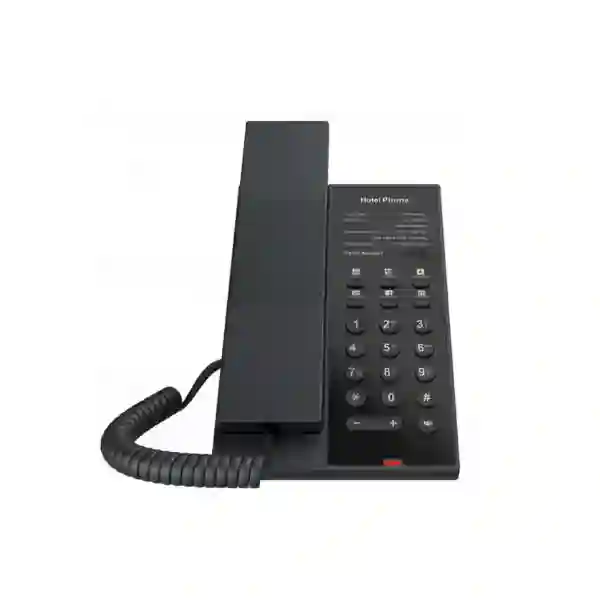
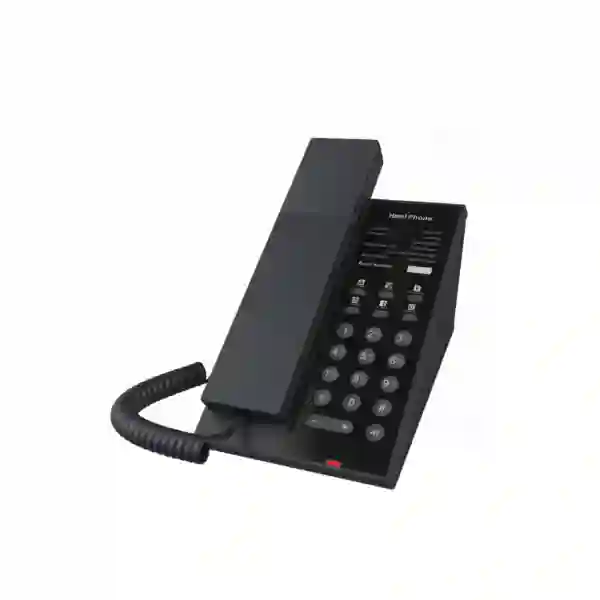
The Fanvil H602W is a compact, screenless Wi-Fi SIP phone built for hospitality and other service-oriented environments where users need dependable voice calling without a complex desktop interface. Fanvil equips the H602W with two SIP lines, six programmable DSS keys, HD voice using G.722 and Opus, a standard numeric keypad, hands-free operation and integrated dual-band 2.4 GHz and 5 GHz Wi-Fi 6. The phone is designed for desktop installation and is especially relevant to hotel rooms, hospital wards, retail locations, malls and supermarkets where one-touch service keys and a clean physical layout can simplify everyday communication.
2 SIP lines
Supports two SIP registrations for straightforward hospitality or business extension requirements.
6 DSS keys
Programmable keys can be assigned to service hotlines, speed dial or operational functions.
Dual-band Wi-Fi 6
Built-in 2.4 GHz and 5 GHz wireless networking offers placement flexibility where Ethernet data cabling is inconvenient.
HD voice
Wideband G.722 and Opus codecs support clear voice when the SIP platform and network are correctly engineered.
What the Fanvil H602W solves
Many hotel rooms, clinics, retail counters and service areas need a fixed telephone but do not need a color display, dozens of line appearances or a complicated menu. They need a handset that is easy to understand, can call predefined destinations quickly and can register to a modern SIP platform. The H602W addresses that requirement with a familiar keypad, hands-free calling and six programmable keys. A hotel can assign buttons to reception, housekeeping or another service desk; a hospital can use them for nursing or administrative call points; a retail operation can dedicate keys to a supervisor, security or stock office. The exact key labels and behavior are determined by the deployment and PBX configuration.
The second problem is network placement. In an existing property, extending an Ethernet cable to every phone position can be disruptive or uneconomical. The H602W uses integrated Wi-Fi 6 for network connectivity, so the voice endpoint can connect wirelessly where suitable WLAN coverage already exists. This does not eliminate power requirements: the H602W uses DC power rather than PoE. Buyers should therefore confirm that an appropriate mains outlet is available at each intended phone location and should include the wireless access points, internet path, PBX and critical power infrastructure in continuity planning.
Verified technical feature summary
| SIP | 2 SIP lines; SIP v1/v2 over UDP, TCP and TLS |
| Wireless | Built-in 2.4 GHz and 5 GHz Wi-Fi 6; 2.4 GHz 802.11 b/g/n/ax and 5 GHz 802.11 a/n/ac/ax |
| Ethernet | 10/100 Mbps network port |
| Audio | HD voice; wideband G.722 and Opus; additional narrowband codecs; handset and hands-free modes |
| Keys | 21 keys including 12 numeric keys, 6 DSS keys and 3 function keys |
| Networking | IPv4/IPv6, DHCP, static IP, PPPoE, VLAN 802.1P/Q, LLDP, QoS, 802.1X, L2TP and OpenVPN |
| Management | Web management; provisioning via FTP, TFTP, HTTP, HTTPS, DHCP Option 66, SIP PnP and TR-069 |
| Power | DC 5V 1A; H602W does not provide PoE |
| Installation | Desktop; black; device dimensions 128 × 195 × 49 mm |
Compatibility, Wi-Fi and PBX planning
The H602W is a SIP endpoint, so successful deployment depends on more than the handset specification. Procurement teams should confirm compatibility with the selected IP PBX or hosted SIP service, then validate the specific features they expect to use: extension registration, transfer, voicemail, hot line behavior, programmable keys, directory handling, provisioning and any hotel or property-management workflow that depends on the PBX. SIP interoperability is broad in principle, but specialized behaviors can depend on firmware, configuration templates and the telephony platform.
Wireless voice also needs a stable WLAN. Signal strength alone is not enough. Voice is sensitive to latency, jitter, packet loss and congestion, so a property should assess 2.4 GHz and 5 GHz coverage at the actual phone positions and during normal traffic. If guest Wi-Fi, staff devices, CCTV, cloud applications and phones all share the same infrastructure, segmentation and Quality of Service should be planned deliberately. The H602W supports VLAN and QoS-related networking functions, but the switches, access points, router and firewall must also be configured coherently.
For related infrastructure, review FourTeck Tanzania’s business technology shop for procurement context and technology services for integrated design, installation and support discussions. Buyers comparing Wi-Fi desk phones can also review the Dinstar C60U-W Wi-Fi IP Phone, while wired or PoE-oriented alternatives include the Dinstar C60S, Dinstar C60SP PoE, Dinstar C62U, Dinstar C62UP PoE, Dinstar C63G and Dinstar C63GP PoE. These links help buyers compare deployment styles, user roles and power choices rather than treating every SIP phone as interchangeable.
Fanvil H602W Wi-Fi IP Phone Tanzania
For organizations evaluating the Fanvil H602W Wi-Fi IP Phone in Tanzania, the strongest use case is a fixed SIP telephone position where simple calling and programmable service keys matter more than a large display. Hotels can place the H602W in guest rooms or operational areas, while clinics, hospitals, retail sites, supermarkets, schools and office support areas can use the same hardware for straightforward voice communication. The six DSS keys give administrators a practical way to expose frequently used destinations without asking every user to remember extension numbers. That is particularly useful in shared rooms or public-facing environments where the telephone should be intuitive for occasional users.
Tanzania deployments should begin with the voice architecture. Confirm whether the phones will register to an on-premises IP PBX, a hosted platform or another SIP service. Define extension numbering, call routing, reception behavior, emergency or service destinations, voicemail requirements and after-hours handling. Once the business call flow is known, the H602W can be evaluated as the endpoint that executes that plan. If the property already has a voice platform, test the intended firmware and programmable-key behavior before a large quantity is ordered.
The wireless environment deserves equal attention. A hotel may already have extensive guest Wi-Fi, but guest coverage and voice-grade device coverage are not always the same objective. Phone positions are fixed, so it is practical to test RSSI, interference, latency and call stability at every room type or representative floor zone. A dedicated or appropriately segmented SSID can make management easier. The 5 GHz band can reduce dependence on crowded 2.4 GHz channels in suitable areas, while 2.4 GHz may provide greater reach in others. The correct choice depends on the building materials, access-point placement and channel design.
Power planning is another important Tanzanian procurement detail. Because H602W network connectivity is wireless but power is DC, each phone still needs a reliable socket. Where business continuity matters, consider which endpoints, access points, switches, PBX equipment and internet devices should sit behind UPS protection. A quotation request should therefore include quantity, property type, number of floors or zones, PBX platform, Wi-Fi design, desired DSS-key labels, provisioning requirements and whether configuration support is required. FourTeck Tanzania can use that information to distinguish a product-only quote from a complete voice-and-network deployment discussion.
Fanvil H602W Wi-Fi IP Phone Dar es Salaam
Dar es Salaam contains a wide mix of hotels, serviced apartments, healthcare facilities, retail centers, corporate offices and multi-tenant properties, all of which can have different reasons for considering a wireless SIP desk phone. In a hotel renovation, extending copper data cabling into every room may be disruptive. In a clinic or retail environment, counters and service points may move as layouts change. The H602W offers a fixed handset with Wi-Fi network access so the voice endpoint can be placed where a suitable wireless signal and DC power are already available. Its screenless design can also reduce user complexity in rooms where only calling and a few service shortcuts are required.
Dense urban wireless conditions make radio planning particularly important. Neighboring networks can create contention, especially in 2.4 GHz. For a Dar es Salaam property, test both supported bands and confirm the access-point channel plan rather than allowing every phone to associate wherever it finds the strongest signal. Voice traffic has a low tolerance for intermittent packet loss and jitter. A web page may recover silently from a brief wireless pause; a telephone conversation exposes the pause immediately. This is why a predeployment pilot across representative floors, rooms and busy periods is valuable.
Hospitality buyers should also think about the phone as part of guest service design. The H602W’s six DSS keys can be configured for destinations such as reception, housekeeping, restaurant reservations or another service desk when the PBX supports the planned call flow. A customizable faceplate can help present clear labels. The organization should decide which services deserve one-touch access and which numbers remain available through the standard keypad. That approach keeps the device useful without cluttering it with unnecessary functions.
When requesting a Dar es Salaam quotation, include phone quantity, number of room types, PBX make or service, required SIP registrations, Wi-Fi SSID strategy, availability of power sockets, expected faceplate labeling and rollout schedule. If the property is also changing access points, switching, firewall policy or IP PBX, it is better to evaluate those dependencies together. The goal is not simply to make the phone register; it is to maintain clear calls, predictable service-key behavior and manageable provisioning as the number of endpoints grows.
Fanvil H602W Wi-Fi IP Phone Mwanza
In Mwanza, the Fanvil H602W can suit hospitality properties, medical facilities, education sites, retail operations and branch offices that want a dedicated SIP telephone without making Ethernet cabling the only network option. A fixed handset remains useful in shared areas because users can make calls without installing an app or signing in to a personal device. The standard keypad supports ordinary dialing, while six programmable DSS keys can simplify access to frequently used internal numbers or service points. For a hotel, that may mean front desk or housekeeping. For a clinic, it may mean reception, nursing or administration. The organization chooses the exact destinations through its PBX and phone configuration.
A Mwanza deployment should check where the PBX is located. If the PBX is on the same site, the internal LAN and WLAN become the primary call-quality path. If the PBX is hosted remotely or centralized in another city, the WAN and internet link also become part of every call. In that case, capacity, latency and resilience are relevant procurement questions. Wireless coverage can be excellent at the phone while the call still performs badly because the upstream link is congested. Troubleshooting should therefore view the entire voice path rather than blaming the handset first.
The H602W supports centralized provisioning options including HTTP, HTTPS, FTP, TFTP, DHCP Option 66, SIP PnP and TR-069. These features can be valuable when a Mwanza organization is deploying dozens of units or wants consistent settings across a chain of sites. Administrators can define a repeatable configuration approach for SIP accounts, time settings, DSS keys and other parameters rather than touching every phone manually. Configuration control also simplifies replacement: a spare unit can be prepared against a known profile instead of depending on undocumented settings.
Procurement teams should specify whether they need hardware only, preconfiguration or a broader telephony project. Include user and room counts, extension plan, PBX details, network topology and wireless access-point information. If power continuity is required for specific service points, plan UPS coverage for the relevant network chain and phone adapters. This produces a more realistic quotation and helps determine whether the H602W should be used across the whole site or selectively in rooms where wireless deployment delivers clear operational value.
Fanvil H602W Wi-Fi IP Phone Arusha
Arusha’s hospitality and tourism economy makes the H602W particularly relevant to hotels, lodges, tour operators and guest-service environments, while the same phone can also serve offices, clinics and institutions. A hospitality telephone has a different job from an executive desk phone. Guests do not need a complicated display; they need an obvious handset, clear dialing and fast access to the services the property wants to expose. The H602W’s six DSS keys and customizable faceplate can support that design by presenting labeled shortcuts for defined destinations. The keypad remains available for room-to-room or external dialing according to the PBX policy.
Wi-Fi can be attractive in properties where buildings were not originally wired for IP telephony or where room renovations need to minimize new cable runs. However, resort-style sites, thick walls, long corridors and detached buildings can create challenging RF conditions. A strong wireless design should map coverage by room and building, not assume that access points serving guest smartphones automatically provide stable voice at every telephone position. Because the H602W supports both 2.4 GHz and 5 GHz, network teams can select the band strategy that fits coverage and interference conditions, but both still depend on disciplined access-point placement and backhaul.
Arusha buyers should also decide whether the phone deployment will be standardized across multiple properties. If a hotel group has more than one location, consistent DSS-key functions, extension ranges, provisioning profiles and labeling can simplify training and support. The device supports web management and several automatic provisioning methods, which can help maintain that consistency. Any integration with property-management workflows should be confirmed with the PBX or hospitality communication platform rather than assumed from the phone alone.
A useful quotation request should list the number of rooms or endpoints, building layout, existing Wi-Fi platform, PBX type, required service buttons, power availability and any branding or faceplate expectations. For remote or multi-building properties, include WAN design and internet resilience as well. The most reliable outcome comes from treating the H602W as one component in a voice service chain that includes the WLAN, SIP platform, numbering plan, power and operating procedures.
Fanvil H602W Wi-Fi IP Phone Dodoma
Organizations in Dodoma can evaluate the Fanvil H602W for administrative buildings, hotels, healthcare facilities, institutions, project offices and service locations that need uncomplicated SIP voice endpoints. The screenless interface keeps the device focused on core calling. Two SIP lines can satisfy many ordinary extension roles, while six DSS keys create direct access to frequently contacted functions or departments. That combination can be useful in common areas and rooms where many different people may use the phone and where an administrator wants the experience to remain predictable.
For a government, institutional or project environment, standardization can be more important than adding features. A deployment template can define extension numbering, DSS key assignments, Wi-Fi profile, management settings and firmware. The H602W supports several provisioning methods, so repeatable rollout is possible when the surrounding management process is planned correctly. Administrators should document phone-to-extension mappings, change default credentials as appropriate, control access to management interfaces and keep configuration backups. These operational practices often have more impact on long-term support than the initial installation itself.
Wi-Fi voice should be tested under real load. Offices and institutions may have periods when meetings, video calls, backups and user traffic place greater demand on the WLAN and internet path. A phone that works during an empty-building test can expose congestion later. Separating voice traffic, applying appropriate QoS and monitoring link quality can improve predictability. Because the H602W uses a DC adapter, each endpoint also needs an electrical plan; protecting only the core switch or PBX does not keep a wireless phone active if its local power outlet fails.
When buying for Dodoma, classify user roles and deployment areas before finalizing quantity. Some staff may need phones with larger displays, more line keys or headset features, while rooms and shared desks may benefit from the H602W’s simpler layout. Include those distinctions in the quotation request together with PBX details, Wi-Fi coverage, expected service shortcuts and configuration scope. A role-based approach helps avoid buying the same handset for every position simply for convenience.
Fanvil H602W Wi-Fi IP Phone UAE
In the UAE, the Fanvil H602W can fit hotels, serviced residences, clinics, retail back offices and commercial facilities that want a streamlined SIP phone with wireless network connectivity. Properties with mature Wi-Fi infrastructure may value the ability to place a phone where running a new Ethernet data cable is inconvenient. The H602W is not a mobile handset; it remains a desktop phone powered by a DC adapter. That distinction is important in project design because the wireless feature addresses the data connection, while a power socket is still required at the final location.
High-density properties should engineer the WLAN specifically for voice. Large hotels can have hundreds of guest devices as well as staff terminals, IPTV, building systems and other connected equipment. The H602W’s 5 GHz support provides additional spectrum options, but it does not automatically guarantee better calls. Access-point capacity, roaming policy, channel design, VLAN segmentation, QoS and backhaul all influence performance. A pilot should confirm voice quality in representative rooms and at peak occupancy before the model is standardized throughout a property.
The phone’s six DSS keys are well suited to hospitality service shortcuts, and its magnetic handset and customizable faceplate support a tidy room presentation. UAE projects should define those labels as part of the guest-service design and align them with PBX call routes. The organization should also decide how configuration will be provisioned across rooms, how spare phones will be handled and how firmware changes will be tested. Centralized provisioning helps prevent inconsistent manual configuration.
Customers with UAE-specific requirements can review FourTeck UAE for broader regional IT and IP telephony solutions and the FourTeck specialist IP phone site for voice-focused options. For a Tanzania-centered procurement program that also includes UAE branches, document a common numbering plan, SIP profile, provisioning standard and support procedure while allowing each site to use the wireless and network configuration appropriate to its local infrastructure.
Fanvil H602W Wi-Fi IP Phone Uganda
Ugandan hotels, clinics, education sites, retail businesses and branch offices can consider the H602W when a fixed SIP endpoint is required but Ethernet availability at the final desk or room position is limited. The familiar handset and keypad are useful in environments where users should not need training to place a call. Six DSS keys can present frequently used internal destinations as one-touch options, while two SIP lines are suitable for straightforward extension requirements. The exact calling features available to users remain dependent on the connected PBX and its configuration.
The Wi-Fi design should be evaluated before a multi-phone rollout. Guest wireless networks and business voice networks have different operational priorities even when they share the same access-point hardware. Voice benefits from predictable latency, controlled congestion and stable authentication. Organizations can create a dedicated or segmented SSID where appropriate and use network policies that keep voice traffic from competing blindly with high-volume applications. Both 2.4 GHz and 5 GHz are available on the H602W, allowing the design to reflect building materials, coverage and channel conditions.
For multi-branch organizations, the H602W’s provisioning options can support a more repeatable configuration process. Extension credentials, time settings, DSS keys and network parameters should be documented and generated from a standard profile where possible. A central IT team can then maintain consistency across Kampala and other sites without relying on handwritten settings. Security should include controlled management access and appropriate credential management rather than leaving phones exposed for convenience.
Regional buyers can review FourTeck Uganda for Uganda-specific IP PBX, VoIP and networking context. If the same organization also operates in Tanzania, align extension plans, naming conventions, support procedures and configuration templates where practical. A shared architecture makes it easier for IT teams to troubleshoot phones across countries while still adapting the Wi-Fi, WAN and power design to each site.
Fanvil H602W Wi-Fi IP Phone Kampala
Kampala offices, hotels and retail properties often operate in dense commercial areas where many wireless networks compete for spectrum. The H602W can be effective in that environment, but the project should use managed Wi-Fi rather than treating the phone as an ordinary consumer client. A defined SSID, consistent security settings, deliberate channel planning and sufficient access-point capacity help turn wireless connectivity into a dependable voice service. Administrators should test call quality while the building is busy, not only after hours when the WLAN is quiet.
Hospitality deployments can use the six DSS keys to create a simple room interface. One button can route to reception, another to housekeeping, and others to the property’s chosen service points. The H602W’s standard keypad means the phone can still support general dialing according to the PBX dial plan. The customizable faceplate is useful when a property wants the visible labels to match its own service names or branding. These details should be approved before mass rollout so every phone presents the same guest experience.
Kampala buyers should also compare the H602W with wired alternatives. If every room already has a dedicated, tested Ethernet outlet and PoE switching, a wired PoE phone may simplify local power management. If network cabling is absent or expensive to extend but power outlets and strong Wi-Fi are available, the H602W can reduce the need for new data cabling. Neither approach is universally better; the right choice depends on the existing property infrastructure and lifecycle support model.
A complete quotation should therefore identify room quantity, number of floors, access-point platform, PBX, intended call routes, power arrangement and provisioning method. Larger deployments should include spare units and a documented replacement process. If the phone is one part of a new voice system, define SIP trunking, reception workflow, voicemail and internal dialing before programming the room endpoints. This sequence keeps the hardware decision tied to the actual business communication design.
Fanvil H602W Wi-Fi IP Phone Arua
For businesses and institutions in Arua, the H602W can provide a straightforward SIP desk phone where a reliable wireless LAN is easier to extend than structured cabling. Hotels, clinics, administrative offices and service organizations may benefit from a fixed device that does not rely on a user’s smartphone or computer. Dedicated hardware can simplify shared-area communication because the phone remains at the location, uses a known extension and presents the same keys to every user.
Connectivity planning is especially important when the SIP platform is remote. A phone can have a strong local Wi-Fi signal while calls still suffer if the internet link has high latency, packet loss or congestion. An Arua deployment should therefore test the path from handset to access point, LAN, router or firewall, WAN and PBX. Monitoring during busy periods can reveal whether the network needs QoS, additional capacity or a different routing approach. For critical communication, businesses can also consider resilience of the internet service and core network equipment.
The H602W’s six programmable DSS keys are useful for organizations that want quick calling to known destinations. In a clinic, these might be reception or administration; in a hotel, guest services; in an office, security or a shared support desk. The buttons should reflect real workflows rather than simply using every available key. A well-designed faceplate with clear labels makes the phone easier to use and reduces requests for printed instructions.
Procurement teams should confirm the availability of DC power at each position because Wi-Fi does not remove the phone’s electrical requirement. If outage continuity matters, identify which endpoints are essential and protect the relevant power and network path. A quotation request should list the number of phones, location types, PBX, expected DSS functions, Wi-Fi coverage and whether configuration is needed. This information helps determine whether the H602W is the right endpoint for every location or only for selected rooms where wireless deployment solves a specific cabling problem.
Fanvil H602W Wi-Fi IP Phone Mbarara
Mbarara organizations can use the H602W in hospitality, healthcare, education, retail and office environments that need a simple SIP phone with flexible network placement. The device’s compact desktop design and screenless interface make it well suited to rooms where users mainly need to answer calls, dial numbers and access a few predefined destinations. Two SIP lines provide basic registration flexibility, and six DSS keys can reduce the number of extension codes users have to remember.
The wireless choice should be based on site conditions. A property with good business Wi-Fi can place H602W units in areas where new Ethernet runs would be inconvenient. A site with weak or inconsistent wireless should improve the WLAN before adding voice endpoints. The phone supports 2.4 GHz and 5 GHz Wi-Fi 6, but radio support cannot compensate for poor access-point positioning, overloaded channels or inadequate wired backhaul. A predeployment survey and pilot calls are especially useful for multi-floor or mixed-construction buildings.
Administrators should think about the lifecycle of the configuration. Manual setup may be acceptable for two or three phones, but larger quantities benefit from automatic provisioning. The H602W can retrieve configurations through several standard methods, allowing IT teams to establish repeatable templates. Document the relationship between each MAC address or device, extension, room and user role so support personnel can quickly identify what should be configured when a phone is replaced.
For Mbarara procurement, define whether the deployment will connect to an existing PBX or form part of a new system. Existing environments require interoperability testing and confirmation of the call features the organization depends on. New systems need a call-flow plan, SIP trunks, reception handling and numbering before endpoints are programmed. Include these requirements in the quotation together with phone quantity, Wi-Fi infrastructure and power availability. The result is a purchase decision based on operational fit rather than feature count alone.
Fanvil H602W Wi-Fi IP Phone Gulu
In Gulu, the Fanvil H602W can support hotels, NGOs, institutions, clinics, retail sites and branch operations that prefer a dedicated telephone at a fixed location but need flexibility in how the endpoint reaches the IP network. The H602W preserves the familiar behavior of a desk phone while using Wi-Fi for data connectivity. This is useful in renovated spaces, temporary offices or rooms where installing a new data outlet would create unnecessary construction work.
Organizations should separate the decision about handset suitability from the decision about network suitability. The phone may meet functional requirements with its two SIP lines, HD voice and six DSS keys, yet still deliver a poor experience if the wireless and WAN environment is unstable. Voice quality should be tested using real calls and normal business traffic. Where possible, keep voice on a managed wireless policy, avoid heavily congested channels and make sure upstream internet or private WAN links have enough consistency for SIP and RTP traffic.
The phone can also fit standardized multi-site deployments. An NGO or business with locations in Gulu, Kampala and Tanzania can use common extension rules, DSS functions and provisioning templates while adapting the Wi-Fi credentials to each site. Centralized documentation reduces dependence on local memory and makes support easier when staff change. Firmware changes should be validated before a large fleet is updated so the organization does not introduce unexpected behavior into guest or service phones.
A Gulu quotation request should explain the use case for each group of phones. Guest rooms, reception backup positions, administrative desks and shared service points may require different button programming even when the same model is used. Also specify available power, access-point model, PBX platform and whether the project requires provisioning or network assessment. This gives the supplier enough context to recommend a deployment that remains manageable after installation rather than simply delivering boxed phones.
Fanvil H602W Wi-Fi IP Phone Kenya
Kenyan hotels, clinics, retailers, schools and offices can evaluate the H602W when they need a compact SIP phone and want wireless network placement. Its most useful characteristic is not raw feature count; it is the combination of a simple handset, six programmable service keys and integrated dual-band Wi-Fi 6. This makes the phone particularly relevant to hospitality rooms and operational positions where users need predictable calling rather than a sophisticated desktop interface.
Before adopting Wi-Fi phones at scale, Kenyan businesses should check access-point density and channel utilization. In a large property, room count can translate into hundreds of additional wireless clients. That client load should be included in capacity planning alongside guest smartphones, staff devices and other connected systems. The WLAN should use a deliberate SSID and security policy, and the wired uplinks behind the access points should have sufficient capacity. Voice traffic may be small in bandwidth terms, but it is sensitive to delay and packet loss.
The H602W uses DC power and therefore differs from a PoE hotel phone architecture. Properties with PoE already available at every room may prefer a wired endpoint for centralized power. Properties with strong Wi-Fi but no Ethernet at the phone location may find the H602W more practical. Procurement should compare total project effort, not only handset price. Cabling, switch ports, adapters, UPS design, installation labor and future maintenance all contribute to lifecycle cost.
For Kenya-focused communication projects, FourTeck Kenya provides regional IP PBX and VoIP context. Organizations operating in both Kenya and Tanzania can standardize SIP accounts, dial plans, DSS behavior and documentation across sites while keeping local WLAN settings separate. A cross-border standard is most valuable when it simplifies support without forcing a single physical network design onto very different buildings.
Fanvil H602W Wi-Fi IP Phone Kuwait
Kuwait hospitality and commercial projects can consider the Fanvil H602W for hotel rooms, serviced accommodation, clinics, retail areas and office support positions. The phone is intentionally simple: it provides the standard keypad, handset, hands-free operation, two SIP lines and six programmable DSS keys without a large visual interface. In a guest room, that simplicity can be an advantage because the device presents only the functions the property wants the guest to use.
Wireless deployment can reduce dependence on a dedicated Ethernet run, but it should be designed as infrastructure rather than convenience. Large buildings should calculate how many phones and other Wi-Fi devices each access point will serve, then validate actual voice performance. The H602W supports modern Wi-Fi 6 operation on 2.4 GHz and 5 GHz, giving designers options for channel use. Building structure, distance, neighboring networks and RF policies still determine which band is appropriate at each location.
Kuwait properties may also value the customizable faceplate and DSS buttons for guest-service branding. A rollout can define one approved layout and button map, then provision identical behavior throughout the property. The provisioning methods supported by the phone help administrators avoid room-by-room manual configuration. For multi-property operators, separate site profiles can preserve common service logic while using different SIP credentials and Wi-Fi settings.
Regional requirements can be explored through FourTeck Kuwait. A procurement request should include room count, desired service keys, PBX platform, WLAN design and power availability. If the property is migrating from analog phones, also describe the existing numbering and guest-service workflow. This helps the project team plan the migration path rather than treating the new IP handsets as isolated replacements.
Fanvil H602W Wi-Fi IP Phone Ghana
Ghanaian hotels, healthcare sites, education facilities, retail businesses and offices can use the H602W where a compact fixed SIP endpoint is preferred to relying on mobile apps. Six programmable keys make the phone useful in service-oriented environments, while the standard keypad supports ordinary dialing. The screenless design is best viewed as purposeful rather than limited: it keeps the user interaction simple for shared rooms and locations where the organization wants to expose a small number of common actions.
Wireless readiness should be confirmed before purchase. Businesses should test both supported frequency bands, ensure the access points have sufficient capacity and examine the WAN path to the PBX if it is hosted remotely. A voice endpoint only performs as well as the chain carrying its RTP media. Intermittent wireless interference, overloaded internet links and misconfigured firewalls can all create symptoms that look like a phone problem. A structured test plan can separate endpoint behavior from network behavior.
Power is another consideration. The H602W receives data over Wi-Fi but still needs its 5V DC supply. In a room with a convenient power socket, this can be straightforward. In sites that expect phones to remain usable during short outages, the local outlet and the supporting Wi-Fi/network equipment need a resilience plan. A PoE wired phone may be more appropriate where centralized UPS-backed switch power is already available, so buyers should compare architecture as well as model features.
For Ghana-related technology requirements, review FourTeck Ghana. Organizations that also operate in Tanzania can define one SIP numbering and provisioning standard and use region-specific Wi-Fi profiles. Include the number of phones, user roles, PBX details, wireless design, faceplate requirements and configuration scope in the quotation so the proposed deployment reflects the real operating environment.
Fanvil H602W Wi-Fi IP Phone Nigeria
Nigerian hospitality, healthcare, retail and corporate environments can consider the H602W for fixed voice locations that benefit from wireless network access. The phone supports two SIP lines and six DSS keys, so it fits ordinary room and service communication better than complex reception-console roles. Hotels can map keys to guest services; clinics can use them for internal assistance points; offices can reserve them for frequently contacted teams. The PBX defines the actual destination and call behavior behind each key.
In large Nigerian cities and dense buildings, wireless interference can be significant. A successful deployment should use managed access points, measure performance at the intended phone locations and avoid placing all voice clients on an overloaded consumer-style WLAN. The H602W can use 5 GHz as well as 2.4 GHz, which gives network teams more flexibility, but the project still needs proper coverage, channel planning, security and backhaul. Voice quality should be evaluated with simultaneous business traffic rather than in isolation.
Organizations should also plan for power conditions. Because the H602W is not PoE, every phone uses a DC supply. If the goal is to keep selected extensions available during outages, protect those local power points as well as the access points, network switches, router, PBX and any internet equipment in the path. Critical desks can be prioritized rather than assuming that every room requires the same continuity level.
Nigeria-focused buyers can consult FourTeck Nigeria for regional IT solution context. For multinational organizations, a common H602W profile can standardize DSS keys, extension naming, security settings and provisioning while local network teams manage SSIDs and connectivity. A quotation should distinguish product quantity from configuration, PBX migration, Wi-Fi assessment and installation so each scope item is clear.
Fanvil H602W Wi-Fi IP Phone Seychelles
The Seychelles hospitality market can be a natural fit for a purpose-built Wi-Fi hotel phone such as the H602W, especially in resorts, villas and guest properties where network cabling may be difficult to extend to every room. The device keeps the guest interaction familiar: lift the handset, dial, use hands-free mode or press a clearly labeled service key. Six programmable DSS buttons can present the property’s most important contact points, and the customizable faceplate can make those options easier to understand.
Island and resort layouts can create special network design challenges. Guest rooms may be distributed across multiple buildings, and access points can serve indoor and semi-outdoor spaces with very different RF characteristics. The H602W should only be placed where the property can maintain stable 2.4 GHz or 5 GHz coverage. A Wi-Fi heatmap or structured test across representative room types can identify dead zones before hundreds of phones are ordered. Backhaul between buildings and the location of the PBX also need consideration.
Properties should separate guest-facing simplicity from back-end management. Although the user sees a straightforward handset, administrators can manage SIP accounts, network settings and provisioning through standard methods. A resort group can create a room-phone template and apply it consistently, while maintaining a controlled process for replacement units and firmware. The faceplate and button layout should be approved together with the guest-service team so technology choices align with operational procedures.
Power remains a local requirement because the H602W uses DC rather than PoE. In villa or detached-room deployments, verify that suitable sockets exist where the phone will sit. If emergency or reception communication must continue during interruptions, design resilience across the phone, access point, backhaul and PBX path. For quotation preparation, include property layout, room count, Wi-Fi infrastructure, SIP platform, DSS-key labels and any multi-site standardization requirements. This information makes it possible to assess whether the H602W should be the primary guest-room standard or one component of a mixed wired and wireless phone deployment.
Buying guidance: H602W or a wired IP phone?
Choose the H602W when the deployment needs a fixed, simple SIP phone and the strongest infrastructure advantage is dependable Wi-Fi at the phone position. It is especially useful when pulling new Ethernet data cabling is difficult or undesirable. Choose a wired PoE model when the property already has structured cabling and wants to centralize endpoint power through PoE switches. A mixed architecture can also be sensible: use wired PoE phones at desks and reception points with available data outlets, then use H602W units in selected rooms where wireless networking materially reduces installation complexity.
Do not base the decision on Wi-Fi as a marketing feature alone. Review the actual room layout, access-point capacity, mains-power availability, existing switch infrastructure, PBX, maintenance approach and outage expectations. The lower-risk architecture is the one the organization can operate consistently for the full lifecycle of the phones.
Quotation checklist
Quantity and locations: total phones, room types, floors, buildings and any branch sites.
PBX platform: existing IP PBX, hosted SIP service, SIP trunking and required call features.
Wi-Fi design: access-point vendor, SSID plan, 2.4/5 GHz coverage and expected client density.
DSS keys: planned labels and destinations such as reception, housekeeping, support or security.
Power: available sockets, adapter requirements and any UPS or continuity requirements.
Configuration scope: hardware only, preconfiguration, auto-provisioning, installation, testing and documentation.
Fanvil H602W FAQs
Does the Fanvil H602W support PoE?
No. Fanvil distinguishes the wired H602, which supports PoE, from the H602W Wi-Fi model, which uses DC 5V 1A power. The H602W’s wireless feature replaces the Ethernet data dependency, not the need for electrical power.
Does H602W support 5 GHz Wi-Fi?
Yes. The current Fanvil datasheet lists built-in dual-band 2.4 GHz and 5 GHz Wi-Fi 6, including 802.11 b/g/n/ax on 2.4 GHz and 802.11 a/n/ac/ax on 5 GHz.
How many SIP lines does the H602W have?
The H602W supports two SIP lines. Buyers should still confirm the specific PBX features and provisioning behavior needed for their project.
What are the six DSS keys used for?
They are programmable keys that can be assigned to functions such as speed dial or service hotlines. Hospitality deployments can use them for reception, housekeeping or other property-specific destinations.
Can the H602W be centrally provisioned?
Yes. Fanvil documents auto-provisioning through FTP, TFTP, HTTP, HTTPS, DHCP Option 66, SIP PnP and TR-069, as well as web management. The selected deployment method should align with the organization’s security and support process.
What should I provide for a Tanzania quotation?
Provide phone quantity, property or business type, PBX platform, Wi-Fi environment, required service-key labels, power availability, deployment locations and whether you need configuration or installation assistance. This allows a quote to reflect both the endpoint and its infrastructure dependencies.
Decision recap
The Fanvil H602W is best suited to hospitality and service environments that want a compact screenless SIP phone, six programmable one-touch keys, two SIP lines, HD voice and dual-band Wi-Fi 6. Its wireless data connection can simplify placement where Ethernet cabling is unavailable, but every phone still needs DC power and depends on a stable WLAN and SIP platform.
For procurement, compare the H602W against the actual site architecture: existing cabling, PoE availability, power sockets, Wi-Fi coverage, PBX compatibility, provisioning method and support model. A pilot in representative rooms is preferable to assuming that a strong-looking Wi-Fi signal guarantees voice quality.
Discuss the Fanvil H602W with FourTeck Tanzania
FourTeck Tanzania can review the H602W as an endpoint within a wider IP telephony, Wi-Fi and network requirement. Share the expected quantity, site layout, existing PBX, Wi-Fi design and service-key plan so the quotation can distinguish hardware supply from configuration, installation and network preparation.
Use the verified FourTeck Tanzania contact page to request a quote or provide project details.




Reviews
There are no reviews yet.