
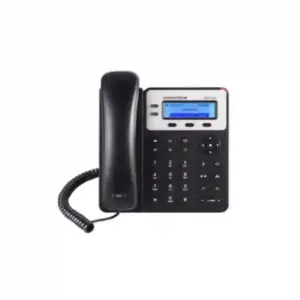
Fanvil H6W Wi-Fi IP Phone
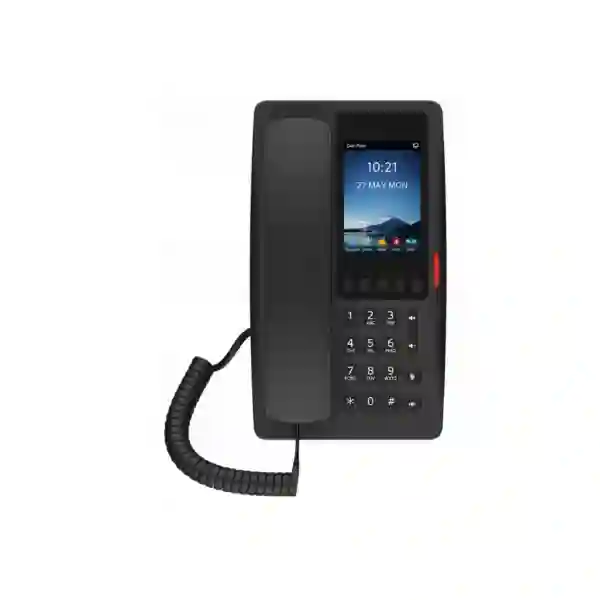
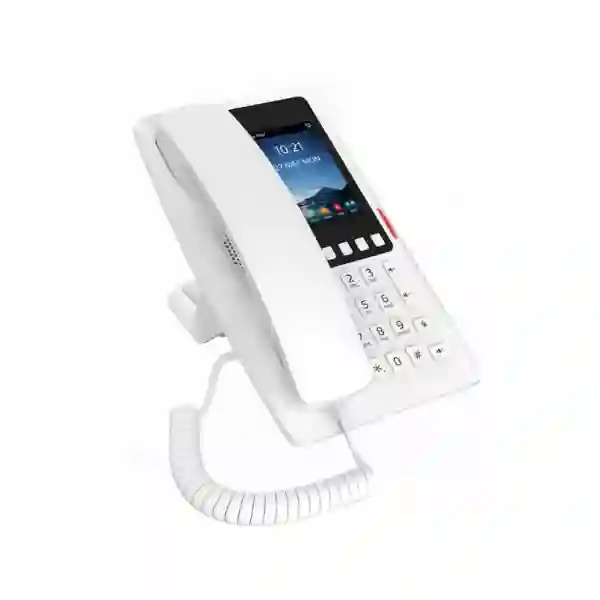
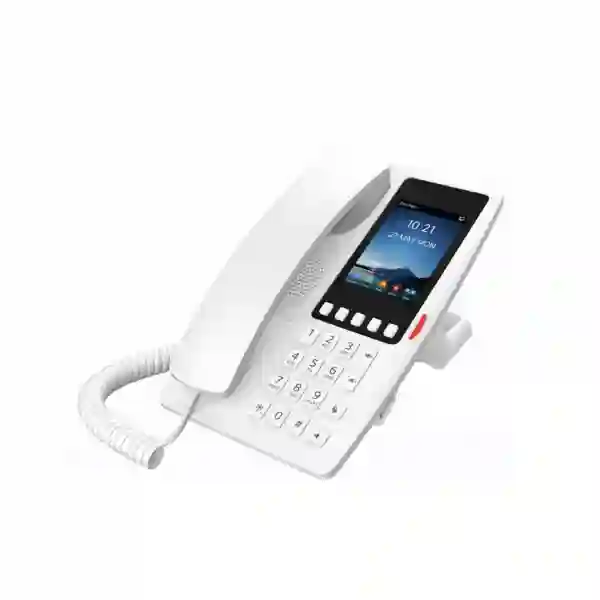
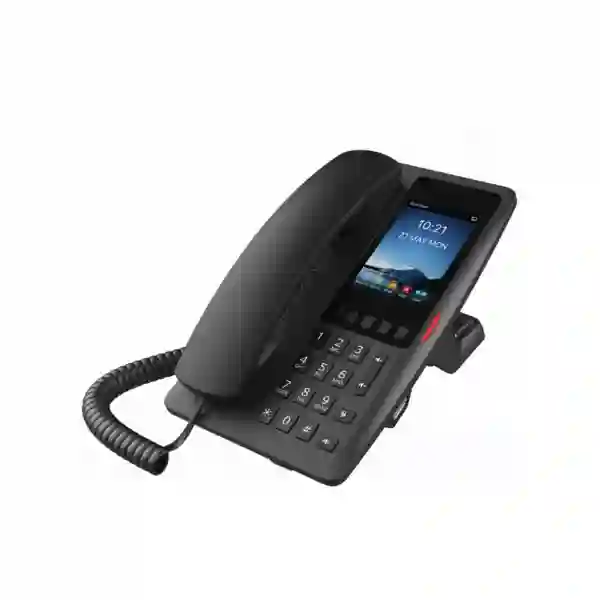
The Fanvil H6W Wi-Fi IP Phone is a hospitality-oriented SIP handset for hotels, serviced residences, healthcare reception points, retail counters and other environments that need simple calling with modern network flexibility. Fanvil equips the H6W with a 3.5-inch 320×480 IPS colour display, five programmable service keys, two SIP lines, HD voice, dual-band 2.4 GHz and 5 GHz Wi-Fi 6, 10/100 Mbps Ethernet, PoE and a USB-A charging interface. For projects in Tanzania, the combination is useful where room or desk phones must be easy for users while remaining manageable for the IT team.
FourTeck Tanzania can help buyers review quantity, SIP/PBX compatibility, Wi-Fi design, PoE availability, VLAN and QoS requirements, service-key programming and deployment scope before quotation. No stock level, delivery time or local authorization is assumed on this page; availability and commercial terms should be confirmed for each request.
Best-fit buying questions
How many rooms or service points need phones?
Will endpoints use Wi-Fi, PoE Ethernet, or a mix?
Which SIP server, IP PBX or hosted voice platform will register the phones?
Which service shortcuts should appear on the programmable keys?
Fanvil H6W Overview and Verified Product Highlights
Fanvil positions the H6W in its H Series of hotel IP phones, but its practical use extends beyond guest rooms. The phone is suitable for settings such as hospitals, shopping areas and supermarkets where staff or visitors need a straightforward endpoint with predefined service contacts. The most important design idea is that the phone can present a small set of programmed actions to the user while the underlying SIP, network and provisioning configuration remains under administrative control.
3.5-inch IPS display
A 320×480 colour screen provides a clear interface and supports a customizable background image, useful for hospitality branding or room-service presentation.
Five programmable keys
Five soft/DSS keys can be configured for service numbers and icons so users can reach functions such as reception, housekeeping or other designated contacts quickly.
Dual-band Wi-Fi 6
Built-in 2.4 GHz and 5 GHz wireless support gives projects a cable-reduction option where the WLAN is engineered for voice coverage, capacity and roaming behaviour.
PoE and Ethernet
The 10/100 Mbps network port and Power over Ethernet capability support conventional wired VoIP deployment where switching and cabling are available.
The H6W supports two SIP lines and HD voice. Fanvil lists wideband codecs including G.722 and Opus, together with full-duplex hands-free operation, echo cancellation, packet-loss concealment, jitter handling and voice-quality monitoring. Network features published by Fanvil include IPv4/IPv6 operation, static or DHCP addressing, VLAN 802.1P/Q, QoS, LLDP, 802.1X network access control, WPA/WPA2-PSK and 802.1X EAP Wi-Fi security, plus L2TP and OpenVPN options. These capabilities are useful, but their successful use depends on the customer network, PBX, security policy and selected configuration.
Technical Specification Snapshot
| Item | Verified H6W detail |
|---|---|
| Display | 3.5-inch 320×480 IPS colour screen |
| SIP lines | 2 |
| Programmable keys | 5 programmable DSS/soft keys; speed-dial functions supported |
| Wi-Fi | Built-in dual-band 2.4 GHz / 5 GHz Wi-Fi 6 |
| Ethernet | 10/100 Mbps |
| Power | PoE supported; optional external power supply listed by Fanvil |
| Audio | HD voice; wideband G.722 and Opus; full-duplex hands-free speakerphone |
| USB | USB-A charging interface |
| Installation | Desktop stand |
Hospitality, Healthcare, Retail and Shared-Space Use Cases
For a hotel, the H6W can serve as a room or service phone where guests need direct access to selected numbers without navigating a complex business handset. A deployment can map the programmable keys to reception, reservations, room service, housekeeping, concierge, emergency procedures or another approved workflow. The colour display and customizable visual elements can also help make the endpoint feel consistent with the property’s service design. In a hospital or clinic, the same simplicity can be useful at reception, nursing stations, waiting areas or non-clinical service points, subject to the organization’s communication and infection-control requirements.
Retail, supermarket and facility environments may use the H6W at customer-service counters, management desks, stock rooms or shared points where a small number of reliable call destinations matter more than a large set of enterprise line keys. In every scenario, the correct decision is not based on the handset alone. Wi-Fi signal quality, PoE switch capacity, voice VLAN design, SIP server configuration, DNS, firewall policy and internet stability can all influence the final experience.
Compatibility, Wi-Fi and Deployment Planning
Before ordering the Fanvil H6W, confirm the SIP platform that will register the phone and the call features that the site expects. SIP standards provide broad interoperability, but feature behaviour, provisioning templates, firmware support and hosted-platform certification can differ. Procurement teams should therefore provide the PBX brand and version, hosted provider name if relevant, extension count, desired call-flow behaviour and any provisioning requirement when requesting a quotation.
For Wi-Fi deployments, perform the same network discipline used for other real-time applications. Confirm coverage at every intended phone position, not only in corridors or common areas. Review 2.4 GHz and 5 GHz channel planning, access-point density, authentication method, DHCP scope, VLAN assignment and QoS strategy. A hotel with many rooms can have excellent guest Wi-Fi in general yet still need separate tuning for voice endpoints. Wired PoE may remain the better choice for locations that already have structured cabling and want a predictable powered network path.
FourTeck Tanzania’s integrated IT and telecom overview explains how IP telephony, switching, Wi-Fi and cabling should be planned together. Buyers comparing equipment can also use the Tanzania business technology shop for adjacent product categories, and the services page for deployment-oriented support context.
Related IP Phones and Internal Comparison Options
A procurement team may want to compare the H6W with other endpoints when some users need different network or call-handling features. FourTeck Tanzania currently lists several business IP phones that can be used as comparison points. The Dinstar C60S Business IP Phone is relevant for general desk calling; the Dinstar C60SP PoE Business IP Phone is useful where powered Ethernet is a core requirement; and the Dinstar C60U-W Wi-Fi IP Phone offers another wireless desk-phone comparison.
For other roles, compare the Dinstar C60U-T 4G IP Phone, Dinstar C62U Business IP Phone and Dinstar C62UP PoE Business IP Phone. These links are not claims that the models are equivalent to the H6W; they provide useful internal options when a project includes reception, office, branch or shared-service users with different needs.
Fanvil H6W Wi-Fi IP Phone Tanzania
Organizations evaluating the Fanvil H6W Wi-Fi IP Phone in Tanzania are often planning more than a handset purchase. Hotels may be refreshing room telephones, opening a new property, moving from analog extensions to SIP, or seeking a cleaner way to connect rooms where re-cabling would be disruptive. Clinics, retail operators and service organizations may need shared endpoints at counters or operational desks. The H6W is particularly relevant when those sites want a combination of a simple user experience and flexible network options. Its two SIP lines, five programmable keys, Wi-Fi 6 capability, Ethernet, PoE and HD voice allow planners to decide whether each endpoint should be wired or wireless according to the actual building.
For a Tanzania project, start by mapping the call flow. A hotel should decide which numbers will be presented on the programmable keys, whether guest-room phones can call external destinations, how emergency or reception calls are handled, and how phones are identified in the PBX. Then review the infrastructure. Wired rooms need appropriate switch ports and PoE capacity if PoE is used. Wireless rooms need dependable coverage at the bedside, desk or wall location where the phone will sit, plus a voice-friendly SSID design. The phone supports VLAN and QoS functions, but these must be coordinated with the switch, access points, DHCP, firewall and PBX architecture.
Procurement should also separate verified product capability from project assumptions. The H6W specification confirms Wi-Fi 6, 10/100 Mbps Ethernet, PoE, HD audio and the 3.5-inch display, but it does not by itself guarantee compatibility with every hosted PBX, every captive-portal Wi-Fi network or every enterprise authentication workflow. Share the intended SIP service, authentication method and provisioning approach before ordering. If a property uses centrally managed Wi-Fi, confirm that voice endpoints can join without guest-login interactions and that client isolation policies do not block required SIP or management traffic.
For buyers seeking Fanvil H6W Tanzania pricing, the useful quotation request should include quantity, deployment city, wired or wireless preference, PBX details, required accessories and whether configuration or installation assistance is needed. FourTeck can then evaluate the phone as part of the broader voice environment rather than quoting an isolated device. For regional IP-phone background, the FourTeck Africa technology site provides multi-market context, while Tanzania remains the primary focus for this page.
Fanvil H6W Wi-Fi IP Phone Dar es Salaam
Dar es Salaam buyers considering the Fanvil H6W are likely to include hotels, serviced apartments, healthcare organizations, shopping environments, multi-floor offices and customer-facing businesses. In a dense commercial property, the most important design decision is often whether the phone should use the existing structured cabling or the wireless network. PoE Ethernet can be attractive in newly built or recently cabled sites because power and data are carried through the network path. Wi-Fi can reduce new cable work in renovated properties, heritage interiors or rooms where adding outlets would be difficult. A mixed design can also be practical when different parts of the building have different infrastructure.
Wireless deployment in Dar es Salaam should not assume that general internet access equals voice readiness. Hotels commonly have many client devices, thick walls, elevators, service corridors and changing occupancy levels. A voice endpoint needs consistent signal and predictable access to the SIP platform. Survey the actual phone locations, confirm access-point coverage and review channel utilization during busy periods. If the property separates guest, staff and operational networks, place voice devices on an appropriate managed segment rather than on a guest network that uses captive portals. The H6W supports both 2.4 GHz and 5 GHz Wi-Fi 6, allowing network teams to choose a band strategy based on coverage and capacity.
For hospitality operations, define the five programmable keys around the guest journey. Reception, housekeeping, restaurant, concierge or emergency assistance may be priorities, but the exact mapping should reflect the property’s organization. The customizable screen can support a consistent presentation, while the two SIP lines allow the endpoint to maintain its voice identity within the PBX. If the phone is used in a hospital, mall or supermarket rather than a hotel, the same keys can point to security, facilities, customer service or management.
A Dar es Salaam quotation request should state room or endpoint count, site type, PBX platform, preferred connection method and any installation requirement. If the project also needs switching, wireless access points or cabling, the H6W should be reviewed with those dependencies in the same bill of materials. That approach helps avoid discovering after delivery that a switch lacks PoE capacity, a VLAN is not available, or wireless coverage is weaker at the intended handset positions than in the surrounding corridor.
Fanvil H6W Wi-Fi IP Phone Mwanza
For organizations in Mwanza, the Fanvil H6W can fit hospitality, healthcare, retail and office communication projects that need an uncomplicated SIP endpoint with flexible connectivity. Lake-region hotels and lodges may be working with buildings where the network has grown gradually: some rooms have Ethernet, others depend on Wi-Fi, and core equipment may be centralized in a limited number of communication rooms. The H6W gives planners both Wi-Fi and Ethernet options, which can be useful when standardizing the user experience across rooms even though the physical network path differs by area.
A strong Mwanza deployment begins with an infrastructure inventory. Record which rooms or service points have usable network outlets, where PoE switching is available, which areas depend on wireless coverage, and how the PBX is reached. If the SIP platform is hosted in the cloud, internet reliability, firewall policy and DNS become part of the call path. If the PBX is on site, internal LAN stability still matters. The H6W’s QoS and VLAN capabilities can support a structured design, but prioritization is only effective when switches and routers are configured consistently. For Wi-Fi, check real signal levels and interference at the phone position instead of relying solely on a floor-plan assumption.
Hotels in Mwanza can use programmable service keys to reduce the number of steps guests take to reach staff. The value is operational as much as technical: a clearly labeled reception or housekeeping shortcut can make the room phone useful without requiring the guest to remember extension numbers. In clinics, retail outlets or customer-service environments, administrators can repurpose the same keys around the local workflow. The 3.5-inch screen and HD voice support a modern presentation without turning the device into an overly complex executive phone.
When requesting Fanvil H6W pricing for Mwanza, include the endpoint quantity and any planned spares, the intended power method, the SIP/PBX platform and whether the phones need pre-configuration. Also state whether the site requires switch, access-point or cabling assessment. This information helps create a quotation aligned with deployment rather than simply multiplying a unit price. Commercial availability, delivery timing and warranty terms should be confirmed at quotation stage rather than assumed from generic online listings.
Fanvil H6W Wi-Fi IP Phone Arusha
Arusha has a strong hospitality and tourism economy, making a hospitality-focused endpoint such as the Fanvil H6W relevant for hotels, lodges, resorts, serviced accommodation and visitor-facing facilities. The phone’s design suits rooms and shared service areas where guests need fast access to a few important destinations rather than the many keys found on a call-center or executive handset. Five programmable soft keys can be configured around the property’s service model, while the colour display can present a more polished interface than a basic analog room telephone.
Property layout is especially important in a hospitality deployment. Guest buildings may be spread across several wings, separate blocks or landscaped grounds. Where Ethernet and PoE reach each room, wired connectivity can provide a stable path and centralized power. Where cabling is impractical, the H6W’s dual-band Wi-Fi 6 can provide flexibility, provided the WLAN has been designed for consistent room-level coverage. Outdoor-distance assumptions should not be applied to indoor voice endpoints; walls, doors, building materials and access-point placement affect usable signal. A site survey or at minimum a room-by-room coverage review is valuable before bulk deployment.
Arusha properties that host international guests may also want to review call policies carefully. The PBX can determine whether room phones access only internal services, local destinations, approved external calling or other routes. The H6W provides the endpoint, but billing, authorization and call routing are PBX functions. Hotels should document extension naming, room mapping and service-key templates so that replacement phones can be provisioned consistently. The phone’s support for centralized configuration methods can help larger deployments, but the exact provisioning workflow should be checked against the chosen PBX and management process.
For an Arusha quotation, specify the number of guest rooms, front-office or service-area devices, network topology and desired service-key layout. Include whether the project is a new property, renovation or replacement of an existing phone system. If replacing analog handsets, confirm the migration plan to SIP and any gateway or PBX changes required. The H6W can be one component of a broader hospitality communication design that includes IP PBX, switches, Wi-Fi, structured cabling and power protection.
Fanvil H6W Wi-Fi IP Phone Dodoma
In Dodoma, the Fanvil H6W can serve hotels, institutions, healthcare sites, business offices and public-facing facilities that want SIP-based voice communication with a simple endpoint. Procurement teams in administrative environments often need clear documentation and predictable device roles. The H6W is straightforward to classify: it is a two-line IP phone with a 3.5-inch IPS screen, five programmable service keys, HD voice, Wi-Fi 6, 10/100 Ethernet, PoE and USB-A charging. Those verified features make it suitable where the phone is expected to provide essential calling and direct service shortcuts rather than advanced call-center functions.
A Dodoma deployment should begin with a compatibility sheet covering the PBX or hosted SIP provider, VLAN, IP addressing, authentication, firmware policy and power method. For government, institutional or regulated environments, network teams may need to review 802.1X, VLAN separation and firewall rules before any endpoint is connected. Fanvil publishes support for 802.1X network access control and standard Wi-Fi security methods, but the organization should test the exact authentication flow it intends to use. If wireless onboarding depends on browser-based captive portals, a dedicated device SSID may be more appropriate.
Operational planning should include user guidance. In a hotel, labels and icons on the programmable keys should correspond exactly to services that are staffed and routed correctly. In an office, clinic or public facility, the keys could provide one-touch access to reception, security, facilities or support. Administrators should maintain a standard configuration template so devices can be replaced without rebuilding settings manually. The PBX should also maintain an extension inventory that maps each phone to its physical location.
For procurement, ask for a quote that separates phones, accessories, switching or power requirements, configuration and installation scope. Do not rely on marketplace prices from other countries as a Tanzania project cost because freight, tax, availability, support scope and accessory inclusion can differ. A well-formed Dodoma request includes quantity, delivery location, desired deployment schedule, SIP platform and whether wired or wireless operation is expected at each group of endpoints.
Fanvil H6W Wi-Fi IP Phone UAE
For organizations with operations in both Tanzania and the UAE, the Fanvil H6W can support a standardized hospitality or shared-service endpoint strategy across properties. The UAE market includes a large concentration of hotels, serviced residences, retail venues, clinics and multi-site businesses, all of which can benefit from clear SIP endpoint standards. A common model can simplify procurement documentation and user training, but each site still needs its own network and PBX validation. The H6W’s dual-band Wi-Fi 6 and PoE options allow the same handset to be deployed over different access methods depending on building infrastructure.
UAE projects often operate dense enterprise Wi-Fi and structured cabling environments. In a high-rise hotel or commercial building, voice traffic may share switching and WLAN infrastructure with guest internet, IPTV, staff devices, access control and other systems. Network segmentation, QoS and capacity planning therefore matter. The H6W supports VLAN and QoS functions, while the broader network must enforce the intended design. If phones use Wi-Fi, the project should define a managed SSID that avoids guest captive portals and provides stable access to the SIP platform.
Multi-country businesses should standardize configuration rather than assume identical carrier or SIP conditions. Extension numbering, emergency calling rules, outbound permissions, time settings and service-key labels may vary by property and jurisdiction. Keep the hardware template consistent where possible, then maintain location-specific PBX profiles. This approach supports easier inventory and spares management without forcing every branch to use identical call routing.
FourTeck’s UAE IT and telecom site provides regional technology context, while the specialist FourTeck IP phone site covers VoIP phone selection across brands including Fanvil. A cross-region quotation request should list the exact quantities and destination markets separately so commercial terms, availability and deployment assumptions can be confirmed rather than generalized across countries.
Fanvil H6W Wi-Fi IP Phone Uganda
Uganda buyers may consider the Fanvil H6W for hotels, lodges, hospitals, supermarkets and other sites that want an IP phone with a simple interface and both wireless and wired deployment choices. For hospitality groups operating properties in Tanzania and Uganda, using the same handset family can make service-key layout, training and configuration documentation more consistent. The device can connect through dual-band Wi-Fi 6 or 10/100 Ethernet, and PoE is available when wired switching is used. That flexibility is valuable where building standards differ from site to site.
The most important procurement step is to validate the voice platform. Confirm whether the phone will register to an on-premises IP PBX, a data-center PBX or a hosted SIP service. Document extension numbering, inbound and outbound calling rules, voicemail behaviour and any hotel PMS or middleware requirements that may interact with the PBX. The H6W is an endpoint; integrations beyond the handset should be confirmed at platform level. If service buttons are programmed, ensure the target extensions and call groups are stable and monitored by the relevant teams.
For wireless deployment, review access-point coverage in actual rooms and service areas. Wi-Fi 6 support does not eliminate the need for proper RF design. A hotel with many mobile guests can create significant airtime demand, so voice endpoints may benefit from a managed SSID and sensible band planning. Wired PoE may be preferred in front-desk, back-office or fixed operational locations where Ethernet is already present. UPS-backed switching can also help maintain internal calling during short power disturbances, depending on the rest of the voice system.
FourTeck’s Uganda IT solutions site covers IP PBX, VoIP and networking context for the market. Buyers seeking H6W pricing should provide quantity, city, PBX details, network preference and project scope. Any delivery, installation or support commitment should be confirmed in the quotation rather than inferred from general regional coverage.
Fanvil H6W Wi-Fi IP Phone Kampala
Kampala organizations evaluating the Fanvil H6W include city hotels, serviced apartments, hospitals, retail centers and businesses that need simple SIP endpoints at shared desks or service points. Dense urban buildings often already have a combination of managed Wi-Fi and structured Ethernet, so the H6W’s dual access methods can help a project use the best path in each area. A new hotel may choose PoE throughout for predictable power and connectivity, while a renovated property may use Wi-Fi in rooms where pulling new cable would disrupt finishes.
For a Kampala hotel, the service-key design should be treated as part of guest experience. Five programmable keys are enough to expose the most frequently used destinations without overwhelming the user. The final choices may include reception, housekeeping, restaurant, concierge or security, but they should match actual staffing and PBX routing. A key that rings an unattended extension creates a worse experience than no shortcut at all, so call groups and escalation rules should be tested during commissioning.
IT teams should test the selected firmware and SIP configuration against the actual PBX before rolling out large quantities. Check registration recovery, time synchronization, voicemail indication, DTMF behaviour, transfer rules and any automated provisioning. Where Wi-Fi is used, validate roaming or reconnection behaviour at the intended fixed location and ensure authentication remains stable after reboots. If the site segments voice into a dedicated VLAN, coordinate the phone settings with switch, access-point and DHCP policies.
A practical Kampala quotation request identifies how many phones belong in rooms, reception, offices and common areas, because these groups may need different configuration templates. It should also specify whether power supplies are required for any non-PoE location, and whether the project needs network assessment, PBX work or only handset supply. Clear scope avoids comparing quotations that include different assumptions and helps procurement evaluate total deployment cost rather than only the unit price.
Fanvil H6W Wi-Fi IP Phone Arua
For Arua deployments, the Fanvil H6W can be attractive when organizations need a modern SIP phone but want flexibility in how endpoints reach the network. Hotels, clinics, offices and service sites may have a mixture of newer and older building areas. Rooms with good cabling can use Ethernet and PoE, while other positions can use dual-band Wi-Fi where coverage has been properly validated. This allows one handset model to fit a phased infrastructure upgrade without requiring every endpoint to use the same physical access method from day one.
The design should account for WAN dependency if the PBX is hosted remotely. A cloud PBX can simplify centralized management, but call availability then depends on local internet, firewall policy and DNS in addition to the LAN. If business continuity is important, document what happens during internet or power interruptions and whether local emergency procedures need an alternative communication method. The phone’s own feature set should not be confused with end-to-end service availability.
For hospitality, standardize the five programmable service keys and screen presentation across rooms. The operational team should approve the labels and numbers before mass provisioning. For a clinic or retail site, use the keys for internal service destinations that genuinely reduce user effort. Maintain a configuration record including SIP account, device name, room or desk mapping, Wi-Fi or VLAN profile and firmware version. This documentation helps remote support teams troubleshoot registration or call-quality issues without guessing how each phone was deployed.
When requesting a Fanvil H6W quotation for Arua, include site connectivity information and whether the phones are part of a new PBX project or an expansion. If the site needs Wi-Fi improvement, switching, UPS or cabling, identify those items early so the voice endpoint does not become the only component discussed. A reliable deployment is the result of the handset, network, PBX and operational call flow working together.
Fanvil H6W Wi-Fi IP Phone Mbarara
Mbarara hotels, healthcare facilities, retail businesses and multi-site organizations can use the Fanvil H6W where a compact service-oriented SIP phone is more appropriate than an executive desktop model. The 3.5-inch display provides a clear visual interface, while five programmable keys can expose frequently needed service numbers. Dual-band Wi-Fi 6 gives flexibility for buildings where Ethernet is limited, and PoE provides a clean wired option for locations that already have suitable switching.
Network planning should consider the total number of voice endpoints, not one phone in isolation. A small pilot may work perfectly while a larger rollout exposes DHCP capacity, Wi-Fi airtime or switch-power constraints. Count endpoints per access point and per PoE switch, reserve sensible addressing capacity, and confirm that the uplinks and internet path can carry concurrent voice traffic with adequate headroom. Voice consumes modest bandwidth compared with video, but it is sensitive to delay, jitter and packet loss. QoS can help only when applied consistently across the relevant network path.
A hospitality deployment should also prepare a replacement process. If a room phone fails, staff should be able to identify a spare, apply the correct template and restore the extension quickly. Centralized provisioning and consistent naming make that easier. Maintain records linking each SIP account to the physical room or service point, and protect administrator credentials. Where the phone is used on Wi-Fi, avoid sharing sensitive network credentials more widely than necessary.
For Mbarara procurement, provide quantity, preferred color if relevant to the project, connection method, PBX details, service-key requirements and any installation scope. Confirm whether external power supplies are needed at non-PoE positions. Ask for all commercial details—availability, lead time, warranty and delivery terms—in the formal quotation. This creates a clearer comparison than relying on overseas online prices that may include different accessories, taxes or distribution conditions.
Fanvil H6W Wi-Fi IP Phone Gulu
In Gulu, the Fanvil H6W can support hotels, medical facilities, NGOs, offices, education-related sites and retail operations that want a standards-based SIP endpoint with a simple user interface. The model’s hospitality orientation is useful where phones are shared or used by visitors rather than assigned to technical power users. Two SIP lines and five programmable keys cover focused call needs, while HD voice, a colour display and hands-free operation provide a modern everyday experience.
Infrastructure conditions should determine whether each endpoint uses Wi-Fi or Ethernet. Where a rack and PoE switch already serve rooms or offices, wired power and data may be straightforward. Where cabling is absent, Wi-Fi can reduce construction work, but coverage should be measured at the device position. The phone supports 2.4 GHz and 5 GHz Wi-Fi 6; network administrators should choose the band and SSID policy based on the local RF environment rather than assuming one band is always superior. Thick walls, floor layouts and access-point placement can change the result.
If the H6W is part of a branch network, coordinate telephony with firewall and WAN design. SIP registration, RTP media and management traffic may traverse security devices, and configuration should follow the PBX provider’s requirements. Avoid unnecessary port exposure to the public internet. Use controlled remote-management methods and strong administrator credentials. For hosted PBX deployments, test behaviour after WAN interruptions and verify that phones recover registration automatically when connectivity returns.
A Gulu quote should describe the operational scenario rather than only naming the phone. State whether the endpoints are for guest rooms, clinic stations, offices or shared counters; how many are required; what PBX they will use; and whether the project needs configuration or network preparation. This lets the supplier assess supporting needs and provides procurement with a more realistic total project view.
Fanvil H6W Wi-Fi IP Phone Kenya
Kenya buyers looking for the Fanvil H6W may be comparing hospitality-focused IP phones for hotels, serviced apartments, healthcare facilities, shopping centers or multi-branch businesses. Public reseller listings in Kenya show active commercial interest in the H6W, but prices found online should be treated as market references rather than a direct basis for a Tanzania or multi-country quotation. Currency, taxes, accessories, stock position, warranty and deployment services can differ. The product decision should instead start with verified features and project compatibility.
The H6W’s combination of Wi-Fi 6, PoE Ethernet and programmable service keys is particularly relevant for hospitality modernization. A property replacing analog phones can use SIP to integrate room endpoints with a modern IP PBX, but the migration may require more than handsets. Existing analog extensions, gateways, front-desk procedures, emergency calling and billing workflows should be reviewed. In a new property, the phone system can be planned with the LAN from the start, including VLANs, PoE budgets, UPS protection and wireless coverage.
For organizations with sites in both Kenya and Tanzania, standardization can simplify device inventory. Use a common H6W baseline configuration, then create location-specific templates for SIP server addresses, extension ranges, time zones, service keys and call permissions. Maintain a shared deployment document that records firmware and configuration standards. This makes support easier without assuming that telecom rules or carrier services are identical across countries.
The FourTeck Kenya site provides regional context for VoIP phones, IP PBX and business networking. For a cross-border Fanvil H6W requirement, submit quantities and destination cities separately and request confirmation of commercial scope for each market. This is more reliable than assuming one region’s availability or pricing applies everywhere.
Fanvil H6W Wi-Fi IP Phone Kuwait
Kuwait organizations evaluating the Fanvil H6W may be planning hotel rooms, serviced apartments, healthcare reception points, retail locations or other shared-service communication areas. In these environments, the value of the H6W is its focused combination of user simplicity and IP-network flexibility. Two SIP lines and five programmable keys keep the front-end manageable, while Wi-Fi 6, Ethernet and PoE provide deployment choices to the technical team.
Hospitality sites should consider room design and service workflow at the same time. The phone’s programmable keys can direct guests to approved services, but the PBX must route those calls to teams that are available. If a property operates several restaurants, spa services or multiple front desks, define the call groups centrally and avoid hard-coding numbers that may change frequently. A documented provisioning template can simplify updates across many rooms. The customizable display background can support property branding, subject to the organization’s design standards.
On the network side, high-density buildings may already have carefully managed wireless infrastructure. Voice endpoints should be placed on an SSID and VLAN appropriate for operational devices, not on a guest network with captive portals. Confirm authentication, DHCP, DNS and access to the SIP server before deployment. Where Ethernet is available, PoE can reduce local adapters and centralize endpoint power through the switching infrastructure. If continuity during short power interruptions matters, the switch, PBX and internet equipment also need suitable UPS support.
For Kuwait procurement, request confirmation of model availability, exact included accessories, warranty terms and lead time for the destination. If the requirement spans Kuwait and Tanzania, separate each country’s quantity and commercial terms while maintaining a shared technical specification. This allows procurement to standardize the phone without confusing regional logistics with device capability.
Fanvil H6W Wi-Fi IP Phone Ghana
Ghana businesses and hospitality operators can consider the Fanvil H6W when they need a SIP phone that is easy for guests or shared users while still offering modern network features. Hotels and serviced properties can use the programmable keys for direct service access, while hospitals, supermarkets and customer-facing organizations can map the same keys to internal support functions. The verified hardware platform includes a 3.5-inch colour display, two SIP lines, HD voice, Wi-Fi 6, Ethernet, PoE and USB-A charging.
For a Ghana deployment, review the LAN and WAN path before finalizing quantity. A hosted PBX places more importance on stable internet and firewall configuration, while an on-premises PBX depends heavily on local switching and power. Both approaches benefit from a voice VLAN, QoS where appropriate, consistent IP addressing and well-documented extensions. If the H6W will use Wi-Fi, perform coverage validation in guest rooms or service areas and ensure the operational SSID does not require browser interaction.
Hotel groups should create a standard endpoint profile that includes the screen background, service-key icons, extension pattern, date and time settings, ringtone policy and administrative credentials. This makes expansion and replacement easier. At larger sites, provisioning should minimize manual per-phone changes. The exact management method should be tested with the selected firmware and PBX platform before large-scale rollout, because practical interoperability is more important than assuming every SIP feature behaves identically on every system.
A quotation request should include the property or business type, city, quantity, SIP platform, network method and scope of installation or configuration. Where the Ghana requirement is part of an African multi-country project, keep technical standards common but ask for country-specific commercial confirmation. The FourTeck Africa site can be used for broader regional solution context while the Tanzania page remains focused on Tanzania procurement.
Fanvil H6W Wi-Fi IP Phone Nigeria
Nigeria’s large hospitality, healthcare and retail markets create many scenarios where a service-oriented SIP phone such as the Fanvil H6W can fit. Hotels may need hundreds of room endpoints with a consistent guest interface, while clinics, supermarkets and customer-service locations may need smaller quantities for shared operational points. The H6W’s programmable keys can simplify commonly used calls, and its wired or wireless network options allow the deployment model to follow the building rather than forcing every site into the same cabling pattern.
At scale, project management matters more than the first successful handset. Build a pilot configuration, test registration and call flows, validate the screen and service keys, and confirm recovery after reboots or network interruption. Then document the approved profile before rolling out the full quantity. This reduces configuration drift between rooms and provides support teams with a known baseline. A spare strategy is also useful for large properties so failed units can be replaced without delaying guest-service operations.
Power and connectivity should be considered together. PoE can centralize power, but the switch must have sufficient total PoE budget and should be protected appropriately if continuity is important. Wi-Fi can reduce cable work, but voice quality depends on consistent signal, low congestion and correct network policy. In either case, the PBX and internet path should be sized and monitored. Voice problems are often blamed on the phone even when packet loss, firewall handling or WAN instability is the underlying cause.
For Nigeria quotations, provide the destination city or cities, quantity per site, intended use, PBX platform and whether supply-only or implementation support is required. If a multinational organization wants the same H6W model in Nigeria and Tanzania, standardize the device specification but keep freight, taxes, lead times and local service scope separate. That distinction supports clearer budgeting and prevents a technical standard from being mistaken for a single regional commercial offer.
Fanvil H6W Wi-Fi IP Phone Seychelles
Seychelles hospitality projects may find the Fanvil H6W particularly relevant because resorts and hotels often need a guest-room phone that is visually clean, easy to use and adaptable to property service workflows. Five programmable service keys can provide direct access to reception, housekeeping, dining, concierge or other functions selected by the property. The 3.5-inch IPS display supports a more modern presentation, while HD voice provides clear communication for routine guest and staff calls.
Island properties can present unique infrastructure layouts, with guest accommodation distributed across separate buildings, villas or floors. Some areas may have structured Ethernet and PoE, while others depend on managed Wi-Fi. The H6W supports both, which gives designers flexibility, but the network must be validated carefully. Wi-Fi coverage that is adequate for mobile browsing may still have dead zones or congestion at fixed phone locations. Wired PoE can provide a stable path where cabling exists, while wireless deployment can reduce new building work in finished rooms.
For resorts, document how the phone fits into the property’s operational and emergency procedures. Service keys should route to staffed destinations, and room numbers should map accurately to PBX extensions. If the PBX integrates with property-management or billing systems, those integrations should be validated separately because they are platform-level functions, not a guaranteed capability of the handset. Keep a spare and provisioning process so room phones can be replaced quickly during occupancy.
A Seychelles quote request should include the exact island or destination, property type, number of rooms, staff endpoints, PBX architecture and network access method. Logistics can materially affect lead time and cost, so delivery assumptions should be confirmed specifically for the project. For a hotel group operating in Seychelles and Tanzania, maintain a shared technical standard for the H6W while requesting separate country-specific commercial proposals and deployment scopes.
Buying Guide: What to Confirm Before Ordering
PBX and SIP compatibility
Provide the PBX brand, version or hosted voice provider. Confirm registration, DTMF, voicemail, transfer and provisioning behaviour in a pilot before a large rollout.
Network method
Decide which locations use Wi-Fi and which use Ethernet/PoE. Validate Wi-Fi coverage, switch port count and PoE budget before deployment.
Service-key plan
Choose the five most useful destinations and confirm that each number or call group is staffed, documented and stable.
Power and resilience
Check PoE availability or external power requirements. Consider UPS protection for switches, PBX and network equipment if continuity is important.
Frequently Asked Questions
Does the Fanvil H6W support Wi-Fi 6?
Yes. Fanvil specifies built-in dual-band 2.4 GHz and 5 GHz Wi-Fi with Wi-Fi 6 support. The final call quality still depends on WLAN coverage, congestion, security settings and access to the SIP platform.
How many SIP lines does the H6W support?
The H6W supports two SIP lines. For hotels and shared-service environments, this is typically sufficient for focused room or service calling, but the exact PBX configuration should be reviewed before deployment.
Can the programmable keys be used for hotel services?
Yes. Fanvil highlights five programmable soft keys that support custom hotel service numbers and icons. A property can map them to approved destinations such as reception or housekeeping according to its PBX call plan.
Does the Fanvil H6W support PoE?
Yes. PoE is supported for wired deployment. Confirm that the Ethernet switch supports the required PoE standard and has enough available total power budget for the number of phones and any other powered devices.
Can the H6W be used outside hotels?
Yes. Fanvil lists scenarios beyond hotels, including shopping malls, hospitals and supermarkets. It can also suit other shared or service-oriented locations where a simple SIP phone with programmable shortcuts is appropriate.
What should I send for a Fanvil H6W quotation in Tanzania?
Send the required quantity, delivery city, PBX or SIP platform, intended use, wired or Wi-Fi preference, power requirements and whether you need configuration or installation assistance. This allows the quotation to address the complete deployment rather than the handset alone.
Quotation Checklist
For the most useful proposal, send FourTeck the following information: required H6W quantity; hotel, clinic, retail or office use case; deployment city and country; SIP/PBX platform; extension plan; Wi-Fi or Ethernet/PoE preference; service-key destinations; need for power adapters; switch and access-point details if known; configuration or installation scope; and any target project schedule. If the environment is still being designed, share floor plans or room counts so the network dependencies can be discussed before equipment is finalized.
The FourTeck Tanzania contact page is the verified route for quotation enquiries. Product availability, lead time, warranty and final commercial terms should be confirmed in the proposal.
Decision Recap
Choose the Fanvil H6W when the requirement is a modern SIP endpoint for hospitality or another shared-service environment and the project values five programmable service keys, a 3.5-inch IPS display, two SIP lines, HD voice, Wi-Fi 6 and PoE. It is especially useful when some locations need wireless connectivity while others can use wired PoE, allowing a consistent handset experience across mixed infrastructure.
Do not choose it solely because a specification looks attractive. Confirm PBX compatibility, Wi-Fi or LAN readiness, power method, service-key mapping and deployment workflow first. For larger properties, pilot the configuration, document the approved template and plan spares. This turns the H6W from an isolated phone purchase into a manageable part of the voice system.
Consult FourTeck Tanzania About the Fanvil H6W
FourTeck can review the H6W alongside IP PBX, SIP, Wi-Fi, PoE switching and structured cabling requirements. Share your project details through the verified contact page so the recommendation and quotation can reflect your actual environment. No unverified claim is made here about stock, same-day delivery, office location, manufacturer authorization or guaranteed regional service coverage.



Reviews
There are no reviews yet.