
Fanvil i10S SIP Audio Intercom
Compact SIP intercom for secure, practical business communication
The Fanvil i10S SIP Audio Intercom is a compact IP communication endpoint for organizations that need a simple call button, clear two-way audio, SIP integration and a practical way to connect an entrance, service point or internal communication location to an IP PBX or compatible SIP platform. Fanvil positions the i10S within its mini intercom family for indoor scenarios, combining audio intercom, security-oriented connectivity and broadcast functions in a wall-mounted device. For Tanzania buyers, the value is not merely the small enclosure: the model is designed to become part of a structured IP communication environment that can use Ethernet, Power over Ethernet and standard SIP protocols rather than a completely separate proprietary intercom network.
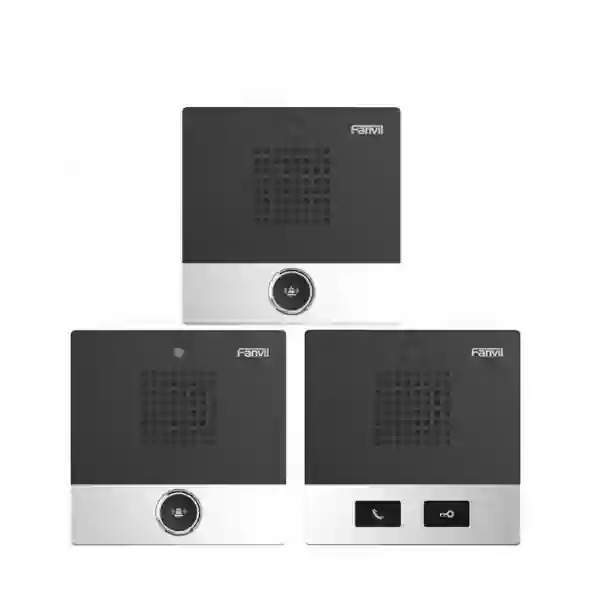
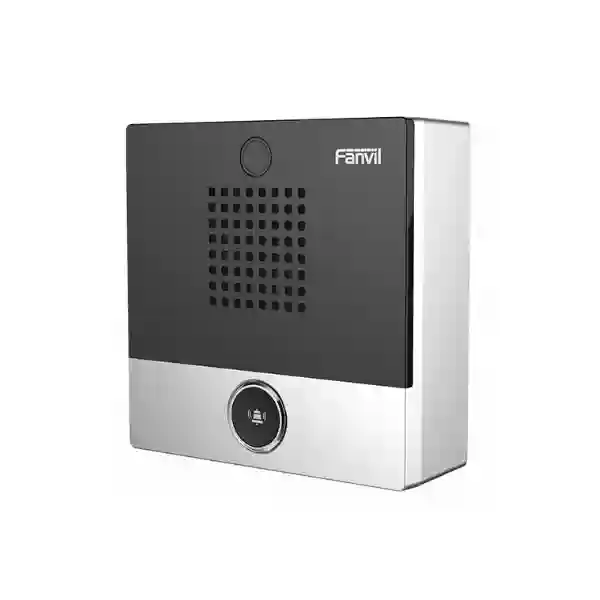
The i10S is the audio-only, one-button model in the i10S/i10SV/i10SD family. It supports two SIP lines, speed dial, automatic answering, multicast, a programmable DSS key, a built-in 1 W speaker, acoustic echo cancellation, wideband G.722 and Opus codecs, one 10/100 Mbps Ethernet interface and integrated IEEE 802.3af PoE. It also includes a short-circuit input/output interface with a built-in relay, allowing suitably designed projects to connect the intercom with compatible door, alarm or control workflows. The unit carries an IP54 protection rating and Fanvil specifies a working temperature range of -20°C to 50°C. Those specifications make it useful for protected indoor areas where dust or occasional moisture exposure is a consideration, while the final mounting location should still be selected according to the site environment and project requirements.
Quick buying answer
Choose the Fanvil i10S when the requirement is a compact audio-only SIP intercom with one physical call key, PoE, wall mounting, relay I/O and IP54 protection. If a camera is required, the i10SV is the related video-capable model; if two physical DSS keys are required, the i10SD is the related audio model.
Before ordering, confirm the SIP platform, PoE availability, call destination, relay logic, mounting position, cable route and whether the project requires audio only or video.
What the Fanvil i10S solves
Many buildings need communication at points where a normal desk phone is not appropriate. A reception-side door, internal service hatch, warehouse dispatch point, security checkpoint, staff-only entrance or help point may need a single obvious button that calls a predefined extension. The Fanvil i10S addresses that requirement with a compact SIP endpoint. Instead of asking a visitor or staff member to navigate a telephone keypad, the installation can use the DSS key as a speed-dial action. The receiving destination can be an extension, security desk, reception group or other supported endpoint according to the PBX configuration.
Because the device supports standard SIP, it can be integrated into a broader voice network rather than isolated as a separate analog intercom. Fanvil lists compatibility with major platforms including Asterisk, BroadSoft, 3CX, Metaswitch, Elastix and Avaya. Compatibility still needs to be checked against the exact PBX edition, firmware, provisioning method and required features, but the open SIP approach gives IT teams a familiar framework for addressing, authentication, codec selection, call routing and network security.
The i10S can also participate in broadcast and multicast scenarios, which can be useful when a site needs announcement functions in addition to point-to-point calling. Its HTTP API, Action URL and Active URI features provide further options for controlled integrations. These capabilities should be implemented with clear network and security policies, especially where intercom actions are connected to access control or other physical systems.
Two SIP lines
Supports two SIP lines for flexible registration and calling design, subject to the chosen SIP platform and deployment policy.
PoE connectivity
The 10/100 Mbps Ethernet port supports IEEE 802.3af PoE, helping reduce separate power cabling when a suitable PoE switch is available.
Wideband audio
G.722 and Opus are supported alongside common narrowband codecs, with full-duplex hands-free operation and acoustic echo cancellation.
Relay I/O
A built-in short-circuit input/output interface can support carefully designed interactions with compatible control or access systems.
Verified Fanvil i10S technical specifications
| Specification | Fanvil i10S |
|---|---|
| SIP | 2 SIP lines; SIP over UDP/TCP/TLS |
| Audio | G.722 and Opus wideband; G.711A/U, G.729A/B, iLBC, G.723 and G.726-32K narrowband support |
| Hands-free | Full-duplex speakerphone with AEC; built-in 1 W speaker |
| Physical key | 1 DSS / speed-dial key |
| Network | 10/100 Mbps Ethernet, IPv4/IPv6, Static IP/DHCP/PPPoE, VLAN, LLDP and QoS |
| Power | IEEE 802.3af PoE Class 3 or DC 12 V / 1 A input |
| Security transport | TLS, SRTP and HTTPS are among the supported technologies |
| VPN | L2TP and OpenVPN |
| I/O | 1 short-circuit input/output interface with built-in relay; relay maximum DC 30 V / 1 A, AC 125 V / 0.5 A |
| Protection | IP54 |
| Mounting | Wall mounted |
| Housing | ABS |
| Operating temperature | -20°C to 50°C |
| Dimensions | 88 × 88 × 32 mm |
Technical specifications should always be confirmed against the current Fanvil documentation and the final shipped unit because vendors may revise hardware, firmware and supported features over time.
Integration, network and deployment planning
A successful SIP intercom installation depends on more than registering an extension. Start with the physical workflow. Decide who presses the button, who should answer, what should happen if the first destination is busy, whether calls must overflow to another extension, whether calls should be automatically answered at the receiving side, and whether the relay interface will participate in a door-release or signalling sequence. These decisions determine the PBX configuration and reduce the risk of installing a device before the call logic is understood.
Next, review network readiness. The i10S has a 10/100 Mbps Ethernet port and can use PoE, so a managed PoE switch is often a practical foundation. A voice or device VLAN can be used where the network architecture supports segmentation. QoS may help prioritize voice in congested networks, while the switch’s PoE budget must have sufficient capacity for all connected devices. The intercom’s IP address, PBX registration, DNS and time settings should be documented so troubleshooting does not depend on memory.
Security should be part of deployment. Where supported by the PBX and project design, SIP over TLS, SRTP and HTTPS can help protect signalling, media and administration. Strong credentials, restricted management access, appropriate firewall policy and current firmware are important. The i10S also supports auto-provisioning through methods including FTP, TFTP, HTTP, HTTPS, DHCP Option 66, SIP PnP and TR-069, giving administrators options for repeated deployments. The chosen method should match the organization’s security policy rather than using an insecure provisioning method simply because it is easy.
For a broader Tanzania project, the intercom may sit beside an IP PBX, PoE switching, access control and structured cabling. FourTeck Tanzania describes these as connected solution areas rather than isolated devices. Review FourTeck Tanzania integrated IT and telecom solutions for the surrounding architecture, FourTeck Tanzania services for deployment-oriented support context, and the Tanzania contact page when preparing a quotation or compatibility discussion.
Fanvil i10S vs i10SV and i10SD
i10S
Audio-only model with one DSS speed-dial key. Choose it when a compact one-button audio call point is sufficient and no built-in camera is required.
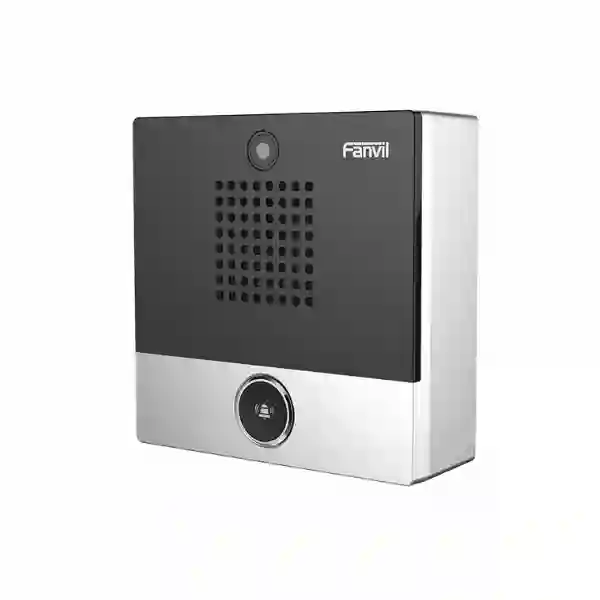
i10SV
Related one-button model with a built-in HD camera. Consider it when the project requires video as part of the intercom workflow and the receiving platform supports the required video functions.
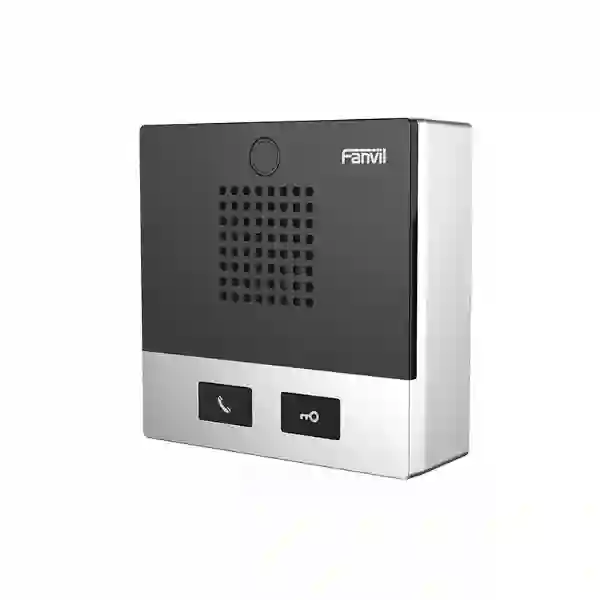
i10SD
Related audio model with two DSS keys. Consider it where users need two distinct physical call actions, such as reception and security destinations.
Fanvil i10S SIP Audio Intercom Tanzania
For organizations searching for the Fanvil i10S SIP Audio Intercom in Tanzania, the most useful procurement approach is to begin with the communication workflow and the existing IP infrastructure. The i10S is not a self-contained building access solution; it is a SIP endpoint that becomes valuable when integrated correctly with an IP PBX, PoE network, receiving extensions and, where appropriate, a compatible relay or access-control design. Tanzania deployments can range from compact offices and retail counters to schools, clinics, warehouses, hospitality properties, apartment common areas and industrial facilities. Each environment changes the priorities. An office may primarily need a reception call point, while a warehouse may need hands-free communication between a controlled entrance and an operations desk. A school may prioritize simple one-button assistance, and a service facility may need a ruggedly placed internal communication point.
Network planning matters across these scenarios. If a managed PoE switch is already present, the i10S can use the same structured Ethernet environment, subject to the switch’s power budget and network design. Where voice traffic is segmented, the intercom can be placed in the appropriate VLAN and registered to the organization’s SIP platform. Buyers should confirm whether the receiving PBX supports the exact call routing, TLS, SRTP, multicast and provisioning functions they intend to use. It is also good practice to define the IP addressing and naming scheme before several devices are installed, particularly in multi-site projects.
Power quality and operational resilience deserve consideration in Tanzania projects. PoE centralizes device power at the switch, which can simplify protection when the switch itself is connected to a suitable UPS. That does not guarantee uninterrupted communication, because the PBX, network core, internet or WAN path may also need backup depending on the architecture. For local SIP calling within a site, the design can often keep internal communication independent of the public internet if the PBX is local, but this depends on the chosen system. Procurement teams should therefore describe whether the intercom must continue functioning during internet outages, power interruptions or WAN failover events.
FourTeck Tanzania can be approached for product selection and project integration without assuming a one-size-fits-all deployment. When requesting a quotation, include the quantity, city, installation environment, PBX model or hosted platform, PoE switch status, required call destination and whether relay integration is needed. This produces a more useful discussion than requesting only a unit price. For regional organizations, the wider FourTeck Africa technology portfolio can also provide context for multi-country IT and communication planning.
Fanvil i10S SIP Audio Intercom Dar es Salaam
Dar es Salaam organizations often operate in busy commercial environments where reception flow, secure doors, staff entrances and service communication need to be simple for users. A Fanvil i10S SIP Audio Intercom can be considered for offices, retail back-of-house areas, warehouses, clinics, schools, property reception points and service counters when the requirement is a one-button audio call into an existing or planned SIP environment. The small 88 × 88 × 32 mm enclosure is useful where wall space is limited, but the installer should still assess mounting height, accessibility, acoustic conditions and protection from direct weather exposure. IP54 protection helps with dust and moisture resistance, yet Fanvil positions the mini intercom for indoor scenarios, so protected placement is important.
In a multi-floor office or commercial building, the design can route a button press to reception, security or another internal extension. If reception is busy, the PBX can be configured—where supported—to follow an overflow rule, ring group or alternative destination. The key point is that these behaviors come from the phone-system design as much as the intercom hardware. Buyers should identify the PBX, SIP credentials and expected call path before installation. If the building uses separate voice and data VLANs, the network team should decide which segment the intercom belongs to and how it may communicate with the PBX while remaining appropriately restricted from unrelated network resources.
For new fit-outs in Dar es Salaam, it is efficient to coordinate the i10S with structured cabling and PoE switching during the same planning stage. That approach avoids adding surface cabling after walls and reception areas are finished. Cable labeling, switch-port documentation and logical device naming simplify ongoing support. Where the relay interface is intended to participate in a door workflow, the electrical characteristics, fail-safe or fail-secure behavior, lock power source, exit method and life-safety requirements need to be designed by the appropriate project team. The intercom should not be treated as a substitute for a complete door-safety design.
Procurement teams in Dar es Salaam can prepare a clear request by stating how many call points are required, whether they are all within one building, which destinations should receive calls, whether only audio is needed, and what PBX or SIP service is already in place. If video identification is necessary, comparing the i10SV is more appropriate than forcing an audio-only i10S into a video requirement. This model-selection step prevents later replacement and keeps the project aligned with user expectations.
Fanvil i10S SIP Audio Intercom Mwanza
Mwanza businesses evaluating the Fanvil i10S can focus on distributed operational communication. Warehouses, workshops, offices, schools, healthcare environments and hospitality facilities may have points where users need to contact a staff desk without installing a full telephone. A one-button SIP intercom can simplify that interaction. The i10S can register to a compatible SIP platform and use its DSS key for speed dial, while automatic answering, multicast and broadcasting functions can support broader communication workflows when properly configured. The device therefore fits best when the organization already understands—or is willing to design—its IP voice environment.
For sites where the network rack is far from the intercom location, normal Ethernet distance limits and structured-cabling standards still apply. Cable quality, termination, patching and switch selection affect reliability. The intercom’s relatively modest bandwidth requirement does not remove the need for a stable LAN. Packet loss, incorrect VLAN settings, duplicate IP addresses, DHCP issues or poor QoS design can all affect voice performance. A commissioning checklist should include a test call in both directions, audio-level verification, echo assessment, call-routing confirmation, reboot recovery and a test of the relay or external input if those features are being used.
The i10S supports both PoE and 12 V DC input, giving project teams flexibility in power design. PoE is often cleaner because one Ethernet cable can carry data and power, but the switch must support the required standard and have sufficient power budget. If a DC adapter approach is selected, the installer needs a safe and appropriate power location. Where continuity is important, backup power should be considered at the complete system level: intercom, switch, PBX and any access-control components that are part of the workflow.
When seeking a Mwanza quotation, procurement teams should avoid assuming that stock, delivery time or installation coverage is automatic. Instead, request current availability and specify the project deadline, quantity and installation needs. Provide photos or drawings of the intended mounting area when they can help the technical discussion. This supports a more accurate recommendation about the i10S, a video alternative or another intercom model based on the actual site.
Fanvil i10S SIP Audio Intercom Arusha
Arusha has a mix of hospitality, tourism, education, professional offices, logistics and institutional environments, and each can have different intercom requirements. The Fanvil i10S is particularly relevant when a project needs a compact audio call point connected to a SIP system rather than a large door station with a screen. A hotel may use an internal service point to reach staff, an office may use it at a controlled reception entry, and a school or campus may use a call point for assistance. The key limitation to remember is that the i10S is audio only. Where visual identification is part of the security procedure, the i10SV or a different video intercom should be assessed instead.
Hospitality and guest-facing environments place extra emphasis on user experience. The call button should have a clear purpose, the receiving team should know how to answer, and call routing should handle busy or unanswered situations. A technically successful SIP registration is not enough if the human workflow is confusing. For example, a visitor should not press a button that silently calls an extension with no audible or procedural feedback. During commissioning, staff should be trained on the call flow and on any door-release procedure associated with the installation.
The i10S’s multicast support can be useful in facilities that also require announcement functions, but multicast design must be coordinated with the network. Switch configuration, VLAN boundaries and multicast handling can influence whether paging traffic reaches intended devices without creating unnecessary broadcast behavior. The HTTP API and Action URL capabilities can also support integrations, but those features should be protected from unauthorized access. Administration should occur through controlled network paths and secure credentials, with configuration backups retained as part of documentation.
Arusha buyers can strengthen procurement by asking for a bill of materials rather than only the intercom. Depending on the project, the full requirement may include a PoE switch, network cabling, PBX configuration, wall mounting materials, compatible access-control components and UPS protection. Separating optional items from required items makes the quotation easier to compare and helps the organization understand which parts are necessary for a working system.
Fanvil i10S SIP Audio Intercom Dodoma
Dodoma organizations searching for the Fanvil i10S may include offices, education facilities, public-facing institutions, clinics, warehouses and growing multi-building operations. For these buyers, the model’s use of standard IP networking can simplify integration with a centrally managed voice environment. Instead of running a separate intercom technology for every call point, an organization can register the i10S to a compatible SIP system, assign a logical extension and route calls according to its communication plan. This approach can be particularly useful where IT teams want common device-management, addressing and documentation practices across a site.
The physical design should still be treated carefully. The IP54 rating does not mean the unit should automatically be placed in every outdoor exposure. Fanvil describes the i10S family for indoor scenes, so protected entrances, sheltered internal points and controlled environments are the safer interpretation unless the specific installation has been assessed by the project team. Temperature, dust, direct rain, cleaning practices and potential impact should all be considered. Where harsher environmental resistance is needed, another intercom family may be more appropriate.
From an IT perspective, the i10S supports IPv4 and IPv6, VLAN, LLDP, QoS and several provisioning mechanisms. Organizations with standardized network templates can incorporate the intercom into a managed endpoint policy. For larger deployments, define a naming convention such as building-floor-location, keep a record of MAC addresses and switch ports, and store configuration backups. These steps reduce support time later, especially when devices are distributed across multiple entrances or facilities.
A Dodoma quotation request should specify whether deployment is for a new site or an existing network. For an existing site, include the PBX vendor, available PoE ports, VLAN configuration and whether the call destination is an IP phone, softphone, reception console or group. For a new site, include expected user count and related voice requirements so the intercom can be considered together with the PBX and endpoint plan rather than in isolation.
Fanvil i10S SIP Audio Intercom UAE
UAE businesses evaluating the Fanvil i10S commonly have structured IP networks and may be integrating intercom endpoints with office telephony, access control or facility communication. The i10S’s SIP support makes it relevant for organizations that prefer interoperable voice architecture rather than a dedicated analog call station. Typical requirements can include staff entrances, office reception points, loading areas, internal help points, clinics, education facilities and service counters. The audio-only format is useful when the call itself is the priority and camera verification is handled separately or is not required.
UAE projects often involve formal IT and security approval, so compatibility should be documented early. Confirm the PBX model, firmware, encryption requirements and whether the organization expects TLS and SRTP. If the intercom will activate or receive signals from another system, document the relay and I/O logic rather than relying on verbal assumptions. Door hardware, life-safety requirements and access-control policies should remain under the appropriate engineering scope. The intercom can be one component in that design, but it should not be treated as the complete access solution.
For enterprise deployments, centralized provisioning can reduce repetitive configuration. Fanvil supports multiple provisioning methods, and the right choice depends on security and the management platform. The device also offers web management, configuration export/import, firmware upgrade and syslog, which can support controlled operations. Administrators should restrict web access, change default credentials where applicable, and keep firmware aligned with approved versions. Test procedures should include audio quality, failover routing and recovery after switch or PBX restart.
Regional buyers can review FourTeck UAE integrated IT and telecom solutions and the FourTeck specialist IP phone and Fanvil portfolio for wider voice-endpoint context. For a quote, specify quantity, city or emirate, expected deployment date, PBX platform, PoE readiness and whether installation/configuration services are required. Current stock, lead time and commercial terms should be confirmed at enquiry stage rather than assumed from product specifications.
Fanvil i10S SIP Audio Intercom Uganda
In Uganda, the Fanvil i10S can fit businesses and institutions looking for a simple SIP communication point that connects to a managed IP voice system. The model’s two SIP lines, speed dial, auto-answer capability, multicast and PoE support make it practical for offices, schools, healthcare sites, warehouses, hospitality operations and security-related internal communication. The key procurement question is whether the project needs a compact audio endpoint or a more feature-rich door station. Where users only need to press one button and talk, the i10S keeps the interface straightforward.
Uganda deployments may span head offices and remote branches, making standardization valuable. An IT team can define a common intercom configuration template covering SIP account format, codec preference, VLAN, time server, button destination, provisioning path and security controls. When the same template is repeated across sites, support staff can diagnose issues more quickly. Nevertheless, each branch should still be checked for PoE capacity, cabling quality and local network addressing to avoid assuming that every location is identical.
For sites that depend on WAN connectivity to reach a centralized PBX, consider what happens when the WAN is unavailable. Some organizations may prefer a local PBX or survivability arrangement; others may accept that the intercom is unavailable during an internet or branch-WAN outage. That is a design decision rather than a specification of the i10S itself. Power continuity is similar: a PoE-powered intercom only remains available if the switch and upstream voice infrastructure remain powered.
Customers coordinating technology across Uganda can review FourTeck Uganda IT, PBX and networking solutions for regional project context. A useful enquiry should identify the branch count, number of call points, PBX platform, whether calls stay within the site or traverse a WAN, and any relay requirements. This information helps distinguish a simple product supply request from a multi-site voice and access integration project.
Fanvil i10S SIP Audio Intercom Kampala
Kampala has dense office, retail, hospitality, education and service environments where an intercom may need to coexist with IP phones, Wi-Fi, cameras and access-control systems on the same managed network. The Fanvil i10S is appropriate when an organization wants a one-button audio SIP endpoint rather than a keypad-based station. A visitor or employee can initiate a predefined call, while the PBX controls where that call is delivered. This can simplify reception entrances, internal service points and controlled staff areas.
Because shared networks carry multiple services, segmentation is important. A security endpoint should not automatically receive unrestricted access to business systems merely because it uses Ethernet. The switch and firewall architecture can place the intercom in a dedicated voice or IoT-style VLAN, permitting only the traffic needed for SIP registration, media, DNS, time services, provisioning and management. The exact rules depend on the selected PBX and management design. Where TLS, SRTP and HTTPS are used, certificate and platform compatibility should also be tested.
Audio commissioning is equally important in Kampala buildings with traffic noise, hard surfaces or busy reception zones. The i10S includes acoustic echo cancellation and wideband codecs, but physical placement still affects intelligibility. Avoid mounting directly beside loud machinery or a speaker where possible, and test from the normal standing distance. The receiving extension should also have adequate microphone and speaker quality. If a security desk answers through a poor handset or noisy open speaker, the complete experience can still be unsatisfactory despite a capable intercom.
For a Kampala procurement request, include details about the intended door or call point, the receiving desk, available PoE switch model and whether the project requires call recording, after-hours routing or integration with a door controller. These details allow the voice and security teams to coordinate responsibilities. They also help avoid ordering an audio-only model when the organization’s procedure actually requires camera verification.
Fanvil i10S SIP Audio Intercom Arua
Arua deployments can benefit from the i10S where organizations want a compact, network-based communication point without adding a conventional telephone at every location. Offices, logistics sites, education environments, healthcare facilities and service locations can use a SIP intercom to connect an entrance or operational point with a receptionist, administrator or security team. The i10S’s one-button interface is easy to explain to users and reduces the need for a directory or keypad at the call point.
Where a site has limited onsite IT support, documentation becomes especially valuable. The installer should record the intercom extension, IP address or DHCP reservation, switch port, VLAN, call destination, credentials-management procedure, firmware level and any relay connection. A printed or digital handover document can save significant time when a future technician needs to troubleshoot the site. Configuration export can also support recovery if the unit must be replaced or reset, subject to secure handling of sensitive information.
Connectivity should be planned according to the site’s actual network. If the PBX is hosted outside the location, call quality depends on the WAN path as well as the LAN. If the PBX is onsite, local calls can be less dependent on external connectivity, although remote support and external calling may still use the WAN. The organization should define which behavior is acceptable during outages. Similarly, a UPS may be important for the switch and PBX if the intercom is expected to remain available during short power interruptions.
Buyers in Arua should also consider whether the mounting environment suits the i10S. IP54 provides resistance to dust and splashing, but the manufacturer describes it for indoor scenes. A sheltered or protected location is therefore preferable to direct outdoor exposure unless the environment has been evaluated. If the application is more demanding, ask for a model comparison rather than assuming the i10S is suitable purely because it has an IP rating.
Fanvil i10S SIP Audio Intercom Mbarara
Mbarara businesses and institutions can use the Fanvil i10S in projects where simple voice interaction is more important than a complex user interface. Examples include staff gates within protected premises, internal delivery points, office reception call buttons, clinical assistance points or communication between a controlled area and a staffed desk. The device’s purpose is clearest when the call destination is predefined and users should not need to know an extension number.
For a growing site, the use of SIP can make future expansion more organized. New intercom points can be assigned extensions and call rules within the PBX, while phones and soft clients can receive calls according to operating requirements. This does not mean every SIP platform supports every advanced Fanvil function identically. Before a large purchase, test one unit with the actual PBX, codecs, network security and provisioning method. A pilot can reveal practical issues around firmware, button behavior, DTMF, relay control or automatic answering before the configuration is repeated across many devices.
The i10S supports G.722 and Opus for wideband audio in addition to several narrowband codecs. Codec choice should be coordinated with the PBX and network. Wideband audio can improve clarity when both sides support it, while compatibility or bandwidth policies may lead an organization to prioritize another codec. The device also supports DTMF through in-band and out-of-band methods including RFC2833 and SIP INFO, relevant where call workflows use tones for control. Exact interoperability should be validated in the intended system.
For Mbarara procurement, provide the number of required intercoms, whether the project is a pilot or full rollout, and the existing voice platform. Ask separately for hardware, configuration, installation and any door-control integration so commercial comparisons remain clear. Current pricing, stock and delivery timing should always be confirmed at the time of enquiry rather than inferred from regional web listings.
Fanvil i10S SIP Audio Intercom Gulu
In Gulu, a compact SIP intercom can serve organizations that want reliable point-to-point communication across an IP network without installing a full desk phone in each operational area. The Fanvil i10S offers one programmable DSS key, two SIP lines and hands-free audio, making it suitable for straightforward call points. It can be considered for schools, administration buildings, warehouses, medical facilities, hospitality sites and office entrances where someone needs to reach a known destination quickly.
The project’s success depends on physical and logical design. Physically, the intercom needs appropriate wall mounting, Ethernet cabling and either PoE or 12 V DC power. Logically, it needs an IP configuration, SIP registration, call destination and security policy. If it will participate in multicast announcements, the network must be configured to handle that traffic. If it will use the relay, the external circuit must remain within the device’s published electrical ratings and be designed by a competent installer.
For organizations that cannot easily dispatch technicians, remote-management planning can reduce future support costs. The i10S offers a web management portal, firmware upgrade, syslog and several auto-provisioning methods. Secure remote access should be provided through the organization’s approved network architecture rather than exposing the device’s management interface directly to the public internet. Configuration backups and clear administrative ownership should form part of handover.
Gulu buyers can also think about lifecycle consistency. If the intercom is one of many Fanvil or SIP endpoints, standardizing firmware approval, naming and provisioning reduces variation. When placing an order, state whether the device will join an existing standardized environment or whether a new PBX and network design is required. This distinction determines whether the purchase is a simple endpoint addition or part of a larger communication project.
Fanvil i10S SIP Audio Intercom Kenya
Kenya has an active market for SIP telephony and intercom equipment, and buyers comparing the Fanvil i10S should focus on model fit rather than only advertised price. Public reseller listings often group the i10S, i10SV and i10SD together, but they are not identical. The i10S is the one-button audio-only model. The i10SV adds a camera, while the i10SD provides two DSS keys without the built-in camera. A procurement specification should therefore state the exact model code to avoid receiving a related unit that does not match the project.
For Nairobi offices, warehouses, hospitality properties or branch networks elsewhere in Kenya, the i10S can integrate with a SIP PBX when compatibility is verified. PoE simplifies cabling, and the compact wall-mounted form factor is useful at service or access points. The unit supports SIP over UDP, TCP and TLS, SRTP media, VLAN, LLDP and QoS, giving IT teams options that align with managed enterprise networks. The security configuration should be designed intentionally, particularly where an intercom is connected to a physical-access process.
Kenyan organizations with multiple branches can create a common configuration template and use centralized provisioning where appropriate. However, WAN architecture should be considered if branches register to a PBX in another location or cloud region. Latency, packet loss and internet failover can affect call behavior. If the intercom is critical for local security operations, the communications design should address what happens when the WAN is down instead of assuming permanent connectivity.
Customers planning Kenya projects can review FourTeck Kenya VoIP, PBX and network solutions. When requesting the Fanvil i10S, include quantity, destination, installation scope, PBX type, PoE availability and whether a compatible door or relay interface is required. Ask for current commercial terms and lead time at quotation stage; product pages from different resellers may show prices or stock that can change and should not be treated as a guaranteed market reference.
Fanvil i10S SIP Audio Intercom Kuwait
Kuwait organizations considering the Fanvil i10S may be looking for a compact endpoint for office entrances, building service areas, warehouses, clinics, education facilities or internal communication. In air-conditioned indoor and sheltered environments, the wall-mounted mini intercom can provide a simple one-button connection to a SIP platform. Its design is particularly useful where the user should not interact with a full telephone keypad and the call destination is already known.
Procurement teams should distinguish the i10S’s IP54 rating from assumptions about harsh outdoor deployment. Environmental protection ratings are only one part of suitability. Direct sunlight, extreme ambient heat, water exposure, physical impact and enclosure location must be considered separately. Fanvil specifies an operating range up to 50°C and describes the i10S family for indoor scenes. For exposed external gates or industrial outdoor points, a different intercom platform may be a better engineering choice.
In enterprise networks, the i10S can be integrated with VLAN and QoS policies. If the organization uses SIP encryption, test TLS and SRTP interoperability with the exact call-control platform. If a hosted PBX is used, ensure firewall and NAT settings support stable registration and RTP media without unnecessarily broad rules. Logging and web-based packet capture can assist troubleshooting, but management interfaces should remain restricted to authorized administrators.
For Kuwait quotations, the project team should identify whether the requirement is product supply only or includes configuration, cabling, PoE switching and integration. State the exact model as Fanvil i10S, not simply “Fanvil i10 series,” and specify if a camera is not required. This avoids ambiguity with the i10SV. If two physical call buttons are needed, compare the i10SD before ordering. Clear functional requirements make model selection faster and reduce change orders after installation.
Fanvil i10S SIP Audio Intercom Ghana
Ghana buyers searching for the Fanvil i10S can evaluate it as part of an IP telephony and facility-communication project. The model supports standard SIP and can use PoE, allowing it to join a structured network with compatible call control. A one-button audio intercom is often useful when visitors, staff or service users need a very simple action: press once to reach a known department or security point. The receiving side can be an IP phone or another supported client according to the PBX design.
For Accra offices or sites in other Ghanaian locations, start by identifying the acoustic and physical environment. A quiet office entrance has different requirements from a busy loading area. The i10S includes acoustic echo cancellation and supports wideband codecs, but background noise still affects real-world intelligibility. Position the unit where users can stand at a natural distance and where the microphone is not constantly exposed to loud mechanical noise. Test with the actual receiving endpoint before final handover.
The network design should define how the intercom receives an address, reaches the PBX and is managed. Static IP, DHCP and PPPoE modes are supported, although enterprise LAN deployments commonly use a managed addressing approach suitable for the site. VLAN, LLDP and QoS can help integrate the device within structured networks. Current firmware should be reviewed during commissioning, with updates applied according to an approved change process rather than automatically in a live security-related environment.
For Ghana procurement, request confirmation of current availability and project lead time rather than assuming regional stock. Provide the intended use case, PBX platform, quantity and deployment city. If relay integration is planned, include a simple description of the door or control workflow so the supplier or integrator can confirm whether additional access-control hardware is required. A complete quotation should separate endpoint hardware from network, cabling and integration services for easier commercial review.
Fanvil i10S SIP Audio Intercom Nigeria
Nigeria’s large commercial and institutional environments can create a wide range of SIP intercom requirements, from small office entrances to multi-site logistics and corporate networks. The Fanvil i10S is best suited to locations where one-button audio calling is enough. Its compact format, two SIP lines, PoE and relay I/O allow it to become a building endpoint within a larger IP communication design. It is not a substitute for a full visitor-management or access-control platform, but it can provide the voice interaction component in a properly engineered workflow.
For organizations with sites in Lagos, Abuja or other cities, centralized PBX registration can simplify administration, yet the WAN must be designed for reliable voice. Packet loss and unstable links can cause one-way audio, delayed speech or registration failures. QoS within the LAN cannot fix a poor external circuit by itself. Multi-site buyers should define whether branch intercom calls must continue during WAN outages and whether a local survivability mechanism is required. These resilience questions are often more important than small differences in endpoint price.
Security teams should also consider the relationship between the intercom and access control. The i10S’s built-in relay can support compatible workflows, but door locks, power supplies, request-to-exit devices and fire/life-safety interfaces need separate engineering. Any network-triggered door function should be protected against unauthorized access. Use strong administrative credentials, controlled management access and encrypted protocols where the overall platform supports them.
A Nigerian procurement specification should identify the exact number of endpoints by site, the intended call destination, the PBX vendor and whether the intercom will be managed centrally. Include the expected installation environment and any requirement for UPS-backed operation. This lets the supplier separate equipment supply from site-specific integration. As with all regional enquiries, current price, stock and delivery timing should be confirmed directly rather than inferred from third-party listings.
Fanvil i10S SIP Audio Intercom Seychelles
Seychelles businesses, hospitality properties and institutions may require compact communication points for reception, service, staff areas and controlled internal doors. The Fanvil i10S can be suitable when the installation is protected and the requirement is audio-only SIP communication. Hotels and resorts in particular should distinguish guest-facing ease of use from technical feature count. A single, clearly labelled call button can be more useful than a complex keypad if the workflow simply connects a visitor or staff member to reception, engineering, security or another service point.
Environmental placement needs close attention in island conditions. Although the i10S has IP54 protection, Fanvil describes it for indoor scenarios. Salt-laden air, direct rain, strong sun and exposed coastal conditions can demand a more robust outdoor-rated product and appropriate corrosion-resistant installation materials. The product should therefore be mounted in a sheltered location unless the project team has confirmed environmental suitability. Cabling routes and connectors should also be protected appropriately for the building environment.
Hospitality networks can be complex because guest Wi-Fi, staff systems, building controls, CCTV and voice services may share infrastructure. The i10S should reside on a managed segment appropriate to operational devices rather than a guest network. PBX reachability, VLAN tagging, QoS and management access should be tested. If the organization uses a cloud PBX, WAN redundancy can be important for sites that rely on external connectivity for voice registration.
For Seychelles procurement, logistics can materially affect project planning, so buyers should request current lead times and shipping terms for the actual quantity required. Include spare-unit strategy if the intercom is operationally important, and retain a configuration backup so a replacement can be commissioned efficiently. If the project includes multiple properties, use a standard naming and provisioning template while still documenting each hotel’s or site’s unique call destinations and network details.
Buying checklist for the Fanvil i10S
- Confirm that the required model is Fanvil i10S, with one DSS key and no built-in camera.
- Identify the IP PBX, hosted PBX or SIP platform and verify interoperability for the required functions.
- Confirm whether PoE is available and whether the switch has sufficient power budget.
- Define the call destination, overflow route and after-hours behavior.
- Decide whether VLAN, QoS, TLS, SRTP and HTTPS are required by the network policy.
- Review the intended mounting location against indoor-use positioning, IP54 protection and environmental conditions.
- If relay I/O will be used, provide the external circuit requirements and access-control design.
- State quantity, destination, required delivery schedule and whether installation/configuration are needed.
- For multiple units, define naming, addressing, provisioning, firmware and documentation standards.
- Request current commercial pricing and availability at quotation stage; do not rely on old web pricing.
Related FourTeck solutions
A SIP intercom rarely operates alone. FourTeck’s broader portfolio connects the voice endpoint with network switching, PBX, access control and cabling. For Tanzania projects, start with the FourTeck Tanzania technology solutions overview, which covers IP PBX, IP phones, managed switching, access control and structured infrastructure. The Tanzania services page is relevant when the project extends beyond product supply into configuration, installation, documentation or support.
For regional operations, FourTeck Kenya and FourTeck Uganda are useful for organizations coordinating related IT, PBX and networking requirements across East Africa. FourTeck Africa provides broader regional context, while FourTeck UAE and the specialist FourTeck IP phone site support customers comparing voice endpoints and related communication solutions in UAE, GCC and African markets.
Frequently asked questions
Is the Fanvil i10S a video intercom?
No. The i10S is the audio-only one-button model. The related i10SV includes a built-in camera, while the i10SD is an audio model with two DSS keys.
Does the Fanvil i10S support PoE?
Yes. Fanvil specifies an adaptive 10/100 Mbps network interface with integrated IEEE 802.3af PoE Class 3. A 12 V DC input is also available.
Can the Fanvil i10S connect to an IP PBX?
Yes. It is a SIP intercom and Fanvil lists compatibility with major platforms such as Asterisk, BroadSoft, 3CX, Metaswitch, Elastix and Avaya. Exact interoperability should still be verified with the specific PBX version and required features.
Can the i10S operate a door lock?
The i10S includes a short-circuit input/output interface with a built-in relay. Whether it can operate a particular door workflow depends on the external lock, controller, power supply, electrical ratings, safety requirements and overall access-control design. The complete circuit should be engineered and verified rather than assumed from the presence of a relay alone.
Is the Fanvil i10S waterproof?
Fanvil specifies IP54 protection for the i10S family, meaning resistance to limited dust ingress and splashing water under the rating conditions. Fanvil also describes the model for indoor scenes, so the installation location should be protected and assessed for actual environmental exposure.
Does it support encrypted SIP and audio?
The official specifications list SIP over TLS, SRTP and HTTPS support. Successful secure deployment depends on compatibility and configuration across the intercom, PBX, certificates and network policy.
Can it be centrally provisioned?
Fanvil lists auto-provisioning options including FTP, TFTP, HTTP, HTTPS, DHCP Option 66, SIP PnP and TR-069. Select the method that matches the organization’s management and security requirements.
What should I provide for a quotation?
Provide the exact Fanvil i10S model, quantity, destination, intended use, PBX or SIP platform, PoE availability, installation requirement, call destination, relay or access-control requirement and target project date. This helps the quotation reflect the complete requirement rather than hardware alone.
Decision recap
Choose the i10S when
You need one-button, audio-only SIP intercom calling; PoE is desirable; a compact wall-mounted format fits the site; and the project can use standard IP networking with a compatible PBX.
Review another model when
You require built-in video, more than one physical call key, a harsh exposed outdoor installation, a display/keypad, specialized vandal resistance or a complete access-control platform rather than a SIP audio endpoint.
Prepare a Fanvil i10S project quotation
For the most useful response, send the quantity, project location, PBX or hosted SIP platform, available PoE infrastructure, intended call destination, installation scope and any relay/access-control requirement. FourTeck can then review the requirement as a complete communication endpoint project instead of treating the intercom as an isolated device.



Reviews
There are no reviews yet.