
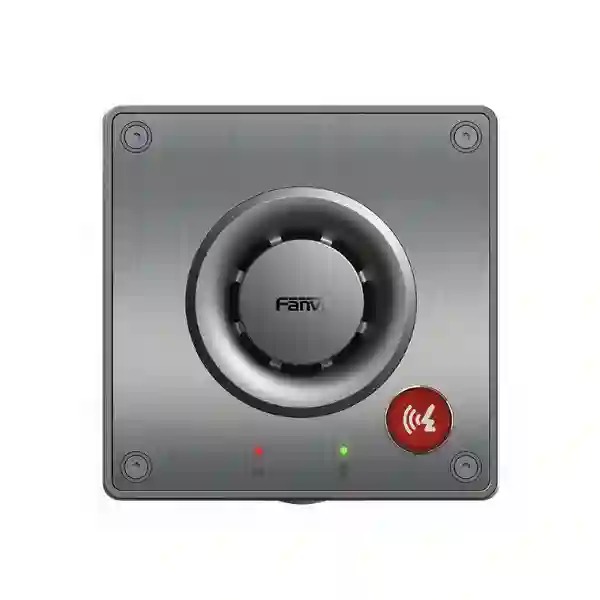
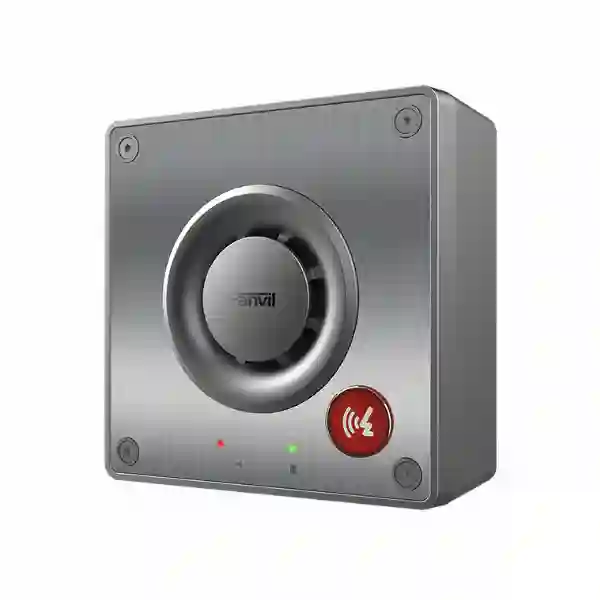
Fanvil i11 SIP Intercom
The Fanvil i11 SIP Intercom is a dedicated network intercom endpoint for organizations that want a simple call point to work as part of an IP-based communications environment. Fanvil currently lists the i11 in its Audio/Video Intercom download area and provides an i11 quick installation guide, user manual and datasheet dated 7 April 2026. For a buyer, the practical question is not only whether an intercom can make a SIP call, but whether it will fit the selected PBX, switch, power design, mounting position, security policy and operating workflow. FourTeck Tanzania approaches the i11 as one component of a complete communication and security design, helping customers consider the surrounding network and business process before quantities are finalized.
What the Fanvil i11 is designed to solve
A SIP intercom solves a different problem from a normal desk phone. It is normally positioned at a doorway, service point, help location, reception boundary, operational zone or another fixed location where the user needs a clear and immediate way to establish two-way voice communication. The i11 belongs to Fanvil’s SIP security industry product family and is listed in the manufacturer’s Audio/Video Intercom category. This makes it relevant to organizations that already use IP PBX or SIP infrastructure and want an intercom endpoint that can participate in the same general communications architecture rather than relying on a completely separate analog intercom platform.
The main design advantage of a SIP approach is architectural consistency. A call point can be treated as a network endpoint, assigned an IP address, registered to a compatible SIP platform and routed according to the organization’s call flow. Depending on the surrounding system, an incoming intercom call may be directed to reception, security, an operations desk, a control room, a duty phone or a group of extensions. That routing logic belongs to the PBX or communications platform, so the intercom selection should be accompanied by a discussion of who must answer, what should happen when the primary destination is busy, and what the fallback path should be after hours.
Organizations should also distinguish the i11 from video door phones and more feature-rich access terminals. The value proposition here is focused audio communication rather than a screen-heavy user experience. If a project needs video verification, card credentials, facial recognition, complex door-control logic or a large keypad, a different Fanvil model or a dedicated access-control platform may be a better fit. FourTeck can help compare the requirement before procurement so a customer does not buy an intercom that is either under-specified for the security process or unnecessarily complex for a simple voice call point.
Deployment, PBX integration and network planning
The most reliable way to deploy a SIP intercom is to design the call flow before touching the device configuration. Start with the user action: someone presses the intercom call control and expects an answer. The project team should decide which extension or ring group answers first, whether calls should be forwarded to another destination if unanswered, how after-hours calls are handled, and whether the answering party needs to trigger a separate access-control action. These decisions determine PBX programming and prevent a technically successful SIP registration from becoming an operationally poor system.
Network preparation should be equally deliberate. A managed switch allows administrators to create a voice or security-device VLAN where appropriate, apply suitable Quality of Service and restrict unnecessary access between the intercom and unrelated business systems. The intercom should receive a documented IP address or a predictable DHCP lease, and the configuration should include consistent naming so support teams can identify the exact unit from the switch, PBX and monitoring tools. If the deployment spans several doors or sites, use a naming convention that includes site, building, floor and location rather than labels such as intercom 1 and intercom 2.
Power should be considered as part of service continuity. Where the selected i11 installation uses network-delivered power, the PoE switch’s power budget and UPS protection should be checked. Where any local power arrangement is involved, its availability and resilience must be included in the design. An intercom connected to a UPS-backed switch but powered from an unprotected local outlet can still go offline during an interruption. Likewise, the PBX, router and internet path must remain available if the call destination is outside the local network.
For a multi-device rollout, test one unit first. Confirm registration, two-way audio, call routing, DTMF behavior where used, time settings, credentials, network policy and any interaction with door-control equipment before cloning the configuration. A controlled pilot is inexpensive compared with troubleshooting dozens of installed units. Firmware should be standardized, the final configuration backed up and the commissioning record should note the device location, MAC address, IP address, SIP extension and switch port.
Related FourTeck Tanzania resources
A SIP intercom depends on several surrounding technologies. Use the FourTeck Tanzania technology overview, FourTeck Tanzania business technology shop, IT and integration services, FourTeck Tanzania contact page and About FourTeck Tanzania to understand procurement and integration scope.
For SIP endpoints that may receive intercom calls, compare the Dinstar C60S Business IP Phone, Dinstar C60SP PoE Business IP Phone, Dinstar C60U-T 4G IP Phone and Dinstar C60U-W Wi-Fi IP Phone. These are not direct substitutes for the i11; they illustrate the broader SIP environment in which an intercom may operate.
Regional buying and deployment guidance
Fanvil i11 SIP Intercom Tanzania
For Tanzania organizations, the Fanvil i11 SIP Intercom is most relevant when the requirement is a fixed audio communication point that can participate in an IP-based voice environment. A business may place an intercom at a controlled entrance, warehouse gate, service counter, security point, parking access, internal help point or staff-only boundary. The product decision should begin by documenting who initiates the call, who must answer and what business action follows. In a reception scenario, the call may ring one extension during office hours and a security desk outside normal hours. In an industrial or institutional environment, it may need to reach a duty group rather than a single person. Those workflow details matter more than purchasing an intercom in isolation.
Tanzania deployments should also account for network and power conditions at the exact installation point. The cable route must be suitable for the building, the switch must provide the required network connectivity, and any PoE design should be checked for available power budget and UPS coverage. Organizations using separate VLANs for voice, cameras or access control should decide where the intercom belongs and which systems it actually needs to reach. Avoid giving a security endpoint unrestricted access to the entire business LAN simply because it uses Ethernet. A controlled network policy makes troubleshooting and security management easier.
Before requesting a quotation, provide the number of i11 units, intended locations, PBX brand and version, switch models, available cabling, desired call destinations, after-hours routing, mounting conditions and whether the intercom must interact with an access-control or door-release system. If the project is replacing an analog intercom, include the existing cable type and the location of the current controller because reuse may not be straightforward. If the project is new, include floor plans or entrance sketches where possible. FourTeck Tanzania can then evaluate the endpoint as part of the complete communication path rather than supplying a device without the information needed for successful commissioning.
Fanvil i11 SIP Intercom Dar es Salaam
Dar es Salaam offices, logistics companies, hotels, warehouses, retail operations, schools, clinics and multi-tenant commercial properties can use SIP intercoms to connect entrances and operational points with staff who already use IP phones. In busy sites, the main design challenge is often call routing rather than hardware. A visitor or driver expects the intercom to be answered quickly, so a single extension may be insufficient. A ring group can distribute calls across reception or security staff, while time conditions can direct calls differently after business hours. The PBX should be configured around the service process, and the answering team should know what action to take when a call arrives from a particular intercom location.
Dense commercial networks in Dar es Salaam may carry voice, CCTV, Wi-Fi, cloud applications and business data on the same switching infrastructure. That makes segmentation and capacity planning important. An intercom uses modest bandwidth compared with video surveillance, but voice is sensitive to delay and packet loss. If the switch uplink is congested by camera streams or backups, users may hear broken audio despite the intercom itself functioning correctly. Managed switches, sensible VLAN design and Quality of Service help keep the voice path predictable. The firewall should allow only the traffic required by the PBX architecture and any remote management policy.
Physical placement deserves equal attention. An entrance intercom should be mounted where a user can reach and hear it comfortably, protected from unnecessary impact and positioned so the call control is obvious. Cable entry, wall construction and exposure to weather should be checked before installation. Where the application requires higher environmental or vandal resistance, verify the exact i11 specification against the current Fanvil datasheet supplied with the unit and compare alternatives if the site demands more. A useful Dar es Salaam quotation request includes the entrance count, expected call destinations, PBX details, network topology, switch power capability, cable distance and any requirement for integration with electric locks, access controllers or CCTV. This allows procurement and installation scope to be defined together.
Fanvil i11 SIP Intercom Mwanza
Mwanza organizations may consider the Fanvil i11 when they need a simple SIP call point for branch offices, service counters, gated facilities, education sites, hospitality operations, warehouses or internal security communication. A useful design starts by separating three questions: where the device will be mounted, where the call will terminate, and who owns the system after installation. If the intercom is at a remote entrance while the answering phone is inside an office, the local LAN path may be simple. If the answering party is in another building or branch, routing may depend on a site-to-site VPN, hosted PBX or another WAN design. The architecture should be decided before the device is commissioned.
Supportability is especially important for branches. An installer can configure a single intercom manually, but a growing organization benefits from consistent naming, IP addressing, extension plans and documentation. Record the i11 location, MAC address, switch port, IP address, SIP extension, PBX server and firmware level. If several branches use the same device type, create a standard configuration template and test it on one site before repeating it. This reduces the chance that each branch develops a slightly different configuration that becomes difficult to troubleshoot later.
Mwanza buyers should also plan for continuity. If the intercom is considered part of a security or operational process, the complete path must be resilient: endpoint power, access switch, uplink, PBX and answering device. A UPS that protects only one component does not keep the service alive if another component loses power. Where internet connectivity is part of the call path, the design should define what happens during an outage and whether a local answering destination is still required. Before quotation, provide the quantity, site addresses, intended call flow, PBX platform, network equipment, cable availability and any requirement for remote support. FourTeck can then distinguish between a hardware-only request and a deployment that needs switching, configuration, cabling, UPS or integration work.
Fanvil i11 SIP Intercom Arusha
Arusha has hospitality, tourism, education, office, logistics and institutional environments where a compact SIP intercom can support reception and controlled-access workflows. In a hotel or lodge administration context, an intercom might connect a staff gate, back-of-house entrance or service point to reception or security. In an office, it may provide a direct call point at a controlled doorway. In a school or campus setting, it can support communication between a restricted area and an administrative point. The common requirement is simplicity: the person at the intercom should not need to know an extension number or navigate a full telephone interface.
The answering side needs careful design. If one receptionist is expected to answer every intercom call, the workflow can fail during peak periods or when that person leaves the desk. A better configuration may use a small ring group with clearly defined responsibility. The PBX can also apply schedules so that calls reach different destinations during evenings or weekends. If a mobile or remote destination is considered, confirm the security and network implications rather than assuming any SIP endpoint can be exposed directly to the internet. A secure PBX, VPN or managed remote architecture is generally preferable to uncontrolled direct exposure.
Arusha deployments may also face mixed building conditions. Some sites have structured Ethernet to the entrance; others have legacy analog cabling or long outdoor runs. The existing cable should be inspected before assuming it can support an IP intercom. Distance, pathway, grounding, surge exposure and switch location can all influence installation scope. Where an entrance is far from the main communications room, fiber, an intermediate network point or a different architecture may be required. For a meaningful quotation, include photos of the proposed mounting point, approximate cable route, switch location, PBX information, call destinations and any access-control interface requirement. This lets the i11 be evaluated as part of the actual site rather than as a generic product line item.
Fanvil i11 SIP Intercom Dodoma
Dodoma offices, institutions, professional-service organizations and government-adjacent facilities can use a SIP intercom where a controlled point needs direct voice communication with reception, security or another responsible team. The i11’s role is clearest when the project already has, or is planning, an IP PBX and managed network. Instead of introducing a parallel analog intercom system, the endpoint can be planned within the organization’s voice architecture, subject to compatibility testing and the exact Fanvil documentation for the current hardware revision.
Procurement teams should avoid specifying only one intercom because the working system usually includes dependencies. Confirm whether a new switch port is available, whether network power is required and supported, whether the cable route exists, whether the PBX has capacity for another SIP endpoint, and whether any additional licensing is required by the PBX platform. The intercom may also need a dedicated wall box, mounting accessories, surge protection or interface components depending on the site. If door release is part of the workflow, the electric lock, controller, emergency release and life-safety requirements should be designed as a separate access-control system rather than assumed to be solved by the SIP endpoint alone.
For ongoing administration, use a documented account with a strong unique credential and restrict management access to trusted networks. Keep the device firmware aligned with Fanvil guidance and preserve a configuration backup after commissioning. When a user reports a problem, support staff should be able to identify whether the issue is endpoint audio, switch connectivity, PBX registration, routing or the answering phone. A clear Dodoma quotation request should therefore include device quantity, mounting locations, network diagram, PBX model and version, expected call destinations, access-control interactions and support expectations. That information makes the difference between purchasing hardware and deploying a maintainable communication service.
Fanvil i11 SIP Intercom UAE
For UAE projects, the Fanvil i11 can be considered for entrances, service points and operational communication locations where a dedicated SIP audio endpoint is preferable to a full desk phone. Multi-site organizations with operations in Tanzania and the UAE may benefit from standardizing the way intercom calls are presented to staff, even if local PBX, network and regulatory conditions differ. The objective should be a repeatable operational experience: a user presses the intercom, the correct team answers quickly, and the action that follows is clear.
Structured commercial buildings in the UAE often have managed switching, centralized racks and strong cabling standards, which makes it practical to treat the intercom as another managed network endpoint. The IT team can define a device VLAN, control management access and monitor switch-port status. If PoE is used for the installed hardware revision, the access switch’s per-port capability and total power budget should be checked. The rack UPS should also protect the PBX, switches and any edge equipment required for the call path. Where the intercom is installed outdoors or in a harsh entrance area, verify the exact environmental rating and mounting instructions from the current Fanvil datasheet and installation guide.
Organizations coordinating UAE and East African projects can consult FourTeck UAE for regional IT, telecom and security context. For quotation, provide the number of call points, location type, PBX platform, VLAN policy, mounting environment, door-control requirements and whether the same configuration should be replicated across multiple properties. Standardization should include naming, firmware, SIP profile, call routing, documentation and change control rather than just buying the same device model.
Fanvil i11 SIP Intercom Uganda
Ugandan organizations can evaluate the Fanvil i11 for branch offices, gated business sites, schools, clinics, hospitality properties, warehouses and service facilities where a fixed SIP audio call point needs to reach a responsible team. The first decision is whether the call will be handled locally or centrally. A local reception desk gives the shortest path and may continue to work even if WAN connectivity fails, provided the PBX is local. A centralized answering team can improve staffing efficiency across branches but depends more heavily on WAN stability, VPN design or a hosted communications platform.
For businesses with several locations, use a consistent extension and naming plan. Each intercom should identify itself clearly on the receiving phone so staff know which gate or help point is calling. Avoid duplicate display names such as Front Door across many branches. Instead use site and location labels that remain understandable under pressure. If the PBX supports ring groups, schedules or failover destinations, these can be used to create a more resilient answering process. Test the entire route, including transfers and after-hours behavior, before handover.
Network and power resilience should be documented. The intercom, switch, router, PBX and answering endpoint are all dependencies. A fault in any one can stop the service. Managed switching allows the IT team to see link status and apply network policy, while a UPS can protect critical local infrastructure. For multi-country FourTeck project context, review FourTeck Uganda. A useful Uganda quotation should include site count, call-point quantity, PBX architecture, switch models, cable route, expected call destinations and any access-control interface. That enables a practical bill of materials and avoids assuming that every branch has identical infrastructure.
Fanvil i11 SIP Intercom Kampala
Kampala offices and commercial facilities can use a SIP intercom to reduce the gap between physical entrances and the organization’s existing communications system. Rather than installing a separate visitor communication platform, a correctly integrated i11 can call the same staff devices that handle ordinary business telephony. This can simplify training and support, but the PBX call flow must be engineered for the entrance workflow. Reception teams should see a meaningful caller name, and unanswered calls should have a defined fallback rather than ringing indefinitely.
Larger Kampala networks may already separate voice, CCTV, Wi-Fi and access-control traffic. The intercom should be placed into the appropriate security zone based on what it needs to communicate with. If it only needs the PBX and management server, firewall or access-control lists can be designed accordingly. This is preferable to placing a device at an exposed entrance on the same unrestricted VLAN as servers and employee computers. Management interfaces should be reachable only by authorized administrators, and credentials should be unique rather than copied from a default template without control.
Installation teams should also inspect the entrance physically. Cable distance, moisture exposure, wall material, conduit, nearby electrical equipment, surge risk and mounting height can influence the work required. Where the project includes a lock, exit button, door contact or emergency release, document those components separately and confirm the interface method. A Kampala quote request should list each door or call point, whether cabling exists, where the nearest switch is located, PBX details, preferred answering extensions and any integration requirement. The i11 can then be assessed as a communication endpoint within a complete door and network design rather than as a standalone item.
Fanvil i11 SIP Intercom Arua
Arua branch offices, institutions, service centers and operational sites may prioritize simplicity and remote manageability when selecting an intercom. The Fanvil i11 is relevant where a fixed SIP call point needs to connect to a central phone system without giving the user a complex interface. In a small branch, the intercom may ring the local administrator or guard desk. In a distributed organization, it may ring a central operations team. Each approach has different dependence on the WAN and should be chosen deliberately.
Remote support becomes easier when the network is documented. Assign a clear device name, record the switch port and IP address, and keep a configuration backup after installation. If the organization uses centralized PBX management, the extension profile should be standardized and protected. When troubleshooting from another city, support staff should be able to determine whether the device has network link, whether it can reach the SIP server, whether it is registered and whether the destination phones are available. Without these records, a minor configuration issue can require unnecessary travel.
Power and connectivity should be sized for the importance of the call point. If it supports security or a critical service workflow, protect the supporting switch and PBX with appropriate backup power and consider what happens during an ISP outage. A local fallback destination may be valuable even when normal calls are routed centrally. For procurement, provide the exact site, use case, number of devices, network equipment, PBX platform, cable condition and desired support model. If the entrance also requires camera verification, credential reading or advanced door control, compare an appropriate video or access-control product rather than forcing an audio intercom to solve every security requirement.
Fanvil i11 SIP Intercom Mbarara
Mbarara businesses and institutions can use a SIP intercom as a direct communications bridge between an entrance or service point and staff on an IP PBX. The value is strongest when the organization wants a repeatable workflow: a button press originates a predictable call, the receiving team recognizes the location, and the call is handled according to an established procedure. This is useful for warehouses, clinics, educational sites, hospitality properties, offices and distributed service operations where users should not need to know internal extension numbers.
The PBX should be configured around staffing. If one person is responsible during the day but a different team covers evenings, use schedules and ring groups rather than asking users to reprogram the intercom. Where staff use desk phones, softphones or mobile extensions, test the exact call behavior on each endpoint type. Audio level, answer mode, transfer behavior and DTMF handling can vary across systems, so a real pilot is more reliable than assuming generic SIP compatibility guarantees identical feature behavior.
Mbarara procurement should also account for infrastructure at the physical location. A new network drop may require structured cabling, a PoE switch port and rack capacity. A remote gate may need a different network extension method. If the intercom is exposed to outdoor conditions, verify the environmental specification and installation instructions for the exact i11 hardware supplied. Do not assume a rating from a visually similar model. A complete quotation request should state whether the project needs hardware only, configuration, cabling, network switching, PBX changes, UPS, door-control integration or commissioning. Clear scope helps compare quotations fairly and prevents installation dependencies from appearing after equipment has already been ordered.
Fanvil i11 SIP Intercom Gulu
Gulu organizations may evaluate the i11 for branch security, office access, campus communication, service points or operational help locations where audio communication is the primary requirement. A SIP intercom can be especially useful when the business already operates VoIP extensions and wants to avoid a separate proprietary intercom controller. The endpoint can be incorporated into the call-routing logic of the wider communication platform, provided the PBX and device are tested together.
The project should define failure behavior. If the main reception extension is unavailable, does the call go to a second desk, a ring group or a remote team? If the WAN is down, can the branch still answer locally? If the power fails, which components remain on UPS? These questions determine whether the intercom remains useful during the situations when it may be most needed. A resilient design does not necessarily require expensive duplication, but it does require understanding each dependency and deciding which failures are acceptable.
For support, treat the i11 as a managed network asset. Maintain firmware records, credentials, configuration backups and a site map. Limit administrative access, and document any PBX-specific settings that are required for registration. If the deployment interacts with an access-control system, keep the security logic clear: the intercom provides communication, while lock power, door sensors, emergency release and access permissions should remain properly engineered. Gulu buyers should include device count, site topology, PBX details, network availability and desired call routes in the request. This allows the project team to check the complete architecture instead of quoting only the endpoint.
Fanvil i11 SIP Intercom Kenya
Kenyan organizations with SIP telephony can consider the Fanvil i11 for audio communication at entrances and fixed operational points. The same procurement principles apply whether the project is a Nairobi office, a warehouse, a hospitality property or a branch facility: confirm the call flow, network, power, mounting environment and integration requirements before choosing quantities. A SIP intercom is useful because it can fit into a standards-based voice environment, but interoperability should still be tested against the exact PBX version and the features the organization expects to use.
For regional companies operating in Tanzania and Kenya, standardization can reduce support complexity. The same naming convention, extension template, VLAN policy and documentation format can be reused across countries even when local service providers and infrastructure differ. The benefit comes from operational consistency rather than from assuming every site is identical. Each branch should still be checked for cable routes, switch capacity, UPS coverage and WAN design.
FourTeck’s Kenya IT and VoIP solutions site provides regional project context for organizations coordinating deployments across East Africa. When requesting an i11 quotation for Kenya, include the number of sites, number of call points per site, PBX platform, desired answering endpoints, network topology and any door-control requirement. If the same organization also operates Tanzania sites, identify which elements should be standardized and which must remain locally adapted. This produces a clearer architecture, simplifies change control and gives procurement teams a more meaningful basis for comparing equipment, installation and support scope.
Fanvil i11 SIP Intercom Kuwait
Kuwait projects may use the Fanvil i11 where a compact SIP audio call point must connect entrances, service areas or operational locations with a business communication platform. The model should be evaluated as part of the building’s network and security architecture. In commercial properties, the intercom may share structured cabling and switching infrastructure with phones, cameras and access-control equipment. This creates opportunities for centralized management, but it also makes segmentation and power planning important.
Environmental conditions at an exterior installation can be demanding, so confirm the current Fanvil specification, approved mounting method and any protective accessories before deployment. Heat exposure, direct sun, dust, cable entry and enclosure placement should be considered with the installer. If the project requires a more demanding environmental rating than the exact i11 hardware supports, select a model that meets the requirement rather than relying on improvised protection. Indoor service points will have different priorities, such as audibility, mounting convenience and user accessibility.
For customers coordinating Middle East projects, FourTeck Kuwait provides local solution context. A quotation request should specify the mounting environment, PBX, network switch, call destinations, number of units and any integration with locks or control systems. The procurement team should also clarify whether installation, configuration and commissioning are included. Separating device cost from the dependencies needed to make it operational gives decision-makers a more accurate total project picture.
Fanvil i11 SIP Intercom Ghana
Ghanaian businesses can evaluate the Fanvil i11 for offices, hospitality, education, healthcare, logistics and controlled commercial sites where a dedicated SIP audio endpoint is needed. The device is most valuable when it is connected to a clearly designed call workflow. A front gate may call reception first and security second; a loading-bay call point may ring an operations group; an internal help point may call a facilities team. The correct destination should be based on who can actually respond, not simply on which extension is easiest to configure.
For organizations using cloud or centralized PBX systems, verify how the intercom reaches the server and whether a secure site-to-site connection is required. Avoid placing a SIP endpoint directly on the public internet without a controlled architecture. Local switching should use stable cabling and managed ports, and the IT team should know which VLAN and IP range the device uses. If the location is considered security sensitive, restrict management traffic and document credentials carefully.
Regional FourTeck context is available through FourTeck Ghana. Customers planning both Ghana and Tanzania deployments can standardize documentation, configuration templates and user procedures while adapting the WAN and power design to each site. A useful quotation includes unit quantity, installation locations, PBX and switch details, cable availability, call-routing requirements and any access-control integration. The more precise the operational requirement, the easier it is to decide whether the i11 is appropriate or whether a video, keypad or access-oriented model should be compared.
Fanvil i11 SIP Intercom Nigeria
Nigeria projects may use SIP intercoms across offices, estates, logistics sites, education facilities, hospitality operations and service locations. The Fanvil i11 is best assessed where audio communication is the central requirement and the organization already has, or plans, a SIP-capable PBX. At larger facilities, several intercoms can be assigned unique extensions and display names so the answering team immediately knows which entrance or operational point is calling. This is much more effective than deploying multiple identical devices without a naming and routing plan.
Power resilience can be important for any entrance communication system. If an organization expects the intercom to remain available during short utility interruptions, every element of the path must be considered: endpoint power, PoE switch where used, PBX, router and answering phone. Central UPS design can simplify this, but only if all relevant devices are actually connected to protected power. In multi-building sites, uplinks between buildings also need to remain operational. Network documentation should identify the intercom port and VLAN so IT staff can troubleshoot quickly.
For local solution context, see FourTeck Nigeria. A Nigeria quotation should identify whether the requirement is hardware supply, installation, configuration, PBX integration, cabling, switching or a complete access solution. Include the current PBX version and the expected answering devices. If video identification, biometric credentials or sophisticated door logic are mandatory, compare a purpose-built access-control product instead of assuming the audio intercom should carry every function. A clear functional specification protects the buyer from both underspecification and unnecessary cost.
Fanvil i11 SIP Intercom Seychelles
Seychelles hospitality, office, property and institutional projects can consider the Fanvil i11 where a fixed audio communication point needs to reach reception, security or operations through a SIP environment. The island context makes maintainability especially important: a system that is easy to document, remotely diagnose and replace can be more valuable than a feature-heavy design that depends on specialized local knowledge. The i11 should therefore be commissioned with clear records of extension, IP address, switch port, firmware, configuration and physical location.
Coastal and outdoor environments require careful physical planning. Verify the exact environmental rating of the supplied hardware, use appropriate cable pathways and consider moisture, salt exposure and direct weather at the mounting point. Where the site exceeds the product’s approved conditions, use a suitable protective architecture or select a different intercom designed for the environment. Never rely on a generic outdoor assumption. Cable route, surge protection, network cabinet location and grounding should be reviewed by the installer.
For multi-property hospitality groups, call routing can be standardized while allowing each property to choose local or centralized answering. A local front desk can provide the fastest response, while central security may be a fallback. If WAN connectivity is unreliable, ensure the basic local workflow does not depend entirely on remote infrastructure. A Seychelles quotation request should specify property type, number of entrances, PBX architecture, network switches, power plan, mounting environment and desired call destinations. FourTeck can then help determine whether the i11 is suitable and what supporting infrastructure should be included in the bill of materials.
Regional FourTeck network
Organizations planning standardized intercom, VoIP and security deployments across several markets can coordinate requirements through FourTeck UAE, FourTeck Kenya, FourTeck Uganda, FourTeck Ghana, FourTeck Nigeria and FourTeck Kuwait. These resources are useful when a company wants common technical standards but region-specific procurement and project planning.
Quotation checklist
List each entrance, help point or service location separately so mounting and cabling can be assessed.
Provide the PBX brand, model or software version and whether the platform is local, hosted or centralized.
Define who answers during business hours, after hours and when the first destination is unavailable.
Identify the switch, VLAN, cable path, available ports, PoE capability where applicable and UPS requirements.
State whether the call point is communication-only or must interact with locks, relays, controllers, CCTV or sensors.
Clarify whether you need product supply only, mounting, cabling, configuration, testing, documentation and support.
Fanvil i11 SIP Intercom FAQs
Is the Fanvil i11 still documented by Fanvil?
Yes. Fanvil’s current download center lists the i11 in its Audio/Video Intercom category and shows an i11 quick installation guide, user manual and datasheet dated 7 April 2026. For exact hardware specifications, installers should refer to the current Fanvil document supplied for the model and hardware revision.
Can the i11 work with an IP PBX?
The i11 is a SIP intercom, so PBX integration is a core use case. However, exact feature behavior depends on the PBX platform, software version and configuration. A pilot should confirm registration, inbound and outbound call behavior, DTMF and any required routing features before a large rollout.
Should the intercom be placed on a separate VLAN?
A dedicated voice or security-device VLAN can be useful in managed networks because it limits unnecessary access and makes policy and troubleshooting clearer. The correct design depends on the existing LAN, PBX location, management platform and security policy.
What information should I send for a quotation?
Provide the quantity, installation locations, PBX platform, network switch details, cabling availability, intended call destinations, operating hours, mounting conditions and any door-control requirement. Photos or plans of the entrance can help scope installation work.
Do I need a video intercom instead?
Choose video when the answering party must visually identify the visitor or when the security procedure requires visual verification. If the only requirement is clear two-way audio and a simple call workflow, an audio intercom may be more appropriate and easier to operate.
Decision recap
The Fanvil i11 is most suitable when the project needs a dedicated SIP audio call point and the organization is prepared to design the surrounding call flow, network, power and mounting correctly. Its value comes from integration with the wider communications environment, not from being treated as a standalone door accessory. Confirm the exact current datasheet, PBX interoperability and installation conditions before quantity purchase.
For procurement, compare the complete working solution: intercom, switch port, power, cabling, PBX configuration, answering endpoint, access-control interface where required, commissioning and documentation. This produces a more reliable project than selecting only by the device price.
Plan your Fanvil i11 deployment with FourTeck Tanzania
Share your site type, number of intercom points, PBX platform, switch details, call-routing requirement and whether the project includes access control. FourTeck can help turn that information into a clearer bill of materials and deployment plan, including the supporting network and voice components that determine whether the intercom works reliably in daily use.




Reviews
There are no reviews yet.