
Fanvil SIP Intercom • Wireless Indoor Station • Tanzania
Fanvil i503W SIP Indoor Station
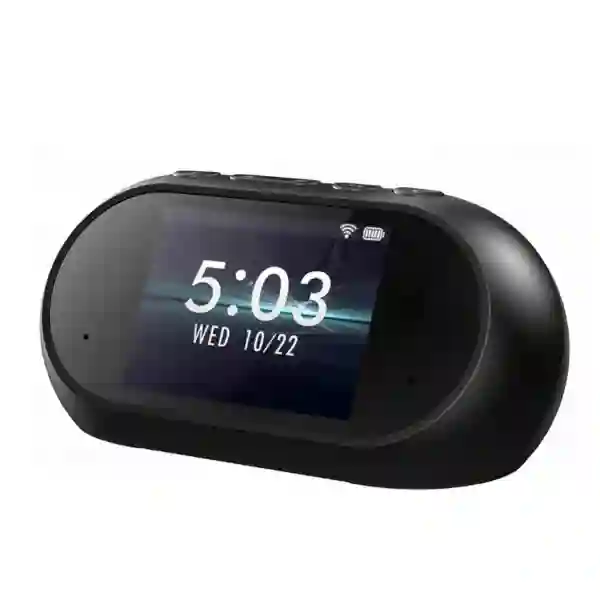
The Fanvil i503W SIP Indoor Station is designed for projects where a conventional wired indoor monitor would be inconvenient, costly or disruptive to install. Its compact desktop format, rechargeable battery and dual-band Wi-Fi 6 connectivity make it especially practical for retrofit apartments, villas, offices, reception areas and legacy buildings where pulling a new network cable to every indoor station is not desirable.
For buyers in Tanzania, the i503W is most relevant when the project needs a compact SIP endpoint that can communicate with compatible Fanvil door phones, display H.264 video, provide clear hands-free audio and enable remote door unlocking from an indoor location. It is not intended to replace a large touchscreen apartment monitor; instead, it gives system designers a focused, space-efficient endpoint for everyday answering, calling and door-release tasks.
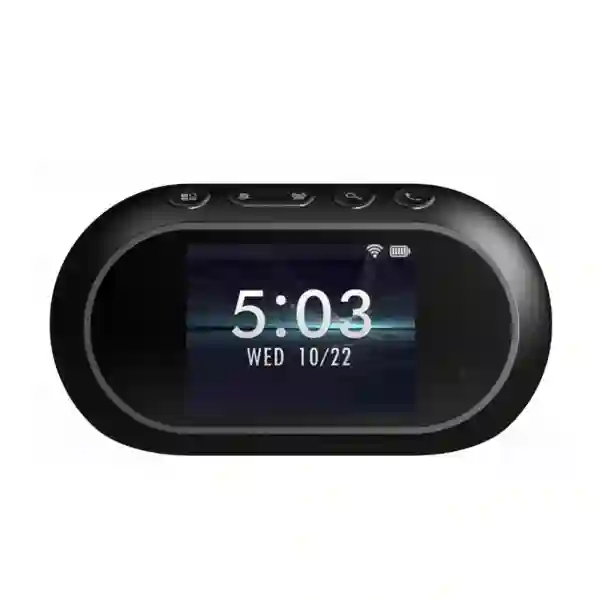
A 320 × 240 color screen provides a compact visual interface for compatible SIP intercom and video-call workflows.
Supports 2.4 GHz and 5 GHz wireless connectivity, helping installers avoid a fixed Ethernet run to the indoor station.
A 2600 mAh typical-capacity battery supports flexible placement and operation away from a permanent wired network point.
SIP 2.0, H.264 video, full-duplex hands-free audio, DND, one-touch family call and remote door unlocking are supported.
What the Fanvil i503W solves
Many access-control and video-door projects reach a practical obstacle inside the building: the entrance device is easy to mount, but the desired indoor answering point has no convenient data outlet. Adding new structured cabling can require drilling, surface trunking, ceiling access or decorative rework. In finished homes and occupied offices, that disruption can be disproportionate to the simple requirement of answering the door and releasing an entrance.
The i503W addresses that scenario with a wire-free operating model. The device can use dual-band Wi-Fi 6 for network connectivity and its built-in rechargeable battery for flexible positioning. A Type-C power interface and 5 VDC, 2 A power specification provide a straightforward charging approach. This combination is useful for refurbishment projects, tenancy changes, villas, reception counters and interior spaces where a desktop station should be installed without redesigning the entire cable path.
Verified Fanvil i503W features and specifications
| Category | Fanvil i503W |
|---|---|
| Display | 2.8-inch IPS color display, 320 × 240 pixels |
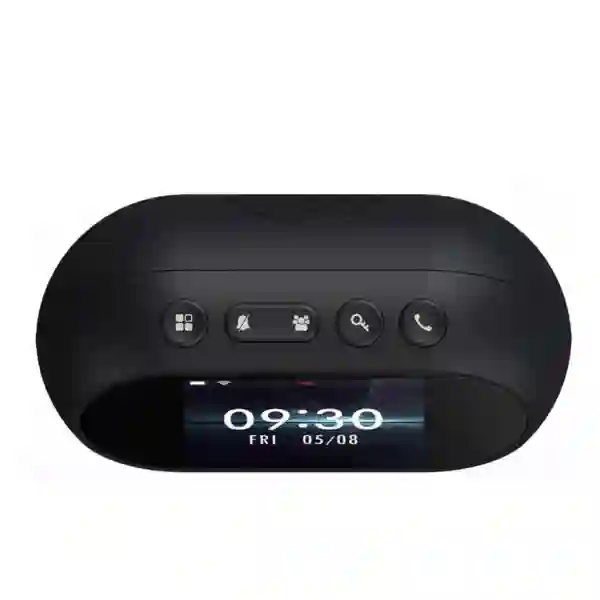
| Buttons | 5 programmable physical buttons |
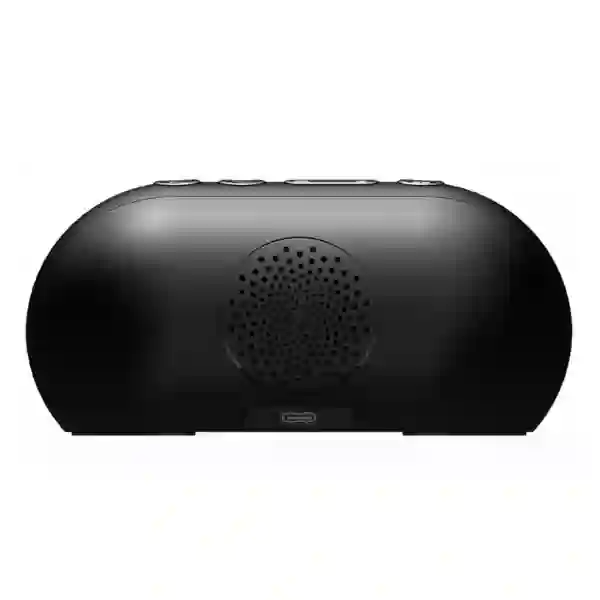
| Speaker | 5 W multimedia speaker |
| Battery | 2600 mAh typical capacity; 2470 mAh rated capacity |
| Wireless | 2.4 GHz / 5 GHz Wi-Fi 6 |
| Power | 5 VDC, 2 A; Type-C interface |
| SIP | SIP 2.0 over UDP, TCP and TLS |
| Audio codecs | G.711a, G.711u, G.729AB, iLBC, G.722 and Opus |
| Audio mode | Full-duplex hands-free communication with Acoustic Echo Cancellation |
| Video | H.264 |
| DTMF | In-band, RFC2833 and SIP INFO |
| Functions | DND, remote door unlocking, one-touch family call |
| Operating range | −20 °C to +60 °C; 10% to 90% RH |
| Dimensions | 129.5 × 59.6 × 67.5 mm |
| Installation | Desktop installation |
Specification planning should always be matched to the intended Fanvil door phone, SIP platform, wireless environment and door-release method. Remote unlocking depends on a correctly designed and configured intercom/access-control workflow rather than on the indoor station alone.
Where the i503W fits in a SIP door-entry design
A SIP indoor station is one endpoint within a wider communication and access-control chain. At the entrance, a compatible door phone or intercom device handles the visitor call and may interface with a lock, relay, door controller or building access system. The IP network carries signaling, audio and video. The i503W receives the call indoors, presents the visitor interaction to the user and can trigger a supported remote unlocking action. Because the i503W uses SIP, the design may also involve an IP PBX, SIP server or compatible intercom registration method depending on the project architecture.
For a small villa, the requirement may be a single entrance and one indoor answering point. In an office, the station might sit on a reception desk so staff can answer the door without leaving the counter. In a retrofit apartment, the wireless architecture may reduce the need to chase walls for Ethernet. In a multi-unit project, the system designer should consider account provisioning, naming, call routing, wireless coverage and support procedures from the beginning. The i503W is compact, but the operational result still depends on careful network and SIP planning.
Select a compatible Fanvil door phone and confirm the required call, camera and door-release functions.
Provide reliable 2.4 GHz or 5 GHz Wi-Fi coverage, secure segmentation and sufficient internet or LAN stability for the chosen SIP design.
Place the i503W where the user can hear calls clearly, view the compact display and reach the programmable controls comfortably.
Buying and deployment guidance
Before requesting a quotation, buyers should define the number of entrances, the number of indoor stations, the expected call flow and whether the project is a new installation or retrofit. A wireless indoor station reduces cabling requirements at the endpoint, but it does not eliminate the need for a dependable IP network. The strongest design is one in which Wi-Fi coverage is validated where the station will be used, especially if the property has reinforced concrete walls, multiple floors, metal partitions or dense neighboring wireless networks.
The 2.8-inch screen is intentionally compact. Buyers who require a large touchscreen interface, extensive on-screen control or a wall-mounted visual console should compare other Fanvil indoor-station models before final selection. The i503W is better suited to users who value a smaller footprint, physical buttons and flexible placement. Likewise, battery operation is useful for mobility and easier installation, but deployment planning should include a practical charging routine and accessible power source.
For security-sensitive projects, confirm SIP account credentials, TLS requirements, network segmentation, wireless authentication, door-release logic and access privileges. The station supports SIP over UDP, TCP and TLS, but the complete security posture depends on the server, door phone, wireless infrastructure and configuration. Password management and firmware lifecycle processes should be part of the handover documentation.
Related FourTeck resources
For integrated projects, FourTeck Tanzania provides broader business technology planning around SIP telephony, wireless networking, access control and supporting infrastructure. Start with FourTeck Tanzania to review the local solution portfolio and the relationship between communications, network and security systems. For regional requirements, FourTeck Uganda is relevant to Uganda-based deployments, while FourTeck Kenya supports planning for Kenya. Organizations with wider Middle East requirements can also review FourTeck UAE. These links are useful when a project spans multiple locations and requires consistent design principles across intercom, IP telephony, Wi-Fi, switching and physical security.
Fanvil i503W SIP Indoor Station Tanzania
Businesses and property owners searching for the Fanvil i503W SIP Indoor Station in Tanzania are typically solving one of two problems: they want a compact indoor answering unit for a new SIP door-entry project, or they need to modernize an existing property without adding disruptive cabling. The i503W is particularly aligned with the second use case because wireless network connectivity and rechargeable battery operation reduce dependence on a fixed Ethernet point at the station location. That does not make the design completely cable-free—the entrance equipment, access-control hardware and charging arrangement still need proper planning—but it can simplify the indoor side of a retrofit.
In Tanzanian offices, villas, apartments and mixed-use properties, procurement should start by confirming the exact visitor workflow. Decide which entrance places the call, who answers it, whether video is required, whether multiple indoor endpoints need to ring and how the door should be released. The i503W supports H.264 video, hands-free audio, SIP 2.0 and remote door unlocking, so it can form a practical indoor endpoint when paired with a compatible design. Its G.722 and Opus wideband codecs are beneficial where the network and peer endpoints support them, while full-duplex hands-free communication with acoustic echo cancellation is designed to improve natural conversation.
Wireless quality is an important consideration in Tanzania because building materials, router placement and network design vary widely. A station positioned behind several masonry walls may not perform like one in an open reception area. The option to use either 2.4 GHz or 5 GHz Wi-Fi 6 gives installers useful flexibility: 2.4 GHz can often provide broader reach, while 5 GHz can provide cleaner spectrum and higher local capacity where coverage is strong. A proper site survey or at least signal validation at the planned installation point is preferable to assuming that an existing consumer router will provide reliable intercom performance.
For procurement, provide the project location, number of entrances, quantity of i503W stations, compatible door-phone model if already selected, SIP server or PBX details, Wi-Fi environment and lock-release requirement. This information helps avoid quoting the indoor station as an isolated item when the real requirement is a complete working visitor-access solution. For Tanzania enquiries, the goal should be compatibility, clear system boundaries and documented configuration rather than simply purchasing a device by model number.
Fanvil i503W SIP Indoor Station Dar es Salaam
In Dar es Salaam, the Fanvil i503W can be a practical choice for businesses and residential properties that need to add an indoor SIP intercom point after the interior has already been completed. Commercial offices, villas, serviced apartments and reception areas often undergo technology upgrades without a full refurbishment. In those situations, running a new Ethernet cable from the entrance or network rack to a reception desk, manager’s office or residence may involve visible trunking or civil work. The i503W reduces that dependency by using Wi-Fi 6 and a rechargeable battery while still delivering standard SIP communication functions.
A Dar es Salaam deployment should pay attention to the wireless environment. Offices in multi-tenant buildings can have many neighboring access points, while larger villas may have thick walls and multiple floors. Before installation, confirm signal strength on both supported wireless bands, choose the appropriate SSID and ensure the station can maintain stable connectivity during normal business hours. If the building already uses managed Wi-Fi, the intercom station can be planned as a controlled endpoint with an appropriate network segment and access policy rather than being placed on an unrestricted guest network.
Reception scenarios are particularly suitable for the i503W. The five programmable physical buttons can be configured around the intended workflow, while the compact display and hands-free speaker reduce desk space. A receptionist can receive a compatible visitor call and use the configured door-release function without leaving the work area. For an executive office or small clinic, the station can provide similar convenience where staff need to screen visitors before granting access. The model’s desktop installation also means the endpoint can be positioned for comfortable use rather than fixed to a wall at an inconvenient height.
When requesting a quotation in Dar es Salaam, describe the entrance hardware, lock type, number of doors, required indoor stations and whether the project will use a standalone SIP design or connect to a broader IP PBX environment. Include any requirement for installation, Wi-Fi assessment, configuration and user handover. A successful project should confirm the complete signal path from door phone to indoor station and from the indoor station’s unlock command to the actual door hardware.
Fanvil i503W SIP Indoor Station Mwanza
For Mwanza projects, the Fanvil i503W is useful where building owners want modern SIP door communication but need to keep the indoor installation simple. A small office, private residence, lodge, clinic or administrative site may have an entrance that can accommodate a networked door phone while the intended answering point has no structured-cabling outlet. By using dual-band Wi-Fi 6 and battery power, the i503W lets the indoor endpoint be placed in a practical location without making Ethernet cabling a prerequisite at that desk or room.
The main design task is to make the wireless link reliable. Mwanza properties can range from compact single-floor offices to larger compounds where distances and wall construction affect signal quality. The station should be tested at the actual position where it will be used. If coverage is weak, the better solution may be to improve the access-point design rather than accept unstable intercom calls. Because visitor communication is a security-related workflow, network reliability should be treated as part of the access-control design instead of as an afterthought.
The i503W’s 2.8-inch IPS screen is best understood as a compact call interface, not as a large building-management tablet. Buyers who need straightforward visitor viewing, answering, audio conversation and door release can benefit from its small form factor. Sites that expect detailed graphical control or extensive visual monitoring should evaluate larger indoor-station options. This distinction matters during procurement because choosing an endpoint by screen size alone can lead to either unnecessary cost or unmet user expectations.
For Mwanza quotations, buyers should list the number of users who need to answer calls, whether one or several stations should ring, the compatible door-phone model, the type of network available and any integration with an IP PBX. It is also useful to state whether the project is a new construction, retrofit or replacement of an older intercom. Those details help determine whether the i503W’s wireless strengths fit the project and what additional components are required for a complete working system.
Fanvil i503W SIP Indoor Station Arusha
Arusha buyers considering the Fanvil i503W often need an indoor station that can fit discreetly into a reception desk, villa, hospitality environment or small business office. In these settings, the value of the model comes from combining SIP interoperability concepts with flexible wireless placement. The device supports SIP 2.0 over UDP, TCP and TLS, H.264 video and common narrowband and wideband audio codecs. This gives system designers a practical set of communication capabilities while maintaining a compact physical footprint.
Hospitality-style properties and guest-facing offices should define who is responsible for answering entrance calls. If a receptionist changes shift or the desk location changes, a desktop wireless station can be more adaptable than a fixed wall terminal. The rechargeable battery also helps where the preferred placement is not directly beside a power socket, although charging procedures should still be part of daily operations. Battery flexibility should be seen as a deployment advantage rather than a reason to ignore power planning.
Arusha installations should also consider how intercom traffic shares the Wi-Fi network with guests, staff devices and business applications. Separating trusted infrastructure from guest traffic can improve management and reduce unnecessary exposure. If a managed wireless system is available, assign the station to the intended secured SSID and verify signal strength at the desk. Where the building depends on consumer-grade wireless equipment, confirm that roaming, channel congestion and coverage do not interrupt calls before commissioning the visitor-access system.
A quotation request should identify the entrance count, door-phone model, preferred indoor-station locations, number of stations and lock-release method. If the project is part of a broader technology upgrade, include requirements for IP telephony, Wi-Fi or access control so the systems can be planned together. This is especially important when the same network must support voice, cameras, office data and visitor access without creating avoidable conflicts or security gaps.
Fanvil i503W SIP Indoor Station Dodoma
In Dodoma, the Fanvil i503W can serve organizations that need a compact visitor-communication endpoint in offices, administrative facilities, residences and small commercial premises. Its strongest deployment case is where the indoor position is difficult to cable or where occupants want to avoid new surface wiring. The combination of Wi-Fi 6, battery operation and desktop installation allows the station to be added with less physical intervention than a conventional Ethernet-connected wall monitor.
For offices, the practical benefit is workflow. Staff at a reception point can answer a compatible door-phone call, communicate hands-free and activate a configured remote unlock function. The 5 W speaker and full-duplex audio architecture support clear conversation, while wideband codecs such as G.722 and Opus are available when both ends and the SIP platform support them. The five physical programmable buttons provide direct interaction for frequently used functions without requiring a large touchscreen.
Network preparation remains essential. A visitor-access system should not depend on an unstable wireless zone, so the access point serving the i503W should have sufficient coverage and capacity. The choice between 2.4 GHz and 5 GHz should be based on the site environment rather than a generic preference. If the indoor station is several rooms away from the access point, 2.4 GHz may offer more practical reach; if the station is close to a modern access point in a congested area, 5 GHz may provide a cleaner operating environment. Testing should determine the final choice.
When procuring for Dodoma, share a simple layout or description showing the entrance, indoor station and network equipment. Specify whether a lock, access controller or relay is already installed. This helps establish the complete solution scope and avoids assuming that an indoor SIP station alone can control any door without compatible entrance hardware and proper configuration.
Fanvil i503W SIP Indoor Station UAE
For UAE projects, the Fanvil i503W is relevant to retrofit apartments, villas, offices and reception points where project teams need an indoor SIP station without adding an Ethernet drop at the user position. Renovated properties often have finished stone, glass, decorative wall panels or fitted furniture that make new cable routes undesirable. The i503W’s Wi-Fi 6 connectivity and rechargeable battery provide an alternative that can reduce physical installation work while preserving SIP-based intercom functionality.
The compact screen and physical controls make the model suited to focused door-entry tasks rather than high-end touchscreen automation. Buyers should therefore compare the user experience required by the project. If occupants mainly need to identify a visitor, speak with them and release a door, the i503W can be an efficient endpoint. If they need a large display, smart-home control, multiple camera tiles or richer graphical workflows, another indoor station may be more appropriate. Correct product selection depends on the intended daily interaction, not just the communication protocol.
In UAE offices, wireless environments can be dense, particularly in towers and mixed-use buildings. Dual-band support gives more deployment flexibility, but the network should still be surveyed and the station placed on a secured SSID. SIP over TLS is available at the endpoint, while the complete security design also depends on the PBX, door phone, certificates, firewall policy and administrator practices. Integrators should document device credentials, provisioning settings and firmware procedures at handover.
Multi-country organizations can coordinate a common intercom approach while adapting network, door hardware and procurement to each location. The UAE section of a regional project should therefore specify the exact building conditions, quantities, door-phone pairing and any integration with enterprise telephony. This makes it easier to decide whether the i503W’s wire-free approach is the right fit for every site or only for locations where cabling is the main obstacle.
Fanvil i503W SIP Indoor Station Uganda
Uganda customers can consider the Fanvil i503W for residential, office and small commercial access projects where a wireless indoor endpoint simplifies installation. A retrofit is often less about replacing the entrance device and more about finding a practical way to put an answering unit where people actually work or live. The i503W’s built-in battery and dual-band Wi-Fi 6 reduce the dependency on an Ethernet socket at that position, making it useful when existing cabling cannot be extended conveniently.
From a system perspective, the device should be treated as a SIP endpoint that works within a compatible intercom architecture. It supports SIP 2.0, H.264 video, full-duplex audio, common codecs, DTMF methods and door-unlocking functionality. The value of those features depends on the paired entrance equipment and configuration. Procurement teams should therefore request compatibility confirmation rather than assuming that all SIP door phones implement every function identically.
For projects across Uganda, power and network resilience should be discussed early. The rechargeable battery adds flexibility at the user endpoint, while the access point, switching equipment, door phone and lock power supply may still need UPS protection if continued operation during short outages is important. The indoor station can only remain useful if the rest of the communication and door-control path is available. A complete resilience plan should identify which devices need backup power and how long the expected backup period should be.
Regional buyers can also coordinate requirements through FourTeck Uganda for projects based in Uganda. When requesting a quotation, include location, quantities, entrance count, Wi-Fi environment, lock type and whether the intercom should integrate with an existing SIP PBX or operate as a dedicated access-control communication system.
Fanvil i503W SIP Indoor Station Kampala
Kampala has many office, apartment and mixed-use environments where wireless density and finished interiors make endpoint placement an important design decision. The Fanvil i503W is well suited to projects that need an indoor SIP station at reception, a security desk or inside a residence but do not want to create a new fixed data outlet. Its 2.4 GHz and 5 GHz Wi-Fi 6 support gives installers options for connecting to existing wireless infrastructure, while the battery and desktop form factor improve placement flexibility.
In a multi-tenant building, however, the installer should not simply connect the station to any available wireless network. A dedicated or secured business SSID, predictable addressing policy and controlled access to the SIP server or door phone can make support easier. Dense neighboring Wi-Fi networks may cause congestion, so channel planning and access-point placement are relevant even though the i503W itself is small. Intercom calls are brief but operationally important; users expect them to ring and connect immediately.
For reception desks, the physical buttons can be an advantage because staff can learn a repeatable process for answering, calling or releasing a door without navigating a large graphical interface. The station also supports DND, which should be configured carefully in security-related workflows so important entrance calls are not unintentionally suppressed. User training should cover charging, volume, call handling and the exact unlock procedure.
A Kampala project quotation should distinguish between device supply and complete deployment. Complete deployment can include compatibility checking, Wi-Fi readiness, SIP configuration, door-phone configuration, lock-control verification and user handover. Stating the desired outcome—such as “reception must see and speak to visitors and unlock the main entrance”—is often more useful than listing a model alone because it allows the solution to be checked end to end.
Fanvil i503W SIP Indoor Station Arua
In Arua, the Fanvil i503W can support smaller offices, residences, clinics and commercial premises that want to modernize visitor communication without undertaking a major cabling project. The wireless indoor-station concept is useful where the building is already occupied and the preferred answering point cannot easily be connected by Ethernet. A stable Wi-Fi network becomes the enabling infrastructure, while the built-in battery allows the station to remain compact and movable within the intended area.
The purchasing decision should be based on the call workflow and physical environment. If one front entrance needs to reach a single desk, configuration can be relatively simple. If several entrances or multiple indoor stations are required, SIP account planning and call routing become more important. Buyers should identify whether calls must ring sequentially, simultaneously or through an IP PBX. They should also confirm how remote door unlocking is implemented with the chosen entrance device and lock hardware.
Wireless infrastructure should be checked for coverage and uptime. A battery-powered indoor station does not solve weak signal, so access points should be located and configured to deliver reliable service at the exact desktop position. If the site also uses Wi-Fi for staff and guests, segmentation can help keep infrastructure devices organized. For small sites without managed networking, strong credentials and controlled administrator access remain important.
When requesting supply or integration for Arua, provide quantities, building type, entrance details and the available internet/LAN arrangement. If the property expects future expansion, mention additional doors or rooms so the initial SIP design does not create avoidable limits. The i503W’s compact format is attractive for straightforward deployments, but long-term support benefits from consistent naming, documented credentials and configuration records from the start.
Fanvil i503W SIP Indoor Station Mbarara
Mbarara businesses and property owners can use the Fanvil i503W where visitor access requires a modern SIP endpoint but the indoor location is difficult to wire. A reception desk in a completed office, a villa living area or a clinic administration counter can often use wireless connectivity more cleanly than a new visible cable route. The model’s 129.5 × 59.6 × 67.5 mm dimensions also make it easy to place on a desk without occupying the space associated with a large monitor.
The small display is suitable for concise visual feedback and compatible video calls, while H.264 support allows video from supported door-phone workflows. Voice remains central to the interaction, and the i503W provides full-duplex hands-free communication with acoustic echo cancellation plus narrowband and wideband codecs. For a quiet office, this supports convenient conversation without a handset. In noisier environments, the station should be positioned thoughtfully so the microphone and speaker can serve the user effectively.
A good installation also considers charging. The built-in battery is a flexibility feature, but users need a clear routine for keeping the device powered. Where the station normally sits in one position, a nearby 5 VDC, 2 A power connection can simplify day-to-day use. Where the unit must occasionally move, battery operation allows more freedom. The operating model should be chosen according to staff behavior rather than relying on battery operation by default.
For Mbarara procurement, list the functions that are essential: two-way audio, video, remote unlock, one-touch internal calling or PBX registration. Confirm which door phone will be used and whether the property already has suitable Wi-Fi. This prevents a quotation from focusing only on the indoor unit while leaving out the entrance, lock and network components needed to achieve the requested result.
Fanvil i503W SIP Indoor Station Gulu
For Gulu deployments, the Fanvil i503W provides a practical indoor SIP endpoint for sites where ease of installation is more important than having a large touchscreen monitor. The wire-free concept is especially useful for existing buildings, temporary fit-outs and small offices where an Ethernet extension to the reception or indoor station location would create unnecessary work. Wi-Fi 6 connectivity and battery operation give installers more flexibility in deciding where the user will answer entrance calls.
The model’s functionality should still be evaluated against the project scope. It supports remote door unlocking and one-touch family call functions, but these features depend on compatible configuration. Buyers should confirm the entrance door phone, SIP registration method, lock interface and security policy. Where the intercom also connects to a business PBX, call routing should be documented so entrance calls do not conflict with ordinary extension behavior.
Gulu sites that experience network or power variability should consider the full system path. A rechargeable indoor endpoint can remain powered, but the access point, router, PoE switch, door phone or electric lock supply may not. If visitor access must continue during short interruptions, UPS-backed networking and door-control equipment can be included in the design. The correct backup requirement depends on the business risk and expected operating hours.
A detailed quotation request should therefore include more than the quantity of i503W units. State the number of doors, station locations, existing networking equipment, desired backup behavior and whether installation/configuration support is required. This enables a complete solution that is easier to commission and maintain, rather than a collection of components whose interoperability has not been verified.
Fanvil i503W SIP Indoor Station Kenya
In Kenya, the Fanvil i503W suits organizations and residences that need a compact indoor SIP intercom endpoint for a retrofit or wireless-first project. The design is especially relevant in completed apartments, villas and offices where users want door-phone communication at a desk or room without extending structured cabling. Dual-band Wi-Fi 6 provides network flexibility, while the rechargeable battery and Type-C interface support easy positioning and charging.
The station can become part of a broader access-control architecture that includes a Fanvil door phone, electric locking hardware, SIP services and the site network. Procurement teams should confirm every dependency. SIP 2.0 support allows the i503W to participate in standard signaling workflows, but practical interoperability can depend on the exact features used by the server and entrance device. Door-release commands, video behavior, DTMF and provisioning should be validated before a multi-unit rollout.
Kenyan urban deployments may have dense wireless environments, especially in apartment blocks and office campuses. A managed WLAN can provide better visibility into signal quality and device connectivity. For a small site, a well-positioned business access point may be sufficient. In both cases, the station should be tested during normal usage periods, not only when the building is empty, because channel congestion can change significantly during working hours.
For Kenya-based requirements, customers can review FourTeck Kenya when planning a local deployment. Provide the quantity, city, entrance count, existing door-phone model if any, Wi-Fi setup and preferred SIP integration. If the requirement spans Tanzania and Kenya, standardizing configuration and documentation can make future support simpler while still allowing each site to use the network design appropriate to its building.
Fanvil i503W SIP Indoor Station Kuwait
Kuwait projects can use the Fanvil i503W where finished interiors or leased spaces make new Ethernet runs undesirable. Villas, apartments, reception counters and office entrances may already have suitable wireless coverage, and the i503W can use that infrastructure instead of requiring a dedicated network cable at the answering position. Its compact dimensions and desktop installation allow the unit to sit near the user without becoming a dominant part of the interior design.
As with other wireless endpoints, performance depends on radio conditions. Reinforced structures, reflective materials and neighboring networks can affect coverage. The station supports both 2.4 GHz and 5 GHz Wi-Fi 6, giving installers flexibility to choose the band that best suits the location. The selected SSID should be secured, stable and allowed to reach the intended SIP and intercom resources without exposing unnecessary network services.
For access-control use, the i503W should be planned alongside the entrance door phone and lock system. Remote unlocking is valuable only when the door interface is configured correctly and permissions are controlled. Facilities teams should decide who is authorized to release each door, whether call records or access events are required elsewhere in the system and what happens if the SIP network is unavailable. Those questions shape the final architecture more than the indoor station specification alone.
Kuwait procurement teams should also define the desired support scope. Device supply, installation, SIP registration, wireless configuration, door integration and user handover are distinct tasks. A clear bill of requirements helps establish responsibility for each stage and makes commissioning more predictable. The i503W is strongest when its wireless flexibility is combined with disciplined system design rather than treated as a plug-in replacement for every legacy intercom.
Fanvil i503W SIP Indoor Station Ghana
For Ghana, the Fanvil i503W offers a compact option for SIP-based visitor communication in offices, homes, clinics and commercial spaces. The product is designed for retrofit and hard-to-wire scenarios, which is relevant when a property needs an indoor answering station but running new data cabling would disturb finished walls or occupied areas. Wi-Fi 6 connectivity lets the station use a suitable wireless network, while the rechargeable battery improves positioning flexibility.
The i503W should be evaluated as part of the entire entrance system. A compatible door phone needs to capture the visitor call and, where required, video. The station then answers the SIP session and can support a configured unlock command. Electric locks, controllers, exit devices and power supplies remain separate design considerations. Buyers should avoid assuming that specifying the indoor monitor alone defines the access-control solution.
For business use, the 5 W speaker, acoustic echo cancellation and wideband audio support are useful where staff need hands-free conversation. The compact physical controls can also be simpler for reception or security personnel than a complex touchscreen. If the station will serve a noisy lobby, however, placement and ambient noise should be assessed. Good user experience depends on both the device and the environment where it is installed.
When planning procurement in Ghana, state whether the project is for one site or multiple branches, how many entrances are involved and whether the organization already operates an IP PBX. Multi-site organizations may prefer a repeatable SIP naming and configuration method. That makes it easier to maintain consistent documentation, troubleshoot remotely and add future indoor stations without redesigning the workflow each time.
Fanvil i503W SIP Indoor Station Nigeria
Nigeria has a wide range of residential and commercial access-control environments, from standalone offices and villas to larger multi-site businesses. The Fanvil i503W is most attractive where the indoor answering point needs flexibility and the project wants to minimize new network cabling. A reception desk can be moved without re-terminating Ethernet, and a residence can add an indoor SIP endpoint without chasing a wall for data. The built-in rechargeable battery complements that flexibility.
Power resilience is an important planning topic for any IP intercom architecture. Although the i503W can operate from its battery, the surrounding infrastructure may include access points, routers, switches, door phones and lock power supplies. Organizations that require continued visitor access during power events should identify which components need UPS or other backup arrangements. The indoor station’s battery is useful but should not be mistaken for full-system backup.
Network security also deserves attention. SIP credentials should be unique and protected, administrator passwords should be controlled, and wireless infrastructure should use appropriate authentication. The endpoint supports SIP over TLS, but encrypted signaling is only one layer of a secure system. Firewall policy, segmentation, firmware management and access privileges determine the broader exposure. In larger organizations, keeping intercom devices on a defined infrastructure network can make monitoring and maintenance easier.
A Nigeria quotation should explain the desired workflow in practical terms: who rings whom, whether video is needed, which door must unlock, how many users answer and whether the intercom integrates with a PBX. With those details, the i503W can be assessed for fit and paired with appropriate entrance and network components. This approach is more reliable than purchasing the endpoint first and trying to design the system around it afterward.
Fanvil i503W SIP Indoor Station Seychelles
In Seychelles, the Fanvil i503W may suit villas, hospitality spaces, offices and smaller properties that need discreet indoor visitor communication. The compact desktop unit avoids the visual impact of a large wall monitor and can be placed where staff or residents naturally spend time. Wireless connectivity is useful in finished properties where opening walls for new cabling would be undesirable, while battery operation allows the device to remain functional away from a permanent power lead for periods of use.
For island properties, procurement planning should emphasize compatibility and documentation so replacement or support needs can be handled efficiently. The project should record the exact Fanvil door-phone model, SIP account configuration, wireless SSID requirements and lock-control arrangement. If spare units or centralized configuration are required, those needs should be identified before purchase rather than after installation.
Wi-Fi design remains a core requirement. Villas and hospitality buildings may have separate indoor and outdoor coverage zones, thick walls or multiple access points. The i503W should connect to a stable indoor network at its intended location. If the property uses guest Wi-Fi, the station should normally be placed on a secured infrastructure or staff network instead, with only the access it needs to reach the intercom services. Clear segmentation helps reduce troubleshooting complexity and keeps visitor-access devices separate from transient user traffic.
For a Seychelles quotation, share the property type, entrance locations, number of indoor stations and any need for centralized management or PBX integration. If the project is part of a hotel or managed residence, identify who will answer calls during different shifts and whether more than one station needs to ring. These operational details determine how the SIP call flow should be configured and whether the compact i503W is the best endpoint for every user role.
Compatibility, integration and security checklist
Confirm the exact Fanvil entrance model and required functions. SIP registration does not automatically guarantee identical implementation of every video or door-release feature.
Decide whether the station will register to an IP PBX, dedicated SIP server or another supported intercom architecture. Document account names, extensions and call routing.
Validate 2.4 GHz and 5 GHz signal quality at the station location and select the band that provides dependable operation in the actual building.
Identify the lock, relay or access controller and confirm how the authorized unlock command reaches it from the intercom system.
Plan charging for the i503W and consider backup power for access points, network equipment, door phones and lock supplies when operational continuity matters.
Use strong credentials, controlled administrator access, appropriate wireless security, network segmentation and a documented firmware/update process.
Who should choose the Fanvil i503W?
Choose the i503W when the project values flexible placement, compact size, wireless networking and basic indoor SIP intercom tasks. It is particularly appropriate for retrofits, completed interiors, reception desks and homes where an Ethernet outlet is not available at the desired user position. The physical-button interface can be easier for straightforward workflows where users mainly answer calls, speak with visitors and release a door.
Consider another indoor-station class when the requirement includes a large touchscreen, extensive visual menus, wall-mounted building controls, multiple security sensor interfaces or a richer application experience. Product selection should start from what the user needs to do each day. A larger and more complex endpoint is not automatically better, while a compact station should not be stretched into a role it was not designed to fill.
Quotation checklist
For a faster and more accurate Fanvil i503W quotation, provide the following information in your enquiry:
- Project country and city.
- Required quantity of Fanvil i503W stations.
- Number of entrances and compatible Fanvil door-phone model, if already selected.
- Whether the system connects to an existing IP PBX or uses a dedicated intercom SIP design.
- Available 2.4 GHz / 5 GHz Wi-Fi coverage at each indoor station location.
- Door lock or access-controller type and required remote-unlock behavior.
- Need for installation, configuration, testing, user training or documentation.
- Any power-backup requirement for the wider network and access-control system.
Frequently asked questions
Does the Fanvil i503W require Ethernet cabling?
The i503W supports dual-band 2.4 GHz and 5 GHz Wi-Fi 6, so the indoor station does not require a fixed Ethernet connection at its placement point. The overall system still requires a reliable IP network and appropriate connectivity for the door phone, SIP services and related equipment.
Can the i503W run on battery?
Yes. Fanvil specifies a built-in rechargeable battery with 2600 mAh typical capacity and 2470 mAh rated capacity. The station can operate on battery and uses a 5 VDC, 2 A power specification with a Type-C interface for charging/power.
Does the Fanvil i503W support video?
Yes. Fanvil lists H.264 video support, and the product is designed to support audio and video calls with compatible Fanvil door-phone workflows. The screen is a compact 2.8-inch IPS display with 320 × 240 resolution.
Can users unlock a door from the i503W?
Remote door unlocking is a supported function. The complete unlock workflow depends on the compatible door phone, lock or access controller, SIP/intercom configuration and user permissions. These elements should be confirmed during system design.
Which SIP protocols does the i503W support?
Fanvil specifies SIP 2.0 over UDP, TCP and TLS. The exact server settings and feature behavior should be validated against the selected PBX or intercom platform.
Is the i503W suitable for apartments and villas?
Yes. Fanvil positions the product for residential communities, offices and villas, with particular emphasis on retrofit and hard-to-wire projects. Its wireless and battery-powered design is especially useful where adding indoor cabling would be disruptive.
Does it support wideband audio?
Yes. The i503W supports G.722 and Opus wideband codecs in addition to G.711a, G.711u, G.729AB and iLBC narrowband codecs. End-to-end audio quality depends on the peer device and network path as well as the indoor station.
What should I confirm before ordering?
Confirm quantities, door-phone compatibility, SIP platform, wireless coverage, required door-release method, station locations and whether installation or configuration is required. These details help ensure the i503W is supplied as part of a workable system rather than as an isolated endpoint.
Decision recap
The Fanvil i503W is a strong fit when a project needs a compact SIP indoor station with wireless connectivity, rechargeable battery operation, physical buttons and essential visitor-call functions. Its 2.8-inch IPS display, Wi-Fi 6, H.264 video, wideband audio codecs, full-duplex hands-free communication and remote door unlocking make it suitable for focused door-entry workflows. The most important buying decision is not whether the specification list looks attractive; it is whether the station fits the building, wireless network, entrance device and user workflow.
For Tanzania and multi-region deployments, prepare a clear scope covering the entrance, indoor stations, SIP call flow, Wi-Fi, door hardware and power continuity. That approach makes compatibility easier to validate and produces a system that can be documented, supported and expanded more predictably.
Plan your Fanvil i503W deployment
Contact FourTeck with your project city, quantity, entrance count, door-phone model, wireless environment and integration requirements. The quotation can then be aligned to the actual deployment instead of treating the indoor station as a standalone purchase.




Reviews
There are no reviews yet.