
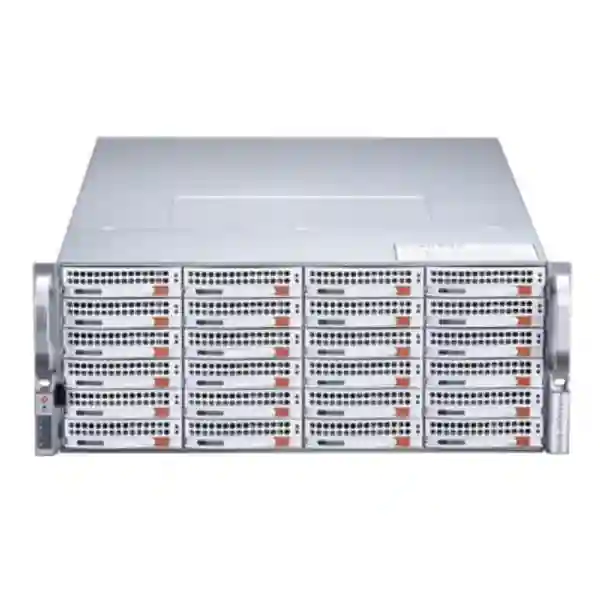
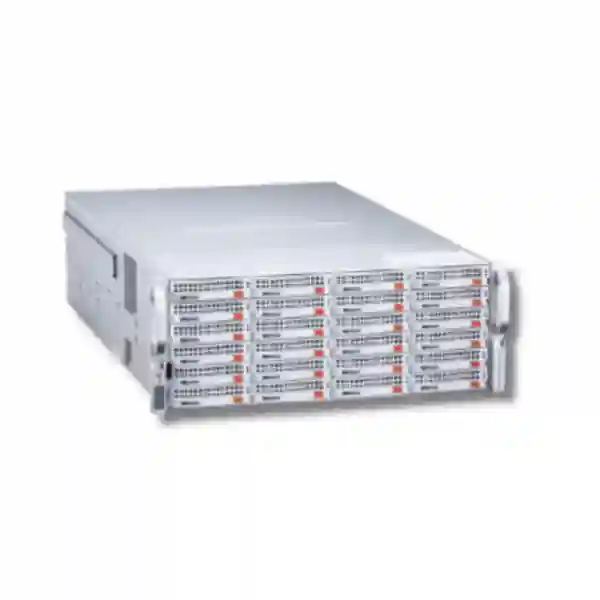
FortiAnalyzer FAZ-3510G Tanzania
Fortinet FortiAnalyzer FAZ-3510G is a high-capacity centralized logging, analytics and reporting appliance for organizations that need to consolidate large volumes of Fortinet security telemetry. Fortinet publishes capacity of up to 5,000 GB of logs per day, a sustained analytic rate of 60,000 logs per second, a collector-mode sustained rate of 90,000 logs per second, support for up to 10,000 devices or VDOMs, and up to 500 Administrative Domains. These characteristics position the platform for large enterprises, service environments, distributed organizations and security operations teams that need a dedicated appliance for visibility, investigation, reporting and operational control.
What the FAZ-3510G is designed to solve
Security teams frequently operate many firewalls, branches, virtual domains and security services. Without centralized analysis, important events can remain fragmented across individual devices. FortiAnalyzer brings supported Fortinet logs into a central platform so teams can investigate activity, build reports, review incidents and maintain a longer operational view of the environment. For Tanzanian organizations with headquarters, branches, data-centre workloads, remote offices or regional operations, this centralization can simplify the practical task of understanding what is happening across the security estate.
The FAZ-3510G should be sized from measured or forecast log volume rather than purchased only because of device count. Procurement teams should document current daily log ingestion, peak logs per second, retention expectations, number of devices and VDOMs, ADOM requirements, expected growth, redundancy requirements and reporting workloads. That information allows a more defensible appliance decision and helps avoid under-sizing or paying for capacity that is not required.
Published maximum daily log volume for FAZ-3510G.
Published sustained analytic log rate.
Published sustained collector-mode log rate.
Maximum devices/VDOMs published by Fortinet.
Verified FAZ-3510G platform facts
| Daily logs | Up to 5,000 GB/day |
| Analytic sustained rate | 60,000 logs/second |
| Collector sustained rate | 90,000 logs/second |
| Maximum devices / VDOMs | 10,000 |
| Maximum ADOMs | 500 |
| Interfaces | 2 × 10GbE RJ45 and 2 × 25GbE SFP28 |
| Storage | 96 TB raw HDD capacity published in the FortiAnalyzer ordering information; current product matrix lists 24 × 4 TB HDD plus 2 × 3.84 TB SSD. |
Security analytics, reporting and SOC workflow
A centralized analyzer becomes valuable when operational processes are built around it. Security teams can use consolidated event data to investigate suspicious activity, correlate observations across supported devices, review trends and prepare reports for internal stakeholders. The objective is not merely to retain logs. The more important outcome is making telemetry searchable and useful for incident response, policy review, security operations and management reporting.
For a large Fortinet deployment, administrative separation also matters. Fortinet lists support for up to 500 ADOMs on the FAZ-3510G. ADOM planning can help organizations separate business units, customers, regions or administrative scopes where appropriate. The exact design should reflect the organization’s operating model and the FortiAnalyzer software release being deployed. Before implementation, confirm supported firmware combinations and release-specific behavior in current Fortinet documentation.
FortiAnalyzer FAZ-3510G Tanzania
Organizations evaluating FortiAnalyzer FAZ-3510G in Tanzania are usually dealing with a scale problem rather than a basic logging requirement. A bank, telecom environment, large enterprise, public-sector organization, university group, industrial operator or multi-site company can generate security telemetry from many gateways, VDOMs and branches. The procurement discussion should therefore begin with evidence: how much data is generated today, what peak event rate looks like, how long logs must remain available, which teams need reports, and what growth is expected over the appliance lifecycle. The FAZ-3510G’s published 5,000 GB/day capacity provides a substantial ceiling, but correct sizing still depends on the real environment.
Tanzania deployments should also consider the supporting data-centre conditions. A high-capacity appliance belongs in a properly planned rack environment with appropriate power protection, cooling, network uplinks and documented management access. The FAZ-3510G includes high-speed 10GbE RJ45 and 25GbE SFP28 connectivity, so network design should consider the switching and optics required for the chosen topology. Retention planning is equally important: daily ingestion and desired retention interact directly with storage consumption, analytics behavior and archive strategy.
For procurement, prepare a bill of requirements rather than requesting only a unit price. Include device count, VDOM count, estimated GB/day, peak LPS, ADOM count, retention period, FortiOS estate, HA expectations, rack and power conditions, and whether the project includes migration from an existing FortiAnalyzer. This helps suppliers quote the correct appliance, subscriptions and implementation scope. FourTeck Tanzania’s integrated IT and security overview explains how firewall, switching, servers, racks and power considerations fit together, while the services page provides context for deployment and lifecycle requirements.
FortiAnalyzer FAZ-3510G Dar es Salaam
Dar es Salaam organizations often concentrate headquarters, data-centre, financial, logistics, hospitality and enterprise operations in environments where security visibility has to span many users and sites. For a business considering the FAZ-3510G, the useful first question is whether existing Fortinet telemetry has outgrown smaller analytics capacity or whether a new architecture is being designed for future consolidation. Inventory every FortiGate and relevant supported source, record average and peak logging rates, and identify the reporting and investigation workloads that security teams perform. This produces a more reliable sizing basis than selecting a model solely from employee count.
Data-centre readiness is a practical part of the purchase. Confirm rack space, redundant power strategy, UPS capacity, cooling, management network segmentation and the switching interfaces needed for the appliance. The high-speed interfaces on the FAZ-3510G should be matched with compatible network infrastructure and an intentional traffic design. If logs arrive from branch sites over WAN links or VPNs, architects should also consider link stability, routing and how interruptions affect forwarding and collection. Security management traffic should be protected and documented rather than mixed casually with user traffic.
Dar es Salaam procurement teams can improve quotation accuracy by specifying the desired outcome: centralized logging, SOC analytics, reporting, incident investigation, multi-ADOM administration, migration or expansion. Include current software versions and the target maintenance window. If the organization is replacing an older analyzer, document retention and migration expectations before the cutover. Related planning may involve FourTeck Tanzania integration services, network security architecture and rack infrastructure. A quotation request should separate appliance hardware, applicable Fortinet subscriptions/support, implementation, configuration, migration, testing, documentation and any training requirement so stakeholders can compare scope clearly.
FortiAnalyzer FAZ-3510G Mwanza
For organizations in Mwanza, centralized security analytics can be especially useful when IT operations include branches, warehouses, commercial facilities, education environments or distributed service locations. A central analyzer can reduce the need to inspect security devices one by one when investigating events. The FAZ-3510G is a large platform, so a Mwanza buyer should verify that the scale is justified by telemetry volume and growth. Smaller environments may be better served by another FortiAnalyzer model, while enterprises consolidating many devices or regional sites may value the larger capacity and administrative scale.
Connectivity between sites deserves careful planning. Log collection is an operational data flow, and remote sites can have different bandwidth and resilience characteristics. Before rollout, identify which sites send logs, expected volumes, WAN paths, VPN dependencies and the behavior required during outages. This allows the security architecture to account for temporary connectivity loss and helps avoid surprises when a remote branch produces more telemetry than anticipated. The organization should also define who can access analytics, who can create reports, and how administrative boundaries map to teams or business units.
Physical deployment should be treated as enterprise infrastructure. Check rack, cooling, power protection and network interfaces before equipment arrives. For environments where a central data centre is outside Mwanza, the project may instead focus on secure forwarding from Mwanza branches to the central FAZ-3510G. In either design, document source devices, naming conventions, time synchronization, management addressing and escalation procedures. Procurement teams can use FourTeck Tanzania’s technology solution portfolio to consider related firewall, switching, server and infrastructure dependencies. The objective is a manageable logging architecture, not simply the installation of another rack appliance.
FortiAnalyzer FAZ-3510G Arusha
Arusha businesses evaluating FortiAnalyzer FAZ-3510G may include hospitality groups, institutions, corporate offices, service organizations and enterprises operating multiple locations. Centralized security visibility is particularly relevant when local IT teams need a consistent way to review firewall and security activity across sites. Because the FAZ-3510G supports very high published log ingestion and device scale, organizations should compare their actual requirements against the platform’s capacity. An accurate baseline should include normal and peak logging, device and VDOM counts, retention expectations, report frequency and anticipated expansion.
The architecture can be centralized even when operations are geographically distributed. Branch devices can forward logs according to the approved Fortinet design, while analysts use a central platform for investigation and reporting. That makes WAN design, DNS, time synchronization, secure management and change control important parts of implementation. For hospitality or campus-style environments, segmentation may create many security zones and VDOMs; the project team should map those structures before creating ADOM and administrative policies.
Buyers should also distinguish between hardware capacity and operational readiness. A powerful appliance does not replace log-source onboarding, report design, alert tuning, administrator roles, backup procedures and documented incident workflows. The best procurement package includes both the product and a clear implementation scope. If the organization already operates Fortinet firewalls, collect model numbers and FortiOS versions for compatibility review. FourTeck Tanzania’s IT lifecycle and implementation services can be considered alongside the analyzer requirement, and the Tanzania contact page can be used to submit the environment details required for a more useful quotation discussion.
FortiAnalyzer FAZ-3510G Dodoma
Dodoma organizations planning centralized Fortinet analytics should begin with governance and operational requirements as well as capacity. Public institutions, enterprises and multi-department environments may need clear separation between administrative responsibilities, reporting audiences and security domains. Fortinet’s published maximum of 500 ADOMs for the FAZ-3510G provides significant administrative scale, but the actual ADOM design should be deliberate. Too much fragmentation can make operations harder, while insufficient separation can complicate responsibility and reporting.
Retention is another important decision. The FAZ-3510G has substantial local storage, yet retention cannot be expressed as one universal number because log volume, analytics configuration and operational requirements vary. Estimate daily ingestion from current systems and define how long searchable analytics must remain online. If longer-term archival is required, include that in architecture planning rather than assuming local storage alone satisfies every policy. Organizations should also define backup and recovery procedures for configuration and operational continuity.
For sites in Dodoma, deployment planning should document rack environment, power resilience, cooling and secure network connectivity. Where the appliance is hosted in another city or data centre, focus on the secure path from Dodoma devices to the central collector/analytics architecture. Change windows and rollback plans matter when redirecting production firewalls to new logging infrastructure. A good quotation therefore includes discovery, configuration, onboarding, testing and documentation instead of hardware alone. Buyers can review FourTeck Tanzania’s cybersecurity and infrastructure portfolio for related dependencies and use the verified contact page to provide device counts, log estimates and desired retention.
FortiAnalyzer FAZ-3510G UAE
UAE enterprises frequently operate dense data-centre, branch, cloud and campus environments, making centralized security analytics a core design consideration rather than an optional reporting tool. For an FAZ-3510G project, the same sizing discipline applies: establish GB/day, sustained and peak LPS, number of managed devices or VDOMs, ADOM structure, retention targets and growth. Fortinet’s published scale makes the appliance relevant to large deployments, but procurement should still be evidence-led. An oversized platform can add unnecessary cost, while an undersized design can constrain retention and analytics operations.
High-speed interfaces and substantial storage mean the appliance should be integrated into a suitable rack and switching environment. Confirm 10GbE or 25GbE connectivity requirements, optics where applicable, management segmentation, redundant power design and monitoring. Security operations teams should also plan role-based administration, reporting schedules and incident workflows before go-live. If multiple business units or customers are separated through ADOMs, define naming, ownership and escalation rules so the platform remains manageable at scale.
Organizations with operations spanning Tanzania and the Gulf may benefit from consistent logging and reporting standards across regions. Device naming, time synchronization, retention policy, incident severity definitions and administrator roles can be standardized while still respecting each environment’s technical and organizational requirements. For UAE project context, visit FourTeck UAE IT and cybersecurity solutions. Tanzania-based requirements can remain coordinated through FourTeck Tanzania. Procurement should verify current Fortinet licensing and support options at quotation time because commercial bundles and software entitlements can change.
FortiAnalyzer FAZ-3510G Uganda
Ugandan enterprises with distributed Fortinet deployments can use centralized analytics to create a consistent operational view across headquarters and branches. The FAZ-3510G is intended for substantial environments, so the project should first determine whether log ingestion and device scale justify this model. Count firewalls and VDOMs, estimate current daily logs, measure peaks where possible and forecast expansion. If a company is growing across East Africa, include future sites in the model rather than sizing only for the present month.
WAN conditions are important when branch logs traverse provider links or VPNs. Architecture teams should identify how log forwarding behaves during interruptions, which traffic receives priority and whether central collection creates avoidable bandwidth pressure. Time synchronization across devices is essential for useful investigations because analysts need events from different sources to align correctly. Administrative design also matters when different teams support Kampala, regional branches or separate business units.
The hardware installation should include suitable rack space, power protection, cooling and network uplinks. If the FAZ-3510G is hosted outside Uganda, the local project may focus on onboarding Ugandan security devices to a regional analyzer while maintaining secure management. Either approach benefits from documentation covering source devices, IP addressing, logging policies, administrators and escalation paths. Organizations can review FourTeck Uganda technology solutions for regional project context and FourTeck Tanzania for Tanzania-led regional coordination. The quotation request should specify whether migration, configuration, testing and knowledge transfer are required.
FortiAnalyzer FAZ-3510G Kampala
Kampala is a natural concentration point for enterprise headquarters, financial operations, institutions and multi-site IT management. An FAZ-3510G deployment can support teams that need to consolidate high volumes of Fortinet logs and maintain centralized investigation and reporting. Before selecting the appliance, capture the existing environment in a sizing worksheet. Include each source device, VDOMs, approximate daily logging, peak LPS, retention, ADOMs and expected new branches. This creates a transparent capacity model that can be reviewed with stakeholders and suppliers.
SOC workflow should be designed at the same time as infrastructure. Decide who reviews incidents, which reports management requires, how administrator access is controlled and how configuration changes are documented. A large analytics platform can generate considerable operational value only when teams know which data they need and how to act on it. Reporting should answer real security and compliance questions rather than create dashboards that no one reviews.
For Kampala organizations with regional branches, consistent log policies can improve investigations across sites. Use standardized device names, time sources and severity handling, while allowing ADOM structures to reflect real ownership boundaries. Infrastructure planning should cover high-speed switching, rack space, power and environmental monitoring. FourTeck’s Uganda IT solutions site provides local-market context, while FourTeck Tanzania services describes the integrated planning approach for security and network infrastructure. Request current commercial terms rather than relying on old online prices, because enterprise security appliances are commonly quoted with support and subscription choices.
FortiAnalyzer FAZ-3510G Arua
Arua deployments can have different connectivity and support considerations from a major data-centre location. If security devices in Arua are to forward logs to an FAZ-3510G hosted centrally, the project should examine WAN reliability, available bandwidth, VPN architecture and the operational plan for temporary outages. Centralized analytics can still be effective for remote sites, but architects should avoid assuming every branch has identical connectivity. Record expected log volumes by site and use them to understand aggregate ingestion.
For organizations considering a locally hosted appliance, verify that the site provides the rack, cooling, power protection and high-speed network environment appropriate for enterprise hardware. The FAZ-3510G’s scale may be more suitable for a central regional facility than an individual small branch, depending on requirements. This is why sizing should be based on the complete security estate rather than the location name. A remote branch can contribute to a much larger centralized platform without needing the analyzer to be physically located in the same building.
Operational documentation is particularly valuable for distributed environments. Maintain a source-device inventory, management addresses, time synchronization settings, forwarding policies and support contacts. Define how new devices are onboarded and how failed logging is detected. If different teams administer separate sites, ADOM planning can create controlled separation where appropriate. For Uganda-related planning, FourTeck Uganda provides regional technology context. Cross-border organizations can coordinate broader requirements through FourTeck Tanzania’s contact page, supplying measured log data and site counts so the quotation can address the complete environment.
FortiAnalyzer FAZ-3510G Mbarara
Mbarara businesses with branch networks, institutions or regional operations may need centralized security reporting without building a separate SOC stack at every location. A FortiAnalyzer architecture can consolidate telemetry centrally while local Fortinet devices continue enforcing security policy. The FAZ-3510G offers large published capacity, so buyers should verify whether the organization’s total estate requires that scale. A smaller model can be appropriate for modest log volumes, while FAZ-3510G becomes more relevant as daily ingestion, device count and retention requirements grow.
Planning should distinguish collection, analytics and retention requirements. Peak LPS can matter even when average daily volume appears manageable. Reporting and investigation workloads also influence the user experience. Capture several days of representative measurements where possible and account for high-activity periods. If the organization plans new sites, increased inspection or additional Fortinet products, include that future telemetry in the forecast.
For Mbarara sites sending data to a central analyzer, secure connectivity and reliable time synchronization are foundational. Network teams should document routing, VPN dependencies and monitoring for failed forwarding. Security teams should document access roles and escalation. Procurement teams should document what is included in the commercial scope: appliance, applicable support/subscriptions, installation, migration, onboarding, reports, testing and knowledge transfer. FourTeck Uganda can provide regional context for IT requirements, while FourTeck Tanzania supports integrated discussions involving network security, switching, servers, racks and related infrastructure. Clear requirements make quotations more comparable and reduce post-purchase surprises.
FortiAnalyzer FAZ-3510G Gulu
For Gulu organizations, the value of centralized analytics often comes from connecting a remote or regional site into a broader security operations model. The FAZ-3510G can serve a large centralized estate, but it should not be selected simply because a branch needs log storage. Assess the whole architecture: number of devices, aggregate GB/day, peak LPS, retention, ADOMs and expected growth. If the analyzer is located at a central data centre, Gulu devices can form part of that design subject to supported connectivity and security configuration.
Remote-site planning should include link resilience and troubleshooting procedures. Security teams need to know when a device stops forwarding logs and whether the cause is the endpoint, tunnel, route, WAN service or central platform. Naming conventions and synchronized time make investigations easier because analysts can correlate events without guessing which branch or time offset is involved. Administrative access should be limited according to role, and configuration changes should be recorded.
When requesting a quotation, explain whether Gulu is a source site, the hosting location or one location within a multi-site rollout. Include firewall models, VDOM counts, software versions and estimated logging. This allows the solution design to distinguish hardware sizing from deployment services. Regional project context is available through FourTeck Uganda. Organizations coordinating security architecture from Tanzania can also use FourTeck Tanzania services. A well-defined rollout should finish with tested log visibility, documented sources, agreed reports and a clear operational handover rather than simply confirming that the appliance powers on.
FortiAnalyzer FAZ-3510G Kenya
Kenyan enterprises operating Fortinet security across headquarters, branches, campuses or data-centre environments can use FortiAnalyzer to centralize logs and improve operational visibility. FAZ-3510G is positioned at substantial scale, with Fortinet publishing up to 5,000 GB/day and 10,000 devices/VDOMs. Those headline numbers should be treated as sizing boundaries, not as a substitute for assessment. Procurement teams should collect actual telemetry and retention requirements before selecting the model.
Organizations with Nairobi headquarters and sites elsewhere in Kenya or East Africa may benefit from a regional logging architecture. Standardize device naming, time synchronization, source onboarding and report definitions across locations. Where different business units require administrative separation, plan ADOMs around operational ownership rather than arbitrary geography. The platform should make investigations simpler, so administrative design needs to remain understandable as the environment grows.
Infrastructure readiness includes rack space, power, cooling, high-speed switching and secure management. Migration from an existing FortiAnalyzer should have a documented sequence covering configuration, device onboarding, validation and rollback. The project team should also confirm software-release compatibility against current Fortinet documentation. For Kenya-related procurement context, visit FourTeck Kenya IT and network security solutions. Regional customers working across Kenya and Tanzania can coordinate broader infrastructure requirements through FourTeck Tanzania. A complete quotation request should state whether the requirement is supply only or includes implementation, migration, reporting configuration, documentation and support planning.
FortiAnalyzer FAZ-3510G Kuwait
Kuwait enterprises considering FAZ-3510G typically need centralized visibility at a scale where individual-device log review is no longer efficient. Large corporate, infrastructure and multi-site environments can produce substantial telemetry, particularly when security inspection and event logging are enabled broadly. Begin with a measured baseline. Daily GB, sustained and peak LPS, number of devices and VDOMs, ADOM count and retention expectations should all be documented before a commercial decision.
Data-centre integration is equally important. Confirm rack requirements, cooling, redundant power design and the network ports that will connect the analyzer. The appliance provides high-speed Ethernet options, but the surrounding switching architecture must be compatible with the selected media and topology. Management access should be segmented and restricted, and administrative roles should reflect real responsibilities. Reporting schedules can then be designed around security operations, management and audit needs.
For organizations operating across Kuwait, UAE and East Africa, consistent logging standards can simplify cross-regional operations. This does not require identical network designs in every country; it means using common principles for naming, time, retention, access control and incident handling. Procurement teams should request current Fortinet support and subscription options as part of the quote and avoid relying on old marketplace pricing. Tanzania-led regional requirements can be discussed through FourTeck Tanzania, while broader FourTeck network capabilities are accessible from FourTeck’s main regional technology site. Include migration and implementation scope explicitly when comparing supplier responses.
FortiAnalyzer FAZ-3510G Ghana
Ghanaian organizations with expanding Fortinet estates can use centralized analytics to reduce fragmented security operations. The FAZ-3510G is relevant where the aggregate environment requires high log ingestion, large device scale or substantial administrative separation. Before purchasing, estimate current and projected GB/day and peak LPS. Count VDOMs as well as physical devices, because virtualized firewall structures can materially affect scale planning. Define retention and reporting requirements with security and compliance stakeholders.
A regional architecture can place the analyzer in a central data centre while collecting from distributed sites, provided connectivity and supported design requirements are satisfied. Network teams should document WAN paths and monitor forwarding health. Security teams should define administrator roles, ADOM ownership and incident procedures. Operations teams should ensure time synchronization is consistent. These details can have more impact on investigation quality than simply adding more storage.
Procurement should also verify physical and support requirements. The FAZ-3510G is enterprise infrastructure and should be installed with suitable rack, power and cooling. Confirm current software support and licensing with Fortinet-authorized commercial channels at quotation time. For organizations coordinating African deployments from Tanzania, FourTeck Tanzania’s integrated infrastructure approach can help connect the analytics requirement to firewalls, switching and data-centre readiness. A useful request for quotation should include source-device inventory, expected logging, retention, target deployment date, migration requirements and the desired post-installation documentation. This turns a product inquiry into an implementable security-operations project.
FortiAnalyzer FAZ-3510G Nigeria
Nigeria’s large enterprise environments can involve many branches, business units and high-volume security gateways, making centralized logging an important operational layer. FAZ-3510G provides published capacity suitable for large Fortinet estates, but organizations should validate the requirement from telemetry rather than from company size alone. A business with fewer users can still generate high log volumes if inspection is intensive, while a larger organization may have a more moderate logging profile. Measure what the security infrastructure actually produces.
Multi-site environments should plan collection paths and administrative structure together. Define which sites report to the analyzer, how connectivity is secured, and how forwarding failures are detected. ADOMs can provide separation for business units or administrative scopes, but they should reflect operational responsibilities. Consistent time synchronization, naming and source documentation make incident investigation faster and reduce ambiguity when analysts compare events from different locations.
The commercial scope should state whether the supplier is providing hardware only or a complete implementation. A complete project can include design validation, rack installation, network integration, software preparation, source onboarding, report setup, migration, testing and handover. Current subscriptions and support should be confirmed at quotation time. Regional IT context is available through FourTeck Nigeria, while FourTeck Tanzania can receive multi-region requirements originating from Tanzania. For cross-border organizations, standardizing logging policy and operational documentation can make support more predictable even when the underlying WAN and site designs differ.
FortiAnalyzer FAZ-3510G Seychelles
Seychelles organizations may operate hospitality, financial, government, services or multi-island environments where centralized visibility is valuable but connectivity characteristics differ from large mainland deployments. An FAZ-3510G requirement should therefore be justified by aggregate security telemetry and the wider regional architecture. If the appliance is hosted in another data centre, Seychelles sites can be treated as log sources within a central design, subject to secure and reliable connectivity. If hosted locally, enterprise rack, power, cooling and network conditions need to be confirmed.
The sizing exercise remains consistent: daily GB, peak and sustained LPS, devices/VDOMs, ADOMs, retention and growth. For distributed hospitality or service properties, document each site rather than using a rough organization-wide guess. This reveals which locations generate the most data and where connectivity may affect collection. Time synchronization is particularly important for cross-site investigations, and administrator access should be designed around clear roles.
Procurement teams should request current Fortinet commercial options and describe the desired implementation scope. If migration is required, specify the existing FortiAnalyzer model and software version. If this is a new deployment, list the Fortinet devices to be onboarded and the reports or operational outcomes expected. Regional requirements can be coordinated through FourTeck Tanzania and the wider FourTeck technology network. The objective should be a supportable analytics architecture with clear source inventory, tested collection, documented access and agreed operational ownership, not merely acquisition of a high-capacity appliance.
Integration and deployment checklist
Capacity evidence
Measure GB/day and LPS, count devices and VDOMs, define ADOMs, retention and growth. Use these figures to confirm whether FAZ-3510G is the correct model.
Data-centre readiness
Confirm rack space, power protection, cooling, high-speed switching, management segmentation and cable/optic requirements before delivery.
Software compatibility
Check the intended FortiAnalyzer release and source-device compatibility against current Fortinet documentation before implementation or migration.
Related FourTeck Tanzania infrastructure
FortiAnalyzer is one layer of a broader security and infrastructure architecture. Review FourTeck Tanzania’s firewall and VPN solution overview when the analyzer will receive telemetry from network-security gateways. The same site also covers network switching and LAN infrastructure, which is relevant to 10GbE/25GbE connectivity; servers, storage and backup planning, useful when considering surrounding data-centre operations; structured cabling, racks and UPS, which supports physical deployment readiness; and integrated IT lifecycle services for design, installation, configuration and documentation. The Tanzania sales contact page is the verified route for submitting a sizing and quotation request.
FortiAnalyzer FAZ-3510G quotation checklist
For a useful quotation, provide the number and models of Fortinet devices, VDOM count, current FortiOS versions, estimated average and peak logs per second, daily log volume, required searchable retention, ADOM count, expected three-year growth, current FortiAnalyzer model if migrating, rack location, available network interfaces, power design, desired implementation date, reporting requirements, and whether configuration, migration, testing, documentation or knowledge transfer should be included.
Do not assume that an online hardware price represents the complete project cost. Enterprise Fortinet deployments can involve support, subscriptions and implementation services. Request a current itemized quote based on the actual architecture.
Frequently asked questions
How many logs per day can FAZ-3510G handle?
Fortinet publishes up to 5,000 GB of logs per day for the FortiAnalyzer 3510G. Actual architecture should still be sized around measured ingestion, peak LPS, retention and workload.
What is the sustained log rate?
Fortinet lists 60,000 logs per second as the sustained analytic rate and 90,000 logs per second as the sustained collector-mode rate for FAZ-3510G.
How many devices or VDOMs are supported?
Fortinet publishes a maximum of 10,000 devices/VDOMs and up to 500 ADOMs for the FAZ-3510G. Release-specific limits and compatibility should be verified in current documentation.
What network interfaces are included?
Current Fortinet ordering information lists 2 × 10GbE RJ45 and 2 × 25GbE SFP28 interfaces. Confirm the exact shipping configuration and required optics/cabling in the final bill of materials.
Is FAZ-3510G suitable for a small office?
Its published capacity is aimed at large logging environments. A smaller FortiAnalyzer model may be more appropriate for modest deployments. Model selection should be based on log volume, LPS, retention, devices/VDOMs and growth.
Can it be used for multi-site security operations?
FortiAnalyzer is designed for centralized logging and analytics. Multi-site designs should account for secure connectivity, forwarding behavior, time synchronization, administrative separation and operational ownership.
Decision recap
FAZ-3510G is a high-capacity FortiAnalyzer appliance for organizations that need centralized security telemetry at enterprise scale. Its published 5,000 GB/day capacity, 60,000 sustained analytic LPS, 90,000 collector LPS, 10,000 devices/VDOMs and 500 ADOM maximums make it a candidate for large deployments, but the correct buying decision depends on measured log volume, retention, administrative structure and growth. Validate current software compatibility, licensing and support before ordering.
Consult FourTeck Tanzania
Share your Fortinet device inventory, VDOM count, estimated log rate, retention target and deployment location. FourTeck can use these details to frame a product and implementation quotation. For multi-country projects, include every site that will forward logs so the design can be evaluated as one security-operations architecture rather than as isolated purchases.



Reviews
There are no reviews yet.