
FortiAP FAP-432FR Tanzania
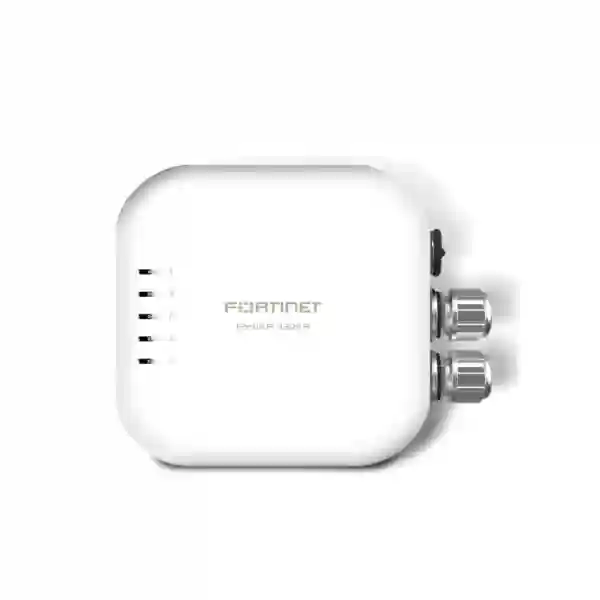
FortiAP FAP-432FR is Fortinet’s ruggedized Wi‑Fi 6 access point for organizations that need secure wireless connectivity in indoor, outdoor and industrial environments. Fortinet documents the model with three radios plus BLE, external antennas, 2.4 GHz and 5 GHz operation, 4×4 service capability and dedicated wireless scanning. For Tanzania buyers, the practical value is the ability to design managed wireless coverage for sites where a standard office access point may not match the physical or operational environment.
Verified FortiAP FAP-432FR capabilities
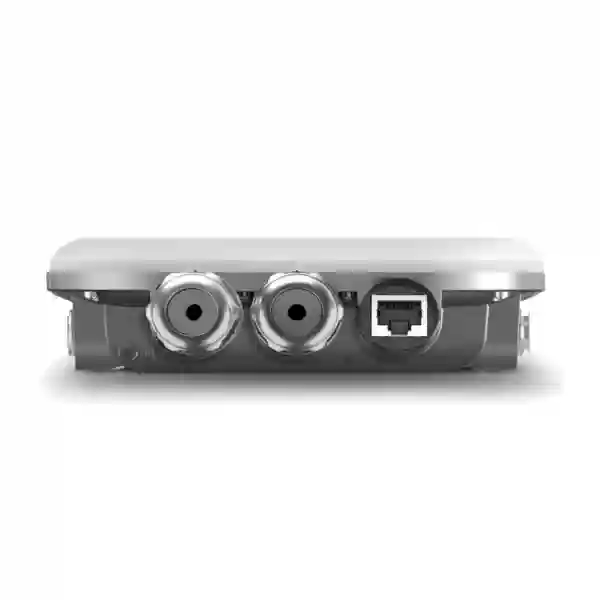
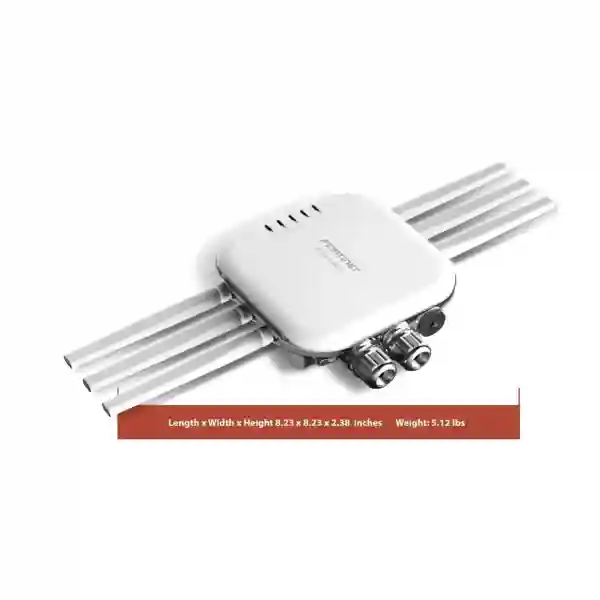
Fortinet positions the FAP-432FR as an indoor, outdoor and industrial access point in its FortiAP portfolio. The published specifications identify three radios plus one BLE radio. The unit uses external N-Type antenna connections, with four dual-band Wi‑Fi antenna paths and an additional dual-band scanning path, while Bluetooth Low Energy and ZigBee capability support the 2.4 GHz band. The 2.4 GHz service radio supports 20/40 MHz channels and 4×4 MIMO. The 5 GHz service radio supports 20/40/80 MHz operation in 4×4 mode and 160 MHz operation in 2×2 mode. These characteristics make the model relevant when wireless design needs both performance and a rugged deployment profile.
Rugged deployment profile
Designed for indoor, outdoor and industrial deployment scenarios where environmental planning matters as much as radio performance.
Wi‑Fi 6 radio platform
Supports 802.11ax wireless operation with multi-radio architecture and 4×4 service capability for modern client environments.
External antenna design
External N-Type antenna connectivity lets project teams plan antenna selection and placement around the intended coverage environment.
Technical planning and compatibility
A successful FAP-432FR deployment starts with more than the access point model. Teams should confirm the FortiOS and FortiAP software versions planned for management, because Fortinet publishes model-specific compatibility matrices. Current Fortinet documentation includes FAP-432FR across FortiOS 7.4 and 7.6 release families, with specific FortiAP firmware requirements by FortiOS version. Compatibility should therefore be checked against the exact FortiGate release before staging or upgrading a production wireless network.
Radio planning should consider floor plan or outdoor site geometry, client density, interference, mounting position, antenna pattern, channel allocation, roaming expectations, PoE and uplink design, segmentation and guest access requirements. Rugged hardware does not remove the need for a wireless survey. Warehouses, factories, yards, logistics sites and mixed indoor/outdoor facilities can contain metal structures, high racks, moving equipment and other obstacles that materially affect propagation.
Where FAP-432FR fits
The FAP-432FR can be considered for industrial facilities, warehouses, logistics compounds, utility environments, transport-related sites, outdoor work areas, campuses and other locations that require a rugged Wi‑Fi 6 access point rather than a conventional indoor-only model. Procurement teams should evaluate the complete bill of materials, including suitable antennas, mounting requirements, power method, switching, surge or environmental protection where applicable, management platform and support subscriptions. The correct design depends on the actual site and should not be inferred from the access point model alone.
FortiAP FAP-432FR Tanzania
Tanzania organizations evaluating rugged enterprise Wi‑Fi often need to balance coverage, environmental conditions, centralized administration and long-term operational support. The FAP-432FR is relevant where the wireless edge extends beyond climate-controlled office rooms into warehouses, industrial zones, loading areas, compounds, workshops or mixed-use facilities. A buyer should begin by documenting the number of coverage zones, expected concurrent clients, device types, application mix and physical obstructions. That discovery step helps determine how many access points are needed and whether directional or omnidirectional antenna approaches are appropriate.
For procurement, request a quotation that clearly identifies the FAP-432FR model, regional ordering suffix where applicable, required antennas, mounting accessories, power components and support services. Fortinet’s ordering guidance uses region-specific suffixes, so an exact order code should be confirmed rather than guessed. Organizations already using FortiGate should also record the installed FortiOS version so compatibility can be validated before deployment. New installations should plan VLANs and SSIDs around business roles such as employees, operational devices, guests and contractors rather than creating one flat wireless network.
Tanzania projects can also benefit from planning wired and wireless infrastructure together. Access-point uplinks, PoE capacity, switch location, fiber or copper distance, WAN resilience and firewall policy all affect the final user experience. Explore the FourTeck Tanzania technology portfolio for related networking and security requirements, or review regional Fortinet solution guidance through FourTeck Africa. A good quotation should separate hardware from optional deployment services so technical and procurement teams can compare the full project scope.
FortiAP FAP-432FR Dar es Salaam
Dar es Salaam businesses may evaluate the FAP-432FR for logistics yards, warehousing, industrial compounds, commercial campuses and other environments where wireless coverage must reach beyond conventional offices. In dense commercial areas, interference and neighboring wireless networks can be as important as distance. A site survey should identify existing 2.4 GHz and 5 GHz usage, structural materials, outdoor transitions and client movement before final placement is selected. Because the model uses external antennas, antenna choice and orientation should be part of the design rather than treated as an afterthought.
For a warehouse, the design should account for aisle geometry, rack height, inventory density and handheld scanner movement. For a yard or compound, planners should consider line of sight, mounting height, vehicle movement and weather exposure. For a mixed office and operational site, separate SSIDs and VLANs can help distinguish corporate users, guests and operational devices. Security policy should then be aligned at the FortiGate or chosen management layer according to the organization’s architecture.
When requesting a Dar es Salaam quotation, include a floor plan or site sketch, approximate coverage dimensions, number of users and devices, current firewall and switching models, available PoE capacity and preferred management approach. This produces a more useful proposal than requesting an access point quantity without context. The FAP-432FR should be selected because its rugged and radio characteristics fit the environment, not simply because it is a higher-specification model.
FortiAP FAP-432FR Mwanza
Mwanza organizations considering industrial or outdoor Wi‑Fi can use the FAP-432FR as part of a planned Fortinet wireless architecture. Suitable projects may include warehouses, processing facilities, campuses, hospitality back-of-house areas, compounds and operational sites where users or devices move between coverage zones. The design process should begin with application requirements. Voice, video, scanners, tablets, laptops and IoT devices can behave differently on a wireless network, so capacity and roaming expectations should be documented.
The FAP-432FR’s dedicated scanning capability is useful within Fortinet’s managed wireless approach, while its external antenna architecture gives designers flexibility in matching coverage to the physical environment. However, the access point alone does not guarantee coverage. Mounting location, antenna gain and pattern, channel plan, transmit power, interference and client radio capability all influence performance. Where a facility has multiple buildings, planners should also distinguish between client-access coverage and any separate point-to-point or backhaul requirement.
Mwanza buyers should request an itemized bill of materials and verify the exact regional ordering code. If FortiGate management is planned, include the existing FortiOS release in the technical review. A staged rollout can be valuable for larger facilities: validate one representative zone, measure client behavior and then repeat the proven design while adjusting for each area’s physical differences.
FortiAP FAP-432FR Arusha
Arusha deployments can include hospitality properties, institutional campuses, logistics operations, industrial facilities and outdoor business areas that require dependable managed Wi‑Fi. For hospitality or campus projects, planners should map guest areas, staff-only zones, service spaces and outdoor coverage separately. User density may change significantly by time of day, so peak occupancy matters more than average occupancy when sizing wireless capacity.
A rugged access point is particularly relevant where equipment is mounted in exposed or operational environments, but installation details still require care. Confirm approved mounting methods, antenna components, cable routing, power delivery and environmental protection requirements from Fortinet documentation and the project engineer. Avoid mixing unverified antenna or accessory assumptions into procurement. The final bill of materials should identify every component needed to commission the access point safely.
Arusha organizations with existing Fortinet infrastructure should also consider how wireless integrates with firewall policy, switching and network segmentation. The goal is not only strong signal; it is controlled access to the right applications and networks. Staff, guests, contractors and operational devices may need different authentication and policy treatment. A pre-sales review should capture these requirements before a quotation is finalized.
FortiAP FAP-432FR Dodoma
Dodoma buyers assessing enterprise wireless for institutional, administrative, education, logistics or operational facilities can consider the FAP-432FR where rugged Wi‑Fi 6 hardware matches the deployment environment. Start by defining the service areas and business applications. A coverage-first project may prioritize broad reach, while a capacity-first project may require more access points at lower power to serve many concurrent clients efficiently.
Network design should include switch ports, PoE budget, VLANs, DHCP, DNS, firewall rules, authentication and monitoring. For sites with critical operational connectivity, document what happens if an uplink, switch or WAN connection fails. Wireless resilience is part of a wider network architecture, and the access point cannot compensate for weaknesses elsewhere in the path.
For procurement, provide the project team with site dimensions, construction details, expected device count, application types and existing Fortinet software versions. This helps validate compatibility and reduces the risk of ordering incomplete accessories. Ask for the precise order code and support options applicable to the intended market instead of relying on a generic SKU from an overseas listing.
FortiAP FAP-432FR UAE
UAE organizations often deploy rugged wireless in warehouses, logistics hubs, industrial zones, outdoor campuses and operational environments. The FAP-432FR’s Wi‑Fi 6 platform and ruggedized positioning make it a candidate for these projects when the radio and environmental requirements align. Buyers should map temperature exposure, mounting location, antenna requirements, cable routes and PoE switching alongside user density and application demand.
Multi-site organizations can standardize configuration templates while still surveying each location. Warehouses with high racks, manufacturing areas with machinery and open yards have different RF behavior. Central management can simplify operations, but channel and power plans should remain site-aware. Review Fortinet’s published FortiAP/FortiOS compatibility matrix before upgrades and commissioning.
For wider UAE security and networking planning, FourTeck UAE can be used as a regional reference point. Procurement teams should request the exact regional product suffix, antenna components and support term so the quotation reflects a deployable solution rather than an access point alone.
FortiAP FAP-432FR Uganda
Uganda businesses can evaluate the FAP-432FR for industrial, logistics, education, hospitality and mixed indoor/outdoor environments where a rugged managed access point is appropriate. The planning sequence should cover RF survey, client density, antenna selection, switching, PoE, management and segmentation. For distributed organizations, common SSID and security standards can simplify operations while allowing site-specific RF tuning.
Fortinet’s Wi‑Fi 6 architecture supports modern client environments, but actual throughput varies with channel width, client capability, interference, distance and security configuration. Project proposals should therefore avoid treating theoretical radio rates as guaranteed application performance. A pilot or post-installation validation survey can provide a more realistic view of service quality.
Organizations can review FourTeck Uganda for related regional Fortinet planning. Include FortiGate model and FortiOS release in the requirement if integrated management is expected, and confirm all accessories before purchase.
FortiAP FAP-432FR Kampala
Kampala projects may involve corporate compounds, warehouses, schools, hospitality locations and commercial facilities that combine indoor and outdoor wireless zones. The FAP-432FR can fit projects requiring rugged Wi‑Fi 6 with external antennas. In a busy urban RF environment, a survey should measure neighboring networks and identify channel reuse opportunities rather than relying only on signal-strength predictions.
For multi-floor or multi-building deployments, document roaming paths and application sensitivity. Voice and real-time applications require more careful roaming and coverage overlap than occasional data access. Guest Wi‑Fi should be separated from business systems, and operational devices should receive only the network access they need. These policy decisions should be designed together with the wireless layout.
A quotation request should include quantity estimates but also ask for antenna, mount, power and support requirements. Confirm exact compatibility with the intended FortiGate and FortiOS version before installation. This reduces commissioning delays and helps the buyer understand the full project cost.
FortiAP FAP-432FR Arua
Arua organizations planning managed Wi‑Fi can consider the FAP-432FR for facilities where rugged hardware and external antenna flexibility are useful. Projects should define whether the objective is staff connectivity, guest access, warehouse mobility, operational device access or a combination. Each use case has different capacity, security and roaming implications.
Where technical support resources are centralized elsewhere, remote manageability and clear documentation become important. Keep records of AP names, switch ports, VLANs, IP addressing, antenna type, mounting position and firmware. Standardized documentation makes troubleshooting and future expansion easier even when the physical site is distant from the main IT team.
Procurement should verify the exact Fortinet order code and required accessories. Avoid ordering from a generic model description alone, because regional suffixes and accessory needs can differ. A pre-deployment compatibility check should also confirm the management software versions intended for the site.
FortiAP FAP-432FR Mbarara
Mbarara businesses can use rugged wireless planning for warehouses, institutions, hospitality operations, compounds and industrial facilities. The FAP-432FR provides a Wi‑Fi 6 platform with external antennas and a dedicated scanning radio, but deployment quality depends on design. High ceilings, metal shelving, walls, outdoor transitions and device movement should be represented in the survey.
For sites using cloud applications or centralized systems, wireless availability also depends on WAN and firewall resilience. Consider dual internet links or other continuity measures where business operations require them, while keeping the wireless and WAN designs as separate but coordinated layers. Segment users and devices according to business role and risk.
Before purchase, document expected client counts, application types, FortiGate/FortiOS versions and PoE switching capacity. Ask for a complete quotation including required antennas and accessories. This provides a clearer procurement comparison and avoids discovering missing components during installation.
FortiAP FAP-432FR Gulu
Gulu deployments may include education, healthcare, logistics, commercial and institutional environments where managed Wi‑Fi extends into operational spaces. The ruggedized FAP-432FR can be evaluated where its environmental profile and Wi‑Fi 6 capabilities match the site. Coverage planning should distinguish indoor rooms, sheltered areas and exposed zones because each can require different mounting and antenna decisions.
Capacity planning should focus on peak concurrent devices rather than total registered devices. A site may have hundreds of known devices but only a smaller active population in each zone. Conversely, training rooms or events can create temporary high-density demand. These patterns should guide AP placement and channel planning.
If FortiGate management is used, confirm firmware compatibility before deployment and before future upgrades. Maintain configuration backups and installation records. Procurement should verify order suffixes and support options rather than assuming a single universal SKU applies in every market.
FortiAP FAP-432FR Kenya
Kenya organizations can consider FAP-432FR for rugged enterprise wireless in warehouses, logistics facilities, industrial environments, campuses and outdoor business areas. External antennas provide design flexibility, while Fortinet’s managed architecture can align wireless access with wider network security. Site survey and capacity planning remain essential for reliable results.
Buyers should compare the FAP-432FR with other FortiAP models based on environment, radio needs and antenna design rather than model number alone. Newer Wi‑Fi generations may be available in the broader FortiAP portfolio, while the FAP-432FR remains a Wi‑Fi 6 rugged model. The correct choice depends on client estate, lifecycle planning, management compatibility and project budget.
For Kenya-specific Fortinet context, see Fortinet solutions from FourTeck Kenya. A cross-border organization can standardize policy and management while still adapting antenna and RF design to each facility.
FortiAP FAP-432FR Kuwait
Kuwait projects that need wireless in industrial, warehouse, outdoor or demanding operational environments can evaluate the FAP-432FR as a rugged Wi‑Fi 6 option. Environmental exposure, mounting and antenna selection should be reviewed carefully. Wireless design should also consider client density, interference and coverage boundaries rather than focusing only on maximum radio specifications.
For logistics and warehouse environments, map aisles, racks and mobile work paths. For compounds or outdoor spaces, assess mounting height and line of sight. Separate guest, staff and operational traffic where appropriate, and align VLAN and firewall policy with the organization’s security requirements.
Procurement teams should verify the exact regional ordering suffix, antennas, mounting components and support services. Review FourTeck Kuwait for regional technology context and coordinate compatibility checks before staging the access points.
FortiAP FAP-432FR Ghana
Ghana businesses planning rugged wireless can consider the FAP-432FR for industrial, logistics, campus and outdoor deployments that require Wi‑Fi 6 and external antenna flexibility. A strong design begins with a survey of the physical site and the applications that wireless users depend on. Signal coverage and client capacity should be treated as separate design goals.
For multi-site companies, standard SSID naming, authentication and security policy can reduce operational complexity. However, each site should retain its own channel and power plan because building materials, interference and client density differ. Firmware standards should be maintained with reference to Fortinet’s compatibility documentation.
Before ordering, verify the complete bill of materials and regional order code. Where a project includes FortiGate, FortiSwitch and FortiAP, review PoE and uplink requirements together so switching capacity supports the wireless plan. This prevents a technically suitable access point from being limited by an undersized access layer.
FortiAP FAP-432FR Nigeria
Nigeria enterprises can evaluate FAP-432FR for rugged Wi‑Fi 6 deployments across warehouses, industrial facilities, logistics sites, campuses and outdoor operational areas. In large facilities, wireless planning should include client roaming, interference, channel reuse and backhaul capacity. External antenna selection should match the intended coverage shape and mounting environment.
Power and network resilience can be important parts of the wider architecture. Confirm stable PoE delivery, switch redundancy where required, WAN design and configuration backup procedures. The wireless access point is one component of the end-to-end service path, so troubleshooting and monitoring should cover switching, firewall and internet layers as well.
Procurement teams should request the exact regional Fortinet order code and applicable support options. Avoid relying on marketplace specifications that may combine details from different models. Official Fortinet data should remain the reference for technical validation.
FortiAP FAP-432FR Seychelles
Seychelles organizations may consider rugged wireless for hospitality, institutional, logistics and mixed indoor/outdoor environments. The FAP-432FR’s ruggedized positioning and external antenna design can be relevant where access points need to serve operational or exposed areas. Coastal and outdoor installations require careful project engineering, and environmental suitability should be verified against official Fortinet installation guidance for the exact mounting location.
Hospitality designs should separate guest capacity from staff and operational systems. Outdoor guest areas can have very different density patterns from rooms or back-of-house spaces. A survey should identify coverage transitions and roaming paths, while firewall and VLAN policy should isolate traffic appropriately.
Because island procurement can involve longer supply chains, validate the full accessory list before shipment. Missing antennas, mounts or power components can delay commissioning. Confirm the exact ordering suffix, support term and management compatibility as part of the quotation review.
Selection, deployment and quotation checklist
Before requesting a FortiAP FAP-432FR quotation, prepare the following information: site type and location; indoor, outdoor or industrial zones; approximate dimensions; floor plans or site drawings; expected concurrent clients; critical applications; client Wi‑Fi capabilities; current FortiGate model and FortiOS version; switching model and available PoE capacity; VLAN and SSID requirements; guest access needs; authentication approach; antenna preference if already engineered; mounting constraints; support term; and target deployment schedule. This information helps technical teams validate the architecture and identify missing dependencies before hardware is ordered.
Do not assume a quoted access point includes every antenna, mount or service needed for a complete installation. Fortinet publishes ordering guidance and uses suffixes for regional variants. The final commercial quotation should therefore state the exact order code and every accessory. Where the project requires professional installation, ask that survey, configuration, mounting, testing and documentation services be listed separately so the procurement team can understand the project scope.
Related Fortinet network planning
FAP-432FR is most useful when treated as part of a complete network. FortiGate can provide the security and management context, FortiSwitch can supply wired access and PoE, and FortiAP provides wireless access. For organizations operating across multiple countries, consistent standards for SSIDs, VLANs, authentication, firmware and documentation can simplify support. FourTeck’s regional resources include FourTeck global solutions, FourTeck Kenya, FourTeck Uganda, FourTeck Ghana and FourTeck Nigeria for broader regional planning.
FortiAP FAP-432FR FAQs
Is the FAP-432FR Wi‑Fi 6?
Yes. Fortinet lists FAP-432FR as a Wi‑Fi 6 access point in its FortiAP portfolio.
Is FAP-432FR intended only for indoor offices?
No. Fortinet describes the hardware type as indoor, outdoor and industrial, and positions the model as ruggedized.
Does FAP-432FR use external antennas?
Yes. Official specifications identify N-Type external antenna support. Antenna selection should be matched to the site design and official accessory guidance.
Can it be managed with FortiGate?
Fortinet publishes FortiAP and FortiOS compatibility matrices that include FAP-432FR. Always check the exact FortiOS and FortiAP versions planned for the deployment.
How many FAP-432FR units does a site need?
There is no reliable universal number. Quantity depends on site dimensions, materials, antenna design, interference, user density, application needs and roaming expectations. A wireless survey is the appropriate basis for sizing.
Decision recap
Choose the FortiAP FAP-432FR for consideration when your project specifically needs a rugged Fortinet Wi‑Fi 6 access point with external antennas, 4×4 service capability and dedicated scanning for an indoor, outdoor or industrial environment. Validate the site with an RF survey, verify FortiGate/FortiOS compatibility, confirm antennas and accessories, and request the exact regional order code before purchase. For a useful quotation, share the site layout, client count, applications, switching and PoE details, existing Fortinet infrastructure and desired support scope.




Reviews
There are no reviews yet.