
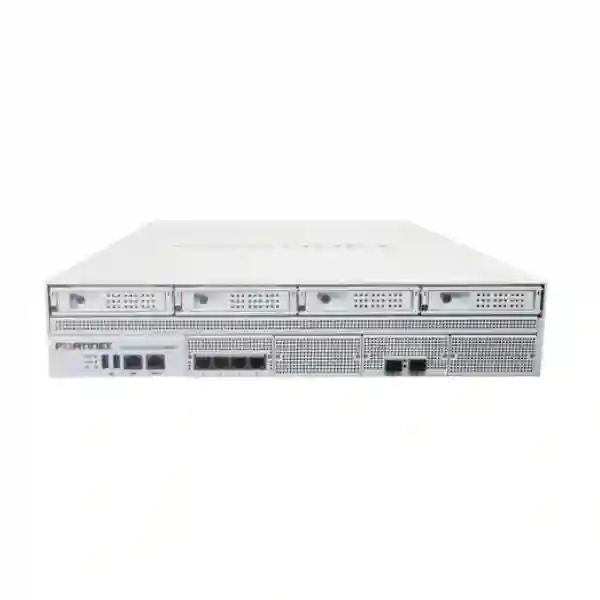
FortiAuthenticator FAC-3000F Tanzania
FortiAuthenticator FAC-3000F is a high-capacity physical identity and authentication appliance for organizations that want to centralize user authentication, strengthen access decisions and connect identity services with the wider Fortinet Security Fabric. It is designed for large user populations and supports enterprise requirements including RADIUS, LDAP-connected identity, certificate services, single sign-on, guest management and multi-factor authentication workflows. For Tanzania organizations evaluating FAC-3000F, FourTeck can assist with requirement discovery, quotation preparation, licensing discussions and deployment planning without treating the appliance as a one-size-fits-all purchase.
What FAC-3000F solves
Large environments frequently accumulate separate identity stores, VPN authentication rules, wireless access policies, certificate processes and administrator authentication methods. FortiAuthenticator provides a central identity layer that can reduce that fragmentation. It can authenticate users against local or remote identity sources, operate as a RADIUS server, participate in certificate-based access designs and support single sign-on so security controls can associate network activity with known users. This is particularly relevant where a FortiGate deployment needs stronger identity context rather than policies based only on IP addresses.
FAC-3000F should be sized from the identity architecture, not merely the employee count. Procurement teams should document local and remote users, authentication clients, directory integrations, token requirements, certificate volumes, HA requirements, growth expectations and the exact FortiAuthenticator software release planned for deployment. Fortinet publishes configuration maximums separately from performance commitments, so design validation remains important for large estates.
Central authentication
Consolidate authentication services for network access and connected systems with standards including RADIUS and LDAP-related workflows.
Identity-aware security
Use identity information and single sign-on capabilities to improve how security controls recognize users accessing internal and cloud resources.
Certificate services
Centralize certificate management for enterprise wireless, VPN and other certificate-based authentication requirements.
Resilient design
Plan active-passive high availability or configuration synchronization where authentication continuity is important to business access.
Verified FAC-3000F specification highlights
| Item | FAC-3000F |
|---|---|
| Copper interfaces | 4 × 10/100/1000 RJ45 |
| SFP interfaces | 2 |
| Local storage | 2 × 2 TB SAS, RAID 1 |
| Base users | 40,000 local + remote users |
| Form factor | 2RU rack mount |
| Power | Dual (1+1) 1000W auto-ranging 100–240V |
| Management | CLI, direct console DB9 CLI, HTTPS |
| High availability | Active-passive HA and configuration synchronization HA |
Capacity figures should be checked against the FortiAuthenticator release and license design selected for the project. Fortinet documentation notes that configuration maximums are not performance commitments.
Licensing and procurement guidance
The FAC-3000F hardware is supplied with a base user entitlement and Fortinet provides hardware user-upgrade licensing for larger deployments. Authentication projects can also involve FortiToken, SMS, enhanced authentication or HA-related licensing depending on the design. A quotation should therefore identify the appliance, user target, authentication methods, support requirement, HA architecture and any token or subscription needs. FourTeck recommends confirming the exact bill of materials against current Fortinet ordering information before purchase.
FortiAuthenticator FAC-3000F Tanzania
Tanzania enterprises considering FortiAuthenticator FAC-3000F are typically dealing with a scale or identity-control problem rather than simply looking for another network appliance. Banks, universities, large commercial groups, public institutions, service providers, healthcare networks and multi-site organizations may have thousands of users authenticating through VPNs, wireless networks, administrative interfaces and business systems. When identities are spread across directories and access platforms, policy becomes harder to audit and user lifecycle changes can take longer to propagate. FAC-3000F provides a dedicated platform around which a centralized authentication architecture can be built, while integrations should be mapped carefully to the organization’s existing directory, FortiGate, wireless, VPN and application environment.
For a Tanzania procurement exercise, start with an authentication inventory. Count employees, contractors, administrators, guests and service identities separately. Identify which users are local, which are synchronized from remote directories and which need certificate or token-based authentication. Record every RADIUS or authentication client, because firewalls, wireless controllers, VPN concentrators and other systems can create a much larger device count than expected. The 40,000-user base capacity makes FAC-3000F relevant to substantial environments, but the final architecture should consider software-version limits, redundancy, future expansion and the expected authentication pattern rather than relying on a headline user figure alone.
Infrastructure planning also matters in Tanzania. The appliance is a 2RU rack system with redundant power supplies, so the data-center plan should account for rack space, suitable power, cooling and resilient upstream network connections. Organizations that cannot tolerate identity-service interruption should evaluate high availability and test failover as part of commissioning. The deployment plan should also cover backup, certificate lifecycle, logging, administrator separation of duties and recovery procedures. These details turn authentication hardware into a dependable identity service.
FourTeck can help Tanzania buyers translate these requirements into a quotation discussion covering appliance sizing, licenses and associated Fortinet components. Buyers building a broader security architecture can also review FourTeck Tanzania technology solutions for related infrastructure planning. A useful request for quotation should include the present user population, three-year growth estimate, directory platform, required MFA method, number of sites, HA requirement and planned integrations. This produces a more meaningful commercial discussion than requesting FAC-3000F hardware without the identity design around it.
FortiAuthenticator FAC-3000F Dar es Salaam
Dar es Salaam organizations often operate dense headquarters environments with branch links, cloud applications, corporate Wi-Fi, VPN access and a large mix of permanent and temporary users. In that setting, authentication is an operational dependency: if identity services are fragmented, security teams may struggle to enforce consistent access and investigate activity across different platforms. FAC-3000F can serve as a centralized authentication platform for large deployments, bringing together RADIUS-based access, directory-backed identity, certificates, single sign-on and supported MFA workflows. The design objective should be to establish a reliable source of authentication decisions and identity context, not merely to add another server to the rack.
A Dar es Salaam head office should map the appliance to the physical and logical data-center design. FAC-3000F occupies 2RU and uses dual redundant power supplies. Rack placement, power diversity, cooling and switch connectivity should be reviewed before delivery. Where authentication supports business-critical VPN, wired or wireless access, an HA design may be appropriate. Fortinet supports active-passive HA and configuration synchronization, but HA licensing and topology should be validated for the chosen release and procurement bundle. Administrators should also decide how management access is restricted and how configuration backups and recovery tests are handled.
Identity architecture workshops should include the network, security, directory and application teams. List Active Directory or LDAP sources, RADIUS clients, certificate requirements, guest access processes and administrative authentication use cases. Determine which systems need immediate authentication and which can tolerate cached or alternate access if a dependency is unavailable. For organizations with several branches connected to Dar es Salaam, this exercise helps establish whether authentication will be centralized, distributed or designed with resilient secondary services.
Commercially, buyers should request the exact FAC-3000F appliance and then specify user licensing, support and any token-related requirements separately. This avoids ambiguity in a quote. If the project also includes perimeter security, branch protection or secure remote connectivity, the identity platform can be planned alongside Fortinet network controls rather than as an isolated purchase. FourTeck can use the customer’s user count, sites, authentication clients, MFA requirement and growth plan to prepare a clearer solution discussion and reduce the chance of licensing surprises later.
FortiAuthenticator FAC-3000F Mwanza
Mwanza businesses with regional branches, logistics operations, education campuses, healthcare environments or distributed commercial teams can use centralized authentication to create more consistent access policy across sites. A common challenge is that each location develops its own user lists, Wi-Fi credentials or VPN practices. As the organization grows, offboarding becomes difficult and security teams lose a single view of who is authenticating. FortiAuthenticator FAC-3000F is designed for much larger identity estates and can centralize authentication functions while integrating with remote identity sources and network access systems.
The project should begin by separating identity scale from network scale. A company might have modest internet bandwidth yet thousands of identities across staff, students, contractors or partners. Conversely, a high-bandwidth site might have a relatively small identity population. FAC-3000F selection should therefore focus on users, authentication clients, certificates, tokens, groups and integration needs. Fortinet’s published limits also vary by software generation, so procurement documents should state the intended FortiAuthenticator version and avoid treating every published maximum from every release as interchangeable.
For Mwanza deployments that depend on connectivity back to a central data center, resilience deserves specific attention. Teams should identify which authentication flows cross WAN links and what happens if those links fail. High availability can protect against an appliance failure, but it does not replace thoughtful network redundancy or directory availability. Certificate services also require disciplined lifecycle planning: enrollment, renewal, revocation, backup and administrator permissions should be documented before the platform becomes a production dependency.
A useful Mwanza quotation request includes the base user count, projected growth, number of sites, number and type of RADIUS clients, existing directory environment, MFA method, certificate use cases and whether HA is required. This lets FourTeck discuss the correct hardware and licensing path instead of quoting only the chassis. Organizations with branch firewalls or secure connectivity projects can align identity controls with the wider security design so user authentication, network segmentation and remote access policies reinforce each other.
FortiAuthenticator FAC-3000F Arusha
Arusha organizations in hospitality, tourism, education, NGOs, professional services and multi-site enterprise environments often need to distinguish employees, administrators, contractors and guests without maintaining disconnected credentials on every system. FortiAuthenticator provides centralized services that can support enterprise authentication, guest management, certificates and single sign-on. FAC-3000F is the high-capacity hardware model intended for large user populations, so it is most appropriate when the organization can justify its scale, resilience and expansion characteristics.
Guest and workforce identity should be designed as separate policy domains. A hotel group, campus or large institution may have a high volume of guest access while a smaller set of employees need privileged access to internal systems. The project team should document onboarding and expiry rules for each identity type. Where certificate-based Wi-Fi or VPN is planned, the certificate authority structure and renewal process must be understood. Where tokens or other MFA methods are used, enrollment and lost-device procedures need operational ownership.
FAC-3000F also needs proper data-room preparation. The 2RU appliance should be installed with suitable airflow, redundant power and reliable switching. Authentication services should be monitored like other critical infrastructure, with alerts, logging and backup processes. If HA is deployed, administrators should test failover during commissioning rather than assuming redundancy works because two appliances are present. Directory dependencies and DNS/NTP services should also be resilient because identity platforms rely on accurate time and dependable name resolution.
For Arusha procurement, FourTeck can help structure the commercial request around the actual solution: FAC-3000F hardware, user upgrades if needed, support, MFA components and deployment requirements. Buyers should provide their identity source, user population, network access systems and expansion plan. This makes it easier to compare a physical FAC-3000F design with other FortiAuthenticator deployment options and to determine whether the capacity is justified for the organization’s real authentication workload.
FortiAuthenticator FAC-3000F Dodoma
Dodoma institutions and enterprises evaluating centralized identity services may need to support large numbers of staff, administrative users, contractors and remote locations while maintaining controlled access to internal applications and networks. FortiAuthenticator FAC-3000F provides a dedicated enterprise authentication platform with support for standards and services commonly used in identity-aware network security. It can be integrated into a broader architecture rather than forcing authentication to remain distributed across individual firewalls, wireless systems and application appliances.
For environments with governance and audit requirements, the design process should emphasize lifecycle control. Document how users are created, synchronized, disabled and removed; how privileged administrators authenticate; how certificates are issued and revoked; and how guest accounts expire. Centralization can make these processes easier to manage, but only if roles and procedures are defined. Teams should also decide which logs must be retained and where they will be reviewed. FAC-3000F can become an important identity source, so administrator access should itself use strong controls.
Capacity planning must distinguish the base entitlement from maximum upgrade potential. Fortinet lists a 40,000-user base for FAC-3000F and provides upgrade licensing for larger populations. The practical project requirement should be validated against the selected software version, authentication pattern and integration design. If the environment needs HA, include the second-node and licensing implications in the original budget rather than treating resilience as an afterthought.
Dodoma buyers can prepare a stronger request by including user categories, site count, directory sources, VPN and wireless platforms, certificate requirements, token strategy and target support period. FourTeck can then help frame a quotation and associated deployment discussion. Where the project also requires firewalls, secure branches or central management, identity can be considered as one layer in a broader security architecture, which helps avoid duplicated authentication stores and inconsistent access rules.
FortiAuthenticator FAC-3000F UAE
UAE enterprises frequently operate hybrid environments spanning headquarters, data centers, cloud services, remote workers and regional branches. At that scale, identity must remain consistent across network and application boundaries. FortiAuthenticator FAC-3000F can provide centralized authentication and identity services for large deployments, including RADIUS, directory integration, single sign-on, certificates, guest authentication and supported MFA workflows. Organizations should position it as an identity infrastructure component with dependencies on directories, network access systems and security policy.
UAE projects often require formal architecture documentation and detailed bills of materials. The FAC-3000F base license supports 40,000 local and remote users, while Fortinet offers user-upgrade licensing for larger estates. The design should specify user count, RADIUS clients, token needs, certificate quantities, HA, support and software version. Data-center teams should reserve 2RU, redundant power and appropriate cooling. Security teams should define management access and logging. Identity teams should map authoritative directories and synchronization behavior.
For multi-country companies, authentication policy should also account for latency and WAN dependencies. A centralized UAE deployment may serve remote sites, but the architecture must evaluate what happens during connectivity loss. HA protects the appliance service locally; network resilience and remote directory availability are separate considerations. Testing should cover login, VPN, Wi-Fi, certificate enrollment and failover scenarios before production acceptance.
Organizations procuring from or coordinating through the UAE can review FourTeck UAE for regional technology engagement. The quotation request should describe the target architecture rather than only asking for a unit price. This enables discussion of the appliance, licensing, MFA components, support and implementation scope together and makes comparisons between deployment options more meaningful.
FortiAuthenticator FAC-3000F Uganda
Uganda organizations with expanding branch networks can benefit from a central authentication strategy when VPN, wireless, firewall and administrator access begin to rely on separate identity stores. FortiAuthenticator FAC-3000F is built for large identity environments and can centralize authentication services while connecting with directories and Fortinet security infrastructure. For most projects, the critical question is not whether centralized authentication is useful but whether FAC-3000F is the appropriate scale and form factor compared with smaller hardware or virtual deployment choices.
A Uganda sizing workshop should count identities and authentication clients separately. A large institution may have many users but a modest number of access devices; a service environment may have many network access clients across sites. Certificate use can also change the design substantially. Fortinet publishes base and maximum values by release, so the selected software generation should be documented in the design. Procurement should include any required upgrade licenses, tokens, HA and support rather than assuming every capability is contained in the appliance price.
Operational resilience is particularly important for distributed sites. Authentication traffic may cross provider links between branches and a central facility. The team should map WAN failure scenarios, DNS and time dependencies, remote directory access and recovery procedures. FAC-3000F supports HA designs, but resilient identity requires more than appliance redundancy. Monitoring should detect authentication failures early and distinguish platform problems from network or directory issues.
Uganda customers can review FourTeck Uganda for related regional security solutions. A quotation request should include users, branches, existing FortiGate or third-party authentication clients, directory platform, MFA approach and desired resilience. This information allows the solution discussion to focus on fit, licensing and integration rather than only the FAC-3000F model number.
FortiAuthenticator FAC-3000F Kampala
Kampala headquarters environments can accumulate many authentication paths as businesses add remote access, managed Wi-Fi, cloud services, branch VPNs and security administration. FortiAuthenticator FAC-3000F can help consolidate identity services for larger estates and provide a structured platform for RADIUS, directory-connected authentication, certificates and single sign-on. The strongest business case comes when centralization reduces duplicated account administration and gives security policy more reliable user context.
Before selecting FAC-3000F, Kampala IT teams should produce an identity dependency map. List the systems that send authentication requests, the directories that hold user records, certificate consumers, token populations and guest-access processes. Identify peak events such as morning logins, semester starts or shift changes. Fortinet warns that published configuration maximums are not performance commitments, so complex or unusually busy deployments should be validated rather than designed from a single maximum number.
Data-center implementation should reserve the appliance’s 2RU footprint and redundant power connections and should follow Fortinet installation guidance for airflow and cabling. If a second appliance is used for HA, test both planned failover and recovery. Authentication is often upstream of many other services, so a small configuration mistake can affect many users at once. Change control, backup and staged rollout procedures are therefore important.
For procurement, specify whether the requirement is hardware only, hardware plus support, or a complete identity deployment with user upgrades and MFA components. FourTeck can use that scope to prepare a more accurate commercial discussion. Kampala organizations already using FortiGate can also evaluate how user identity from FortiAuthenticator can contribute to a more coherent Fortinet security design across remote access, network segmentation and administrative authentication.
FortiAuthenticator FAC-3000F Arua
Arua organizations connected to larger national or regional networks may need authentication that remains centrally governed while supporting users far from the primary data center. FortiAuthenticator FAC-3000F can form the central identity service for large estates, but the remote-site experience depends on network architecture as much as the appliance itself. Designers should understand which login transactions cross WAN links, how directory lookups are performed and what contingency exists if a site temporarily loses connectivity.
For a distributed deployment, document branch firewalls, wireless infrastructure, VPN services and any network access servers that will use RADIUS. Determine whether users authenticate against local FortiAuthenticator records or remote LDAP directories and how synchronization is handled. If certificates are used, consider enrollment and renewal for devices that spend long periods at remote sites. If tokens are used, define enrollment support for users who may not be physically close to the central IT team.
FAC-3000F’s large base user entitlement may be appropriate for an organization serving many sites, but the choice should be justified by total identity scale and growth. The hardware requires enterprise rack and power planning, so a central data-center location is usually the natural deployment point. High availability can improve platform resilience, while WAN diversity and resilient directory services address different failure domains.
Arua procurement teams should send FourTeck a topology summary with users per site, authentication clients, directory locations, required MFA, certificate use and desired recovery objectives. This creates a useful basis for selecting licensing and support. It also helps determine whether central FAC-3000F, a different FortiAuthenticator appliance or another deployment model better fits the operational reality rather than selecting hardware solely because it offers the highest capacity.
FortiAuthenticator FAC-3000F Mbarara
Mbarara enterprises, education networks, healthcare groups and regional businesses can face identity complexity as they connect branch users, wireless networks, VPN services and administrative systems. A centralized authentication platform can reduce the number of independent credential stores and make access processes easier to govern. FortiAuthenticator FAC-3000F is aimed at large-scale requirements, offering the hardware capacity and licensing path needed for substantial user populations.
The business should first decide what it wants FortiAuthenticator to own. Possible roles include RADIUS authentication, directory integration, single sign-on, certificate services and guest authentication. Trying to migrate every identity function at once can create unnecessary risk. A staged approach can begin with a clearly bounded use case, validate logs and user experience, then expand to additional access systems. This is especially useful where branches depend on WAN connectivity to the central authentication service.
Security teams should also design administrative access carefully. Because FAC-3000F can become a central trust point, privileged administrator accounts deserve stronger protection, limited roles and auditable change processes. Certificates and tokens need lifecycle procedures, not just initial configuration. Backup and recovery should be tested, and HA should be evaluated where business access depends on continuous authentication.
When requesting a Mbarara quote, include the base and projected user population, authentication clients, directory type, MFA method, number of branches, HA requirement and support term. FourTeck can then discuss the FAC-3000F hardware and any associated licensing as a complete requirement. This procurement method reduces the risk of receiving a chassis-only quote that omits important identity components or of purchasing capacity that is poorly aligned with the organization’s actual deployment.
FortiAuthenticator FAC-3000F Gulu
Gulu organizations operating as part of national networks can use centralized authentication to maintain consistent identity controls across remote users and sites. FortiAuthenticator FAC-3000F can support large environments where network access, VPN authentication, certificates and user identity need to be coordinated. The design should account for both central governance and the realities of remote connectivity, because authentication availability depends on the full service chain from user device to network, FortiAuthenticator and directory.
A technical discovery exercise should list every access path: employee Wi-Fi, guest Wi-Fi, remote VPN, administrator login, wired access and application authentication where applicable. Each path may use different protocols and identity sources. Mapping them before implementation makes policy migration easier and helps the team avoid unexpected dependencies. It also provides a basis for estimating authentication clients and certificate or token requirements.
FAC-3000F provides redundant hardware characteristics suitable for enterprise data centers, but branch continuity needs additional planning. If Gulu users authenticate against a central site, test what occurs during WAN impairment. Where business requirements justify it, network redundancy and HA can be combined with documented emergency access procedures. Monitoring should cover authentication failures, directory reachability and certificate health so problems are found before they become widespread login incidents.
For a commercial request, Gulu buyers should state whether the system will serve only one organization or multiple business units, the expected growth, the authentication methods and the support expectations. FourTeck can then frame FAC-3000F as part of an identity solution rather than an isolated appliance. This is also the right time to review existing FortiGate and other security infrastructure so identity information can be used consistently across the environment.
FortiAuthenticator FAC-3000F Kenya
Kenya enterprises with large headquarters, campuses, financial environments, service-provider networks or distributed branches may need an authentication platform that scales beyond basic directory integration. FortiAuthenticator FAC-3000F provides a dedicated high-capacity platform for centralized identity services and can connect authentication, certificates, single sign-on and supported MFA workflows with Fortinet security infrastructure. The appliance’s base 40,000-user entitlement positions it for significant deployments, while upgrade licensing provides additional scale where required.
Kenya project teams should avoid equating licensed users with every other system limit. Authentication clients, groups, certificates, tokens and software-version maximums are separate planning dimensions. A design review should therefore capture all of them. Organizations should also decide whether the appliance will be deployed in a primary data center, disaster-recovery facility or HA pair and whether remote branches depend on the central service over MPLS, SD-WAN or internet VPN links.
Identity migration can be phased. A business might first centralize VPN and firewall administrator authentication, then extend to wireless access and certificates after operational processes are proven. This reduces change risk and lets support teams learn the platform. For certificate deployments, establish enrollment and revocation procedures. For MFA, establish enrollment, replacement and recovery processes. For SSO, test identity mapping carefully to avoid assigning network activity to the wrong user.
Kenya buyers can review FourTeck Kenya for regional Fortinet and security information. A FAC-3000F quotation should include users, growth, authentication clients, support, HA and token requirements. Providing this information up front helps produce a more useful bill of materials and makes it easier to compare the physical appliance with alternative FortiAuthenticator deployment options.
FortiAuthenticator FAC-3000F Kuwait
Kuwait enterprises running data-center, campus and multi-branch environments can use FortiAuthenticator FAC-3000F to centralize authentication and identity functions that would otherwise be distributed across security appliances and access systems. The platform is relevant where organizations need RADIUS, directory integration, certificates, SSO, guest management and MFA-related workflows at substantial scale. Its value comes from creating a consistent identity service that other controls can consume.
The procurement specification should state the intended FortiAuthenticator software version because supported limits and features can evolve. It should also identify the base user count, growth target, authentication clients, certificate quantities and token needs. FAC-3000F is a 2RU appliance with dual power supplies and SAS storage configured for RAID 1, so it should be treated as data-center infrastructure with suitable rack, power and cooling arrangements.
For high-availability environments, teams should consider the entire dependency chain. Appliance HA addresses one failure domain; directory, DNS, NTP, switching and WAN dependencies must also be resilient. Change procedures should include backup before major configuration updates and a tested rollback path. Privileged management should be limited to appropriate administrators, and authentication logs should be integrated into the organization’s operational monitoring process where required.
Kuwait customers can use FourTeck Kuwait for regional engagement. A clear RFQ should identify whether installation, configuration, migration or support is expected in addition to hardware. It should also distinguish mandatory requirements from future options. That structure allows FAC-3000F licensing and associated Fortinet components to be evaluated accurately and avoids comparing incomplete quotations that contain different service and entitlement assumptions.
FortiAuthenticator FAC-3000F Ghana
Ghana organizations modernizing identity controls can use a centralized authentication platform to support secure access across headquarters, branches and remote users. FortiAuthenticator FAC-3000F is intended for large-scale environments and can support RADIUS authentication, directory-connected identity, certificate management, single sign-on and guest workflows. It can be particularly useful where a Fortinet security environment needs consistent user identity information for access and policy decisions.
A Ghana deployment should be justified with an identity sizing worksheet. Include employees, contractors, students or customers where relevant, but also count authentication clients and certificates. Determine which identities are authoritative in remote directories and which will be stored locally. If the organization uses MFA, document token enrollment and recovery. If guest access is important, document sponsorship, expiry and audit requirements. These operational details influence the design as much as the appliance specification.
Physical deployment should follow enterprise data-center practices. The 2RU FAC-3000F has redundant power supplies and front-to-back airflow, so rack planning should preserve cooling and power resilience. HA can be considered for critical authentication services. Testing should cover normal logins, failed credentials, directory outages, network interruption and recovery so support teams understand expected behavior before production rollout.
Ghana buyers can review FourTeck Ghana when coordinating regional security requirements. For a useful quote, provide the intended user entitlement, HA requirement, support term, authentication methods and integration list. This helps distinguish the FAC-3000F hardware cost from the complete identity solution and provides a clearer basis for implementation planning, budgeting and future expansion.
FortiAuthenticator FAC-3000F Nigeria
Nigeria’s large enterprises, financial institutions, education networks, service providers and distributed commercial groups may have identity populations and branch counts that make centralized authentication a strategic infrastructure requirement. FortiAuthenticator FAC-3000F provides a high-capacity hardware platform for enterprise authentication, certificates, SSO and related identity services. It can reduce dependence on separate local credential stores and provide a more consistent foundation for access policy across Fortinet and standards-based systems.
For multi-site Nigerian environments, topology matters. The design should document which regions connect to the primary authentication service, how directory traffic flows, whether latency is acceptable and how users authenticate during connectivity problems. FAC-3000F supports HA, but a resilient architecture also needs dependable switching, DNS, NTP, directory and WAN services. Larger projects may require staged rollout by business unit or region so authentication changes can be tested before broad migration.
Licensing should be specified precisely. The base user entitlement is 40,000 and Fortinet provides upgrade licensing for larger user counts, but other components such as tokens, HA and support may require separate consideration. The selected software version should be part of the design because configuration maximums can differ across releases. Procurement teams should therefore request a complete bill of materials rather than comparing appliance-only prices.
FourTeck can use a Nigeria customer’s identity inventory to discuss the correct configuration and commercial scope. Include users, branches, authentication clients, directory systems, certificate needs, MFA method, HA and desired support. The result is a better foundation for deciding whether FAC-3000F is the right physical platform and for coordinating it with FortiGate, wireless, VPN and other security controls that rely on trustworthy user identity.
FortiAuthenticator FAC-3000F Seychelles
Seychelles organizations in hospitality, finance, government, education and multi-property business environments may need to manage employee, contractor and guest identities across physically separated sites. Central authentication can improve consistency, but island and inter-site connectivity makes dependency planning especially important. FortiAuthenticator FAC-3000F can support large identity populations and centralized services such as RADIUS, directory integration, certificates, single sign-on and guest authentication where the project scale justifies the platform.
A Seychelles design should first identify whether the identity service will sit in one primary data center or be protected with HA. The team should map how remote properties or offices reach it and what happens if an inter-site link is unavailable. Guest access should be kept logically distinct from employee and privileged administration. Certificate and MFA workflows should include remote enrollment and recovery procedures so users are not dependent on physical access to central IT support.
Because FAC-3000F is a 2RU enterprise appliance, the hosting environment needs adequate rack space, power and cooling. Redundant power supplies improve hardware resilience, while HA can address appliance availability when correctly designed and licensed. Backup, monitoring and change control should be established before authentication is migrated, because identity outages can prevent users from reaching many otherwise healthy systems.
For procurement, Seychelles customers should provide FourTeck with the total user population, property or site count, authentication clients, directories, guest requirements, certificates, MFA and growth estimate. This information helps determine whether FAC-3000F capacity is appropriate and what additional licensing is required. It also helps the organization compare a centralized hardware approach with alternative deployment models based on operational resilience, management preference and future expansion.
Compatibility and integration planning
FortiAuthenticator supports widely used identity and authentication standards including RADIUS, LDAP, X.509 certificates, SCEP, OAuth, OIDC and SAML 2.0, with exact workflows depending on the software release and connected product. This makes it useful in mixed environments, but standards support does not guarantee that every third-party application will work without configuration or testing. Before procurement, identify each relying system, its authentication protocol and the attributes it expects.
FortiGate integration is a common reason to deploy FortiAuthenticator because identity can strengthen firewall and remote-access policy. Wireless environments can use RADIUS and certificate-based approaches, while applications may use federation protocols where supported. A proof of concept is advisable for unusual or business-critical integrations. Document attribute mapping, group membership, certificate trust and fallback behavior so implementation teams have a repeatable design.
Related security planning
FortiGate integration
Identity-aware firewall and VPN designs can use FortiAuthenticator as part of a broader Fortinet architecture. Confirm the target FortiGate release and authentication workflow during design.
MFA and tokens
Determine which user groups need MFA, the token type, enrollment method, replacement process and licensing before finalizing the bill of materials.
Certificates
Plan certificate issuance, renewal, revocation and trust distribution for enterprise Wi-Fi, VPN and other certificate-based access scenarios.
FAC-3000F quotation checklist
Sending these details with the RFQ helps FourTeck distinguish the core appliance from user upgrades, MFA components, support and implementation requirements. It also provides a basis for checking whether FAC-3000F is correctly sized.
Frequently asked questions
What is FortiAuthenticator FAC-3000F used for?
It is a high-capacity Fortinet authentication appliance used to centralize identity services such as RADIUS authentication, directory integration, single sign-on, certificate management, guest authentication and supported multi-factor authentication workflows.
How many users does FAC-3000F support?
Fortinet lists a 40,000-user base entitlement for local and remote users. Upgrade licensing can extend supported user capacity. Confirm the target software release and current ordering guide when sizing a project.
Does FAC-3000F support high availability?
Fortinet documents active-passive HA and configuration synchronization HA. The exact topology, licensing and operational procedure should be validated for the planned FortiAuthenticator version.
Can it integrate with FortiGate?
Yes. FortiAuthenticator is designed as part of the Fortinet Security Fabric identity ecosystem and can provide authentication and identity services used in FortiGate-related access scenarios. The exact integration should be designed for the required FortiOS and FortiAuthenticator releases.
What should I provide for a Tanzania quotation?
Provide the current and future user count, directory platform, number of authentication clients, MFA/token needs, certificate requirements, HA preference, site count, support term and any FortiGate or third-party integrations.
Decision recap
FAC-3000F is best evaluated as enterprise identity infrastructure rather than as a standalone authentication box. Its large base user entitlement, rack-mount hardware, redundant power, RAID storage and HA options suit organizations that need centralized authentication at scale. The purchase decision should still be driven by the number and type of identities, authentication clients, certificate requirements, MFA strategy, software release, resilience targets and growth.
FourTeck can help translate those inputs into a quotation and deployment conversation. For Tanzania projects, include the full identity scope at the start so hardware, licensing and support can be reviewed together.
Consult FourTeck about FAC-3000F
Share your user population, authentication architecture, directory platform, sites, MFA requirement and HA objective. FourTeck can use this information to prepare a focused FAC-3000F discussion for Tanzania and regional deployments without assuming stock, delivery time or licensing that has not been confirmed.



Reviews
There are no reviews yet.