
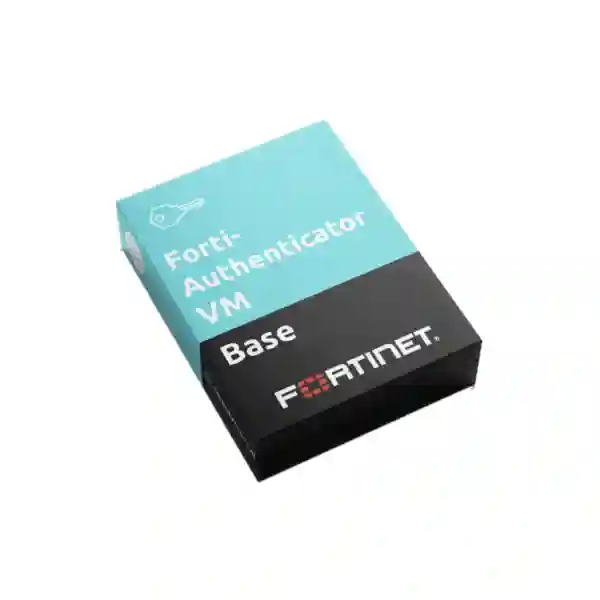
FortiAuthenticator VM Tanzania
FortiAuthenticator VM is Fortinet’s virtual identity and authentication platform for organizations that want to centralize user verification, strengthen multi-factor authentication, improve single sign-on and apply identity-aware access across security infrastructure. For Tanzanian enterprises, institutions, service providers and distributed organizations, the virtual appliance offers a practical way to add enterprise authentication services without introducing another dedicated hardware appliance. It can support RADIUS and TACACS+ authentication, Fortinet Single Sign-On, SAML and modern identity workflows, certificate services, FortiToken-based MFA and high-availability designs. FourTeck can help buyers define user capacity, virtualization requirements, licensing approach and integration scope before requesting a commercial quotation.
What FortiAuthenticator VM solves
Identity is a critical control point in modern security. Firewalls, VPN gateways, wireless networks, switches, cloud applications and administrative systems all need a reliable method to establish who a user is and what that user should be allowed to access. FortiAuthenticator VM consolidates many of these identity functions into a centrally managed virtual appliance. Rather than maintaining separate authentication logic on every network device, an organization can build a more consistent identity layer and integrate it with existing directories and security systems.
The platform is particularly relevant when an organization is introducing multi-factor authentication, moving away from password-only remote access, deploying 802.1X, centralizing administrator authentication, enabling guest access, building certificate-based access, or improving user identification for Fortinet security policies. Fortinet documents capabilities including RADIUS, TACACS+, FSSO, SAML identity-provider functions, OAuth2/OIDC, SCIM provisioning, FortiToken authentication, email and SMS OTP options, FIDO passwordless authentication, captive and guest portals, and PKI certificate management. The exact design should be selected according to the authentication workflow rather than enabling every feature by default.
Central authentication
Use RADIUS and TACACS+ services to centralize authentication for supported network access and administrative workflows.
Multi-factor authentication
Strengthen access with FortiToken options, OTP methods, FIDO passwordless capabilities and adaptive authentication where the selected design supports them.
Identity-aware security
Use Fortinet Single Sign-On and identity information to help security controls associate users with sessions and policies.
Virtual deployment
Deploy in supported virtual or cloud environments and scale user licensing and infrastructure resources as requirements grow.
FortiAuthenticator VM licensing and sizing
Fortinet currently documents both perpetual and subscription licensing for FortiAuthenticator-VM. The perpetual model starts with a base VM license and supports stackable user-capacity upgrades. Subscription licensing is term based and includes support entitlements; current Fortinet documentation notes that subscription VM licensing requires FortiAuthenticator 8.0.0 or later and connectivity to Fortinet’s licensing service. For high-availability subscription deployments, each member requires its own license and Fortinet does not support mixing perpetual and subscription licenses in the same redundant HA pair.
Sizing should begin with the number of local and remote users, expected concurrent authentication activity, SSO requirements, certificate objects, FortiToken requirements, NAS devices, growth expectations and high-availability strategy. Fortinet’s current VM documentation describes a base capacity of 100 users with stackable upgrade tiers. Because object limits and resource requirements can vary with software release and license size, buyers should validate the current ordering guide and release documentation before purchase rather than relying on an older specification table.
FortiAuthenticator VM Tanzania
Organizations in Tanzania often need to secure a mixture of headquarters users, branches, remote employees, administrators, Wi-Fi users and cloud application access. FortiAuthenticator VM can provide a central identity service for these environments while fitting into an existing virtualization strategy. A buyer evaluating FortiAuthenticator VM Tanzania should first map every authentication source and relying system: Active Directory or LDAP directories, FortiGate VPN access, wireless infrastructure, network switches, privileged administrator access, SaaS applications and any certificate-based services. This prevents the project from being treated as a simple VM installation when the larger requirement is identity architecture.
For procurement, user count is only the first sizing variable. Teams should document expected growth, MFA method, number of sites, resilience expectations, whether a secondary FortiAuthenticator instance is required, and whether perpetual or subscription licensing aligns better with budgeting. Authentication is a dependency for access, so resilience deserves particular attention. If FortiAuthenticator becomes part of VPN, Wi-Fi, firewall or administrator authentication, the design should consider HA, directory availability, DNS, time synchronization, backup, monitoring and recovery procedures.
Tanzanian buyers can also plan the deployment alongside the wider Fortinet security environment. Visit FourTeck Tanzania for the regional technology portfolio, FourTeck Fortinet solutions for related Fortinet security context, and FourTeck Africa for broader regional solution planning. A quotation request should state the required user capacity, hypervisor or cloud target, intended authentication methods, HA requirement, FortiToken requirement and current directory environment so the proposed configuration can be checked against the latest Fortinet ordering information.
FortiAuthenticator VM Dar es Salaam
Dar es Salaam organizations frequently operate complex networks that combine office users, remote workers, data-centre services, cloud applications, wireless access and multiple security devices. In this type of environment, FortiAuthenticator VM can serve as a central authentication layer rather than leaving identity decisions distributed across individual devices. Businesses evaluating the platform should identify which access events require stronger assurance: SSL VPN access, administrative login, employee Wi-Fi, contractor access, application federation or privileged network management.
A virtual deployment can be attractive for organizations that already operate VMware, Hyper-V, KVM or supported cloud infrastructure because identity services can be introduced without allocating rack space for another appliance. Virtualization does not remove infrastructure planning, however. CPU, memory, storage, interfaces, backups and HA placement should be considered alongside user licensing. Network paths between FortiAuthenticator, directories, FortiGate devices and other RADIUS or TACACS+ clients should be documented before implementation.
For a Dar es Salaam quotation, include the present and projected number of users, the number of authentication clients, the directory source, MFA preference, expected remote-access use and whether certificate services are part of the project. This creates a clearer commercial scope and reduces the risk of selecting a license only from today’s headcount. Where the project includes firewall and secure access modernization, the authentication design can be reviewed as part of the broader Fortinet architecture rather than as an isolated server.
FortiAuthenticator VM Mwanza
For businesses and institutions in Mwanza, centralized authentication can simplify security when users connect from a main site, branches and remote locations. FortiAuthenticator VM can help consolidate authentication policies and provide MFA for selected access workflows while integrating identity information with Fortinet security infrastructure. The most useful starting point is an access inventory: which users need access, which systems request authentication, where user accounts are stored, and what happens if the authentication service is unavailable.
Organizations with branch connectivity should pay special attention to WAN dependencies. A centralized identity design needs reliable paths to directories and authentication clients, and operational teams should understand failure behavior before production rollout. Where resilience is important, Fortinet supports active-passive HA for VM deployments. HA licensing and infrastructure should be included in procurement planning rather than added only after authentication has become business critical.
Mwanza customers planning MFA should also distinguish between the FortiAuthenticator platform license and authentication-token requirements. FortiToken, SSO Mobility Agent and some other entitlements can have separate licensing considerations. A well-prepared request therefore identifies the number of users needing MFA, preferred token method, expected authentication channels and future expansion. This makes it easier to compare the base VM, upgrade capacity and support requirements against the current Fortinet ordering guide.
FortiAuthenticator VM Arusha
Arusha organizations may need to authenticate employees, administrators, guests, partners and remote users across several different access systems. FortiAuthenticator VM provides a platform for bringing these identity workflows under a more consistent policy framework. RADIUS can support network-access authentication, TACACS+ can support administrator authentication and authorization use cases, SSO can improve identity visibility, while MFA can add an additional verification factor to higher-risk access.
For hospitality, services, education, NGO, enterprise and other multi-user environments, guest and captive-portal requirements should be separated from workforce authentication during design. Different populations can require different onboarding, credential lifetime and audit approaches. Certificate management may also be relevant where the organization is moving toward certificate-based device or user authentication. FortiAuthenticator includes PKI functions, but certificate lifecycle planning should be treated as a security project rather than a checkbox.
Before requesting FortiAuthenticator VM pricing in Arusha, prepare a concise deployment profile covering users, directories, MFA, RADIUS/TACACS+ clients, SSO requirements, virtualization platform, backup, HA and support term. If the environment includes FortiGate, FortiSwitch or FortiAP infrastructure, note those systems as integration points. The result is a more useful bill of materials and a clearer implementation conversation.
FortiAuthenticator VM Dodoma
Organizations in Dodoma evaluating identity security may need a platform that can support centralized authentication for employees and administrators while fitting existing virtual infrastructure. FortiAuthenticator VM is designed for identity and access services within Fortinet-enabled environments and can also serve standards-based authentication use cases. Its capabilities make it relevant to organizations replacing locally managed credentials, introducing MFA or seeking better user identification for network security policy.
Public-sector, institutional and enterprise deployments should define governance requirements early. Authentication logs, administrator roles, certificate handling, directory integration and recovery procedures can be as important as initial user capacity. Where an identity service protects remote access or privileged administration, change management and maintenance windows should be planned carefully. Fortinet notes that applying a VM license can involve a reboot, which is one example of why operational planning matters.
For procurement in Dodoma, avoid selecting a license from a single metric. Document the number of users, expected SSO sessions, authentication clients, FortiToken needs, HA design and anticipated expansion. Include the target hypervisor or cloud platform and current FortiAuthenticator software version if this is an upgrade project. These details allow the proposed configuration to be validated against current licensing and platform documentation.
FortiAuthenticator VM UAE
UAE enterprises commonly operate hybrid environments spanning offices, data centres, cloud workloads and remote access. FortiAuthenticator VM can provide a centralized identity layer for Fortinet security deployments and standards-based authentication requirements. It is available for private virtualization and public cloud use, giving architects flexibility to place authentication services close to the systems and directories they depend on.
A UAE deployment should consider data placement, latency, directory connectivity, high availability and disaster recovery. Organizations using cloud-hosted workloads can evaluate supported public-cloud deployment options, while private-cloud teams can align the VM with existing hypervisor standards. For subscription licensing, internet reachability to Fortinet’s licensing infrastructure is an operational requirement documented by Fortinet, so egress policy and monitoring should be part of the design.
Buyers can review the wider regional portfolio through FourTeck UAE. When requesting a FortiAuthenticator VM quotation, specify user capacity, license preference, support term, MFA method, HA, hypervisor or cloud platform and integration endpoints. This provides enough context to distinguish a straightforward virtual appliance purchase from a broader identity-security deployment.
FortiAuthenticator VM Uganda
Ugandan organizations with distributed users can use centralized authentication to reduce dependence on separate credentials and inconsistent access rules. FortiAuthenticator VM supports identity services that can integrate with Fortinet security infrastructure and common directory-driven designs. It is relevant for VPN authentication, network access, administrator authentication, SSO and MFA projects where a virtual appliance is preferred.
For multi-site organizations, the architecture should account for branch connectivity and the impact of WAN interruption on authentication. Directory replication, HA placement, DNS and time services are important dependencies. FortiAuthenticator’s HA capabilities can support resilience, but both infrastructure and licensing need to be planned correctly. Authentication should be tested under failure conditions before it becomes the sole path for critical access.
For regional context, visit FourTeck Uganda. Procurement teams should provide current and future user counts, MFA requirements, number of authentication clients, directory platform, virtual environment and support expectations when requesting pricing.
FortiAuthenticator VM Kampala
Kampala businesses often combine office networks, cloud applications, remote employees and administrator access that benefit from consistent identity controls. FortiAuthenticator VM can centralize authentication and provide MFA and SSO functions while integrating with Fortinet security infrastructure. This can reduce the operational burden of managing authentication separately on each device.
The design should distinguish workforce authentication from privileged administrator access. TACACS+ can be relevant for administrative authentication and command authorization, while RADIUS supports many network-access scenarios. MFA can then be applied where stronger assurance is required. Organizations should define emergency-access procedures and backup authentication paths as part of implementation.
A Kampala quotation should include user count, authentication protocols, MFA method, directory integration, HA requirement and target virtual platform. If the deployment will grow across branches, size the license and infrastructure with expansion in mind rather than treating the initial user count as permanent.
FortiAuthenticator VM Arua
Arua organizations considering centralized identity should focus on operational simplicity and resilience. FortiAuthenticator VM allows authentication services to run as a virtual appliance, which can suit organizations already standardizing on virtual infrastructure. The platform can support network authentication, MFA, SSO and certificate-related use cases without requiring a separate physical identity appliance.
Connectivity between sites can influence architecture. If users or network devices depend on a remotely hosted authentication service, WAN behavior and failover need testing. Authentication timeouts, directory reachability and DNS or NTP dependencies should be documented. For critical access, HA and recovery planning should be evaluated before production rollout.
When seeking FortiAuthenticator VM pricing for Arua, provide a realistic user count and growth estimate, list RADIUS/TACACS+ clients, identify MFA users and state the target hypervisor. This helps align the requested configuration with the current Fortinet licensing model and avoids purchasing capacity without understanding the wider deployment.
FortiAuthenticator VM Mbarara
Mbarara enterprises and institutions can use FortiAuthenticator VM to build a more centralized approach to identity across VPN, network and administrative access. The virtual form factor can be integrated into existing data-centre infrastructure while supporting Fortinet identity-aware security workflows.
A successful deployment begins with directory and policy design. Teams should decide which identity store is authoritative, how groups map to access policy, which users require MFA and how guest or contractor identities are handled. Certificate services and passwordless methods should be introduced with lifecycle and recovery processes, not only technical configuration.
Procurement teams in Mbarara should request licensing based on both present and projected users and confirm separate token or support requirements. Where HA is required, the second instance and its licensing must be included in the design. This produces a more realistic project budget than pricing only a single base VM.
FortiAuthenticator VM Gulu
For Gulu organizations, FortiAuthenticator VM can provide centralized authentication without adding a dedicated hardware platform. This is useful when an organization already operates a virtual environment and wants to integrate identity controls with Fortinet security products or standards-based network authentication.
Remote-access projects are a common reason to introduce stronger authentication. MFA can reduce dependence on passwords alone, while SSO and directory integration can simplify identity administration. The design should still account for account lifecycle, token enrollment, lost-device procedures, administrator recovery and audit requirements.
A useful Gulu quotation request states the number of users, number requiring MFA, authentication clients, directory type, virtualization platform and HA expectations. These inputs help determine whether the base capacity is sufficient or whether user upgrades and additional entitlements are required.
FortiAuthenticator VM Kenya
Kenyan enterprises can deploy FortiAuthenticator VM as part of a centralized identity strategy for Fortinet security infrastructure, remote access and network authentication. The platform supports private virtualization and documented cloud deployment options, making it adaptable to data-centre and hybrid-cloud designs.
Organizations should map identity flows before selecting capacity. User count, concurrent SSO activity, network devices, MFA adoption, certificate requirements and HA all influence the design. For subscription VM licensing, operational connectivity to Fortinet licensing services should also be considered in firewall and monitoring policy.
Regional solution information is available through FourTeck Kenya. A procurement request should include the target deployment platform, license model, user count, support requirement and integration scope so that current Fortinet ordering data can be applied accurately.
FortiAuthenticator VM Kuwait
Kuwait organizations deploying Fortinet security can use FortiAuthenticator VM to centralize identity services for users and administrators. Virtual deployment can align with established private-cloud or data-centre standards while providing RADIUS, TACACS+, SSO, MFA and certificate capabilities from a dedicated identity platform.
Identity architecture should consider both security and continuity. If authentication is required for VPN, Wi-Fi or privileged administration, teams should plan HA, backups, directory redundancy and emergency access. Licensing should be reviewed together with these requirements because redundant deployments require appropriate entitlements.
For Kuwait procurement, specify the user tier, FortiToken requirements, authentication protocols, hypervisor or cloud target and desired support term. This information helps create a configuration that reflects the actual access design instead of quoting an arbitrary VM size.
FortiAuthenticator VM Ghana
Ghanaian organizations modernizing network access can use FortiAuthenticator VM to centralize authentication and strengthen access with MFA. The solution can integrate identity into Fortinet security policies and provide standards-based services for network and administrator authentication.
Organizations with branches should evaluate where the VM will run and how remote sites reach it. Authentication is latency sensitive and operationally important, so WAN resilience, DNS, NTP and directory connectivity should be included in testing. HA may be appropriate for environments where authentication downtime would interrupt critical business access.
A Ghana quotation should identify current and future user counts, MFA users, directory source, authentication clients and virtual platform. Buyers should also confirm whether perpetual or subscription licensing better matches procurement policy and support expectations.
FortiAuthenticator VM Nigeria
Nigerian enterprises with large or distributed user populations can use FortiAuthenticator VM as a scalable identity layer for Fortinet-enabled networks. Stackable user licensing supports growth, while the virtual form factor allows the platform to be placed within supported private or public cloud infrastructure.
Larger deployments should pay close attention to sizing beyond raw user count. Authentication peaks, SSO sessions, number of NAS devices, certificate objects, token requirements and HA topology should be reviewed. Capacity should be validated against the current Fortinet release and ordering documentation because limits can evolve between software generations.
For Nigeria procurement, provide an architecture summary with sites, directories, user populations, MFA scope, network clients, cloud or hypervisor platform and resilience requirements. This supports a more accurate bill of materials and implementation plan.
FortiAuthenticator VM Seychelles
Seychelles organizations can use FortiAuthenticator VM to centralize authentication for office, remote-access and administrative environments while keeping the identity platform virtual. This can be useful where infrastructure consolidation and simplified hardware footprints are priorities.
For island and distributed connectivity environments, architects should examine dependency on WAN and internet paths carefully. Local directory connectivity, authentication availability, backup and recovery can be more important than adding features. Subscription deployments also require the documented connectivity needed for entitlement validation.
A Seychelles quotation should specify user capacity, authentication methods, MFA requirements, target virtual environment, HA expectations and support term. These details allow licensing and infrastructure to be matched to the operational design.
Compatibility and deployment planning
Fortinet documentation lists FortiAuthenticator VM deployment across VMware ESXi/ESX, Microsoft Hyper-V, KVM, Xen and several public-cloud or hyperconverged environments, including Microsoft Azure, AWS, Nutanix AHV, Oracle OCI and Alibaba Cloud in the referenced data sheet. Platform support should always be checked against the software version being purchased. The VM requires appropriate virtual compute, memory, storage and network interfaces, and those resources should be sized for the license and workload rather than simply allocated at the minimum.
Implementation should include network addressing, DNS, NTP, directory connectivity, certificates, firewall rules, backup, monitoring and administrative access. Where MFA is introduced, enrollment and recovery processes should be documented. Where SSO is used, identity-source and session behavior should be tested. Where RADIUS or TACACS+ is used, each client device should be inventoried and configured with controlled shared secrets and appropriate policies.
Quotation checklist
FortiAuthenticator VM FAQ
What is FortiAuthenticator VM?
It is the virtual-appliance edition of Fortinet FortiAuthenticator, providing centralized authentication and identity services such as RADIUS, TACACS+, SSO, MFA and certificate-management capabilities.
How is FortiAuthenticator VM licensed?
Fortinet documents perpetual stackable user licensing and subscription VM licensing. The appropriate model depends on user capacity, support requirements, software version and procurement preference.
Does FortiAuthenticator VM support high availability?
Yes. Fortinet documents active-passive HA and configuration synchronization for VM deployments. Redundant units require appropriate licensing.
Can FortiAuthenticator VM provide MFA?
Yes. Fortinet documents support for FortiToken options, OTP methods, FIDO passwordless authentication and adaptive authentication capabilities. Licensing and integration requirements depend on the selected method.
Decision recap
FortiAuthenticator VM is suited to organizations that want centralized authentication and identity services in a virtual deployment. The key buying decisions are user capacity, license model, MFA method, directory and application integrations, virtualization platform, resilience and support. A technically useful quotation should therefore be based on the intended authentication architecture rather than product name alone.
Plan your FortiAuthenticator VM deployment
Share your user count, authentication requirements, virtual platform and HA expectations with FourTeck Tanzania. The project can then be scoped around the current Fortinet licensing and deployment model, with related firewall, network and identity requirements considered together.



Reviews
There are no reviews yet.