
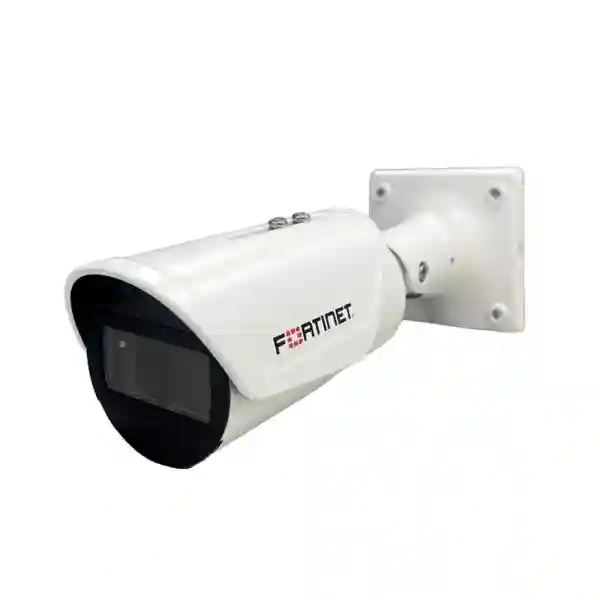
FortiCamera FCM-FB85-CA Tanzania
FortiCamera FCM-FB85-CA is Fortinet’s cloud-enabled 8 megapixel bullet IP camera for organizations that need detailed visual monitoring across entrances, perimeters, yards, offices, retail locations, campuses and distributed facilities. The model combines an 8 MP sensor, motorized varifocal optics, 50 metre infrared illumination, local storage and FortiCamera Cloud positioning in a rugged indoor/outdoor format. For Tanzanian buyers, that makes the camera relevant where security teams need to combine physical surveillance with centrally administered network infrastructure rather than operate video as an isolated system.
FourTeck can help buyers prepare a technically complete quotation request covering camera quantities, viewing distances, mounting locations, PoE capacity, recording expectations, retention needs and cloud-management requirements. Product availability, licensing, accessories and support terms should be confirmed for the exact project before purchase.
High-resolution imaging supports detailed monitoring for business surveillance applications.
Infrared illumination extends visibility for low-light and night-time monitoring scenarios.
Integrated storage provides an additional local video-storage resource within the camera design.
Designed for FortiCamera Cloud, supporting centralized visibility for distributed video-security environments.
FortiCamera FB85-CA overview and verified capabilities
The FCM-FB85-CA belongs to Fortinet’s network-based video-security portfolio. Fortinet positions FortiCamera with FortiRecorder and FortiCamera Cloud to address physical security, loss prevention, centralized visibility and AI-assisted analysis. The FB85-CA is a full bullet camera intended for indoor or outdoor installation. Official Fortinet material identifies an 8 MP sensor, low-light CMOS imaging, motorized varifocal optics, 50 m IR illumination, RTSP support, H.264/H.265 video compression, audio input/output, digital input/output, Ethernet connectivity and 1 TB storage. Environmental protection and vandal-resistant construction make it suited to exposed surveillance points, subject to correct installation and site engineering.
For procurement teams, the important distinction is that a camera specification is only one part of a successful surveillance design. Lens coverage, mounting height, target identification distance, lighting, network topology, PoE budget, bandwidth, recording policy, retention period and operator workflow all affect the final design. A quotation should therefore identify the physical areas to be covered rather than simply multiplying a camera quantity. Buyers can also explore FourTeck Tanzania technology solutions for related network and security requirements, while regional projects can reference FourTeck Africa.
Technical specification planning
| Format | Full bullet, indoor/outdoor |
| Sensor resolution | 8 MP |
| Lens | Motorized varifocal; verify exact current lens specification against the ordering documentation supplied with the quoted unit |
| Infrared | 50 m IR illumination |
| Video | H.264 / H.265; RTSP supported |
| Network | 10/100 Ethernet; PoE support |
| Storage | 1 TB |
| Audio / I/O | Audio line in/out and digital I/O |
| Platform | FortiCamera Cloud |
Fortinet documentation published across different product materials can contain specification wording that changes with document revision. Procurement should therefore validate the current datasheet and orderable part details at quotation time, especially for lens range, PoE class and support bundle. This avoids designing a site around an outdated secondary listing.
Where the FortiCamera FCM-FB85-CA fits
The bullet form factor is useful when the camera itself can be visibly positioned toward a defined observation area. Typical planning scenarios include perimeter approaches, loading areas, gates, building exteriors, parking areas, warehouse aisles and controlled access routes. The 8 MP imaging capability can help where operators need more scene detail, while motorized optics allow installers to tune the field of view during commissioning. IR illumination is relevant for sites where ambient light drops substantially after operating hours.
Organizations already standardizing on Fortinet can evaluate how video security fits alongside the broader security architecture. Visit FourTeck’s Fortinet specialist resource for wider Fortinet solution context, or FourTeck IT services when a project also requires infrastructure planning. These links describe adjacent solution areas; the exact compatibility and service scope for a Tanzanian project should be confirmed during design.
FortiCamera FCM-FB85-CA Tanzania
In Tanzania, the FortiCamera FCM-FB85-CA is relevant to organizations modernizing physical security while also improving network governance. Enterprises, schools, hospitality properties, warehouses, retailers, logistics operators and multi-site businesses may need cameras that can cover outdoor approaches as well as indoor operational areas. The buying process should start with a site map: mark entrances, perimeter lines, high-value zones, loading points and public-facing spaces, then define whether each camera is intended for overview, detection, recognition or detailed identification. That requirement determines viewing angle and mounting position more reliably than choosing by megapixel count alone.
Tanzanian deployments also benefit from careful network planning. Each camera requires a suitable Ethernet path and power arrangement, and PoE switching capacity should be calculated for the full camera estate rather than one device. Uplink capacity, VLAN design, remote access policy and recording traffic should be considered alongside cybersecurity controls. Where sites span multiple branches, FortiCamera Cloud can be evaluated for centralized administration and visibility, while organizations with on-premises recording requirements can assess FortiRecorder options and retention sizing.
Environmental conditions vary widely between coastal, urban, industrial and inland sites. Outdoor cameras should be mounted to reduce direct glare, avoid unnecessary sky exposure, protect cabling and connectors, and maintain a useful field of view during rain or dust. Night scenes should be tested for reflective surfaces that can wash out IR images. For procurement, request a bill of materials that separates cameras, mounts, junction accessories, PoE switching, storage or subscriptions, installation, configuration and support. This produces a clearer commercial comparison and reduces missing components. FourTeck Tanzania can use the project brief to prepare an appropriate quotation without assuming stock, delivery time or licensing until these are confirmed.
FortiCamera FCM-FB85-CA Dar es Salaam
Dar es Salaam projects often combine office, retail, hospitality, logistics and industrial surveillance requirements within dense network environments. For a FortiCamera FCM-FB85-CA deployment, begin by separating perimeter surveillance from customer-facing or staff areas. Outdoor bullet cameras can be directed toward gates, yards, parking approaches and building boundaries, while interior placements should be selected around actual operational risk. Camera height matters: mounting too high can produce broad coverage but reduce useful facial or object detail. A motorized lens gives the installer flexibility to refine framing after physical placement.
Coastal conditions make installation workmanship especially important. Weather-rated equipment still depends on protected terminations, appropriate cable routing, secure junction points and mounting hardware suited to the structure. Installers should check for direct sun, reflective walls, headlights and strong backlighting. Night testing is essential because an apparently good daytime view can behave differently when IR illumination activates. Recording requirements should be documented in days of retention and expected operating mode rather than described simply as “large storage.”
For businesses with several Dar es Salaam sites, centralized visibility can reduce the operational burden of managing independent camera systems. Network segmentation, administrator access, credential policies and remote viewing permissions should be agreed before commissioning. If the project also requires firewall or secure WAN design, the camera network should be included in that architecture rather than treated as an unmanaged edge. Buyers should provide floor plans, target areas, approximate distances, preferred retention, number of monitoring users and any integration expectations when requesting a quotation. This helps translate the FB85-CA specification into a practical design rather than a hardware-only purchase.
FortiCamera FCM-FB85-CA Mwanza
Mwanza organizations considering the FortiCamera FCM-FB85-CA may be planning surveillance for commercial premises, education facilities, warehouses, hospitality sites, offices or distributed operational locations. The camera’s bullet format and 50 m IR capability make it a candidate for defined outdoor views, but the actual usable identification distance depends on lens framing, target size, lighting and installation geometry. A pre-installation survey should therefore document what operators need to see and what action they expect to take when an event occurs.
Network readiness is equally important. Confirm the route from each camera to the access switch, available PoE budget, cable distance, surge and grounding considerations, uplink capacity and whether surveillance traffic should be isolated in a dedicated VLAN. If remote monitoring is required, define who may view live or recorded video and from which locations. Centralized cloud management can be attractive for organizations with limited local administration, but subscription and service requirements should be validated for the proposed deployment before purchase.
Mwanza procurement teams can improve quotation accuracy by grouping cameras by use case. For example, gate cameras may need a narrower field of view than warehouse overview cameras; building perimeter cameras may require different mounts; reception or indoor areas may be better served by another FortiCamera form factor. Ask the supplier to identify all required accessories and recurring services separately. This creates a transparent basis for comparing the FB85-CA with alternative FortiCamera models and helps avoid over-specifying every location with the same camera. A staged rollout can also be considered where the organization wants to validate image quality, network impact and operator workflow before expanding across multiple facilities.
FortiCamera FCM-FB85-CA Arusha
Arusha has a diverse mix of hospitality, tourism-support, education, professional services, retail and institutional environments where video security may need to cover both guest-facing and operational areas. The FortiCamera FCM-FB85-CA can be evaluated for exterior approaches, service areas, car parks, gates and other defined scenes requiring an 8 MP bullet camera. The design objective should be explicit: deterrence, general awareness, incident review and detailed identification each lead to different framing choices.
Hospitality and public-facing environments require particular care around camera placement. A technically capable camera should still be positioned in a way that supports security objectives without creating unnecessary blind spots or intrusive views. For exterior installations, review changing sunlight, night lighting, vegetation and vehicle movement. The 50 m IR specification is a useful capability, but real-world night performance depends on scene reflectivity and framing. Commissioning should include both daytime and night-time checks rather than accepting a single installation snapshot.
For multi-building sites, map camera traffic to the network before installation. PoE switch capacity should include headroom, and uplinks should be sized around simultaneous camera traffic and other business applications. Recording and cloud-management choices should reflect how operators actually work: a security desk may need continuous local access, while management may prioritize remote visibility across properties. Buyers in Arusha should request a project-specific quotation listing camera hardware, accessories, switching requirements, recording or cloud components, support and installation as separate lines. Where broader regional coordination is required, FourTeck Kenya can provide adjacent East African solution context without implying identical commercial terms across countries.
FortiCamera FCM-FB85-CA Dodoma
Dodoma buyers may be evaluating video security for offices, institutions, campuses, commercial facilities, warehouses and expanding business sites. The FortiCamera FCM-FB85-CA is suited to projects that call for a robust bullet camera with high-resolution imaging and centralized management options. Planning should begin with security outcomes rather than camera counts. Identify the paths people and vehicles use, the assets requiring protection, areas where incidents are most likely to occur and the positions from which a camera can capture useful evidence.
Outdoor installations should account for heat, dust, direct sunlight and exposed cabling. The camera’s environmental specifications provide an equipment envelope, but installation quality determines whether the overall system remains reliable. Cable entry points, mounting surfaces, junction protection and network equipment locations should be reviewed. For larger sites, consider how camera coverage can be divided into logical zones so operators can find relevant video quickly rather than monitoring an undifferentiated list of feeds.
A Dodoma quotation request should state the number of buildings, approximate camera positions, distances to network cabinets, preferred retention period, monitoring locations and whether cloud administration is required. Where the organization already uses Fortinet security infrastructure, discuss segmentation and management policies for the camera network. The FB85-CA should not automatically be specified for every position: indoor corridors, wide open areas and compact rooms may call for different form factors. A mixed-camera design can provide better coverage and cost control. Confirm current Fortinet ordering information, support options and any required FortiCamera Cloud subscriptions before approval so the commercial proposal matches the intended operating model.
FortiCamera FCM-FB85-CA UAE
UAE deployments commonly involve commercial towers, warehouses, retail environments, hospitality properties, campuses and industrial sites with mature network infrastructure. The FortiCamera FCM-FB85-CA can be assessed where an 8 MP outdoor-capable bullet camera, motorized framing and long-range IR are appropriate. The first design step is to classify each scene by required detail and lighting. High resolution alone does not guarantee useful evidence if the target occupies only a small portion of the frame, so lens setup and mounting geometry remain fundamental.
High ambient temperatures and intense sunlight make site engineering important. Cameras should be mounted within supported environmental limits, with protected cabling and sensible orientation. At night, external lighting and IR should be tested together to avoid overexposed foreground objects. Network designers should calculate aggregate PoE load, switching capacity and uplink traffic, then apply segmentation and administrator controls consistent with the organization’s security policy. For cloud-managed deployments, confirm subscription terms, data-handling requirements and operational responsibilities.
UAE buyers can use FourTeck UAE for regional technology enquiries and Fortinet UAE solution guidance for related Fortinet infrastructure. A professional request for quotation should include camera quantities by location, target viewing distances, retention requirements, required accessories, existing PoE switches, remote-viewing needs and desired support coverage. This information lets the project team determine whether the FB85-CA should be deployed uniformly or alongside dome, fisheye or other camera formats. Commercial availability and regulatory requirements should always be confirmed for the exact UAE project.
FortiCamera FCM-FB85-CA Uganda
Ugandan organizations can evaluate the FortiCamera FCM-FB85-CA for perimeter, entrance, warehouse, campus, office and branch surveillance where a bullet camera is suitable. Distributed businesses should pay particular attention to management architecture. If cameras are installed at multiple sites, the organization needs a repeatable approach to IP addressing, VLANs, administrator access, firmware maintenance, recording policy and incident retrieval. Centralized FortiCamera Cloud capabilities can be evaluated as part of that model.
Before specifying camera quantity, divide each location into surveillance objectives. A gate may require detailed framing, while a yard may prioritize situational awareness. A corridor or reception space may suit a different form factor. The FB85-CA’s motorized optics help tune the field of view, but installers still need accurate mounting positions and a commissioning checklist. Night-time tests should verify that 50 m IR capability translates into useful images for the actual scene and does not create reflection from nearby walls or surfaces.
For regional support and solution context, buyers can review FourTeck Uganda. Procurement requests should list hardware, mounts, PoE switching, network work, recording or cloud services, installation and support separately. Organizations should also specify retention expectations and the number of users who require live or playback access. This prevents under-sizing the surrounding infrastructure. Where the project connects Uganda with Tanzanian or other East African sites, standardizing camera naming, network policies and operating procedures can simplify administration while still allowing each location to use the camera type best suited to its physical environment.
FortiCamera FCM-FB85-CA Kampala
Kampala businesses often need video security across busy mixed-use environments, from offices and retail premises to warehouses, compounds and hospitality properties. The FCM-FB85-CA can serve defined outdoor or indoor observation points where its bullet design and high-resolution sensor are appropriate. A good design considers movement patterns throughout the day. Vehicle headlights, entrance backlighting, crowded scenes and changing night illumination can all affect the value of recorded footage.
For sites with existing Ethernet infrastructure, verify that cabling and switches meet the camera’s power and connectivity requirements. PoE budgets should be checked at switch level, not assumed from port count. Camera traffic should be logically separated where appropriate, and remote access should be controlled through documented administrator roles. If the organization wants cloud-based monitoring, confirm the required FortiCamera Cloud service and support options during quotation rather than treating cloud access as an unspecified feature.
Kampala procurement teams should ask installers to demonstrate final framing at both day and night. The motorized lens can be adjusted to focus on the target area, which is especially valuable where mounting positions are constrained. The 1 TB local storage capability is useful within the product architecture, but retention planning must still consider recording mode, resolution, frame rate and organizational policy. For a multi-camera system, recording design should be treated as a system-level decision. A complete quotation should also identify mounting accessories, network upgrades and commissioning services so decision-makers can compare total deployment requirements rather than only the unit price of the camera.
FortiCamera FCM-FB85-CA Arua
Arua projects may involve branch offices, commercial compounds, education facilities, warehouses or service locations where dependable video coverage is needed without creating an overly complex local management burden. The FortiCamera FCM-FB85-CA offers a combination of 8 MP imaging, IR illumination and cloud-oriented management that can be evaluated for these environments. For remote or branch sites, network resilience and operational simplicity can matter as much as camera resolution.
Begin with a site survey that identifies the security objective of each proposed position. Outdoor bullet cameras are most effective when they are aimed at a clearly defined area and mounted where tampering is difficult while maintenance remains practical. Check the direction of sunrise and sunset, nearby lighting, roof lines, reflective surfaces and vegetation. Protect cabling and connectors, and document how the camera connects to the local PoE switch and upstream network.
If video will be monitored from another city, define how outages and local network interruptions will be handled and who is responsible for first-line checks. Cloud management can simplify visibility, but the full solution still depends on internet connectivity, power, switching and correct account administration. Buyers in Arua should request a bill of materials that includes the FB85-CA, required mounts or junction accessories, PoE infrastructure, any subscriptions, installation and support. Avoid assuming that the same configuration used at a Kampala headquarters will automatically fit a smaller branch. Standardize policies where helpful, but size each site around its actual coverage, bandwidth and operational requirements.
FortiCamera FCM-FB85-CA Mbarara
Mbarara organizations can consider the FortiCamera FCM-FB85-CA for business premises where security teams need high-resolution coverage of outdoor approaches or other defined areas. Warehouses, retail compounds, offices, educational sites and hospitality properties can all have different surveillance priorities, so the camera should be selected as part of a coverage plan. The bullet format is visually prominent, which may support deterrence, while motorized optics allow installers to refine scene framing during commissioning.
A reliable deployment depends on the network behind the camera. Confirm PoE availability, cable routes, cabinet capacity, uplink performance and power protection. For sites with several cameras, create a naming convention and network diagram so operators and support teams can identify devices quickly. If video is accessed remotely, apply strong administrative controls and document who can view, export or manage recordings. Where cloud services are used, licensing and support should be matched to the intended operational period.
Night-time performance should be validated on site. IR range is a manufacturer specification, but scene geometry determines whether important subjects are illuminated at the required detail. Nearby surfaces can reflect IR and reduce clarity, while distant targets may occupy too few pixels if the lens is set too wide. Mbarara buyers should therefore ask for commissioning that verifies focus, field of view and night imagery. The quotation should separate camera hardware from accessories, switching, recording or cloud components and labor. This provides a more accurate view of total project cost and makes future expansion easier to plan.
FortiCamera FCM-FB85-CA Gulu
Gulu businesses and institutions evaluating the FortiCamera FCM-FB85-CA should focus on practical surveillance outcomes: which areas need continuous visibility, which incidents must be reviewable, and what level of detail operators require. The 8 MP sensor provides substantial image information, but installation choices determine how effectively that resolution is used. A camera aimed across a very wide scene may provide less useful detail on a distant subject than a properly framed view using the motorized lens.
For exterior areas, plan for weather exposure, dust, heat, cable protection and secure mounting. The camera’s rugged specification supports indoor/outdoor use, but junctions and cabling must also be installed correctly. Check night lighting and IR performance after dark. If a site uses generators, UPS systems or other power-protection measures, include surveillance switches and relevant network equipment in the continuity plan so cameras do not become unavailable during the events they are intended to document.
For organizations linking Gulu with other Ugandan sites, centralized administration can simplify camera inventory and operator access. Establish consistent naming, administrator roles, retention policies and incident-export procedures. Buyers should state whether they need live monitoring, event review, cloud management or integration with broader Fortinet infrastructure. A detailed request for quotation should identify the number of target areas rather than simply asking for a fixed number of cameras. That gives the solution team room to recommend the FB85-CA where it fits and alternate camera formats where they produce a better operational result.
FortiCamera FCM-FB85-CA Kenya
Kenyan deployments can range from single-site commercial surveillance to multi-branch systems requiring centralized visibility. The FortiCamera FCM-FB85-CA is a candidate for perimeter and defined-scene monitoring where an 8 MP bullet camera with 50 m IR and motorized optics suits the security objective. Before purchase, buyers should decide whether each camera is expected to provide broad awareness or detailed evidence. This determines lens setup, mounting position and the number of cameras more effectively than a generic coverage estimate.
Enterprise sites should integrate camera networking into normal IT governance. Calculate PoE demand, use appropriate segmentation, control administrator access and document remote connectivity. Storage and retention should be sized around policy and recording behavior. A high-resolution stream can create significant data over time, so retention planning should be performed before the system is commissioned. FortiCamera Cloud may be evaluated for distributed administration, while on-premises recording options can be considered where the operating model requires them.
For Kenyan enquiries, FourTeck Kenya provides regional context. Projects spanning Kenya and Tanzania can benefit from consistent camera standards and support procedures, but each site should still receive a physical survey because lighting, network topology and target distances differ. Ask for a quotation that identifies cameras, mounts, network switching, recording or cloud services, installation, commissioning and support. This makes it easier to compare alternatives and plan future expansion without assuming that every surveillance point needs the same camera model.
FortiCamera FCM-FB85-CA Kuwait
Kuwait projects considering the FortiCamera FCM-FB85-CA should place environmental and network design alongside image quality. Commercial, warehouse, office and industrial sites can expose outdoor cameras to high temperatures, bright sunlight and dust. The camera should be installed within its documented operating limits, with cable protection, suitable mounting and a field of view that avoids unnecessary glare. Night testing remains important even when IR illumination is specified.
A motorized lens helps commissioning teams adjust the scene without replacing a fixed lens, but target detail should still be verified at the actual distance. If the objective is to recognize activity at a gate or loading area, frame that target deliberately rather than maximizing the total scene. For network planning, calculate PoE capacity and aggregate camera bandwidth, then decide whether surveillance traffic requires dedicated VLANs or switching resources. Access to live and recorded video should follow defined user roles.
Regional buyers can review FourTeck Kuwait for local technology enquiries. When requesting the FB85-CA, provide site type, camera quantity estimate, target distances, retention needs, monitoring locations and required support period. Confirm current product availability, accessories and cloud-service terms at quotation time. Where an organization has multiple branches, a standardized design template can reduce operational complexity, but the installer should still adjust lens framing and mounting to each location. A complete proposal should show recurring services separately from one-time hardware and installation so procurement teams understand the lifecycle cost structure.
FortiCamera FCM-FB85-CA Ghana
Ghanaian organizations can evaluate the FortiCamera FCM-FB85-CA for surveillance projects that need a rugged bullet camera and centralized management options. Offices, warehouses, retail compounds, educational facilities and hospitality properties often combine indoor and outdoor coverage, so camera selection should be based on each scene. The FB85-CA is particularly relevant to defined outdoor views, while other form factors may be preferable for discreet interior coverage or very wide spaces.
Planning should include lighting throughout the full operating cycle. Daytime sun, shaded entrances, vehicle lights and night-time IR can produce very different images. Installers should test final framing and focus under representative conditions. Network engineers should confirm PoE switching capacity and create an appropriate surveillance segment. For multi-site organizations, centralized cloud administration may help standardize device visibility, but service subscriptions, internet dependence and user-access policies should be reviewed before rollout.
For regional enquiries, FourTeck Ghana provides relevant market context. A useful quotation request should specify target areas, approximate distances, number of sites, retention expectations, monitoring users and whether integration with existing Fortinet infrastructure is desired. Buyers should also ask for mounting and junction accessories to be itemized rather than assumed. If the deployment is large, consider a pilot in one representative area to validate image quality, network behavior and operator workflow before standardizing the design across multiple facilities.
FortiCamera FCM-FB85-CA Nigeria
Nigeria presents a broad range of surveillance requirements across corporate offices, retail chains, warehouses, logistics facilities, campuses and industrial sites. The FortiCamera FCM-FB85-CA can be assessed for projects needing an 8 MP bullet IP camera with long-range IR and cloud-enabled management. Large or distributed deployments should begin with a camera schedule that records the purpose, target area, mounting height, viewing distance and network connection for every proposed position.
Power and network resilience should be designed at system level. Cameras may rely on PoE switches, uplinks, routers and internet services, so continuity planning should include these dependencies. Recording policy should define how long video must be retained and who can retrieve or export it. Where bandwidth between sites is constrained, architects should consider how live viewing and centralized management will be used operationally rather than assuming every stream will be watched continuously from a remote location.
Buyers can visit FourTeck Nigeria for regional enquiries. For procurement, separate camera hardware, mounts, PoE infrastructure, storage or cloud services, installation and support in the bill of materials. The FB85-CA may be an excellent fit for selected perimeter or approach views without being the right choice for every indoor area. Mixed designs can use bullet, dome or other camera formats according to scene requirements. Confirm current Fortinet documentation and commercial terms before ordering, especially where a project requires specific support duration or cloud subscriptions.
FortiCamera FCM-FB85-CA Seychelles
Seychelles deployments may involve hospitality properties, commercial facilities, offices, retail locations and distributed buildings where outdoor video security must coexist with coastal environmental conditions. The FortiCamera FCM-FB85-CA is designed for indoor/outdoor use, but the complete installation should be engineered for the site. Protected terminations, appropriate mounting materials, careful cable routing and routine inspection are important where equipment is exposed to salt-laden air and weather.
Hospitality sites often require a balance between strong perimeter visibility and unobtrusive guest-area design. The bullet form factor is well suited to locations where visible surveillance is acceptable and a defined direction of view is required. Motorized optics can help installers tune coverage around gates, service roads, delivery zones or building approaches. At night, test IR against nearby walls, vegetation and reflective surfaces. A 50 m IR specification describes the illuminator capability, but usable scene detail still depends on target size and lens framing.
Network and cloud planning should reflect island connectivity and the property’s operating model. If management teams require remote access, define bandwidth expectations and user permissions. PoE switching and upstream network equipment should be included in power-protection planning. A quotation should identify the exact camera locations, retention policy, required mounts, network upgrades, cloud or recording components and support expectations. For multi-property groups, centralized naming and administration can simplify operations, while each property should retain a site-specific coverage design. Confirm supply, delivery, subscription and support details for the Seychelles project rather than extrapolating terms from another market.
Compatibility, cloud management and network integration
Fortinet positions FortiCamera within a broader network-based video-security architecture that includes FortiCamera Cloud, FortiRecorder and FortiCentral. The right operating model depends on whether an organization prioritizes cloud administration, on-premises recording, centralized monitoring or a combination of these requirements. Buyers should document how many sites and users are involved, who administers cameras, how incidents are reviewed and what retention obligations apply.
From a network perspective, surveillance should be treated as a managed application. Use appropriate VLAN design, administrator controls and switch capacity. Confirm PoE requirements for the current hardware revision and maintain sufficient power budget. Where camera networks connect through FortiGate infrastructure, security policy can be designed around required management and video flows rather than granting broad network access. For wider secure-network projects, FourTeck firewall solutions illustrate related security architecture capabilities, while the exact Tanzanian design should be scoped independently.
Buying and quotation checklist
List every target area, viewing distance, mounting point and day/night objective.
Document PoE switch models, available power budget, cable distances, uplinks and VLAN requirements.
State retention days, expected recording mode, operator locations and playback requirements.
Request cameras, mounts, subscriptions, support, installation and commissioning as identifiable line items.
FortiCamera FCM-FB85-CA FAQs
Is the FortiCamera FCM-FB85-CA suitable for outdoor use?
Yes. Fortinet positions the FB85-CA for indoor and outdoor deployment and publishes environmental protection specifications. Correct mounting, cable protection and installation practices are still essential.
What resolution does the FB85-CA provide?
The camera uses an 8 MP sensor. Image usefulness at a target depends on lens framing, distance, lighting and installation geometry as well as sensor resolution.
Does it support night surveillance?
Fortinet specifies 50 m IR illumination. A site should still be tested at night because reflections, ambient light and target distance affect practical results.
Can the FortiCamera FB85-CA use PoE?
Yes, Fortinet documentation identifies PoE support. Confirm the current PoE requirement and ensure the selected switch has adequate per-port and total power budget.
How much local storage is included?
Current Fortinet documentation lists 1 TB storage for the FB85-CA. Retention should nevertheless be planned at system level according to recording settings and organizational policy.
What information is needed for a Tanzania quotation?
Provide the number of sites, target areas, approximate distances, camera quantity estimate, retention requirement, existing network and PoE infrastructure, cloud-management expectations and desired support scope.
Decision recap
Choose the FortiCamera FCM-FB85-CA when the project calls for a Fortinet cloud-enabled 8 MP bullet camera, long-range IR, motorized framing, local storage and indoor/outdoor deployment. Validate each camera position against the actual surveillance objective and confirm current ordering, support and subscription details before purchase. The best proposal will include the network, power, recording and mounting components required to make the camera operational rather than quoting the camera in isolation.
Plan your FortiCamera deployment with FourTeck Tanzania
Send your site count, coverage areas, approximate distances, retention requirement and existing network details. FourTeck can use this information to prepare a project-specific quotation and identify the camera, infrastructure and service components that should be confirmed for your deployment.



Reviews
There are no reviews yet.