
FortiCamera FCM-FD55-CA Tanzania
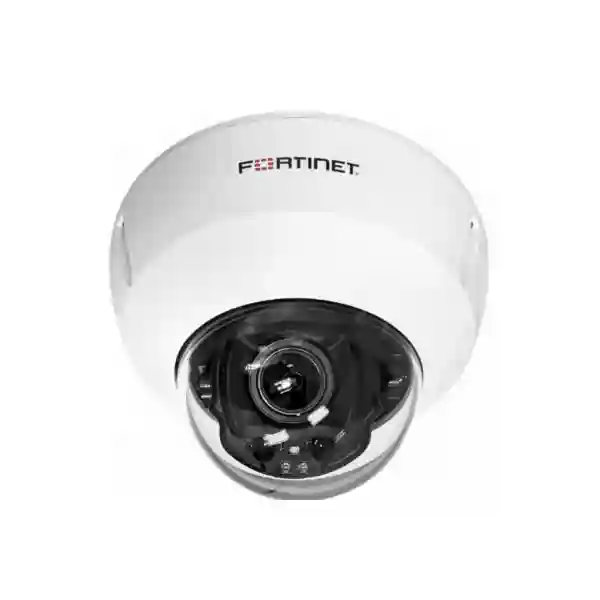
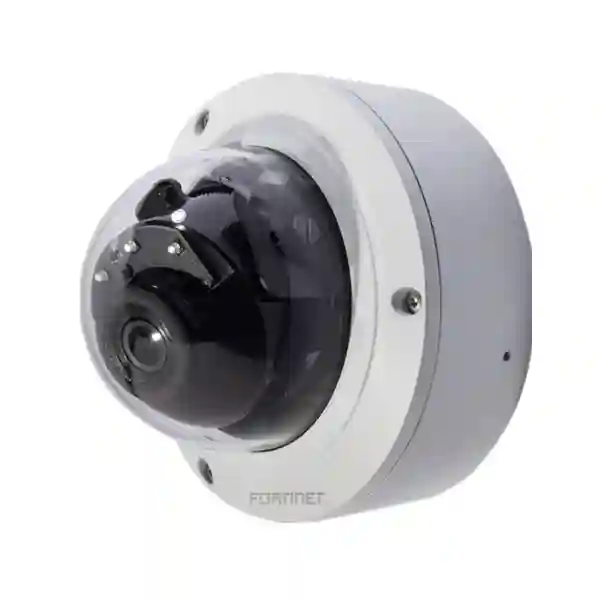
FortiCamera FCM-FD55-CA is a cloud-enabled AI analytics 5 megapixel fixed-dome IP camera for organizations that want centrally manageable video security with strong day/night coverage and a rugged indoor/outdoor form factor. Fortinet specifies 5MP video, a 50m IR LED, a 2.7–13.5mm motorized lens, 10/100 Ethernet with PoE, audio, shutter WDR, digital input/output, vandal-resistant construction, IP66/67 protection and 512GB SD storage. The model is supported by FortiCamera Cloud and can also participate in supported FortiRecorder architectures.
5MP AI Video
The FD55-CA combines 5MP capture with AI-oriented analytics capabilities. Fortinet documentation identifies -CA models as supporting visual-search features associated with recognition of people, vehicles and other searchable objects, subject to the selected management architecture and supported software versions.
50m Infrared
A specified 50m IR LED supports surveillance planning for low-light areas such as entrances, perimeter approaches, warehouses, compounds and parking zones. Actual scene performance depends on mounting height, field of view, ambient light and reflective surfaces.
Motorized Lens
The 2.7–13.5mm motorized lens gives installers useful framing flexibility. That makes the camera suitable for projects where the required field of view must be tuned after mounting rather than relying on a single fixed focal length.
FortiCamera FCM-FD55-CA Technical Overview
| Camera format | Fixed dome IP camera |
| Resolution | 5MP; Fortinet ordering information lists 5MP at 30fps |
| Lens | 2.7–13.5mm motorized, autofocus |
| Night coverage | 50m IR LED |
| Network / power | 1× 10/100 Ethernet with PoE |
| Additional capabilities | Audio, shutter WDR, digital input/output |
| Environmental design | Indoor/outdoor, vandal resistant, IP66/67 |
| On-board storage | 512GB SD card |
Deployment and Integration
The FCM-FD55-CA is designed for Fortinet video-security environments where camera management, recording and investigation workflows can be planned around FortiCamera Cloud or compatible FortiRecorder deployments. Fortinet lists the model among cloud-native cameras supported by FortiCamera Cloud. In hybrid architectures, FortiRecorder can connect supported cameras to cloud management, but organizations should validate the exact FortiRecorder and FortiCamera software versions required for the analytics features they intend to use.
For a new installation, camera count is only one part of sizing. Procurement teams should also document viewing areas, required retention, expected recording mode, network switching, PoE budget, uplink capacity, mounting surfaces, environmental exposure and administrator access. A camera positioned for a wide overview serves a different objective from one positioned for entrance identification. The motorized lens helps tune the scene, but placement should still be designed around the security outcome.
Related Fortinet Security Planning
Video surveillance is most useful when considered alongside the network carrying the video. Organizations can review FourTeck Tanzania technology solutions when planning switching, network security and surveillance requirements. For broader Fortinet architecture context, see Fortinet-focused security solutions. Regional projects can also reference FourTeck Uganda, FourTeck Kenya, FourTeck Ghana and FourTeck Nigeria for country-specific procurement conversations.
FortiCamera FCM-FD55-CA Tanzania
Tanzanian organizations evaluating the FortiCamera FCM-FD55-CA commonly need to balance image detail, night coverage, installation durability and manageable recording architecture. The fixed-dome format suits offices, hospitality properties, educational sites, warehouses, retail premises, compounds and other locations where a discreet but robust camera is preferred. Its 5MP specification provides a useful basis for detailed monitoring, while the 50m infrared capability can support planned night surveillance where scene geometry is appropriate. The IP66/67 rating and indoor/outdoor positioning make environmental planning easier, although installers should still consider direct sun, rain exposure, mounting stability, cable routing and surge protection.
For procurement, define each camera’s purpose before requesting a quotation. Identify whether the scene is an entrance, corridor, perimeter, loading zone, reception, parking area or general overview. Then record the approximate distance to the subject, desired retention period, number of concurrent viewers and whether analytics or visual search is required. This information helps determine camera placement, storage architecture and management choices. PoE also simplifies many installations by carrying power and network connectivity through Ethernet, provided the selected switch has adequate PoE capacity.
Customers planning FortiCamera Cloud should verify subscription and support requirements for the intended deployment. Customers integrating with FortiRecorder should confirm the supported software version and analytics behavior before finalizing the bill of materials. A well-prepared Tanzania quotation should therefore include camera quantities, mounting requirements, PoE switching, recorder or cloud-management preference, retention expectations, installation scope and any integration requirements. This avoids treating the camera as an isolated device and produces a more complete surveillance design.
FortiCamera FCM-FD55-CA Dar es Salaam
In Dar es Salaam, the FCM-FD55-CA can fit surveillance designs for corporate offices, retail facilities, logistics sites, hotels, warehouses and multi-building compounds. Projects in busy commercial environments often need cameras that can provide both broad situational awareness and tighter scene framing. The 2.7–13.5mm motorized lens is useful here because installers can adjust the field of view for the actual location instead of relying on a fixed-lens assumption. For exterior installations, the IP66/67-rated enclosure and vandal-resistant design are relevant specifications, while 50m infrared supports low-light planning.
Network design deserves equal attention. Each camera requires suitable Ethernet connectivity and PoE capacity, and larger deployments should account for switch port availability, uplink design and video traffic. If a business has multiple floors or buildings, camera networks may benefit from deliberate segmentation and documented addressing. Where cloud management is selected, reliable upstream connectivity is an important operational consideration. Where FortiRecorder is used, storage sizing and recorder placement should be included in the project plan.
A Dar es Salaam buyer should prepare a site camera schedule showing location, mounting surface, indoor/outdoor status, approximate viewing distance and purpose. Add retention requirements and any need for analytics-based investigation. That schedule makes quotation comparison more meaningful because suppliers can work from the same scope. The result is a deployment designed around coverage and operational use rather than camera quantity alone.
FortiCamera FCM-FD55-CA Mwanza
For Mwanza deployments, organizations may consider the FortiCamera FCM-FD55-CA for business premises, hospitality environments, institutional campuses, storage areas and mixed indoor/outdoor security zones. The dome format offers a compact physical profile, while the vandal-resistant construction is useful where equipment may be accessible to occupants or visitors. A 5MP sensor, motorized autofocus lens and shutter WDR provide a flexible foundation for varied scenes, but final positioning should always be tested against the actual security objective.
Night monitoring requires practical site assessment. Although Fortinet specifies a 50m IR LED, useful identification distance can vary with angle, weather, reflectivity and how much of the image is occupied by the subject. Installers should therefore validate night views after mounting and adjust lens framing where necessary. Outdoor cabling should be protected and correctly terminated, while PoE switch capacity should be calculated for the complete camera estate.
Mwanza procurement teams can improve quotation accuracy by listing camera locations and desired recording retention before purchase. If cloud management is preferred, include subscription and internet-connectivity considerations. If an on-premises or hybrid FortiRecorder design is preferred, include recorder compatibility, storage and software-version checks. These steps help ensure the FD55-CA is deployed as part of a complete, supportable video-security system.
FortiCamera FCM-FD55-CA Arusha
Arusha businesses and institutions can evaluate the FD55-CA where a rugged dome camera with cloud-capable management and AI-oriented investigation features is desirable. Hospitality properties, offices, schools, retail premises and compounds may have very different surveillance goals, so each proposed camera should have a defined purpose. Entrances may prioritize identifiable views, while open areas may prioritize overview coverage. The motorized 2.7–13.5mm lens supports this tuning during commissioning.
The camera’s indoor/outdoor positioning and IP66/67 rating support varied placement, but environmental design remains important. Mounts, cable paths and junction points should suit the installation surface and exposure. For areas with challenging contrast, shutter WDR is a relevant feature to consider. For night scenes, the 50m IR specification provides a planning reference, but installers should verify the final image after dark rather than relying on a specification alone.
Before requesting an Arusha quotation, document quantity, camera purpose, mounting type, network distance, PoE availability, recording preference and retention. If AI analytics or visual search is a key requirement, specify that explicitly so the proposed FortiCamera Cloud or FortiRecorder architecture can be checked for feature compatibility. This requirements-first approach supports a clearer bill of materials and reduces redesign during deployment.
FortiCamera FCM-FD55-CA Dodoma
In Dodoma, the FortiCamera FCM-FD55-CA can support video-security planning for offices, institutions, campuses, retail facilities, warehouses and controlled compounds. Its 5MP fixed-dome platform combines a motorized lens with infrared illumination, audio and digital I/O, making it relevant to projects that need more than a basic fixed-view camera. The rugged indoor/outdoor design also provides flexibility when a standardized camera family is preferred across internal and external areas.
For multi-camera sites, switching and recording architecture should be designed before installation. Confirm PoE port count and power budget, cable distances, uplink capacity and the intended management platform. Cloud-managed deployments should account for dependable connectivity and subscription planning. FortiRecorder designs should be checked against current compatibility documentation, particularly when analytics or visual-search capabilities are part of the requirement.
Dodoma procurement documentation should describe the security outcome for each camera, not simply the model and quantity. Include areas to be observed, approximate distances, expected lighting, retention period, user-access requirements and installation constraints. With this information, a quotation can include the camera, appropriate mounts, network infrastructure and management components needed for a complete solution.
FortiCamera FCM-FD55-CA UAE
UAE projects evaluating the FD55-CA may range from offices and retail sites to warehouses, hospitality properties and distributed facilities. The camera’s 5MP resolution, 50m IR, motorized autofocus lens and rugged IP66/67 dome design provide a versatile specification for mixed environments. In large facilities, the ability to tune lens framing helps installers align each camera with a specific operational objective, such as an entrance, loading area or general overview.
A complete UAE design should include PoE switching, network segmentation, recording and retention requirements, and administrator workflows. For FortiCamera Cloud, verify the required licensing and connectivity. For hybrid or recorder-led architectures, confirm FortiRecorder compatibility and software versions. Projects requiring analytics should state the exact investigation features needed so they can be validated against the proposed architecture.
Quotation requests are more useful when they include camera schedules, floor plans or annotated site drawings, retention targets and installation expectations. This enables more accurate selection of mounts, switching and management components. It also helps separate areas needing detailed identification from areas where general situational awareness is sufficient.
FortiCamera FCM-FD55-CA Uganda
Ugandan organizations can consider the FD55-CA for business, institutional, hospitality, retail and logistics surveillance projects requiring a cloud-enabled rugged dome camera. The model’s 5MP capture and motorized lens make it adaptable to different scene widths, while 50m IR supports planned night monitoring. IP66/67 protection and vandal resistance are relevant for exposed or accessible mounting locations.
For a multi-site Uganda deployment, consistent configuration and management can be as important as camera specifications. Decide whether the project will use FortiCamera Cloud, FortiRecorder or a supported hybrid approach, then verify software and subscription requirements. Network teams should also calculate PoE availability and video traffic and document how cameras are separated from other business devices.
A procurement brief should list sites, camera quantities, scene purposes, retention requirements, mounting conditions and desired analytics. This gives the supplier enough context to propose supporting infrastructure rather than quoting cameras alone. Regional project discussions can also reference FourTeck Uganda for Uganda-focused technology requirements.
FortiCamera FCM-FD55-CA Kampala
Kampala deployments may use the FD55-CA across offices, commercial properties, retail locations, warehouses and compounds where flexible dome-camera coverage is needed. The 2.7–13.5mm motorized lens supports field-of-view adjustment after mounting, while shutter WDR can be useful in scenes with difficult contrast. The 50m infrared specification is relevant to night surveillance, although final night performance should be validated at the installed location.
Network readiness should be assessed before camera installation. Check cable routes, PoE switch capacity, uplink bandwidth and recorder or cloud-management architecture. For larger deployments, define camera naming, addressing and access policies in advance. If visual search or analytics is important, include it in the project specification so compatibility can be verified rather than assumed.
Kampala buyers can request a more accurate quotation by supplying site plans, desired camera positions and retention requirements. Mounting accessories should be selected for the actual surface and camera orientation. A structured scope helps ensure the final design includes the network, storage and management components needed to operate the cameras effectively.
FortiCamera FCM-FD55-CA Arua
For Arua projects, the FD55-CA offers a combination of 5MP imaging, motorized framing, infrared illumination and weather-resistant dome construction. These characteristics can support security planning for offices, institutions, retail premises, warehouses and compounds. Camera selection should still begin with the required view: overview monitoring, entrances and perimeter approaches have different placement and lens-framing needs.
PoE can simplify installation, but project planners should verify cable distances and available switch power. Where cameras are spread across buildings, network topology and uplink capacity need to be included in the design. For cloud management, connectivity reliability is important. For recorder-based deployment, storage and compatibility should be sized to the required retention and camera count.
Arua quotation requests should include the number of cameras, intended mounting locations, indoor/outdoor exposure, night-monitoring needs and desired retention. Where analytics is required, describe the operational goal so the proposed management architecture can be validated. This creates a procurement specification based on outcomes rather than a simple device list.
FortiCamera FCM-FD55-CA Mbarara
Mbarara organizations planning video surveillance can evaluate the FortiCamera FCM-FD55-CA for sites requiring a rugged fixed-dome camera with flexible optical adjustment. Its 5MP platform, 50m IR and motorized lens can support varied monitoring zones, while IP66/67 protection expands placement options. Vandal-resistant construction is useful where cameras are installed in accessible areas.
Good surveillance design also considers how footage will be managed. Determine whether users need cloud access, local recording or a hybrid model, and verify the corresponding Fortinet software and subscription requirements. Define retention before sizing storage. Network teams should confirm PoE budgets, cable routes and access controls, particularly when several cameras share the same switching infrastructure.
For a Mbarara quotation, provide camera locations, expected fields of view, installation heights and lighting conditions where possible. Include mounting and commissioning requirements as well as any need for analytics or visual-search workflows. This information helps build a more complete proposal around the FD55-CA.
FortiCamera FCM-FD55-CA Gulu
In Gulu, the FD55-CA can be considered for commercial, institutional and mixed-use sites that need an indoor/outdoor dome camera. The combination of 5MP resolution, a motorized 2.7–13.5mm lens and 50m infrared gives designers flexibility when balancing wide coverage and tighter scene framing. The camera also includes audio and digital I/O for projects where those interfaces are relevant.
Installation planning should address environmental exposure, mounting stability, cable protection and PoE availability. For night coverage, validate the final scene after commissioning because infrared effectiveness depends on real site conditions. In multi-camera deployments, storage, management and network bandwidth should be planned as a system rather than added after installation.
Gulu procurement teams should state whether FortiCamera Cloud or FortiRecorder integration is expected, how long footage should be retained and whether analytics is a required workflow. Providing these details with a camera schedule gives suppliers a stronger basis for a technically coherent quotation.
FortiCamera FCM-FD55-CA Kenya
Kenyan organizations evaluating the FD55-CA can use its cloud-enabled 5MP dome platform in projects spanning offices, retail, hospitality, logistics and institutional environments. The motorized lens supports commissioning flexibility, while IP66/67 protection and vandal resistance make the model relevant to both indoor and outdoor positions. A 50m IR LED supports night-surveillance planning for suitable scenes.
Larger Kenya deployments should define management and recording architecture early. FortiCamera Cloud can centralize supported cloud-native cameras, while FortiRecorder can be used in supported recorder and hybrid designs. Exact software versions and feature support should be verified, especially for analytics. Network planning should include PoE budgets, port counts, addressing and uplinks.
A useful Kenya quotation brief includes site count, camera quantity, coverage goals, retention, installation scope and desired management method. Mounting accessories and switching should be included where required. For regional procurement discussions, FourTeck Kenya can be referenced alongside the Tanzania project team.
FortiCamera FCM-FD55-CA Kuwait
Kuwait surveillance projects can consider the FD55-CA where a cloud-capable, rugged fixed-dome camera is appropriate. Its 5MP resolution, motorized autofocus lens, 50m infrared and shutter WDR support a broad range of indoor and outdoor monitoring scenarios. IP66/67 protection is a useful specification for exposed locations, although mounting and environmental conditions should always be assessed during design.
For commercial or distributed sites, define the operational workflow before selecting the management architecture. Determine who needs live view and recorded access, how long footage must be retained, and whether analytics or visual search is needed. Then validate FortiCamera Cloud or FortiRecorder compatibility, subscriptions and storage. PoE network capacity should be checked at the same time.
A Kuwait quotation should specify camera positions, scene purpose, cable and mounting requirements, management preference and retention. This allows supporting components to be scoped correctly and reduces the risk of discovering infrastructure gaps during commissioning.
FortiCamera FCM-FD55-CA Ghana
Ghanaian businesses and institutions can evaluate the FD55-CA for security-camera deployments that need a 5MP fixed dome with rugged environmental protection and flexible lens adjustment. The camera’s 50m IR, motorized lens, audio, shutter WDR and digital I/O provide a useful feature set for varied sites. IP66/67 and vandal-resistant construction support indoor/outdoor deployment planning.
Projects should define camera roles and recording requirements before purchase. A camera watching a doorway may need different framing from one monitoring a yard or corridor. Network teams should verify PoE switching and connectivity, while security teams define retention and user access. If cloud or analytics functions are required, corresponding licensing and compatibility should be checked against current Fortinet documentation.
For Ghana quotations, provide a camera schedule, installation conditions and desired management architecture. This makes it easier to scope mounts, switching, storage and support around the cameras. FourTeck Ghana can also be referenced for country-focused procurement discussions.
FortiCamera FCM-FD55-CA Nigeria
Nigeria projects may deploy the FD55-CA in offices, retail estates, logistics facilities, hospitality sites, campuses and other environments requiring managed video surveillance. The 5MP dome combines a motorized lens with 50m IR, shutter WDR and rugged IP66/67 construction. These specifications provide deployment flexibility, but site-specific coverage and identification requirements should guide positioning.
Multi-site deployments benefit from standardized camera naming, network segmentation and documented management workflows. Decide whether cameras will connect to FortiCamera Cloud, FortiRecorder or a supported hybrid design and validate current compatibility. PoE power, switch ports, uplink bandwidth and storage retention should all be calculated as part of the bill of materials.
Nigeria quotation requests should include site counts, camera quantities, coverage goals, retention and analytics requirements. This enables a proposal that accounts for the wider surveillance architecture instead of only the camera hardware. FourTeck Nigeria provides an additional regional reference for technology procurement conversations.
FortiCamera FCM-FD55-CA Seychelles
Seychelles organizations evaluating the FD55-CA may value its indoor/outdoor dome construction for hospitality, commercial and institutional surveillance designs. Fortinet specifies IP66/67 protection and vandal resistance, together with 5MP imaging, 50m infrared and a motorized lens. These features support flexible placement, but coastal or exposed environments still require careful attention to mounting hardware, cable protection and maintenance planning.
For sites with multiple buildings or distributed cameras, the network and management model should be defined before installation. Confirm PoE capacity, connectivity and recording retention, then choose an appropriate FortiCamera Cloud or compatible FortiRecorder approach. Where analytics is required, validate the feature against the proposed software version and architecture.
A Seychelles quotation can be improved by documenting camera positions, viewing objectives, installation exposure, retention and access requirements. This gives the project team enough information to consider mounts, network components and management needs along with the FD55-CA itself.
Buying and Quotation Checklist
✓ Number of cameras and site locations
✓ Indoor or outdoor placement
✓ Required field of view and viewing distance
✓ Night-monitoring expectations
✓ Mounting surfaces and accessories
✓ PoE switch ports and power budget
✓ FortiCamera Cloud or FortiRecorder preference
✓ Recording retention target
✓ Analytics / visual-search requirement
✓ Installation and commissioning scope
Frequently Asked Questions
Is FCM-FD55-CA a cloud camera?
Yes. Fortinet lists FortiCam FD55-CA among cloud-native models supported by FortiCamera Cloud. It can also be used in supported FortiRecorder architectures; verify current compatibility for the intended deployment.
What resolution does the FD55-CA provide?
Fortinet lists the FD55-CA as a 5 megapixel camera, with ordering documentation specifying 5MP at 30fps.
Can the camera be installed outdoors?
Fortinet positions it for indoor/outdoor use and lists IP66/67 protection and vandal-resistant construction. The complete installation should still use suitable mounting and protected cabling for the site conditions.
Does it support PoE?
Yes. Fortinet documentation lists Ethernet with PoE. Confirm the PoE requirements and available power budget of the chosen switch when designing the deployment.
Decision Recap
FortiCamera FCM-FD55-CA is a strong fit to evaluate when the requirement calls for a 5MP cloud-enabled fixed-dome camera with AI-oriented analytics, 50m infrared, adjustable motorized optics, PoE, rugged indoor/outdoor construction and on-board storage. The final purchase decision should be based on scene requirements, camera count, retention, network readiness, management architecture and the analytics features needed.
Consultation Panel
For a project quotation, prepare the camera schedule, floor plan or site sketch, retention requirement and preferred management model. FourTeck can then use that scope to discuss the FD55-CA together with the networking, mounting, recording and management components relevant to the deployment.



Reviews
There are no reviews yet.