
FortiExtender 511G Wi-Fi (FEX-511G-WiFi) Tanzania
Build a more flexible branch WAN with a Fortinet indoor 5G gateway that combines cellular connectivity and local Wi-Fi 6. FortiExtender 511G-WiFi is designed for organizations that want to add cellular WAN to a Fortinet environment, place the cellular gateway where radio conditions are more suitable, or create an additional connectivity path for branches and distributed sites. For Tanzanian buyers, the important purchasing questions are not only raw 5G capability: they include carrier compatibility, signal conditions at the intended installation point, FortiGate integration, power and cabling, SIM strategy, Wi-Fi requirements and the management model.
What FortiExtender 511G-WiFi provides
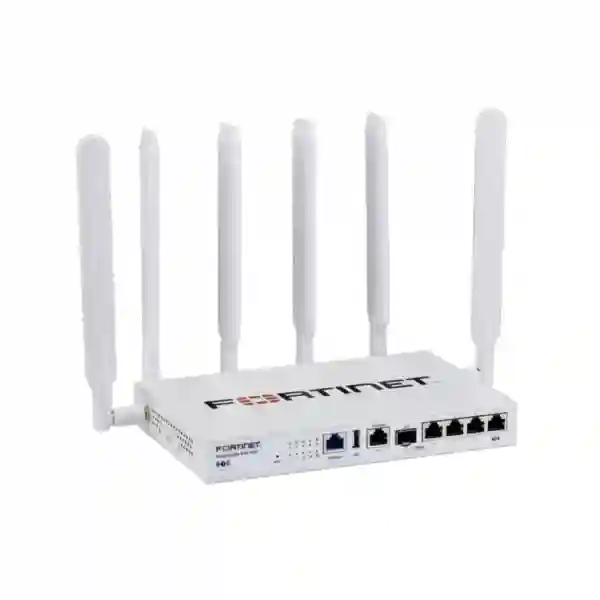
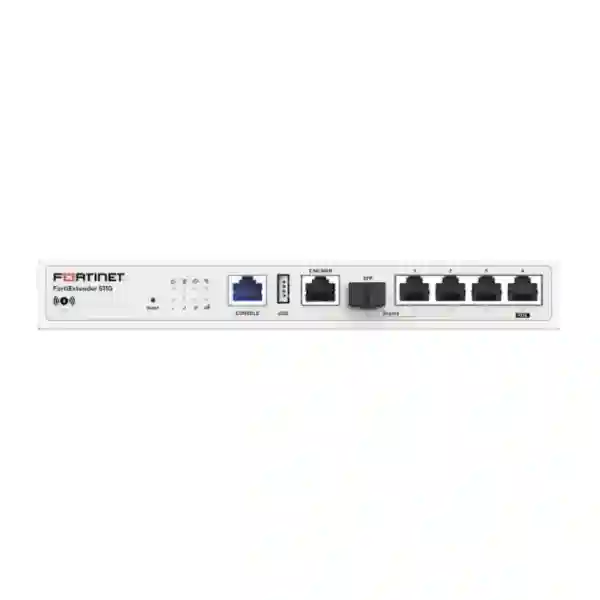
Fortinet positions the FEX-511G-WiFi as a high-end indoor 5G gateway with Wi-Fi. Current Fortinet ordering information identifies a single 5G modem, dual SIM plus eSIM capability, one dedicated 2.5G WAN port, LAN/switch connectivity including an SFP/RJ45 combination and three LAN ports, built-in Wi-Fi 6, and support for FortiGate LAN Extension and WAN Extension. Fortinet documentation also identifies the Sierra EM9291 modem for the FEX-511G-WiFi. These characteristics make the model relevant where an organization wants cellular WAN without treating the cellular gateway as an isolated consumer router.
A 5G gateway platform intended for business WAN extension, with LTE fallback capabilities depending on carrier and deployment conditions.
The Wi-Fi model adds integrated wireless access, useful where local wireless connectivity is part of the branch design.
LAN and WAN Extension support helps organizations incorporate the gateway into a Fortinet-managed network architecture.
Verified hardware and connectivity highlights
| Area | FEX-511G-WiFi detail |
|---|---|
| Cellular category | 5G gateway; Fortinet documentation lists Sierra EM9291 modem |
| SIM | Dual SIM plus eSIM in Fortinet ordering guidance |
| Dedicated WAN | 1 × 2.5G WAN |
| Local connectivity | SFP/RJ45 combination plus LAN ports |
| Wireless LAN | Built-in Wi-Fi 6 |
| Management modes | Can operate standalone when not managed by FortiGate or FortiEdge Cloud; standalone supports IP pass-through or NAT mode |
Deployment and buying guidance
A successful cellular deployment begins with the site rather than the appliance specification. Confirm the mobile operator, bands and service available at the intended location; test signal quality where the unit can realistically be mounted; decide whether cellular service will be primary, secondary or used for continuity; and identify how traffic should move when a wired circuit is unavailable. Where FortiGate is already present, validate the exact FortiOS and FortiExtender OS combination against Fortinet’s current compatibility matrix before rollout. Fortinet’s 2026 compatibility documentation includes FEX-511G-WiFi across supported FortiOS 7.x combinations, but production teams should still match their exact software releases before change approval.
Also plan SIM ownership, data plans, antenna placement, cable paths, power, LAN addressing and Wi-Fi coverage. The presence of dual SIM plus eSIM capability can provide design flexibility, but it does not itself guarantee carrier service or automatic commercial redundancy. Carrier activation, subscriptions, supported bands and policy configuration remain deployment-specific. For procurement, provide the site count, intended carriers, FortiGate model and software version, expected role of the 5G link, local Wi-Fi requirement and mounting constraints when requesting a quotation.
FortiExtender 511G Wi-Fi (FEX-511G-WiFi) Tanzania
For organizations evaluating FortiExtender 511G-WiFi in Tanzania, the product is most useful when procurement is connected to a clear WAN design. A branch may need cellular connectivity as an alternative to a fixed circuit, a temporary link while a primary service is being commissioned, or an additional path for continuity. Other sites may value the ability to position the cellular gateway separately from the firewall so that radio reception and network security equipment do not have to share the same physical location. The integrated Wi-Fi 6 capability can also simplify selected small-site designs where local wireless access is required, although coverage planning should still be based on the actual floor plan, construction materials and client density.
Tanzania deployments should start with carrier and signal validation at each site. 5G availability can vary by location and indoor conditions, so a specification sheet cannot replace a site-level check. Buyers should document whether the connection is intended as primary WAN, failover, rapid deployment or an out-of-band option; how much traffic is expected; and which applications must remain available during a fixed-line incident. That information determines whether the cellular service and data plan are appropriate and helps network teams create sensible routing and failover policies.
Fortinet environments can use the FEX-511G-WiFi as part of a broader secure networking design. Before purchase, confirm compatibility with the deployed FortiGate and FortiOS release, decide whether FortiGate management, FortiEdge Cloud or standalone operation is appropriate, and document SIM and administrative ownership. For broader Fortinet planning, explore FourTeck Tanzania technology solutions and the regional Fortinet resources available through FourTeck Africa. A quotation request should include site count, carrier preference, firewall environment, mounting requirements and whether Wi-Fi is needed at every location.
FortiExtender 511G Wi-Fi (FEX-511G-WiFi) Dar es Salaam
Dar es Salaam organizations often operate headquarters, branches, retail points, warehouses and customer-facing sites where WAN interruptions can affect cloud applications, payment workflows, communications and access to centralized systems. FEX-511G-WiFi can be considered when a business wants a 5G-capable WAN path integrated with a Fortinet architecture rather than relying on an unmanaged hotspot. The design process should identify which sites require cellular service continuously and which need it only as a contingency path.
Dense urban construction can make indoor radio conditions different from outdoor coverage expectations. Placement therefore matters. Network teams should test the intended operator at practical mounting points and avoid assuming that a server room is automatically the best radio location. One advantage of the FortiExtender concept is the ability to place cellular connectivity where reception is suitable while extending it into the network. Where fiber or copper constraints affect placement, the FEX-511G family’s network interfaces can support more flexible physical designs, subject to the exact topology and transceiver requirements.
For a Dar es Salaam quotation, document the existing firewall, FortiOS release, number of locations, mobile operators under consideration, expected data consumption, and failover objective. Businesses with customer Wi-Fi should separately define whether the integrated Wi-Fi 6 radio is intended for staff, operational devices or another controlled use; security policy and segmentation should not be left implicit. FourTeck can use this project information to help align the requested hardware and associated requirements without assuming that one cellular design suits every branch.
FortiExtender 511G Wi-Fi (FEX-511G-WiFi) Mwanza
In Mwanza, a FortiExtender 511G-WiFi project may support distributed offices, commercial operations, hospitality, logistics or service locations that need an additional WAN option. The first decision is the business role of cellular connectivity. A backup link has different sizing and policy requirements from a primary link carrying normal business traffic. For backup use, identify the applications that should continue during an outage and consider limiting nonessential traffic so the cellular plan is reserved for critical services.
Radio assessment remains essential. Building layout, glazing, walls, equipment rooms and the available operator network can all influence results. The gateway should be installed where it can obtain useful cellular reception while remaining connected to the secure network architecture. Teams should also record antenna and cable requirements before ordering. If the integrated Wi-Fi 6 capability will be used, treat wireless LAN design as a separate coverage and security task rather than assuming that cellular signal quality predicts indoor Wi-Fi performance.
For organizations standardizing Fortinet across several Tanzanian locations, consistent configuration templates and compatibility checks can reduce operational variation. Confirm the supported FortiOS/FortiExtender OS combination, management approach, SIM activation process and escalation ownership before deployment day. Include these details in procurement so that hardware, service subscriptions and implementation tasks are not handled as unrelated purchases. The result is a more supportable Mwanza deployment and a clearer path for future branch expansion.
FortiExtender 511G Wi-Fi (FEX-511G-WiFi) Arusha
Arusha businesses considering FEX-511G-WiFi may include offices, tourism-related operations, hospitality environments, professional services and distributed organizations that depend on reliable access to cloud and centralized applications. Cellular WAN can add useful path diversity, but resilience depends on more than installing a second device. The fixed and cellular paths should be evaluated for common dependencies, routing behavior and the applications that need priority during an incident.
The integrated Wi-Fi 6 capability can be valuable for a compact branch or controlled local wireless requirement. Buyers should nevertheless define SSID purpose, authentication, segmentation and coverage expectations. Where a larger site already uses dedicated enterprise access points, the Wi-Fi feature may serve a narrower role while the FEX-511G-WiFi is primarily selected for its 5G gateway functions. This distinction helps avoid paying for or designing around features that are not required.
Arusha procurement teams should request a bill of materials only after confirming carrier suitability, FortiGate compatibility, power method, mounting position and required accessories. If multiple sites are involved, provide a simple site matrix with operator, primary circuit, firewall model, software release and desired cellular role. This makes it easier to identify exceptions before equipment is deployed. A controlled pilot at a representative site can also help validate operational procedures and monitoring before a wider rollout.
FortiExtender 511G Wi-Fi (FEX-511G-WiFi) Dodoma
Dodoma deployments can use a 5G cellular gateway to add connectivity flexibility for offices, branches and project sites where continuity and rapid network activation matter. FEX-511G-WiFi combines cellular WAN with wired interfaces and integrated Wi-Fi 6, making it relevant to compact sites as well as FortiGate-centered networks. The correct design depends on whether cellular is the normal access path, an emergency path, or a temporary service during circuit provisioning.
Before procurement, perform a location-specific carrier check and determine the practical mounting point. Cellular performance can change significantly within a building. If the network room has weak reception, consider how the gateway can be placed closer to a suitable signal area while preserving secure cabling and equipment protection. Power availability and physical security should be included in the site survey. Where SIM diversity is planned, verify the commercial and technical details with the intended operators rather than assuming all SIM or eSIM services behave identically.
Operational planning should include monitoring and change ownership. Decide who can modify cellular settings, how failover is tested, what alerts should be generated, and how data usage will be reviewed. For FortiGate-managed environments, validate software compatibility before rollout and retain a standard configuration record. These steps turn the FEX-511G-WiFi from a standalone connectivity purchase into a manageable component of the Dodoma branch network.
FortiExtender 511G Wi-Fi (FEX-511G-WiFi) UAE
UAE organizations evaluating the FEX-511G-WiFi can use the gateway for branch resilience, temporary sites, distributed retail and other locations where cellular WAN complements fixed connectivity. The 5G platform, dual SIM plus eSIM capability and integrated Wi-Fi 6 provide several design options, but procurement should be driven by verified operator support and the exact business use case. A primary cellular branch requires different data planning from a failover-only design.
For multi-site projects, create a repeatable deployment standard covering SIM assignment, FortiGate integration, addressing, failover policy, Wi-Fi configuration, monitoring and physical installation. Where the gateway is placed away from the firewall for better reception, document the cabling path and power arrangement. Confirm the FortiOS and FortiExtender OS versions against Fortinet’s compatibility guidance before production rollout. This is particularly important when an organization has a mixed estate of firewall software releases.
Buyers coordinating Tanzania and UAE infrastructure can also review FourTeck UAE for regional technology planning. Keep each country’s carrier, regulatory and service requirements separate in the design record; a globally positioned gateway does not remove the need to validate local mobile service. Quotations should state the intended region, number of sites, management model and accessories so the requested configuration can be checked accurately.
FortiExtender 511G Wi-Fi (FEX-511G-WiFi) Uganda
For Uganda deployments, FEX-511G-WiFi can support a Fortinet branch architecture where cellular connectivity is required as an alternative or complementary WAN path. Organizations should begin with a site inventory rather than a single country-wide assumption. Record the fixed connectivity at each branch, the mobile operators that can be tested, the critical applications, and whether the site requires local Wi-Fi from the gateway.
Dual SIM plus eSIM capability offers design flexibility, but resilience still depends on how subscriptions and routing are configured. Two SIM options are useful only when the selected services and network design meet the organization’s continuity objective. Validate operator compatibility, signal and data plans. For FortiGate environments, confirm the supported software combination and decide whether WAN Extension or another operating model is appropriate for the topology.
Organizations working across Tanzania and Uganda can consult FourTeck Uganda for Uganda-focused technology requirements while keeping the Tanzanian procurement scope clearly defined. A cross-border standard can still use common naming, monitoring and security principles, but carrier activation and local implementation details should be validated per country and site.
FortiExtender 511G Wi-Fi (FEX-511G-WiFi) Kampala
Kampala branch environments may use cellular WAN to protect access to SaaS, cloud platforms, centralized business systems and communications when a fixed circuit is disrupted. FEX-511G-WiFi can be incorporated into a Fortinet design and provides Wi-Fi 6 for sites where local wireless from the gateway is useful. The deployment team should decide which traffic is allowed over cellular during failover and whether bandwidth-heavy noncritical services should be restricted.
Urban radio coverage does not guarantee identical indoor performance in every building. Survey realistic equipment locations and consider where the gateway can be mounted securely while obtaining suitable reception. If Wi-Fi is used, assess client distribution and construction materials separately. For an office with an existing managed WLAN, the integrated radio may not replace dedicated access points; it can instead be treated as an optional capability of the cellular gateway.
A Kampala bill of materials should include the exact FEX model, required power and mounting accessories, intended SIM approach and management requirements. Include the FortiGate model and software version in the request so compatibility can be checked before deployment. For multiple branches, define a test plan that confirms failover, recovery, monitoring and application reachability before the cellular path is considered production-ready.
FortiExtender 511G Wi-Fi (FEX-511G-WiFi) Arua
Arua sites considering cellular WAN should focus on practical service availability and operational requirements. The FEX-511G-WiFi provides a business-oriented 5G gateway platform, but the usable connection at any site depends on the mobile network and radio environment. Test the preferred carrier at the actual location and document whether LTE fallback is acceptable for the applications that must remain available.
Remote or distributed operations benefit from standardized management. Establish who owns SIM activation, who can change the gateway configuration, how data consumption is monitored and what happens when a carrier service degrades. If the device is integrated with FortiGate, verify compatibility and document the extension design before shipping equipment to site. This reduces the risk of discovering software or topology issues during installation.
For procurement, provide a clear description of the site: user count, key applications, existing WAN, Fortinet firewall, power conditions, mounting constraints and local wireless requirement. The integrated Wi-Fi 6 function may be useful for a small site, but it should be selected intentionally. Larger environments may still need a dedicated WLAN architecture. The quotation should therefore reflect the complete site design rather than treating FEX-511G-WiFi as a generic router.
FortiExtender 511G Wi-Fi (FEX-511G-WiFi) Mbarara
Mbarara organizations can evaluate FEX-511G-WiFi for branch connectivity where cellular service adds a useful second path or provides rapid network activation. The most important planning step is to define acceptable performance during cellular operation. If the gateway is for continuity, list critical systems such as ERP, email, voice, VPN or cloud applications and decide which lower-priority traffic can wait until the primary circuit returns.
Placement and signal testing should be completed before a final rollout. A cellular gateway located beside the firewall may be convenient but not optimal for radio reception. FortiExtender deployments can separate the cellular edge from the firewall location, allowing designers to consider better signal positions while maintaining managed network connectivity. Confirm cable distances, interfaces, power and physical security as part of that plan.
When requesting pricing for Mbarara, specify the exact model and whether Wi-Fi 6 will be used. Also provide the FortiGate model, software version, carrier choices and number of sites. If dual SIM is part of the continuity strategy, document how switching is expected to work and how each subscription will be monitored. Clear requirements help prevent a hardware purchase from being mistaken for a complete resilience design.
FortiExtender 511G Wi-Fi (FEX-511G-WiFi) Gulu
Gulu deployments may need connectivity for branches, field-facing operations or distributed offices where a second WAN path improves business continuity. FEX-511G-WiFi offers 5G cellular connectivity and Wi-Fi 6 in an indoor platform that can integrate with FortiGate. The product should be evaluated alongside the mobile service, because coverage, capacity and subscription terms directly influence the final user experience.
A robust deployment plan should define normal routing, failure detection, failover behavior and recovery to the preferred WAN. Test these processes with real applications rather than only checking that an interface changes state. Where cellular data is metered or subject to commercial limits, monitoring and traffic policy become important. Teams can prioritize essential services and avoid unexpected consumption during a long fixed-line outage.
The integrated Wi-Fi feature can support selected local clients, but wireless security and segmentation should follow the organization’s policy. Confirm whether the gateway will be managed through FortiGate, FortiEdge Cloud or standalone, and ensure administrators understand the chosen operating model. A Gulu quotation should include enough technical context to identify accessories and avoid assumptions about power, mounting or carrier activation.
FortiExtender 511G Wi-Fi (FEX-511G-WiFi) Kenya
Kenyan organizations with regional operations can consider FEX-511G-WiFi when standardizing Fortinet-based cellular WAN across branches. A common hardware platform can simplify documentation, but each site still needs carrier and signal validation. Define whether the device is being used for primary access, secondary WAN, temporary connectivity or another operational purpose, then size the mobile service around that role.
For businesses spanning Kenya and Tanzania, consistent security policy and management processes can be valuable. Maintain separate carrier profiles while using common configuration standards, naming, monitoring and failover testing. Verify the exact FortiOS compatibility at each location, especially when firewall estates have different upgrade cycles. Integrated Wi-Fi 6 should also be mapped to a specific requirement rather than enabled by default without segmentation planning.
Regional buyers can review FourTeck Kenya for Kenya-focused requirements. When requesting a cross-border quotation, separate quantities and deployment assumptions by country. This allows SIM, accessory and implementation considerations to be reviewed without implying that the same mobile service or logistics conditions apply everywhere.
FortiExtender 511G Wi-Fi (FEX-511G-WiFi) Kuwait
Kuwait deployments can use the FEX-511G-WiFi as a cellular WAN component for branches, temporary offices and continuity designs. The model combines 5G, flexible SIM options, wired connectivity and Wi-Fi 6. Selection should begin with the intended operator and installation environment, followed by validation of the Fortinet management architecture and the applications that will use the cellular path.
Where 5G is used as backup, policy should determine when the path activates and what traffic is permitted. Where it is primary, organizations should consider expected throughput, data usage and the operational implications of relying on a mobile service. Signal assessment at the mounting point is essential in either case. Building construction and equipment-room placement can affect radio conditions even in areas with strong general coverage.
Procurement teams should include the exact region, carrier, site count, FortiGate model, software release and required accessories in their request. For Kuwait-focused technology sourcing, FourTeck Kuwait provides a regional reference point. Cross-region projects should retain separate validation records for Kuwait and Tanzania while standardizing configuration practices where appropriate.
FortiExtender 511G Wi-Fi (FEX-511G-WiFi) Ghana
Ghana organizations evaluating the FEX-511G-WiFi should connect product selection to the resilience and branch-network objective. The gateway can add a 5G path and integrated Wi-Fi 6 to a Fortinet environment, but service quality is determined by the selected operator, local coverage, installation position and network policy. Test those factors before committing to a broad rollout.
A multi-site design should use a repeatable checklist: carrier verification, SIM ownership, FortiGate compatibility, software baseline, addressing, failover policy, monitoring, power and mounting. This makes deployment results easier to compare and helps operations teams support the estate after installation. If Wi-Fi is required, define its client group and security policy. If not, the model can still be evaluated primarily for its cellular gateway capabilities.
For regional procurement, keep quantities, accessories and service assumptions explicit. A global model designation should not be interpreted as confirmation of every carrier service or subscription feature in every market. Confirm the intended Ghana carrier and service before deployment and document any differences from the Tanzania design.
FortiExtender 511G Wi-Fi (FEX-511G-WiFi) Nigeria
Nigeria deployments may use FEX-511G-WiFi to provide cellular WAN diversity for branches and distributed operations. Because mobile network conditions can differ significantly between sites, procurement should be based on a site matrix rather than a single national assumption. Identify the preferred and alternate operators, the primary fixed connection, critical applications and expected cellular usage for every location.
For resilience, test actual failure scenarios. Confirm that the network detects the loss of the preferred path, sends intended traffic over cellular, preserves required security policy and returns cleanly when the main circuit recovers. Monitor cellular consumption during these tests. Dual SIM and eSIM options can support flexible designs, but carrier activation and switching behavior must be planned and verified rather than assumed.
FortiGate integration can help maintain a consistent secure networking architecture. Check the FortiOS and FortiExtender OS compatibility for the production versions in use and define management ownership. Where the integrated Wi-Fi 6 radio is enabled, apply the same attention to authentication and segmentation that would be used for any enterprise wireless service. These steps make the Nigeria deployment easier to operate alongside Tanzanian and other regional sites.
FortiExtender 511G Wi-Fi (FEX-511G-WiFi) Seychelles
Seychelles projects can consider the FEX-511G-WiFi where cellular connectivity provides a useful primary, backup or temporary WAN path. Hospitality, offices and distributed sites may value the combination of 5G and local Wi-Fi 6, but the correct design depends on operator service at the specific property or location. Test signal and confirm the available mobile plan before treating cellular as part of a business-continuity design.
For sites with existing FortiGate infrastructure, validate software compatibility and determine how the FortiExtender will be managed. Document physical placement carefully: a location selected for cellular reception must also be practical for power, network cabling and equipment security. If the built-in Wi-Fi is intended for users or devices, assess coverage and segmentation independently from cellular reception.
A Seychelles quotation request should state site count, carrier preference, primary WAN type, FortiGate model, software version and the intended role of the cellular connection. For regional groups operating in Tanzania and island markets, use common operational standards where they help, but keep carrier, logistics and local service assumptions country-specific. This approach supports a more predictable rollout and clearer troubleshooting responsibilities.
Compatibility, management and integration
Fortinet documents standalone operation when a FortiExtender is not managed by FortiGate or FortiEdge Cloud. Standalone devices can operate in IP pass-through or NAT mode and can be configured through supported management interfaces. For the FEX-511G-WiFi, current documentation also notes SSH hardening behavior in which SSH access is disabled by default on ports until explicitly enabled. Administrators should follow current Fortinet documentation rather than relying on older deployment habits.
In a FortiGate-centered design, check the compatibility matrix for the exact FortiOS release. Compatibility tables change as software releases evolve, so procurement and implementation teams should record the versions validated at design time. Also define whether the cellular link participates in SD-WAN, which health checks determine path quality, what traffic is allowed during failover, and how monitoring is handled. These are configuration decisions, not automatic outcomes of purchasing the gateway.
Use cases for business networks
Add cellular as an alternate path for critical applications when the preferred fixed connection is unavailable.
Use mobile connectivity while permanent connectivity is being planned or commissioned, subject to carrier service and data requirements.
Place the cellular gateway where reception is more suitable instead of forcing cellular antennas to remain beside the firewall.
Use integrated Wi-Fi 6 where the branch design calls for local wireless access from the same platform.
Related FourTeck resources
For projects that extend beyond a single gateway, use the FourTeck Tanzania website to review the broader Tanzania technology portfolio and procurement context. Regional organizations can coordinate country-specific requirements through FourTeck Uganda, FourTeck Kenya, FourTeck Kuwait, and FourTeck Africa. These links are useful when a project spans several markets and the technical standard must be balanced with local carrier, procurement and deployment requirements.
Quotation checklist for FEX-511G-WiFi
To prepare a useful quotation and deployment discussion, provide: required quantity and site count; deployment country and city; intended mobile operator or operators; whether cellular is primary, backup or temporary; existing FortiGate model and FortiOS version; preferred management model; whether integrated Wi-Fi 6 will be used; mounting and power constraints; expected applications and approximate traffic profile; and any requirement for accessories. Do not assume that SIM subscriptions, carrier activation, support contracts or accessories are included unless they are explicitly listed in the quotation.
Frequently asked questions
Is FEX-511G-WiFi a 5G gateway?
Yes. Fortinet lists FortiExtender 511G-WiFi as a 5G gateway with Wi-Fi. Current ordering guidance identifies a 5G modem and built-in Wi-Fi 6.
Does it support more than one SIM option?
Fortinet’s ordering guide lists dual SIM plus eSIM capability for the 511G-WiFi. Actual carrier activation and subscription support must be confirmed for the intended operator and region.
Can it work without FortiGate management?
Fortinet documentation states that FortiExtender can work standalone when it is not managed by FortiGate or FortiEdge Cloud. Standalone operation can use IP pass-through or NAT mode.
Can I use it as a backup WAN?
It can be designed as an alternate cellular WAN path. The final resilience behavior depends on the FortiGate or network configuration, carrier service, routing and failover policies, so those items should be tested as part of implementation.
Does it include Wi-Fi?
Yes. The FEX-511G-WiFi variant includes built-in Wi-Fi 6. The related FEX-511G model is listed separately without the built-in Wi-Fi AP feature.
What should be checked before buying in Tanzania?
Confirm carrier and signal suitability at the site, the role of the cellular link, FortiGate and software compatibility, SIM requirements, mounting and power, local Wi-Fi needs, accessories and the required management approach.
Decision recap
Choose the FortiExtender 511G-WiFi when the project specifically benefits from a high-end indoor Fortinet 5G gateway with integrated Wi-Fi 6, flexible SIM options, 2.5G WAN connectivity and FortiGate extension capabilities. Before ordering, validate the carrier, site signal, Fortinet software compatibility and operating model. If Wi-Fi is not required, compare the non-Wi-Fi 511G variant as part of the selection process rather than assuming the Wi-Fi model is automatically the better fit.
Plan your FortiExtender deployment
Share your site count, carrier preference, existing FortiGate environment and the role you expect cellular connectivity to play. FourTeck can use those details to support product selection and quotation preparation for a Tanzania deployment without relying on unverified assumptions about coverage, stock or service availability.


Reviews
There are no reviews yet.