
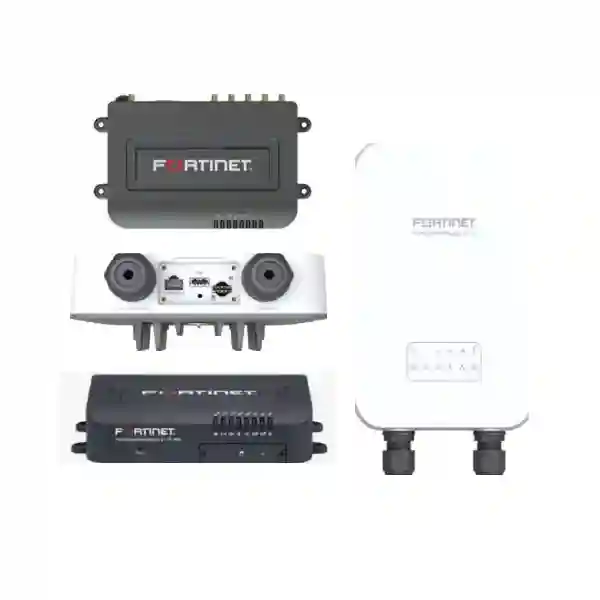
FortiExtender Rugged Series Tanzania
Fortinet FortiExtender Rugged Series is designed for organizations that need cellular WAN connectivity beyond a conventional indoor branch. The current FortiExtender Rugged 511G (FER-511G) is an outdoor 5G Sub-6/LTE wireless WAN router built for harsh and remote environments, helping teams position cellular connectivity where signal conditions and operating requirements make ordinary indoor equipment unsuitable.
Rugged outdoor connectivity
Fortinet specifies IP64 dust and splash protection and ruggedization for temperature, shock, vibration and humidity. That positioning makes the platform relevant to industrial sites, utilities, transportation infrastructure, remote facilities and other locations where environmental exposure is a design consideration.
5G/LTE WAN
The FER-511G uses a dual-SIM 5G NR Sub-6GHz modem and supports LTE connectivity, allowing planners to consider cellular service as a primary WAN, resilient secondary path or connectivity option for sites where fixed-line access is difficult or slow to provision.
Fortinet integration
FortiExtender can be deployed as a wireless WAN device and managed through Fortinet options including FortiEdge Cloud, FortiManager and FortiGate-integrated designs. Exact software compatibility should be validated against the current Fortinet compatibility matrix before procurement.
FortiExtender Rugged 511G verified highlights
Fortinet positions FortiExtender Rugged 511G as its outdoor 5G gateway. Published product information identifies a dual-SIM 5G NR Sub-6GHz modem, one 2.5GbE port capable of PoE powered operation and one 1GbE port. Fortinet also describes the rugged platform as suitable for harsh sites and secure-network extension. Cellular band and carrier support vary by region and service provider, so a procurement decision should include carrier, SIM, band, antenna, firmware and deployment-location checks rather than relying on the product family name alone.
| Planning item | FER-511G consideration |
|---|---|
| Device role | Rugged outdoor 5G/LTE wireless WAN router |
| Cellular | 5G NR Sub-6GHz with LTE and dual-SIM capability |
| Ethernet | 2.5GbE/PoE-powered port plus 1GbE port |
| Environmental positioning | IP64; ruggedized for demanding conditions |
| Management | Fortinet cloud and on-premises management options |
Where FortiExtender Rugged fits
A rugged cellular gateway is useful when the WAN edge must move closer to usable radio signal, operate in exposed conditions, or provide an independent path from the primary wired circuit. Typical design discussions include remote industrial facilities, utility infrastructure, temporary project locations, surveillance networks, outdoor cabinets, logistics environments and distributed operational technology. FortiExtender also supports business-continuity designs in which cellular connectivity remains available when a wired service is interrupted. The correct architecture depends on signal surveys, carrier service, data requirements, power, mounting, environmental exposure, security policy and integration with the existing network.
For broader security architecture, buyers can review FourTeck Tanzania technology solutions and the wider FourTeck Africa portfolio. Regional projects can also use FourTeck Uganda, FourTeck Kenya, FourTeck Ghana, FourTeck Nigeria and FourTeck Fortinet UAE when planning multi-country requirements.
FortiExtender Rugged Series Tanzania
Tanzanian organizations evaluating rugged 5G/LTE WAN usually need to solve more than simple internet access. The design may involve a remote operational site, a facility where the best cellular signal is outside the main equipment room, a branch requiring a diverse backup path, or infrastructure that must remain connected despite challenging environmental conditions. FortiExtender Rugged 511G gives network teams a purpose-built outdoor cellular edge option that can be incorporated into a Fortinet-centered architecture. A sound Tanzania deployment begins by confirming which mobile operator will serve each site, which radio bands are available there, whether 5G is present or LTE fallback will be relied upon, and where the device can be mounted for useful reception without creating avoidable cable, power or physical-security problems.
Procurement should therefore include the exact FER-511G hardware requirement, expected SIM strategy, mounting environment, power method, Ethernet handoff, FortiGate or standalone topology, management preference and support requirement. Businesses operating mines, utilities, agriculture, manufacturing, logistics, tourism facilities and distributed offices can all have different availability and traffic priorities. Some sites may need cellular as the principal connection; others may value it primarily for failover or out-of-band recovery. FourTeck can use these requirements to prepare a quotation around the intended architecture rather than treating the rugged gateway as an isolated appliance. Carrier service and coverage remain separate considerations and should be verified for each installation address.
FortiExtender Rugged Series Dar es Salaam
In Dar es Salaam, FortiExtender Rugged can support connectivity designs for warehouses, port-related operations, logistics compounds, construction sites, manufacturing locations, campuses and distributed commercial facilities. Dense urban coverage does not remove the need for site-level radio validation: building materials, equipment rooms, antenna position and local network conditions can affect practical performance. An outdoor-rated gateway can help network designers place the cellular edge in a more favorable location while returning Ethernet connectivity to the protected network. This is particularly relevant where the existing firewall or switching equipment is installed deep inside a building and moving cellular antennas through long cable runs would be undesirable.
For a Dar es Salaam quotation, document whether the requirement is primary WAN, backup WAN or remote-management access; identify the intended operator and SIM arrangement; and specify the firewall, SD-WAN or routing environment to which the FortiExtender will connect. Organizations with several branches should also define how devices will be monitored and configured. Fortinet offers centralized management approaches, but licensing, compatibility and operational workflow should be checked for the exact software versions selected. This produces a more useful bill of materials and avoids assuming that every city site has identical signal, mounting or failover requirements.
FortiExtender Rugged Series Mwanza
Mwanza deployments can include industrial facilities, logistics operations, regional branches, hospitality properties and remote sites around the wider Lake Victoria economic area. For these environments, the value of a rugged cellular WAN device is often resilience and placement flexibility. The FER-511G can be considered where outdoor positioning improves access to cellular service or where environmental exposure calls for hardware designed beyond a normal office router. Its dual-SIM capability also gives architects a basis for planning cellular resilience, although actual failover behavior, carrier interoperability and service availability should be validated as part of the network design.
Before ordering for Mwanza, capture expected traffic, critical applications, recovery objectives, installation height and location, power availability, Ethernet path and environmental exposure. If the gateway is being added to an existing FortiGate estate, record firewall models and FortiOS versions so compatibility can be checked. If it will operate more independently, define routing, security and management responsibilities clearly. A rugged gateway is one component of the availability design; appropriate carrier subscriptions, network security policy, monitoring and physical installation remain important to reliable operations.
FortiExtender Rugged Series Arusha
Arusha businesses may need resilient connectivity across tourism properties, offices, education sites, industrial facilities, logistics operations and locations outside dense fixed-line coverage. FortiExtender Rugged offers a practical architecture option where 5G/LTE should be positioned at an outdoor or environmentally demanding edge. For hospitality and distributed operations, cellular can be planned as an alternate WAN path that helps maintain access to cloud applications, payment services, communications or management systems when a primary circuit has problems. The actual applications placed on the cellular path should be governed by bandwidth, data-plan and business-priority policies.
Site surveys matter in and around Arusha because terrain, distance from cellular infrastructure and building placement can affect reception. Procurement teams should avoid choosing a gateway solely from a headline 5G label. Confirm local carrier support, intended bands, SIM requirements, mounting conditions and the Ethernet connection back to the network. For organizations standardizing on Fortinet, the FortiExtender can participate in a broader secure networking strategy, but model and software compatibility should be validated before rollout. A pilot at a representative site is useful when many geographically varied locations are planned.
FortiExtender Rugged Series Dodoma
Dodoma organizations planning government, enterprise, education, infrastructure or distributed branch networks can use rugged cellular connectivity to add diversity to fixed WAN services or connect locations where terrestrial circuits are not the preferred option. The FortiExtender Rugged 511G is particularly relevant when equipment needs to be positioned outdoors for reception or installed in a harsher setting than an ordinary indoor router is designed to tolerate. Its 5G/LTE capability and Ethernet interfaces allow it to form the cellular edge while security and application policy can remain aligned with the wider network design.
A Dodoma project should begin with the service objective. Backup links may prioritize rapid failover and remote recoverability; primary cellular sites may focus more heavily on sustained throughput, data-plan economics and signal quality. Out-of-band use cases need careful separation from the production failure domain. Installation planning should document power, PoE requirements, cable routes, grounding and physical protection as appropriate to the site. FourTeck can prepare product guidance and quotation inputs once the desired topology, number of locations and existing Fortinet environment are known.
FortiExtender Rugged Series UAE
UAE deployments frequently combine branch connectivity, industrial sites, logistics yards, construction environments and geographically distributed assets. FortiExtender Rugged can be evaluated as an outdoor 5G/LTE edge for organizations that want cellular WAN integrated into a Fortinet-oriented architecture. In high-temperature and exposed environments, environmental specifications and installation conditions deserve particular attention. IP64 protection is useful, but it should not be interpreted as permission to ignore enclosure placement, direct environmental exposure, power design or the installation limits stated by the manufacturer.
For UAE procurement, validate the precise carrier and band requirements against the FER-511G regional hardware capabilities, then define whether the service is primary, failover or out-of-band. Multi-site businesses should decide how centralized management will be handled and whether the device connects to FortiGate SD-WAN. Buyers can review FourTeck Fortinet UAE resources for region-focused planning. Quotations should be based on exact quantities, deployment type, support expectations and any required accessories rather than assumptions about a generic rugged-series bundle.
FortiExtender Rugged Series Uganda
Uganda projects can span Kampala headquarters, regional branches, utilities, agricultural operations, industrial sites and remote service locations. A rugged cellular gateway can provide useful WAN diversity where fixed infrastructure differs significantly between sites. FortiExtender Rugged 511G provides 5G/LTE capability in an outdoor-rated format and can be integrated with Fortinet network operations. The practical design should still be driven by local coverage, signal conditions and the availability objectives of each site.
Organizations deploying across Uganda should build a site inventory that records carrier options, mounting conditions, available power, existing firewall and switch infrastructure, critical applications and acceptable recovery behavior. This allows different sites to use the same product family without pretending their connectivity conditions are identical. FourTeck Uganda provides a regional path for broader technology requirements. For cross-border East African estates, consistent configuration standards and centralized monitoring can simplify operations while local carrier validation remains site specific.
FortiExtender Rugged Series Kampala
Kampala has a concentration of enterprise, financial, retail, hospitality, education and service-sector networks where WAN availability directly affects cloud access and digital operations. FortiExtender Rugged can be used to introduce a physically distinct cellular path, especially when the preferred radio position is outside the normal network room. In a FortiGate environment, this can support an SD-WAN or failover strategy while keeping the cellular modem separate from the firewall chassis and allowing better placement for reception.
For Kampala branches, specify the expected role of cellular during normal operation. Active use may require traffic steering and application policies; standby use requires reliable health checks and tested failover; out-of-band management requires independence from the components it is meant to recover. Those design choices affect configuration and service planning. Carrier subscriptions and real-world coverage should be validated separately. A standardized installation checklist can help organizations with many Kampala sites maintain consistent mounting, cabling, labeling, monitoring and security practices.
FortiExtender Rugged Series Arua
Arua deployments may place greater emphasis on connecting regional operations and sites where fixed connectivity choices are more constrained. FortiExtender Rugged provides an option for organizations that can obtain suitable cellular service and need hardware designed for exposed or demanding locations. The gateway can support a primary or secondary WAN role, but successful deployment depends on understanding the radio environment and business applications rather than assuming metropolitan connectivity patterns apply.
For an Arua site, test signal quality at the intended mounting point, identify available carriers and bands, and determine how the Ethernet handoff will reach the protected network. Define whether loss of the primary WAN should move all traffic to cellular or only critical services. Data consumption can change substantially during prolonged failover, so operational policies should align with the chosen mobile plan. For remote sites, centralized visibility and documented recovery procedures are especially valuable because travel to the location may be less convenient than resolving a problem centrally.
FortiExtender Rugged Series Mbarara
Mbarara enterprises, healthcare facilities, education environments, agriculture-related businesses and regional branches can evaluate rugged cellular WAN where resilience or location flexibility is important. FortiExtender Rugged 511G supports modern cellular connectivity and can be positioned as part of a wider Fortinet deployment. Outdoor placement may help overcome the attenuation encountered when a cellular device is installed deep inside a reinforced building or equipment area, while its rugged design addresses environmental conditions beyond those expected for a desk or rack-mounted indoor gateway.
The procurement process should identify the site’s expected uptime requirement, the primary connectivity method, intended cellular carrier, firewall integration and physical installation. When cellular is backup, teams should periodically test failover rather than assuming a configured link will perform correctly months later. Firmware management, SIM status, signal monitoring and configuration backup should form part of operations. These practices turn the rugged gateway from a one-time hardware purchase into a maintainable resilience component.
FortiExtender Rugged Series Gulu
Gulu sites can use cellular WAN to connect distributed operations or add redundancy where dependence on one terrestrial circuit creates business risk. The rugged FortiExtender model is designed for harsh and outdoor settings and can therefore be considered for compounds, infrastructure locations and remote facilities as well as conventional branches needing better radio placement. Its role should be defined alongside the firewall and routing architecture so that traffic behavior during a link change is predictable.
Planning should include signal testing, carrier selection, SIM provisioning, mounting, power, Ethernet cabling and management. For organizations operating sites across northern Uganda, templates for naming, configuration, monitoring and escalation can make support easier. If a FortiGate is already deployed, confirm supported FortiOS integration for the intended FortiExtender firmware. Where the device is used standalone, document the security boundary and management path. These checks are more important than simply matching a model number to a city.
FortiExtender Rugged Series Kenya
Kenya has diverse deployment environments ranging from dense Nairobi business districts to industrial, agricultural, logistics and remote infrastructure sites. FortiExtender Rugged can support organizations that need 5G/LTE WAN in a form factor intended for outdoor and harsh conditions. It can serve as primary cellular access, backup connectivity or a separate management path, depending on the surrounding architecture and carrier service. The device’s placement flexibility is valuable when optimal cellular reception is not available in the same room as the firewall.
Multi-branch Kenyan deployments should establish a repeatable design while preserving site-level carrier checks. Record the intended SIM provider, available radio technology, mounting environment, expected traffic and Fortinet integration for every location. Organizations can consult FourTeck Kenya for broader regional technology planning. For cross-border networks with Tanzania or Uganda, shared configuration standards can reduce operational complexity while procurement and carrier arrangements remain appropriate to each country.
FortiExtender Rugged Series Kuwait
Kuwait organizations can consider FortiExtender Rugged for industrial compounds, logistics operations, temporary sites, outdoor infrastructure and enterprise WAN resilience. Cellular connectivity can provide path diversity and faster deployment in locations where a new fixed circuit is impractical. Because Kuwait presents demanding heat and outdoor conditions, installation teams should compare the exact Fortinet environmental specifications with the real mounting location and provide appropriate protection, power and cabling practices rather than relying on the word rugged alone.
Carrier compatibility and regional cellular bands must be confirmed before ordering. Buyers should also decide whether FortiExtender will integrate with an existing FortiGate environment and how centralized management will be provided. FourTeck Kuwait can be used for region-oriented technology enquiries. A quotation request is more actionable when it includes site count, connectivity role, operator preference, firewall models and required support rather than only a request for a generic FortiExtender price.
FortiExtender Rugged Series Ghana
Ghanaian enterprises can use rugged cellular connectivity for branch resilience, industrial sites, remote infrastructure, logistics and distributed operational environments. FortiExtender Rugged 511G offers an outdoor-rated 5G/LTE WAN platform that can be integrated into Fortinet networking. For sites outside the strongest urban coverage, LTE capability and careful carrier selection may be as important as 5G. A radio survey at the actual installation point helps establish realistic expectations before a large rollout.
Project teams should map business-critical applications to the cellular design. A backup link intended only for transaction traffic has different capacity and policy needs from a primary link carrying cloud applications, voice and large transfers. Management, firmware, monitoring and failover testing should be included in the operating model. FourTeck Ghana provides a regional route for associated technology requirements, while the exact FortiExtender bill of materials should follow validated carrier and installation requirements.
FortiExtender Rugged Series Nigeria
Nigeria’s large geographic and commercial diversity makes cellular WAN a relevant option for distributed enterprise networks, retail, financial services, energy, logistics and industrial operations. FortiExtender Rugged provides a way to place a 5G/LTE edge in demanding or outdoor locations and connect it back to the secure enterprise network. In cities with multiple service choices, dual-SIM planning can form part of a resilience strategy; at remote sites, the priority may instead be identifying the carrier with the most appropriate coverage and capacity.
A Nigerian rollout should not assume identical cellular conditions across branches. Build a site-by-site record of carrier, technology, signal, mounting, power and traffic requirements. If cellular is used for failover, define application priorities so a backup event does not immediately overload the available service. Centralized monitoring can help operations teams detect signal changes, SIM issues and connectivity failures. FourTeck Nigeria supports broader regional technology enquiries and cross-site planning.
FortiExtender Rugged Series Seychelles
Seychelles organizations in hospitality, services, infrastructure and distributed island operations may evaluate cellular WAN as a resilient complement to primary connectivity. A rugged outdoor gateway can be useful where the best radio position is separated from the main network equipment or where environmental exposure requires purpose-designed hardware. FortiExtender Rugged 511G provides 5G/LTE capability, but local carrier compatibility and available bands should be confirmed before procurement because island and regional network conditions can differ from larger markets.
For hospitality or multi-building sites, define whether cellular is intended to protect guest services, payment systems, administration, security systems or remote management. Prioritizing critical applications during failover can preserve useful service when cellular capacity differs from the primary link. Physical placement should consider weather exposure, secure mounting, power and Ethernet distance. For remote operations, management visibility and tested recovery procedures can be especially valuable. A complete quotation request should state the number of sites, intended carrier, firewall environment and connectivity role.
Selection and quotation checklist
To prepare an accurate FortiExtender Rugged Series quotation, identify the number of sites and devices, country of deployment, intended mobile carrier, primary or backup WAN role, expected traffic, existing FortiGate model and FortiOS version where applicable, mounting environment, power method, Ethernet handoff, management platform and support requirement. Also identify whether the project requires a proof of concept or staged rollout. Carrier subscriptions, data plans and radio coverage should be verified independently for each location.
Frequently asked questions
What is FortiExtender Rugged 511G?
It is Fortinet’s rugged outdoor 5G Sub-6/LTE wireless WAN router, designed for harsh-site connectivity and integration into Fortinet networking environments.
Can FortiExtender Rugged be used for WAN failover?
Yes. Fortinet positions FortiExtender cellular gateways for high availability and failover use cases. The exact topology and policies should be designed around the firewall, carrier and application requirements.
Is FER-511G an outdoor device?
Yes. Fortinet identifies FER-511G as an outdoor-rated rugged gateway and specifies IP64 dust and splash protection. Installation must still follow Fortinet environmental and mounting guidance.
Does it support dual SIM?
Fortinet’s current FER-511G documentation specifies a dual-SIM 5G NR Sub-6GHz modem. Carrier and band compatibility must be validated for the deployment country.
What information should I provide for a quote?
Provide country, site count, intended carrier, WAN role, existing Fortinet environment, installation conditions, management preference, required support and expected project timing. This helps match the hardware and deployment plan to the real requirement.
Decision recap
Choose FortiExtender Rugged Series when the project needs Fortinet-aligned cellular WAN in an outdoor or demanding environment and when flexible placement, 5G/LTE access and resilient network design are important. Validate carrier bands, signal, power, mounting, software compatibility and management before finalizing the order. FourTeck can help translate those project inputs into a product quotation without assuming unsupported stock, pricing or delivery conditions.



Reviews
There are no reviews yet.