
RUGGED LTE CONNECTIVITY FOR MOBILE OPERATIONS
FortiExtender Vehicle 211F (FEV-211F) Tanzania
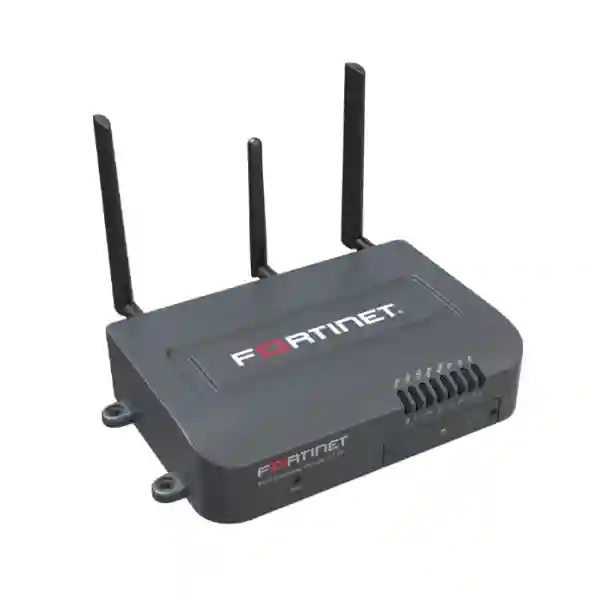
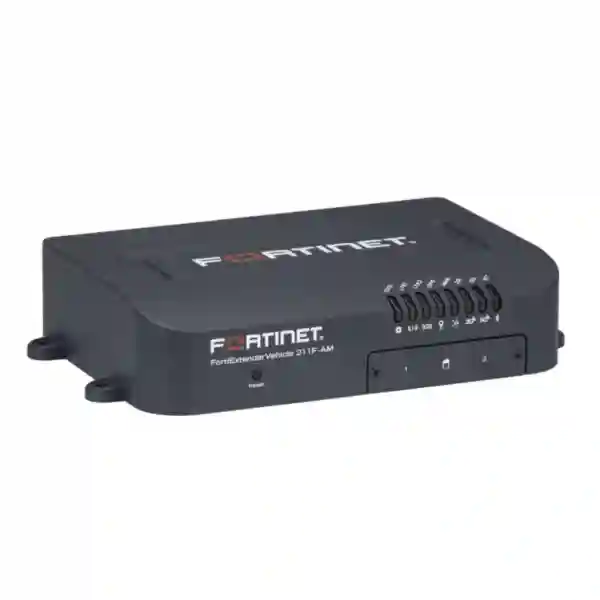
FortiExtender Vehicle 211F is a Fortinet rugged broadband wireless WAN router designed for vehicle and operational technology deployments that need dependable cellular connectivity, local Ethernet connections, Wi-Fi and location services in one purpose-built platform. For Tanzanian fleet operators, logistics teams, utilities, transport organizations and mobile field operations, FEV-211F creates a practical bridge between moving assets and centrally managed business networks.
Single internal LTE modem with dual SIM support for resilient mobile WAN planning.
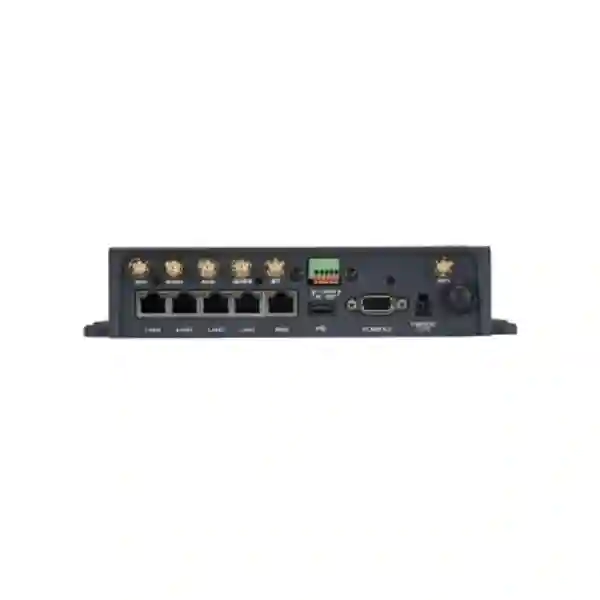
One GE WAN plus four GE LAN RJ45 interfaces for vehicle and OT devices.
2×2 2.4/5 GHz wireless connectivity supports local mobile users and devices.
Dedicated positioning capability supports connected-fleet and mobile operational use cases.
What FortiExtender Vehicle 211F Solves
A vehicle network has different requirements from a conventional office branch. It moves between cellular coverage areas, may carry operational devices that need wired Ethernet, may need local Wi-Fi for authorized users, and must be installed in an environment exposed to vibration and changing conditions. FEV-211F brings these connectivity functions into a rugged vehicle-oriented form factor. Fortinet positions the platform for mobile fleets and OT applications, allowing organizations to extend network access to logistics vehicles, service fleets, public transportation, utility operations and other moving assets.
The international FEV-211F uses one CAT-12 3G/4G LTE module with dual SIM capability. Fortinet lists LTE download and upload rates for the modem category at up to 600 Mbps and 150 Mbps respectively; actual carrier performance depends on radio conditions, network capacity, supported bands, antenna placement and service plan. The unit provides one Gigabit Ethernet WAN port and four Gigabit Ethernet LAN ports, giving designers options for onboard routers, terminals, cameras, controllers, laptops or other IP equipment. Integrated 2×2 2.4/5 GHz 802.11ac Wi-Fi and GPS/GNSS expand the deployment possibilities.
A critical procurement point is the antenna. Fortinet states that the external vehicle LTE antenna is required and sold separately for FEV-211F. Buyers should therefore treat the gateway, suitable antenna, mounting method, cabling, power design and cellular service as one solution rather than ordering the appliance alone. Fourteck can help prepare a bill of materials around the actual vehicle and operational requirement.
Verified FEV-211F Technical Highlights
| Product | FortiExtender Vehicle 211F |
| Model / SKU | FEV-211F |
| Cellular | Single CAT-12 LTE modem, dual SIM |
| Ethernet | 1 × GE WAN + 4 × GE LAN RJ45 |
| Wi-Fi | 2×2 2.4/5 GHz 802.11ac |
| Location | GPS/GNSS |
| Antenna | External vehicle LTE antenna required; sold separately |
Fleet, Logistics, Utility and OT Use Cases
FEV-211F is particularly relevant when a vehicle is effectively a small moving branch. A logistics truck may need connectivity for driver applications, dispatch systems, scanners and onboard monitoring. A utility vehicle may need secure access to cloud applications and operational systems while technicians work away from fixed offices. A transport fleet may need Wi-Fi and Ethernet for onboard equipment. A mobile service team may need predictable network architecture that can be standardized across many vehicles rather than assembling consumer routers and separate accessories for every deployment.
The four LAN ports are useful where multiple onboard endpoints require physical Ethernet. Wi-Fi can serve authorized local clients where wireless access is appropriate. GPS/GNSS capability can complement fleet applications that use location information. Dual SIM support allows planners to consider carrier diversity or service continuity strategies, subject to the selected carriers, SIM configuration and coverage. Organizations already using Fortinet can also evaluate FortiGate LAN/WAN extension and Fortinet management approaches as part of a broader security architecture.
Deployment Planning Before You Buy
Start with the vehicle type, operating routes, expected carrier coverage, connected device count and traffic profile. Confirm which cellular bands and operators are required in the deployment country. Determine whether one SIM is sufficient or whether the dual-SIM design will be used for resilience. Map every onboard endpoint that requires Ethernet or Wi-Fi, including cameras, terminals, tablets, telemetry equipment and maintenance laptops.
Antenna planning deserves equal attention. The FEV-211F does not include the required vehicle LTE antenna, so the correct compatible antenna and mounting location should be part of the quotation. Roof placement, cable routing, waterproofing, connector protection and vehicle installation practices can materially affect radio performance. Power should be planned for the vehicle electrical environment rather than treated like a desktop installation. Finally, decide how configuration, firmware, monitoring and security policy will be managed across the fleet.
Related Fourteck Tanzania Solutions
A connected fleet often depends on more than the cellular gateway. Review Fourteck Tanzania integrated IT solutions when the project includes several network and security layers. Organizations connecting vehicles back to protected corporate resources can combine FEV-211F planning with firewall, VPN and network security planning. Vehicle depots and operations centers may also need managed switching and LAN infrastructure and business Wi-Fi design. For procurement and project scoping, use the verified Fourteck Tanzania contact page.
FortiExtender Vehicle 211F Tanzania
For organizations in Tanzania, FortiExtender Vehicle 211F addresses a specific connectivity problem: how to give moving vehicles and mobile operational assets a consistent network edge without depending on fixed broadband. Fleet operators can use the CAT-12 LTE connection as the mobile WAN while connecting onboard devices through the four Gigabit LAN ports or integrated Wi-Fi. This makes the product relevant to logistics, field service, utilities, transportation, construction support, mining support vehicles and other organizations whose teams work between depots, customer sites and remote operating areas.
Tanzania deployments should begin with route and carrier analysis. A vehicle that spends most of its time in a major urban area has a different radio environment from one moving between cities or serving remote project locations. Dual SIM capability can support a resilience strategy, but buyers should confirm compatible operator services, coverage and data plans before deployment. The correct external LTE antenna is essential and is not included with the gateway. Vehicle type, roof construction, mounting position and cable routing should therefore be documented during design.
Procurement teams should specify the complete requirement: number of vehicles, expected connected devices, primary applications, monthly traffic expectations, preferred carriers, antenna and mounting needs, power arrangement and management model. If the fleet connects to head-office applications, include VPN, firewall and access-control requirements in the architecture discussion. Standardizing configuration, addressing, device naming and monitoring across vehicles can make a growing fleet easier to support. Fourteck Tanzania can help translate these operational inputs into a practical FEV-211F bill of materials and quotation without assuming stock, pricing or delivery until these are confirmed.
FortiExtender Vehicle 211F Dar es Salaam
Dar es Salaam organizations may evaluate FEV-211F for delivery fleets, port-related logistics, service vehicles, corporate transport, utilities and mobile technical teams. Dense commercial activity can create a requirement for vehicles to remain connected while moving between warehouses, offices, customer sites and transport corridors. Instead of relying on an ad-hoc phone hotspot or consumer router, the FEV-211F provides a vehicle-oriented network edge with CAT-12 LTE, dual SIM, wired LAN interfaces, Wi-Fi and GPS/GNSS capability.
For a Dar es Salaam deployment, define what must stay online while the vehicle moves. Dispatch applications may need continuous cloud access; technicians may need secure access to enterprise systems; onboard devices may need Ethernet; and operations teams may need location-aware workflows. Those requirements determine the data plan, carrier strategy and security design. Dual SIM can be valuable when a business wants flexibility between mobile services, but the practical benefit depends on configured service and coverage rather than the hardware alone.
Vehicle installation should include the required external LTE antenna, secure mounting, protected cable routing and a power plan suitable for the vehicle. If multiple vehicle classes are involved, installation templates should document where the gateway and antenna are placed for each type. For larger fleets, centralized configuration and monitoring can reduce manual maintenance. When requesting a Dar es Salaam quote, include vehicle quantity, fleet type, routes, connected equipment and integration requirements so the commercial proposal reflects the full solution rather than only the FEV-211F appliance.
FortiExtender Vehicle 211F Mwanza
Mwanza buyers can consider FortiExtender Vehicle 211F for mobile teams operating between city facilities, industrial sites, logistics points and regional routes. The product is most useful when vehicles need a stable, repeatable networking platform rather than occasional personal-device tethering. Four LAN interfaces support wired onboard equipment, while integrated Wi-Fi can provide local connectivity for authorized clients. GPS/GNSS adds a useful platform capability for fleet applications that incorporate positioning.
Planning should account for the actual movement of the fleet. Cellular conditions can vary by route, terrain, network load and operator, so a procurement decision should not be based solely on theoretical modem throughput. Teams should identify the applications that are operationally critical and decide what should happen when signal quality changes. Dual SIM capability gives designers an additional option for service planning, but the SIMs, carrier subscriptions and switching policies need to be selected and configured appropriately.
Mwanza projects should also budget for the required vehicle LTE antenna, which Fortinet sells separately. Installation quality matters because antenna placement and cable routing affect the radio path. Businesses operating mixed fleets should document installation standards and test representative vehicle types before a broad rollout. A quotation request should state whether the FEV-211F will operate independently as a vehicle gateway or integrate with an existing Fortinet security environment. This helps align hardware, management, support and deployment scope from the beginning.
FortiExtender Vehicle 211F Arusha
In Arusha, FEV-211F can fit organizations managing tourism transport, field service vehicles, logistics, utilities, institutional fleets and mobile operations that need business connectivity beyond a fixed office. The rugged vehicle form factor is designed for environments where a conventional branch router is not the natural fit. With LTE, dual SIM, Wi-Fi, GPS/GNSS and multiple Ethernet ports, the gateway can become the onboard network hub for selected business devices.
Arusha deployments may involve vehicles travelling between urban areas and more distant operating locations, making route-based connectivity planning important. Buyers should map where applications are used, what data is transferred and which workflows can tolerate temporary connectivity changes. Carrier coverage and compatible radio bands should be confirmed for the intended operating territory. Where resilience is important, dual SIM can be incorporated into the design after evaluating operator choices and data plans.
The external LTE antenna is a required accessory rather than an optional cosmetic item. Its mounting position should be selected to support reliable reception while protecting the installation from environmental exposure and accidental damage. Organizations should also decide who will manage configurations and updates across the fleet. For an Arusha quotation, provide vehicle count, vehicle types, routes, onboard endpoints, preferred operators and any VPN or corporate-network integration. These details help prevent incomplete purchasing and create a deployment that can be replicated as the fleet expands.
FortiExtender Vehicle 211F Dodoma
Dodoma organizations with government-linked operations, utilities, service fleets, logistics teams, institutions and distributed field personnel may use FEV-211F to extend managed connectivity into vehicles. The unit offers a clear alternative to assembling separate mobile hotspots, switches and Wi-Fi devices when a project needs one vehicle-oriented gateway. Its wired LAN ports are useful for fixed onboard endpoints, while Wi-Fi supports local wireless access and GPS/GNSS can support location-enabled applications.
A sound Dodoma deployment starts by classifying traffic. Business applications, telemetry, cameras, voice and general user internet access can have very different bandwidth and security requirements. Not every endpoint should necessarily share the same access policy. Where the vehicle links back to protected systems, firewall and VPN architecture should be designed alongside the cellular connection. If the organization already uses Fortinet at offices or data centers, the FEV-211F can be assessed within that broader operational model.
Procurement should include the required external LTE antenna, installation hardware and an appropriate power approach. Before scaling to many vehicles, test the proposed mounting and connectivity design in representative routes and operating conditions. Document SIM assignment, device identity, configuration backup and support ownership. Buyers requesting pricing in Dodoma should provide quantities and project scope so the quote can distinguish hardware, accessories, management or support requirements and any deployment services. Availability and delivery should be confirmed at quotation time rather than assumed.
FortiExtender Vehicle 211F UAE
UAE fleet operators can evaluate FEV-211F for logistics, field engineering, utilities, service fleets and connected mobile assets that require LTE networking with onboard Ethernet and Wi-Fi. The international model supports the vehicle/OT use case with a single CAT-12 modem and dual SIM architecture. For organizations managing operations across several countries, standardizing on a common vehicle gateway can simplify configuration templates, monitoring processes and spare planning, provided the regional radio and carrier requirements are validated.
High-temperature operating environments and long vehicle duty cycles make installation planning important. The gateway should be installed according to vendor environmental guidance, with suitable airflow, secure mounting and protected cabling. The external LTE antenna is sold separately and should be selected as part of the complete system. Antenna placement, cable length and connector protection can influence the quality of the mobile link, so these should be engineered rather than improvised after the gateway is installed.
For UAE procurement, specify whether vehicles need only internet access or must connect securely to branch, cloud or data-center applications. Identify wired endpoints, Wi-Fi clients, expected data usage and carrier strategy. Businesses with operations spanning Tanzania and the Gulf can use consistent naming, management and security standards while adapting SIMs and installation details to each market. Fourteck regional resources at Fourteck UAE can complement Tanzania project discussions for cross-border requirements.
FortiExtender Vehicle 211F Uganda
Uganda organizations can use the FEV-211F concept for logistics fleets, utilities, mobile service operations, institutional vehicles and field teams that need managed LTE connectivity. The combination of dual SIM, four wired LAN ports and Wi-Fi means one gateway can support several onboard connectivity patterns. It is especially relevant where an organization wants fleet networking to follow enterprise standards rather than depend on individually managed consumer devices.
The deployment plan should reflect travel routes and the applications used while vehicles are moving. Teams can compare mobile operators for the intended service areas and decide how the dual-SIM capability will be used. For business-critical applications, define how users and systems behave during coverage changes and what monitoring is required. The theoretical CAT-12 capability should not be interpreted as a guaranteed field speed; real throughput depends on the mobile network, signal, antenna and service conditions.
The required LTE vehicle antenna is sold separately, so Uganda quotations should include antenna and mounting requirements from the start. For fleets that also connect to protected office networks, coordinate FEV-211F with firewall and VPN policy. Organizations operating across East Africa can benefit from standardized configuration templates while using locally appropriate SIMs and carrier services. For regional Fortinet context, Fourteck Uganda provides a related regional technology resource.
FortiExtender Vehicle 211F Kampala
Kampala-based fleet operators may need connectivity for vehicles moving between offices, warehouses, customer locations and surrounding districts. FEV-211F gives those vehicles a dedicated network edge with LTE, Ethernet, Wi-Fi and positioning capability. A logistics vehicle could connect a driver terminal and other onboard devices through LAN while authorized users connect over Wi-Fi. A field-service vehicle could provide technicians with controlled access to cloud and enterprise applications without relying on a personal phone hotspot.
For urban fleets, capacity and application design can matter as much as coverage. Determine how many users and devices will connect concurrently, which applications are critical and whether any traffic should be separated or prioritized. The single CAT-12 modem uses dual SIM, enabling a carrier strategy that can be designed around operational needs. SIM failover behavior and management should be configured and tested rather than assumed.
Installation teams should plan the external LTE antenna and secure vehicle mounting before rollout. For a fleet with many similar vehicles, create a repeatable installation drawing and commissioning checklist. Record serials, SIM assignments, configuration versions and vehicle IDs to simplify future support. Kampala buyers should request a quote with quantities, antenna requirements and management expectations so the commercial scope is complete. If the organization has offices protected by FortiGate, include that information so vehicle-to-enterprise integration can be reviewed.
FortiExtender Vehicle 211F Arua
Arua operations can involve vehicles covering longer routes and serving field locations where fixed connectivity is not available at the point of work. FEV-211F is designed for exactly the category of problem where the network edge must travel with the vehicle. Its LTE modem provides the WAN path, while Ethernet and Wi-Fi connect local onboard equipment. GPS/GNSS capability can support fleet applications that make use of positioning data.
For routes outside dense urban coverage, organizations should place additional emphasis on operator coverage assessment and antenna installation. Dual SIM gives the hardware flexibility to use two SIM profiles, but resilience depends on actual carrier networks and configuration. Businesses should test intended routes before committing to a large deployment, particularly when applications are sensitive to interruption. Data consumption should also be estimated from the real workload rather than user count alone.
The external LTE antenna must be included in the solution and mounted appropriately for the vehicle. Where dust, vibration or frequent vehicle servicing are factors, cabling and connector protection should be documented. Arua procurement teams should also define remote-management responsibilities because physically visiting every vehicle for configuration changes is inefficient. A standardized deployment record, remote monitoring plan and spare strategy can make the system more supportable as the fleet grows.
FortiExtender Vehicle 211F Mbarara
Mbarara businesses with distribution, agriculture-related logistics, service operations, utilities and mobile field teams can consider FEV-211F when vehicles require a managed connection to cloud or enterprise resources. Four Ethernet LAN ports make the gateway useful where onboard devices should remain wired for predictable connectivity. Wi-Fi can support tablets, laptops or other approved wireless clients, while the LTE modem carries traffic to the mobile network.
A practical design should distinguish essential operational traffic from convenience traffic. If a vehicle carries telemetry, payment, dispatch or service-management applications, those workflows may deserve tighter access controls and monitoring than general browsing. When the fleet connects back to company systems, VPN and firewall policies should be reviewed as part of the architecture. This avoids treating cellular connectivity as separate from cybersecurity.
Mbarara buyers should verify mobile operator compatibility and coverage along the routes where vehicles actually work. The dual-SIM feature can be incorporated into continuity planning after this review. The external LTE antenna is required and should be quoted with the gateway. Before deployment, define power, mounting, antenna placement, cable paths and a commissioning test. For multiple vehicles, repeatable documentation is valuable because it allows technicians to troubleshoot against a known standard rather than a different installation in every vehicle.
FortiExtender Vehicle 211F Gulu
Gulu fleet and field operations may need mobile connectivity across mixed urban and regional routes. FEV-211F provides a purpose-built vehicle gateway that can consolidate LTE WAN, local Ethernet, Wi-Fi and positioning into one platform. This is useful for organizations that want a controlled network architecture in vehicles and need to connect several operational devices without building the solution from unrelated consumer components.
Coverage analysis is particularly important for vehicles that travel beyond city centers. Organizations should compare the intended carriers, supported service areas and expected application behavior when signal quality changes. Dual SIM can provide additional flexibility, but it should be configured according to the business continuity requirement. Application data use should be estimated so mobile plans align with real operations, especially if vehicles transmit media, large files or frequent telemetry.
The antenna is part of the radio system and must be selected and installed correctly. Fortinet specifies an external vehicle LTE antenna for FEV-211F and sells it separately. Gulu projects should include secure mounting, protected cable routing and a clear power design. Larger deployments benefit from remote management, configuration standards and inventory records linking each gateway to its vehicle and SIMs. These operational controls can reduce support effort throughout the equipment lifecycle.
FortiExtender Vehicle 211F Kenya
Kenya logistics, transport, utility and service organizations can evaluate FEV-211F for connected-fleet projects that require a rugged LTE gateway. The device can provide cellular WAN for the vehicle while four LAN ports and integrated Wi-Fi connect onboard systems. This architecture can be useful for distribution fleets, field engineering, mobile service units and other vehicles that must exchange data with cloud applications or central operations.
For fleets travelling between Nairobi, industrial zones, regional cities and long-distance corridors, connectivity planning should use real route requirements. The dual-SIM design allows two SIMs to be incorporated into the solution, but organizations should validate operator coverage and configuration. The CAT-12 modem capability defines the radio technology ceiling; it does not guarantee a specific field throughput. Signal conditions, cell loading, service plans and antenna quality all influence results.
The required external LTE antenna should be included in procurement and matched to the installation. Vehicle power, mounting, cabling and remote management should also be scoped. Cross-border fleets operating between Kenya, Tanzania and Uganda can standardize gateway configuration and security policies while adapting carrier services by country. For broader regional requirements, Fourteck Kenya offers related Fortinet and network-security information.
FortiExtender Vehicle 211F Kuwait
Kuwait fleet operators can consider FortiExtender Vehicle 211F for service vehicles, logistics, utility operations and mobile technical teams that require managed LTE connectivity. The vehicle gateway format allows Ethernet-connected equipment and wireless clients to share a centrally designed mobile network edge. This can reduce dependence on temporary hotspots and give IT teams a consistent platform across multiple vehicles.
Environmental and installation planning should be taken seriously in hot operating conditions. Equipment location, ventilation, cable protection and antenna placement should follow vendor guidance and the practical constraints of the vehicle. The external LTE antenna is sold separately, so the bill of materials must include a compatible antenna and mounting plan. Teams should test representative installations before fleet-wide rollout.
Procurement should identify carriers, SIM strategy, applications, data usage and security integration. If vehicles need access to internal applications, the cellular gateway should be considered alongside VPN and firewall controls. For organizations operating fleets across several Middle East and African markets, a common FEV-211F platform can support standardized operations while country-specific mobile services are handled separately. Current availability, commercial terms and delivery should be confirmed when requesting a quote.
FortiExtender Vehicle 211F Ghana
Ghanaian organizations managing logistics, utility, service and mobile operational fleets can use the FEV-211F design to bring enterprise-style connectivity into vehicles. LTE provides the wide-area link, while wired Ethernet and Wi-Fi support onboard users and systems. This combination can be relevant to dispatch, maintenance, field reporting, telemetry and other applications that need data access while teams are away from fixed sites.
The project should start with an application inventory and route map. Determine which devices connect to the four LAN ports, which use Wi-Fi and how much traffic they generate. Review operator coverage for the actual service area and decide whether the dual-SIM capability will be used. Where security matters, define how vehicle traffic reaches cloud and corporate systems and whether VPN or centralized policy is required.
The required external LTE antenna must be selected and installed as part of the complete solution. For large fleets, standardize the antenna position, gateway mounting, cable path and commissioning test for each vehicle class. Remote configuration and inventory records can reduce support costs. Organizations coordinating regional procurement can also reference Fourteck Ghana for market-specific technology discussions while maintaining common fleet standards.
FortiExtender Vehicle 211F Nigeria
Nigeria has many fleet scenarios where a dedicated vehicle network can be more manageable than consumer mobile connectivity: logistics and delivery, utilities, field engineering, maintenance teams, transport services and mobile operational units. FEV-211F combines a CAT-12 LTE modem with dual SIM, four LAN ports, Wi-Fi and GPS/GNSS in a ruggedized platform designed for vehicle and OT use.
Because fleet routes can span different mobile-network conditions, organizations should validate carrier compatibility and coverage for their actual operations. Dual SIM provides design flexibility, but it is only one part of resilience; antenna quality, configuration, application behavior and network availability also matter. IT teams should determine which traffic is business-critical and whether vehicle devices require segmentation or controlled access to enterprise systems.
A complete purchase includes the required external LTE antenna and an installation plan. Vehicle electrical power, gateway mounting and cable protection should be addressed before deployment. For a large fleet, centralized configuration and consistent records are important because manual per-vehicle administration becomes difficult at scale. Nigerian buyers can use Fourteck Nigeria for related regional requirements while cross-border organizations maintain shared technical standards.
FortiExtender Vehicle 211F Seychelles
Seychelles organizations may have smaller fleets than large mainland markets, but mobile connectivity can still be important for utilities, service teams, transport, hospitality operations and field maintenance. FEV-211F offers a structured way to give a vehicle LTE WAN, wired local connectivity, Wi-Fi and positioning capability. The value is not simply internet access; it is the ability to create a repeatable, managed onboard network.
Island geography makes it important to validate the exact carrier and coverage assumptions for the intended operating areas. Buyers should confirm supported mobile services, select suitable SIM plans and test the gateway on representative routes. Dual SIM can provide additional service options, while the four LAN ports make it possible to connect several fixed onboard endpoints without adding a separate small switch in simple deployments.
The required external LTE antenna should be selected with the vehicle type and environmental exposure in mind. Installation should protect connectors and cables from weather and maintenance activity. For organizations with a limited technical team, remote management and good documentation are especially valuable. Record device identity, SIM information, configuration and vehicle assignment. When requesting a quotation, include these deployment details so accessories and implementation requirements are not overlooked.
Selection and Quotation Checklist
Before requesting a FortiExtender Vehicle 211F quote, prepare the information that determines a complete solution. State the number and type of vehicles, countries and routes of operation, preferred mobile carriers, number of wired and wireless onboard devices, critical applications, estimated traffic, corporate VPN requirements, existing Fortinet environment, management preference and expected deployment schedule. Confirm that the required external LTE antenna and its mounting method are included. If the fleet includes different vehicle types, identify them because antenna and gateway placement may differ.
For international fleets, verify regional radio compatibility before standardizing the exact hardware variant. The FEV-211F is the international model listed by Fortinet for EU/APAC/LATAM carrier environments, while North America uses the FEV-211F-AM variant. Do not substitute variants without validating the operating region and carrier requirements.
Frequently Asked Questions
What is FortiExtender Vehicle 211F?
FEV-211F is a rugged Fortinet wireless WAN router for vehicle and OT deployments. It includes one CAT-12 LTE modem with dual SIM, one GE WAN port, four GE LAN ports, 2.4/5 GHz 802.11ac Wi-Fi and GPS/GNSS capability.
Does FEV-211F include the vehicle LTE antenna?
No. Fortinet specifies that an external LTE antenna is required and sold separately. Antenna selection and vehicle mounting should therefore be included in procurement planning.
How many SIM slots does FortiExtender Vehicle 211F have?
The FEV-211F uses a single CAT-12 LTE modem with dual SIM support. How the two SIMs are used depends on the configured connectivity strategy and carrier services.
Can FEV-211F connect onboard wired devices?
Yes. It provides four Gigabit Ethernet LAN RJ45 ports in addition to one Gigabit Ethernet WAN port, making it suitable for vehicle systems that require physical Ethernet connections.
Does FortiExtender Vehicle 211F provide Wi-Fi?
Yes. Fortinet lists 2×2 2.4 GHz and 5 GHz 802.11ac Wi-Fi for the international FEV-211F.
Is FEV-211F suitable for fleet deployments?
Fortinet specifically positions FortiExtender Vehicle for mobile fleets and vehicle/OT applications. Suitability for a particular fleet depends on carrier compatibility, coverage, connected devices, installation environment and security requirements.
Decision Recap
Choose FortiExtender Vehicle 211F when the project needs a rugged vehicle-oriented LTE gateway with dual SIM, multiple Gigabit Ethernet connections, 802.11ac Wi-Fi and GPS/GNSS. It is particularly relevant to connected fleets that want a standardized network edge and integration with broader Fortinet networking. Do not treat the gateway as the entire installation: the required external LTE antenna, vehicle mounting, power, SIMs, carrier coverage, security architecture and management model all need to be planned.
Talk to Fourteck About FEV-211F
Share your fleet size, vehicle types, operating locations, carriers, onboard devices and network-security requirements. Fourteck can use those details to prepare a more complete FortiExtender Vehicle 211F discussion covering the gateway, compatible antenna, integration and deployment scope. Pricing, stock and delivery are confirmed during quotation rather than assumed on this page.




Reviews
There are no reviews yet.