
FortiGate 1800F (FG-1800F) Tanzania
FortiGate 1800F is designed for organizations that need high-capacity security at an enterprise edge, data center, hybrid environment or heavily segmented network. The platform combines FortiOS security and networking with purpose-built acceleration, dense connectivity and options for resilient high-availability designs. For Tanzanian enterprises evaluating FG-1800F, the practical buying question is not simply maximum firewall throughput: the design should account for inspected traffic, SSL inspection, VPN load, interface speeds, optics, segmentation, logging, subscription services, redundancy and expected growth.
Published IPv4 firewall throughput reaches up to 198/197/140 Gbps depending on packet size.
Fortinet publishes 22 Gbps IPS throughput using its enterprise traffic mix methodology.
Published NGFW throughput is 17 Gbps with firewall, IPS and application control enabled.
Published threat-protection throughput is 15 Gbps under Fortinet’s stated test conditions.
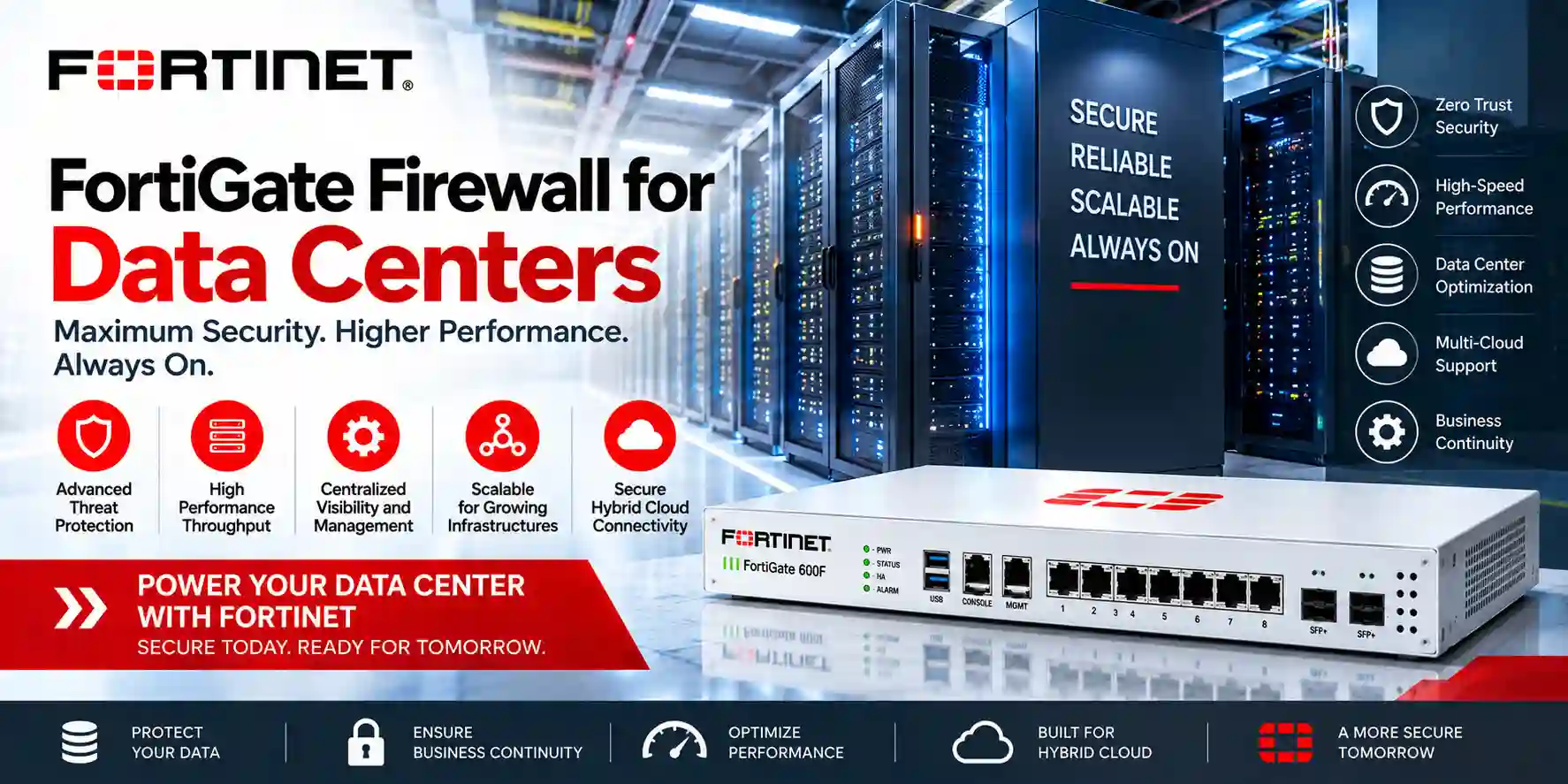
FortiGate 1800F Overview and Verified Capabilities
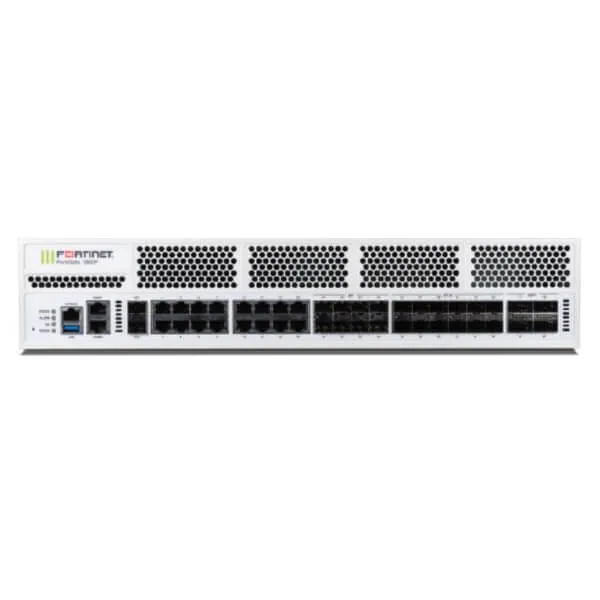
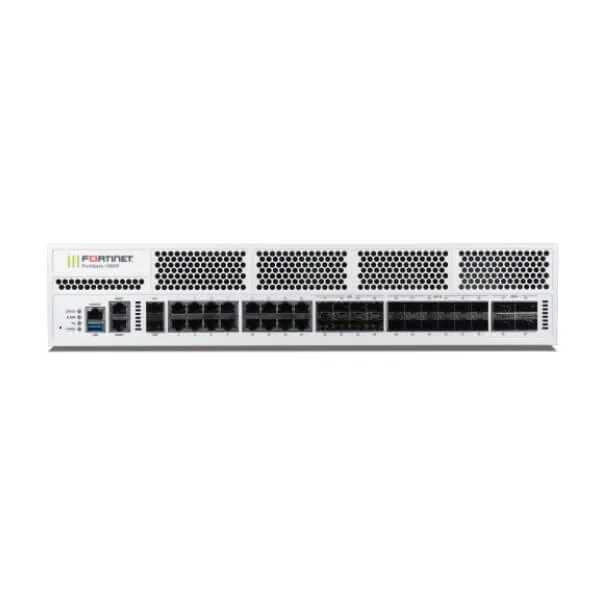
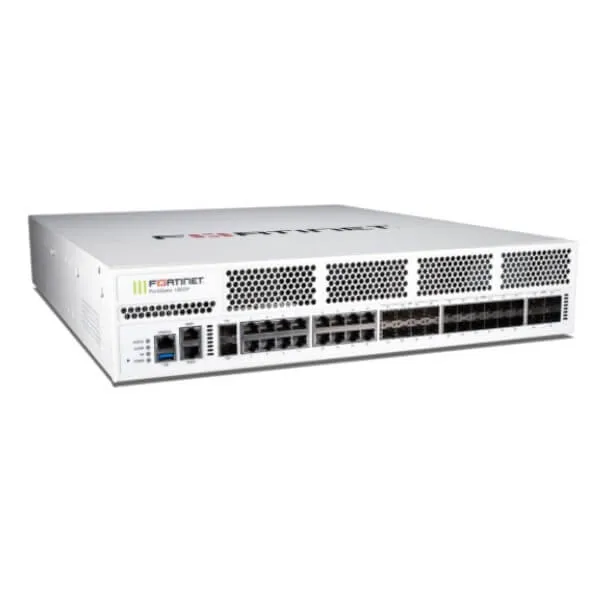
Fortinet positions the FortiGate 1800F Series for high-performance next-generation firewall use cases across enterprise edges, hybrid IT, data-center cores and internal segmentation. The appliance uses Fortinet’s NP7 network processor architecture to accelerate supported traffic. Current Fortinet documentation identifies sixteen hardware-accelerated GE RJ45 data ports, eight GE SFP slots, twelve 25GE SFP28/10GE SFP+ capable slots, four 100/40GE QSFP28/QSFP+ capable slots, two management ports and two 10GE SFP+ HA interfaces. This port mix makes the platform relevant when an organization needs to consolidate security controls without immediately creating an interface bottleneck between high-speed switching, WAN, server and security zones.
Capacity planning should use security-enabled throughput rather than the largest headline number. Fortinet publishes 22 Gbps IPS, 17 Gbps NGFW and 15 Gbps threat-protection throughput, alongside 12 Gbps SSL-inspection throughput under its stated test methodology. It also publishes 55 Gbps IPsec VPN throughput, up to 12 million concurrent TCP sessions in the standard specification, 750,000 new TCP sessions per second, 20,000 gateway-to-gateway IPsec VPN tunnels and active-active, active-passive and clustering HA configurations. Actual results vary with configuration, traffic mix, enabled inspection, firmware, policies and other operational factors, so a production design should leave appropriate headroom.
The FG-1800F is a 2RU rack-mount appliance. Fortinet lists redundant hot-swappable power supplies and an operating temperature range of 0°C to 40°C. These details matter for data-center planning in Tanzania: rack space, power circuits, UPS capacity, cooling, airflow, transceiver selection and cable type should all be confirmed before deployment. Buyers should also distinguish the FG-1800F from the FG-1801F, because the 1801F adds onboard storage while the 1800F specification lists no onboard storage. Logging and analytics requirements can therefore influence the wider architecture and whether FortiAnalyzer or another approved logging design is required.
Key Buying and Deployment Questions
Before requesting a FortiGate 1800F quote, document internet and private-WAN bandwidth, east-west traffic that will cross the firewall, SSL-inspection expectations, number of users and devices, IPsec tunnels, remote-access requirements, required 10/25/40/100GbE connections, transceiver types, HA requirement, FortiGuard subscription term, FortiCare support level, central management and logging requirements. A complete bill of materials may need optics, cables, rack accessories, subscriptions and related Fortinet components in addition to the appliance itself.
FortiGate 1800F Tanzania
Organizations searching for FortiGate 1800F Tanzania are usually planning a high-capacity firewall refresh, a data-center security layer, a major internet edge, a multi-site WAN hub or segmentation between critical networks. In these environments, selecting the appliance by raw firewall throughput alone can produce an incomplete design. Tanzanian enterprises should map the real traffic path: internet circuits, MPLS or carrier Ethernet, private fiber, cloud connectivity, branch VPNs, server networks, DMZs and internal security zones. The inspection profile is equally important. IPS, application control, malware protection and SSL inspection consume resources differently from basic stateful firewalling, so the sizing exercise should be based on the services that will actually remain enabled during peak periods.
The FG-1800F’s high-speed interface mix is particularly useful where the firewall must connect to core switching or aggregation at 10, 25, 40 or 100 Gigabit Ethernet speeds. Procurement teams should confirm the exact transceiver and fiber requirements on both sides of every high-speed link. A QSFP28 port on the firewall does not by itself guarantee compatibility with an existing switch optic, breakout method or fiber plant. Port grouping behavior should also be considered for the 25GE interfaces because Fortinet documentation notes that speed changes can affect interfaces within a group. Capturing these details before ordering reduces redesign during implementation.
For Tanzania deployments that require resilience, an HA pair may be more appropriate than a single appliance. That decision changes the hardware quantity, subscription planning, rack allocation, power, switch connectivity and maintenance procedure. Teams should also plan where logs will be retained, how administrators will manage policy changes, whether FortiManager and FortiAnalyzer are part of the architecture, and how configuration backups will be protected. For broader regional cybersecurity context, customers can review FourTeck Africa IT and firewall solutions, while specialized Fortinet information is available through FourTeck’s Fortinet-focused regional resource. The objective is to create a quote around the complete deployment rather than an isolated chassis.
FortiGate 1800F Dar es Salaam
FortiGate 1800F Dar es Salaam requirements commonly align with large headquarters, service-provider environments, data centers, financial organizations, hospitality groups, logistics operations and enterprises that aggregate traffic from multiple sites. A coastal commercial hub can concentrate internet connectivity, cloud access and branch VPN termination at one location, making firewall capacity and redundancy central design issues. For a headquarters deployment, engineers should establish peak north-south internet traffic as well as east-west traffic between user, server, voice, wireless, guest and application zones. If encrypted applications are inspected, the design should use Fortinet’s published SSL-inspection performance as a more relevant reference than raw firewall throughput.
A Dar es Salaam project should include a physical infrastructure review. The FG-1800F occupies 2RU and requires appropriate rack depth, airflow and power planning. Dual power supplies provide a basis for power redundancy, but meaningful resilience also depends on separate protected power paths where available, suitable UPS capacity and redundant upstream/downstream switching. For an HA pair, each appliance should have carefully mapped production and heartbeat connectivity so that maintenance or a component failure does not create an avoidable outage. Configuration synchronization, monitored interfaces and failover behavior should be tested against the organization’s change-control plan.
Procurement documentation should specify FG-1800F precisely and identify whether AC or DC power is required, the desired support and security subscription term, optics, patch leads, high-availability quantity, central management and logging. If the project includes multiple WAN providers, Secure SD-WAN can be evaluated as part of the FortiOS design, but routing policies, SLA measurements, application steering and failover behavior should be defined before migration. A quotation request that includes current firewall model, circuit speeds, user count, critical applications, VPN scale, VLAN/VRF structure and growth expectations allows a much more useful technical review than a request for price alone.
FortiGate 1800F Mwanza
For FortiGate 1800F Mwanza projects, the strongest fit is generally an organization with substantial traffic, multiple protected network zones or a regional hub role rather than a small office that only needs basic perimeter filtering. Enterprises operating distributed branches, industrial sites, healthcare systems, education campuses or regional service networks can use a high-capacity firewall at a central location to enforce policy, terminate encrypted tunnels and control access between operational segments. The sizing process should start with measured traffic and business requirements, not model prestige. If expected inspected throughput is far below the platform’s capability, another FortiGate model may be more economical; if growth, segmentation or high-speed aggregation is substantial, the 1800F can provide useful headroom.
Connectivity planning is important when a Mwanza site aggregates fiber and carrier services from different providers. The FG-1800F provides a broad combination of copper and optical interfaces, but every handoff should be documented by media type, speed and transceiver standard. High-speed server or core-switch links may use 25GE or 100/40GE interfaces, while management and lower-speed network connections can use other ports. Engineers should preserve dedicated management access and avoid consuming high-value interfaces without a port plan. The final design should include diagrams showing WAN, LAN, DMZ, HA and out-of-band management paths.
Security policy design should reflect local business operations: branch access, cloud applications, administrative systems, guest networks, payment or transactional systems, voice, cameras and server workloads should not automatically share the same trust level. FortiGate segmentation, IPS, application control, VPN and policy controls can be combined according to the organization’s risk requirements. Logging should be sized for retention and investigation needs, and subscription renewal dates should be tracked as part of operational governance. When requesting a quote, include implementation expectations and migration constraints so the proposed bill of materials covers the appliance, subscriptions and connectivity components needed for a controlled deployment.
FortiGate 1800F Arusha
FortiGate 1800F Arusha searches may come from larger hospitality groups, regional headquarters, education organizations, NGOs, service providers and enterprises that need a secure aggregation point for multiple properties or offices. In a multi-site environment, the firewall can form part of a hub architecture for site-to-site IPsec VPN and Secure SD-WAN, but the design should account for the combined traffic of all connected sites rather than the bandwidth of one location. Peak usage, cloud applications, voice and video, backups, software updates and security inspection can create very different traffic patterns throughout the day.
For hospitality and campus-style environments, segmentation deserves special attention. Guest access, staff systems, servers, building systems, cameras, payment networks and management interfaces should be mapped into appropriate security zones with explicit policy between them. A high-capacity firewall is valuable only when the policy model is understandable and maintainable. Administrators should define object naming, change control, logging, administrator roles and backup procedures before the production cutover. Where SSL inspection is planned, application compatibility and certificate deployment should be tested with representative devices and business services.
Arusha buyers should also consider operational continuity. An HA pair, redundant switching and diverse WAN services can reduce single points of failure, but each layer needs testing. Maintenance windows should include rollback plans, configuration validation and failover tests. Fortinet publishes active-active and active-passive HA support for the platform, allowing architects to choose an approach consistent with the wider network. For organizations procuring across East Africa, FourTeck Kenya and FourTeck Uganda provide regional pathways for related requirements. The quotation should still identify the final deployment location, required license term, optics, support expectations and any implementation services.
FortiGate 1800F Dodoma
FortiGate 1800F Dodoma projects can be relevant to large institutional, government-adjacent, education, enterprise and data-center networks that require strong segmentation and predictable security performance. Procurement teams should translate policy requirements into technical requirements before selecting subscriptions or accessories. Determine which traffic needs IPS, malware protection, application control, DNS/web security, SSL inspection, VPN and logging. This helps create a realistic performance envelope and prevents the design from relying on the maximum stateful firewall number when security services will be active in production.
Network architects should document trust boundaries and critical systems. Administrative networks, server workloads, user access, wireless, guest services, voice, cameras, external services and partner connections can be placed into defined zones with least-privilege policies. Where the firewall sits between core segments, interface capacity and latency become important, and the FG-1800F’s NP7 acceleration and high-speed interfaces are relevant. However, policy complexity can affect operations even when hardware capacity is ample. A clear rule lifecycle, periodic review and centralized logging are essential for a sustainable deployment.
Physical and lifecycle planning should include rack space, redundant power, environmental conditions, spare optics strategy, firmware governance and subscription renewals. The firewall should be integrated into monitoring so interface state, resource utilization, VPN status, HA health and security events can be reviewed. If the organization requires centralized administration across many FortiGate devices, FortiManager can be evaluated; if centralized analytics and log retention are required, FortiAnalyzer can be considered. A Dodoma quotation request should therefore include both the product model and the desired architecture, enabling the supplier to identify dependencies before the purchase is finalized.
FortiGate 1800F UAE
FortiGate 1800F UAE demand often centers on enterprise data centers, regional headquarters, managed environments and organizations requiring high-speed security between internet, cloud and internal networks. UAE buyers should specify the exact appliance variant, subscription term, FortiCare requirement, optics and HA quantity when requesting a commercial proposal. The dense interface mix can support high-speed core and aggregation designs, but engineers must match QSFP28, QSFP+, SFP28 and SFP+ connectivity to the installed switching platform. Cabling distance, fiber type and breakout requirements should be validated before shipment.
For a regional hub, IPsec and SD-WAN planning may be as important as perimeter security. Fortinet publishes up to 55 Gbps IPsec VPN throughput under its stated test conditions and support for large tunnel counts, making the platform relevant to substantial encrypted connectivity. Real deployments should be modeled using actual encryption, routing, inspection and traffic patterns. If remote access is required, identity, MFA, endpoint posture and application access policies should be considered as part of the design rather than treating VPN as an isolated feature.
Customers seeking a specialized regional path can use FourTeck Fortinet UAE for FortiGate, renewal and deployment information or FourTeck UAE for wider IT requirements. A strong RFQ should include current topology, target throughput, number of security zones, WAN carriers, required inspection, HA design, logging, management and migration scope. This enables a technically aligned proposal instead of a chassis-only comparison.
FortiGate 1800F Uganda
FortiGate 1800F Uganda deployments are most relevant where a business or institution has enterprise-scale bandwidth, many branches, substantial VPN aggregation, data-center workloads or a need for high-speed internal segmentation. The procurement process should begin with traffic measurements and growth assumptions. Organizations should distinguish internet-edge traffic from internal east-west flows because a firewall deployed between core zones may inspect far more aggregate traffic than the public internet circuit suggests. Security services, logging and encrypted traffic inspection should be included in the performance model.
For multi-branch organizations, Secure SD-WAN and IPsec can be incorporated into the FortiGate architecture to connect sites over multiple links. The design should define which applications prefer each path, the SLA metrics that trigger steering, and the failover behavior when a carrier degrades rather than fails completely. Centralized policy and analytics may simplify operations across a larger estate. The FG-1800F can serve as a powerful hub, but branch models should be sized independently for their own traffic and security requirements.
Uganda procurement teams should provide exact delivery location, appliance quantity, HA requirement, AC/DC variant, license bundle and term, optics and implementation scope. They should also confirm whether configuration migration, VPN rollout, central management or logging is required. FourTeck Uganda can be used for Uganda-focused enquiries, while the Tanzania page can support cross-border project coordination where appropriate. No assumption should be made about stock or delivery time until the exact configuration is quoted and confirmed.
FortiGate 1800F Kampala
FortiGate 1800F Kampala buyers may be planning a headquarters firewall, financial or service-provider edge, data-center security platform or central VPN hub. Kampala environments with multiple internet providers and cloud-heavy applications can benefit from a design that combines routing and security policy, but the migration should be engineered carefully. Existing NAT, public services, BGP or static routes, VPNs, authentication and security policies should be inventoried before cutover so that dependencies are not discovered during the maintenance window.
A capacity review should separate raw throughput from inspected throughput. Fortinet’s published 17 Gbps NGFW and 15 Gbps threat-protection figures are more useful for many security-enabled designs than the 198 Gbps maximum firewall figure. SSL inspection can be another key sizing factor, especially in networks dominated by encrypted web and SaaS traffic. Engineers should identify which traffic will be decrypted, which categories require bypass for technical or policy reasons, and how certificates will be distributed to managed endpoints.
High availability should be considered when the firewall protects critical business connectivity. Two appliances can reduce hardware-level risk, but resilient design also requires redundant links, switch ports, power and correct HA monitoring. The project plan should include a failover test and a documented recovery process. For quotations, Kampala customers should send interface requirements, circuit speeds, current firewall model, user/device scale, VPN count, subscription preference and desired support term. These details make it easier to validate whether FG-1800F is appropriately sized and what supporting components belong in the bill of materials.
FortiGate 1800F Arua
A FortiGate 1800F Arua deployment is likely to be justified by a regional hub, major institutional network, carrier-connected facility or organization consolidating traffic from numerous sites. For smaller standalone offices, sizing should be reviewed carefully because a high-end platform may exceed practical requirements. The correct decision depends on inspected throughput, segmentation, VPN aggregation, high-speed interface needs, concurrent sessions and growth rather than city or user count alone.
Where WAN reliability is a concern, a firewall design can incorporate multiple carriers and SD-WAN policies. This should be supported by clear application priorities: business-critical services may need preferred links, while bulk traffic can use alternative capacity. Health checks should measure conditions that matter to the application, and routing behavior should be tested for both complete outages and degraded links. Site-to-site IPsec can secure traffic between branches and the hub, with key management and tunnel monitoring incorporated into operations.
Arua procurement should also account for physical infrastructure and maintainability. Rack depth, power protection, cooling, fiber patching and access to replacement optics can influence availability. Documentation should record port assignments, VLANs, routing, security policies, VPNs and administrator access. If the device is managed remotely, secure out-of-band or protected management connectivity is valuable. An RFQ should state whether the requirement is appliance-only or includes licensing, HA, optics, configuration and migration, ensuring that commercial comparisons are based on equivalent scope.
FortiGate 1800F Mbarara
FortiGate 1800F Mbarara requirements can arise in larger healthcare, education, financial, industrial and multi-branch networks that need a secure regional aggregation point. A useful design exercise starts by mapping applications and trust zones. Clinical or operational systems, user networks, guest Wi-Fi, servers, cameras, voice and administrative systems often have different security needs. Segmentation can limit lateral movement and make policy easier to audit when rules are defined around business purpose instead of broad any-to-any access.
The platform’s interface density provides flexibility for connecting separate networks and high-speed switching, but physical ports should not replace a logical design. VLANs, routing domains and zones can be combined with appropriate interfaces to create a maintainable topology. Where traffic crosses the firewall internally, aggregate east-west load must be included in sizing. If encrypted application traffic is inspected, test critical services before broad rollout and maintain a documented exception process for applications that cannot be decrypted.
For procurement, identify the security subscription needed for the intended services and align the renewal term with budgeting and support policy. Confirm FortiCare level, central logging, management and any professional services. High availability should be considered for critical sites, with dual power and network paths designed end-to-end. Buyers should request a detailed bill of materials rather than comparing only base appliance prices, because optics, subscriptions and implementation can materially change the complete project scope.
FortiGate 1800F Gulu
FortiGate 1800F Gulu searches may relate to regional infrastructure, institutions, service networks or organizations using Gulu as an aggregation point for northern operations. The firewall can support large numbers of sessions and VPN connections, but a technical assessment should establish whether those capabilities are actually required. Sizing based on future growth is sensible; oversizing without a documented reason can unnecessarily increase hardware and subscription cost. The target should be sufficient security-enabled performance with operational headroom.
For distributed sites, the central firewall may terminate IPsec tunnels from branches while enforcing access to applications hosted at the hub or in cloud environments. Routing, DNS, identity and application dependencies should be mapped so branch failover behaves predictably. SD-WAN can help steer traffic across available links, but policies should be tied to measured service quality and application importance. Central monitoring should alert administrators to tunnel failures, interface errors, HA events and unusual security activity.
Gulu deployment planning should also address supportability. Keep current configuration backups, document firmware policy, track subscription expiration and maintain a tested change process. Physical installation should provide adequate rack space, airflow and protected power. If an HA pair is selected, schedule periodic failover tests rather than assuming redundancy will work indefinitely. A quote request should include these operational requirements so that the proposed FortiGate 1800F solution is evaluated as part of a complete security architecture.
FortiGate 1800F Kenya
FortiGate 1800F Kenya can serve enterprise headquarters, data centers, service-provider environments and regional hubs requiring high-throughput NGFW, segmentation and VPN capacity. Kenyan organizations with connectivity to multiple offices or cloud services should quantify aggregate traffic through the security boundary and determine which flows require advanced inspection. A model that appears oversized against internet bandwidth may be appropriate if it also secures substantial east-west data-center traffic, while a design based solely on raw throughput may be inappropriate if SSL inspection and threat protection dominate the workload.
The 1800F’s high-speed optical interfaces can connect to modern core switching, but procurement should specify transceiver standards, fiber types and peer-device compatibility. High availability can be designed with redundant switching and power so maintenance does not interrupt critical services. Fortinet publishes support for active-active and active-passive HA; the chosen topology should match routing, session behavior and operational preferences. Logging and management architecture should also be decided before deployment.
Kenya-focused buyers can use FourTeck Kenya for regional enquiries. A complete RFQ should state the appliance model, quantity, power variant, subscription bundle and term, support level, optics, VPN and SD-WAN requirements, and whether installation or migration is required. Where the firewall replaces an existing platform, exporting current policies and documenting NAT, routing, VPN and authentication dependencies will make migration planning more accurate and reduce avoidable downtime.
FortiGate 1800F Kuwait
FortiGate 1800F Kuwait projects often involve data centers, enterprise campuses, large internet edges and high-capacity segmentation. The appliance’s 2RU form factor, redundant power and high-speed interfaces suit rack-based infrastructure, but environmental and power planning remain essential. Confirm rack depth, airflow direction, UPS design, power connectors and network cabling before delivery. For optical links, validate both firewall and switch transceivers to avoid speed or media mismatches during installation.
Security architects should size for the enabled protection stack. IPS, application control, malware protection and SSL inspection create a more demanding workload than basic firewalling, and Fortinet publishes separate performance figures for these scenarios. Use the closest relevant metric and retain headroom for growth, bursts and future policy changes. If the appliance terminates VPNs for branches or remote users, include encrypted traffic in the capacity model and define authentication and access controls as part of the security design.
Regional customers can consult FourTeck Kuwait for local-market enquiries. Quotations should clearly separate appliance hardware, FortiGuard services, FortiCare, optics, HA quantity and professional services. This makes competing proposals easier to compare and reduces the risk of discovering missing subscriptions or connectivity components after purchase. Availability, pricing and delivery should always be confirmed against the exact requested configuration rather than assumed from a generic product listing.
FortiGate 1800F Ghana
FortiGate 1800F Ghana is relevant to high-capacity enterprise, data-center, financial, telecom and multi-site security designs. The platform can consolidate perimeter security, VPN aggregation and internal segmentation, but consolidation should be planned so one appliance does not become an uncontrolled concentration of risk. High availability, redundant switching, power diversity, configuration backups and tested failover procedures are important when many business services depend on the same firewall cluster.
Ghana buyers should define interface requirements early. The FG-1800F offers copper GE, SFP, SFP28/SFP+ and QSFP28/QSFP+ connectivity, enabling a mixture of lower-speed and high-speed links. Each production connection should have a documented purpose, peer device, speed and optic. When high-speed ports are used with breakout or grouped speed behavior, the design should follow current Fortinet documentation and be validated in the target FortiOS release.
A procurement package should include desired FortiGuard protection, FortiCare support, management and analytics requirements, VPN scale, HA, optics and deployment services. Organizations should also specify compliance or log-retention needs because these can affect the wider solution. For regional coordination, FourTeck Africa provides a broader IT-solutions route. Final product suitability should be confirmed against measured traffic and security policy rather than relying on a generic enterprise label.
FortiGate 1800F Nigeria
FortiGate 1800F Nigeria deployments can address large corporate networks, financial environments, service providers, data centers and multi-site organizations that require substantial inspected throughput and session capacity. In complex networks, the firewall may process internet traffic, inter-VLAN or inter-zone traffic, partner connections, cloud links and branch VPNs simultaneously. Capacity planning should aggregate these flows and consider peak conditions. The security policy set should also be reviewed for efficiency and clarity before migration.
For organizations with multiple carriers, Secure SD-WAN can combine path monitoring and application-aware steering with the FortiGate security stack. The implementation should define business-critical applications, acceptable latency and loss, preferred paths and failover behavior. VPN architecture should consider route design, tunnel scale, authentication and monitoring. If centralized management is required across a large Fortinet estate, FortiManager can be evaluated, while FortiAnalyzer can support centralized logs and analytics depending on requirements.
Nigeria procurement should request the exact FG-1800F configuration, subscription term, support level, optics, HA quantity and implementation scope. Cross-check whether AC or DC power is appropriate for the facility and ensure the rack and cooling design meets published environmental requirements. A migration plan should include policy conversion, testing, rollback and post-cutover validation. Commercial proposals should be compared on complete scope rather than appliance price alone, particularly where security subscriptions and high-speed optics are significant components.
FortiGate 1800F Seychelles
FortiGate 1800F Seychelles requirements may emerge from larger hospitality groups, financial institutions, service providers, government-related infrastructure or organizations consolidating multiple sites into a central security platform. Island deployments can make planning and spares strategy especially important because replacement logistics may differ from major mainland hubs. Buyers should therefore validate the full bill of materials, including optics, power requirements, subscriptions and any practical spare components, before deployment.
A resilient design should consider multiple WAN links where available, HA firewalls, redundant switching and protected power. The FortiGate can participate in SD-WAN and VPN architectures, but redundancy should be tested across the entire path rather than only at the appliance level. For hospitality or multi-property environments, segmentation between guest, staff, payment, server, camera and building-management networks can reduce risk and improve policy clarity. Remote administration should use strong authentication and tightly controlled management access.
Seychelles buyers should provide expected bandwidth, number of sites, VPN requirements, security inspection profile, high-speed port needs, HA preference and support term when seeking a quote. If central logs are required for investigation or compliance, include retention and reporting requirements in the design. The FG-1800F offers substantial capacity, so suitability should be confirmed against real workloads and growth plans. A carefully scoped procurement reduces the chance of overbuying hardware while underbuying the subscriptions, optics or implementation work needed to operate it effectively.
Technical Specification Snapshot
| Firewall throughput | Up to 198 / 197 / 140 Gbps (1518 / 512 / 64-byte UDP) |
| IPS throughput | 22 Gbps |
| NGFW throughput | 17 Gbps |
| Threat protection | 15 Gbps |
| IPsec VPN | 55 Gbps |
| Concurrent TCP sessions | 12 million standard specification |
| Form factor | 2RU rack mount |
| HA | Active-active, active-passive, clustering |
Performance values are published by Fortinet as up-to figures and vary by system configuration and test conditions. Validate current Fortinet documentation and the intended FortiOS release during final design.
Quotation Checklist for FG-1800F
✓ Internet/WAN bandwidth
✓ Peak inspected traffic
✓ User and device count
✓ Number of security zones
✓ 10/25/40/100GbE optics
✓ HA requirement
✓ FortiGuard/FortiCare term
✓ Logging and management needs
FortiGate 1800F FAQ
What is the FortiGate 1800F designed for?
It is a high-performance FortiGate platform suited to enterprise edge, data-center, segmentation, VPN, Secure SD-WAN and other high-capacity security use cases where its interface density and security-enabled performance are appropriate.
What are the published IPS and NGFW throughput figures?
Fortinet’s current 1800F Series datasheet publishes 22 Gbps IPS throughput and 17 Gbps NGFW throughput under its stated test conditions.
Does FG-1800F support high availability?
Yes. Fortinet lists active-active, active-passive and clustering high-availability configurations. A complete resilient design also needs redundant network and power paths.
What should be included in a quote request?
Include bandwidth, security services, interface and optic requirements, VPN scale, HA quantity, subscription term, support level, logging, management and deployment scope. This allows the bill of materials to reflect the complete project.
Decision Recap and Consultation
Choose the FortiGate 1800F only after validating security-enabled throughput, interface speeds, VPN requirements, segmentation, HA, power, optics and subscription scope. Its published capacity makes it a strong candidate for demanding enterprise and data-center roles, but correct sizing protects both performance and budget. FourTeck can review the requested configuration and prepare a quotation based on the target deployment.




Reviews
There are no reviews yet.