
FortiGate 5000 Series Tanzania
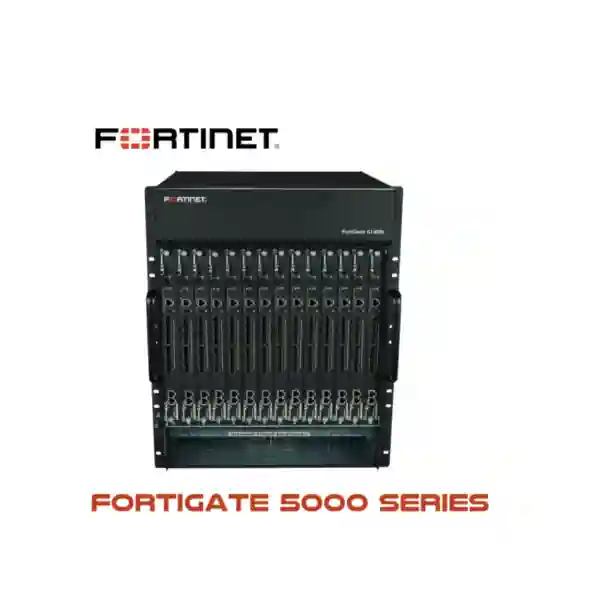
FortiGate 5000 Series is built for organizations whose firewall requirement is no longer a simple branch-edge appliance decision. Fortinet positions the family for large enterprises and service providers, with deployment flexibility at enterprise and cloud edges, data-center cores and internal network segments. Its chassis-based approach supports high-speed interfaces, dense connectivity and scalable security capacity for architectures where availability, inspection performance, segmentation and operational continuity must be considered together.
Suitable for security designs protecting high-volume north-south and east-west traffic, subject to correct sizing and model selection.
A platform family intended for demanding carrier and service-provider environments where modularity and resilience matter.
FortiOS can bring firewall, IPS, application control, VPN and related security policy functions into a unified operating environment.
What the FortiGate 5000 Series solves
Large networks create a different firewall problem from ordinary office networks. Traffic can arrive through multiple high-capacity links, applications may span data centers and clouds, security policies can be divided across tenants or business units, and maintenance windows may be tightly controlled. A chassis platform addresses these conditions by separating the system into chassis, security-processing and networking elements that can be selected around the required architecture. This makes the 5000 Series relevant when the design objective includes high throughput, resilient service, dense interfaces, segmentation, encrypted-traffic inspection and the ability to expand security capacity without treating every growth step as an entirely separate edge appliance project.
The correct purchase should start with workload data rather than a product name alone. Buyers should document peak and sustained traffic, percentage of encrypted sessions, IPS and application-control requirements, VPN scale, interface speeds, routing design, availability targets, log retention, management architecture and expected growth. The precise FortiGate blade, chassis, FortiController component, transceiver, power arrangement and FortiGuard/FortiCare entitlement should then be validated against current Fortinet documentation before ordering.
Verified platform characteristics
Fortinet documentation describes the FortiGate 5000 Series as delivering high-performance threat protection and SSL inspection for large enterprises and service providers. The platform is designed for enterprise/cloud edge, data-center core and internal-segment deployments. Fortinet also documents multiple high-speed interfaces, high port density and high throughput as core characteristics. Hardware compatibility is configuration-dependent: chassis power, cooling and fabric-backplane capabilities determine which FortiGate and FortiController boards can be supported, so an existing chassis should never be assumed to accept a newer blade without a compatibility check.
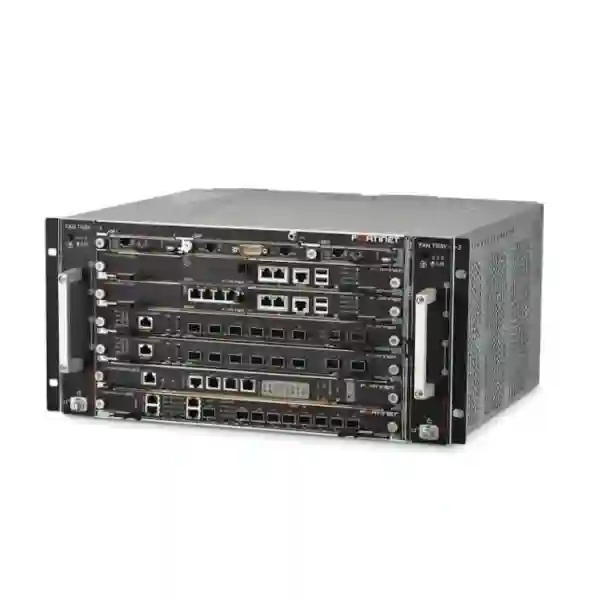
For example, Fortinet documents the FortiGate-5144C as a 14-slot, 14U 19-inch rack-mount chassis with a 40 Gbps fabric backplane and 400 W available power per slot. Fortinet separately documents the FortiGate-5060 as a six-slot 5U ATCA chassis with redundant hot-swappable DC power entry modules and hot-swappable cooling fan trays. These examples demonstrate why the series should be quoted as a designed system rather than as a generic firewall SKU. Exact current lifecycle status, supported boards, software versions and service eligibility should be checked for the requested configuration at quotation time.
Architecture, integration and procurement guidance
A FortiGate 5000 Series project should be mapped to the surrounding network before a bill of materials is finalized. Identify upstream and downstream switches or routers, interface media, routing protocols, VLAN and segmentation boundaries, high-availability design, management networks, logging destinations and authentication dependencies. For a data-center deployment, teams should also document rack space, power feeds, cooling, cabling paths and change-control requirements. Service-provider designs may additionally need to consider tenant separation, large-scale address translation, IPv4/IPv6 requirements, mobile-core security or other specialized traffic patterns supported by the selected Fortinet architecture.
Licensing is equally important. Hardware alone does not define the security outcome. Buyers should state which FortiGuard security services are required, the desired subscription term, FortiCare support level and whether centralized management or analytics is part of the project. Where FortiManager or FortiAnalyzer is planned, capacity and retention requirements should be sized independently. A quotation request should therefore include both technical and commercial inputs, avoiding a situation where an appliance is selected first and the actual inspection, support or management requirements are discovered later.
FortiGate 5000 Series Tanzania
For Tanzania, FortiGate 5000 Series enquiries are most relevant to organizations operating large data centers, national or multi-site enterprise networks, service-provider infrastructure, cloud interconnects and security environments where ordinary branch-class firewalls would not match the scale or resilience requirement. The buying process should begin with a network baseline: internet and private-WAN capacity, peak utilization, encrypted-traffic percentage, internal segmentation flows, number of security zones, routing complexity, remote-access and site-to-site VPN needs, and the applications that cannot tolerate security-related bottlenecks. This information gives procurement and technical teams a defensible basis for comparing a chassis architecture with newer fixed-form-factor high-end FortiGate options.
Tanzanian projects should also account for infrastructure around the chassis. Rack units, power architecture, cooling capacity, optical interfaces, transceiver types, structured cabling and redundant paths can materially affect the deployment plan. Where an existing FortiGate 5000 chassis is already installed, provide the exact chassis and blade identifiers, FortiOS version, serial-linked service status and required expansion goal. Fortinet compatibility documentation shows that power, cooling and backplane speed influence board support, so replacement or expansion parts should be validated rather than selected by family name alone.
For procurement, request an itemized quotation that separates chassis or appliance hardware, security/networking blades, optics, power accessories, FortiGuard services, FortiCare support, management/analytics requirements and professional services if needed. FourTeck Tanzania can use that information to clarify the requested configuration without representing unverified stock, delivery dates or authorization status. Buyers researching related enterprise security can also review FourTeck Tanzania technology solutions as the starting point for complementary networking and infrastructure requirements.
FortiGate 5000 Series Dar es Salaam
Dar es Salaam organizations evaluating FortiGate 5000 Series commonly need to secure concentrated connectivity: data-center links, corporate headquarters, hosting environments, major internet edges or aggregation points serving many downstream users and sites. A useful design workshop should distinguish internet-edge traffic from data-center east-west traffic because the security profiles and performance assumptions may differ. Internet-facing flows may require intensive IPS, application control, web security and TLS inspection, while internal segmentation may focus on policy enforcement between application tiers, user zones, server networks or administrative domains.
The procurement team should ask the network team for interface-speed requirements and media types before requesting pricing. A chassis firewall project can involve high-speed optical links and dedicated management connectivity, and an incomplete optics list can delay an otherwise correct firewall purchase. Power and cooling are similarly important. Fortinet’s chassis documentation specifies physical, electrical and thermal requirements for individual platforms, so a Dar es Salaam data-center plan should reserve suitable rack space and validate facility power and airflow before equipment arrival.
Organizations replacing an older 5000 Series installation should capture current policy count, VDOM use, VPN dependencies, routing tables, address objects, certificates, authentication integrations and logging destinations. Migration planning should include configuration review, staged testing, rollback criteria and an agreed cutover window. If the project instead involves a new security architecture, compare the operational benefits of modular chassis scaling with current high-end FortiGate fixed and chassis platforms. The objective is not simply to purchase the largest firewall; it is to choose a supported architecture that meets inspection, resilience and lifecycle requirements for the planned service period.
FortiGate 5000 Series Mwanza
In Mwanza, a FortiGate 5000 Series requirement may arise from organizations centralizing security for multiple facilities, large user populations or business-critical applications. The first sizing question should be where the firewall sits in the topology. A data-center core segmentation role can generate different traffic patterns from a perimeter role, while an aggregation design serving remote sites can introduce substantial VPN, routing and policy-management requirements. Documenting these roles prevents a quotation from being based on raw bandwidth alone.
Connectivity resilience should be designed end to end. Multiple carriers or private links can improve WAN availability, but the firewall, upstream routing, switching, power and application architecture must all support the intended failover behavior. Teams should define which sessions may reset during failover, which applications require continuous availability, how routing convergence is handled and how security policy remains consistent across redundant paths. FortiGate HA and chassis resilience concepts can be evaluated in that wider context rather than treated as an isolated appliance feature.
For purchasing, Mwanza customers should provide expected bandwidth growth over the intended lifecycle and identify which security services will be enabled concurrently. Encryption levels continue to make SSL/TLS inspection planning important, and security throughput under inspection is more useful than headline firewall throughput for many real deployments. Ask for current Fortinet documentation for the exact proposed model and software train, plus subscription and support terms. A clear bill of materials should list interfaces, optics and accessories so the delivered system can be checked against the approved design before installation.
FortiGate 5000 Series Arusha
Arusha enterprises considering FortiGate 5000 Series should frame the project around business services that need protection and continuity. Large hospitality groups, institutions, multi-site organizations and service environments can have diverse traffic: public internet, corporate applications, guest services, voice, cloud access, site-to-site connectivity and administrative systems. Segmentation policy can reduce unnecessary trust between these zones, while centralized security inspection can make controls easier to govern when the architecture is properly sized.
A high-end firewall should not become a single design assumption for every site. Branches can use appropriately sized edge platforms while a central FortiGate environment protects shared applications, internet aggregation or data-center resources. This hub-and-spoke or distributed approach should be selected according to link quality, application placement, latency sensitivity and failure domains. If traffic must traverse the central firewall for inspection, WAN capacity and backup paths should be included in sizing. If security is distributed, policy consistency and centralized management become more important.
Before requesting a FortiGate 5000 Series quotation in Arusha, prepare a diagram and a concise requirement sheet. Include link speeds, expected growth, VLANs or security zones, routing protocols, VPN counts, authentication systems, logging requirements, management platform, availability target and any regulatory or audit controls the organization must satisfy. This enables suppliers and integrators to respond to a real architecture instead of guessing. It also gives stakeholders a checklist for technical evaluation, licensing comparison and implementation acceptance.
FortiGate 5000 Series Dodoma
Dodoma projects can involve government, institutional and large-enterprise networks where change control, segmentation and service continuity are important design considerations. A FortiGate 5000 Series evaluation should therefore include governance as well as throughput. Identify who administers security policy, how changes are approved, where logs are retained, how privileged access is controlled, how configurations are backed up and how incident-response teams obtain visibility. Central management and analytics can be evaluated alongside the firewall platform so the operational model is defined before deployment.
Segmentation requirements should be translated into explicit zones and trust boundaries. Examples may include user networks, server networks, management infrastructure, internet-facing services, partner connections and backup environments. The firewall design can then be assessed for interface capacity, routing, VDOM or administrative separation needs and expected inspected traffic between zones. This approach is more reliable than choosing hardware based solely on total internet bandwidth because internal traffic can be substantial in centralized environments.
Procurement documentation should avoid ambiguous descriptions such as “FortiGate 5000 firewall” when a project needs specific chassis, blades, power components, optics and subscriptions. Require exact manufacturer part numbers in the commercial response and cross-check them against current Fortinet compatibility information. Include implementation assumptions, support terms and renewal planning in the evaluation. This is especially important for long-lived infrastructure where service continuity depends on having a clear lifecycle, software-upgrade and support strategy rather than only an initial hardware purchase.
FortiGate 5000 Series UAE
UAE buyers evaluating FortiGate 5000 Series frequently operate dense data-center, cloud, telecom and enterprise environments with high-capacity connectivity. The purchasing process should distinguish an expansion or support requirement for an installed 5000 platform from a greenfield architecture. Existing installations may need exact replacement blades, compatible components, service renewals or migration planning. Greenfield projects should compare current Fortinet platforms using measured inspection, interface, resilience and lifecycle requirements rather than assuming a legacy family is automatically the correct choice.
For multi-gigabit and high-speed environments, capture interface counts and optical standards early. The firewall must fit the physical network as well as the logical security design. Teams should also identify whether the requirement includes data-center segmentation, internet edge, cloud connectivity, carrier services, managed security or tenant separation. Each role changes the mix of throughput, sessions, VPN, routing, logging and policy scale that matters during sizing.
Organizations coordinating UAE and African infrastructure can use FourTeck UAE for broader regional technology context and FourTeck Fortinet UAE resources for Fortinet-focused enquiries. For every quotation, request exact hardware and service identifiers, subscription duration, support level, optics and accessory requirements. Availability and lifecycle status should be confirmed at the time of the request rather than inferred from older product literature.
FortiGate 5000 Series Uganda
Uganda organizations researching FortiGate 5000 Series may be consolidating security for large enterprise campuses, data centers, service-provider networks or multi-site operations. Begin by deciding whether traffic is centralized through one security core or inspected at multiple edges. Centralization can simplify policy control but may increase dependency on WAN capacity and the central security platform; distributed security can improve local autonomy but requires disciplined management and consistent policy. The chosen Fortinet architecture should reflect that operational model.
A meaningful sizing exercise should list peak throughput and the services applied to that traffic. IPS, application control, antivirus, web filtering and encrypted-traffic inspection consume resources differently from basic stateful firewalling. VPN requirements should include both site-to-site and remote-access demand, and routing requirements should include the protocols and convergence behavior expected during failure. Log volume and retention should be planned separately so analytics infrastructure does not become an afterthought.
For Uganda-specific procurement coordination, FourTeck Uganda provides a regional route for related infrastructure enquiries. For a 5000 Series request, submit the exact existing model when replacing equipment, or provide the target architecture when planning a new system. Ask the commercial response to separate hardware, FortiGuard, FortiCare, management, analytics, optics and services. This makes technical comparison clearer and helps renewal planning after the initial deployment.
FortiGate 5000 Series Kampala
Kampala is a natural concentration point for enterprise headquarters, data centers and connectivity aggregation, making high-end firewall design relevant where many business services share common infrastructure. A FortiGate 5000 Series project should map critical applications to traffic paths and failure domains. If internet, private WAN, cloud interconnect and partner connections converge on the same security layer, the design must account for concurrent demand rather than sizing each service in isolation.
High availability should be expressed as a business requirement: acceptable downtime, maintenance expectations and failure scenarios. From there, architects can determine firewall clustering, chassis redundancy, upstream switching and routing, redundant power and monitoring requirements. Testing should cover link failure, device failure and planned maintenance. Security controls also need validation after failover so resilience does not accidentally create a bypass path or inconsistent policy state.
Kampala procurement teams can improve quotation accuracy by attaching a topology diagram and interface schedule. Include port speeds, fiber types, transceiver expectations, IP addressing responsibility, routing protocols, security zones and management interfaces. If migrating from another firewall or an older FortiGate, include policy and object counts plus VPN and certificate dependencies. The resulting scope gives implementation teams a better basis for staging, testing and rollback planning.
FortiGate 5000 Series Arua
Arua organizations with regional operations may encounter a different challenge from a single large metropolitan data center: connectivity to dispersed sites can vary in bandwidth, latency and resilience. If a FortiGate 5000 Series platform is used centrally, the architecture should consider how branch traffic reaches the security core, what happens during WAN disruption and which services must continue locally. SD-WAN, routing and branch firewall choices should therefore be designed together with the central security platform rather than as unrelated purchases.
The central firewall requirement should be based on aggregated traffic plus growth, but the inspection profile matters just as much. Organizations should identify which traffic categories require deep inspection and which trusted internal flows follow different policy. Encryption, VPN and application behavior should be represented in testing. This prevents performance expectations from being based on laboratory headline figures that do not reflect the actual policy stack.
For procurement, an Arua project should document remote-site count, WAN technologies, central application locations, cloud usage, backup connectivity and operational support model. If the 5000 Series is part of an existing installation, capture chassis and board details before sourcing replacements or expansions. Compatibility and lifecycle verification are essential. If it is a new project, ask for a current-platform comparison so the selected Fortinet architecture aligns with the intended support horizon and expansion plan.
FortiGate 5000 Series Mbarara
Mbarara businesses evaluating enterprise security may need to protect centralized applications while supporting branches, partner links, remote users and cloud services. FortiGate 5000 Series is relevant only when the scale and architecture justify a chassis-class platform. A requirements workshop should quantify traffic at the proposed firewall location and identify the security services enabled simultaneously. It should also define how policy ownership is divided among IT, security and application teams.
Network segmentation is particularly useful when organizations need to limit lateral movement between user, server, operational and administrative zones. The design should list required flows between these zones instead of starting from broad allow rules. This improves both security and sizing because architects can estimate inspected east-west traffic. Where third-party systems connect to the network, partner zones and restricted access paths can be planned explicitly.
A quotation should be evaluated for completeness rather than only total price. Confirm that required optics, power components, support, subscriptions and management elements are present and correctly matched. Ask how software versions will be selected and how configuration migration will be validated. Establish acceptance criteria such as interface operation, routing, VPN establishment, policy verification, logging, monitoring and failover testing. These steps turn a firewall purchase into an implementable security project.
FortiGate 5000 Series Gulu
Gulu deployments serving distributed organizations should place availability and manageability at the center of the design. A large central firewall can provide a consistent security control point, but it also becomes critical infrastructure. Redundant WAN paths, power, switching and management access should therefore be considered alongside the firewall itself. Teams should define how they will reach and troubleshoot the platform if the production network is impaired, including out-of-band management where appropriate.
Security policy design should account for cloud adoption. Users may access SaaS directly, applications may reside in public cloud and data may move between local and hosted systems. The firewall’s role must be defined within this hybrid architecture. Some traffic will traverse the central platform while other traffic may require controls closer to users or cloud workloads. Fortinet Security Fabric integrations can be considered where they provide useful visibility and coordinated policy, but each component should be scoped and licensed according to the actual requirement.
For Gulu procurement, request current documentation for any proposed 5000 Series configuration and avoid relying on old online specifications for a long-lived platform family. Exact support eligibility, software compatibility and component availability can change over time. A well-prepared request includes current equipment details, target capacity, desired service term and migration timeline. That allows the supplier to respond with a more precise bill of materials and reduces the risk of ordering incompatible chassis components.
FortiGate 5000 Series Kenya
Kenya has substantial enterprise, cloud, carrier and data-center activity, so FortiGate 5000 Series searches often reflect high-throughput perimeter security, segmentation, managed-service or installed-base requirements. Buyers should identify whether they need a current new deployment, expansion of an existing chassis, replacement components, FortiGuard/FortiCare renewal or migration to a newer high-end FortiGate family. These are commercially and technically different requests and should not be combined into a vague product enquiry.
For a new architecture, capture traffic measurements from routers, switches or existing security platforms and build a growth model. Add expected TLS inspection, IPS, application control, VPN and logging demand. Review port density and interface speeds against the data-center switching fabric. If multiple tenants or business units share infrastructure, document segmentation and administrative requirements. High availability should be tested against the actual upstream and downstream topology.
Regional customers can review FourTeck Kenya for related Kenyan technology enquiries. For FortiGate 5000 Series purchasing, insist on exact manufacturer part numbers and current compatibility verification. Where older blades or chassis are involved, lifecycle and service status should be confirmed before committing to an expansion. In some cases a migration to a current high-end platform may better match the required support horizon; that decision should be made from documented requirements, not from product age alone.
FortiGate 5000 Series Kuwait
Kuwait enterprise and service-provider environments may require high-capacity security at data-center and network aggregation points. A FortiGate 5000 Series evaluation should begin with traffic engineering. Document uplink capacity, expected oversubscription, peak sessions, encrypted traffic, VPN demand and internal segmentation. Where the firewall protects public services, include inbound application traffic and DDoS architecture in the wider design, recognizing that different security controls may be delivered by different systems.
Facility planning matters for chassis equipment. Rack space, power feeds, cooling and cable management should be checked against the exact Fortinet hardware guide. Optics and high-speed interfaces should be specified with the connected switching equipment. For redundant designs, validate that physical paths do not share avoidable single points of failure. Operational teams should also define monitoring, alerting, configuration backup and upgrade procedures before production handover.
Commercially, request separate line items for hardware, security subscriptions, support and services. Long subscription terms can change project economics, so compare terms on an equivalent scope. Kuwait-focused technology enquiries can also use FourTeck Kuwait. For any older FortiGate 5000 configuration, ask for written confirmation of current component compatibility and service eligibility at quotation time.
FortiGate 5000 Series Ghana
Ghana organizations seeking FortiGate 5000 Series may be planning security for data centers, financial or enterprise networks, service-provider infrastructure or large shared platforms. The best starting point is a capacity and policy matrix that pairs traffic classes with required security inspection. This helps separate basic forwarding needs from the more demanding inspected traffic that drives real-world sizing. Include encrypted sessions and application behavior in performance testing wherever possible.
The design should also specify management boundaries. Large platforms can serve multiple network segments and organizational units, so administrators need clear roles, change procedures and logging. Where centralized FortiManager or FortiAnalyzer is used, plan device capacity, log rate, retention and access control. Integrations with identity, SIEM or automation systems should be documented so required interfaces and workflows can be tested before production cutover.
For purchasing, Ghana teams should distinguish installed-base support from new architecture requirements. Older chassis may remain operational but expansion decisions depend on compatibility and lifecycle status. New projects should compare current Fortinet choices against the required lifecycle. Request exact part numbers, service terms and a configuration diagram. This gives technical reviewers enough information to validate the proposed system and helps finance teams understand which costs recur at renewal.
FortiGate 5000 Series Nigeria
Nigeria’s large enterprise, telecom, financial and data-center environments can create firewall requirements where throughput, segmentation and resilience are all significant. FortiGate 5000 Series should be assessed against measured workloads. High-capacity internet circuits alone do not define sizing: internal data-center traffic, encrypted inspection, VPN, session rates and security profiles can change the required platform considerably. Growth projections should cover the planned support period rather than only the first year.
Resilience planning should cover the complete service chain. Redundant firewall components are useful only if switching, routing, power and connectivity are also designed to survive expected failures. Teams should document failover triggers, routing behavior and application dependencies, then test these scenarios during acceptance. Maintenance procedures should specify how software upgrades and hardware work can be performed with controlled impact.
Nigeria procurement teams can request a bill of materials that separates core hardware from FortiGuard and FortiCare entitlements, optics, management, analytics and professional services. When the request concerns an installed 5000 platform, provide exact serial/model information so compatibility can be checked. For greenfield projects, ask for a current-platform alternative as part of technical due diligence. The goal is a supportable security architecture that meets required inspection and availability targets without relying on assumptions from older specifications.
FortiGate 5000 Series Seychelles
Seychelles organizations may place particular emphasis on resilient connectivity, centralized services and efficient remote administration. A FortiGate 5000 Series deployment would normally be considered for unusually large or critical environments rather than routine branch security. Teams should first quantify the traffic that genuinely converges on the proposed platform and evaluate whether a chassis architecture is operationally appropriate for the site, rack, power and support model.
Where international links and cloud services are important, the security architecture should avoid creating unnecessary latency or a single dependency. Define which traffic must be inspected centrally, which services can use local internet breakout and how policy is enforced consistently. VPN and SD-WAN requirements should be coordinated with firewall sizing. Remote monitoring and out-of-band access can be valuable for critical infrastructure where physical intervention may require planning.
Procurement should include spares and lifecycle thinking without assuming that every component must be stocked locally. Ask suppliers to identify exact part numbers, support entitlements and lead-time assumptions at the time of quotation. Validate the current Fortinet support status for the proposed system. If the requirement comes from an older installed FortiGate 5000 platform, a structured migration assessment can compare continued operation, targeted component replacement and transition to a current high-end FortiGate architecture.
Selection and sizing checklist
Before requesting a FortiGate 5000 Series quotation, collect: current and projected throughput; internet, WAN and data-center interface speeds; concurrent session expectations; new sessions per second where relevant; percentage of TLS-encrypted traffic; IPS, application control, web filtering and malware inspection requirements; site-to-site and remote-access VPN scale; routing protocols; VLAN and segmentation plan; VDOM requirements; HA design; log rate and retention; centralized management needs; rack space; power and cooling; optics; support term; and desired implementation timeline. If replacing an existing system, add current chassis and blade models, software version, configuration size and migration constraints.
Do not treat a single performance number as a purchasing decision. Fortinet publishes different metrics under defined test conditions, and production results vary with traffic mix, packet size, enabled features and network conditions. Compare the metric that resembles your intended policy stack, then leave suitable growth and operational margin. For a chassis family, also validate component compatibility because backplane, power and cooling constraints can differ between generations.
Related FourTeck resources
Organizations planning a multi-country rollout can coordinate related requirements through the wider FourTeck network. Tanzania remains the primary context for this page, while FourTeck Africa can provide a broader regional technology reference. These links are useful when a security project also involves switching, servers, connectivity or infrastructure planning across markets. For Tanzania-specific engagement, use the contact route in the quotation panel below.
FortiGate 5000 Series FAQs
Who is the FortiGate 5000 Series designed for?
Fortinet positions the series for large enterprises and service providers, including enterprise/cloud edge, data-center core and internal-segmentation deployments. Whether it is appropriate for a specific organization depends on measured traffic, security services, resilience, interfaces and lifecycle requirements.
Can I add a newer blade to an existing FortiGate 5000 chassis?
Do not assume compatibility. Fortinet’s compatibility guidance considers available power, cooling and fabric-backplane capability. Provide the exact chassis and blade identifiers and validate them against current Fortinet documentation before ordering.
Does FortiGate 5000 Series support SSL inspection and threat protection?
Yes. Fortinet describes high-performance threat protection and SSL inspection as key uses of the family. Actual performance depends on the exact configuration, software and enabled security features, so use the relevant current datasheet for sizing.
What information is needed for a Tanzania quotation?
Provide the deployment role, bandwidth and growth, interface speeds, security services, VPN needs, HA design, segmentation, management/logging requirements, rack and power environment, subscription term and any existing FortiGate 5000 model information. This supports a more precise bill of materials.
Should an older FortiGate 5000 deployment be expanded or replaced?
That decision depends on current support status, component compatibility, required capacity, software needs, operational risk and the intended lifecycle. Compare continued operation or expansion with current Fortinet high-end platforms using the same workload and availability requirements.
Quotation checklist and consultation
For an efficient technical and commercial review, send a topology diagram plus your expected bandwidth, interface list, security profiles, VPN requirements, HA target, management/logging design, FortiGuard service needs and preferred support term. Existing customers should add chassis and blade identifiers. FourTeck can then review the request around the intended deployment instead of relying on a generic series name.
Decision recap: choose the FortiGate 5000 Series when a verified chassis-based requirement aligns with your scale, resilience, interface and security-inspection needs. Validate every board, chassis, optic and service entitlement against current Fortinet documentation. For greenfield projects, compare current high-end FortiGate alternatives so the selected platform matches the required support horizon.



Reviews
There are no reviews yet.