
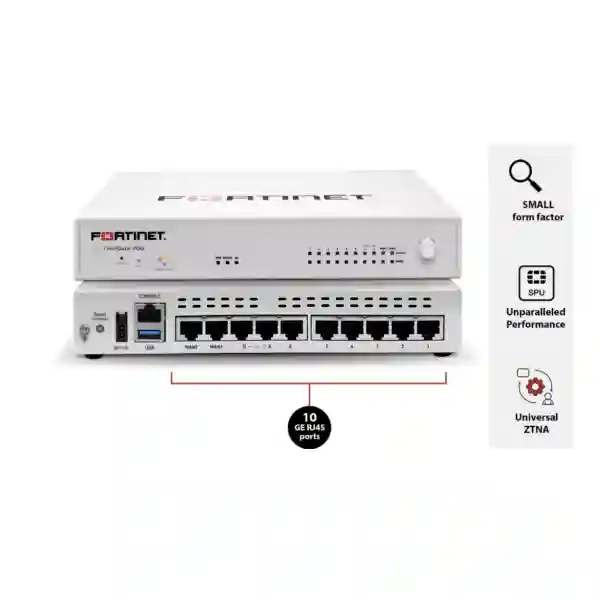
FortiGate 70G Series Tanzania
FortiGate 70G Series is designed for organizations that want firewalling, secure SD-WAN and coordinated security in a compact branch platform. Fortinet positions the family for distributed enterprise sites and WAN transformation, with FortiOS providing a common networking and security operating system and FortiGuard security services extending threat protection. For Tanzania buyers, the practical purchasing question is not simply which firewall has the highest headline specification; it is how the appliance, subscriptions, WAN design, VPN requirements, switching, wireless access and operational support fit the actual site.
FortiGate 70G Series overview
The FortiGate 70G family brings networking and security functions into one FortiOS-based platform. Fortinet describes the series as a converged next-generation firewall and SD-WAN appliance for distributed sites. The standard 70G and 71G architecture uses Fortinet’s SOC5/SP5 design with NP7Lite and CP10 acceleration components. Fortinet documentation identifies ten front-panel 10/100/1000BASE-T RJ45 data interfaces: ports 1–6, FortiLink ports A and B, and WAN1 and WAN2. This port arrangement gives network designers useful flexibility for dual-WAN designs, local network segmentation and FortiLink-based integration with compatible Fortinet switching.
The buying decision should include the precise model, required FortiGuard subscription bundle, expected encrypted traffic, VPN design, number of users and devices, WAN circuits, segmentation plan and growth horizon. A firewall that is correctly sized for today’s internet connection can still become restrictive if a business later enables more inspection, adds site-to-site VPNs or expands branch connectivity. FourTeck therefore recommends treating appliance selection and security-service selection as one procurement exercise rather than purchasing hardware in isolation.
Converged security
FortiOS combines firewall and networking capabilities in one operating environment, helping administrators apply policy and connectivity controls consistently.
Secure SD-WAN
The platform supports SD-WAN use cases that can help branches use multiple links according to application, performance and policy requirements.
Security Fabric
FortiGate can participate in the broader Fortinet Security Fabric, making it suitable when firewall, switching, wireless and security operations need coordinated visibility.
Technical planning and integration
Fortinet’s 70G/71G documentation identifies ten Gigabit RJ45 front-panel data interfaces and hardware acceleration through the SOC5/SP5 architecture. The 71G variant adds onboard storage according to Fortinet’s series data sheet. Exact throughput figures should always be checked against the current Fortinet data sheet and the security features that will actually be enabled, because firewall throughput, IPS, NGFW and threat-protection measurements represent different test profiles. Procurement teams should also confirm current FortiOS support, subscription term, transceiver or accessory needs, power arrangements and any high-availability design before ordering.
For a branch deployment, map WAN1 and WAN2 requirements, internal VLANs, guest networks, voice systems, servers, cameras and management networks before configuration. Where FortiSwitch or FortiAP products are planned, confirm model compatibility and controller requirements. Remote-access VPN and site-to-site IPsec requirements should be documented with user counts, authentication approach, peer details and routing requirements. This preparation reduces configuration changes after deployment and gives the quotation team a clearer bill of materials.
FortiGate 70G Series Tanzania
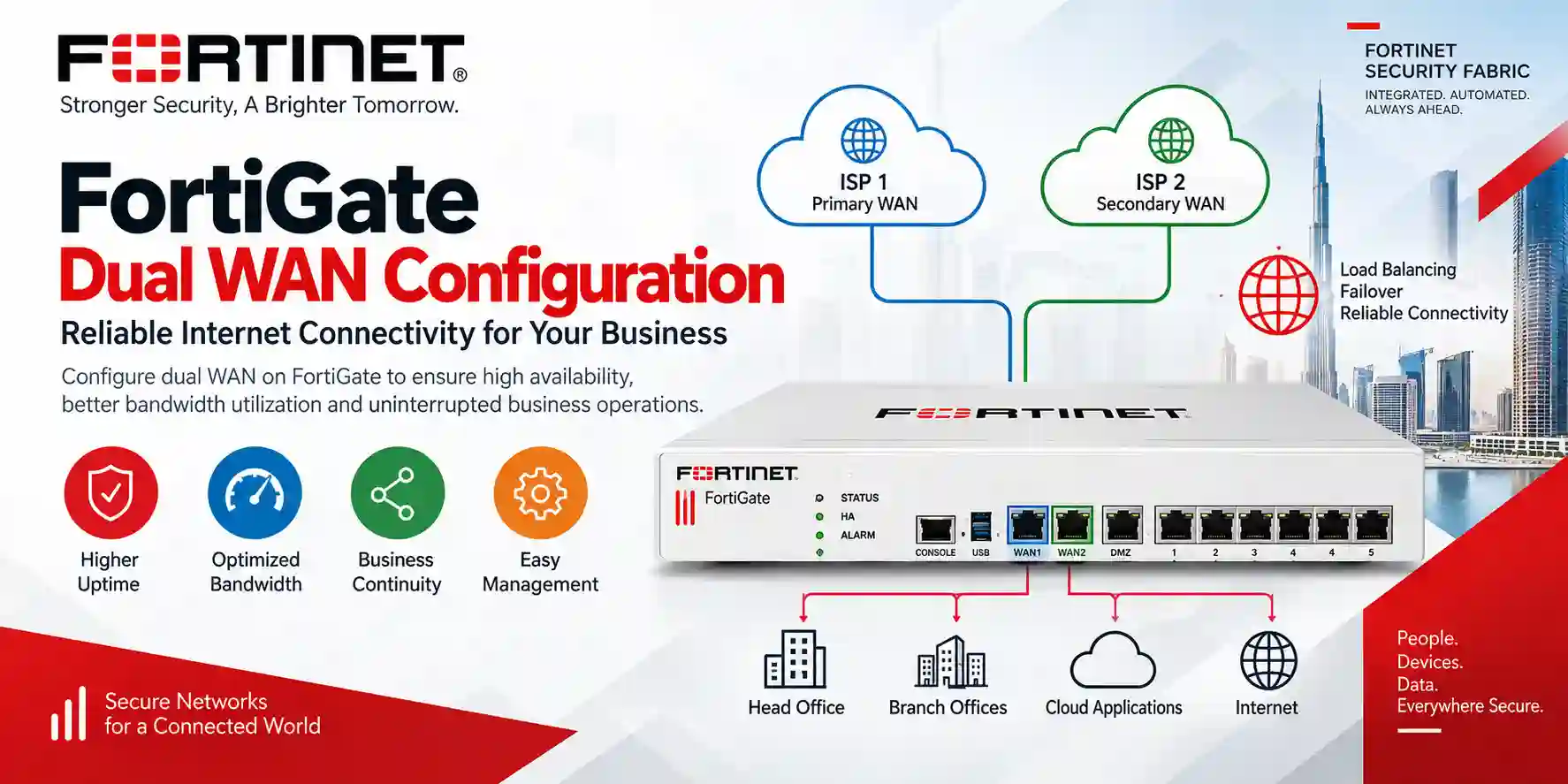
Organizations searching for FortiGate 70G Series Tanzania commonly need a compact firewall for a head office, branch, retail location, professional office, school, hospitality property or distributed business network. The useful starting point is the traffic profile: internet bandwidth, number of concurrent users, cloud applications, VPN traffic and security inspection requirements. A Tanzania deployment may also need two internet services for resilience. In that case, the two WAN interfaces can be planned as part of an SD-WAN design rather than treating the second circuit only as a cold backup. Application steering, health checks and policy should be defined around business requirements and the characteristics of each service provider connection.
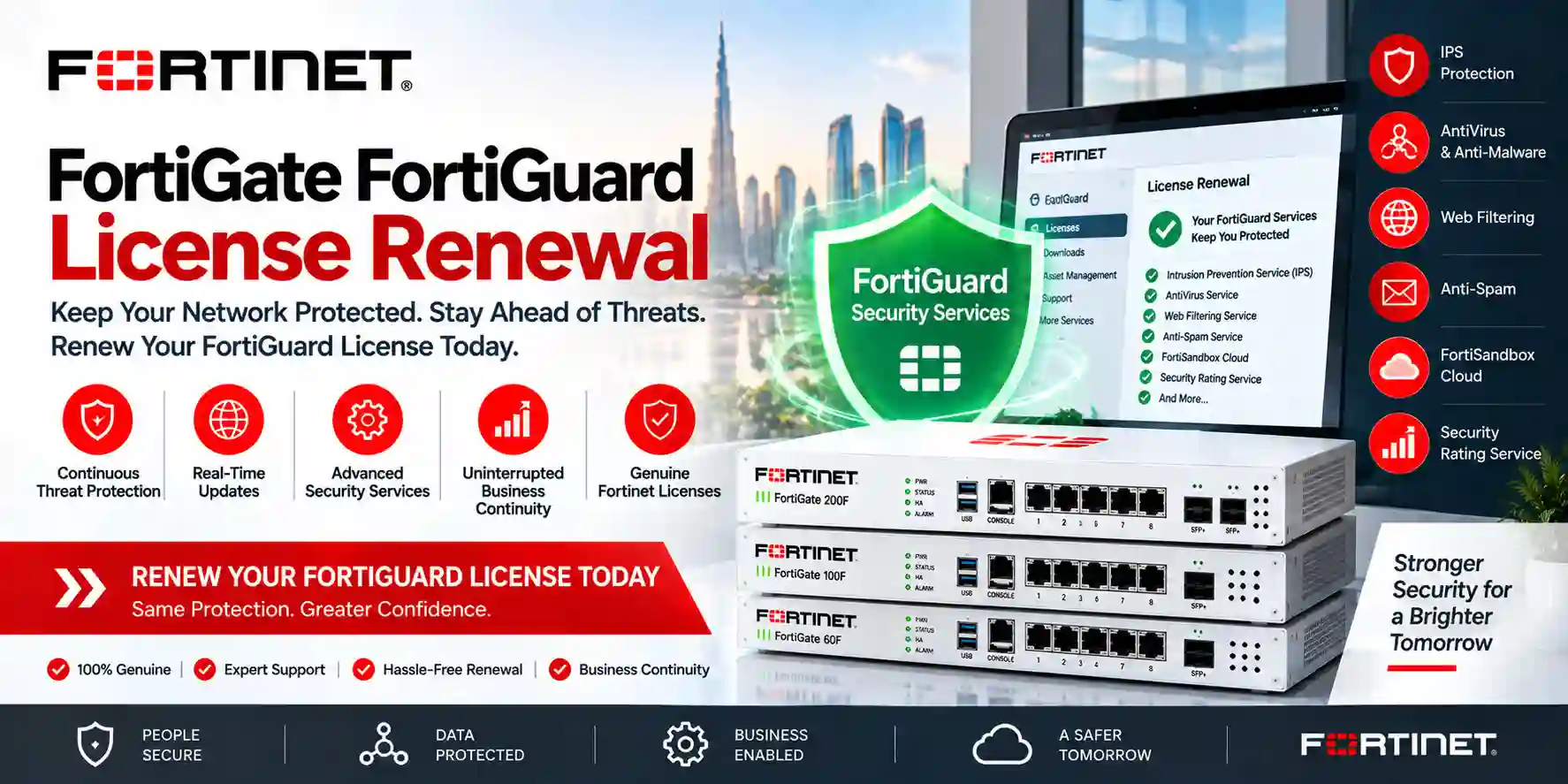
Security subscriptions are equally important. Buyers should decide which FortiGuard services and support term are required instead of comparing appliance-only pricing. Web filtering, intrusion prevention, malware protection and other subscribed capabilities have operational value only when they match the organization’s security policy and are maintained. If an existing FortiGate is being replaced, capture the current interface map, policies, objects, VPNs, routes and dependencies before migration. If the 70G is a first firewall, define segmentation from the beginning so staff, guest, server, voice and device networks do not become one flat trust zone.
FourTeck can use these details to prepare a more relevant Tanzania quotation. Include the required model, user/device estimate, WAN bandwidth, number of sites, VPN requirements, subscription duration and whether Fortinet switching or wireless products are part of the project. For related planning, see FourTeck Tanzania technology solutions for the regional site context, and use the consultation request to verify current product and service options rather than assuming availability.
FortiGate 70G Series Dar es Salaam
For businesses evaluating FortiGate 70G Series in Dar es Salaam, network design often starts with internet continuity and protection of cloud-connected operations. Offices with finance systems, Microsoft 365 or Google Workspace, ERP access, VoIP, remote users and supplier portals benefit from documenting which applications must remain available when one WAN circuit degrades. A dual-WAN firewall design can then use health monitoring and SD-WAN policy to support the intended failover or traffic-steering behavior. The objective is not simply to connect two ISPs; it is to decide what traffic should use each path and how sessions should behave during an outage.
Segmentation is another procurement consideration. A Dar es Salaam office may have employee devices, guest Wi-Fi, IP phones, CCTV, printers, access-control systems and servers sharing the same physical premises. The firewall design can separate these systems into logical networks and apply policy between them. Before requesting a quote, list the number of local networks, required switch uplinks, wireless integration, public services and any third-party systems that need inbound or outbound access. This makes it easier to determine whether the 70G family and its available interfaces suit the intended topology.
Organizations migrating from an older firewall should include migration effort in the project scope. Existing rules can contain years of exceptions, so they should be reviewed rather than copied blindly. VPN peers, DNS dependencies, NAT rules and remote-access authentication deserve particular attention. A well-defined Dar es Salaam request for quotation should therefore include hardware, the required FortiGuard subscription and support term, configuration or migration scope, testing expectations and documentation needs. This creates a clearer commercial comparison and reduces ambiguity between an appliance price and a complete security deployment.
FortiGate 70G Series Mwanza
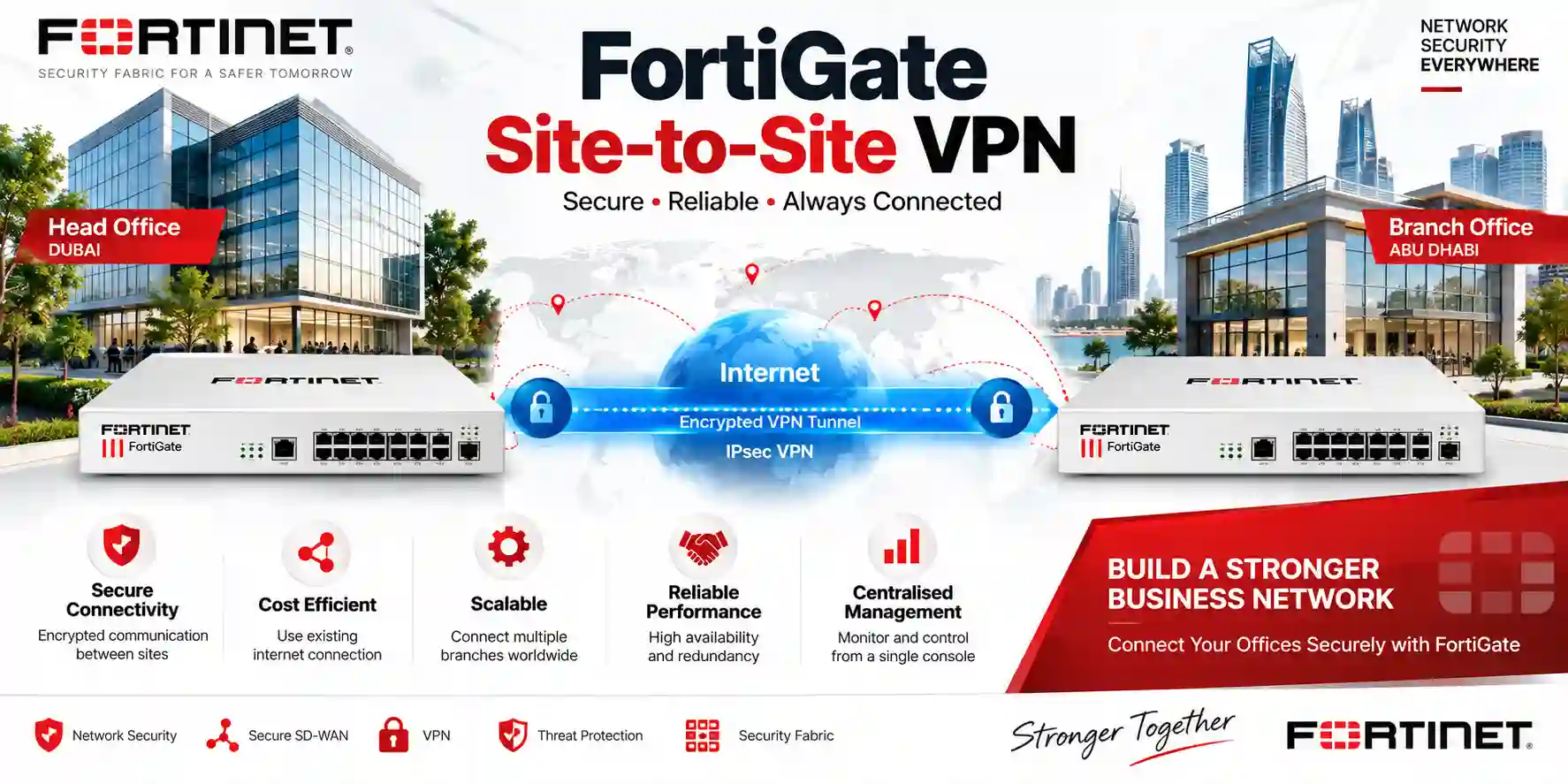
A FortiGate 70G Series project in Mwanza can be approached as a branch-security and connectivity exercise. Companies with a central office elsewhere and a Mwanza branch may require secure site-to-site VPN connectivity for business applications, directory services, file access or centralized management. The design should document the peer firewall, routing domains, protected subnets and expected traffic so that VPN configuration is deliberate. Where cloud applications dominate, local internet breakout may be preferable for some traffic while private or encrypted paths remain necessary for internal systems.
For organizations using more than one WAN service, link quality matters as much as advertised bandwidth. Latency, packet loss and jitter can affect voice and interactive applications. Secure SD-WAN policies can be designed around these characteristics, but administrators need clear thresholds and monitoring. Buyers should therefore provide circuit types and expected bandwidth when asking for a FortiGate 70G quotation. This helps avoid choosing a platform based solely on employee count, which can overlook inspection load, VPN encryption and application behavior.
The operational plan should cover who will administer the firewall, how configuration backups will be handled, how alerts will be reviewed and how FortiOS and security subscriptions will be maintained. A firewall is not a one-time installation. For Mwanza businesses, procurement should include a renewal calendar and a defined escalation path for configuration changes or incidents. If the project includes switches or access points, include those requirements in the same topology diagram. This gives the quotation team a better view of Fortinet Security Fabric integration and prevents late discovery of missing ports, uplinks or controller assumptions.
FortiGate 70G Series Arusha
Businesses considering FortiGate 70G Series in Arusha may operate hospitality, tourism, professional services, education, logistics or multi-site environments where guest and staff connectivity have different security requirements. The firewall plan should distinguish trusted business systems from guest access, operational devices and externally accessible services. VLAN and policy design can then reduce unnecessary communication between these zones. If guest Wi-Fi is important, document the access-point environment and authentication expectations so that firewall, switching and wireless components can be evaluated together.
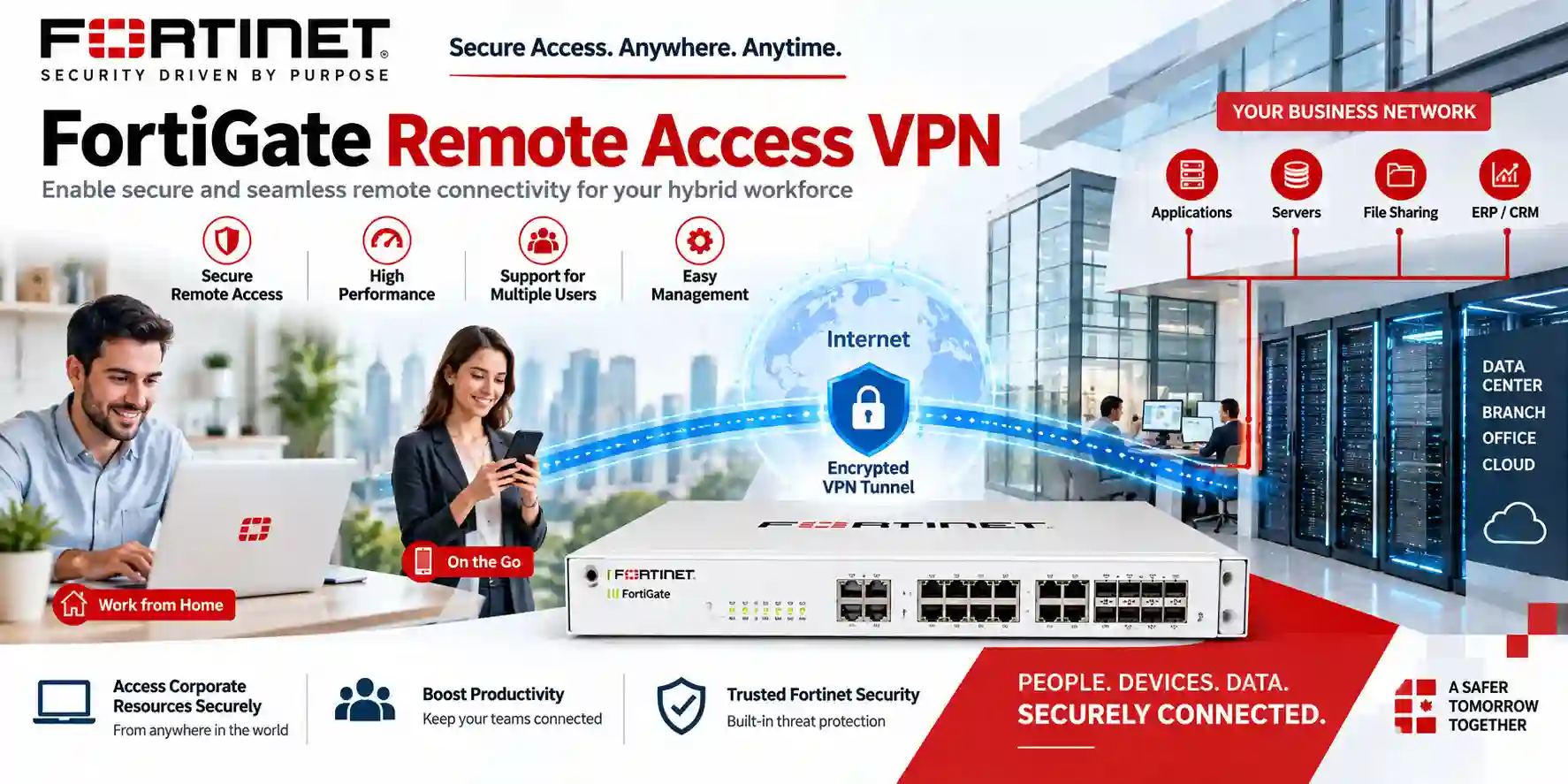
Remote administration and supplier access also deserve careful planning. Rather than exposing management services directly to the internet, organizations can define secure administrative methods and limit who can reach sensitive systems. Where third parties need access to applications or equipment, specify the destination, protocol, user group and time requirement. This supports a least-privilege policy instead of broad permanent rules. FortiGate VPN capabilities can form part of this design, subject to the chosen FortiOS configuration and authentication architecture.
An Arusha quotation request should identify the expected internet links, user/device scale, security services, VPNs and future expansion. If a business anticipates opening additional properties or branches, discuss that roadmap before selecting the appliance and management model. Standardized policy templates, naming conventions and documentation can make later expansion easier. The 70G family is best evaluated as part of this lifecycle: acquisition, subscription, configuration, monitoring, change control and renewal. FourTeck can use a detailed scope to align the requested Fortinet components with the intended network rather than relying on generic firewall sizing.
FortiGate 70G Series Dodoma
For FortiGate 70G Series deployments in Dodoma, procurement teams can improve project quality by defining policy and compliance needs before equipment selection. Government-facing organizations, professional offices, NGOs, education providers and businesses may need to protect confidential information while allowing controlled internet and inter-site access. Start with an inventory of users, endpoints, servers, cloud applications and external connections. From that inventory, define security zones and the flows that must be permitted between them. This provides a stronger basis for firewall policy than adding rules reactively after installation.
If the site connects to a headquarters or data center, determine whether the VPN should be route-based, which networks need reachability and how internet-bound traffic should be handled. Redundant internet links can be incorporated into the WAN architecture, but failover behavior should be tested against critical applications. Some sessions may need to reconnect when a public IP changes, so continuity expectations should be realistic and documented. Administrators should also decide how logs and alerts will be retained or integrated with existing monitoring processes.
A complete Dodoma RFQ should distinguish the firewall appliance from subscription and implementation components. State the desired subscription duration, security-service requirements, configuration scope, VPN count, network segments and whether migration from another platform is required. Ask for current availability and commercial terms at quotation time rather than relying on static web information. This approach supports transparent comparison and makes future renewal planning easier. Where a broader Fortinet deployment is planned, include switching and wireless requirements so that interface allocation, FortiLink design and management responsibilities can be considered from the beginning.
FortiGate 70G Series UAE
Organizations sourcing FortiGate 70G Series for UAE operations often need to align a branch firewall with a wider regional network. The core questions remain bandwidth, inspection requirements, VPN scale, SD-WAN design and subscription coverage. If the UAE site is one node in a Tanzania–UAE business network, document both ends of each site-to-site tunnel and decide whether routing is centralized or distributed. Consistent address planning is important because overlapping private networks complicate mergers, branch additions and VPN deployment.
For multi-branch operations, configuration standards can reduce administrative effort. Define common security zones, naming conventions, logging requirements and change-control procedures while preserving site-specific WAN settings. FortiOS and Fortinet Security Fabric capabilities can support a consistent architecture, but the design should be based on actual requirements rather than assuming every location needs identical policy. Subscription terms should also be coordinated so renewals do not become fragmented across sites.
Buyers comparing regional options can review FourTeck UAE and the specialist Fortinet UAE resource for relevant regional context. A useful quotation request should include the exact 70G-series model under consideration, required support and FortiGuard services, WAN details, VPN topology, deployment location and any installation or migration expectations. Current pricing, stock and lead time should be confirmed during quotation because these commercial details can change.
FortiGate 70G Series Uganda
FortiGate 70G Series buyers in Uganda may be connecting a single office or building a network of branches that requires consistent security policy. For distributed environments, define which applications are centralized, which are cloud-based and which require direct internet access. This application map helps determine SD-WAN and VPN policy. Dual internet links can improve resilience when correctly configured, but organizations should specify link capacity and service characteristics so health checks and steering rules can reflect real operational priorities.
Security inspection should be planned around risk and performance. Rather than enabling every feature without a policy objective, identify the controls needed for web access, malware prevention, intrusion prevention and application visibility, then verify the appropriate FortiGuard subscription. Encryption inspection policies require particular planning because certificate deployment, privacy requirements and application compatibility may affect implementation. These topics should be addressed during design rather than discovered after go-live.
For cross-border organizations, a standardized firewall platform can simplify skills and configuration practices across Tanzania and Uganda. Buyers can use FourTeck Uganda for regional technology context while keeping each site specification distinct. Include user and device counts, WAN links, VPN peers, segmentation, security-service term and management expectations in the RFQ. If an existing firewall is being replaced, provide a sanitized configuration summary or rule count where appropriate so migration scope can be estimated more accurately.
FortiGate 70G Series Kampala
A Kampala office evaluating FortiGate 70G Series may have a dense mix of employees, cloud services, voice, guest access and branch connectivity. Capacity planning should therefore look beyond internet speed. Concurrent sessions, encrypted traffic, security inspection, VPN usage and future growth all affect the selection. A topology diagram showing WAN circuits, core switching, VLANs, servers and wireless networks is one of the most useful documents to prepare before requesting a quote.
Where the business depends on SaaS and real-time communication, SD-WAN policy can prioritize application experience according to link health. The technical team should define acceptable latency, jitter or loss thresholds and decide how traffic should move when a link deteriorates. For inbound services, public IP arrangements and NAT requirements should be recorded. For remote users, authentication and endpoint requirements should be agreed before VPN deployment. These details prevent a firewall project from becoming a series of ad hoc configuration changes.
Operational ownership is equally important. Decide who approves policy changes, who monitors alerts, how often configuration backups are tested and when FortiOS upgrades are evaluated. FortiGuard subscriptions and support should be tracked with renewal dates. A Kampala procurement package that includes these lifecycle needs produces a more meaningful commercial proposal than a request for appliance price alone. Buyers should ask for the exact model and subscription SKUs on the formal quotation and validate current Fortinet documentation for the software release planned for deployment.
FortiGate 70G Series Arua
For an Arua branch, FortiGate 70G Series planning may emphasize reliable connectivity to headquarters and controlled local internet access. The branch should be documented as part of the wider network: identify central applications, DNS and directory dependencies, VPN routes and any local services. If two WAN circuits are available, the business can define which applications should fail over and whether both links should carry traffic during normal operation. This creates a clear SD-WAN objective instead of treating redundancy as an undefined feature.
Smaller branches still benefit from segmentation. Employee endpoints, guest Wi-Fi, CCTV, printers and operational devices can have different trust levels. Define the required VLANs and permitted flows before configuration. This reduces the risk of creating broad any-to-any policies for convenience. If the site uses Fortinet switches or access points, document the models and intended FortiLink or controller integration so compatibility can be checked against current vendor guidance.
Arua buyers should include subscription and support requirements in the original budget. Threat intelligence and security services are ongoing components, and renewal planning helps avoid unexpected gaps. The quotation should state the appliance model, subscription duration, installation scope, WAN information, VPN needs and whether remote or onsite activities are expected, without assuming service coverage until confirmed. If the branch will be administered centrally, specify the management architecture and logging destination. These details help ensure the proposed FortiGate configuration supports both local needs and organization-wide policy.
FortiGate 70G Series Mbarara
Organizations looking for FortiGate 70G Series in Mbarara can begin with a simple question: what must remain secure and available when network conditions change? List critical applications, user groups, internet links and remote sites. This creates a practical basis for firewall rules, VPN configuration and SD-WAN steering. If voice or video is important, link quality metrics should be considered alongside bandwidth. If the business transfers large files or performs cloud backup, schedule and traffic-priority decisions may also influence WAN policy.
The 70G family provides multiple Gigabit interfaces, but port count alone does not determine topology. Buyers should consider whether local switching will aggregate endpoints, whether dedicated interfaces are needed for DMZ or management networks, and whether FortiLink integration is planned. A network diagram should show physical connections and logical VLANs. This makes the configuration easier to review and supports future troubleshooting.
Migration projects should include policy cleanup. Legacy firewall configurations often contain obsolete objects and temporary rules. Before moving to FortiGate, identify active services and owners, then recreate only required access. Test site-to-site tunnels, remote access, DNS, NAT and critical applications against an acceptance checklist. A Mbarara quotation should therefore cover more than hardware: include the desired FortiGuard and support term, configuration or migration work, documentation and post-change testing. Current availability and commercial conditions should be confirmed at the time of purchase rather than inferred from product-page content.
FortiGate 70G Series Gulu
For Gulu deployments, FortiGate 70G Series can be evaluated for secure branch connectivity where a business needs internet protection, VPN access and centralized policy. Start by documenting the branch’s dependence on headquarters. If authentication, ERP, file services or other systems reside centrally, the VPN and routing design becomes business-critical. Define backup behavior if the primary WAN or tunnel fails, and identify applications that can use direct internet access independently of headquarters.
Local security policy should account for different device classes. User laptops, phones, printers, cameras and guest devices should not automatically receive identical network access. Segmentation and least-privilege rules help reduce unnecessary exposure. Web and application controls should be selected according to organizational policy, with the relevant FortiGuard service subscription confirmed during procurement. Logging should be configured so important security and connectivity events can be investigated later.
Gulu organizations planning future branches can also define a repeatable deployment template. Standard address ranges, VLAN names, VPN conventions and documentation formats reduce complexity as the network grows. However, each site’s WAN and operational requirements should still be validated individually. Include expansion plans in the RFQ so the proposed management approach can account for additional devices. Ask the supplier to itemize hardware, subscriptions and professional services separately where applicable; this improves budget visibility and makes renewal costs easier to track over the firewall lifecycle.
FortiGate 70G Series Kenya
FortiGate 70G Series procurement in Kenya can be relevant to organizations building a consistent East African security architecture. A Tanzania-headquartered company with Kenyan branches, for example, may want common FortiOS policy concepts while maintaining site-specific WAN and compliance requirements. The design should document inter-site traffic, local internet breakout, cloud application paths and centralized services. Avoid overlapping private address ranges between sites because they complicate VPN routing and future expansion.
For SD-WAN, identify the business objective for each circuit. One link may offer better latency while another provides backup capacity. Health checks and application steering should reflect those differences. Security subscriptions should be selected based on the protections required, and buyers should verify the exact bundle and term quoted. If SSL/TLS inspection is part of the policy, endpoint certificate deployment and application exceptions should be planned carefully.
Regional buyers can review FourTeck Kenya for market-specific technology context. A strong Kenya RFQ should include the exact FortiGate model under consideration, user/device count, internet bandwidth, number of WAN links, VPN peers, VLANs, security services and implementation expectations. If the project spans Kenya and Tanzania, state whether centralized management, common logging or shared security policies are required. This allows the proposed solution to account for cross-site operations without assuming that every branch has identical connectivity or support needs.
FortiGate 70G Series Kuwait
For Kuwait organizations considering FortiGate 70G Series, the product can be assessed as a compact branch NGFW and secure SD-WAN platform within a larger corporate architecture. Begin by defining WAN circuits and application paths. If the Kuwait office connects to Tanzania, UAE or other locations, document the VPN topology and whether branches communicate directly or through a hub. Routing design, address planning and DNS dependencies should be agreed before implementation.
Security policy should distinguish business systems, guest access and operational devices. Where public-facing services exist, use dedicated zones and narrowly scoped access rules. Administrators should also define authentication requirements for remote access and management. FortiGuard services and support terms should be treated as planned lifecycle costs, with renewal dates tracked centrally. Exact service bundles should be verified on the formal quotation because commercial packaging can evolve.
Buyers can consult FourTeck Kuwait for related regional context. When requesting a quotation, provide internet bandwidth, expected users and devices, VPN count, security inspection requirements, required subscription duration and any migration scope. If the firewall will integrate with FortiSwitch, FortiAP or third-party infrastructure, include model details and topology. This helps technical reviewers confirm compatibility and prevents the procurement process from reducing a network-security project to a single hardware line item.
FortiGate 70G Series Ghana
A Ghana deployment of FortiGate 70G Series may support a branch office, professional organization or distributed business that needs controlled internet access and encrypted connectivity. The selection process should account for the site’s real traffic mix. Internet bandwidth is useful but does not capture VPN load, security inspection, cloud traffic or future growth. Create a simple requirements sheet covering users, devices, applications, WAN links, remote sites and desired security controls before comparing options.
Dual-WAN designs should be based on measurable behavior. Determine which link is preferred for business-critical applications and what conditions should trigger a path change. Consider whether voice, video and transactional systems have stricter latency requirements than bulk transfers. For segmentation, separate staff, guest and device networks according to risk. Document exceptions so firewall policies remain understandable and auditable.
For regional procurement context, buyers can review FourTeck Ghana. The RFQ should itemize the desired 70G-series appliance, FortiGuard subscription and support term, implementation or migration needs, VPN configuration and documentation. Ask for current commercial information at quotation time rather than assuming web-listed conditions. If the Ghana site is part of an African multi-site network, include centralized management and logging requirements so that operational consistency can be considered from the start.
FortiGate 70G Series Nigeria
Organizations evaluating FortiGate 70G Series in Nigeria may prioritize resilient internet access, branch connectivity and visibility across a diverse endpoint environment. Before sizing the firewall, document the primary and backup internet circuits, expected traffic, VPNs, cloud services and security inspection. Where multiple links are used, SD-WAN policy can be designed around application needs and measured link health. This is more useful than a simple active/standby configuration when both circuits can contribute to business connectivity.
Network segmentation is particularly valuable in busy offices with staff endpoints, guest access, IP phones, cameras and other connected systems. Define trust zones and permitted communication rather than placing every device on one LAN. Security-service selection should follow the organization’s threat and acceptable-use policies. The exact FortiGuard bundle, support term and FortiOS compatibility should be confirmed before purchase.
Regional buyers can use FourTeck Nigeria for related market context. A complete request should include model preference, bandwidth, users/devices, VLANs, VPN peers, remote-access requirements, subscription term and whether migration from another firewall is required. If several Nigerian sites are planned, provide the branch count and connectivity model so standardized configuration and management can be considered. Current stock, delivery and pricing should always be confirmed in the formal sales process rather than treated as fixed product-page claims.
FortiGate 70G Series Seychelles
FortiGate 70G Series buyers in Seychelles may be supporting hospitality, professional services, distributed operations or other environments where internet availability and segmentation are important. A firewall design should begin with the site’s applications and network zones. Guest connectivity, employee systems, payment or business applications, cameras and building devices can have different trust requirements. Document these groups so firewall policy and VLAN design can limit unnecessary lateral communication.
If two internet services are available, define how they should be used. A business may want one preferred path for interactive applications and another for backup or lower-priority traffic. SD-WAN health checks can support this strategy when thresholds are properly configured. For VPN connectivity to Tanzania or other offices, confirm peer addresses, protected networks, routing and authentication. Where public IP resources or carrier NAT affect the design, identify those constraints before implementation.
Seychelles procurement should also include lifecycle planning. FortiGuard subscriptions, support, configuration backups, FortiOS maintenance and policy review are ongoing responsibilities. Request a quotation that clearly separates appliance, subscription and implementation components where applicable. Provide bandwidth, user/device estimates, network segments, VPNs and integration requirements so the proposal can be technically meaningful. If Fortinet switching or wireless products are part of the environment, include those models and intended topology for compatibility review rather than assuming integration from brand name alone.
Related Fortinet deployment topics
A 70G project often connects to broader requirements such as dual-WAN design, site-to-site VPN, remote-access VPN, FortiGuard renewal and Fortinet switching or wireless integration. The Tanzania site also provides visual guidance around FortiGate dual-WAN configuration, FortiGate site-to-site VPN planning, remote-access VPN, and FortiGuard subscription renewal. These resources relate to common lifecycle tasks around a FortiGate deployment.
Quotation checklist
✓ Exact model preference and number of sites
✓ Primary and secondary WAN bandwidth
✓ Approximate users and connected devices
✓ Required VLANs and network zones
✓ Site-to-site and remote-access VPN requirements
✓ FortiGuard security-service requirements
✓ Desired subscription/support duration
✓ Existing firewall migration scope
✓ FortiSwitch/FortiAP integration requirements
✓ Logging, management and documentation expectations
FortiGate 70G Series FAQs
What is the FortiGate 70G Series designed for?
Fortinet positions the 70G family as a converged NGFW and SD-WAN platform for distributed enterprise sites and branch networking. Suitability for a particular site depends on traffic, enabled security services, VPN usage and growth requirements.
How many front-panel network interfaces do FortiGate 70G and 71G have?
Fortinet hardware-acceleration documentation lists ten 10/100/1000BASE-T RJ45 front-panel data interfaces: six numbered ports, FortiLink A and B, and WAN1 and WAN2.
Should I buy the firewall without FortiGuard services?
The appliance and subscription should be evaluated together. The appropriate FortiGuard services depend on the security controls your organization needs, and the exact bundle and term should be specified on the quotation.
Can the 70G Series be used with two internet connections?
The 70G/71G architecture includes WAN1 and WAN2 interfaces, and Fortinet positions the family for secure SD-WAN. The actual dual-WAN design should define health checks, preferred paths, failover behavior and application policy.
What information is needed for a FortiGate 70G quotation?
Provide the target model, user/device scale, internet bandwidth, WAN count, VPN requirements, VLANs, required security services, subscription duration and any installation or migration scope.
Decision recap and consultation
Choose the FortiGate 70G Series by matching the exact model and subscription to real traffic, inspection, VPN, segmentation and lifecycle requirements. A good procurement package includes the appliance, the correct security services, deployment scope, documentation and renewal planning. FourTeck can review your site details and prepare a quotation aligned with the requested configuration.


Reviews
There are no reviews yet.