
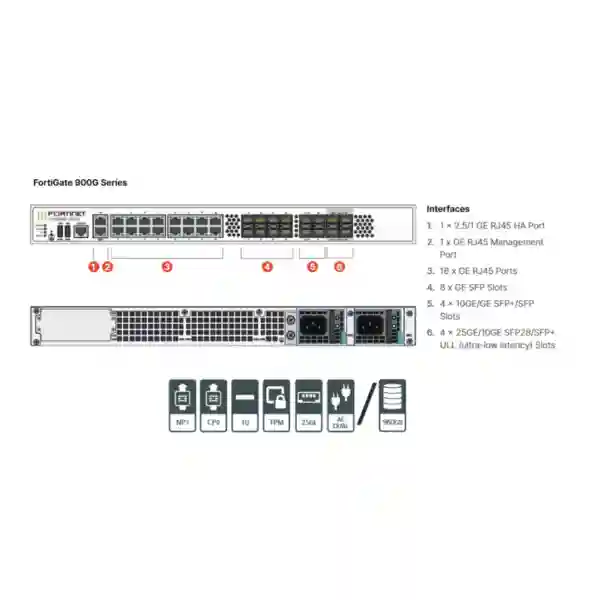
FortiGate 900G Series Tanzania
FortiGate 900G Series is designed for organizations that need high-capacity firewalling and security services without separating networking and protection into disconnected platforms. Fortinet positions the series for secure networking at scale, combining FortiOS, purpose-built security processing, AI/ML-assisted FortiGuard services, segmentation, Secure SD-WAN and zero-trust network access. For Tanzanian enterprises evaluating a data-center, campus, internet-edge or hybrid-network firewall, the 900G family provides a platform that can consolidate security inspection and routing functions while retaining high-speed interface options.
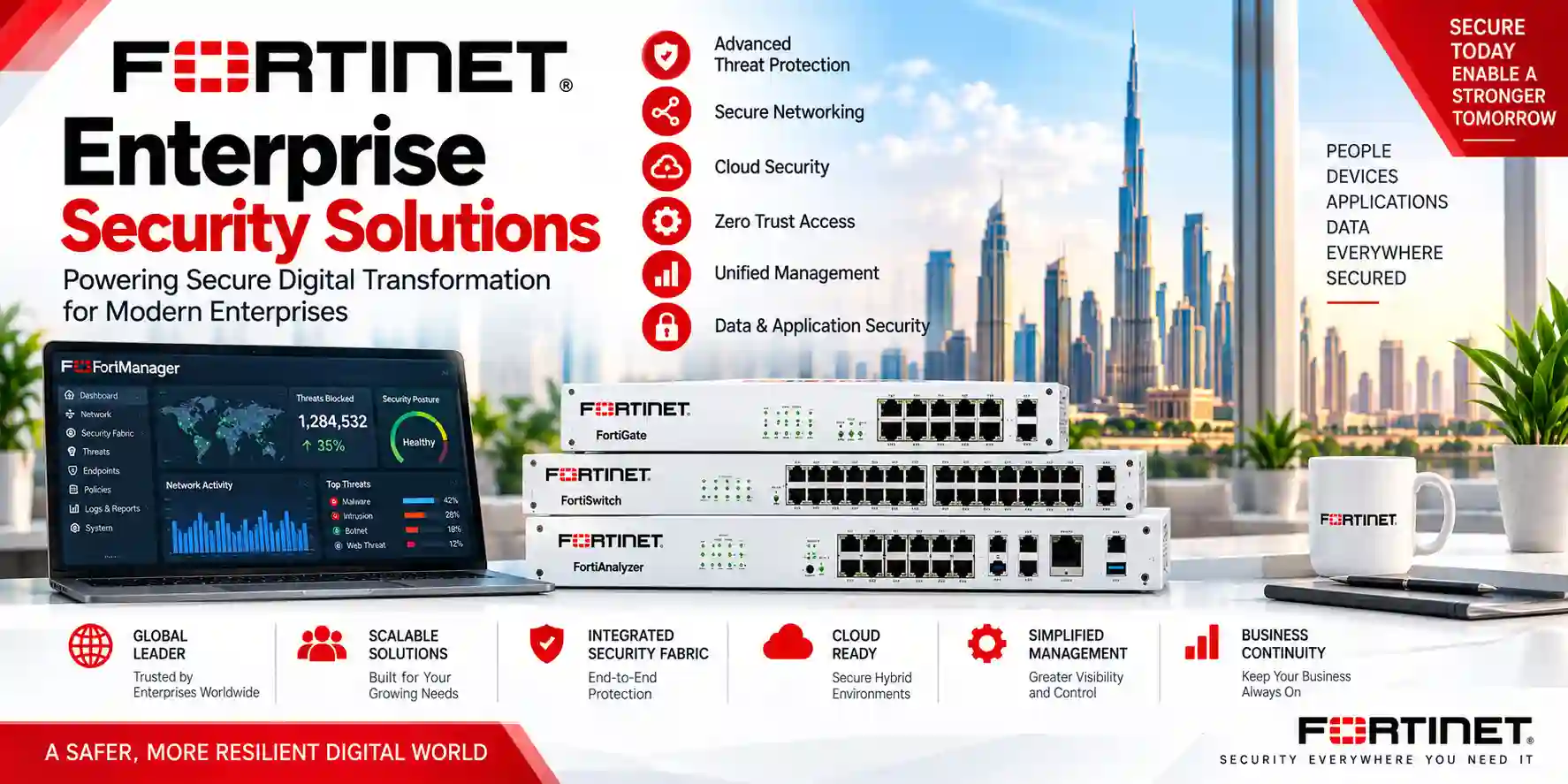
FortiGate 900G Series overview
The FortiGate 900G family includes FG-900G, FG-900G-DC, FG-901G and FG-901G-DC variants. Fortinet documentation describes the platform as an AI/ML-enabled next-generation firewall with deep visibility into applications, users and devices. It is intended to bring networking and security together through FortiOS, so policy enforcement, routing, VPN, application control, intrusion prevention and other subscribed security functions can operate as part of a coordinated architecture. This approach is useful for organizations modernizing an internet edge, consolidating branch connectivity, segmenting critical workloads or creating consistent controls across hybrid environments.
Interface flexibility is a major consideration when selecting an enterprise firewall. Fortinet documents sixteen 10/100/1000BASE-T data ports, eight 1GbE SFP slots, four 1/10GbE SFP/SFP+ ports and four 10/25GbE SFP+/SFP28 ultra-low-latency ports on the 900G/901G platform, alongside dedicated management and HA connectivity. These options allow designers to map copper access, fiber uplinks and higher-speed aggregation to the intended topology rather than treating the firewall as a simple internet gateway.
Secure networking
FortiOS combines security and networking functions, supporting designs where firewall policy, segmentation, routing and SD-WAN decisions need coordinated administration.
High-speed connectivity
Multiple copper, SFP, SFP+ and SFP28 interfaces support mixed enterprise and data-center connectivity, including 25GbE-capable uplinks.
FortiGuard services
Organizations can select appropriate FortiGuard security subscriptions for threat intelligence and inspection functions according to their security policy and renewal strategy.
ZTNA and VPN
The platform supports secure access strategies spanning site connectivity, remote access and identity-aware application access, subject to the selected architecture and licensing.
Planning a FortiGate 900G deployment
A firewall should be sized against the traffic that will actually be inspected, not only the nominal ISP circuit. Procurement teams should document internet bandwidth, east-west traffic, encrypted traffic, expected concurrent sessions, remote-access usage, site-to-site VPN requirements, security profiles, logging needs, redundancy objectives and anticipated growth. The correct FortiGate model and subscription bundle depend on which security functions will be enabled simultaneously. High availability also changes the bill of materials because organizations commonly need matched appliances, optics, cabling, power planning and resilient upstream/downstream switching.
The FG-901G variants add onboard storage compared with corresponding FG-900G positioning, while DC variants address environments designed around DC power. Exact hardware, storage, power and subscription requirements should therefore be confirmed against the current Fortinet ordering information before quotation. This avoids a common procurement problem: choosing a firewall model first and discovering later that the required optics, power format, retention strategy or service bundle was not included.
FortiGate 900G Series Tanzania
Organizations in Tanzania searching for FortiGate 900G Series typically need more than a box-level quotation. Enterprise firewall projects often involve internet-edge security, data-center segmentation, VPN connectivity between offices, application visibility, secure remote access and WAN resilience. A useful procurement process starts with the network design: number and speed of WAN circuits, core-switch uplinks, public services, VLANs, server zones, remote sites and expected encrypted traffic. These details help determine whether the 900G family fits the required capacity and which interfaces should be allocated to ISP, LAN, DMZ, HA and management roles.
For Tanzania deployments, buyers should also plan subscriptions and lifecycle costs from the beginning. FortiGuard services can extend the appliance with security intelligence and inspection capabilities, while centralized administration may be considered where multiple FortiGate devices are operated. Subscription selection should follow the organization’s risk profile and operational model rather than simply choosing the largest bundle. Teams should identify which controls are mandatory, how logs will be retained, who will review alerts, and how renewals will be budgeted.
Connectivity design matters when the firewall is placed between high-speed switching and multiple internet or private-WAN services. The 900G series offers a mixture of copper and fiber interfaces, including 25GbE-capable ports, allowing network architects to preserve faster uplinks where the surrounding infrastructure supports them. Optic compatibility, transceiver type, fiber mode, switch port capability and link redundancy should all be verified before purchase. For resilient environments, HA design should also account for duplicated power, switching paths and ISP dependencies rather than treating appliance redundancy as the only availability measure.
FourTeck can be approached with a requirement sheet covering current topology, bandwidth, security services, VPN counts, desired redundancy, rack and power conditions, and target deployment schedule. That produces a more meaningful quotation discussion than requesting a model price without context. Buyers comparing broader Fortinet options can also review FourTeck Tanzania technology solutions and discuss adjacent switching, connectivity and security requirements as part of the same design conversation.
FortiGate 900G Series Dar es Salaam
Dar es Salaam organizations may evaluate the FortiGate 900G Series for headquarters, data centers, service environments and larger campuses where substantial internet and internal traffic must cross a security boundary. A deployment can be designed around multiple security zones rather than a single inside/outside model. Public-facing applications, corporate users, guest networks, server segments, management networks and partner connectivity can each receive policy appropriate to their risk. Segmentation also improves troubleshooting because traffic paths and access rules are easier to define and audit.
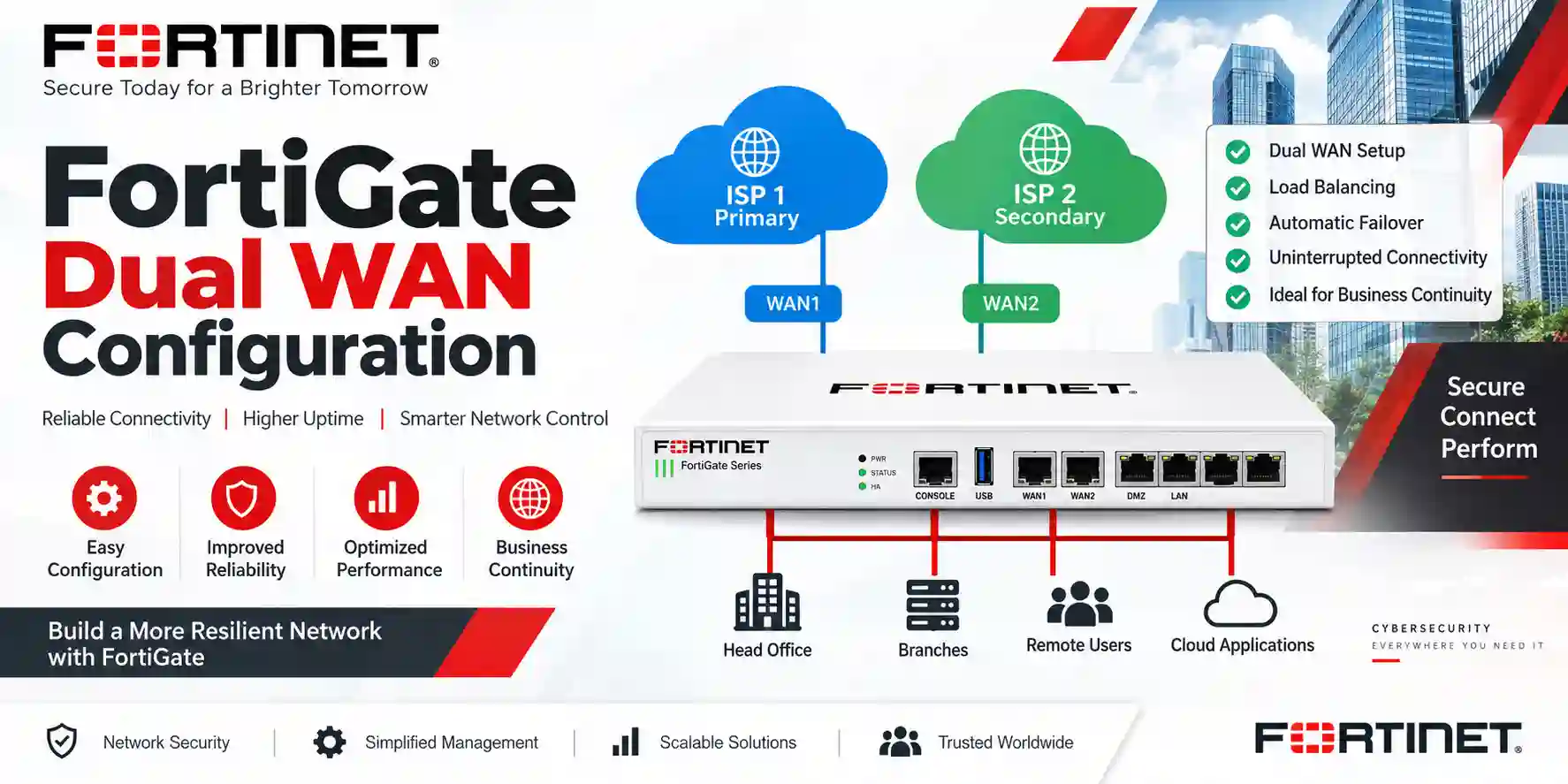
Businesses with two or more WAN services can consider FortiGate Secure SD-WAN capabilities as part of resilience and application-routing design. The objective is not merely to connect two providers; teams should define health checks, preferred paths, failover behavior, application priorities and what happens to active sessions when a path changes. Critical services such as voice, cloud applications, payment systems and VPN traffic may need different steering rules. For background on resilient connectivity concepts, see the Tanzania resource on FortiGate dual-WAN setup as a visual reference.
Security inspection should be planned with encrypted traffic in mind. SSL inspection can improve visibility, but deployment requires certificate planning, endpoint trust, application testing, exception handling and attention to privacy and regulatory requirements. Pilot testing with representative business applications is preferable to enabling broad inspection without validation. The same disciplined approach applies to IPS, web filtering and application control: policy should reflect business requirements, and security teams should monitor the effect of controls after deployment.
A Dar es Salaam quotation request should specify appliance variant, AC or DC power preference, storage requirement, FortiGuard subscription term, HA requirement, transceivers and any implementation assistance needed. Providing this information helps align the bill of materials with the network rather than relying on a generic firewall quote.
FortiGate 900G Series Mwanza
For organizations in Mwanza, the FortiGate 900G Series can be evaluated where a central site aggregates significant business traffic, protects server resources or connects multiple remote locations. The first question should be architectural fit. A large firewall may sit at an internet edge, between user and server networks, at a private-cloud boundary or in a consolidated hub. Each role produces different traffic patterns, so bandwidth and session requirements should be measured from monitoring data where possible rather than estimated only from employee count.
Distributed businesses should document every branch tunnel, remote-user requirement and third-party connection before migration. IPsec VPN design includes addressing, routing, encryption parameters, failover behavior and monitoring. If sites use overlapping private address space, remediation may be required before consolidation. When dynamic routing is part of the WAN, routing policy and convergence should be tested together with security policy so that a network path change does not produce an unexpected access outcome.
The 900G platform’s range of physical interfaces gives architects flexibility, but unused port count should not be confused with usable design capacity. Teams should map every link and record speed, media, VLAN behavior, LACP requirements and redundancy. Fiber links require compatible optics at both ends. High-availability pairs require careful heartbeat and monitored-interface planning. Management interfaces should be placed in an appropriately protected administration network instead of being treated like ordinary user-facing ports.
Mwanza buyers can improve quotation accuracy by including a simple topology diagram, existing firewall model, ISP capacities, core switch models, VPN inventory, required security profiles and growth horizon. This makes it easier to discuss whether FortiGate 900G is appropriately sized and which subscription and accessory choices belong in the proposal.
FortiGate 900G Series Arusha
Arusha enterprises evaluating FortiGate 900G may include hospitality groups, corporate campuses, institutions and multi-site organizations that need reliable segmentation and secure connectivity. Networks with guest access, business applications, operational systems and administrative users benefit from separating trust zones. Firewall policy can then be built around permitted business flows rather than broad network access. This is especially valuable when third-party devices or services must connect without receiving unnecessary reach into internal systems.
Secure SD-WAN can be relevant for sites that depend on multiple connectivity paths. A practical design begins by classifying applications and defining measurable link-quality thresholds. Failover should be tested under controlled conditions, including loss, latency and complete circuit failure. Teams should also decide how inbound services behave when an ISP changes and whether DNS, public addressing or upstream routing creates additional dependencies. The firewall is one component of resilience; power, switches, carrier equipment and DNS architecture may be equally important.
Remote administration deserves separate planning. Management access should use restricted trusted paths, strong authentication and role-based administration. Configuration backup, change control and logging processes should be defined before production cutover. Organizations operating several Fortinet devices may also evaluate centralized management and analytics options to reduce policy drift and improve operational visibility.
For procurement, Arusha customers should distinguish appliance hardware from recurring security services. FortiGuard subscription terms, support coverage and renewal dates should be recorded as part of the asset lifecycle. A complete request should also list required SFP/SFP+ or SFP28 modules, rack accessories, HA quantities and power expectations. This avoids fragmented purchasing and gives implementation teams a clearer path from delivery to commissioning.
FortiGate 900G Series Dodoma
Organizations in Dodoma considering FortiGate 900G Series may prioritize controlled access, auditable policy and resilient connectivity for headquarters or institutional networks. Security architecture should begin with information flows: which users need which applications, which services are exposed externally, which partner connections are required, and which systems should never communicate directly. Translating these requirements into network zones and explicit policies can reduce unnecessary lateral access and simplify future audits.
Zero-trust network access concepts can complement traditional VPN and segmentation by focusing application access on validated users and devices. Adoption should be planned around identity sources, endpoint posture requirements, application publishing and operational support. ZTNA is not a substitute for every network control; it is one part of a layered architecture that may also include firewall policy, endpoint security, MFA, secure DNS and monitoring.
For encrypted internet traffic, organizations should decide where inspection is technically and legally appropriate. Certificate distribution, unmanaged devices and applications that use certificate pinning can affect deployment. A staged rollout allows teams to identify exceptions and performance considerations before broad enforcement. Logging architecture is equally important: decide what events need retention, where logs will reside and who is responsible for review and escalation.
A Dodoma procurement package should therefore include more than model quantity. It should capture appliance variant, subscriptions, support term, HA strategy, optics, VPN requirements, expected inspection profiles and management approach. A requirements-led quotation supports more accurate comparison between proposals and reduces the risk of discovering missing components during deployment.
FortiGate 900G Series UAE
For UAE deployments, the FortiGate 900G Series can be considered for enterprise edge, campus and data-center security where high-speed interfaces and consolidated security functions are required. Buyers commonly need to coordinate firewall selection with fast switching, redundant internet circuits, private connectivity and cloud services. A design review should establish expected inspected throughput, session scale, VPN traffic and SSL inspection requirements before a final appliance decision is made.
The four 10/25GbE SFP28-capable interfaces documented for the platform are useful when upstream and downstream infrastructure operates beyond traditional 1GbE or 10GbE links. Network teams should confirm transceiver compatibility and link design rather than assuming that a physical slot guarantees interoperability with every optic. Where low-latency ports are used, the planned interface operating speeds and surrounding switch configuration should be validated during staging.
Organizations coordinating procurement in the Emirates can review FourTeck Fortinet UAE resources for region-focused Fortinet discussions and FourTeck firewall resources in Dubai for broader firewall planning. These network resources are useful when a Tanzania-centered organization also maintains UAE operations and wants consistent design principles across locations.
Before requesting a quote, document whether the project requires AC or DC hardware, onboard storage, HA, security subscriptions, optics and implementation services. Where multiple sites will share policies, also identify central-management and logging expectations. This creates a procurement scope that can be checked against current Fortinet ordering information before purchase.
FortiGate 900G Series Uganda
Ugandan enterprises can evaluate FortiGate 900G Series for central sites that need substantial firewall capacity, VPN aggregation and security inspection. Multi-site businesses should consider the firewall as part of the WAN architecture rather than as a standalone perimeter appliance. Branch connectivity, routing, application steering, internet breakout and security policy can be designed together so that resilience decisions do not undermine segmentation.
Secure SD-WAN is particularly relevant when a hub receives traffic from many branches or has multiple upstream circuits. Policy can take application and link conditions into account, but successful deployment depends on accurate service-level objectives. Teams should define what constitutes an unhealthy path and test how business applications react to failover. Voice and interactive applications may be more sensitive to latency and packet loss than bulk transfers, so one routing rule is rarely appropriate for every workload.
Security subscriptions should be mapped to actual control requirements. IPS, application control, malware protection and web-related services can add value where they match policy and are actively operated. Organizations should also budget renewals and identify who owns security tuning. A powerful appliance with default or unreviewed policies does not replace governance and monitoring.
For Uganda-specific technology enquiries, organizations can use FourTeck Uganda alongside the Tanzania team when coordinating cross-border projects. A shared requirements document covering bandwidth, sites, VPNs, security profiles and redundancy can help standardize procurement while allowing each location’s carrier and infrastructure differences to be addressed.
FortiGate 900G Series Kampala
Kampala organizations planning an enterprise firewall refresh should compare the FortiGate 900G Series against the actual role of the security gateway. Headquarters environments often combine internet access, data-center traffic, branch VPNs, remote users and public services. Separating these flows into defined zones and interfaces creates a clearer policy model and allows security inspection to be applied according to risk.
Migration planning is as important as hardware selection. Existing objects, NAT rules, VPN parameters and routing policies should be inventoried and cleaned before conversion. Old firewall configurations frequently contain unused services, duplicated rules and temporary exceptions that should not automatically be reproduced. A staged migration with rollback procedures and validation tests can reduce disruption during cutover.
High availability should be designed end to end. Two firewalls cannot provide complete resilience if both rely on one switch, one power source or one carrier handoff. Teams should identify every shared dependency and decide which ones need duplication. HA testing should include link failures and device failures, with monitoring in place to confirm that traffic follows the expected path.
A Kampala quotation request is more useful when it includes the existing network diagram, target port speeds, expected security services, HA requirement, VPN inventory and subscription duration. This information supports accurate discussion of hardware, licensing and accessories while giving implementation teams a concrete deployment scope.
FortiGate 900G Series Arua
For organizations in Arua, the 900G family may be relevant when a central facility supports many users, server workloads or remote locations and requires enterprise-class security consolidation. The decision should be based on measured or forecast traffic rather than the prestige of a larger model. Network teams should capture peak throughput, encrypted traffic, concurrent sessions, VPN load and growth plans, then compare those requirements with current Fortinet data.
WAN reliability can be improved through multiple connectivity paths, but policy must define how those paths are used. Some organizations prefer active/standby internet access, while others distribute traffic according to application requirements. Either approach needs monitoring and realistic failure testing. Backup circuits with much lower capacity may require temporary application priorities during an outage.
Security operations also influence architecture. Decide how alerts will be reviewed, how configuration changes are approved and where logs will be retained. Administrative accounts should follow least-privilege principles, and management access should be separated from ordinary user traffic where practical. Backup configurations should be protected and tested as part of recovery procedures.
Arua buyers coordinating with larger Ugandan or regional networks should document common standards for VPN, segmentation, naming, logging and subscriptions. Standardization can simplify support, but site-specific carrier, power and switching constraints still need individual validation before equipment is ordered.
FortiGate 900G Series Mbarara
Mbarara businesses evaluating FortiGate 900G can focus on whether the platform supports their planned consolidation of security and networking functions. A central firewall may enforce internet policy, segment servers, terminate VPNs and participate in WAN routing. Consolidation can simplify architecture, but it also makes change management and availability planning more important because several business services may depend on the same security layer.
Segmentation should be built around business trust boundaries. Finance systems, infrastructure management, servers, staff devices, guests and externally accessible services generally have different access requirements. Explicit policy between zones makes these differences visible. Network architects should avoid creating so many micro-segments that operations become unmanageable; the goal is meaningful risk reduction with policies that administrators can maintain.
When the design includes VPN connectivity, tunnel count alone is not sufficient for sizing. Teams should consider aggregate encrypted throughput, routing behavior, failover and the applications traversing the tunnels. Remote-access design additionally requires identity, MFA, endpoint and user-support planning. Where ZTNA is considered, application-specific access and device posture can be evaluated as part of a broader zero-trust roadmap.
For procurement, list the exact required hardware variant and do not assume every 900G-family unit is interchangeable. Storage and power variants differ, and optics or subscriptions may be separate items. A detailed bill of materials should be checked against the final architecture before ordering.
FortiGate 900G Series Gulu
Organizations in Gulu considering the FortiGate 900G Series should begin with a capacity and dependency review. If the firewall will aggregate several sites, traffic that once stayed local may now cross the central appliance. Cloud adoption can also increase encrypted internet traffic, while backup and replication jobs can create large bursts. Understanding these patterns helps determine whether links, interfaces and inspection policies are aligned with the intended design.
Secure SD-WAN can help organizations use multiple WAN links intelligently, but successful outcomes depend on well-defined policy. Critical applications should be identified and tested across normal and degraded links. Monitoring should distinguish an available link from a usable one because high loss or latency can make a circuit technically up while applications perform poorly.
Operational readiness is another buying factor. Administrators need documented policy ownership, backup routines, update procedures, alert handling and renewal tracking. Firewall security is a lifecycle process; rules and objects should be reviewed as applications and users change. Central management may be appropriate where an organization operates many Fortinet devices or needs consistent policy across sites.
Gulu procurement teams can prepare a concise requirement sheet containing circuit speeds, branch count, expected VPN load, VLANs, public services, security subscriptions, HA preference and optics. This allows suppliers to respond to a defined technical scope and helps buyers compare proposals on equivalent assumptions.
FortiGate 900G Series Kenya
Kenyan enterprises can evaluate FortiGate 900G Series for high-capacity enterprise perimeter and segmentation projects, especially where multiple WAN links, fiber uplinks and extensive VPN connectivity are involved. Before selecting a model, teams should profile traffic at peak periods and identify which flows require advanced inspection. A simple internet-speed figure does not capture internal segmentation traffic or east-west flows that may traverse the firewall.
Organizations operating between Kenya and Tanzania can benefit from a consistent firewall policy framework while still adapting to local carrier and application conditions. Standard naming, VPN templates, logging practices and security profiles can reduce operational complexity. However, IP addressing, ISP handoffs, public services and local switching should be validated separately for each site.
The 900G series interface mix supports a range of enterprise topologies. High-speed fiber ports can connect to core switching or upstream infrastructure, while copper and lower-speed fiber ports can serve other network roles. Network designers should reserve ports deliberately for HA, management, WAN, LAN and DMZ functions and include the correct transceivers in the bill of materials.
For Kenya-focused project coordination, see FourTeck Kenya. Cross-border organizations can use a common requirement document to compare appliance, subscription and support needs between locations without assuming that one site’s exact bill of materials automatically fits another.
FortiGate 900G Series Kuwait
Kuwait organizations evaluating the FortiGate 900G Series may be planning enterprise edge, data-center or campus deployments that require fast interfaces and integrated security controls. A design should establish the role of the firewall first: internet perimeter, internal segmentation, VPN hub, WAN edge or a combination. Each role affects interface allocation and the amount of traffic subject to inspection.
High-speed ports are useful only when the surrounding network can take advantage of them. Core switches, optics, cabling and upstream services should be checked for speed and compatibility. Redundant paths should be mapped before installation so that HA and switch redundancy work together. If the firewall is placed in a critical path, maintenance and upgrade procedures should be considered during design rather than after go-live.
Security subscriptions should be chosen based on required controls and operational capacity. Organizations should identify which security services will be enabled, how policies will be tuned, where logs will be retained and who will respond to alerts. Renewal planning belongs in the original budget because security services are part of the lifecycle cost.
Kuwait-focused buyers can consult FourTeck Kuwait for regional technology enquiries. When the same organization also operates in Tanzania, a shared architecture standard can help keep VPN, policy and management practices consistent while allowing each site to use suitable local connectivity.
FortiGate 900G Series Ghana
Ghanaian enterprises considering FortiGate 900G should evaluate it against security inspection, WAN and segmentation requirements rather than purchasing on headline throughput alone. Real deployments can enable several security functions simultaneously, and encrypted traffic is now a major part of enterprise application use. The design should therefore identify which traffic requires inspection and what exceptions may be necessary.
For organizations with branches, the firewall may serve as a VPN and SD-WAN hub. Branch connectivity should be standardized where possible, with documented routing, tunnel parameters and failover behavior. Network monitoring should verify both availability and application quality. A backup circuit that is technically reachable but too constrained for critical applications needs a policy that prioritizes essential traffic during an outage.
The 900G family includes hardware variants that should be matched to deployment needs. Procurement should verify storage and power requirements and include transceivers, subscriptions and HA quantities where required. The final bill of materials should reference current vendor ordering information rather than assumptions from a different FortiGate model.
For regional coordination, FourTeck Ghana can support Ghana-focused enquiries. Multinational buyers can align policy standards and management processes across Ghana and Tanzania while keeping carrier-specific and infrastructure-specific design decisions local to each site.
FortiGate 900G Series Nigeria
Nigeria deployments of FortiGate 900G Series can include enterprise headquarters, data centers and aggregation sites where multiple circuits and large user populations create demanding security requirements. Sizing should consider aggregate traffic across all security zones, not only north-south internet traffic. Internal segmentation can move significant application and server traffic through the firewall, especially when workloads are separated into controlled zones.
WAN design should account for carrier diversity and realistic failover capacity. Secure SD-WAN policies can select paths based on application and link conditions, but teams need measurable service-level thresholds and a clear policy for degraded operation. Testing should include partial failures such as packet loss and latency, not only unplugging a cable.
For security inspection, organizations should define policy based on risk and business requirements. SSL inspection, IPS, application control and web security functions need appropriate tuning and operational ownership. Changes should follow documented procedures, and logs should feed an agreed monitoring process. This turns the firewall from a static gateway into an actively managed security control.
Nigeria buyers can use FourTeck Nigeria for region-specific project discussions. Cross-border organizations can standardize FortiGate policy templates and management approaches while separately validating ISP, power, optics and rack requirements for each deployment location.
FortiGate 900G Series Seychelles
Seychelles organizations evaluating FortiGate 900G Series may place particular emphasis on resilient connectivity, secure remote access and efficient use of available WAN paths. The correct architecture depends on the organization’s scale and whether the appliance protects a central data environment, campus, internet edge or several connected sites. Capacity planning should use real traffic measurements where available and include growth rather than relying only on current ISP subscription speed.
Where multiple internet paths are available, SD-WAN policy can help prioritize business-critical applications and define failover behavior. Network teams should test what happens when a preferred circuit degrades, not merely when it disappears completely. DNS, public IP addressing, VPN peers and cloud allowlists may also be affected by path changes and should be included in continuity testing.
Remote-access requirements should be separated into user access, administrator access and site-to-site connectivity. Each has different authentication, authorization and monitoring needs. ZTNA can be considered for application-specific access, while VPN remains relevant for other use cases. Identity integration and MFA should be part of the design conversation rather than afterthoughts.
A Seychelles quotation request should identify hardware variant, required subscriptions, support term, HA preference, interface media, optics and management expectations. For projects spanning several African markets, FourTeck Africa provides a regional coordination point alongside the Tanzania site.
Compatibility, licensing and integration questions
FortiGate 900G can participate in a broader Fortinet Security Fabric design, but compatibility should always be checked against the software versions and products actually being deployed. FortiOS release selection should follow supported upgrade paths and organizational change policy. When integrating authentication, switching, wireless, logging, endpoint or management systems, record the exact versions and required features before implementation.
FortiGuard subscriptions are not a one-size-fits-all purchase. The appropriate bundle and term depend on the required security services and support expectations. Buyers should request a quotation that clearly separates appliance hardware, subscription or support term, optics/accessories and optional services. Renewal dates should be entered into asset-management and budget processes at purchase time.
FortiGate 900G quotation checklist
✓ Required model/variant
✓ AC or DC power requirement
✓ Onboard storage requirement
✓ HA pair or standalone design
✓ Internet and internal bandwidth
✓ Expected encrypted traffic
✓ Copper/fiber port map
✓ SFP/SFP+/SFP28 optics
✓ VPN and branch requirements
✓ FortiGuard service requirements
✓ Logging/management approach
✓ Subscription and support term
FortiGate 900G Series FAQ
Which models are in the FortiGate 900G Series?
Fortinet’s 900G Series data sheet identifies FG-900G, FG-900G-DC, FG-901G and FG-901G-DC variants. The appropriate choice depends on storage, power and deployment requirements.
Does FortiGate 900G support 25GbE connectivity?
Fortinet documents four 10/25 Gigabit Ethernet SFP+/SFP28 ultra-low-latency interfaces on the 900G and 901G platform. Optics and peer-device compatibility should be verified for the intended deployment.
Can FortiGate 900G be used for Secure SD-WAN?
Yes. Fortinet positions Secure SD-WAN as part of its converged networking and security approach. The final design should define application steering, health checks, failover and available circuit capacity.
Should I buy FG-900G or FG-901G?
Selection should be based on the current Fortinet specifications and the project’s storage, power, logging and operational requirements. Request a bill of materials that names the exact variant rather than using “900G” generically.
What information is needed for a FortiGate 900G quote?
Provide circuit speeds, expected inspected traffic, interface requirements, HA preference, VPN scope, desired security services, subscription term, optics and power requirements. A topology diagram is especially useful for enterprise projects.
Decision recap and consultation
FortiGate 900G Series is suited to organizations evaluating a high-capacity Fortinet NGFW with high-speed interface options, integrated Secure SD-WAN, segmentation, VPN, ZTNA capabilities and FortiGuard security services. The best procurement outcome comes from matching the exact 900G variant, subscriptions and accessories to a documented network requirement. Share your topology, bandwidth, security-service requirements, HA expectations and preferred subscription term so the proposed bill of materials can be reviewed against the intended deployment.



Reviews
There are no reviews yet.