
FortiMail FML-2000F Tanzania
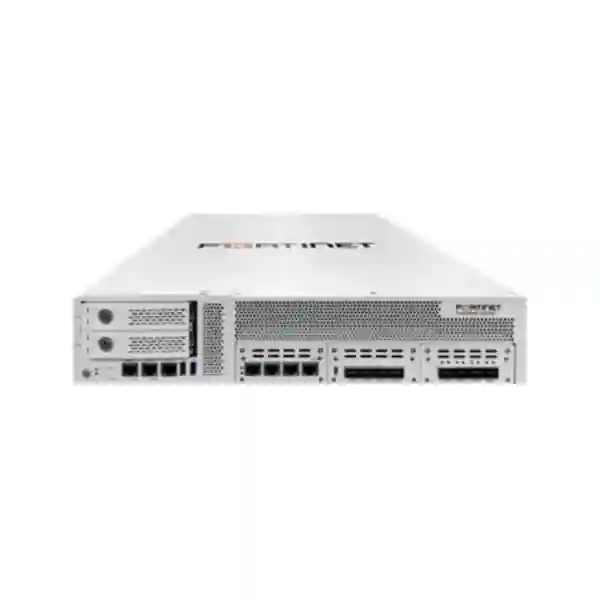
FortiMail FML-2000F is a purpose-built secure email gateway for large organizations that need stronger control over phishing, spam, malware, impersonation, business email compromise, unsafe attachments, malicious URLs and sensitive information moving through email. For Tanzania enterprises, universities, public-sector organizations and other high-volume environments, the appliance provides dedicated hardware, resilient storage and centralized email-security policy in a 2U platform.
FortiMail 2000F at a Glance
Fortinet positions FortiMail 2000F for large enterprise, education and government departments. The appliance provides four 10/100/1000 copper RJ45 interfaces and two SFP Gigabit Ethernet interfaces. It includes redundant hot-swappable power supplies, 32 GB memory and two 2 TB SAS drives as the standard storage configuration, with support for additional drives. Hardware RAID options include RAID 1, 5, 10 and 50 plus hot-spare configurations depending on the installed drive count. The chassis is a 2U rack-mount system designed for data-centre installation.
The platform is not simply an anti-spam box. It is intended to become a controlled inspection point for business email. Depending on the licensed services and approved deployment, organizations can apply anti-spam and antivirus controls, authentication, content profiles, data loss prevention, centralized quarantine and advanced threat-protection workflows. Optional API integration is available for Microsoft 365 and Google Workspace environments. Buyers should therefore evaluate the appliance, subscription bundle and deployment design together rather than comparing hardware price alone.
Rack-mounted hardware for demanding organizational mail environments.
Two 2 TB SAS drives with hardware RAID management.
Dual hot-swappable power supplies support infrastructure resilience planning.
Central policy, quarantine, filtering and threat-protection capabilities.
Why Organizations Deploy FortiMail FML-2000F
Email carries invoices, payment instructions, customer records, password resets, contracts, internal approvals and privileged conversations. Attackers exploit this trust with credential phishing, impersonation, malicious documents, fraudulent payment requests and malware delivery. A dedicated email-security gateway gives security teams a place to inspect mail before risky content reaches users and to apply outbound controls before sensitive information leaves the organization.
FortiMail can be particularly relevant when an organization wants policy ownership that is independent of individual mailbox settings. Security administrators can define protection according to domains, recipients, senders, content and organizational requirements. Central quarantine and reporting can also make investigation more structured because suspicious mail events are handled within a security workflow rather than being left entirely to end users.
Sizing remains important. A procurement team should document protected domains, average and peak message volumes, expected growth, mail-platform architecture, API requirements, retention expectations, high-availability objectives and the desired FortiGuard service level. These details help determine whether FML-2000F is appropriately sized and whether optional storage or related security components should be included in the bill of materials.
Verified FML-2000F Hardware Specifications
| Model | FortiMail 2000F / FML-2000F |
| Recommended scenario | Large enterprise, education and government departments |
| Copper interfaces | 4 × 10/100/1000 RJ45 |
| Fiber interfaces | 2 × GE SFP |
| Memory | 32 GB |
| Storage | 2 × 2 TB SAS standard; up to 6 × 2 TB optional |
| RAID | Hardware RAID 1, 5, 10, 50 and hot spare, based on drive count |
| Power | Dual redundant hot-swappable power supplies |
| Form factor | 2U rack mount |
| Protected email domains | Up to 1,000 configured protected email domains under the published system specification; licensing and design should be confirmed for the intended deployment. |
Email Security Capabilities
The value of FortiMail is created by the combination of hardware, FortiMail software and the selected security services. Anti-spam and antivirus inspection can reduce commodity threats, while more advanced protection is intended to address sophisticated phishing, malware and emerging campaigns. Authentication and reputation controls can help administrators evaluate sender legitimacy, while content profiles provide policy enforcement for messages and attachments.
Data loss prevention is important for organizations that use email to exchange financial, customer, employee or operational information. DLP policies can support governance by identifying content that matches defined rules and applying an approved action. This does not replace information-classification processes or user training, but it creates an enforceable technical layer around email movement.
Centralized quarantine gives administrators a controlled location for messages that require review. This can reduce dependence on users making security decisions independently. Message tracking and reporting also support investigation when a security team needs to understand why a message was accepted, blocked, quarantined or routed in a particular way.
Microsoft 365 and Google Workspace Planning
Organizations using Microsoft 365 or Google Workspace should decide whether they require gateway-based mail inspection, optional cloud API integration, or a design that combines several controls. Fortinet lists Microsoft 365 and Google Workspace email API integration as an optional capability for FortiMail. The appropriate approach depends on the mail architecture, security objectives, routing constraints and licensed services.
Before deployment, document domains, connectors, accepted senders, relay requirements, DNS records, authentication controls and change windows. A mail-security migration should also include rollback planning. MX-record changes and connector changes can affect message delivery, so technical teams should validate the final architecture before making production changes.
FortiMail FML-2000F Tanzania
For Tanzania organizations, FortiMail FML-2000F is most relevant where email is a business-critical service and security teams need centralized inspection at enterprise scale. Large financial organizations, universities, government departments, healthcare groups, logistics businesses, telecom-related operations and diversified enterprises can all face high volumes of external correspondence and targeted phishing. The correct buying discussion should start with the mail environment rather than the appliance name alone.
A Tanzania procurement team should prepare a clear requirement covering the number of domains, approximate mailbox population, current email platform, average and peak mail flow, existing security gateway, desired FortiGuard bundle, storage requirements, high-availability expectations and deployment responsibility. This prevents a quotation from being reduced to hardware alone. Subscription term and support coverage should be identified explicitly because security efficacy and support entitlement depend on the purchased services.
Infrastructure planning also matters. The FML-2000F is a 2U appliance, so buyers should confirm rack space, power feeds, cooling, network interfaces and transceiver requirements. Dual hot-swappable power supplies provide a foundation for resilient power design, but actual resilience depends on how the appliance is connected to independent power sources and how the wider mail architecture handles failure. Organizations with strict continuity requirements should discuss high-availability design and upstream/downstream dependencies before installation.
FourTeck can help translate the requirement into a quotation discussion covering appliance configuration, licensing, accessories, delivery destination and implementation scope. Current price, availability and delivery timing should always be confirmed for the final order configuration rather than assumed from an online listing.
FortiMail FML-2000F Dar es Salaam
Dar es Salaam organizations often operate complex email environments because corporate headquarters, financial operations, logistics teams, professional services and regional business functions are concentrated in the city. For a large organization, email security therefore needs to handle both volume and business sensitivity. FortiMail FML-2000F provides a dedicated enterprise gateway for organizations that want centralized filtering, quarantine, DLP and threat-protection policies.
A deployment in Dar es Salaam should begin with message-flow mapping. Identify internet-facing mail routes, Microsoft 365 or Google Workspace connections, internal relay systems, applications that send automated email and any branch sites that depend on the central gateway. This map helps prevent overlooked systems from failing when routing changes are introduced. Procurement should also identify whether the organization expects the appliance to support one central domain, many subsidiaries or a larger multi-domain environment.
Data-centre readiness should be reviewed before delivery. The 2U chassis needs suitable rack depth, front-to-back airflow, stable power and the correct copper or SFP connectivity. If optional storage is planned, the drive configuration and RAID design should be agreed before production use. Security teams should also define quarantine ownership, administrator roles, logging requirements and escalation processes so the technical installation is matched by operational procedures.
For quotation preparation, Dar es Salaam buyers should provide quantity, required subscription term, email platform, protected domains, peak traffic expectations, storage requirement and any requested deployment assistance. A complete request helps commercial and technical teams identify dependencies early and reduces the risk of receiving an incomplete appliance-only quote.
FortiMail FML-2000F Mwanza
Businesses and institutions in Mwanza evaluating FortiMail FML-2000F should focus on whether their email environment genuinely requires enterprise-scale dedicated hardware. Organizations with centralized administration, multiple business units, many protected domains or substantial inbound and outbound mail can benefit from a purpose-built gateway, particularly when email contains commercially sensitive or regulated information.
For multi-site organizations, the design question is often whether mail security should be centralized or distributed. A centralized FortiMail deployment can simplify policy ownership, but branch connectivity and mail routing must be considered. Teams should document what happens when WAN connectivity is interrupted, how applications relay email and whether branch systems have any direct internet mail dependencies. Business continuity planning should include these paths rather than focusing only on the FortiMail appliance.
Mwanza procurement teams should also separate capacity planning from security licensing. Hardware resources determine platform capacity, while the selected FortiGuard and FortiCare services determine the protection and support package purchased. Confirming the desired term at quotation stage makes lifecycle budgeting easier. Organizations should also identify who will own renewal tracking so protection services are not treated as a one-time hardware purchase.
A useful quotation request includes the current mail platform, domain count, estimated message volume, existing gateway, required security functions, implementation date and destination. FourTeck can use these details to discuss a configuration-aligned proposal without making assumptions about stock or delivery timing.
FortiMail FML-2000F Arusha
Arusha organizations may need email protection across headquarters, field operations, hospitality groups, educational institutions, international organizations and businesses serving customers across borders. Such environments can receive diverse external messages and attachments, making phishing, impersonation and malicious-document control important. FortiMail FML-2000F offers centralized policy enforcement for larger organizations that require dedicated email-security infrastructure.
The buying process should examine identity and sender-authentication strategy alongside malware filtering. Email security is stronger when organizations maintain appropriate domain authentication and monitor spoofing attempts rather than relying only on content scanning. Administrators should review accepted domains, relay permissions, trusted systems and authentication policies during deployment planning.
Arusha teams should also consider administrative workflow. Who reviews quarantined messages? Who can release them? Which events should be escalated to security staff? How long should logs or quarantined items be retained under internal policy? These operational questions affect storage, staffing and policy design. They should be discussed before the gateway becomes a production dependency.
For a commercial proposal, provide the number of protected domains, mailbox estimate, peak mail traffic, preferred support period, deployment model and integration requirements. If the organization uses Microsoft 365 or Google Workspace, state this explicitly so optional API integration and gateway architecture can be considered. Final pricing should reflect the exact configuration and subscription package selected.
FortiMail FML-2000F Dodoma
FortiMail FML-2000F can suit larger Dodoma organizations that require structured email security, including public-sector departments, education environments and enterprises with centralized communications. Fortinet specifically identifies government departments among the recommended scenarios for the 2000F, making sizing and policy design particularly relevant where many users and domains must be protected through common administrative controls.
Public-sector and institutional deployments should begin with governance requirements. Security teams may need clear separation of administrative duties, documented quarantine processes, content controls and repeatable incident handling. Data loss prevention policies should be aligned with the organization’s own information-classification rules rather than enabled generically. The objective is to make technical controls support approved governance, not to create policies without business context.
Infrastructure teams should confirm rack, power and cooling requirements and decide how redundant power supplies will be connected. They should also plan backups of configuration, software maintenance, monitoring and change management. If additional drives are required, storage and RAID design should be documented as part of the build specification.
Dodoma procurement requests should clearly separate hardware, subscriptions, support, optional storage, integration and professional-service requirements. This creates a more transparent bill of materials and makes future renewal planning easier. FourTeck can assist with configuration review and quotation preparation based on the documented requirement and destination.
FortiMail FML-2000F UAE
Organizations with operations spanning Tanzania and the UAE may want a consistent email-security standard across business units. FortiMail FML-2000F can be evaluated as part of that standard where dedicated enterprise hardware is appropriate. The important architectural decision is whether security will be centralized, deployed per region or combined with cloud-based email-security controls.
Regional designs should consider mail routing, latency, data handling, administrative ownership and business continuity. A single central gateway can simplify policy, while regional gateways can provide local processing and independent failure domains. There is no universal answer; the correct design depends on how domains, tenants, applications and users are distributed.
Commercial planning should also recognize that supply, tax, freight, support and implementation arrangements may differ between countries. Procurement teams should provide each destination, quantity and required subscription term when requesting a multi-country quote. This makes it easier to maintain a consistent technical bill of materials while handling regional commercial differences separately.
For wider UAE technology requirements, buyers can review FourTeck UAE solutions alongside the Tanzania project. The link is useful for organizations coordinating infrastructure across both markets, while the final FortiMail configuration should still be validated against the specific email environment.
FortiMail FML-2000F Uganda
Uganda organizations considering FortiMail FML-2000F should assess the appliance against enterprise mail volume, protected domains and operational requirements. Regional groups with offices in both Uganda and Tanzania may also benefit from common security policies, consistent subscription terms and shared administration where the architecture supports it.
A multi-country deployment should document where internet mail enters the organization, where mailboxes are hosted and which team owns security operations. If Microsoft 365 or Google Workspace is used, optional API integration may be relevant in addition to gateway controls. If on-premises mail servers are retained, routing and redundancy requirements become particularly important.
Procurement teams should request a configuration that includes hardware, FortiCare, FortiGuard services, optional storage and any implementation requirements. Renewal dates should be standardized where practical so regional teams are not managing many unrelated contract cycles. Support escalation and configuration ownership should also be documented.
Organizations coordinating requirements in Uganda can also use FourTeck Uganda for regional technology enquiries. Availability, delivery and support scope should be confirmed in the final quotation for the selected destination and configuration.
FortiMail FML-2000F Kampala
Kampala enterprises with centralized corporate IT, financial operations, education systems or multi-site administration may require a dedicated email-security gateway capable of handling substantial mail flows. FortiMail FML-2000F provides the hardware resources and centralized controls expected from an enterprise platform, but deployment quality depends on accurate sizing and integration planning.
Security teams should establish baseline mail statistics before purchase. Daily averages alone can hide peak conditions, so administrators should review busy-hour message rates, attachment patterns and automated application traffic. Growth expectations should also be included. This produces a more realistic capacity discussion and helps avoid choosing an appliance solely from current user count.
Kampala deployments should also plan administrator access and audit practices. Roles can be separated so routine quarantine management does not require unrestricted system administration. Change control is especially important when modifying mail routes, domain policies or authentication settings because errors can affect organization-wide communication.
A strong quotation request should include domains, users, traffic, mail platform, desired security bundle, support term, storage needs, HA objectives and implementation responsibilities. The result should be a complete project configuration rather than a standalone chassis price.
FortiMail FML-2000F Arua
For organizations in Arua, a FortiMail FML-2000F project is most appropriate when email security is centralized for a larger institution or distributed business rather than a small office. The platform’s enterprise positioning means buyers should confirm that message volume, domain count and security requirements justify a dedicated 2U appliance.
Connectivity planning is important for sites that depend on centralized infrastructure. If mailboxes or applications are hosted elsewhere, teams should document WAN dependencies and define what happens during connectivity interruptions. Email continuity objectives, DNS behavior and relay paths should be part of the architecture discussion. These questions can be more important to user experience than raw appliance specifications.
Organizations should also prepare operational procedures for false positives, quarantined messages and security incidents. Users need a clear route for reporting suspicious email, while administrators need a controlled process for releasing legitimate messages. Regular policy review helps keep filtering aligned with changing business communication.
When requesting pricing for Arua, provide destination, quantity, desired contract term, mail platform, protected domains and deployment scope. Current availability and logistics should be confirmed after the exact bill of materials is established.
FortiMail FML-2000F Mbarara
Mbarara organizations evaluating enterprise email protection should consider FortiMail FML-2000F when centralized security, high mail volumes and structured administration are required. Universities, healthcare networks, larger commercial organizations and institutions can benefit from a gateway that applies consistent policies across users and domains.
Healthcare and education environments often exchange many attachments and serve diverse user populations. Policy design should balance security with usability. Attachment controls, content rules and quarantine actions should be tested against legitimate workflows before broad enforcement. A staged deployment can help teams identify exceptions without weakening the overall policy.
Storage planning is another consideration. The appliance ships with two 2 TB SAS drives and supports additional drives. Whether more storage is required depends on how the organization uses quarantine, logs and other data-retention functions. Buyers should avoid assuming that maximum drive capacity is automatically necessary; requirements should be tied to policy and operational needs.
A quotation should state the intended storage configuration, subscription bundle, support term, domain count and integration requirements. FourTeck can use that information to support configuration review and a more precise commercial discussion.
FortiMail FML-2000F Gulu
Gulu institutions and businesses planning centralized email protection should first determine whether the FML-2000F’s enterprise capacity aligns with their actual environment. A large multi-site organization may centralize mail security at a primary data centre while branch users consume the protected service through existing mail infrastructure.
Such a design requires clear dependency mapping. DNS, internet links, mail servers, cloud connectors, application relays and administrator access all affect service continuity. Security teams should test failure scenarios and document recovery procedures. Dual power supplies improve appliance-level resilience, but complete email continuity requires resilience across the surrounding architecture.
Policy planning should include spam handling, malware response, impersonation controls, content rules and escalation procedures. Administrators should review reports regularly rather than treating the gateway as a set-and-forget device. Threat patterns and business communication both change, making periodic tuning important.
For procurement, provide the target destination, number of protected domains, current email platform, estimated traffic and preferred subscription period. This allows the proposed configuration to be aligned with the actual project instead of relying on generic assumptions.
FortiMail FML-2000F Kenya
Kenya-based enterprises and regional groups can evaluate FortiMail FML-2000F where dedicated high-volume email security is required. For organizations operating across Kenya and Tanzania, common policy design can simplify governance, but architecture should still reflect where mail is hosted and how users connect.
Regional procurement can benefit from standardizing the model, security bundle and support term where business requirements are comparable. However, organizations should not force identical hardware into locations with very different traffic profiles. Capacity should be validated per deployment, and virtual or cloud options may be more appropriate for some sites.
Security operations should also be planned across regions. Decide whether quarantine and incident response are handled centrally or locally, which team owns policy changes and how escalations are documented. Shared standards can improve consistency without requiring every operational task to be performed by the same team.
Kenya project teams can review FourTeck Kenya for related regional requirements. Final FortiMail pricing and availability should be confirmed against the required bundle, quantity, destination and project schedule.
FortiMail FML-2000F Kuwait
Organizations coordinating security procurement between East Africa and Kuwait may need consistent email-protection standards for shared domains, subsidiaries or central IT operations. FortiMail FML-2000F can form part of such a standard where physical enterprise gateways are appropriate.
Cross-region architecture should account for data routes, cloud tenancy, administration, resilience and local business requirements. A gateway located far from users can introduce routing complexity, while separate gateways require coordinated policy. The design should be based on actual mail flow rather than geography alone.
Commercial teams should identify each delivery country and contract requirement early. Hardware, subscriptions and support terms should be documented consistently, while logistics and local commercial conditions can be handled separately. This helps organizations compare like-for-like technical configurations.
For Kuwait-related technology procurement, FourTeck Kuwait provides a regional point of reference. Buyers should request current configuration-specific information before committing to deployment dates.
FortiMail FML-2000F Ghana
Ghana enterprises with substantial email traffic can consider FML-2000F when a dedicated secure email gateway fits the organization’s architecture. Financial services, education, government and diversified businesses may require centralized protection against phishing, malware and impersonation together with outbound policy controls.
Before purchase, technical teams should document the number of domains, mail routes, cloud or on-premises platforms and expected growth. Organizations with multiple subsidiaries should determine whether domain policies are shared or independently administered. This affects policy structure and operational responsibilities.
Procurement should also confirm subscription scope. FortiMail hardware and security services are related but distinct parts of the solution. The quotation should clearly identify the FortiGuard bundle, FortiCare coverage and contract period. Renewal ownership should be assigned from the beginning.
A complete Ghana request should include quantity, destination, implementation scope, storage requirements and support term. This enables a more accurate discussion of the full solution rather than a generic appliance price.
FortiMail FML-2000F Nigeria
Large Nigerian organizations can face substantial email volumes and targeted social-engineering risks, making enterprise email security an important control layer. FortiMail FML-2000F is designed for larger environments and can centralize filtering, quarantine, DLP and threat-protection policies for inbound and outbound mail.
Capacity planning should consider automated business systems as well as user mailboxes. Billing platforms, alerts, customer systems and application relays can create significant traffic that is not obvious from user count. Peak message rates and growth should therefore be included in sizing.
Operational maturity is equally important. Security teams should define how alerts are reviewed, how suspected business email compromise is escalated, and how policy exceptions are approved. Integrating email events into the broader incident-response process can improve investigation and accountability.
Nigeria buyers should request a bill of materials that identifies appliance, licenses, support, storage options and any implementation services separately. Current commercial terms and delivery expectations should be confirmed for the final destination and configuration.
FortiMail FML-2000F Seychelles
Organizations in Seychelles may consider FortiMail FML-2000F when a larger centralized environment requires dedicated email-security hardware. Hospitality groups, financial organizations, government institutions and multi-site enterprises can all depend heavily on external email communication and therefore need controls that reduce phishing and malicious-content exposure.
For island deployments, project planning should pay particular attention to logistics, infrastructure readiness and business continuity. The rack, power, cooling and network environment should be prepared before equipment arrival, and implementation dates should not be committed until the final configuration and delivery plan are confirmed.
Cloud-hosted mail does not remove the need for email-security architecture. Teams using Microsoft 365 or Google Workspace should review whether gateway controls, optional API integration or another FortiMail deployment model best fits their requirements. The decision should be based on security objectives and operational capability.
A Seychelles quotation request should include domain count, users, message volume, mail platform, desired contract term and destination. This provides the information needed for a configuration-focused commercial discussion.
Licensing, FortiGuard and Support Planning
Fortinet offers FortiMail appliances with FortiCare and FortiGuard service bundles. Buyers should confirm exactly which bundle and term is included in a quotation. A base hardware SKU should not be assumed to include every advanced security service. Likewise, a subscription bundle should be evaluated against the organization’s threat model, integration requirements and support expectations.
One-year, multi-year and other contract structures may be available depending on the order code and commercial program. Longer terms can simplify renewal planning, but organizations should select a term that aligns with budgeting, lifecycle plans and procurement policy. Record all license and support identifiers after purchase so future renewal and support requests can be handled efficiently.
Deployment and Integration Checklist
Before installation, confirm rack space, power, cooling, copper or fiber connectivity, IP addressing, DNS, NTP and administrative access. Map inbound and outbound mail routes, application relays and cloud connectors. Back up existing mail-gateway configuration where applicable and document a rollback path for routing changes.
During policy design, start with clear security objectives. Define spam thresholds, malware actions, impersonation controls, attachment rules, URL handling, DLP requirements and quarantine workflows. Avoid enabling restrictive controls without testing legitimate business traffic. A controlled pilot can reveal required exceptions and help users understand new quarantine or reporting processes.
After deployment, monitor message flow, false positives, threat detections and system resource utilization. Review policies periodically and keep software maintenance within the organization’s change-management process. Email security is an ongoing operational control, not a one-time installation task.
Related FourTeck Security Resources
Organizations building a wider security architecture can review FourTeck Tanzania for local product and solution information. For broader regional coordination, FourTeck Africa can support multi-country technology discussions. Kenya requirements can be coordinated through FourTeck Kenya, Uganda requirements through FourTeck Uganda, and UAE projects through FourTeck UAE. These links are useful where a group wants to coordinate infrastructure standards across several markets while keeping the FortiMail bill of materials aligned with each site’s actual needs.
FortiMail FML-2000F Quotation Checklist
✓ Quantity required
✓ Protected domains
✓ Approximate mailbox count
✓ Average and peak message volume
✓ Required FortiGuard bundle
✓ FortiCare term
✓ Storage requirement
✓ High-availability requirement
✓ SFP/transceiver requirement
✓ Deployment assistance scope
✓ Target project date
✓ Renewal and support ownership
Frequently Asked Questions
What is FortiMail FML-2000F used for?
It is a physical enterprise email-security appliance used to inspect and control inbound and outbound email. Depending on configuration and licensed services, it can help address spam, malware, phishing, impersonation, risky content, data leakage and other email threats while providing centralized quarantine, policy and reporting functions.
How much storage does FML-2000F include?
Fortinet lists two 2 TB SAS drives as the standard configuration, providing 4 TB raw storage before RAID considerations. The platform supports up to six 2 TB drives as an optional configuration. Usable capacity depends on the selected RAID layout.
Does FortiMail 2000F have redundant power?
Yes. Fortinet specifies redundant hot-swappable power supplies. For practical resilience, the data-centre design should also consider independent power feeds, UPS capacity and the availability design of surrounding mail infrastructure.
Can it work with Microsoft 365 or Google Workspace?
Fortinet lists optional Microsoft 365 and Google Workspace email API integration for FortiMail. Gateway-based protection may also be relevant depending on the architecture. Confirm the desired integration and licensing during solution design.
Is FortiMail 2000F suitable for a small business?
Fortinet positions this model for large enterprise, education and government departments. Smaller environments should compare lower-capacity FortiMail appliances, virtual options or cloud services rather than assuming the 2000F is the right fit.
What information is needed for a Tanzania quote?
Provide quantity, destination, mail platform, protected domains, mailbox count, estimated message volume, desired security bundle, support term, storage requirements, HA objectives, integration needs and requested implementation scope. Current price and availability can then be checked against the exact configuration.
Decision Recap
Choose FortiMail FML-2000F when the requirement calls for a dedicated 2U enterprise email-security appliance with substantial storage, hardware RAID, redundant power and centralized protection for a large mail environment. Do not select it from model name alone. Validate domains, message volume, mail platform, security services, support term, storage and resilience requirements first. A configuration-led quotation provides a better basis for procurement than an appliance-only price.
Talk to FourTeck About Your FortiMail Project
Share your email platform, protected domains, approximate users, message volume, security requirements, desired subscription period and delivery location. FourTeck can help structure the product enquiry around the required appliance, services and project scope. Availability, final pricing, delivery timing and support coverage remain subject to the confirmed quotation.


Reviews
There are no reviews yet.