
FortiSwitch FS-124G Tanzania
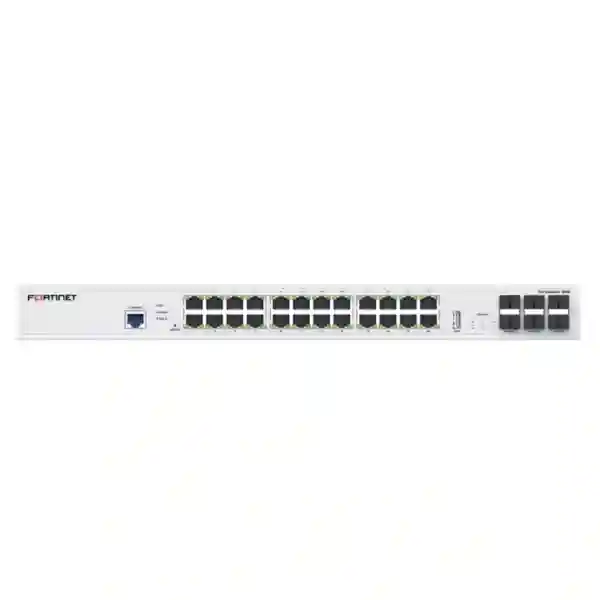
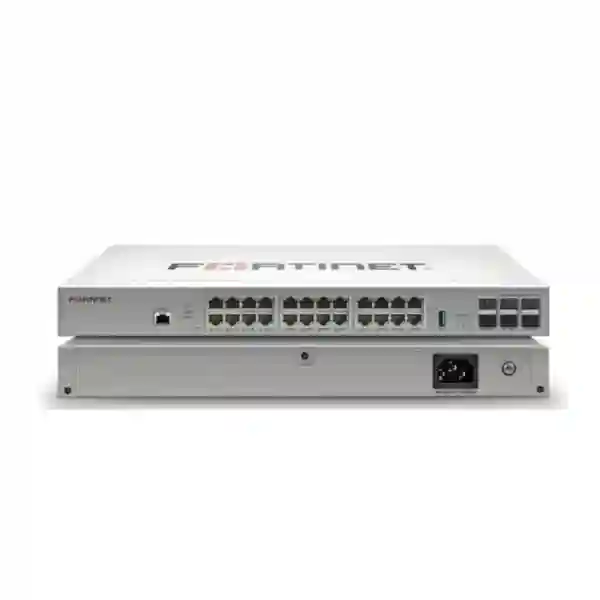
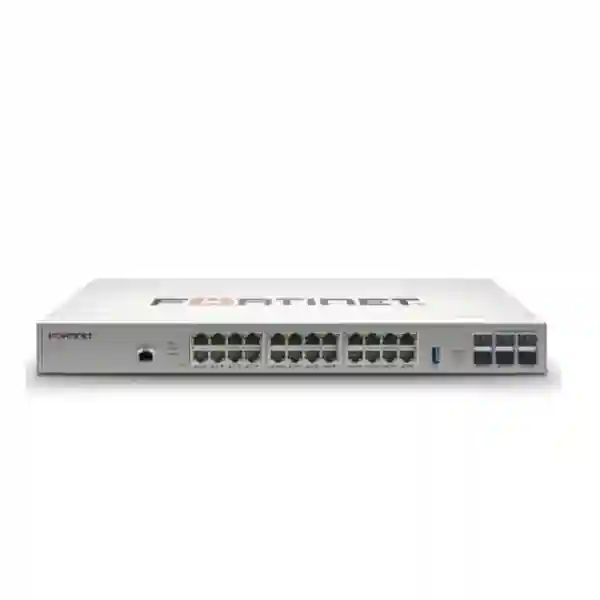
FortiSwitch FS-124G is a secure-access, multi-gigabit Ethernet switch for organizations moving beyond traditional 1GbE at the access layer. Fortinet lists the FS-124G with 24 x 2.5GbE multi-gigabit RJ45 ports and six 10GbE SFP+ uplinks. The FS-124G is the non-PoE model, so buyers should not confuse it with the separate FS-124G-FPoE variant. For offices, campuses, hospitality networks, education environments, healthcare facilities and distributed business sites, this combination provides a practical way to increase edge bandwidth while retaining high-speed fiber uplink options.
FortiSwitch FS-124G Overview
The FS-124G belongs to Fortinet’s FortiSwitch secure access portfolio. Its main purchasing advantage is straightforward: every one of its 24 copper access interfaces can provide up to 2.5GbE connectivity, while six SFP+ interfaces provide 10GbE uplink options. This makes the model relevant where endpoint and wireless access requirements are beginning to exceed the practical limits of a 1GbE-only access switch. Fortinet’s current ordering guidance positions the 124G for single-location, multi-tier environments and identifies multi-gigabit access as a core capability.
A correct buying decision starts with the connected-device plan rather than the switch name alone. Count wired users, access points, workstations, servers, cameras and other Ethernet devices; determine which endpoints can actually negotiate 2.5GbE; then map uplink requirements to the six SFP+ interfaces. Because the FS-124G does not provide PoE, devices requiring Ethernet-delivered power need their own power source, an injector, or a PoE-capable switch such as an appropriate FortiSwitch PoE variant. That distinction is especially important for wireless access points, IP phones and cameras.
Multi-Gig Access
Twenty-four 2.5GbE RJ45 ports give organizations room to connect higher-bandwidth edge devices without moving every access connection to fiber.
10GbE Uplinks
Six 10GbE SFP+ interfaces support higher-capacity links toward aggregation, core or other appropriate network infrastructure.
Fortinet Ecosystem
FortiSwitch can participate in Fortinet-oriented network operations, with management choices depending on the wider architecture and software design.
Technical Buying Guide
| Item | Verified FS-124G Detail | Planning Meaning |
|---|---|---|
| Copper access | 24 × 2.5GbE multi-gig RJ45 | Useful for faster edge connectivity and compatible multi-gig endpoints. |
| Uplinks | 6 × 10GbE SFP+ | Plan optics, fiber type and upstream compatibility separately. |
| PoE | Not provided on FS-124G | Choose external power or a PoE-capable model for powered endpoints. |
Deployment and Integration Considerations
Before ordering, document the existing firewall, VLAN plan, IP addressing, authentication requirements, access-point model, endpoint speeds, fiber paths and expected growth. The six SFP+ uplinks are valuable only when the upstream equipment, optics and cabling are compatible with the planned link speed. Procurement teams should therefore request a complete bill of materials rather than treating the switch as an isolated line item. A practical quote may need transceivers, patch leads, rack accessories, support coverage and professional configuration depending on the project.
The FS-124G can be attractive in refresh projects where existing Cat5e/Cat6 structured cabling may be retained subject to cable quality, distance and the target Ethernet standard. A site survey should confirm actual cabling condition. For a Fortinet Security Fabric environment, administrators should also plan the desired management architecture, firmware compatibility and change-control process before deployment. Fortinet documentation lists the FS-124G as a supported model in current FortiSwitch Manager documentation, but the exact software release used in production should always be checked against the applicable release notes.
FortiSwitch FS-124G Tanzania
Tanzanian organizations evaluating the FortiSwitch FS-124G commonly need a balance between faster access connectivity and manageable infrastructure growth. The 24-port 2.5GbE layout is useful when a network refresh must support newer laptops, workstations, wireless access infrastructure or other multi-gig capable devices without jumping directly to an all-fiber access layer. Six 10GbE SFP+ uplinks provide options for linking access switching toward an aggregation or core layer, provided the upstream design supports the selected optics and link configuration.
For procurement in Tanzania, start by separating hardware requirements from project requirements. Hardware selection should confirm port count, non-PoE suitability, uplink quantity and speed. Project planning should cover VLANs, management, rack space, fiber modules, copper patching, labeling, configuration, testing and handover. If the project includes access points, phones or cameras that need PoE, the non-PoE FS-124G should not be specified as though it can power them. A PoE-capable FortiSwitch variant or another powering method should be evaluated.
Businesses can also use a switch refresh as an opportunity to document the network properly. Record each uplink, VLAN purpose, port role, endpoint category and spare-capacity target. This makes future expansion easier and helps avoid consuming all 24 access ports immediately. FourTeck Tanzania can be approached for a quotation based on the exact switch model and deployment scope. For broader security planning, organizations can review FourTeck Tanzania technology solutions, while Fortinet-focused regional context is also available through FourTeck Africa. A quote request should identify site count, current firewall or core switch, required SFP+ links and whether installation assistance is needed.
FortiSwitch FS-124G Dar es Salaam
Dar es Salaam businesses often operate bandwidth-intensive environments that combine cloud applications, high-density Wi-Fi, IP communications, video, file access and centralized business systems. In such environments, the access switch can become a bottleneck when every endpoint is restricted to traditional 1GbE. The FortiSwitch FS-124G provides 24 copper multi-gigabit ports rated for 2.5GbE and six 10GbE SFP+ uplinks, creating a practical access-layer option for organizations that have compatible endpoints and need more uplink flexibility.
A Dar es Salaam deployment should be sized around actual device demand. A professional-services office may prioritize high-speed workstations and Wi-Fi access points; a hotel may prioritize guest-network segmentation and uplink capacity; a school may need classroom, administration and lab VLANs; and a logistics operation may need reliable connectivity across office and operational systems. These scenarios require different port assignments even when the same switch model is used. The FS-124G’s lack of PoE is therefore a key design checkpoint. Powered endpoints require a separate power plan.
When requesting a quotation, provide the number of users, current switch models, firewall platform, rack environment, existing fiber links and the desired number of 10GbE uplinks. Confirm whether SFP+ transceivers are already available or must be included. It is also useful to identify growth for the next refresh cycle rather than sizing only for today’s connected devices. FourTeck can use this information to prepare a more relevant product and deployment discussion. The objective is not merely to purchase a 24-port switch; it is to build an access layer whose endpoint speeds, uplinks, segmentation and management approach fit the business network.
FortiSwitch FS-124G Mwanza
Organizations in Mwanza considering a network modernization project can evaluate the FS-124G where 2.5GbE access and 10GbE uplinks align with the site design. Its 24 multi-gig copper interfaces can support a mixed estate of standard Ethernet and faster compatible endpoints, while the six SFP+ ports give network designers several options for higher-speed upstream connectivity. This can be relevant to growing offices, education sites, healthcare environments, hospitality properties and businesses consolidating traffic onto a more structured LAN.
The most important planning step is to identify why multi-gig access is required. If most endpoints are 1GbE and there is no near-term refresh, the organization should compare the cost and future value of the FS-124G against alternative FortiSwitch models. If newer Wi-Fi infrastructure, high-performance workstations or other devices can use 2.5GbE, the additional access speed may provide a clearer benefit. For wireless projects, remember that FS-124G itself is non-PoE; power requirements must be addressed separately.
Mwanza procurement teams should also include uplink components in the scope. SFP+ is a physical interface family, so the correct optical or direct-attach component depends on distance, media and the upstream device. Avoid ordering transceivers based only on connector appearance. Confirm compatibility, fiber type and link budget before purchase. For multi-site businesses, standardizing VLAN naming, port templates, firmware processes and configuration documentation can make support easier. A FourTeck quotation request can include the switch, compatible connectivity components and implementation scope so technical and commercial teams are working from the same bill of materials.
FortiSwitch FS-124G Arusha
Arusha has a diverse business environment spanning hospitality, professional services, education, tourism operations, NGOs and growing commercial organizations. The FortiSwitch FS-124G can fit access-layer projects where these organizations need more than 1GbE on copper endpoints and want 10GbE uplink flexibility. With 24 2.5GbE RJ45 access ports and six SFP+ uplinks, the switch offers a useful middle ground between legacy gigabit access and more complex high-speed campus architectures.
For hospitality and guest-facing environments, switching should be planned together with wireless coverage, VLAN separation, guest access controls and internet-edge security. For offices, priorities may include user devices, meeting rooms, storage access and resilient uplink design. For education, labs and high-density wireless may drive the requirement. In every case, device power is a separate consideration because FS-124G does not supply PoE. If access points or phones need switch-delivered power, compare the network requirement with a suitable PoE model rather than adding unnecessary external injectors by default.
A useful procurement brief for Arusha should state the exact model FS-124G, number of units, intended uplink topology, transceiver requirement, rack location, cable category, VLAN count and management preference. Include whether the switch will join an existing Fortinet environment or operate within a mixed-vendor network. This helps avoid assumptions during configuration. Buyers should also request current commercial availability rather than relying on static online pricing or stock statements. FourTeck can prepare a quotation after the technical scope is established, allowing the organization to compare hardware, accessories and implementation as a complete network investment.
FortiSwitch FS-124G Dodoma
Dodoma organizations planning office, institutional or campus network upgrades can consider the FortiSwitch FS-124G when the requirement calls for 24 multi-gigabit copper access ports and multiple 10GbE uplinks. The model is particularly relevant when network planners want to create capacity for faster endpoints while keeping a familiar RJ45 access layer. Its six SFP+ interfaces can support high-speed links toward suitable upstream switching infrastructure, giving designers more flexibility than access switches with fewer uplink ports.
Government-related offices, education facilities, professional organizations and growing enterprises may have different procurement processes, but the technical questions are similar. How many active ports are required on day one? Which endpoints can use 2.5GbE? Are powered endpoints present? How many fiber uplinks are needed? What is the upstream switch model? Which VLANs and security zones are required? The answers determine whether FS-124G is the right fit and what accessories belong on the bill of materials.
For formal procurement, the model name should be written accurately to prevent substitution with FS-124F or FS-124G-FPoE. The FS-124G is non-PoE. Technical schedules should also distinguish the copper access interfaces from SFP+ uplink interfaces and avoid assuming optics are automatically included. A clean handover should document management addressing, VLANs, trunk links, access-port assignments, firmware version, administrator access and configuration backup. FourTeck can support quotation discussions based on these project details, helping the buyer align the product order with the intended network architecture instead of purchasing hardware first and resolving compatibility questions later.
FortiSwitch FS-124G UAE
UAE businesses evaluating FortiSwitch FS-124G typically include branch offices, hospitality groups, professional firms, retail operations and enterprises refreshing access networks for faster wireless and endpoint connectivity. The model’s 24 2.5GbE RJ45 interfaces can accommodate compatible multi-gig devices, while six 10GbE SFP+ ports provide flexible high-speed uplink choices. This architecture is useful when the access layer needs a bandwidth upgrade without moving every connected endpoint to fiber.
A UAE project should evaluate the FS-124G as part of the wider LAN design. Determine whether endpoints require PoE, because this exact model does not provide it. Determine whether the existing firewall and aggregation switches can support the intended VLAN, trunk and uplink architecture. For new Wi-Fi deployments, match access-point Ethernet speed and power requirements carefully. A multi-gig port is only one part of the design; powering, cabling and upstream capacity must all align.
Organizations with regional operations can coordinate requirements through FourTeck UAE while keeping the Tanzania deployment documented separately. The procurement request should specify hardware quantity, optics, support expectations and configuration scope. Buyers should confirm current price and availability at quotation time because these commercial details change. For enterprises standardizing Fortinet switching across several locations, use a repeatable deployment template for management, VLANs, naming, firmware and configuration backup while allowing each site to retain the uplink and endpoint capacity it actually needs.
FortiSwitch FS-124G Uganda
Ugandan organizations can evaluate the FS-124G for access-layer refreshes where 2.5GbE copper connectivity and 10GbE uplinks are required. The switch provides 24 multi-gig RJ45 access interfaces and six SFP+ uplinks, making it relevant for business networks that expect higher endpoint bandwidth or need stronger uplink capacity than conventional 1GbE access switches. Typical planning contexts include offices, education, healthcare, hospitality, retail and distributed enterprise branches.
Before selecting the model, map endpoint categories and power requirements. The FS-124G is not a PoE switch. An organization with many IP phones, cameras or wireless access points may need a PoE-capable alternative or a deliberate external-power design. Where endpoints are independently powered, the non-PoE model can keep the switching requirement focused on data connectivity. Network teams should also confirm structured cabling quality for intended multi-gig links and test critical runs where necessary.
For Uganda-specific product and security context, buyers can review FourTeck Uganda. A complete RFQ should include the exact FS-124G model, quantity, site locations, uplink media, SFP+ requirements, existing FortiGate or core switch details and desired implementation services. This enables a more accurate technical discussion than a request based only on port count. Multi-site organizations should also define common configuration standards so that switch management remains consistent as the network grows.
FortiSwitch FS-124G Kampala
Kampala businesses often combine dense office connectivity with wireless, cloud applications, voice and shared services. A switch refresh can therefore be driven by both endpoint speed and uplink congestion. FortiSwitch FS-124G offers 24 2.5GbE copper ports and six 10GbE SFP+ uplinks, giving network planners a platform for multi-gig access and higher-speed upstream links. It can suit sites that have outgrown basic gigabit access but do not require PoE from this particular switch.
Planning should begin with a port worksheet. Assign expected devices, negotiated speeds, VLANs and power needs to each access port, then reserve sensible capacity for expansion. Map SFP+ uplinks to the upstream architecture and identify whether they will use fiber optics or another supported connection type. The upstream device must support the selected link. If redundancy is part of the requirement, design it according to supported architecture rather than assuming every access switch supports every multi-chassis topology.
For procurement, ask for the exact model and verify that quotations do not silently substitute a PoE variant or a different 124-series generation. Buyers should also confirm support options, transceivers and configuration services as separate line items where appropriate. A well-scoped Kampala deployment should finish with port labels, VLAN documentation, administrator credentials under controlled ownership, configuration backup and an agreed firmware-maintenance process. These operational details often matter as much as raw port speed over the useful life of the switch.
FortiSwitch FS-124G Arua
For organizations in Arua, the FortiSwitch FS-124G can be evaluated when network growth calls for faster wired access and 10GbE uplink capability. Its 24 2.5GbE RJ45 ports can support compatible endpoints at multi-gig speeds, while six SFP+ interfaces create options for connecting the access layer to higher-capacity upstream infrastructure. The model is best assessed against actual endpoint, cabling and uplink requirements rather than selected simply because it is newer than a gigabit switch.
Sites with modest IT teams benefit from keeping the design clear. Define user, server, voice, wireless, camera and guest networks; decide which device groups belong on this switch; and determine which need PoE. Since FS-124G provides no PoE, powered endpoints need another solution. This may make the model a good fit for independently powered workstations and network devices while a separate PoE switch serves phones, cameras or access points.
Procurement teams should request the switch and required uplink components together, while verifying compatibility with existing equipment. If fiber is used between rooms or buildings, document fiber type, distance, connector format and upstream interface. If the deployment is part of a wider Fortinet environment, document the chosen management approach and supported software release. A structured RFQ reduces rework and makes it easier to compare quotations on equivalent scope rather than comparing only the base switch price.
FortiSwitch FS-124G Mbarara
Mbarara businesses and institutions modernizing local-area networks can consider FS-124G where multi-gig access has a defined purpose. The 24 copper ports support 2.5GbE connectivity and the six SFP+ interfaces support 10GbE uplink options. This makes the switch relevant for offices that are adding higher-performance endpoints, upgrading wireless infrastructure or consolidating access traffic toward a faster distribution layer.
A sound design should avoid overspending on speed that endpoints cannot use. Inventory network adapters and access points, check cable condition and identify the actual bottleneck. In some networks the uplink is the limiting factor; in others, endpoint links, internet bandwidth or server capacity are the constraint. The FS-124G provides useful access and uplink capability, but the business benefit depends on the surrounding network. Also account for the model’s non-PoE design when mapping devices.
When preparing an Mbarara quote request, include unit count, rack location, existing core or firewall, VLAN requirements, desired SFP+ link count and any installation or configuration work. Ask for commercial availability at the time of purchase rather than assuming online stock. For long-term supportability, maintain a configuration backup, firmware record and port map after commissioning. If several branches use the same model, a standardized configuration template can reduce troubleshooting time and make future changes more predictable.
FortiSwitch FS-124G Gulu
Gulu organizations can use the FS-124G as a candidate for higher-speed access networks where 24 multi-gig copper ports match the required endpoint density. Six 10GbE SFP+ ports provide uplink choices for designs that need greater aggregate bandwidth toward the rest of the LAN. This can support network refresh projects in offices, education, healthcare, hospitality and other environments where traffic patterns have grown beyond older access-switch assumptions.
The model should be chosen after checking endpoint power. FS-124G is non-PoE, so it cannot directly power PoE phones, cameras or access points. If the deployment includes those devices, compare a PoE-capable design or plan power separately. This distinction can affect total project cost, rack layout and operational simplicity. Also validate cabling and upstream compatibility before committing to 2.5GbE access and 10GbE uplinks.
A useful deployment document should list port purpose, VLAN, endpoint, expected speed and any special configuration. Uplinks should identify the far-end device and transceiver. Procurement should include the exact model designation, because similarly named FortiSwitch variants have different capabilities. FourTeck can use a complete requirement list to discuss quotation and implementation scope. Buyers should evaluate total solution fit, including accessories and deployment effort, instead of comparing only the chassis price.
FortiSwitch FS-124G Kenya
Kenyan organizations considering FS-124G can use its 24 2.5GbE RJ45 ports to increase access-layer bandwidth for compatible endpoints and its six 10GbE SFP+ ports for higher-speed uplinks. The model can fit office, campus, hospitality, education and branch environments where a multi-gig access layer is justified by endpoint capability or planned growth. It is the non-PoE variant, so power delivery should be treated as a separate design decision.
For a Nairobi or wider Kenya project, the buying team should identify port demand, PoE demand, uplink topology, fiber type, firewall platform and management architecture. A multi-gig switch is most valuable when the network around it can use the capacity. If the upstream switch is limited, if cabling cannot support the intended rate, or if endpoints negotiate only 1GbE, the project should address those constraints as part of the refresh.
Regional buyers can review FourTeck Kenya for Kenya-focused technology procurement context. For a quotation, specify whether transceivers, configuration and installation are required. Avoid assuming accessories are included with the base unit. Multi-site companies can improve operations by standardizing naming, VLANs, firmware policy and backup procedures while keeping site-specific port and uplink capacity flexible.
FortiSwitch FS-124G Kuwait
Kuwait enterprises planning a wired-network refresh can evaluate the FortiSwitch FS-124G for access environments that need 2.5GbE on copper and multiple 10GbE uplinks. Twenty-four multi-gig RJ45 interfaces provide a familiar access medium for compatible endpoints, while six SFP+ interfaces support higher-speed connections toward suitable aggregation or core equipment. This makes the switch relevant to offices, hospitality environments, education, retail and other commercial networks where access demand is increasing.
The non-PoE design must be included in project planning. If the intended access layer connects phones, cameras or wireless access points that depend on PoE, the design should use a suitable powering method or evaluate a PoE-capable FortiSwitch. If endpoints are independently powered, the FS-124G can concentrate on data switching without a PoE budget. Buyers should also validate rack environment, structured cabling and uplink optics.
For procurement, a technical schedule should list exact quantities, port use, uplink count, fiber type, transceivers, support requirements and deployment services. Regional projects should use current quotations for price and availability. Where several countries share an IT standard, the FS-124G can be assessed under a common architecture, but each site’s cabling, power and upstream network should still be checked individually. This prevents a standardized product choice from becoming a one-size-fits-all deployment mistake.
FortiSwitch FS-124G Ghana
Ghanaian businesses can consider FS-124G for access-layer upgrades where higher-speed copper endpoints and 10GbE uplinks are part of the network roadmap. The 24-port 2.5GbE access configuration can support compatible modern devices while retaining standard RJ45 connectivity. Six SFP+ uplinks allow the access switch to connect to appropriate upstream infrastructure at higher speeds, subject to transceiver, media and device compatibility.
Before procurement, identify which devices need multi-gig performance and which require PoE. FS-124G does not provide PoE. A mixed switching design may therefore be appropriate where some devices need power and others prioritize bandwidth. Network teams should also review VLANs, uplink oversubscription, firewall placement and monitoring requirements. These factors determine whether the switch’s capabilities translate into meaningful operational improvement.
A Ghana RFQ should include exact model, unit quantity, required SFP+ links, optics or cables, support expectations and deployment scope. If the switch will join an existing Fortinet environment, include current FortiGate and management details so compatibility can be reviewed. Documentation after installation should capture port assignments, VLANs, management addressing and configuration backup. This creates a maintainable foundation for later growth and simplifies troubleshooting when new devices or branches are added.
FortiSwitch FS-124G Nigeria
Nigerian enterprises with growing campus, office or branch networks can evaluate FortiSwitch FS-124G when 2.5GbE access and 10GbE uplinks match the design requirement. Its 24 multi-gig RJ45 ports can serve compatible workstations, infrastructure devices and other Ethernet endpoints, while six SFP+ ports provide substantial uplink flexibility for a 24-port access switch. The product should be assessed as part of a complete LAN architecture rather than as a standalone speed upgrade.
Power requirements are a key selection factor. The FS-124G is non-PoE. If the network includes many access points, cameras or phones, compare the overall cost and operational simplicity of a PoE-capable alternative. If endpoints have independent power, the FS-124G may align well with the project. Structured cabling should be inspected for the intended multi-gig links, and fiber uplinks should be specified using the correct media and compatible transceivers.
Procurement teams should request current commercial terms and avoid treating old online prices as a reliable quote. The technical request should list model, quantity, optics, desired support and implementation services. Multi-branch organizations should define a repeatable configuration standard for VLANs, management, firmware and backups. This helps the switching estate remain understandable as sites are added. FourTeck can discuss quotation requirements once the endpoint and uplink design is documented.
FortiSwitch FS-124G Seychelles
Seychelles businesses, hospitality properties and service organizations may evaluate FS-124G when network modernization calls for faster copper access and multiple 10GbE uplinks. Twenty-four 2.5GbE RJ45 ports can support compatible endpoints while six SFP+ ports provide higher-speed connectivity toward suitable upstream equipment. For hotels and distributed properties, the access-layer design should be coordinated with wireless, guest-network segmentation, back-office systems and internet-edge security.
The FS-124G does not provide PoE, an important consideration for hospitality and wireless-heavy deployments. If access points, cameras or phones depend on Ethernet power, plan a PoE-capable switching layer or another power method. The decision should consider operational simplicity, not only hardware price. Uplink planning should also account for building layout, fiber type, distance and redundancy requirements.
For island deployments, a complete bill of materials can reduce project delays caused by missing optics, patch components or accessories. Specify the exact switch model, transceiver requirements, rack environment and implementation scope before ordering. Keep spare capacity for future endpoints and document the final network after commissioning. A clear port map, VLAN schedule, management plan and configuration backup make future support easier, particularly when technical teams support multiple properties or sites remotely.
Related Fortinet and FourTeck Resources
FortiSwitch projects are often planned alongside firewall, wireless and wider network-security requirements. Tanzania buyers can start with FourTeck Tanzania for the local technology portfolio and use FourTeck Africa for broader regional context. Cross-border teams can also reference FourTeck Kenya, FourTeck Uganda and FourTeck UAE when coordinating requirements in those markets. These links are useful for regional procurement context; the exact FS-124G quotation should still be requested for the target project.
FortiSwitch FS-124G FAQs
How many ports does the FortiSwitch FS-124G have?
Fortinet lists 24 x 2.5GbE multi-gig RJ45 access ports and six 10GbE SFP+ uplink ports for the FS-124G.
Does FS-124G support PoE?
No. The FS-124G is the non-PoE model. Fortinet separately offers the FS-124G-FPoE variant with PoE capabilities. Buyers should specify the exact model required.
Why choose 2.5GbE access?
2.5GbE can provide additional bandwidth for compatible endpoints compared with traditional 1GbE. The benefit depends on endpoint capability, cabling, application traffic and upstream network capacity.
Are SFP+ transceivers included?
Do not assume optics are included. The required SFP+ component depends on media, distance and upstream compatibility. Confirm the complete bill of materials in the quotation.
Can FS-124G be centrally managed?
Fortinet documents FS-124G among supported models for FortiSwitch Manager releases. The exact management design and software compatibility should be validated for the production environment and chosen Fortinet architecture.
Quotation Checklist
For a useful FS-124G quotation, provide: exact model and quantity; installation city and site count; number and type of connected endpoints; PoE requirements; current firewall and upstream switch models; number of planned 10GbE uplinks; fiber type and distance; transceiver requirements; VLAN and segmentation requirements; preferred management approach; rack and cabling status; support requirements; and whether configuration, testing, documentation or handover assistance is required. This information helps separate the switch price from the complete project scope and reduces the chance of missing necessary components.
Decision Recap and Consultation
Choose the FortiSwitch FS-124G when the project genuinely needs 24 ports of 2.5GbE copper access, six 10GbE SFP+ uplinks and a non-PoE design that fits the endpoint power plan. Compare alternatives when PoE is required, when endpoint density exceeds 24 access ports, or when the wider topology requires capabilities not provided by this access-layer model. A pre-purchase design review should validate cabling, uplinks, optics, management and growth so the final quotation reflects a deployable network rather than a chassis-only purchase.




Reviews
There are no reviews yet.