
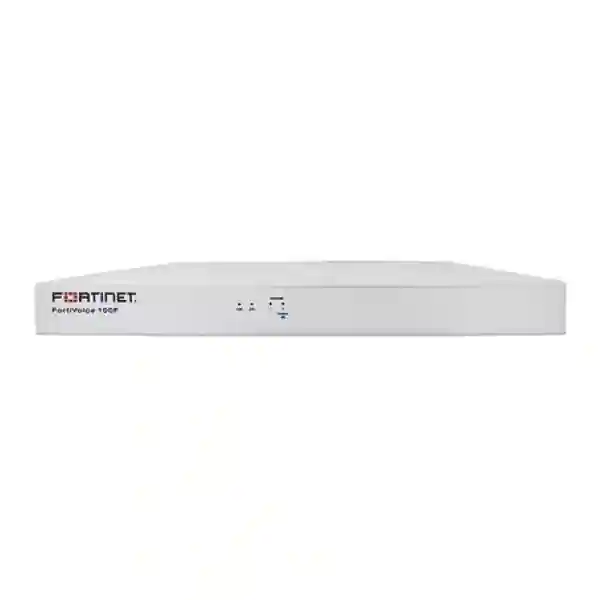
FortiVoice FVE-100F Tanzania
FortiVoice FVE-100F is a compact Fortinet enterprise phone-system appliance for organizations that need controlled, centrally administered IP communications without moving immediately to a much larger PBX platform. The appliance supports up to 100 extensions, 16 VoIP trunks and 30 concurrent calls, with 10 auto attendants, eight conference bridges and support for up to 10 call-center agents. For Tanzanian organizations planning a new IP PBX, replacing an aging telephone system or standardizing communications across departments, these published capacities provide a practical starting point for sizing. The important procurement step is to map real users, simultaneous calling patterns, SIP service, endpoint choices, branch requirements and optional functions before ordering.
Maximum extensions published for the FVE-100F.
VoIP trunks for SIP-based business calling designs.
Concurrent calls, a key sizing figure for busy organizations.
Published internal storage capacity.
FortiVoice FVE-100F Overview
The FVE-100F sits in Fortinet’s FortiVoice Enterprise family between smaller office appliances and higher-capacity systems. It uses a desktop form factor with two RJ45 network interfaces and external power. Fortinet lists audio codec support including G.711 μ-law/A-law, G.729a, G.722 and Opus, together with video codec support in the FortiVoice platform. The model has no built-in FXO, FXS or PRI ports, so projects that require traditional telephone-line connectivity or analog endpoints should plan the appropriate FortiVoice gateway architecture rather than assuming those interfaces exist on the base appliance.
That distinction matters during procurement. A 100-user office may be an excellent capacity match while still needing separate gateway hardware because of legacy analog lines, fax devices, lifts, door systems or existing carrier handoffs. Conversely, a business moving entirely to SIP trunks and IP endpoints may value the cleaner IP-centric design. FVE-100F and larger FortiVoice systems can manage FortiVoice gateways centrally; Fortinet currently documents support for up to five managed gateways on the FVE-100F. This gives designers a supported path for adding FXO, FXS or PRI connectivity where the wider deployment requires it.
Verified Technical Specifications
| Extensions | 100 | VoIP trunks | 16 |
| Concurrent calls | 30 | Auto attendants | 10 |
| Conference bridges | 8 | Attendees per bridge | 8 |
| Maximum call-center agents | 10 | Storage | 250 GB |
| RJ45 interfaces | 2 | Form factor | Desktop |
| Dimensions | 41 × 210 × 133 mm | Weight | 1.2 kg |
Business Communications Capabilities
A business phone system is more than an extension count. FortiVoice is designed around centralized communications administration, call routing and user services. The FVE-100F’s ten auto attendants can support structured inbound call flows, while eight conference bridges provide internal conferencing resources. Optional FortiVoice capabilities include FortiFone Softclient, unified communications, call-center functions and hotel-management use cases. Buyers should distinguish base appliance capabilities from optional licensing and service components when requesting a quotation, because the exact commercial package should match the intended deployment rather than being inferred from the hardware name alone.
For organizations already using Fortinet infrastructure, FortiVoice can also fit into a broader operational approach. Fortinet documentation includes FortiOS Security Fabric connector support and remote-management capabilities in current FortiVoice releases. These integrations should be assessed against the exact firmware release and the customer’s network-management policy. A communications deployment should also include VLAN planning, quality-of-service policy, DNS and NTP design, firewall rules, secure administrative access, SIP-provider parameters, backup procedures and endpoint provisioning.
Choosing the FVE-100F: Capacity and Sizing Guidance
The headline figure of 100 extensions does not mean every organization with 100 employees will automatically be a perfect fit. Extension count, simultaneous calls and trunk demand are separate sizing dimensions. A company with many users but light calling may stay comfortably within the 30-concurrent-call capacity, while a smaller customer service operation can create heavier simultaneous traffic. Procurement teams should estimate peak external and internal calling, conference usage, call queues, reception traffic, seasonal peaks and planned headcount. They should also determine whether the maximum of 10 call-center agents suits the workflow or whether a higher-capacity FortiVoice model is appropriate.
Storage and retention expectations deserve similar attention. The appliance has 250 GB of published storage, but retention requirements depend on configuration and actual use. Avoid translating raw storage into an unsupported promise about recording hours or voicemail retention without a deployment-specific calculation. Organizations with regulatory retention requirements should document recording policy, access controls, backup expectations and privacy requirements before configuration.
FortiVoice FVE-100F Tanzania
For buyers in Tanzania, the FVE-100F is relevant to medium-sized offices, professional-services firms, hospitality environments, educational organizations, healthcare administration, distributors and multi-department businesses that want an IP-based communications platform sized for up to 100 extensions. The procurement conversation should begin with the actual telephone environment: number of staff requiring extensions, SIP trunk availability, current telephone numbers, reception workflows, remote-user needs, analog dependencies and the number of calls expected at the busiest hour. This produces a more dependable bill of materials than selecting an appliance only from employee count.
Tanzania deployments can vary considerably between single-building offices and organizations connecting branches. Network readiness is therefore central to a successful VoIP project. The LAN should be reviewed for managed switching, voice VLAN design, PoE requirements for IP phones, QoS and resilient internet or WAN connectivity where SIP services or remote sites depend on IP transport. The FVE-100F itself provides two network interfaces, while endpoint and access-layer requirements are separate. If traditional carrier lines or analog devices remain part of the project, the FVE-100F has no integrated FXO or FXS ports, making compatible gateway planning important.
Before requesting a Tanzania quotation, prepare the extension count, expected simultaneous calls, SIP provider details, number of physical phones, softclient requirements, call-center agents, auto-attendant flows, branch locations and any hotel-management requirements. This allows a supplier to distinguish the base FVE-100F appliance from support, licenses, gateways, endpoints and implementation services. For broader security planning, review FourTeck Tanzania technology solutions alongside the communications design. Customers with regional operations can also review FourTeck Africa solutions for cross-border technology planning.
FortiVoice FVE-100F Dar es Salaam
Dar es Salaam organizations often evaluate business telephony in environments with multiple departments, busy reception desks, customer-facing teams and a mix of local and international calling. The FVE-100F offers a defined 100-extension ceiling and 30 concurrent calls, giving IT managers concrete capacity figures to compare with current traffic. A head office with sales, finance, operations, management and support teams can organize extensions and call handling under one FortiVoice system, while the ten auto attendants can support structured inbound routing where the design calls for separate menus or business functions.
A Dar es Salaam deployment should be planned as a network project rather than simply a PBX replacement. Check switch capacity, PoE budgets, voice VLANs, WAN stability, SIP-provider interoperability and firewall policy. If an office is replacing analog telephones gradually, identify every legacy dependency before finalizing hardware. The FVE-100F does not contain built-in analog FXO or FXS interfaces. FortiVoice gateways can extend deployments with traditional interfaces, and the FVE-100F can centrally manage up to five supported gateways. This can be useful when a migration needs to preserve selected analog services while the main user population moves to IP endpoints.
Commercial buyers should ask for a quotation that separates appliance hardware, FortiCare support, optional capabilities, FortiFone endpoints or softclients, gateway requirements, SIP configuration and professional deployment work. The objective is to make the proposal auditable: every line should connect to a technical requirement. Organizations that also need firewall, switching or secure connectivity can review the broader FourTeck technology portfolio. Avoid assuming stock or delivery lead times; request current availability for the exact FVE-100F package at the time of purchase.
FortiVoice FVE-100F Mwanza
In Mwanza, the FVE-100F can suit growing organizations that need a centrally administered phone system for office teams, customer contact, administration and branch coordination. The model’s 100-extension capacity offers room for a substantial user base without moving into the larger FortiVoice appliances, while 16 VoIP trunks and 30 concurrent calls provide additional dimensions for sizing. Businesses should compare those limits with peak usage rather than average usage, especially where reception, sales or service teams generate concentrated calling periods.
For a Mwanza project connecting another location, WAN and internet design become part of voice quality planning. Voice traffic is sensitive to latency, jitter, packet loss and congestion, so network readiness should be assessed before phones are rolled out. Managed switches, QoS, voice VLAN segmentation and adequate uplink capacity can help establish a controlled foundation. Where a branch-resiliency strategy is needed, Fortinet documents local-survivable gateway approaches within the FortiVoice family; the exact supported topology and firmware requirements should be checked during solution design rather than assumed from the appliance specification alone.
Procurement teams should also document number-porting or SIP-number requirements, emergency calling policy, call recording expectations, voicemail, conference usage and user training. A technically correct PBX can still deliver a poor user experience when call flows have not been mapped. Before ordering, create a simple call-flow diagram showing what happens when a customer calls the main number, chooses a department, reaches a busy queue or calls outside business hours. That information helps turn the FVE-100F’s capabilities into a practical communications design and reduces rework during deployment.
FortiVoice FVE-100F Arusha
Arusha businesses evaluating FortiVoice may include hospitality, travel, professional services, education and regional administration. These environments can place different demands on a PBX. A hotel may care about hospitality integration and guest-service workflows, while an office may prioritize extension management, reception routing, conferencing and softclient access. Fortinet lists hotel management and call-center functionality among the add-on capabilities associated with the FVE-100F family, so buyers should specify these requirements early and obtain the correct licensing and integration scope.
The FVE-100F supports 100 extensions but has no built-in analog extension or traditional-line ports. That makes the existing telephony inventory especially important during an Arusha migration. List analog phones, fax machines, door phones or other devices that might require gateway connectivity. For greenfield IP deployments, plan endpoint power and switching at the same time as PBX configuration. A phone-system proposal should therefore cover the core appliance, endpoints, network readiness, SIP service, optional gateways and deployment tasks as one coordinated design.
For organizations serving international customers, review inbound numbering, outbound caller identity, time-zone call routing and after-hours treatment with the chosen carrier. FortiVoice can provide structured call handling, but carrier capabilities and local telecom arrangements remain separate dependencies. Ask for a current quotation rather than relying on overseas web prices, because bundles, support periods, taxes and logistics can differ. The strongest buying brief includes user count, expected concurrency, locations, call-center agents, hospitality needs, SIP trunks, existing analog services and the desired go-live sequence.
FortiVoice FVE-100F Dodoma
Dodoma organizations seeking a manageable business IP PBX can assess the FVE-100F for administrative offices, institutions, service organizations and multi-department operations. Its published capacity of 100 extensions and 30 concurrent calls makes it straightforward to compare with a documented communications requirement. Instead of treating 100 as a target, leave operational headroom for growth and temporary users. If projected expansion approaches the appliance limit or call concurrency is expected to be unusually high, compare the next FortiVoice models before purchase.
Operational continuity should be discussed during design. Determine which calls are business-critical, what happens if the WAN or SIP service fails, how configuration backups are maintained and who is authorized to administer the phone system. For branch environments, Fortinet’s FortiVoice platform includes gateway and local-survivability concepts that may form part of a wider architecture. Those features require correct supported models, firmware and topology, so they should be engineered deliberately rather than treated as automatic failover.
Security is equally relevant. Place voice infrastructure in an intentional network architecture, restrict administrative access, keep firmware under a controlled maintenance process and define firewall policy for SIP and related services according to the carrier and Fortinet guidance. Where a wider Fortinet security environment is being considered, the communications project can be coordinated with firewall and switching requirements. A quotation request should clearly separate the FVE-100F appliance, support term, optional licenses, phones, gateways, installation, configuration and training so decision-makers can compare scope rather than only headline hardware cost.
FortiVoice FVE-100F UAE
Organizations in the UAE can evaluate the FVE-100F when they need a Fortinet business phone platform for up to 100 extensions. Commercial requirements frequently include structured reception routing, department extensions, conferencing, mobile or desktop softclient access and integration with SIP services. The FVE-100F provides 16 VoIP trunks and supports 30 concurrent calls, so concurrency analysis should be included in the design. Businesses with high-volume customer-contact teams should also note the published maximum of 10 call-center agents for this model and compare larger FortiVoice appliances if required.
UAE deployments should account for local telecom service requirements and the exact services supplied by the chosen carrier. Do not assume that an IP PBX feature automatically determines carrier availability or regulatory treatment. Document telephone numbers, trunk service, outbound caller identity, remote-user expectations and branch connectivity before configuration. Where analog or PRI connectivity is required, the base FVE-100F has no integrated FXO, FXS or PRI interfaces, so compatible gateway design may be necessary.
For regional procurement and related infrastructure, customers can explore FourTeck UAE technology solutions. A useful quotation request includes the number of users, physical phones, softclient users, simultaneous calls, SIP trunks, call-center agents, conferencing needs, gateways and support period. This helps ensure the commercial package is compared on complete project scope instead of an isolated appliance price.
FortiVoice FVE-100F Uganda
Ugandan organizations can consider the FVE-100F for a head office or centralized communications deployment where the expected user population remains within 100 extensions. The platform is particularly relevant when an IT team wants centralized administration and a defined migration path from older telephony toward SIP and IP endpoints. With 16 VoIP trunks and 30 concurrent calls, the model should be sized against peak traffic. An organization with many extensions but modest external calling has a different profile from a contact-heavy business with fewer users.
Branch planning is an important consideration for organizations operating beyond one site. The FVE-100F can manage up to five FortiVoice gateways according to current Fortinet documentation. That can support designs requiring compatible analog or digital telephony interfaces outside the base appliance. Network quality between sites should be measured and voice QoS planned. If a branch must continue making calls during a central-site interruption, discuss supported local-survivability architecture and the required FortiVoice components as part of the project scope.
For Uganda-specific technology sourcing, see FourTeck Uganda. Request current availability and a project quotation for the exact hardware, support and optional functions required. Avoid treating internet-listed prices from other markets as a final landed project cost, because licensing, support duration, endpoints, gateways and implementation scope materially affect the complete solution.
FortiVoice FVE-100F Kampala
Kampala offices with customer-facing teams can use the FVE-100F capacity figures to build a disciplined PBX requirement. Start with extensions by department, then estimate concurrent calling during the busiest period. Add reception, conference, call queue and branch traffic. The appliance supports 10 auto attendants and eight conference bridges, which can help structure inbound calls and internal collaboration. For contact-center requirements, verify whether the maximum 10 agents is sufficient before committing to the model.
A migration plan should inventory the existing telephone estate. Because the FVE-100F does not include built-in FXO or FXS interfaces, retained analog services may require FortiVoice gateways. This is not a disadvantage when the goal is an IP-centric architecture, but it is a procurement detail that must be captured early. Similarly, IP phones need appropriate Ethernet access and, where relevant, PoE switching. Softclient users need suitable licensing, endpoint security and network access.
Before deployment, agree naming conventions, extension ranges, dial plans, business hours, holiday schedules, voicemail policy and administrator roles. These operational details often determine how easy the phone system is to support after go-live. A complete Kampala proposal should combine the FVE-100F with the necessary support, endpoints, gateway components and professional configuration rather than presenting the PBX appliance as a standalone answer to every communications requirement.
FortiVoice FVE-100F Arua
For an Arua organization, the value of an IP PBX often depends on connecting staff reliably while keeping administration manageable. The FVE-100F provides a centralized platform for up to 100 extensions and can suit businesses that expect growth beyond a small-office phone system. When evaluating it, document both current users and a realistic expansion horizon. Also count simultaneous calls, because the appliance is rated for 30 concurrent calls rather than 100 simultaneous conversations.
Connectivity design deserves particular attention where branches or remote users depend on WAN links. Voice quality can deteriorate when data traffic saturates a connection, so QoS, bandwidth planning and monitoring are useful parts of deployment. If SIP trunks traverse an internet connection, discuss redundancy expectations and firewall policy. If the business retains analog lines or devices, include appropriate gateways because the FVE-100F itself has no FXO or FXS ports.
Arua buyers can improve quotation accuracy by providing a site survey summary: user count, switch model, PoE availability, internet links, SIP provider, existing numbers, endpoint count, analog devices and desired call flows. This allows the supplier to identify dependencies before installation. Ask separately about support terms and optional FortiVoice functions so the final bill of materials reflects actual needs rather than a generic bundle.
FortiVoice FVE-100F Mbarara
Mbarara businesses modernizing office communications can assess the FVE-100F as a 100-extension FortiVoice appliance with SIP-focused connectivity. It is suitable for structured office telephony where reception, departments and management need centrally controlled extensions and call routing. The published 16 VoIP trunks and 30 concurrent calls should be checked against traffic forecasts. A growing organization should reserve capacity for additional users rather than designing the system to sit at its maximum limits on day one.
For organizations with customer service teams, the FVE-100F supports up to 10 call-center agents. Buyers expecting a larger agent population should compare higher FortiVoice models instead of assuming licensing alone will raise the hardware model’s documented capacity. Hospitality organizations can likewise discuss hotel-management options and integration requirements during solution design. Optional functionality should be quoted explicitly.
Implementation planning should include IP addressing, VLANs, DHCP options where used for phone provisioning, QoS, firewall rules, SIP settings, backup and user training. The purpose is to make the system supportable after installation. If traditional lines or analog extensions must remain, specify them in the request because compatible gateways will be required. A well-prepared Mbarara quotation request therefore combines telephony requirements with network and migration information.
FortiVoice FVE-100F Gulu
Gulu organizations looking for a Fortinet IP PBX can use the FVE-100F for a centrally administered environment of up to 100 extensions. Its compact desktop hardware can be appropriate where rack space is not a requirement, while the 250 GB internal storage supports the platform’s communications functions. Procurement should still focus on workload: extension count, concurrent calls, trunk requirements, conferencing and optional features all contribute to model selection.
For multi-site operations, define whether the Gulu location is the central site, a branch or part of a peer network. This determines how SIP services, gateways and survivability should be planned. Fortinet documents gateway management and local-survivable deployment concepts, but supported architecture depends on models and firmware. Where continuity is important, include failure scenarios in the design workshop: loss of internet, loss of the central PBX, carrier outage and power interruption.
Power and network infrastructure are also part of practical voice availability. IP phones may depend on PoE switches, so UPS coverage should include relevant network equipment if continued calling during short power interruptions is required. The FVE-100F uses an external power supply. A quotation should identify all infrastructure dependencies and avoid unsupported promises about uptime. Ask for current product availability, FortiCare options, endpoints, gateways and implementation services as separate, understandable components.
FortiVoice FVE-100F Kenya
Kenyan businesses can evaluate the FVE-100F for medium-size IP telephony projects requiring up to 100 extensions. It offers 16 VoIP trunks and 30 concurrent calls, plus auto-attendant and conferencing resources. The appliance is best selected through traffic analysis rather than employee count alone. Companies with intensive outbound sales, reservations or support operations should model busy-hour concurrency and the number of call-center agents before deciding between the FVE-100F and a larger FortiVoice platform.
A deployment should identify the chosen SIP provider, numbering plan, physical phones, softclients and any legacy interfaces. The base FVE-100F does not contain analog FXO or FXS ports, so retained analog services need gateway planning. Network switching and security should be assessed at the same time, including PoE, VLANs, QoS and firewall policy. This reduces the risk of purchasing a PBX that is correctly sized but connected to an unprepared LAN.
For regional technology requirements, visit FourTeck Kenya. When requesting pricing, state whether the project requires hardware only or a complete communications solution with support, endpoints, gateway integration and configuration. This distinction makes commercial comparisons more meaningful and helps procurement teams understand the total implementation scope.
FortiVoice FVE-100F Kuwait
Kuwait organizations planning a Fortinet-based communications system can consider the FVE-100F when the requirement falls within 100 extensions and 30 concurrent calls. The appliance supports 16 VoIP trunks and provides centralized PBX capabilities for office users. It can be relevant to professional services, trading businesses, hospitality and multi-department offices where structured call routing and unified administration are priorities.
Carrier and regulatory requirements should be verified locally as part of deployment. SIP trunk availability, number presentation and remote-user scenarios are services outside the appliance specification and should be confirmed with the relevant provider. The FVE-100F is an IP-centric system without integrated FXO, FXS or PRI ports, so projects requiring traditional interfaces should add supported FortiVoice gateway components.
A Kuwait quotation request should include extension count, peak concurrency, trunk requirements, call-center agents, conference needs, endpoint types, support duration and gateway requirements. Buyers can review FourTeck Kuwait for related regional technology sourcing. Request current commercial terms rather than assuming pricing published for another country applies to the Kuwait project.
FortiVoice FVE-100F Ghana
Ghanaian organizations seeking an IP PBX for up to 100 extensions can evaluate the FVE-100F against their current and planned calling profile. The system’s 30-concurrent-call capacity is particularly useful for sizing because it separates registered users from active conversations. A business with 80 extensions may still need careful analysis if many users call simultaneously, while another organization with close to 100 extensions may have relatively light traffic.
Network preparation includes voice VLANs, PoE switching for compatible IP phones, QoS, reliable DNS and time services, and appropriate security policy. For SIP trunks, confirm provider parameters and firewall requirements. Where analog devices or lines remain, plan gateways because the FVE-100F has no built-in FXO or FXS ports. Fortinet documents centralized gateway management for the model, with up to five managed gateways.
For Ghana-focused sourcing, see FourTeck Ghana. Provide a structured requirement when requesting a quotation: users, phones, softclients, trunks, peak calls, branches, call-center agents, hospitality needs and support term. This makes it easier to produce a technically relevant bill of materials and avoid missing dependencies during implementation.
FortiVoice FVE-100F Nigeria
Nigerian enterprises and growing businesses can assess the FVE-100F for an IP communications deployment of up to 100 extensions. Its 16 VoIP trunks, 30 concurrent calls, ten auto attendants and eight conference bridges provide useful reference points for solution planning. Businesses with contact-center operations should note the model’s maximum of 10 call-center agents and compare larger appliances if their service desk or sales team requires more agent capacity.
Resilience planning can be especially important in distributed deployments. Define primary and backup connectivity, power protection for PBX and switching, configuration backup and the response to carrier outages. Where multiple branches are involved, review FortiVoice gateway and local-survivability options with the integrator. Do not assume every continuity function is inherent in the FVE-100F alone; supported topology and additional equipment matter.
For related regional solutions, visit FourTeck Nigeria. Procurement teams should request a current project quote including support and licensing requirements, phones or softclients, gateway hardware and implementation. The goal is to compare a complete working solution rather than only the price of the base appliance.
FortiVoice FVE-100F Seychelles
Seychelles businesses evaluating a compact enterprise IP PBX can consider the FVE-100F where up to 100 extensions and 30 concurrent calls fit the requirement. Hospitality and service-sector environments may value structured call handling, conferencing and optional hotel-management functionality, while general offices may focus on extension administration, reception workflows and SIP connectivity. These different use cases should be documented before licensing and integration are quoted.
Island deployments can make logistics and remote support planning especially important, so procurement should clarify the support term, replacement process and implementation responsibilities before purchase without assuming a particular stock or service level. Network readiness remains fundamental: review PoE switching, VLANs, QoS, internet connectivity and firewall policy. If legacy analog devices or carrier interfaces must be retained, compatible gateways are required because the FVE-100F does not provide integrated FXO or FXS ports.
A useful request for quotation lists users, sites, SIP trunks, peak calls, physical phones, softclient users, analog dependencies, call-center agents, hospitality integration and desired support duration. Include future growth so the selected system does not immediately operate at its capacity ceiling. Current availability and commercial terms should be confirmed at the time of procurement.
Compatibility, Gateways and Migration Planning
A common buying question is how the FVE-100F connects to an existing telephone environment. The appliance is designed around IP communications and has two RJ45 network interfaces. It does not have built-in FXO, FXS or PRI ports. If a project must connect traditional telephone lines, analog extensions or PRI services, identify the exact interface count and use a supported FortiVoice gateway design. Current Fortinet administration documentation states that the FVE-100F can manage up to five gateways.
Migration can be phased. Organizations may first establish the FortiVoice core, provision IP endpoints and SIP trunks, then integrate selected legacy services through gateways. A staged plan can reduce operational disruption, but it should include a rollback approach, number migration sequence, user acceptance testing and training. Test inbound and outbound calling, transfers, voicemail, auto attendants, conference functions, emergency calling procedures and after-hours routing before final cutover.
FortiVoice FVE-100F Licensing and Support Questions
The hardware model should not be confused with every optional feature that can be added to a FortiVoice solution. Fortinet identifies FortiFone Softclient, unified communications, call-center and hotel-management capabilities in connection with the FVE-100F product family. Exact license requirements, quantities and support bundles should be validated against the current Fortinet price list and the planned deployment. FortiCare support is commonly offered in multi-year bundles, but the required support term should be quoted rather than assumed.
When comparing proposals, ask each supplier to state the base appliance, support duration, optional licenses, gateway hardware, endpoints and services separately. This prevents a lower-looking quote from being mistaken for an equivalent solution when it omits implementation or optional functionality. Also confirm firmware planning and upgrade responsibility as part of ongoing operations.
FortiVoice FVE-100F Use Cases
Medium Office
Centralize extension management, reception routing, voicemail and conferencing for an office that fits within the model’s published capacity.
Customer Service
Support a small call-center requirement of up to 10 agents, subject to the appropriate licensing and full traffic analysis.
Hospitality
Plan hotel-management functionality where required, with integration scope and licensing verified before purchase.
Multi-site Business
Build centralized communications with supported gateway and branch-resiliency architecture where the network design requires it.
Quotation Checklist
For a useful FortiVoice FVE-100F quotation, provide the following information: total users and extensions; projected growth; maximum simultaneous calls; number and type of SIP trunks; existing telephone numbers; physical IP phones; softclient users; call-center agents; auto-attendant requirements; conference usage; analog lines and devices; PRI requirements if any; branch locations; gateway requirements; hotel-management requirements; network-switching and PoE status; firewall environment; desired support term; installation scope; training needs; and target deployment schedule. This information allows the proposed bill of materials to be aligned with the real project.
Frequently Asked Questions
How many extensions does the FortiVoice FVE-100F support?
Fortinet publishes a capacity of up to 100 extensions for the FVE-100F.
How many concurrent calls are supported?
The published FVE-100F capacity is 30 concurrent calls. This should be compared with busy-hour calling rather than total employee count.
Does the FVE-100F have analog FXO or FXS ports?
No. Fortinet’s data sheet lists zero FXO and zero FXS ports for this model. Projects requiring traditional interfaces should plan compatible FortiVoice gateways.
How many VoIP trunks does it support?
The FVE-100F is specified for 16 VoIP trunks.
Can it be used for a call center?
Fortinet lists support for up to 10 call-center agents on the FVE-100F. Confirm required licensing and compare larger models if more agents are needed.
Can the FVE-100F manage FortiVoice gateways?
Yes. Current Fortinet documentation states that the FVE-100F can manage up to five FortiVoice gateways.
What should I include when requesting a Tanzania quote?
Include users, simultaneous calls, SIP trunks, endpoints, analog requirements, call-center or hospitality functions, branches, support term and implementation scope. This enables a more accurate configuration and quotation.
Decision Recap
FortiVoice FVE-100F is designed for organizations needing up to 100 extensions, 16 VoIP trunks and 30 concurrent calls in a compact Fortinet PBX appliance. Its fit depends on more than extension count: evaluate concurrency, call-center agents, SIP services, legacy interfaces, branch architecture, endpoints and licensing. The absence of built-in analog ports means gateway requirements should be identified during design. For the right workload, the FVE-100F offers a clearly defined platform for centralized business communications with room for structured call handling, conferencing and optional unified-communications functions.
Plan Your FortiVoice FVE-100F Deployment
Prepare your extension list, call-flow requirements, SIP details, endpoint quantities, analog dependencies and support expectations before requesting a quote. A requirements-led proposal helps ensure that the FVE-100F, gateways, phones, licensing and implementation services form one coherent solution.



Reviews
There are no reviews yet.