
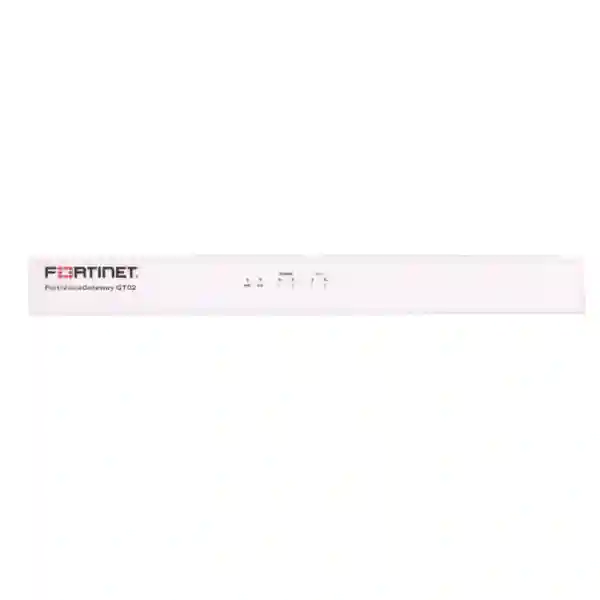
FortiVoice Gateway FVG-GT02 Tanzania
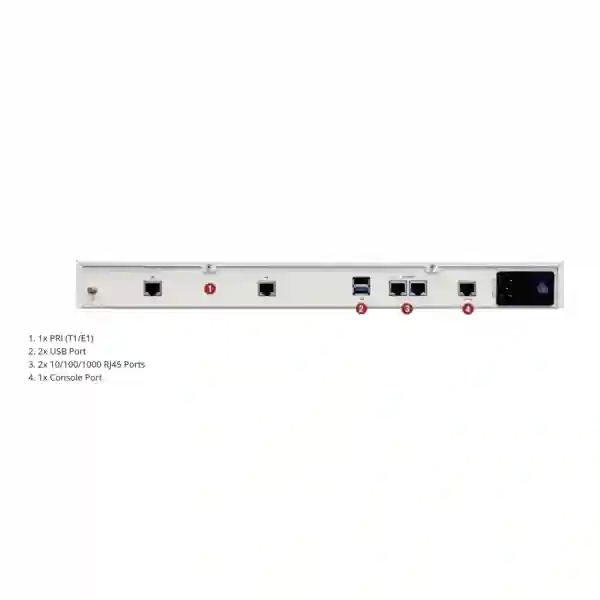
The FortiVoice Gateway FVG-GT02 is a purpose-built dual-PRI voice gateway for organisations that need to connect PRI T1/E1 services to a compatible FortiVoice phone system. Fortinet specifies two PRI interfaces and two 10/100/1000 Ethernet ports for this model, giving businesses a focused way to bridge digital telephony trunks into a centrally managed FortiVoice deployment. FourTeck can help procurement and IT teams review the requested model, FortiVoice platform compatibility, support requirements and regional telecom considerations before quotation.
FortiVoice FVG-GT02 Overview
Business telephony environments often need to preserve an existing PRI service while modernising call control, extensions and administration. The FVG-GT02 addresses that requirement as a dedicated FortiVoice gateway rather than a general-purpose router or analogue adapter. Its role is straightforward: provide two PRI T1/E1 interfaces for digital trunks and connect the gateway to the IP network through dual Gigabit Ethernet interfaces. This architecture can be useful when an organisation has carrier-provided PRI circuits, a structured enterprise telephony environment, or a phased migration plan in which traditional digital trunking must coexist with a newer IP-based communications platform.
Fortinet positions its gateway family as expansion hardware for FortiVoice phone systems. Current Fortinet product information states that FortiVoice gateway devices work with FortiVoice models supporting 100 extensions and more. That makes compatibility verification an important purchasing step. Buyers should identify the exact FortiVoice appliance or virtual system in use, software version, required PRI signalling, carrier handoff, number plan, expected call paths and support term before placing an order. The FVG-GT02 should not be selected simply because a site has a PRI circuit; the complete voice architecture must be reviewed.
Two PRI interfaces supporting T1/E1 use cases, subject to the correct regional carrier configuration.
Two 10/100/1000 Ethernet connections provide network connectivity for the gateway.
Designed to operate with compatible FortiVoice phone systems as part of a managed communications deployment.
Verified Technical Highlights
| Product | FortiVoice Gateway GT02 |
| Official SKU / model | FVG-GT02 |
| PRI interfaces | 2 × PRI (T1/E1) |
| Network interfaces | 2 × 10/100/1000 Ethernet |
| Form factor | Rack-mount gateway |
| Management context | FortiVoice environment |
| Support planning | FortiCare contract options should be confirmed for the required term and region |
Telecommunications products can be subject to country-specific regulations and availability. Confirm regional availability, carrier interface requirements and the correct order configuration before procurement.
Where the FVG-GT02 Fits
The GT02 is most relevant when a business communications design has a clear requirement for two PRI connections. Examples include a headquarters retaining two digital carrier trunks, an enterprise consolidating call control while preserving established PSTN connectivity, or a centralised FortiVoice deployment serving sites that still depend on PRI handoffs. It can also be considered during a staged migration where the organisation wants to modernise endpoint management and call features without forcing an immediate change to every carrier circuit.
The buying conversation should therefore begin with the telephony topology rather than the product code. Confirm whether the carrier delivers E1 or T1, what signalling and numbering are in use, whether both PRI ports are required from day one, how calls should route during failures, which FortiVoice system will control the gateway, and whether the deployment is local or remote. This information helps prevent a mismatch between the physical gateway and the actual voice-service design.
FortiVoice Gateway FVG-GT02 Tanzania
For organisations evaluating the FortiVoice Gateway FVG-GT02 in Tanzania, the most important task is to map the gateway to the actual carrier and FortiVoice environment. A Tanzanian enterprise may be replacing an older PBX, consolidating several telephony systems, building a new headquarters communications platform, or retaining a PRI service while moving extensions and administration onto an IP-based system. In each case, the two PRI ports are valuable only when the trunk requirements are clearly documented. Procurement teams should record the carrier handoff, E1 or T1 requirement, number of active channels, inbound number ranges, outbound presentation requirements, failover expectations and any call-recording or contact-centre dependencies before requesting a final configuration.
Tanzania deployments can vary significantly between corporate headquarters, hospitality properties, education campuses, healthcare organisations, financial offices and distributed commercial operations. A hotel may focus on dependable external calling and integration with a larger property communications workflow, while a corporate office may care more about central administration, extension policies, call routing and future migration toward SIP services. The FVG-GT02 can serve as the PRI connectivity component, but it does not remove the need to size the FortiVoice system itself. Fortinet indicates that these gateways are intended for FortiVoice models with 100 extensions and above, so the controlling platform and its capacity must be checked as part of the design.
Network readiness is another practical consideration. The GT02 provides dual Gigabit Ethernet connections, and the voice network should be planned with suitable switching, VLAN policy, addressing, quality-of-service practices, power protection and administrative access controls. Organisations should decide where the gateway will be installed, whether the PRI demarcation is in the same equipment room, how cabling will be labelled, how configuration backups will be managed and who will coordinate testing with the telecom provider. For businesses also strengthening their network perimeter, the wider FourTeck Fortinet firewall portfolio for Africa provides useful context for secure branch and headquarters networking, although firewall selection is a separate sizing exercise from voice-gateway selection.
A useful Tanzania quotation request should include the exact FVG-GT02 model, FortiVoice system model, firmware context, required quantity, desired FortiCare term, deployment city, PRI carrier details and target project schedule. Buyers should avoid assuming stock, lead time or telecom approval until those items are confirmed. FourTeck can use the information to structure a clearer product discussion and help identify whether the GT02 is the right gateway for the intended FortiVoice architecture.
FortiVoice Gateway FVG-GT02 Dar es Salaam
Dar es Salaam businesses often operate communications environments that combine headquarters users, customer-facing departments, warehouses, branches and external service providers. When an existing PRI service remains part of that environment, the FVG-GT02 can provide the dual digital trunk interface required to connect those circuits to a compatible FortiVoice deployment. The product is especially relevant where two PRI connections are explicitly required, whether for capacity planning, separation of services or a telephony design that uses more than one carrier path. The correct architecture should be documented before ordering because physical port count alone does not determine resilience or call capacity.
For a Dar es Salaam head office, project planning should cover the equipment-room layout, rack space, UPS protection, Ethernet switching, voice VLANs and the physical route from the telecom demarcation to the gateway. Teams should also identify the people responsible for FortiVoice administration and carrier coordination. During migration, a controlled test plan is useful: verify inbound calls, outbound calls, direct numbers, caller ID behaviour, emergency or priority routing where applicable, hunt groups, auto attendants and after-hours policies. If the organisation has branches outside the city, test how centralised call control and remote-site connectivity behave under normal and degraded network conditions.
The dual Ethernet interfaces should be incorporated into a deliberate network design rather than treated as an automatic guarantee of high availability. Switching topology, IP addressing, supported gateway configuration and upstream network redundancy all matter. Voice traffic should be protected from avoidable congestion, and management access should be restricted to authorised administrators. Organisations with broader security projects can also review FortiGate 120G enterprise-edge guidance when planning secure WAN and branch connectivity, while keeping the voice-gateway design and firewall sizing as separate technical workstreams.
When requesting an FVG-GT02 quote for Dar es Salaam, include the exact FortiVoice controller, the number and type of PRI circuits, required support duration, installation context and any migration deadline. This makes it easier to distinguish a simple hardware requirement from a broader telephony transition. FourTeck can then help with model confirmation and procurement guidance without making assumptions about carrier services, local stock or deployment scope.
FortiVoice Gateway FVG-GT02 Mwanza
Mwanza organisations considering the FVG-GT02 may include regional offices, healthcare groups, educational institutions, logistics operations, hospitality businesses and growing enterprises that need structured telephony while retaining PRI connectivity. In these environments, the gateway can be evaluated as the bridge between two PRI T1/E1 interfaces and the FortiVoice network. The business case should be tied to an existing or planned FortiVoice system rather than viewing the GT02 as a standalone PBX. Fortinet’s positioning makes the gateway an expansion component for compatible FortiVoice deployments.
A regional project may have different constraints from a large headquarters installation. Telecom handoff location, availability of rack and power infrastructure, remote administration, travel time for physical intervention and WAN connectivity to a central IT team can all affect the design. Before purchase, document whether the FortiVoice system is located in Mwanza or centrally elsewhere, whether the gateway will operate at the same site as the PRI service, and how administrators will reach the management interfaces securely. If voice services are business critical, include power continuity and network-failure procedures in the implementation plan.
Migration planning should also consider existing telephone numbers and user expectations. A technically successful PRI connection is not enough if call routes, departmental numbers, receptionist flows or business-hours rules are not recreated correctly. Prepare a call-flow inventory before cutover and assign owners to validate key inbound and outbound scenarios. Where a company has multiple offices, standardised documentation for gateway addressing, port labels, carrier contacts and support escalation can reduce troubleshooting time.
For procurement, specify FVG-GT02 clearly and separate hardware from support and service requirements. Confirm the desired FortiCare term, any associated FortiVoice licensing or support needs, delivery location and project timeline. Regional telecom availability should be verified rather than assumed. This approach gives Mwanza buyers a more reliable path from product inquiry to a deployment-ready bill of requirements.
FortiVoice Gateway FVG-GT02 Arusha
Arusha has a diverse business environment that can include hospitality, tourism operations, professional services, NGOs, education and regional offices. For organisations in these sectors that still depend on PRI trunks, the FortiVoice FVG-GT02 offers a specific two-port PRI interface for integration with a compatible FortiVoice system. A hospitality property, for example, may place a premium on reliable inbound reservations calls and departmental routing, while a regional office may prioritise centralised administration and consistent extension policies. The same hardware can support different operational goals, so requirements should be defined in business terms before configuration begins.
A strong Arusha deployment plan starts with the carrier circuit. Identify the PRI type, signalling details, number allocation and the physical termination point. Then map those details to the FortiVoice call plan. The gateway’s two Gigabit Ethernet ports connect it to the IP network, where switching, VLANs, QoS and access controls should be considered. If the FortiVoice platform is managed from another city or country, confirm WAN stability and remote-management procedures as well as what happens when inter-site connectivity is interrupted.
For hospitality and customer-service environments, cutover testing deserves particular attention. Validate main numbers, direct numbers, reception queues, night service, transfer paths and outbound caller identification. If legacy equipment remains in service, document exactly which functions stay on the old system and which move to FortiVoice. This prevents the PRI gateway from becoming an unclear boundary between two systems. For new deployments, create a simple network and telephony diagram that shows carrier, GT02, FortiVoice controller, switches and key endpoint groups.
An Arusha quotation request should therefore include more than a model name. Share the existing PBX or FortiVoice platform, expected migration approach, PRI details, required support term and desired project window. FourTeck can use this information to help confirm product suitability and prepare a relevant commercial response, while carrier services and local regulatory requirements remain subject to verification.
FortiVoice Gateway FVG-GT02 Dodoma
Dodoma organisations planning enterprise telephony can evaluate the FVG-GT02 where two PRI connections need to be incorporated into a FortiVoice environment. Government-related institutions, education organisations, corporate offices and service providers may have established number ranges or digital trunk services that cannot be replaced immediately during a communications refresh. In that situation, a PRI gateway can help preserve the carrier interface while call control, endpoint management and administration move to a newer platform.
The project should begin with compatibility and scope. Fortinet states that FortiVoice gateway devices are intended for FortiVoice systems with 100 extensions and above, so buyers should confirm the controlling system and software environment. Then identify the two PRI requirements: are both circuits active, is one intended for additional capacity, or is the design meant to support different service paths? Resilience should be evaluated end to end because two physical PRI ports do not automatically create carrier diversity. True continuity depends on carrier architecture, cabling, network design, power and system configuration.
In a structured Dodoma installation, rack location and power protection should be agreed early. Keep PRI and Ethernet cabling clearly labelled and maintain a configuration record that includes addressing, gateway settings, FortiVoice associations and carrier escalation details. Administrators should test representative call scenarios and keep a rollback procedure for migration day. If a central IT team manages several regions, standard templates for deployment and troubleshooting can make future expansion easier.
Procurement teams should request the FVG-GT02 with the correct support expectations rather than treating the appliance and lifecycle support as unrelated purchases. Fortinet lists FortiCare contract options for the gateway family. The exact term and availability should be confirmed at quotation. For Dodoma projects, also state quantity, destination, implementation schedule and whether professional configuration assistance is required so that commercial and technical scope remain clear.
FortiVoice Gateway FVG-GT02 UAE
UAE businesses evaluating the FVG-GT02 may be dealing with established enterprise telephony, multi-site operations or migration from traditional PRI services to a more centrally administered communications platform. The gateway’s two PRI T1/E1 interfaces and dual Gigabit Ethernet connections make it a focused option for connecting digital trunks to FortiVoice. Because telecommunications equipment and services are subject to regional requirements, buyers should confirm current product availability and carrier compatibility for the intended UAE deployment before ordering.
The UAE use case can range from a single headquarters to a regional hub serving multiple offices. In a headquarters scenario, the GT02 may sit near the carrier handoff and FortiVoice system. In a centralised model, network design becomes more important because call control and administrative traffic may traverse routed infrastructure. Document VLANs, QoS, firewall policy, management access and failure behaviour. Where two PRI circuits are present, determine whether they represent capacity, different number groups or independent providers, then configure call routing according to the actual business continuity objective.
Procurement should also distinguish the base gateway from support bundles. Fortinet publishes a FortiCare order code for the GT02 family, and support term selection should be aligned with the organisation’s lifecycle policy. Businesses operating across multiple countries should record the destination and telecom context for every unit rather than assuming one configuration can be replicated unchanged. For broader regional IT procurement, FourTeck UAE provides a relevant regional contact point for technology requirements.
A complete UAE request should state FVG-GT02 quantity, FortiVoice controller, PRI service type, carrier details, support term and deployment city. If the project includes migration from an older PBX, include a summary of current call flows and critical numbers. This makes the technical review more meaningful and reduces the risk of treating a voice gateway as an isolated hardware purchase.
FortiVoice Gateway FVG-GT02 Uganda
Uganda organisations looking for the FortiVoice Gateway FVG-GT02 should first verify that a two-PRI gateway matches the local carrier service and the intended FortiVoice architecture. The model provides two PRI T1/E1 ports and two Gigabit Ethernet interfaces. It is not an analogue FXS or FXO gateway, so buyers migrating from analogue trunks or extensions should not assume that the GT02 is interchangeable with other FortiVoice gateway models. The physical line type is a fundamental selection criterion.
For a national business with a head office and branches, the gateway can form part of a centralised voice strategy where PRI services are retained at one location while extensions and users are administered through FortiVoice. The design should account for WAN quality, voice VLANs, routing, power protection and remote support. If the gateway is placed at a branch, clarify how it behaves when connectivity to the central system changes and plan operational procedures accordingly. Carrier coordination is especially important during migration because number routing and circuit activation are outside the gateway itself.
Procurement teams can improve quotation accuracy by sharing the current FortiVoice model, software context, quantity, PRI details and support term. If the project spans several Ugandan locations, list each destination separately because telecom and deployment conditions may differ. For regional technology discussions, FourTeck Uganda can provide relevant country-focused procurement context.
Testing should cover business-critical inbound and outbound calls, caller identification, route selection, failover expectations and administration. A documented acceptance checklist helps both IT and business stakeholders confirm that the migration meets operational needs. The goal is not merely to bring a PRI link online but to integrate it cleanly into the wider communications workflow.
FortiVoice Gateway FVG-GT02 Kampala
Kampala is a natural location for headquarters and regional-office telephony projects, and the FVG-GT02 can be considered when two PRI circuits need to connect into a compatible FortiVoice system. A head office may have long-established public numbers, receptionist services, departmental call routes and outbound policies that need to survive a PBX refresh. The GT02 provides the physical PRI bridge, while the success of the project depends on accurate call-flow migration and FortiVoice configuration.
Before procurement, inventory the existing environment. Record carrier names, circuit identifiers, E1/T1 settings, number blocks, current PBX interfaces and any services that depend on special routing. Determine whether both PRI ports are required immediately and whether they serve separate purposes. On the IP side, identify switch ports, VLANs, addressing and management access. The gateway’s dual Ethernet connectivity should be designed according to supported FortiVoice architecture and the organisation’s redundancy requirements.
Kampala businesses with customer-service teams should build an acceptance plan around real workflows. Test the main published number, direct inward dial numbers where used, transfer paths, hunt groups, queues, after-hours routing and outbound presentation. For organisations with remote branches, also test calls that depend on WAN connectivity. Keep carrier and internal IT contacts available during cutover so that faults can be isolated quickly between the PRI service, gateway, network and FortiVoice configuration.
For quotation, state the exact FVG-GT02 model, FortiVoice system, quantity, desired support term and deployment schedule. Avoid relying on generic online pricing because regional availability, support configuration, taxes and logistics can vary. A requirement-led quotation is more useful than a bare hardware price for a communications component that sits at the boundary between carrier and enterprise systems.
FortiVoice Gateway FVG-GT02 Arua
For an Arua deployment, the FVG-GT02 is best assessed in the context of regional connectivity and support planning. A business or institution may need to retain PRI services while centralising communications administration, but the physical location of the gateway, FortiVoice controller and carrier handoff will determine the practical design. The GT02 supplies two PRI interfaces and two Gigabit Ethernet ports; it should be paired with a compatible FortiVoice system and a network architecture suited to the organisation’s operating conditions.
Remote-site planning benefits from clear documentation. Label every circuit and cable, record the gateway IP configuration, maintain current diagrams and define who can access the system for troubleshooting. If the FortiVoice controller is in another city, test WAN dependence and document what users should expect during an outage. Power quality and UPS capacity should also be considered because telephony is often expected to remain available when other office systems are disrupted.
Arua procurement teams should coordinate with the telecom provider before finalising hardware. Confirm the PRI handoff and technical parameters, then verify that the selected FortiVoice environment supports the intended gateway deployment. Where a project is replacing legacy equipment, avoid disconnecting the old system until representative call tests are complete. A phased migration can reduce operational risk when published business numbers and customer contact channels are involved.
The commercial request should include destination, quantity, support duration and required project date in addition to the model. If configuration or migration assistance is needed, define that scope separately from hardware supply. This gives stakeholders a clearer understanding of what is being purchased and what remains the responsibility of the carrier, internal IT team or implementation partner.
FortiVoice Gateway FVG-GT02 Mbarara
Mbarara organisations with established digital telephony services can consider the FortiVoice FVG-GT02 when a dual-PRI interface is required for a FortiVoice deployment. The product is relevant to businesses that want to modernise call management while retaining carrier circuits that remain operationally or commercially appropriate. Its role should be clearly defined: the GT02 connects PRI services to the FortiVoice environment; endpoint capacity, call features and broader unified communications functions depend on the FortiVoice system and associated configuration.
For a regional office, design decisions should account for how telephony is managed day to day. If local staff do not administer the gateway, secure remote access and reliable documentation become important. If the controller is centralised, WAN quality and routing need attention. Voice traffic should be separated and prioritised according to the organisation’s network standards, and the gateway should be protected by appropriate power backup. These measures are part of deployment quality even though they are not features of the gateway itself.
Migration should be treated as a business process. Identify which phone numbers customers use, which departments receive the highest call volumes and what after-hours rules must continue working. Schedule carrier and FortiVoice testing around these priorities. If two PRI circuits are being connected, validate route selection and the intended behaviour when one path is unavailable. Do not assume that physical duplication automatically delivers service continuity; resilience depends on the complete design.
When asking for a Mbarara quote, provide the current telephony platform, target FortiVoice model, PRI specifications, quantity and support expectations. A detailed requirement helps FourTeck distinguish the correct GT02 request from other gateway types and supports a more accurate procurement discussion.
FortiVoice Gateway FVG-GT02 Gulu
Gulu businesses and institutions planning a FortiVoice rollout can use the FVG-GT02 where two PRI T1/E1 interfaces are specifically needed. Typical project drivers may include replacement of an ageing PBX, centralisation of telephony management, expansion of call capacity or preservation of existing carrier services during a phased technology refresh. The GT02 should be viewed as one component in that transition, with FortiVoice call control, networking and carrier coordination planned together.
The physical installation should be simple to support. Choose an appropriate rack location near network switching and the PRI demarcation, provide UPS-backed power, label cables and maintain enough documentation for remote troubleshooting. If the IT team is located elsewhere, establish a clear escalation path for power, carrier, LAN and FortiVoice issues. This is especially useful when diagnosing call failures because problems can occur at several layers and may not originate in the gateway.
Before cutover, test both PRI ports and representative call routes. Validate inbound calls to key numbers, outbound calls, caller ID behaviour and any routing rules that distinguish departments or sites. If the gateway is part of a multi-site design, include WAN failure scenarios in the acceptance plan. The goal is to confirm business continuity, not only port status. Keep configuration backups and record the final working settings after acceptance.
For Gulu procurement, specify the exact model and required FortiCare term, then provide deployment and carrier context. Telecom products can be subject to regional availability rules, so current supply and suitability should be confirmed. FourTeck can assist with the product inquiry and quotation process based on the documented requirement.
FortiVoice Gateway FVG-GT02 Kenya
Kenyan enterprises with PRI-based telephony can evaluate the FVG-GT02 when integrating two digital trunks into FortiVoice. The product’s dual PRI and dual Gigabit Ethernet design is straightforward, but deployment planning should still begin with carrier and FortiVoice compatibility. Organisations should identify whether their requirement is a new installation, a migration from an existing PBX or an expansion of an established FortiVoice environment. Each scenario creates different testing and cutover requirements.
In a multi-branch Kenyan organisation, centralised voice management can simplify administration, but the network must be designed for the traffic paths involved. Document where PRI circuits terminate, where the FortiVoice system resides and which sites depend on WAN links for calling. Apply appropriate VLAN, QoS and access-control practices and protect core voice equipment with reliable power. If the project uses two PRI circuits for continuity, verify carrier diversity and routing logic rather than assuming redundancy from the gateway ports alone.
Procurement teams should include the support lifecycle in their bill of requirements. Fortinet publishes FortiCare support options for the GT02 family, and the required term should be confirmed alongside hardware. For country-focused technology procurement and related infrastructure, buyers can visit FourTeck Kenya. This regional resource can complement the Tanzania product inquiry when a project spans East African offices.
A useful Kenya quotation brief should include quantity, destination, FortiVoice system model, PRI type, carrier information, target deployment date and support term. If the organisation is migrating live business numbers, add a call-flow summary and cutover constraints. This gives technical and commercial teams the information needed to review the request without inventing assumptions about stock, lead time or carrier services.
FortiVoice Gateway FVG-GT02 Kuwait
Kuwait businesses may consider the FVG-GT02 when existing PRI circuits must be integrated with a FortiVoice phone system. The gateway provides two PRI T1/E1 interfaces and two Gigabit Ethernet network ports. In practical terms, it can support a migration strategy that retains digital carrier connectivity while modernising the internal telephony platform. Because telecom products are regulated and availability differs by region, buyers should confirm that the intended model and service arrangement are appropriate for the Kuwait deployment.
A headquarters installation should begin with a detailed inventory of the current PBX and carrier environment. Record PRI parameters, number ranges, call routing, reception services and any critical integrations. Then map these requirements into the FortiVoice design. The gateway should be installed with appropriate rack, power and network provisions, and management access should be limited to authorised administrators. Two Ethernet interfaces can contribute to a resilient design only when the surrounding switching and supported configuration are planned correctly.
Kuwait organisations with multiple offices should also decide whether PRI services remain distributed or are consolidated. Consolidation can simplify carrier management but may increase dependence on WAN connectivity for remote sites. Distributed gateways can preserve local carrier access but increase the number of devices to manage. The right choice depends on business continuity objectives, network quality and operational support. These are architecture decisions rather than properties that can be inferred from the GT02 model number.
For procurement, provide the FortiVoice controller, quantity, PRI requirements, support term and deployment location. FourTeck’s regional network includes Kuwait-focused resources for broader IT requirements, while the final gateway configuration and telecom suitability should be confirmed for the specific project before purchase.
FortiVoice Gateway FVG-GT02 Ghana
Ghana organisations that use PRI services can assess the FVG-GT02 as a dual-port digital trunk gateway for compatible FortiVoice systems. A typical requirement may arise during a PBX replacement, a move toward centralised communications or an expansion that needs additional PRI connectivity. The gateway is not a complete telephony solution by itself; it depends on the FortiVoice system, network and carrier service. Buyers should therefore confirm the complete architecture rather than selecting solely on the presence of two PRI ports.
For enterprise deployments, document both the physical and logical environment. Physically, identify rack position, PRI demarcation, Ethernet switching and UPS power. Logically, record addressing, VLANs, management access and call routing. Operationally, define who supports the carrier circuit, gateway, network and FortiVoice system. Clear ownership helps shorten fault isolation when a user reports a call problem. If the organisation has remote offices, include WAN-dependent call paths in testing.
Migration planning should protect published business numbers and customer contact flows. Build an acceptance checklist covering main numbers, direct numbers, outbound calls, transfers, queues and after-hours routing. If two PRI circuits are used, test both under normal conditions and validate the intended failure response. Keep the previous system available until the agreed acceptance criteria are met when project conditions allow.
A Ghana quote request should specify FVG-GT02, quantity, FortiVoice platform, PRI service details, desired support term and delivery destination. This allows a more precise review of product and support requirements. Regional availability and telecom compliance should be confirmed before final order approval.
FortiVoice Gateway FVG-GT02 Nigeria
Nigeria’s large enterprise and multi-site business environments can create strong reasons to preserve existing digital trunks while modernising internal communications. Where two PRI T1/E1 connections are part of the requirement, the FVG-GT02 can provide the carrier-facing gateway function for a compatible FortiVoice system. The correct design should reflect the organisation’s call volumes, number ranges, carrier architecture and branch strategy rather than treating the GT02 as a generic voice appliance.
For large offices, resilience planning is especially important. Two PRI ports can connect two circuits, but continuity depends on how those circuits are delivered, how calls are routed and whether the FortiVoice and network infrastructure remain available during failures. Review UPS and generator-backed power where appropriate, switching redundancy, WAN paths and carrier escalation. On the management side, restrict administrative access and maintain current configuration backups and network diagrams.
A phased migration can be useful when a business has many published numbers or customer-service workflows. Test a representative group of inbound and outbound routes before full cutover. Verify caller ID, transfers, queues, reception services and any contact-centre dependencies. If the organisation operates across cities, create a site-by-site matrix showing gateway location, PRI provider, FortiVoice relationship and support ownership. This makes future troubleshooting and expansion easier.
Nigeria procurement requests should include quantity, destination, FortiVoice system, carrier details and desired FortiCare term. For broader regional technology requirements, FourTeck Nigeria is part of the FourTeck regional network. Availability, lead time and telecom suitability should always be confirmed for the specific order rather than inferred from another market.
FortiVoice Gateway FVG-GT02 Seychelles
Seychelles organisations considering the FVG-GT02 may include hospitality groups, service companies, public institutions and multi-property businesses that need to integrate PRI connectivity with FortiVoice. In island environments, communications continuity and remote support planning can be particularly important. The GT02 offers two PRI interfaces and two Gigabit Ethernet connections, but the complete solution must include a compatible FortiVoice system, carrier service, switching and power infrastructure.
Hospitality environments should pay close attention to customer-facing call flows. Main reservation numbers, reception routing, department transfers, after-hours handling and emergency procedures may all need to be preserved during migration. Document these workflows before changing the telephony platform. If a property has existing integrations with hotel systems or specialised applications, verify compatibility separately; the presence of a PRI gateway does not by itself confirm application integration.
Remote administration can reduce the need for physical intervention, but only when network access is secure and documentation is accurate. Record gateway addressing, FortiVoice association, PRI parameters, cabling and support contacts. Protect the equipment with appropriate power backup and test how voice services behave during WAN or carrier interruptions. Where two PRI circuits are used, clarify whether they provide additional capacity or an intended resilience path and test accordingly.
A Seychelles quotation should include destination, quantity, FortiVoice model, PRI carrier details, required support term and project timeline. Because regional telecom availability can vary, verify the product and service combination before committing to a deployment schedule. FourTeck can use a detailed brief to support model confirmation and commercial preparation without making unsupported assumptions about local stock or service coverage.
Compatibility and Integration Planning
The FVG-GT02 should be planned as part of a FortiVoice architecture. Start by confirming the exact FortiVoice appliance or virtual platform, extension scale and software context. Fortinet currently states that FortiVoice gateway devices work with models supporting 100 extensions and more. Then verify the PRI interface requirements with the telecom provider. T1 and E1 are related digital trunk technologies but differ in framing and regional usage, so the carrier’s technical specification should guide configuration.
Network integration should cover IP addressing, VLAN placement, routing, DNS and NTP where required by the surrounding platform, administrative access and quality-of-service practices. Do not expose management interfaces unnecessarily. In multi-site designs, document whether voice traffic crosses VPNs or private WAN links and test latency, loss and failure behaviour under realistic conditions. The objective is predictable calling, not merely network reachability.
Where a FortiGate firewall is part of the same project, keep responsibilities clear. The firewall secures and routes network traffic; the GT02 handles PRI voice gateway functions. Coordinated policy and network design can support a clean deployment, but the two products solve different problems and should be sized independently.
Selection and Buying Guidance
Choose GT02 when
The verified requirement is two PRI T1/E1 connections to a compatible FortiVoice environment and the project benefits from a dedicated dual-port PRI gateway.
Review alternatives when
The actual requirement is analogue FXS extensions, analogue FXO trunks, a single PRI, SIP-only connectivity or a FortiVoice platform outside the supported gateway context.
Confirm before ordering
FortiVoice compatibility, carrier PRI type, regional availability, support term, quantity, rack and power readiness, deployment destination and migration scope.
Quotation Checklist
To prepare a useful FVG-GT02 inquiry, provide the information below. A complete brief reduces back-and-forth and helps distinguish hardware supply from telecom, configuration and migration services.
FortiVoice FVG-GT02 FAQs
What is the FortiVoice FVG-GT02?
It is a FortiVoice voice gateway with two PRI T1/E1 interfaces and two 10/100/1000 Ethernet ports, designed to work as part of a compatible FortiVoice phone-system deployment.
How many PRI ports does the GT02 provide?
Fortinet specifies two PRI ports for the FVG-GT02. The related GT01 model is the single-PRI option in the gateway family.
Does FVG-GT02 support T1 and E1?
Yes. Fortinet describes the GT02 as a two-port PRI T1/E1 voice gateway. The correct carrier configuration must still be confirmed for the deployment region and service.
Can FVG-GT02 be used as a standalone PBX?
It is positioned as a gateway that works with FortiVoice phone systems. Buyers should confirm the controlling FortiVoice system rather than treating the GT02 as a standalone replacement for a complete PBX.
Which FortiVoice systems work with FortiVoice gateways?
Fortinet’s current product page states that FortiVoice gateway devices work with FortiVoice models with 100 extensions and more. Confirm the exact platform and software compatibility for the planned deployment.
Does the FVG-GT02 include analogue FXS or FXO ports?
The GT02 is the PRI gateway model. Organisations needing analogue extensions or analogue trunks should review the relevant FXS or FXO gateway models instead of assuming the GT02 provides those interfaces.
What information is needed for a quote?
Provide the exact model, quantity, FortiVoice system, PRI service type, carrier context, destination, support term and target project date. Migration and configuration requirements should also be stated if they are part of the project.
Is the FVG-GT02 available in every country?
Fortinet notes that phone-system products are subject to regional telecommunications regulations and publishes country availability guidance. Current availability should be confirmed for the intended destination before purchase.
Decision Recap
Choose the FortiVoice Gateway FVG-GT02 when the verified technical requirement is for two PRI T1/E1 interfaces connected to a compatible FortiVoice system. The model provides two Gigabit Ethernet interfaces and is designed as a FortiVoice expansion gateway. Before purchase, confirm the FortiVoice platform, carrier PRI specification, regional telecom availability, support term and migration plan. If the requirement is analogue FXS, analogue FXO, one PRI or SIP-only connectivity, review the appropriate alternative rather than forcing the GT02 into the design.
Talk to FourTeck About Your FortiVoice Project
Share your FortiVoice model, PRI details, deployment location, quantity and support requirements. FourTeck can use these details to review the FVG-GT02 request, clarify the procurement scope and prepare a relevant quotation. No stock, delivery-time or local-service assumption is made until the requirement is reviewed and current options are confirmed.



Reviews
There are no reviews yet.