
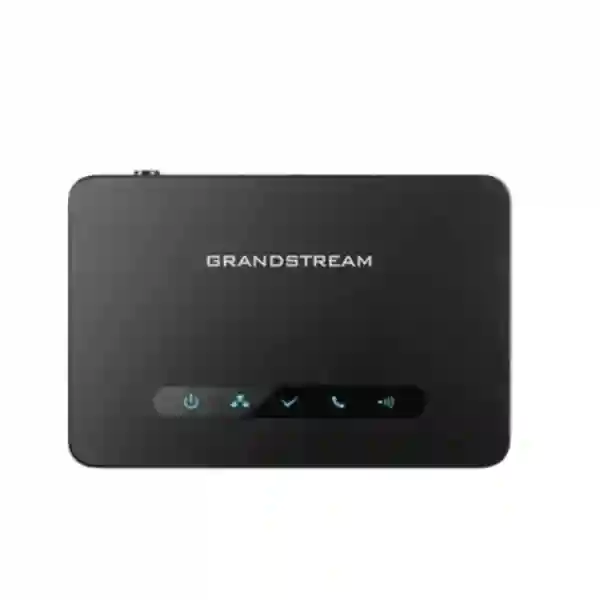
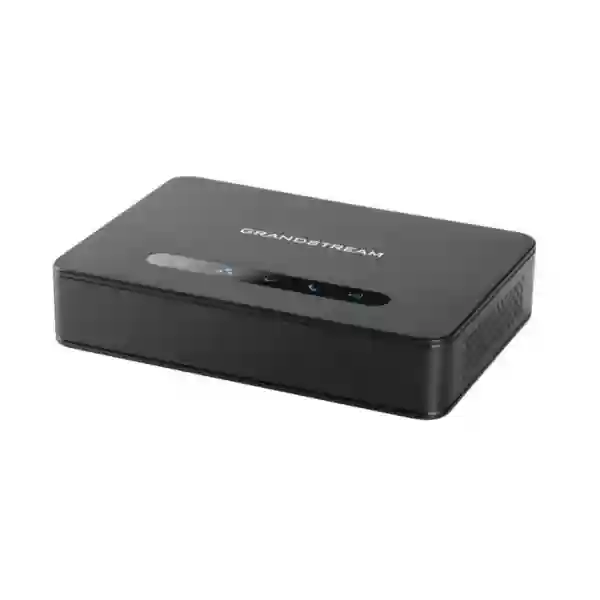
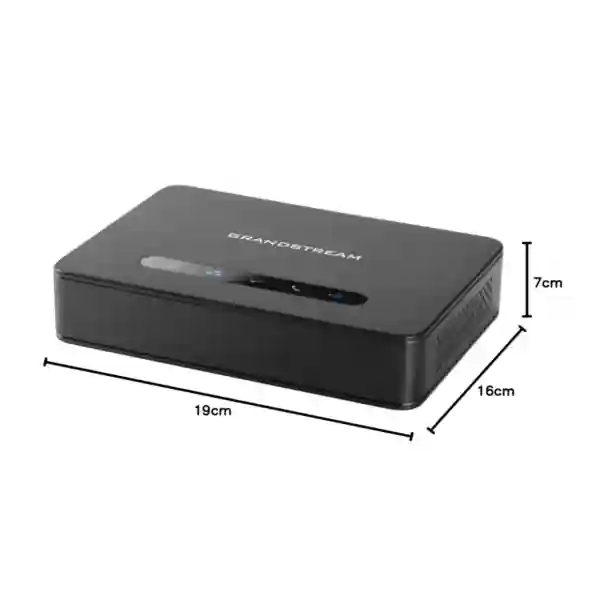
Grandstream DP760 Long-Range Wideband DECT Repeater
The Grandstream DP760 is built for organisations that already use, or are planning, a compatible Grandstream DP-series DECT voice system and need cordless coverage beyond the natural reach of the base station. The repeater can extend coverage by up to 300 metres outdoors and 50 metres indoors, supports up to two concurrent HD calls, and includes a 10/100 Mbps Ethernet interface with Power over Ethernet. For Tanzania deployments, the practical value is straightforward: staff can remain reachable while moving through offices, warehouses, hospitality properties, clinics, retail environments and operational areas where one DECT coverage cell may not be enough.
What the Grandstream DP760 solves
A cordless voice system is only useful where the handset can maintain a stable radio link. Offices with reinforced walls, multi-room hospitality layouts, warehouses with shelving, clinics with long corridors, retail spaces with back rooms and multi-floor buildings can all create practical coverage gaps. The DP760 is a purpose-built DECT repeater that extends a compatible Grandstream DECT deployment without requiring every user to return to a desk phone. Instead of adding a second independent phone system, the repeater extends the existing DECT environment so mobility remains part of the same business communications design.
Grandstream specifies automatic or manual association with supported DP-series base stations, seamless call handover, automatic region detection and XML-based provisioning. The repeater also exposes status and management capabilities over its Ethernet connection. These features matter in business environments because deployment is not only about achieving signal at one point on the day of installation; administrators also need a repeatable way to associate devices, monitor health, upgrade firmware and document how the voice system is arranged.
For buyers comparing a DP760 quotation, the central question is therefore not simply “how far does it reach?” Radio range is always shaped by walls, floors, metal, shelving, people, glass and other site conditions. A better procurement question is “where are the actual DECT weak spots, how many simultaneous calls pass through the repeater, and where can the device be placed with dependable power or PoE?” Answering those points before ordering produces a more predictable result.
Grandstream DP760 verified technical highlights
| Product type | Long-range wideband DECT repeater / wireless relay station |
| Additional range | Up to 300 metres outdoors and 50 metres indoors under supported conditions |
| Concurrent calls | Up to 2 concurrent HD calls |
| Ethernet | One 10/100 Mbps auto-sensing Ethernet port with integrated PoE |
| Voice codecs | G.722 for HD audio and G.726 for narrowband audio |
| Association | Automatic or manual association with supported Grandstream DP-series DECT bases |
| Provisioning | Automated provisioning options include XML configuration files |
| Indicators | Power, network, association, activity and DECT status indicators |
| Operating temperature | -10°C to 50°C |
Frequency bands and regulatory variants differ by region. Procurement teams should confirm that the exact regional unit offered is suitable for the intended country and compatible with the existing base-station environment before purchase.
Deployment and selection guidance
1. Survey the weak area
Walk the expected handset route and identify where calls become unstable. Floors, concrete, metal shelving, machinery and room layout can reduce radio performance, so the theoretical range should never replace a practical site check.
2. Check call capacity
The DP760 relays up to two concurrent HD calls. A location with heavy simultaneous call traffic may require a different capacity plan even if one repeater appears sufficient from a coverage perspective.
3. Plan power and network
The Ethernet interface can provide PoE-based installation convenience and management access. Confirm PoE availability, cable distance, switch capacity, VLAN policy and UPS strategy where voice availability is important.
4. Confirm base compatibility
Check the exact Grandstream DP base model, firmware level and repeater mode before procurement. Compatibility should be confirmed against current Grandstream documentation rather than assumed from the shared DP product family name.
Related Tanzania technology planning
The DP760 sits inside a broader voice and network environment. Buyers can review the FourTeck Tanzania technology shop for business telephony, networking and infrastructure categories. For larger deployments, the FourTeck Tanzania services page provides context around design, installation and support-oriented project work. Regional organisations with connected operations can also review FourTeck Kenya and FourTeck Uganda when planning related technology requirements in neighbouring markets.
These links are useful because DECT coverage is rarely an isolated purchase. The voice network may depend on PoE switching, cabling, IP PBX configuration, voice VLANs, QoS, UPS protection and compatible handsets. A quotation should therefore identify both the repeater and the supporting environment needed to make it work reliably.
Regional procurement and deployment guidance
Grandstream DP760 Tanzania
For organisations searching for the Grandstream DP760 in Tanzania, the repeater is most relevant when an existing or planned Grandstream DECT installation needs more practical mobility than a single base station can provide. Typical candidates include business offices, hospitality properties, medical facilities, schools, retail environments, logistics operations and warehouses where users need to carry a cordless handset while moving between work areas. The DP760 can add up to 300 metres of outdoor range and 50 metres indoors, but those figures should be treated as design limits rather than guaranteed site results because Tanzanian buildings vary widely in wall construction, floor thickness, room density and the amount of metal or shelving in the radio path.
A sensible Tanzania procurement process begins with the current voice environment. Confirm the DP-series base station in use, firmware version, handset models, number of users and how many concurrent calls may pass through the weak-coverage area. The DP760 supports up to two concurrent HD calls, so capacity matters as much as signal strength. A warehouse with several roaming staff members can have very different needs from a small office where one person occasionally walks into a back room. If the existing network already has PoE switching, the repeater’s Ethernet and PoE support can simplify placement and reduce dependence on a nearby power outlet. Where uptime matters, the switch and PBX may also need UPS protection.
Before requesting a Tanzania quotation, share the site type, number of floors, approximate distances, key obstacles, current Grandstream base model and where users currently lose signal. It is also useful to state whether the project is a new installation or an extension of a working DECT system. FourTeck can then frame the request around coverage, compatibility and supporting network requirements instead of treating the DP760 as a stand-alone accessory. For mixed voice projects, include the number of extensions, reception requirements, SIP or IP PBX environment and any branch communication needs so the repeater forms part of a scalable business telephony design.
Grandstream DP760 Dar es Salaam
Dar es Salaam businesses often combine office areas with reception zones, storage rooms, workshops, retail floors or multi-tenant building layouts, making cordless voice coverage a practical operational question rather than a specification-table exercise. The Grandstream DP760 is useful where a compatible DP-series base provides adequate service in the core area but staff experience weak DECT coverage when moving farther through the premises. Examples can include a receptionist who needs to walk to a back office, supervisors moving through warehouse aisles, hospitality staff crossing service areas, or technical teams working across adjacent rooms where desk phones would limit mobility.
For Dar es Salaam deployments, building materials and vertical separation deserve special attention. Concrete columns, reinforced slabs, tinted glass, metal partitions and dense shelving can all affect radio propagation. A repeater should therefore be positioned where it still receives a strong, stable link from the base or upstream repeater while extending useful coverage into the required area. Placing the unit at the far edge of an already weak signal is rarely the best approach. Where Ethernet cabling is available, PoE can make placement cleaner because the device does not need a separate nearby mains adapter. That can be useful in corridors, equipment areas or wall locations chosen primarily for radio performance.
When requesting a DP760 quote in Dar es Salaam, provide a basic floor plan or simple description of the route users take, the approximate dimensions, current base location and whether calls fail at a specific doorway, floor, warehouse bay or outdoor transition. Also estimate the number of simultaneous roaming calls. The DP760 relays up to two concurrent HD calls, and that limit should be assessed before using repeaters as the answer to a high-call-density problem. If the wider project includes IP PBX, switching or cabling changes, the design should account for voice VLANs, QoS, PoE budget and power resilience so the cordless layer is supported by a reliable network underneath.
Grandstream DP760 Mwanza
In Mwanza, the Grandstream DP760 can be a practical extension device for organisations that need cordless voice mobility across a larger working footprint. Business sites may include offices linked to stock rooms, hospitality spaces with several service zones, healthcare environments, educational campuses, retail operations or light industrial areas where employees move beyond the reliable coverage area of a single DECT base. The repeater is not a replacement for the base station or PBX; its role is to relay supported DECT traffic and extend the usable cordless coverage zone for compatible Grandstream deployments.
Site geometry should drive the Mwanza design. Long corridors, changes in floor level, thick masonry, metal doors and storage racks can create sharp differences in signal strength over short distances. Grandstream publishes additional range figures of up to 300 metres outdoors and 50 metres indoors, but these values are best used as planning references. Real installations should be checked along the actual handset path. If staff need to move from an office into a warehouse, for example, the doorway and building envelope may become the critical transition point. A strategically placed repeater can be more useful than simply locating it halfway by distance.
Procurement teams in Mwanza should also consider maintenance and network access. The DP760 includes Ethernet connectivity for PoE and remote functions such as provisioning, status monitoring and firmware upgrades. This makes structured cabling and managed switching part of the conversation. Before ordering, confirm the existing DP base, software level, power method, expected number of simultaneous calls and whether there is a managed PoE switch nearby. If the site uses generator or UPS-backed network infrastructure, determine whether the repeater should remain powered during short electricity interruptions. A good quotation request includes these environmental details so the product can be assessed as part of the operational voice system rather than purchased on range alone.
Grandstream DP760 Arusha
Arusha organisations looking at the Grandstream DP760 often have a clear mobility requirement: staff need a cordless extension to remain usable across guest areas, offices, stores, compounds, training facilities or operational spaces where a single DECT base does not reach consistently. Hospitality is a particularly natural use case because users may move between reception, administration, service corridors and back-of-house areas. The same principle applies to clinics, schools, offices and warehouses. The DP760 extends the radio layer of a supported Grandstream DP-series system while preserving the convenience of cordless business calling.
The correct placement in Arusha should be based on signal quality and site construction. Open areas may allow much longer practical reach than indoor spaces divided by concrete, brick, metal or treated glass. Grandstream’s published limit is up to 300 metres outdoors and 50 metres indoors for additional range, but a site survey remains important because every wall and floor changes the RF path. The most useful location is usually one that maintains a dependable connection to the base while opening coverage into the target area. Where multiple directions require extension, the design should also consider the supported repeater topology and call-capacity needs rather than assuming one unit can solve every coverage problem.
For an Arusha quotation, include the number and type of users, current DP base model, handset models, number of floors, approximate distances and areas where call quality drops. If the project is new, it can be more efficient to plan base, handset and repeater placement together rather than adding repeaters after installation. The DP760’s PoE capability can simplify deployment when structured cabling reaches the chosen position. Administrators should also plan firmware management and documentation so future troubleshooting is straightforward. By combining radio coverage, call capacity and network readiness, buyers can decide whether the DP760 is the right extension device for the site instead of treating it as a generic wireless booster.
Grandstream DP760 Dodoma
For Dodoma offices, institutions and operational sites, the Grandstream DP760 can extend cordless voice coverage when supported Grandstream DECT users need to move beyond the central base-station area. The requirement may arise in administrative buildings with long corridors, stores connected to an office, educational facilities, clinics, hospitality properties or multi-room business sites. Rather than adding a separate mobile service for internal movement, a DECT repeater can help keep users on the existing IP telephony environment, provided the underlying base station, handsets and firmware are compatible.
Dodoma buyers should evaluate both physical coverage and operational continuity. Walls, floor slabs, metal cabinets, rack rooms and building geometry may reduce indoor range, while outdoor paths can perform much better where there is clearer line of sight. The DP760 is rated to extend coverage by up to 300 metres outdoors and 50 metres indoors. It also supports up to two concurrent HD calls, so a department that expects several simultaneous roaming conversations should include capacity in the design. Coverage that looks sufficient on a floor plan can still become a bottleneck if too many calls need the same repeater.
The Ethernet interface and PoE support can be useful in structured business networks because installation can be aligned with existing cabling and managed switching. Before requesting a Dodoma quotation, identify the preferred repeater location, whether a PoE port is available, whether the voice system uses a dedicated VLAN, and whether network devices are UPS-backed. Also provide details of the existing Grandstream DP base and current firmware. For new deployments, share the expected user count, movement paths and voice-system objectives. A complete request allows the repeater to be sized within the wider IP PBX and network architecture, reducing the risk of buying hardware that cannot be positioned correctly or does not match the actual concurrent-call requirement.
Grandstream DP760 UAE
In the UAE, the Grandstream DP760 is relevant to organisations that use compatible Grandstream DECT platforms in offices, warehouses, hospitality venues, retail environments and service facilities where staff move across a larger footprint. The main procurement need is usually not another handset but a stronger coverage plan. A supported repeater can extend the existing DECT radio environment and preserve a single business-calling workflow for roaming users. Grandstream specifies up to 300 metres of additional outdoor range and 50 metres indoors, together with support for up to two concurrent HD calls.
UAE deployments can include modern glass-and-concrete office towers, large warehouses with dense metal racking, villa-style premises, showrooms and hospitality spaces. Each creates different RF behaviour. Metal structures and reinforced concrete can significantly attenuate DECT signals, while open warehouse aisles or outdoor service areas may offer longer reach. The design should therefore use actual user movement and signal measurements rather than assume that the headline range applies uniformly. The repeater should maintain a stable link to the base or supported upstream topology while extending service into the target zone.
Procurement teams should also verify the regional hardware variant and frequency requirements for the destination. Do not assume that a unit sourced for another market is automatically appropriate. Confirm the compatible Grandstream base model, firmware, PoE availability and expected simultaneous call load. The DP760’s Ethernet connection can support PoE as well as management functions such as provisioning, status monitoring and firmware upgrades, which is useful in centrally managed business networks. When requesting a UAE quotation, include base-station details, floor plan, target coverage area and whether the site needs installation or only hardware supply. This creates a more meaningful comparison between quotations than evaluating unit price without deployment assumptions.
Grandstream DP760 Uganda
Uganda buyers considering the Grandstream DP760 are usually trying to solve a coverage gap inside a compatible Grandstream cordless VoIP system. The repeater can be useful for offices, hotels, clinics, schools, warehouses, retail environments and branch operations where employees need to carry a DECT handset beyond the practical range of the base station. Grandstream positions the DP760 as a wideband DECT repeater with up to 300 metres of additional outdoor range, up to 50 metres indoors and support for as many as two concurrent HD calls.
A useful Uganda design starts with the actual building rather than the catalogue figure. Thick walls, stairwells, concrete floors, metal shelving, equipment rooms and crowded spaces can reduce propagation. The repeater should be placed where it still receives a dependable DECT signal and can project coverage into the weak area. If a warehouse or campus needs coverage in several directions, the project should be mapped before ordering so the number and placement of repeaters align with the supported topology and voice traffic. A single unit may be enough for one dead zone but not for several separated zones.
For procurement, confirm the Grandstream DP base model, handset family, firmware, available Ethernet and PoE, call density and expected movement path. The Ethernet connection can provide PoE and remote management functions, so a managed switch may simplify installation. If the broader voice solution includes IP PBX, SIP trunks, switches or branch connectivity, include those requirements in the quotation request. Organisations operating across East Africa can also use the FourTeck Uganda site as a regional reference point for related IT and communications planning. The final objective should be a stable, documented cordless voice environment, not simply the addition of a repeater without testing.
Grandstream DP760 Kampala
Kampala businesses often operate from multi-floor offices, commercial buildings, retail spaces, hospitality venues and mixed-use premises where internal mobility matters. In a supported Grandstream DECT system, the DP760 can extend coverage into areas where handsets lose a stable link to the base. The device is particularly useful when users need to stay reachable while moving between reception, departments, meeting areas, stock rooms or back-of-house spaces. Because the repeater relays the existing DECT system, users do not need to switch to a separate communication platform simply to cover a difficult part of the site.
Dense urban buildings can create challenging radio conditions. Reinforced concrete, elevators, metal fire doors, glass, partitions and equipment rooms all influence signal behaviour. The published 50-metre indoor extension is therefore a maximum planning reference rather than a fixed radius. A Kampala site survey should identify exactly where call quality falls and find a placement point that receives adequate signal while improving coverage beyond that boundary. For multi-floor projects, vertical attenuation through slabs may require a different approach from extending along a corridor or open office.
The DP760 supports up to two concurrent HD calls, so call traffic should be included in the decision. A hotel service floor with several roaming staff may need more capacity planning than a small office where one manager moves between rooms. The repeater’s PoE support is useful where Ethernet is already installed, allowing flexible placement and centralised power. Before ordering in Kampala, provide the current base model, firmware, number of handsets, expected simultaneous calls and any PoE/network limitations. If installation is required, floor plans and photos of the intended area can help shape a better quotation. The goal is to connect product selection with the real coverage and capacity problem rather than using distance alone as the purchase criterion.
Grandstream DP760 Arua
Arua organisations may consider the Grandstream DP760 when a cordless VoIP system needs to cover a larger operational area without adding separate phone lines or forcing users back to fixed desk positions. The repeater is designed for supported Grandstream DP-series DECT environments and can extend radio coverage to areas such as remote offices, stores, reception zones, clinics, schools, hospitality facilities and compounds where staff movement is part of daily work. Its value is strongest when the existing system already performs well near the base but becomes unreliable at a predictable boundary.
Planning in Arua should account for the physical layout and power/network availability at the intended repeater location. The DP760 can add up to 300 metres outdoors and 50 metres indoors, but walls, roofs, doors, metal structures and vegetation or people can influence real performance. A practical test with the existing handset can help identify where the base signal begins to weaken. The repeater should be positioned before that point so it can receive and relay a strong signal rather than trying to rescue coverage after the radio link has already become unstable.
The device’s Ethernet interface supports PoE and remote functions, which can be helpful when the site has structured cabling and a managed switch. Where the network is simple, buyers should still confirm how the repeater will be powered and managed. Capacity is equally important: the DP760 supports up to two concurrent HD calls. Before requesting an Arua quotation, state how many users carry DECT handsets, how often they make simultaneous calls and which areas they need to reach. Also include the exact Grandstream base model and firmware where possible. This information helps distinguish a genuine repeater requirement from a larger redesign involving base placement, multiple coverage zones or a different cordless voice architecture.
Grandstream DP760 Mbarara
In Mbarara, the Grandstream DP760 can support businesses and institutions that need reliable cordless calling across office, hospitality, health, education, warehouse or retail environments. A compatible Grandstream DECT base may cover the core workspace well while leaving weaker zones behind thick walls, across corridors or in attached operational areas. The DP760 is designed to extend that existing DECT coverage rather than act as an independent base station. This distinction matters because buyers should confirm the current Grandstream platform before ordering.
A good Mbarara deployment combines coverage planning with call-capacity planning. Grandstream specifies up to 300 metres of additional outdoor range and 50 metres indoors, but the actual result depends on construction and interference conditions. At the same time, the repeater supports up to two concurrent HD calls. A site can therefore have excellent radio coverage but still require more careful design if several roaming users routinely make calls at once. The quotation should reflect both dimensions instead of assuming that a single repeater automatically expands every aspect of the system.
PoE can be an advantage where the site has Ethernet cabling, because the repeater can be positioned for radio performance without requiring a conveniently located mains outlet. It also provides a path for provisioning, status monitoring and firmware updates. Procurement teams should check PoE switch capacity, UPS requirements and network policies if the voice system is business-critical. When requesting a DP760 price or quotation in Mbarara, include a description of the weak-coverage area, approximate distances, base-station model, handset models and expected simultaneous call count. For a new deployment, provide the building layout and user movement patterns so the base and repeater arrangement can be designed together. This reduces later relocation work and gives administrators a cleaner system to document and maintain.
Grandstream DP760 Gulu
Gulu customers looking for a Grandstream DP760 are often planning or extending a cordless IP telephony deployment for a site where users need freedom to move. The repeater can suit offices, education facilities, clinics, stores, hospitality properties and operational environments in which a compatible Grandstream DECT base provides good local service but cannot consistently reach every required area. By relaying the DECT signal, the DP760 allows the voice system to cover more of the real workplace rather than concentrating communication around fixed desk positions.
Site construction should guide the Gulu installation. Open compounds and outdoor service areas may allow significantly longer paths than buildings divided by masonry, concrete and metal. Grandstream publishes up to 300 metres of additional outdoor range and 50 metres indoors, but these are maximum figures under supported conditions. A practical deployment should identify the point where handset performance begins to deteriorate and place the repeater where it retains a stable upstream connection. If the target area is separated by several heavy barriers, moving the repeater a relatively short distance can make a major difference.
The DP760’s limit of up to two concurrent HD calls should be reviewed for busy departments. If only one or two staff roam through the extended area, the repeater may fit well. If many users make simultaneous calls, the system may need a broader capacity discussion. Ethernet with PoE can simplify installation and provide remote management features, provided the network reaches the chosen position. Before requesting a Gulu quotation, document the Grandstream base model, firmware, handset count, weak areas, expected call volume and available PoE. If the project also involves IP PBX or switching, include those requirements so the voice system can be evaluated end to end. Clear information at procurement stage produces a more predictable installation and easier future support.
Grandstream DP760 Kenya
Kenya organisations can use the Grandstream DP760 to extend compatible Grandstream DECT voice coverage in offices, warehouses, hotels, medical facilities, schools, retail sites and other locations where employees move beyond the range of a single base station. The product is best evaluated as part of a complete DECT design: base station, handsets, repeater placement, IP PBX, network switching and power resilience all influence the final user experience. Grandstream specifies up to 300 metres of additional outdoor coverage and 50 metres indoors, plus support for up to two concurrent HD calls.
Large Nairobi offices and warehouses, branch operations in other counties and hospitality or logistics sites can present very different radio environments. Metal racks, reinforced floors, partitioned offices and long corridors may reduce the effective range. The repeater should sit inside a strong part of the existing coverage cell while extending service toward the problem area. If the design requires several coverage zones, the supported repeater arrangement and call limits should be considered before procurement. Adding hardware without a coverage map can create overlapping or poorly placed cells without solving the real weak spot.
The Ethernet interface and PoE support are useful for managed networks because they allow centralised power and remote functions including status monitoring and firmware upgrades. Buyers should confirm the regional DECT variant, exact Grandstream base compatibility, firmware and PoE switch readiness. For related regional technology planning, the FourTeck Kenya website provides a local reference point. A useful Kenya quotation request should include the exact DP base model, handset count, approximate floor plan, target coverage area and simultaneous call expectation. This makes it easier to determine whether the DP760 is the right extension device or whether the deployment requires a broader redesign of base placement, capacity or network infrastructure.
Grandstream DP760 Kuwait
Kuwait businesses considering the Grandstream DP760 typically need to improve cordless voice mobility in a supported Grandstream DECT environment. Office suites, warehouses, workshops, retail operations and hospitality spaces can all develop coverage gaps when walls, storage systems or building geometry block the base-station signal. The DP760 acts as a wideband DECT repeater, extending supported coverage without creating a separate phone platform. Grandstream publishes an additional range of up to 300 metres outdoors and 50 metres indoors and specifies support for up to two concurrent HD calls.
For Kuwait projects, buyers should pay attention to the physical environment and regional hardware version. Radio regulations and DECT frequency variants are not identical in every market, so the exact unit offered should be confirmed for its intended destination. Indoors, reinforced concrete and metal can reduce usable range significantly. In warehouses, rows of racking can create directional coverage behaviour that is not obvious from straight-line measurements. A repeater survey should therefore follow the route that users actually take rather than assume a circular coverage radius around the device.
PoE can improve installation flexibility because the DP760’s Ethernet port can receive power from a suitable switch while supporting management functions. Procurement teams should check whether the intended switch provides compatible PoE, whether that switch is backed by UPS power, and whether the voice network uses dedicated VLAN or QoS policies. They should also confirm the Grandstream base model, firmware and expected call traffic through the repeater. A quotation request should separate hardware quantity from installation assumptions: include site dimensions, floor count, wall types, target areas and any existing cabling. This level of detail helps avoid purchasing a repeater that is technically correct but positioned badly or undersized for the expected call activity.
Grandstream DP760 Ghana
Ghana organisations can consider the Grandstream DP760 when a compatible DP-series cordless VoIP system needs greater coverage for roaming staff. The product fits environments where internal movement is important: offices with separated departments, hotels with service zones, clinics, schools, shops, warehouses and operational facilities. The repeater does not create new SIP accounts or replace the voice platform. Its purpose is to extend the DECT radio coverage available to supported handsets through the existing Grandstream architecture.
Coverage design in Ghana should recognise that the published range is conditional. Grandstream specifies up to 300 metres outdoors and 50 metres indoors, but concrete, brick, metal roofs, shelving, tinted glass and crowded spaces can attenuate the signal. The site should be tested along the expected handset route. If the weak area sits beyond several structural barriers, a repeater placed just before those barriers may perform better than one located purely by distance. The target is a strong upstream DECT connection plus useful downstream coverage, not the longest possible physical separation from the base.
Call capacity is another procurement factor. The DP760 supports up to two concurrent HD calls, so the extended area should be assessed for the number of users likely to speak at the same time. Ethernet and PoE support can simplify power and management where structured cabling is available. Before requesting a Ghana price or quote, state the exact Grandstream base model, handset family, firmware, site layout, PoE availability and simultaneous-call requirement. For new projects, include the broader IP PBX and network context. This helps determine whether the DP760 is enough or whether the organisation should adjust base placement, add additional supported infrastructure or review the overall cordless voice architecture before hardware is ordered.
Grandstream DP760 Nigeria
Nigeria buyers searching for the Grandstream DP760 are usually looking for a dependable way to expand cordless business calling across a site without abandoning an existing compatible Grandstream DECT platform. Offices, warehouses, hospitality locations, clinics, schools, retail chains and operational facilities can all benefit when staff need to move through areas that sit outside the practical coverage of the primary base station. The DP760 is designed as a wideband DECT repeater and can extend supported coverage while preserving the existing handset and voice-system workflow.
The published specification of up to 300 metres outdoors and 50 metres indoors should be interpreted alongside the building. Nigeria sites range from open industrial compounds to dense commercial buildings with concrete, steel, partitions and equipment rooms. These materials can shape the radio path dramatically. The repeater should be deployed where it can still receive a strong DECT signal and then extend that signal into the required area. For multi-floor buildings, vertical coverage may need different placement from a same-floor corridor or warehouse expansion. A simple test with the existing handset can often identify the transition point that needs attention.
The DP760 supports up to two concurrent HD calls, so high-traffic roaming teams should not make a coverage-only decision. The Ethernet connection provides PoE capability and management functions, giving network administrators more control over installation and updates. Before requesting a Nigeria quotation, confirm the exact DP-series base station, firmware, handset count, number of simultaneous calls, available PoE ports and any UPS requirements. Also confirm the regional hardware variant. A useful procurement document can include a basic floor plan, photos, current base location and weak areas. This enables a supplier or integrator to discuss realistic placement and supporting network requirements rather than offering a unit price that says nothing about whether the repeater will solve the actual business problem.
Grandstream DP760 Seychelles
In Seychelles, the Grandstream DP760 can be useful for hospitality properties, offices, service businesses, clinics, retail environments and other sites where staff need cordless voice coverage across several rooms or operational zones. Resorts and hospitality facilities can be especially demanding because guest-facing areas, service corridors, reception, administration and back-of-house spaces may be separated by walls, landscape features or different building wings. A compatible Grandstream DECT deployment can use the DP760 to extend coverage while keeping staff on the same internal business calling system.
The physical layout should shape the design. Open outdoor paths can behave very differently from indoor spaces with concrete, masonry, metal and glass. Grandstream specifies additional coverage of up to 300 metres outdoors and 50 metres indoors, but real-world performance depends on the radio path. In a multi-building hospitality property, the question may not be raw distance alone; the transition between buildings, doors, walls and elevation can become the limiting factor. The repeater should remain within a dependable upstream coverage zone while providing a stronger signal to the desired destination.
Seychelles buyers should also consider service continuity and installation access. The DP760 includes an Ethernet port with PoE, allowing central power from a compatible switch and supporting remote provisioning, monitoring and firmware management. This can reduce the need to place the device close to a separate mains socket. However, the PoE switch, cabling and UPS strategy should match the importance of the voice service. Before requesting a quote, share the Grandstream base model, firmware, number of handsets, simultaneous-call expectations, site layout and intended repeater location. For hospitality projects, identify which staff groups need mobility and which zones are operationally critical. This makes the procurement decision more precise and helps determine whether one repeater is sufficient or whether a wider DECT coverage design is needed.
Quotation checklist for the Grandstream DP760
Grandstream DP760 FAQ
What is the Grandstream DP760?
The DP760 is a long-range wideband DECT repeater designed to extend the cordless coverage of supported Grandstream DP-series DECT systems. It relays the DECT radio connection rather than acting as an independent IP PBX or desk phone.
How much range does the DP760 add?
Grandstream specifies up to 300 metres of additional outdoor range and up to 50 metres indoors. Real performance depends on walls, floors, metal, shelving, people, interference and repeater placement, so a site survey is recommended.
How many calls can the DP760 handle?
The DP760 supports up to two concurrent HD calls. This capacity should be considered when designing coverage for departments or roaming teams that may make several calls at the same time.
Does the DP760 support Power over Ethernet?
Yes. Its 10/100 Mbps Ethernet interface includes PoE support, which can simplify placement when a compatible PoE switch and Ethernet cabling are available.
Can I use the DP760 with any cordless phone?
No. The DP760 is designed for supported Grandstream DP-series DECT deployments. The exact base-station model, firmware and regional variant should be confirmed before purchase.
Where should a DP760 repeater be installed?
Install it where it still has a strong upstream DECT connection but can extend useful coverage toward the weak area. Avoid choosing a location only by physical distance. Site construction and radio obstacles matter.
What information should I send for a quotation?
Provide the exact Grandstream base model, handset count, firmware, location, site type, floor plan or approximate dimensions, weak-coverage area, expected simultaneous calls, PoE availability and whether installation or configuration is required.
Decision recap
Choose the Grandstream DP760 when your supported Grandstream DECT system works well near its base station but needs better cordless reach into one or more adjacent areas, and when up to two concurrent HD calls through the repeater meet the traffic requirement. Confirm exact base compatibility, regional hardware variant, firmware and PoE before ordering. If coverage problems are caused by several separated zones, heavy structural attenuation or higher call density, treat the project as a DECT design exercise rather than assuming one repeater will solve every limitation.
Plan the DP760 around your actual site
Send FourTeck the current Grandstream base model, number of handsets, weak-coverage areas, expected simultaneous calls and any floor plan or site measurements. This lets the discussion focus on whether the DP760 is the right coverage extension, where it may be positioned, and what PoE, cabling or voice-network dependencies should be included.




Reviews
There are no reviews yet.