
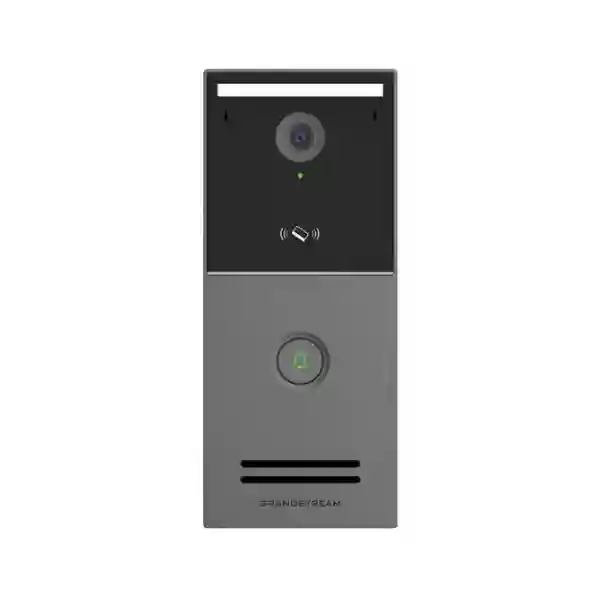
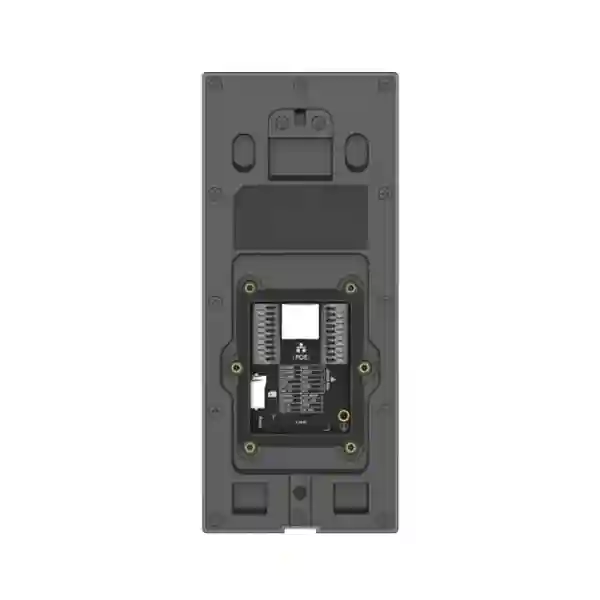
Grandstream GDS3726 Smart IP Video Door Station Tanzania
The Grandstream GDS3726 brings door access, visitor communication and entrance video into one IP-connected device. It is designed for organisations that want more than a basic doorbell: the unit can participate in SIP communication, present live entrance video, authenticate users through several credential methods, trigger door hardware through solid-state relays and connect with security-management workflows. For offices, schools, apartment buildings, hospitality sites, warehouses, clinics and other controlled premises, this combination can reduce the number of separate devices required at an entrance while keeping the design compatible with network-based security and communication systems.
4MP HDR image sensor with video up to 1920 × 1080 and a wide 127° horizontal / 152° diagonal field of view.
RFID, NFC, BLE 5.0, SecureAccess application, QR-code and SIP-call access workflows.
IP66 weather protection, IK10 vandal resistance, PoE, ONVIF Profile S, two solid-state relays and Wiegand/RS485 expansion.
What the Grandstream GDS3726 is designed to solve
A secure entrance usually involves several functions: a visitor needs a way to call someone inside, authorised staff need a convenient way to unlock the door, the security team may want a visual record of activity, and the door hardware needs a controlled method of release. The GDS3726 addresses these functions as an IP video door station rather than as an isolated reader. Its SIP capabilities allow the entrance to behave as a communication endpoint, while video and access-control functions support security operations. This makes the product especially relevant where a business already uses IP networks, SIP telephony, managed switching, CCTV recording or centralised security administration.
The official Grandstream platform positions the GDS3726 within the GDS372x facility-access family. The model uses a 1/3-inch 4MP HDR image sensor, an F2.2 lens and up to 1080p video at 30 frames per second. Its wide field of view is useful at entrance points where a narrow camera can miss people standing close to the door or slightly off centre. Grandstream also specifies AI ISP image processing, wide dynamic range up to 120 dB, white-light illumination, PIR support and AI-based motion detection. These are entrance-focused features, but their value depends on placement, lighting and the physical geometry of the doorway, so installation planning remains important.
The access-control side is equally important. The GDS3726 supports RFID credentials, NFC, Bluetooth Low Energy, QR-code workflows, SIP calls and remote opening methods through supported platforms. Two solid-state relay outputs can be used in a properly designed door-control circuit, while alarm inputs and outputs allow integration with relevant external security devices. Wiegand 26/34 input and output plus RS485 extend integration possibilities. For network connection, the unit provides 10/100 Ethernet with integrated PoE. A microSD card of up to 256GB is supported, while ONVIF Profile S and RTSP interoperability can help when integrating video with compatible third-party recording platforms.
Video at the doorway
A 4MP HDR sensor, 1080p stream, wide-angle optics and WDR support help the door station capture an entrance scene that often contains difficult backlighting and short subject distance.
Credential flexibility
RFID, NFC, BLE, QR codes and supported app/SIP workflows provide several ways to design staff, visitor and remote-release processes without relying on one credential type.
Network integration
PoE simplifies cabling, SIP supports intercom communication, and ONVIF Profile S makes the entrance video more suitable for integration with compatible surveillance infrastructure.
Outdoor resilience
IP66 and IK10 ratings make the model suitable for many exposed doorway conditions when the complete installation, sealing, mounting and associated door hardware are executed correctly.
Technical specification guide for procurement
| Camera | 1/3-inch 4MP HDR image sensor; video up to 1920 × 1080; up to 30 fps |
| Lens / field of view | F2.2; approximately 127° horizontal, 70° vertical, 152° diagonal |
| Imaging features | HDR, WDR up to 120 dB, white-light illumination, PIR, AI ISP and AI-based motion detection |
| Audio / intercom | Two microphones, 3W speaker and SIP-based communication features |
| Access methods | RFID, NFC, BLE, QR code, SecureAccess app workflows and SIP call / supported remote methods |
| Door / alarm interfaces | Two solid-state relays, three alarm inputs, two alarm outputs, Wiegand 26/34 input/output and RS485 |
| Network | 10/100 Mbps Ethernet with integrated PoE; SIP networking and management functions |
| Storage / interoperability | microSD up to 256GB; ONVIF Profile S and RTSP support for compatible video systems |
| Protection | IP66 weather protection and IK10 vandal resistance |
| Operating temperature | -30°C to +60°C, subject to correct installation and environmental design |
Compatibility, integration and deployment planning
A GDS3726 purchase should be planned as part of a door system, not just as a standalone network device. The final design may also require an electric strike or magnetic lock, door contact, request-to-exit device, emergency release arrangement, power supply, PoE switch, UPS, structured cabling and appropriate network configuration. Lock choice depends on the actual door, fire-safety obligations, fail-safe or fail-secure behaviour and local building requirements. These details cannot be determined from the door-station model alone. A site survey or at least a complete door schedule helps procurement teams avoid missing components that can otherwise delay commissioning.
For SIP integration, confirm the target IP PBX, extension plan, call routing and the endpoints that should ring when the doorbell is pressed. A reception desk might use a Grandstream or third-party SIP phone, while another project might route entrance calls to several users or to a mobile workflow. Network segmentation should be planned as carefully as on any security endpoint. PoE capacity, VLAN design, IP addressing, NTP, firmware management and controlled administrative access all matter. If entrance video is also recorded, confirm the NVR or VMS supports the intended ONVIF/RTSP workflow and that retention, storage, permissions and privacy policies are defined.
The management model should also match the organisation. Grandstream lists Cloud, SecureAccess Mobile App and GDS Manager options for the current GDS372x platform. Credential administration is easier when there is a clear process for adding staff, revoking lost credentials, issuing temporary visitor access and reviewing events. The technical capability to support thousands of credentials is useful, but good access governance depends on operational discipline. Buyers should therefore consider not only how a door opens on day one, but how access rights will be maintained months and years after installation.
Useful FourTeck resources for a complete deployment
Browse the FourTeck Tanzania technology shop when the door-station project also needs PoE switching, IP phones, access-control components or related business infrastructure. For implementation-oriented requirements, the FourTeck Tanzania services page outlines solution planning, integration and lifecycle support considerations. Organisations evaluating a broader security and communications project can also review FourTeck Tanzania’s solution-led approach to understand how networking, telephony, surveillance and access systems are considered together.
Regional buyers can use the FourTeck Uganda technology portal and FourTeck Kenya technology portal when planning related projects in neighbouring East African markets. These links are provided as regional technology resources; final product availability, commercial terms and project scope should always be confirmed for the exact destination and requirement.
Grandstream GDS3726 Tanzania
For organisations searching for the Grandstream GDS3726 in Tanzania, the strongest use case is usually a controlled entrance where communication, identity and video need to work together. A corporate office may want reception staff to see and speak with a visitor before releasing the door. A school may need controlled staff or administration entrances while keeping visitor calling separate from routine staff entry. A warehouse or logistics facility may want an IP intercom at a gate or protected doorway, while an apartment or mixed-use building may need a door station that can call SIP endpoints inside. The GDS3726 supports this style of design because it combines a video door station, SIP endpoint and access-control interfaces in one outdoor-rated device. Its 4MP HDR sensor and wide view can help at close-range entrance scenes, and its credential options let the project choose RFID, NFC, BLE, QR code or supported mobile/SIP workflows according to the security policy rather than forcing every user into one method.
Tanzania deployments should be specified around the actual site. Entrance exposure, rain, direct sunlight, dust, available shade and mounting height affect performance even when the device itself is IP66 rated. Cable routes should be checked for Ethernet distance, grounding approach, surge exposure and mechanical protection. If PoE is used, the network switch needs a sufficient power budget and ideally UPS backup where continuity is important. If the door station controls an electric lock, the installer should confirm whether the lock is fail-safe or fail-secure, the current draw, the required power supply and the behaviour expected during power loss or emergency release. These issues are separate from the GDS3726 specifications but determine whether the complete door solution behaves correctly in real operation.
Procurement teams in Tanzania should request a quotation that identifies the exact GDS3726 unit, quantities, required credentials, mounting accessories, lock hardware, exit devices, power components, PoE switching, network configuration, PBX integration, recording integration and commissioning scope. Where the organisation already has a SIP PBX or NVR, the make, model and software version should be included so compatibility can be checked before order. Where a project is new, the design should define who receives visitor calls, who can remotely release the door, how credentials are issued, how events are retained and how administrators will update firmware. This level of detail makes the quotation more comparable and reduces the chance of discovering missing dependencies during installation.
The GDS3726 is therefore best evaluated in Tanzania as part of an IP-based entrance architecture rather than only by unit price. The product’s appeal is its ability to connect access control, intercom, surveillance and network management requirements. A successful deployment uses that flexibility without creating unnecessary complexity. For small sites, a simple SIP call flow and a controlled credential list may be enough. For larger organisations, the same platform can fit into more structured access, video and identity processes. In either case, the project should document door behaviour, network design and administration responsibilities before commissioning so the system remains understandable after handover.
Grandstream GDS3726 Dar es Salaam
Dar es Salaam buyers often evaluate smart door stations for offices, commercial buildings, hospitality properties, schools, clinics, warehouses and multi-tenant premises where daily visitor traffic is higher than at a small branch office. In these environments, a single entrance can serve employees, contractors, customers, delivery personnel and guests. The GDS3726 allows the project to separate those workflows. Regular staff can use assigned credentials such as RFID, NFC or supported mobile methods, while occasional visitors can use the doorbell to initiate a SIP call. Temporary access can be handled through controlled methods such as QR code workflows where appropriate. This separation is valuable because visitor access should not require sharing permanent credentials, and staff entry should not always depend on a receptionist manually answering every call.
In Dar es Salaam, installation design should pay close attention to outdoor heat, strong daylight, rain exposure and the physical security of the entrance. The GDS3726’s IP66 and IK10 ratings support demanding doorway use, but the system still needs sensible placement. The camera should not be aimed into an uncontrolled light source if an alternate angle can provide better identification. The mounting height should show faces naturally while keeping the call button accessible. Cables should enter through protected pathways, and any external lock-control wiring should be planned to avoid easy bypass. Where the entrance is separated from the IT room, switch location, copper distance and surge protection become practical design questions. A UPS-backed PoE switch can also help keep the intercom reachable during short utility interruptions, although the door lock and all related power supplies must be included in the resilience plan.
Businesses replacing older analogue intercoms in Dar es Salaam should decide whether the project is a direct device replacement or a broader move to IP-based security. With SIP, the GDS3726 can be incorporated into a phone-system workflow so reception or designated users answer entrance calls on compatible endpoints. With ONVIF Profile S and RTSP support, video may be integrated into a compatible surveillance platform rather than kept as an isolated door camera. These integrations can reduce duplicated infrastructure, but only when network capacity, user permissions and recording policies are planned. The security team should know where live video is viewed, which events are retained and who is authorised to export or review recordings.
A useful Dar es Salaam quotation request therefore includes the building type, number of controlled doors, existing PBX, existing NVR or VMS, lock type, number of regular users, preferred credential method, whether visitor calling must reach one or several destinations, and whether remote unlocking is required. Buyers should also state whether they need installation, configuration, testing, credential enrolment and administrator orientation. This produces a more meaningful comparison than asking only for the price of a GDS3726. The same model can support very different project scopes, from a single reception entrance to a coordinated access-and-video deployment, so the commercial proposal should reflect the complete requirement.
Grandstream GDS3726 Mwanza
In Mwanza, the Grandstream GDS3726 can fit business locations that need controlled entry without separating intercom, access credentials and entrance video into unrelated systems. Potential environments include professional offices, education facilities, clinics, retail back-office entrances, lodging properties, warehouses and private compounds used for business operations. A key planning decision is whether the door station is mainly being installed for staff access, visitor communication, security video or all three. If staff access is primary, credential enrolment and revocation procedures should be defined. If visitor handling is primary, the SIP call flow needs to be reliable and easy for reception or security teams. If entrance video is important, storage, retention and viewing permissions should be decided alongside the hardware purchase.
The GDS3726’s wide field of view is useful for close doorways, but the actual mounting position still needs to match the entrance geometry. A device installed too high can show the top of a visitor’s head rather than the face; one installed too low can be easier to obstruct. Outdoor installations should account for weather exposure and direct sunlight. The IP66 rating protects the product enclosure within its specified conditions, while IK10 provides vandal resistance, yet the supporting junctions, lock cables and power components also need suitable protection. Mwanza projects with longer cable routes should confirm Ethernet distance and network topology before ordering. In larger compounds, it may be better to place managed switching closer to the entrance rather than attempt an unsupported copper run.
Where the site already has IP telephony, the door station can be treated as another SIP endpoint with a specific security role. The PBX can determine where calls are routed and what happens when the first destination does not answer. A receptionist may answer on a desk phone, while another workflow may involve security personnel. The design should avoid giving broad remote-unlock privileges to users who do not need them. Network access controls should also restrict administration interfaces to trusted management networks. If the GDS3726 video is sent to an NVR, camera naming and event documentation should make it easy for operators to distinguish the door station from conventional CCTV cameras.
For Mwanza procurement, ask for a bill of materials that separates the GDS3726 from supporting components. This should identify any electric lock, power supply, door contact, exit button, credential cards or tags, PoE switch, UPS and cabling items required by the design. If existing hardware will be reused, provide model numbers and photographs where possible so assumptions can be checked before quotation. Buyers should also define acceptance criteria: the doorbell should call the correct destination, authorised credentials should unlock the correct door, invalid credentials should be rejected, the door should behave safely on power loss according to the selected lock design, video should appear in the intended monitoring platform, and administrators should receive enough documentation to operate the system after handover.
Grandstream GDS3726 Arusha
Arusha organisations may consider the GDS3726 for hospitality, tourism-related administration, schools, offices, residential management, healthcare, logistics and other sites where visitor handling and staff access meet at the same entrance. Hospitality and service environments can benefit from a door station that allows a visitor or supplier to contact staff without being granted direct access. Office sites can combine that visitor call workflow with credentials for employees. Where a site operates outside normal office hours, the call routing policy can change by schedule through the surrounding SIP environment, while access credentials can remain subject to defined permissions. The important design principle is to decide which user groups need convenience and which areas require stronger control, rather than applying one access method to every door.
The physical installation should consider Arusha’s environmental conditions and the exposure of the specific entrance. Even an outdoor-rated door station performs best when mounting protects connectors and cable entries from unnecessary water pathways and mechanical damage. The GDS3726 is rated IP66 and IK10, but the wall surface, bracket, conduit, junctions and lock wiring are part of the finished security boundary. If the entrance is on a detached gate or perimeter wall, designers should examine how Ethernet, PoE and lock-control circuits reach the device, whether lightning or surge exposure is elevated and how the system behaves when the remote network link fails. In some projects, local door hardware control and central communication need different resilience strategies.
Integration with SIP can be especially useful where staff already rely on IP phones. Instead of installing a separate proprietary indoor monitor for every user, a GDS3726 call can be designed to reach compatible SIP endpoints according to the PBX configuration. That can simplify user experience, but it should be tested with the exact PBX and phones in use. Video interoperability through ONVIF Profile S and RTSP also gives integrators options for compatible NVR or VMS platforms. Recording entrance video can help security investigations, but organisations should apply appropriate access controls and retention policies, particularly where employees, residents, students or guests are recorded.
Arusha buyers preparing a quotation should state whether they need one entrance or multiple doors, how many employees require credentials, what type of lock is installed, whether a PBX already exists, whether the door station must be recorded by CCTV and whether mobile access methods are desired. The proposal should also clarify configuration, credential setup, administrator training, documentation and testing. For hospitality or multi-user properties, it is useful to map who answers calls during daytime, night-time and staff changeover periods. A technically correct device can still deliver a poor experience if calls ring the wrong team or no one knows who owns credential administration, so operational ownership should be part of the project from the beginning.
Grandstream GDS3726 Dodoma
In Dodoma, the Grandstream GDS3726 is relevant to offices, institutions, schools, healthcare facilities, corporate compounds and other properties that need network-based control at an entrance. Government-adjacent and administrative environments often require a clear distinction between staff entry, scheduled visitors and unplanned visitors. A smart video door station can support that distinction when the workflow is designed carefully. Employees can be assigned controlled credentials, visitors can use the doorbell to call a responsible person, and security operators can view the entrance before making a release decision. QR-code or mobile workflows can be considered for temporary access where organisational policy permits them, but the process for issuing and expiring such access should be documented.
The GDS3726 uses a 4MP HDR image sensor and a broad field of view, which can help at entrances with mixed foreground and background lighting. WDR support is particularly relevant where a person stands in shade while the background is bright. Still, the best image comes from appropriate positioning, and the door station should not be expected to solve every lighting problem automatically. Installation teams should evaluate height, angle, proximity to reflective surfaces and whether night-time illumination is sufficient for the required identification task. The PIR and motion-related functions should also be configured based on the actual scene so normal activity does not create excessive events.
Network and security teams in Dodoma should treat the GDS3726 as a managed IP security endpoint. It should receive a controlled IP address, appropriate VLAN placement, strong credentials, current firmware and restricted administrative access. If SIP is used, call routing and codec compatibility should be validated with the PBX. If video is recorded, ONVIF/RTSP integration should be tested with the chosen recorder. The microSD option can provide local storage possibilities within supported configurations, but local media is not a substitute for a complete retention and backup policy where evidence preservation is important. The organisation should define what events are retained, for how long and who may review them.
Procurement teams should request clear scope boundaries. A price for the GDS3726 alone does not indicate whether the quotation includes a lock, lock power supply, exit request, door contact, credential cards, PoE switch port, PBX configuration, NVR configuration, cable installation or commissioning. These items should be shown separately or described unambiguously. If a site already has access-control or telephony infrastructure, the existing models should be recorded so the integrator can assess reuse. The strongest Dodoma project brief combines the security objective, door hardware condition, IT environment and operational workflow in one document. That allows the GDS3726 to be selected and configured as part of a complete entrance solution instead of being purchased first and integrated later.
Grandstream GDS3726 UAE
For UAE deployments, the Grandstream GDS3726 is a practical choice for businesses that want SIP-based visitor communication, credential access and entrance video in a single IP device. Corporate offices, warehouses, clinics, schools, residential facilities and hospitality properties can use the same core model with different workflows. A reception-led office may route the doorbell call to a front-desk phone, while a warehouse may send it to security. A managed residential environment may use RFID, NFC or approved mobile credentials for regular users and reserve SIP calling for guests. The device’s two solid-state relays and external interfaces provide flexibility for door-control design, but local lock, emergency-release and building requirements should be addressed by a qualified installer.
Outdoor UAE entrances can expose equipment to intense heat, direct sunlight and dust, making placement and enclosure design important even when the product carries IP66 and IK10 ratings. The official operating temperature range extends to +60°C, but designers should avoid placing equipment where reflected heat or unventilated enclosures create conditions beyond specifications. Cable pathways should be protected, and any PoE switch or auxiliary power supply should be installed in a suitable technical location. If a gate is far from the main building, the design may require fibre or local switching rather than a long copper run. Surge protection and grounding should be assessed according to the site environment rather than assumed from the device rating.
UAE organisations with existing VoIP systems can use the GDS3726 as part of a SIP communication architecture, provided the target PBX and endpoints are tested. This can be more efficient than deploying a closed intercom system with dedicated indoor stations. The same principle applies to video: ONVIF Profile S and RTSP offer integration paths for compatible surveillance platforms. However, cybersecurity should remain central. The device should not be exposed directly to the public internet, administrative access should be restricted and firmware should be maintained. Where cloud or mobile access is used, account governance and user permissions should be reviewed as part of the security policy.
A UAE quotation should identify exact quantity, door type, lock hardware, credential method, PBX model, NVR or VMS model, mounting environment and any requirement for mobile or QR-code access. Buyers should ask whether the proposal covers configuration, user enrolment, testing, documentation and handover. They should also clarify warranty and support terms rather than assuming they are identical across channels. The GDS3726 can be a strong fit where an organisation values integration, but the business outcome depends on the surrounding system. A well-scoped project connects the device to PoE, telephony, access-control hardware, video recording and user administration in a way that is secure and maintainable.
Grandstream GDS3726 Uganda
Uganda buyers can use the GDS3726 for IP-based access control and visitor intercom at offices, schools, clinics, warehouses, hotels, residential compounds and other controlled sites. The product is especially useful where an organisation already has structured Ethernet and SIP communications or plans to modernise toward them. A single device can present the doorbell, camera, microphone, speaker, credential reader and relay interfaces at the entrance. That reduces the need for separate visitor-video and staff-access devices, although the complete installation still requires correct lock hardware, power, cabling and security policies. The design should start with the door workflow: who may enter automatically, who must call, who can approve entry and how every credential is issued and revoked.
Uganda sites vary widely in network quality and electrical resilience, so the surrounding infrastructure should be assessed. PoE can simplify the device connection by carrying power and data over one cable, but the switch should have adequate power capacity and should be backed by suitable UPS protection if entrance communication needs to continue during short outages. The lock circuit may have a separate power supply and therefore needs its own resilience analysis. Remote gates or detached guardhouses can require different network architecture from an indoor office door. Rather than pushing Ethernet beyond normal copper limits, designers should consider local switching or fibre where distance demands it.
For organisations with an IP PBX, SIP integration can send entrance calls to reception, security or a defined group. Failover routing is worth considering so a visitor is not stranded when the first user is unavailable. The GDS3726 can also work with compatible video platforms using ONVIF Profile S or RTSP, allowing entrance footage to appear in a broader CCTV environment. Administrators should keep door-station access limited to authorised staff and maintain firmware. Credential databases should be reviewed periodically so former employees, expired contractors or lost cards are removed promptly. Technology can enforce access only as well as the identity process behind it.
Uganda procurement requests should state the number of doors, location type, network availability, existing PBX, existing recorder, lock type and expected number of users. If the customer wants RFID cards, NFC, BLE or QR-code access, that preference should be recorded along with how credentials will be administered. The quotation should distinguish equipment from installation, integration and support scope. Regional organisations with operations in several countries should also decide whether they want one common access-control standard across branches. Standardising models and configuration practices can simplify training and spares, but only where each site’s door hardware and compliance requirements are compatible with the same architecture.
Grandstream GDS3726 Kampala
Kampala organisations often have dense office, retail, hospitality and multi-tenant environments where entrances handle a mix of employees, customers, suppliers and service contractors. The Grandstream GDS3726 can make that entrance more manageable by providing SIP intercom and credential access in the same unit. Staff can enter using approved credentials while visitors contact reception or security. For a multi-floor office, the call can be routed through an IP PBX rather than relying on a proprietary indoor monitor located near the door. This is particularly useful where the organisation already uses Grandstream or other SIP-based business communications and wants one network to support voice, access and video services with appropriate segmentation.
A Kampala installation should be planned around the door rather than the product catalogue. The installer needs to identify whether the opening is a glass door, metal door, wooden door, pedestrian gate or another construction, because lock selection and cable routing differ. Door contacts can provide useful status information, while request-to-exit and emergency-release devices may be required by the design. The GDS3726’s solid-state relays are part of the control path, but the lock power circuit should be designed according to current requirements and safety behaviour. If the entrance faces weather directly, mounting and sealing should preserve the product’s outdoor capability and protect surrounding connections.
On the network side, the device should have a documented switch port, VLAN, IP address and administrative owner. PoE simplifies deployment but should not encourage unmanaged placement. The door station handles security-sensitive functions, so configuration backups, firmware maintenance and strong administrator credentials are important. If video is integrated with a CCTV recorder, operators should test live view, recording, time synchronisation and event retrieval. If the PBX handles visitor calls, test call quality, door-release actions and fallback routing from the actual endpoints users will operate. A commissioning checklist should validate both normal and failure scenarios rather than only confirming that the device powers on.
When requesting GDS3726 pricing in Kampala, buyers should provide enough context for a complete quote. Helpful details include the exact door location, whether structured cabling exists, distance to the switch, lock type, number of users, desired credentials, PBX brand, recorder brand and whether remote management is needed. A site visit can be valuable when existing door hardware is unclear. Commercial comparisons should be made on the same scope: one quotation may include only the door station while another includes access hardware, installation and configuration. Separating those components gives procurement teams a clearer view of actual project cost and helps prevent later variation charges caused by omitted door or network items.
Grandstream GDS3726 Arua
For Arua sites, the GDS3726 can support controlled access at offices, education facilities, health facilities, guest properties, warehouses and operational compounds where a networked visitor intercom is preferable to a simple standalone bell. The model’s combination of video, SIP calling and credential methods is useful where staff need reliable day-to-day access but occasional visitors still require approval. RFID or NFC can support regular users, while the doorbell can trigger a SIP call. BLE, QR-code and supported application workflows give additional options for organisations that want to reduce dependence on physical cards. The best choice should be based on how easily credentials can be issued, revoked and supported by the local operating team.
Arua projects should pay attention to infrastructure availability. The GDS3726 can receive PoE through Ethernet, but the cable route must remain within Ethernet standards and be physically protected. Detached gates may require a local network cabinet or fibre link if distance is too great. Power stability also matters: a UPS can support the network switch, but the electric lock and its power supply need to be considered separately. If the door is intended to remain locked or unlocked during a power failure, that behaviour should be chosen deliberately with regard to safety and security, not discovered after installation. The entrance should also have an appropriate mechanical override or emergency path where required.
Because the GDS3726 is an IP endpoint, remote support can be easier than with a purely analogue intercom when the network is designed for secure management. Administrators can use Grandstream management options and appropriate network tools, while video can integrate with compatible ONVIF systems. Remote convenience should not lead to unnecessary exposure, however. Management interfaces should remain on trusted networks or secure access paths, default credentials should be changed and firmware should be reviewed regularly. If the organisation has limited on-site IT staff, handover documentation becomes even more important so local teams know how to add users, remove credentials and report faults.
For an Arua quotation, include the expected user count, preferred access method, door type, existing lock or planned lock, network distance, available PoE, PBX environment and any CCTV integration. If the door station is part of a new building or renovation, coordinate the cabling before finishes are complete. This can reduce exposed conduit and avoid later rework. Buyers should also ask for the exact components included in the price and whether configuration, testing and training are covered. The GDS3726 offers substantial capability, but its value is highest when the operational workflow is simple enough for the local team to maintain without depending on specialist intervention for routine user changes.
Grandstream GDS3726 Mbarara
Mbarara businesses and institutions can use the GDS3726 where a secure entry point needs both visitor interaction and controlled staff access. Offices, schools, medical environments, hospitality facilities and warehouses are examples where this combination can be valuable. The product’s SIP intercom capability means a visitor can call a designated user or group, while staff use a credential such as RFID, NFC or supported mobile access. The wide-angle camera helps show the person at the entrance, and the two-way audio path allows the internal user to verify the purpose of the visit before releasing the door. This is more informative than a basic audio-only bell and more integrated than running separate video and access devices without shared workflow.
Door security should be considered holistically. The GDS3726 may be vandal-resistant, but a weak lock, exposed power supply or poorly protected cable can undermine the entire installation. A Mbarara site survey should inspect the door frame, locking method, exit path and location of the nearest network cabinet. If an electric strike is appropriate, verify alignment and door condition. If a magnetic lock is selected, confirm emergency-release and power-loss behaviour. The design should also determine whether a door contact is required so the system can detect a door left open. These physical details often have more impact on reliability than small differences between door-station specifications.
The network architecture should give the GDS3726 a stable, managed connection. PoE is convenient, but the switch should be selected for power budget and network management rather than only free port count. VLAN segmentation can separate security devices from general user traffic. If a SIP PBX is used, call routing can define primary and backup answer points. If a compatible NVR records video, confirm timestamp alignment and retention. Local microSD storage can provide additional functionality within the supported product design, but organisations that require evidential footage should use a deliberate recording and backup policy rather than relying on removable media alone.
Mbarara procurement teams can improve quotation accuracy by providing photographs of the entrance, approximate cable distances, existing network equipment and the PBX or recorder model. They should state whether they need only supply or a complete installed solution. A complete scope can include device mounting, lock integration, network setup, SIP registration, video integration, credential enrolment, testing and handover. The final acceptance test should involve the actual staff who will use the system: reception should answer a visitor call, security should review the image, authorised users should enter with their credentials and administrators should demonstrate that a lost card or user can be disabled promptly. This converts the technical installation into a usable business process.
Grandstream GDS3726 Gulu
Gulu deployments of the Grandstream GDS3726 can be appropriate for organisations that want an IP-based entrance system capable of growing with the site. A small office might use one door station and a handful of staff credentials, while a larger educational, healthcare or logistics facility may integrate the same model into a wider SIP and surveillance network. This scalability is practical because the door station is not tied to a single purpose: it can present video, two-way audio, access credentials and relay control while connecting to network management and compatible recording systems. The design should nevertheless remain as simple as the operational requirement allows. Adding every available access method is not useful if staff cannot administer them consistently.
At the physical layer, a Gulu installation should consider weather exposure, mounting surface, cable protection and the complete door assembly. The IP66 enclosure protects against specified environmental exposure, and IK10 supports vandal-resistant applications, but a secure installation also hides or protects cabling. If the unit is installed at a gate, ensure the network and power architecture is appropriate for the distance. Long outdoor copper runs can create reliability and surge risks; fibre to a nearby cabinet or properly designed local switching may be more suitable. A door station should also be mounted where users can comfortably reach the call area and where the camera captures faces rather than only the top of a head.
The SIP environment should be configured with user experience in mind. A visitor should not hear endless ringing because the only receptionist is away. Ring groups, sequential routing or schedule-based destinations may improve response, depending on the PBX. Door release should be available only to authorised users, and call logs should be treated according to policy. For surveillance integration, ONVIF Profile S or RTSP can connect video to compatible systems. The security team should test whether the chosen recorder supports the streams and whether recording quality meets the entrance-use objective. The camera is part of the door station, so it should not automatically be assumed to replace every dedicated CCTV camera covering the surrounding area.
When sourcing the GDS3726 in Gulu, define the complete business requirement before comparing prices. State whether the project is a new installation or replacement, whether the door already has an electric lock, whether PoE is available, the number of regular users and the systems that need integration. Ask suppliers to identify optional versus mandatory accessories and to separate labour from hardware where possible. This makes proposals easier to compare. Also request documentation for administrator credentials, network settings and user-enrolment procedures at handover. A secure door system becomes difficult to support when only the installer knows how it was configured, so documentation should be treated as a project deliverable rather than an optional extra.
Grandstream GDS3726 Kenya
Kenya organisations can deploy the GDS3726 as part of an integrated office, campus, warehouse, residential or hospitality entrance solution. The device is particularly attractive where SIP telephony and IP surveillance are already present, because the entrance can be treated as another managed endpoint rather than a completely separate proprietary system. A visitor presses the doorbell and reaches reception or security through SIP, while authorised staff use RFID, NFC, BLE or another supported method. The camera provides a wide view of the entrance, and the door-control relays connect to the access hardware. This design can simplify administration across sites when organisations standardise the way doors, phones and video systems are configured.
Kenya projects should match hardware to the actual door and risk level. A glass office entrance, external steel gate and internal server-room door have different lock requirements. The GDS3726 may be suitable at each from a communications perspective, but the lock, power supply, request-to-exit and emergency-release components will differ. Outdoor installations should protect cable entries and evaluate lightning and surge exposure. The IP66/IK10 ratings are useful, yet a complete system needs appropriately rated junctions and secure cabling as well. Where the device is installed beyond standard Ethernet distance, fibre or an intermediate network design should be used instead of forcing a long copper connection.
For organisations with multiple Kenyan branches, central administration can be a strong reason to choose an IP door-station platform. Standard naming, VLANs, credential policies and firmware practices can make support more consistent. Grandstream’s management options can fit into that operational model, while ONVIF/RTSP compatibility helps with video integration. However, every branch should still have a defined local procedure for emergency access and manual operation if network services are unavailable. A security system should not depend on a remote administrator for every routine situation. The local team needs enough training to recognise device faults, handle visitor calls and revoke a lost credential quickly.
A Kenya quotation should therefore include the technical environment and the desired operating model. Provide the PBX platform, NVR/VMS platform, door construction, lock type, user count, access methods and whether remote mobile workflows are required. If the project spans several branches, state whether configuration templates and documentation should be standardised. Commercial evaluation should consider unit cost, integration labour, supporting hardware, installation quality and lifecycle support. A lower product price can be outweighed by missing lock components or integration work. The GDS3726 is most valuable when the full architecture is budgeted from the beginning and the customer receives a door that is tested as an operational system, not just a network device mounted on a wall.
Grandstream GDS3726 Kuwait
In Kuwait, the Grandstream GDS3726 can serve corporate offices, villas used for professional operations, warehouses, clinics, schools, apartment management and other premises that require controlled entry with video verification. The device’s combination of SIP intercom, 4MP HDR imaging and multiple credential methods can reduce the need to install a separate intercom camera and standalone reader at the same door. Regular users can receive assigned credentials, while visitors can call the responsible internal team. For properties where temporary visitors or contractors are common, supported QR or mobile workflows may provide another option, subject to the organisation’s identity and security policy. The implementation should favour the smallest set of access methods that staff can administer reliably.
Kuwait’s outdoor heat and sun exposure make installation location important. Although the GDS3726 has an official operating-temperature range up to +60°C and carries IP66 protection, direct solar heating on dark surfaces can create harsher local conditions. Where possible, use sensible placement, shading and cable-entry protection while preserving the camera view. Door-station mounting should also avoid reflective surfaces that can degrade images at certain times of day. The supporting lock power supply, PoE switch and any network cabinet should be installed within their own environmental limits. If the door station is placed at a remote boundary wall, network distance and surge protection need special attention.
SIP integration allows visitor calls to reach compatible IP phones or other supported endpoints. Businesses with an existing PBX should test the door station with the exact platform before a large rollout, especially if video calling or remote door-release functions are required. Security teams may also connect the video stream to a compatible ONVIF or RTSP recording platform. The GDS3726 provides strong integration options, but good cybersecurity practice is still required: administrator interfaces should remain restricted, firmware should be maintained, unused services should be reviewed and user privileges should follow role requirements. Entry systems should not be exposed directly to the public internet for convenience.
When requesting GDS3726 pricing for Kuwait, include the intended door type, indoor or outdoor exposure, cable distance, lock requirements, number of users and existing communications or CCTV systems. Confirm whether the quotation covers only hardware or includes installation, configuration, credential setup and commissioning. Businesses should also request documentation of network settings and administrative ownership. If the site is part of a regional organisation, consider whether the same model is used elsewhere and whether a common configuration standard can reduce training. Consistency is useful, but local door hardware, environmental conditions and regulatory expectations should still be validated for each building rather than copied blindly from another country.
Grandstream GDS3726 Ghana
Ghana customers looking at the Grandstream GDS3726 can consider it for businesses that want to combine access credentials, intercom and entrance video in an IP-connected format. Offices, schools, health facilities, warehouses, apartment management, hospitality and professional premises can all have a similar core need: authorised users should enter efficiently, while unknown visitors should communicate with someone inside before the door is released. The GDS3726 supports that workflow with a doorbell, camera, dual microphones, speaker and access-control methods including RFID, NFC, BLE and supported QR/mobile/SIP options. Its two solid-state relays can participate in door control when correctly integrated with appropriate locking equipment and safety devices.
Ghana deployments should examine the site’s network and power design before ordering. PoE simplifies installation, but the switch port should be managed and its power budget confirmed. If the building experiences short power interruptions and entrance communication must continue, the PoE switch and supporting network may require UPS backup. The door lock can have separate power requirements, so it must be included in the resilience plan. Outdoor entrances should make full use of weather-resistant mounting practices. The product’s IP66 and IK10 ratings are valuable, but connectors, conduit and junctions also need appropriate protection. A secure cable route prevents tampering with the network and lock-control path.
The SIP capability can allow a Ghanaian office to route calls to reception or security through an existing IP PBX. This can lower user friction because staff answer the door using familiar phone endpoints. If a receptionist is unavailable, the PBX can route to another destination depending on the organisation’s configuration. Video integration with compatible NVR or VMS platforms can provide entrance recording and central viewing. Administrators should define who can watch live video, export recordings and unlock the door remotely. These permissions should be limited to users with a business need rather than shared widely for convenience.
A good Ghana quotation request includes the number of doors, photographs or drawings, existing lock condition, Ethernet availability, PBX and recorder details, preferred credential method and estimated user count. Ask whether installation, PBX registration, recorder integration and training are included. If credentials will be issued to many employees, request an enrolment plan and a clear procedure for future additions and removals. The value of the GDS3726 lies not only in its feature list but in the way those features can create a controlled entrance process. Procurement should therefore evaluate the complete system and administrative workflow instead of treating the unit as a commodity video doorbell.
Grandstream GDS3726 Nigeria
Nigeria deployments can use the Grandstream GDS3726 at commercial offices, residential management sites, schools, healthcare facilities, industrial premises, logistics locations and hospitality properties that need a more structured entrance than a basic bell or standalone card reader. The device brings together SIP intercom, access credentials and high-definition entrance video. This combination supports different user groups: permanent employees can use assigned credentials, visitors can call reception, contractors can receive controlled temporary access and security can verify the scene visually before release. Large organisations can also use consistent device naming and configuration templates across branches, provided the networking and management systems are designed to support multi-site administration.
Power and connectivity deserve particular attention in Nigerian projects. A PoE door station still depends on the switch, network path and upstream services, so an unreliable power environment can affect access communication if no backup strategy exists. UPS capacity should be sized for the devices that genuinely need continuity. The lock may use a separate power supply, and its behaviour during an outage needs to be selected according to safety and security objectives. At remote gates, designers should avoid unsupported Ethernet distances and consider fibre or local switching. Cable routes should be protected against tampering, moisture and physical damage because exposed infrastructure can defeat even a robust outdoor door station.
Where a Nigerian business already uses SIP telephony, the GDS3726 can route visitor calls to IP phones, reception consoles or other supported endpoints. The PBX should be configured to handle unanswered calls sensibly. ONVIF Profile S and RTSP provide video-integration paths for compatible surveillance platforms, allowing the door camera to appear beside other security cameras. That does not automatically make it the only camera required at an entrance; a separate overview camera may still be useful depending on the scene. Cybersecurity controls should include restricted management access, strong credentials, firmware management and segmentation of security devices from general user networks.
Nigeria procurement teams should compare proposals using a common scope. One supplier may quote only the GDS3726, while another includes lock hardware, mounting, cabling, PoE, configuration and commissioning. The lowest headline figure may therefore not represent the lowest completed-project cost. Provide door counts, site addresses, user quantities, access methods, PBX/NVR platforms and installation expectations when requesting pricing. For multi-site rollouts, start with a pilot entrance and document the accepted configuration before scaling. This helps identify local issues with locks, network routes, call flows and user administration while the project is still small, creating a repeatable design for later branches.
Grandstream GDS3726 Seychelles
In Seychelles, the GDS3726 can be relevant to hotels, guest properties, offices, service businesses, apartment management, education and other sites that need controlled visitor access with network-based communication. Hospitality environments in particular can benefit from separating guest-facing visitor calling from staff access. Employees can use assigned credentials while suppliers, contractors or unscheduled visitors call an internal team before entry. The wide-angle camera helps at compact entrances, and SIP integration can route the call to compatible endpoints without requiring a dedicated proprietary monitor at every location. Where several buildings share an IP communications environment, this can help standardise how entrances interact with staff.
Island environments can create specific installation challenges, including humidity, salt-laden air in coastal locations and strong weather exposure. The GDS3726 is IP66 and IK10 rated, but the broader installation should be selected for the environment as well. Fasteners, conduit, junction boxes, lock hardware and power components should be appropriate for the site conditions. Cable entries must be sealed correctly, and placement should avoid unnecessary direct exposure where architectural shelter is available. Because some sites have detached villas, gates or service buildings, network-distance planning is important. Fibre may be preferable for long outdoor links, while local PoE switching can reduce cable length if there is a suitable protected technical space.
Seychelles properties often value remote operational oversight, but remote access should be implemented securely. The GDS3726 supports Grandstream management and app workflows, while SIP and ONVIF/RTSP provide integration with communications and surveillance systems. Administrators should avoid exposing device management directly to the internet. Secure remote-access methods, role-based permissions and good account hygiene are preferable. In hospitality, staff turnover can make access credential management particularly important, so there should be a routine process for immediately removing users who leave and reviewing temporary credentials that should have expired.
A Seychelles quotation should clearly identify whether the requirement is for supply only or a complete door solution. Specify door material, lock type, indoor/outdoor location, proximity to the sea where relevant, number of users, intended credential methods, PBX environment and any CCTV recorder. Ask for compatible mounting and weather-protection details and confirm who will perform commissioning. For properties with several entrances, it can be useful to classify doors by risk and user flow rather than installing identical configurations everywhere. Main guest entrances, staff-only service doors and restricted equipment rooms may need different access rules even if they use the same GDS3726 platform. Good planning keeps those rules understandable for the staff who administer them.
Selection and quotation checklist
Before ordering, document the door, the network and the workflow. Confirm the exact number of entrances, door material, lock type, existing access hardware, distance to the nearest network switch, PoE availability and power-backup expectations. Record the PBX model if SIP integration is required and the NVR/VMS model if video recording is required. Estimate the number of regular users and choose the credential types that will actually be administered. Decide whether temporary visitor credentials are needed and who has authority to create them.
Lock, power supply, door contact, request-to-exit, emergency release, mechanical override and mounting condition.
PoE switch, VLAN, IP plan, PBX registration, call routing, NVR/VMS integration, firmware and administrator access.
Credential enrolment, revocation, visitor workflow, remote unlock permissions, event review, documentation and handover ownership.
Grandstream GDS3726 frequently asked questions
Is the GDS3726 an IP intercom or an access-control reader?
It is a smart IP video door station that combines SIP intercom, entrance video and access-control functions. It includes reader technologies and relay interfaces while also functioning as a network video/audio endpoint.
Does the GDS3726 support PoE?
Yes. Grandstream specifies a 10/100 Ethernet interface with integrated PoE. The project should still verify switch PoE budget, cable distance and backup-power requirements.
Can the GDS3726 work with a SIP PBX?
Yes, SIP communication is a core use case. Exact call behaviour, video support and remote-release workflows should be tested against the chosen PBX and endpoint models.
Can it connect to a CCTV recorder?
The GDS3726 supports ONVIF Profile S and RTSP, which provides integration paths for compatible NVR and VMS platforms. Compatibility should be confirmed with the exact recorder and software version.
What access methods are available?
Grandstream lists RFID, NFC, Bluetooth Low Energy, QR-code, SecureAccess application and SIP-related opening workflows on the current platform. The organisation should enable only the methods that fit its security and administration policy.
Is the GDS3726 suitable outdoors?
The unit is rated IP66 and IK10 and has an official operating range of -30°C to +60°C. Proper mounting, cable protection, environmental exposure and all supporting components still need to be considered.
How many access credentials can it support?
Grandstream’s current documentation lists support for up to 5,000 RFID credentials on the GDS3726 platform. Operational capacity should also consider how credentials will be enrolled, reviewed and revoked.
Does the product include the door lock?
The GDS3726 is the door station and provides relay interfaces, but the correct electric lock, power supply, exit hardware and safety devices depend on the door and project design. They should be specified separately unless clearly included in a complete solution quotation.
Decision recap: when the GDS3726 is a strong fit
Choose the GDS3726 when the entrance needs a combination of video verification, SIP intercom and modern credential access on an IP network. It is especially relevant where the customer wants to integrate with existing telephony or surveillance systems rather than operate a completely separate proprietary door platform. Its outdoor and vandal-resistance ratings, wide-angle 4MP HDR imaging, multiple access methods and relay/alarm interfaces make it versatile for business entrances.
Do not select the model in isolation from the door. Confirm the lock, power, emergency release, network, PBX, recording platform, credential policy and management process before purchase. A technically capable door station delivers the most value when the surrounding architecture is equally well planned.
Consultation panel
For a useful GDS3726 quotation, prepare the number of doors, photos or drawings of each entrance, lock details, cable distance, existing network switch, PBX, NVR/VMS, expected user count and preferred access methods. This information helps turn a model request into a complete scope that can be checked for compatibility, installation dependencies and future support.




Reviews
There are no reviews yet.