
Grandstream GSC3610 Tanzania
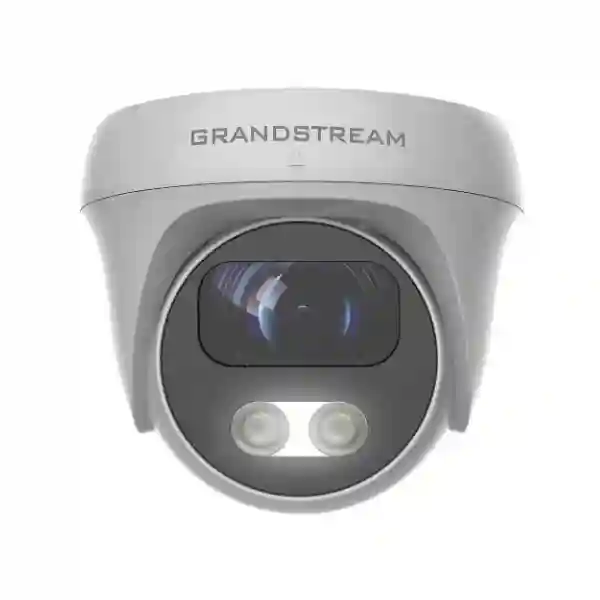
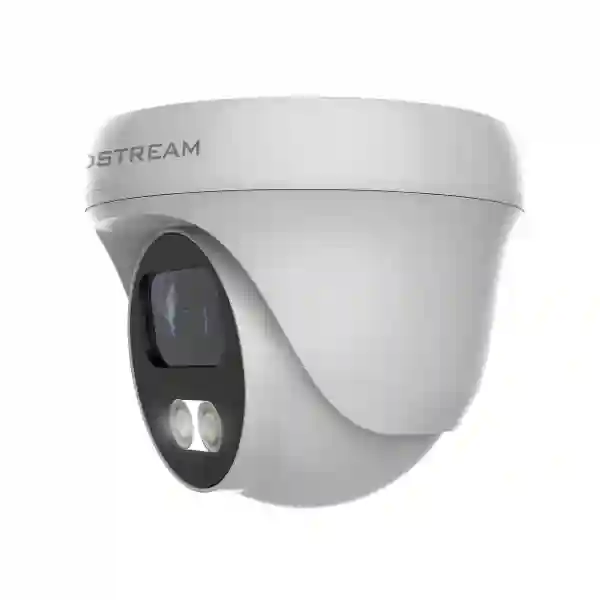
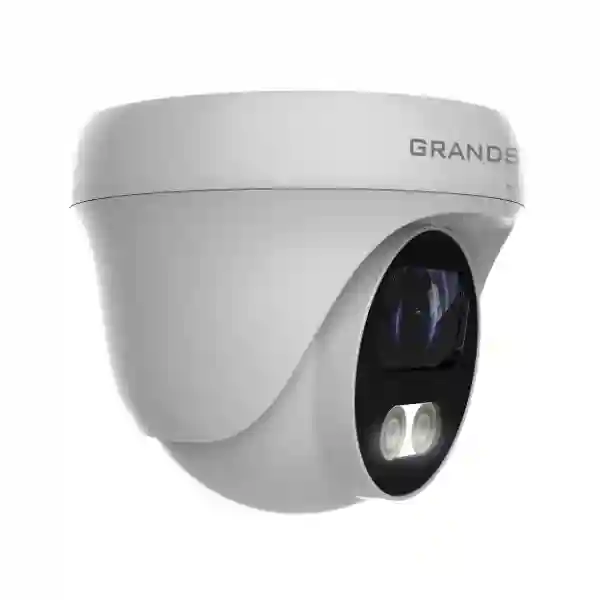
The Grandstream GSC3610 is a fixed dome IP camera built for organizations that want straightforward Full HD surveillance with network-based management, Power over Ethernet, infrared night monitoring, motion detection and integration with IP communications. Its 3.6 mm fixed lens is intended for wide-angle monitoring of nearby subjects, making it suitable for reception areas, retail floors, hotel corridors, office entrances, warehouse access points, banks and other controlled spaces where a compact ceiling-mounted camera is preferred.
What the Grandstream GSC3610 is designed to do
The GSC3610 combines video surveillance and IP communications in a single endpoint. Grandstream specifies a 1/2.9-inch CMOS image sensor with 1920 × 1080 resolution, a fixed 3.6 mm lens, primary streaming up to 1080p, infrared illumination up to 20 metres, motion detection and ONVIF Profile S support. Network connectivity is provided through a 10/100 Ethernet port, and power can be delivered through IEEE 802.3af PoE or an appropriate 12 V DC supply. This allows installers to plan a camera location around network reach and viewing requirements rather than relying on a separate local mains socket at every camera point.
The camera is especially useful where surveillance must connect with broader unified communications. SIP/VoIP support enables video and audio streaming toward compatible endpoints, while line-in and line-out interfaces can support external audio equipment. Grandstream documentation also positions the GSC3610 for use with Grandstream video phones, the GSC3570 control station, GSURF Pro video management software and other ONVIF-compatible video management systems. This makes it a practical choice for businesses that want security monitoring to sit alongside IP telephony, intercom and facility-management workflows rather than operate as an isolated CCTV island.
Grandstream currently lists the GSC3610 in its product archive. Buyers should therefore treat procurement as a project-specific exercise: confirm availability, firmware status, interoperability needs and whether an alternative current camera model is preferable before committing to a large deployment. FourTeck can help structure a quotation around the number of camera points, PoE requirements, recording method, monitoring endpoints, switching capacity and integration objectives without assuming stock or lifecycle conditions that have not been confirmed.
1080p network video
Primary stream support up to 1920 × 1080 gives businesses Full HD monitoring for entrances, work areas and other defined zones.
PoE deployment
IEEE 802.3af PoE can carry power and network connectivity over one Ethernet run, simplifying ceiling camera installation.
Smart infrared
Integrated infrared LEDs support monitoring in dark conditions, with an official stated IR reach of up to 20 metres.
SIP and ONVIF
SIP/VoIP and ONVIF Profile S support create useful options for unified communications and compatible VMS integration.
Grandstream GSC3610 key verified specifications
| Camera type | Ceiling-mounted fixed dome IP camera |
| Image sensor | 1/2.9-inch CMOS, 1920 × 1080 |
| Lens | Fixed 3.6 mm |
| Infrared | 2 IR LEDs, up to 20 m, automatic control |
| Network | 1 × RJ-45 10/100Base-T Ethernet with PoE |
| PoE | IEEE 802.3af |
| Interoperability | ONVIF Profile S; SIP/VoIP support |
| Audio interfaces | 3.5 mm line-in and 3.5 mm line-out |
| Operating range | -20 °C to 50 °C; up to 95% RH |
| Dimensions / weight | 109 × 93 mm; 390 g |
Note: Grandstream source material from different publication dates contains differing weatherproof references (IP66 and IP67). Current Grandstream product-page and documentation references should be checked during project validation rather than relying on reseller summaries.
Integration, recording and network planning
A successful GSC3610 deployment is more than a camera purchase. The camera location, field of view, cable path, PoE budget, switch uplink capacity, recording destination and monitoring workflow should be decided before installation. Because the lens is fixed at 3.6 mm, the camera is best suited to applications where the required view is known in advance. If a project needs optical adjustment after installation, long-distance identification, or a different field of view, another camera class may be a better technical match.
For PoE, planners should count every camera against the switch power budget rather than looking only at port count. Grandstream publishes maximum PoE power consumption for the GSC3610 of just over 4 W under its stated test conditions, but network design should still include sensible headroom for switching, future growth and other powered devices. Managed PoE switching can simplify troubleshooting by allowing ports to be monitored, restarted and segmented using VLAN policies where required.
For recording and viewing, ONVIF Profile S helps interoperability with compatible video management platforms, while GSURF Pro is Grandstream’s own management option. SIP integration is particularly valuable where security staff, reception users or facility teams already use compatible Grandstream video endpoints and want visual alerts or direct monitoring within the communications environment. External microphone and speaker connections can be considered where two-way audio is part of the deployment design.
Related FourTeck resources
For broader regional procurement and solution planning, explore FourTeck global technology solutions for cross-market infrastructure requirements, FourTeck Africa for Africa-focused ICT solution planning, FourTeck Uganda for Uganda-related projects, FourTeck Kenya for Kenya requirements, and Grandstream UAE solutions when a project includes Grandstream products in the UAE. These links are useful when the same organization is planning communications, security or networking across multiple countries.
For Tanzania enquiries, use the FourTeck Tanzania website as the primary regional starting point. Because search indexing did not expose enough verified same-domain product URLs during this content run, no fabricated Tanzania product paths have been inserted.
Grandstream GSC3610 Tanzania
Organizations evaluating the Grandstream GSC3610 in Tanzania are typically trying to solve a practical monitoring requirement rather than simply buy a camera by model number. A good starting point is to identify the exact area to be watched, the distance between camera and subject, expected lighting conditions, available ceiling or wall mounting points, Ethernet cable routes and the system used for live viewing or recording. The GSC3610’s fixed 3.6 mm lens and 1080p primary stream are well suited to wide-angle observation of nearby activity, so offices, retail outlets, reception zones, warehouses, hotel areas, controlled entrances and similar business spaces are natural project types. Its integrated infrared capability also supports monitoring after normal working hours in locations where ambient light may be low.
For Tanzanian businesses, PoE can simplify deployments where the selected camera point is not close to a convenient power outlet. A suitable PoE switch can provide both Ethernet connectivity and power over one structured-cabling run. The network should nevertheless be planned as a security system: camera traffic may need separate VLAN treatment, administrator passwords should be changed from defaults, firmware should be reviewed before handover and access to web interfaces should be restricted. If cameras will be viewed across WAN links between branches, the available bandwidth and cybersecurity policy should be considered before enabling remote access. A local recording or VMS architecture may reduce dependence on internet connectivity for core surveillance functions.
Tanzania buyers should also decide whether they are looking for camera-only supply, replacement of an existing GSC3610, a small multi-camera installation or a larger integrated system. That distinction affects the quotation. A camera-only request may need model confirmation and availability checking, while an integrated design may also require PoE switching, storage, a compatible video management platform, UPS protection, structured cabling, endpoint monitoring and network segmentation. Because Grandstream now places the GSC3610 in its product archive, procurement should include a lifecycle check and a comparison with current alternatives if the project is new or expected to expand over several years.
When requesting a quotation in Tanzania, provide the number of camera points, site type, indoor or outdoor location, approximate viewing distance, recording expectations, number of monitoring users, PoE availability and any requirement for SIP integration with Grandstream phones or facility-control endpoints. This information helps determine whether the GSC3610 remains the right fit and avoids a quote that only lists hardware without the switching, recording or installation components necessary for a usable surveillance solution.
Grandstream GSC3610 Dar es Salaam
Dar es Salaam businesses often have a mix of office, retail, hospitality, logistics and commercial property requirements, and the GSC3610 can be considered where a discreet ceiling-mounted IP dome is appropriate. Before specifying it, the project team should map entrances, reception points, customer-facing areas, stock rooms, loading approaches and internal corridors to determine which zones need general situational awareness and which need tighter identification views. Because the GSC3610 uses a fixed 3.6 mm lens, positioning matters: it should not be selected solely on megapixel count if the camera is expected to identify subjects at distances beyond the useful field of view.
In multi-floor office buildings and commercial sites, a PoE design can reduce electrical complexity. Camera ports can be grouped on managed network switches and protected by UPS systems that maintain monitoring during short power interruptions. Network administrators can also create dedicated surveillance VLANs, restrict management access and allocate uplink capacity according to the number of streams and recording profile. Where an organization already operates Grandstream voice infrastructure, the GSC3610’s SIP capability offers an additional design path: selected video endpoints can participate in monitoring or alert workflows without turning every user workstation into a VMS console.
Dar es Salaam projects can vary from one or two camera points to distributed branch networks. A branch rollout should use a repeatable standard for camera naming, addressing, passwords, time synchronization, firmware, retention settings and documentation. If monitoring is centralized, WAN bandwidth and failover should be evaluated, but local recording can still preserve evidence when internet connectivity is interrupted. ONVIF Profile S support means the camera may integrate with compatible third-party platforms, but exact compatibility should be tested against the intended recorder or VMS rather than assumed from the ONVIF label alone.
A useful quotation request for Dar es Salaam should include floor plans or approximate camera zones, required retention period, existing switch models, rack and UPS information, desired monitoring stations and whether audio or intercom integration is relevant. Since the GSC3610 is archived by Grandstream, the procurement conversation should also cover replacement strategy and current-model alternatives so that a new deployment does not become difficult to expand later.
Grandstream GSC3610 Mwanza
For businesses in Mwanza, the Grandstream GSC3610 can suit compact commercial surveillance zones where wide-angle nearby monitoring is more important than long-range zoom. Typical examples include storefronts, office reception areas, warehouse access points, internal corridors, clinic entrances, hospitality service areas and administrative facilities. The strongest result comes from matching the camera to the scene: determine the mounting height, target width, expected subject distance and lighting before finalizing quantity and placement.
The camera’s PoE support is useful where structured cabling is already present or where a new Ethernet cable can be pulled to the ceiling position. A single network cable can then carry power and data from a suitable IEEE 802.3af switch. For small sites, this can keep the installation tidy and make power backup easier because the camera and switch can be protected from the same UPS. For larger Mwanza deployments, calculate the aggregate PoE load, network throughput and storage requirement rather than sizing the system camera by camera in isolation.
Night monitoring should also be treated as a site-specific requirement. Grandstream specifies smart infrared with illumination up to 20 metres, but reflected surfaces, mounting angle, subject movement, outdoor lighting and environmental conditions can change the practical image. A pre-installation site survey can identify where supplemental lighting or a different camera type would improve the result. The GSC3610 can switch between colour and black-and-white day/night operation using IR-cut functionality, which is useful for mixed-light environments but should still be commissioned carefully.
Mwanza buyers planning a replacement of an existing GSC3610 should provide the existing firmware, VMS or NVR platform, camera IP scheme and mounting details. New projects should additionally compare lifecycle options because Grandstream now lists the model in its archive. A procurement request that explains the operational requirement—not just the model number—gives the supplier room to confirm whether the GSC3610 is still the best technical and commercial option.
Grandstream GSC3610 Arusha
Arusha has many hospitality, tourism, office, education and service environments where discreet IP surveillance can support property and facility management. The Grandstream GSC3610 is relevant for indoor and sheltered or outdoor monitoring points that need a dome form factor, Full HD streaming, motion detection and infrared assistance. The fixed 3.6 mm lens is intended for a broad nearby scene rather than optical zoom, so installers should place the camera where its field of view naturally covers the area of interest.
Hotels and lodges may consider the GSC3610 for controlled entrances, service corridors, back-office spaces, stores and other operational areas subject to privacy policy and applicable regulations. Offices may use it for reception, entry and common-area observation. In either case, the system should be designed around data governance as well as hardware. Define who can view live video, who can export recordings, how long footage is retained, how passwords are managed and what network routes are permitted to reach the camera-management interface.
PoE is useful where aesthetics and installation simplicity matter because it avoids a separate visible power adapter near the camera. The GSC3610 can also integrate with compatible Grandstream communications endpoints, giving organizations that already use Grandstream IP phones or facility-control products an opportunity to unify monitoring and communication. ONVIF Profile S creates another route into compatible video-management platforms, but a proof-of-concept is sensible when the intended VMS contains specific analytics, audio or event-handling requirements.
For an Arusha quotation, identify whether the project is a single property, a campus or multiple remote locations. State the expected recording duration, the number of simultaneous viewers, any requirement for remote access, available PoE switching and whether the camera must coexist with an existing NVR. Because the GSC3610 is archived by its manufacturer, lifecycle suitability and current alternatives should be discussed before standardizing the model across a new long-term deployment.
Grandstream GSC3610 Dodoma
Organizations in Dodoma evaluating the Grandstream GSC3610 may include offices, institutions, service providers, retail premises and facilities that want a network camera tied into existing Ethernet infrastructure. The model provides 1080p primary video, motion detection, smart IR, PoE and standards-based ONVIF integration, making it straightforward to understand from an infrastructure perspective. The key design question is whether its fixed-lens field of view matches the security objective at each camera point.
For institutional or multi-building projects, standardization can lower operational complexity. Cameras can be assigned documented IP addresses or DHCP reservations, placed in dedicated network segments, synchronized through reliable NTP, and monitored through a central VMS. Administrative access should be limited to authorized staff, secure protocols should be preferred, and remote management should be exposed only through controlled network paths. These practices matter as much as image quality because an IP camera is also a network endpoint.
Where buildings have intermittent connectivity between sites, local recording can provide resilience while central staff use remote viewing when the WAN is available. A design based solely on cloud or remote viewing may not meet operational expectations if bandwidth is constrained. The GSC3610’s dual-stream capability can help by using a higher-resolution stream for recording and a lower-resolution stream for selected viewing scenarios, depending on VMS capabilities and configuration.
Dodoma procurement teams should prepare a bill-of-materials request that includes cameras, PoE switches or injectors where needed, recording/storage, UPS, cabling, patching, racks and endpoint monitoring. If the request is for an existing GSC3610 installation, include the current software and configuration environment so compatibility can be checked. For new systems, ask for lifecycle guidance because the model appears in Grandstream’s product archive and may not be the preferred platform for long-term expansion.
Grandstream GSC3610 UAE
The Grandstream GSC3610 is relevant to UAE buyers who need a compact dome IP camera that can fit into a broader Grandstream communications environment. Its combination of 1080p streaming, PoE, motion detection, infrared illumination and SIP/VoIP functionality differentiates it from conventional standalone CCTV devices. In offices, retail branches, warehouses and hospitality sites, this can simplify scenarios where reception or security users need to interact with video through compatible IP endpoints as well as a video-management platform.
UAE projects often involve structured cabling and managed PoE switching, making the GSC3610 straightforward to power where a suitable port is available. Nevertheless, system designers should verify the complete path from camera to recorder: switch PoE capacity, VLAN design, uplink bandwidth, VMS compatibility, storage retention and remote-access policy. For outdoor placements, installers should also validate environmental exposure, mounting quality and weather sealing around cable connections rather than relying solely on an enclosure rating.
A multi-site UAE business may also use the camera within a standardized Grandstream ecosystem. SIP endpoints, compatible Grandstream video phones and facility-control stations can be considered for active monitoring, while ONVIF support can connect the device to third-party VMS platforms. If a company already operates mixed-brand surveillance, the integration plan should confirm discovery, streaming, event support and authentication with the chosen recorder before purchase.
Because GSC3610 is listed by Grandstream in its product archive, UAE procurement should verify current availability and consider whether a current-generation alternative offers better lifecycle continuity. The Grandstream UAE FourTeck resource can be used when coordinating Grandstream-related requirements in the region, while quotations should state camera quantity, site type, recording requirement, PoE availability and integration objectives.
Grandstream GSC3610 Uganda
Uganda buyers considering the GSC3610 should begin with scene design and network readiness. The camera is intended for wide-angle monitoring of nearby subjects with a fixed 3.6 mm lens, so it is strongest in areas such as offices, shop floors, entrances, bank branches, warehouses, hotels and controlled building zones. Full HD resolution helps with general monitoring, while smart infrared supports dark conditions, but the system should be tested against the actual identification requirement rather than judged only by specification-sheet resolution.
PoE can make deployments easier in branches and commercial sites by centralizing power at the network switch. A UPS protecting the switch can therefore keep multiple cameras operating during brief electrical interruptions. Designers should calculate PoE headroom and use appropriate outdoor-rated cabling and weatherproof connection practices wherever the network cable leaves protected spaces. Network segmentation and strong administration credentials should be part of commissioning from day one.
For organizations with multiple Ugandan sites, management standards become important. Use consistent device naming, IP addressing, time synchronization, firmware policy, recording retention and user permissions. If live viewing is centralized in Kampala while cameras are installed elsewhere, choose stream profiles that fit WAN capacity and keep local recording options available where operationally necessary. ONVIF Profile S can support compatible VMS integration, and SIP functionality may be useful for teams already working with Grandstream communications endpoints.
Procurement should not assume current stock or long-term availability because Grandstream identifies GSC3610 as an archived product. Buyers can use FourTeck Uganda for regional solution context and should request confirmation of model status, compatible alternatives and the complete bill of materials needed for deployment.
Grandstream GSC3610 Kampala
Kampala offices, retail outlets, hotels, warehouses and service businesses can consider the GSC3610 where a ceiling-mounted dome camera suits the required viewing angle. The model’s value is not just its 1080p image; it is the combination of network surveillance and communication-oriented features. Motion detection can support event workflows, while SIP capability can bring video toward compatible Grandstream endpoints and ONVIF can connect the camera to standards-based VMS environments.
A Kampala installation should start with a camera schedule showing each proposed mounting point, target scene and expected subject distance. That prevents a common problem: selecting a fixed lens for a location that later needs a narrower or adjustable view. In reception zones and entrances, the GSC3610 can offer broad situational awareness, while cash-handling, perimeter or long-distance scenes may require a different lens or camera category depending on the identification goal.
For network design, use PoE-capable switching with enough reserve capacity, protect critical equipment with UPS and isolate surveillance traffic where practical. If cameras must be reachable from remote sites, route that access through secure network controls rather than placing management interfaces directly on the public internet. Recording storage should be sized from camera count, codec, frame rate, bit rate and retention period, not from a generic storage estimate.
Kampala buyers replacing installed GSC3610 units should share the existing VMS and firmware environment before ordering. New deployments should ask for a lifecycle comparison because the GSC3610 is in Grandstream’s archive. A complete quote can then distinguish between a like-for-like replacement and a modernization project that may benefit from a current camera platform.
Grandstream GSC3610 Arua
Arua businesses seeking a Grandstream GSC3610 may be planning a compact security installation for an office, shop, warehouse, accommodation property, clinic or other commercial premises. For these sites, the camera’s PoE support can be particularly practical because one structured cable can deliver both network connectivity and power from a centrally protected switch. This keeps camera points simpler and allows multiple cameras to be supported by the same UPS-backed network infrastructure.
The GSC3610’s 3.6 mm fixed lens works best when the monitored zone is known. Before installation, walk through the site and identify the horizontal area that must remain visible, likely movement paths and possible backlighting from doors or windows. Infrared monitoring can help after dark, but reflective walls, glass and nearby surfaces can influence night images. Installation height and tilt should therefore be chosen through field testing rather than copied from another site.
For remote support, document every device with its IP address, switch port, MAC address, physical location and administrative owner. Keep configuration backups and firmware records so technicians can diagnose faults without recreating the system from scratch. Where internet connectivity between Arua and another operations centre is inconsistent, local recording can provide continuity while remote viewing remains an optional management layer.
Arua procurement requests should specify whether the goal is camera supply, complete installation or integration into an existing NVR/VMS. Since the manufacturer lists GSC3610 as archived, availability and replacement options need confirmation before purchase. This is especially important for projects that may add more cameras later, because long-term standardization is easier when model lifecycle is clear from the start.
Grandstream GSC3610 Mbarara
Mbarara organizations can use the GSC3610 as part of a small or mid-sized IP surveillance system where general Full HD monitoring and simple PoE deployment are priorities. The device is well suited to fixed areas where a 3.6 mm lens can cover the required scene. Retail floors, offices, controlled entrances, warehouses, service counters and hospitality areas are examples of environments where such a camera can fit, subject to site survey and privacy requirements.
The network side deserves equal attention. Each camera consumes bandwidth continuously when recording, and several cameras can create meaningful traffic on uplinks or WAN connections. A design should choose primary and secondary stream settings according to the recording and viewing task. The higher-resolution stream can be reserved for recording while a lower stream may be used for selected remote views, depending on the capabilities of the VMS. NTP synchronization is also important so timestamps line up correctly across cameras and other security systems.
Grandstream supports motion detection and alerting features, but motion events should be tuned to the scene. Vegetation, lighting changes and busy public areas can generate unnecessary events if detection zones and thresholds are not configured thoughtfully. A commissioning process should test day and night operation, image framing, event behaviour, access permissions and recording playback before the site is handed over.
When requesting a quote for Mbarara, include the number of cameras, mounting environment, required recording days, existing switch and recorder details, and whether integration with Grandstream phones or a facility-control station is expected. The archived status of GSC3610 means a supplier should confirm procurement feasibility and discuss current alternatives for a fresh deployment.
Grandstream GSC3610 Gulu
In Gulu, the Grandstream GSC3610 can be evaluated for business surveillance at offices, stores, educational facilities, warehouses, hospitality properties and other sites that need a compact dome IP camera. The camera supports Full HD network video, smart IR and motion detection, giving it a useful baseline for everyday monitoring. Its fixed-lens design keeps configuration straightforward but makes pre-installation positioning more important because field of view cannot be optically adjusted after mounting.
PoE makes it possible to centralize electrical support around the network switch, and this can simplify backup-power planning. Instead of adding individual power adapters at each camera, the project can protect the PoE switch and recorder with suitable UPS equipment. The Ethernet topology should still be documented carefully, including switch port numbers, cable labels and camera addresses, so maintenance remains manageable as the site grows.
Organizations that want remote viewing from another city should first determine what happens if the WAN connection fails. Local recording or edge continuity may be necessary for security operations that cannot depend entirely on internet access. Remote access should be routed securely and user permissions should follow operational roles. ONVIF Profile S can support integration into a compatible VMS, but feature compatibility for motion events and audio should be verified with the specific platform in use.
For Gulu quotations, define whether the GSC3610 is a replacement requirement or a new standard. Grandstream’s archive listing means new deployments should compare the model with current alternatives before final approval. If a like-for-like unit is needed to maintain an existing installation, provide the current camera and VMS details to reduce compatibility risk.
Grandstream GSC3610 Kenya
Kenya organizations sourcing the GSC3610 may be supporting an installed Grandstream surveillance environment or planning a security project that integrates with Grandstream communications. The model combines 1080p video, smart infrared, motion detection, PoE, SIP/VoIP and ONVIF Profile S. These features make it useful in mixed security and communications scenarios, particularly when teams already operate Grandstream video phones or facility-control endpoints.
A Kenyan multi-branch rollout should standardize more than hardware. Define a common camera naming method, IP addressing plan, secure credential policy, VLAN design, firmware baseline, time source, recording retention and remote-support procedure. Standardization allows a central IT team to troubleshoot sites consistently. If bandwidth between branches is limited, use local recording and appropriate secondary-stream settings for remote monitoring instead of forcing high-resolution streams across every WAN link.
The physical design should verify ceiling strength, viewing angle, protection of cable exits and the usefulness of the fixed 3.6 mm lens for each scene. IR reach is stated at up to 20 metres, but night performance depends on the actual environment. Where the camera is exposed to strong backlighting or highly reflective surfaces, commissioning tests should be completed before accepting the final view.
Because GSC3610 is now in Grandstream’s product archive, Kenya buyers should confirm availability and compare lifecycle options for new installations. The FourTeck Kenya site can support broader regional solution planning. Quotations should include complete infrastructure needs rather than camera quantity alone.
Grandstream GSC3610 Kuwait
Kuwait buyers looking for the Grandstream GSC3610 should evaluate both surveillance requirements and model lifecycle. The camera is a 1080p fixed dome with a 3.6 mm lens, PoE, smart infrared, motion detection and IP communications integration. It can fit offices, warehouses, hospitality operations and commercial premises where a fixed wide-angle view is suitable, but long-range or adjustable-lens applications may call for a different model.
For indoor commercial deployments, PoE helps keep the installation clean and centralized. Managed switches can provide port monitoring, VLAN segmentation and controlled restart capabilities, while UPS systems can protect cameras and recorders together. For more exposed locations, the installation method, cable glands and connection sealing should be checked carefully so that the deployment matches environmental conditions and maintenance expectations.
SIP/VoIP capability may appeal to organizations already using Grandstream communications, allowing video streams to participate in compatible endpoint workflows. ONVIF Profile S provides standards-based integration with compatible VMS products. Buyers should still validate the exact feature set they need, including audio, motion events, multi-stream recording and user authentication, because support can vary between VMS vendors.
For Kuwait procurement, specify whether the GSC3610 is required as a replacement or whether the requirement can be met by a newer platform. Grandstream’s product archive listing makes this distinction important. Use FourTeck Kuwait for regional ICT solution context and request a quotation based on camera count, recording days, PoE infrastructure, remote-access needs and system integration.
Grandstream GSC3610 Ghana
Ghana businesses can consider the GSC3610 when a fixed dome IP camera with Full HD video and PoE fits the project. Retail outlets, offices, hospitality sites, banks, warehouses and entrance areas are among the environments Grandstream associates with this camera class. The important step is to translate a general “CCTV camera” requirement into measurable viewing objectives for each location so that the fixed 3.6 mm lens is used where it provides the right coverage.
Network and storage design should be developed alongside the camera plan. A PoE switch must have sufficient ports and power capacity, while the recording server or VMS needs enough storage for the chosen resolution, bit rate, frame rate and retention period. Remote users should be assigned individual accounts where supported, and administrative interfaces should be protected from unnecessary exposure. Time synchronization across cameras is also essential for incident review.
The camera’s SIP/VoIP support is useful for businesses that want to combine visual monitoring with Grandstream communication devices. For mixed-brand security environments, ONVIF Profile S can help integration with compatible platforms. Project teams should validate interoperability in advance where event handling, audio or specific VMS functions are critical.
Ghana buyers should also account for lifecycle. Because Grandstream lists the GSC3610 in its archive, a new project should compare current alternatives rather than assuming this model is the best standard for future expansion. FourTeck Ghana can be used for regional solution planning, while a detailed quote should include installation, switching, storage and support requirements where needed.
Grandstream GSC3610 Nigeria
Nigeria projects involving the Grandstream GSC3610 can range from replacement purchases to branch-wide IP surveillance. The camera supports Full HD primary video, a fixed 3.6 mm lens, infrared monitoring, motion detection, PoE and standards-based network integration. It is most useful where the monitored scene is stable and nearby, such as office entrances, reception areas, stores, controlled corridors and warehouse zones.
For distributed businesses, the surveillance network should be treated as a managed IT service. Assign consistent naming, maintain a firmware register, use secure credentials, place cameras on controlled VLANs and ensure the recorder or VMS has a reliable time source. If a central security team monitors several branches, design remote viewing around available WAN bandwidth. Local recording can preserve evidence when connectivity is disrupted, and a lower secondary stream can reduce bandwidth for live monitoring where supported.
PoE simplifies camera power but does not remove the need for electrical planning. Switch power budgets, UPS autonomy and rack ventilation all influence system reliability. At the camera point, proper mounting and cable protection matter for long-term operation. Commissioning should verify image framing, night view, motion events, recording playback and permissions before handover.
Nigeria buyers should note that Grandstream places GSC3610 in the product archive. Ask for current availability and a comparison with newer alternatives if the project is greenfield or expected to grow. FourTeck Nigeria provides regional context for broader ICT requirements, and quotations should clearly separate camera hardware from switching, storage and installation components.
Grandstream GSC3610 Seychelles
Seychelles organizations considering the GSC3610 may include hospitality properties, offices, retail facilities and service businesses that need discreet dome surveillance. The fixed 3.6 mm lens can work well for reception areas, internal access points, stores and similar nearby scenes. Full HD streaming, smart IR and motion detection give the camera a practical baseline, while PoE allows a single structured cable to carry power and data from the network room.
For island or multi-property operations, maintainability is especially important. Standardized switching, spare-port capacity, configuration backups and clear device documentation can reduce downtime when support resources are not immediately on site. Camera systems should also be designed so essential recording remains available if an internet connection to a remote monitoring location is interrupted.
Environmental conditions should be considered at every installation point. Outdoor or semi-outdoor camera locations need correct mechanical mounting and protected network connections. Salt air, direct weather exposure and temperature can influence maintenance planning even when a product has a weatherproof enclosure. For critical external areas, site-specific environmental suitability should therefore be verified rather than inferred solely from a generic IP rating.
Seychelles procurement teams should state whether they specifically require GSC3610 to match an installed system or whether they are open to a current alternative. That distinction matters because Grandstream lists the model in its product archive. A complete quote should cover the number of sites, camera points, PoE and UPS needs, recorder/VMS platform, retention period, remote viewing and any SIP-based monitoring requirement.
How to decide whether GSC3610 fits your project
Good fit when
You need a compact fixed dome, Full HD viewing, a broad nearby scene, PoE, infrared monitoring, motion detection, ONVIF interoperability or integration with compatible Grandstream SIP/video endpoints.
Review alternatives when
You need optical zoom, a variable focal length, long-distance identification, newer lifecycle status, advanced analytics or a surveillance platform with specific functions not validated for the GSC3610.
Quotation checklist
For a useful quotation, send the information below. It helps distinguish a simple camera supply request from a complete surveillance project and reduces the risk of missing switches, storage or installation items.
✓ Number of GSC3610 cameras or camera points
✓ Exact site and indoor/outdoor mounting environment
✓ Approximate viewing distance and target area
✓ Existing PoE switch make/model and spare port count
✓ Required recording retention in days
✓ Existing NVR/VMS platform, if any
✓ Need for remote access or multi-branch monitoring
✓ Need for SIP integration with Grandstream endpoints
✓ UPS or backup-power requirement
✓ Cabling and installation scope
✓ Whether GSC3610 is mandatory or current alternatives can be proposed
Frequently asked questions
Is the Grandstream GSC3610 a 1080p camera?
Yes. Grandstream specifies a 1920 × 1080 image sensor and a primary video stream up to 1920 × 1080. The camera also supports a secondary stream for lower-resolution use cases.
Does GSC3610 support PoE?
Yes. It has a 10/100 Ethernet port with IEEE 802.3af PoE support. It can also be powered from an appropriate 12 V DC source according to Grandstream documentation.
Can GSC3610 work with third-party video management software?
Grandstream lists ONVIF Profile S support, which is intended to aid interoperability with compatible VMS platforms. Exact compatibility with a particular recorder, event system or software version should still be validated before deployment.
Does the GSC3610 have night vision?
It includes two infrared LEDs with automatic control. Grandstream specifies infrared reach up to 20 metres, with day/night switching using IR-cut functionality.
Can it integrate with Grandstream phones?
Yes, Grandstream documents SIP/VoIP video integration with compatible Grandstream video endpoints and facility-control products. Exact endpoint support should be checked against the current firmware and deployment design.
Is the Grandstream GSC3610 still a current product?
Grandstream currently lists GSC3610 in its product archive. For replacement purchases, availability should be checked. For new projects, compare lifecycle and current alternatives before standardizing the model.
Decision recap
Choose the GSC3610 when its fixed dome form factor, 3.6 mm field of view, 1080p video, PoE, infrared monitoring, motion detection, SIP integration and ONVIF compatibility match an existing or carefully defined requirement. For new large-scale deployments, include lifecycle review because the product is archived by Grandstream.
The best quotation is based on the entire solution: camera placement, PoE switching, bandwidth, storage, monitoring endpoints, remote access, recording retention, UPS protection and installation. That creates a deployable system rather than a disconnected list of camera hardware.
Consult FourTeck Tanzania
Share your camera quantity, site type, viewing zones, existing network, recording requirement and integration needs. FourTeck can use those project details to structure a relevant GSC3610 quotation or propose a suitable alternative where lifecycle, lens or deployment requirements point to another model.




Reviews
There are no reviews yet.