
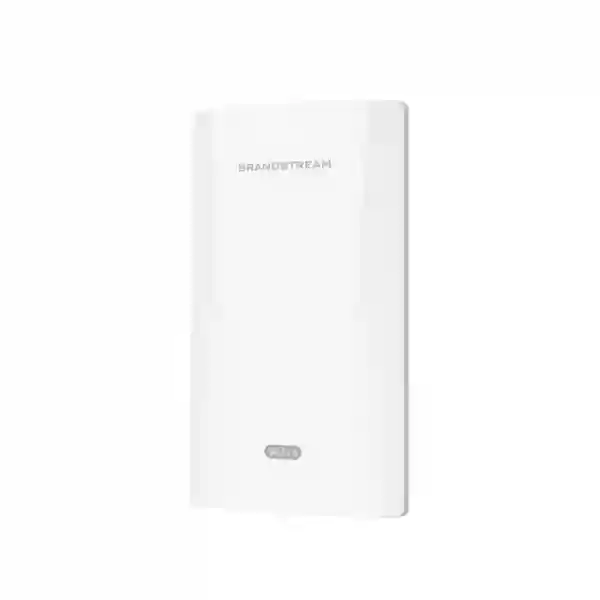
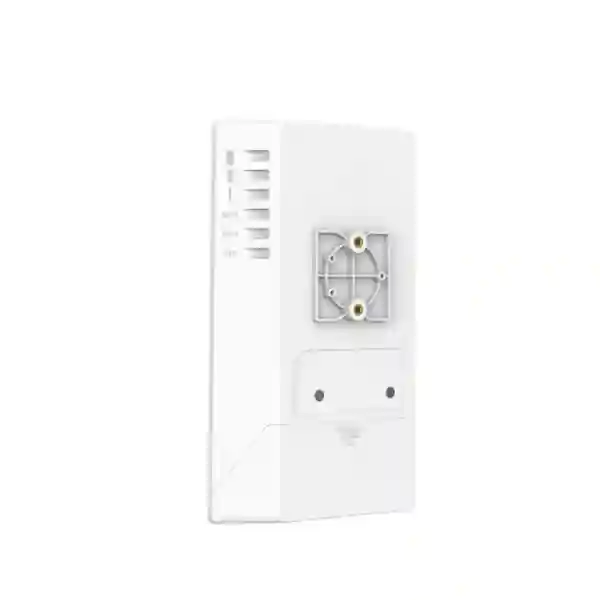
Grandstream GWN7302 Tanzania
The Grandstream GWN7302 is an enterprise PtP/PtMP fixed wireless bridge for carrying Ethernet network traffic across outdoor distances where trenching fiber or copper may be costly, disruptive or impractical. Grandstream specifies up to 5 km wireless range with clear line of sight, single-band 5 GHz 2×2:2 MIMO with TDMA, up to 2.4 Gbps aggregate wireless throughput, IP66 environmental protection and two Gigabit Ethernet ports supporting PoE input and PoE output functions.
For Tanzania deployments, the GWN7302 can be considered for connecting separate buildings, camera poles, warehouse zones, yards, farms, schools, hospitality compounds and temporary project areas. It is a transparent Layer‑2 bridge rather than a general client-access Wi‑Fi access point, so it is intended to extend an existing LAN between locations while carrying DHCP, VLAN and management traffic across the wireless link.
Quick verified highlights
Range: up to 5 km in suitable line-of-sight conditions.
Wireless: 5 GHz, 2×2:2 MIMO, TDMA, Wi‑Fi 6 class radio.
Throughput: up to 2.4 Gbps aggregate wireless rate.
Ports: two 10/100/1000 Mbps Ethernet ports.
Outdoor rating: IP66.
Modes: PtP and PtMP; Grandstream documents one master with up to four slaves in PtMP mode.
What the GWN7302 solves
A fixed wireless bridge solves a different problem from ordinary office Wi‑Fi. Instead of primarily serving laptops and phones, it creates a dedicated wireless path between network locations. A GWN7302 pair can bridge a main building to a remote office, gatehouse, CCTV pole, warehouse, classroom block or other site segment without laying a continuous data cable between the two points. In point-to-multipoint mode, one master can link with multiple remote units, allowing several remote zones to return traffic to a central network. Because the bridge operates transparently at Layer 2, existing addressing, DHCP and VLAN designs can pass across the connection when the wider network is configured correctly.
The practical design question is not simply whether 5 km appears on the datasheet. Reliable bridge performance depends on clear line of sight, mounting height, Fresnel-zone clearance, antenna alignment, local radio conditions, cabling quality, surge and grounding practices, power availability and the traffic profile being carried. Trees, roofs, terrain, cranes and other obstructions can change link quality dramatically. Buyers should therefore treat the maximum distance as a planning ceiling under appropriate conditions, not as a guarantee for every site.
For broader infrastructure planning, FourTeck Tanzania also covers integrated IT, networking and security solutions, while the services page explains project assistance around design, installation, configuration and support. These are relevant because a long-range wireless bridge normally sits inside a larger solution that includes switches, VLANs, cameras, firewalls, power protection and structured cabling at each endpoint.
Grandstream GWN7302 technical overview
Long-range wireless
Grandstream specifies wireless links up to 5 kilometres with appropriate line of sight. The directional antenna system is intended for fixed bridging rather than broad client coverage.
5 GHz 2×2:2 MIMO
The radio uses single-band 5 GHz 2×2:2 MIMO and TDMA technology. Grandstream lists IEEE 802.11a/n/ac/ax support and an aggregate wireless rate up to 2.4 Gbps.
Outdoor protection
The enclosure is IP66 rated. Grandstream states an operating temperature range from -30 °C to 60 °C, supporting exposed outdoor installations when mounted and cabled correctly.
PoE and Gigabit Ethernet
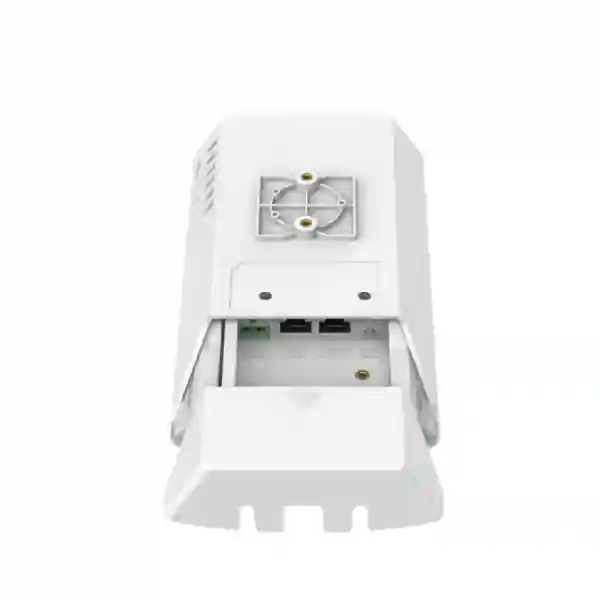
Two Gigabit Ethernet ports are provided. The installation guide identifies NET1 as PoE IN and NET2 as PoE OUT, enabling flexible power and nearby-device designs subject to power-budget planning.
Management options: the GWN7302 supports an embedded web interface, the GWN App and GDMS Networking. Grandstream also describes one-key pairing and signal-strength LEDs to help with initial pairing and antenna alignment. These features simplify setup, but installers should still verify link metrics, network segmentation, firmware level, traffic flow and failover expectations before handing over a production link.
Deployment and buying guidance
A quotation request is more useful when it includes both endpoints, approximate distance, mounting height, whether a direct visual path exists, expected traffic, VLAN requirements, whether cameras or access points will sit behind the remote bridge, existing switch models, available PoE, and whether the link is business-critical. A short-distance camera backhaul has different capacity and resilience priorities from a multi-building campus carrying voice, data and CCTV simultaneously.
For PtP, the normal concept is one master and one slave. For PtMP, Grandstream documents one master with up to four slave bridges. PtMP can be efficient where several remote facilities are visible from a central mounting point, but shared airtime and traffic concentration should be considered. Where every remote site carries heavy or latency-sensitive traffic, separate PtP links or a different topology may be more appropriate after a site assessment.
The FourTeck Tanzania shop provides a broader procurement path for related network equipment, and the About FourTeck Tanzania page gives additional context on the company’s integrated technology approach. For quotations, availability checks and deployment discussions, use the verified FourTeck Tanzania contact page.
Grandstream GWN7302 Tanzania
For organizations in Tanzania, the Grandstream GWN7302 is most relevant where two or more network zones must be connected but continuous cabling between them is difficult. Common project patterns include linking an administration block to a warehouse, extending a LAN to a security gate, returning video from a camera pole, connecting buildings across an industrial compound, providing temporary connectivity at a construction area, or joining operational areas across farms and estates. The device is particularly attractive when the endpoints have a practical line of sight and the customer wants to avoid civil works associated with trenching. The important planning step is to distinguish the wireless backhaul requirement from ordinary user Wi‑Fi: the GWN7302 carries network traffic between fixed endpoints and is not intended to replace indoor or outdoor access points that provide client access to phones and laptops.
Tanzania projects can vary widely in terrain and site layout, so a 5 km specification should be validated against the actual path. Roof height, trees, future construction, mast movement, nearby radio activity and the physical clearance around the line can influence performance. A pre-installation survey should confirm whether each endpoint can be mounted securely and whether power, grounding and weather-protected Ethernet termination are available. Where the remote location needs a camera or access point, the PoE output capability may reduce cabling complexity, but the complete power budget still needs to be checked. Customers carrying CCTV should estimate the combined camera bitrate rather than sizing the link by camera count alone.
Procurement teams should request the exact model, required unit quantity, mounting conditions, bridge topology, switch compatibility and preferred management method. Where remote administration is desirable, GDMS Networking can provide a centralized management option, while local web management and the GWN App remain available. FourTeck Tanzania can be approached for product quotation and network-integration discussion without assuming stock, delivery time or site coverage until those items are confirmed for the specific project.
Grandstream GWN7302 Dar es Salaam
In Dar es Salaam, the GWN7302 can fit commercial environments where buildings, yards, parking areas and operational zones need network connectivity without a new underground cable route. Warehouses, logistics compounds, office campuses, schools, hotels, workshops and security deployments may all have points that are physically separated but visually reachable from one another. In these settings, a fixed wireless bridge can connect the remote segment back to the main switching and firewall infrastructure. Because the GWN7302 behaves as a transparent Layer‑2 bridge, VLANs and DHCP can traverse the link, allowing the remote side to remain part of the existing logical network when configuration policies permit.
Dense urban and industrial areas require careful radio planning. A direct line of sight does not automatically mean the channel is clean, and nearby wireless systems can affect usable performance. Mounting should therefore be chosen for both physical visibility and stable alignment. On rooftops, installers should consider wind loading, corrosion exposure, cable routing, lightning and surge protection, and how maintenance staff will safely reach the unit later. For CCTV projects, it is useful to determine whether the bridge will transport only camera traffic or a mixed workload that also includes office data, access control or voice. Quality-of-service planning becomes more important as the number of applications grows.
A Dar es Salaam buyer preparing a quote should provide the approximate distance between endpoints, available mounting points, whether a mast or pole is already present, LAN speed at both ends, number of VLANs, connected device types and whether PoE is available from an existing switch. This avoids treating the bridge as an isolated purchase. The objective is a complete working path from the core switch through the bridge to the remote switch, camera or access point, with management and support responsibilities clearly defined.
Grandstream GWN7302 Mwanza
Mwanza deployments may involve campuses, hospitality sites, warehouses, lake-adjacent commercial properties, education facilities, industrial compounds and security systems with network points separated by roads, yards or terrain. A GWN7302 bridge can provide a practical network extension when fiber is unavailable or when trenching across the site would be disruptive. The model’s directional 5 GHz radio, TDMA operation and point-to-point or point-to-multipoint modes are designed for this type of fixed infrastructure link. In a simple PtP design, one unit at the main network faces a second unit at the remote area; in PtMP, one central master can communicate with multiple remote slave units, up to four according to Grandstream’s current documentation.
For Mwanza, sight-line planning deserves particular attention wherever buildings, slopes, trees or future construction may cross the radio path. The best mounting position is not always the highest possible location; it should be stable, maintainable, grounded appropriately and clear enough for the intended distance. Cable length from the bridge to the indoor network should be controlled, and outdoor Ethernet should be selected and routed appropriately for the environment. If the link supports cameras, access points or other powered equipment, confirm the upstream PoE source and downstream power requirements rather than assuming that PoE pass-through alone solves every power condition.
Operationally, administrators should document the bridge role, management IPs, firmware, VLAN design, channel choices, credentials and physical mounting references. This makes troubleshooting easier when a future user reports slow connectivity at the remote site. A strong procurement request should therefore include not only quantity and price but also site conditions, traffic requirement, installation scope and any desired remote-management method. This helps determine whether the GWN7302 is the right architecture for the link or whether fiber, another wireless topology or a hybrid approach would provide a better long-term result.
Grandstream GWN7302 Arusha
In Arusha, the GWN7302 can support organizations that operate across compounds rather than inside a single building. Hospitality properties, education sites, offices, workshops, farms and tourism-related facilities may need to extend network access to reception points, service buildings, parking areas, camera zones or remote staff facilities. Where the endpoints can see one another and cabling is impractical, a dedicated fixed wireless bridge can be faster to deploy and easier to modify than civil works. Its IP66-rated enclosure is designed for outdoor use, while one-key pairing and alignment indicators are intended to simplify the initial establishment of the wireless link.
The technical design should begin with the application. A bridge serving a handful of management devices has different requirements from one carrying multiple high-resolution camera streams or a remote office’s complete LAN. Aggregate throughput figures are radio data rates rather than guaranteed application throughput, so capacity planning should allow for protocol overhead, environmental conditions and the shared nature of the medium. The link should also be integrated into the security architecture: VLANs, switch-port settings, firewall policies and management access should be defined intentionally instead of leaving the remote segment as an undocumented extension.
Arusha sites can also benefit from clear maintenance planning. Outdoor equipment should be mounted where alignment can be checked safely, cables can be inspected, and replacement can occur without major disruption. If the deployment is business-critical, teams should define what happens if the wireless path is unavailable and whether a backup path is required. A quotation discussion should therefore cover endpoint distance, expected uptime, applications, existing switching and PoE, mounting requirements, and who will manage the devices after handover. These details turn the GWN7302 from a standalone device purchase into a properly engineered network link.
Grandstream GWN7302 Dodoma
Dodoma organizations considering the Grandstream GWN7302 are often solving a site-extension problem: a remote building or operational point needs network access, but there is no practical Ethernet or fiber path. Administrative campuses, schools, warehouses, secure compounds, construction locations and business parks can use fixed wireless bridging to connect separated LAN segments when line of sight is available. The GWN7302 is designed specifically for this purpose. It carries Layer‑2 traffic between endpoints, supports PtP and PtMP modes, and can extend VLAN and DHCP services across the wireless path so the remote location can participate in the same designed network architecture.
Before procurement, planners should identify the exact endpoints and estimate the required capacity. For example, a remote CCTV cluster may continuously send video toward an NVR, while a branch workspace has more variable traffic patterns involving web access, voice, cloud applications and file transfers. These workloads should not be treated as identical. The GWN7302 includes advanced QoS features, but QoS is most effective when the rest of the network also classifies and prioritizes traffic correctly. Administrators should also think about how the device will be monitored, whether GDMS remote management is desired, and how firmware changes will be tested and scheduled.
Physical conditions in Dodoma matter as much as configuration. Mounts must stay aligned, outdoor cable entries need protection, and power availability should be checked at both ends. The IP66 enclosure helps protect the bridge itself, but the complete installation also includes brackets, cables, connectors, surge protection and the network devices behind it. A good quotation should include these surrounding requirements. The result is a more accurate bill of materials and a clearer understanding of installation scope, rather than a price comparison based only on the two bridge units.
Grandstream GWN7302 UAE
For UAE projects, the Grandstream GWN7302 addresses long-range connectivity between fixed network locations such as warehouses, logistics yards, industrial facilities, construction sites, school campuses, parking structures and multi-building commercial compounds. The device is useful when installing new fiber between points is not justified by the project timescale or civil-work cost. In a correctly aligned point-to-point design, two bridges create the wireless equivalent of an Ethernet extension between sites. In point-to-multipoint mode, one central bridge can communicate with several remote units, enabling a hub-and-spoke arrangement when geometry and traffic demands are suitable.
UAE installations should account for heat, dust, exposed rooftops and potentially busy 5 GHz radio environments. Grandstream rates the GWN7302 for operation up to 60 °C and provides IP66 protection, but project engineering should still consider mounting location, enclosure exposure, cable selection, surge protection, power stability and safe maintenance access. For logistics and security use cases, the PoE output port can be relevant when a nearby camera or other PoE device must be powered at the remote mounting point. Designers should confirm the total available power before finalizing that arrangement.
Regional buyers can also review FourTeck UAE IT and networking solutions when coordinating related switching, security and infrastructure needs. A useful GWN7302 quote request should describe both endpoints, required distance, connected devices, expected throughput, VLANs, PoE availability and whether installation or alignment assistance is required. Price alone does not establish whether the bridge is suitable; the link budget, clear path and surrounding network design determine whether the deployment will meet operational expectations.
Grandstream GWN7302 Uganda
In Uganda, the GWN7302 can be used to join network segments across business compounds, education sites, hospitality properties, farms, warehouses, security perimeters and project locations. The main advantage is avoiding a continuous physical cable route where distance, roads, terrain or temporary requirements make trenching unattractive. The bridge does not function as a normal public Wi‑Fi hotspot; instead, it transports the LAN between fixed endpoints. This makes it suitable for extending services such as internet access, VLANs, CCTV traffic and management connectivity from a central network toward a remote zone.
Uganda deployments should be assessed for vegetation and seasonal path changes. A route that looks clear during installation may be affected later by tree growth or new construction, so mounting height and future clearance matter. When PtMP is considered, planners should verify that the master has practical visibility toward each slave and that the combined traffic does not overwhelm the shared wireless path. The Grandstream documentation allows one master with up to four slaves, but the optimal number depends on workload and link conditions. Continuous camera traffic, for example, can consume capacity more predictably than ordinary office browsing.
For local solution context, buyers can review FourTeck Uganda networking and IT solutions. A strong procurement package should capture site coordinates or a path description, approximate link length, mounting availability, required bandwidth, connected device types, VLANs, preferred management method and any installation support required. This information allows the project team to evaluate whether the GWN7302, fiber, or another wireless architecture best fits the operational requirement without making unsupported assumptions about stock or deployment coverage.
Grandstream GWN7302 Kampala
Kampala businesses may use the Grandstream GWN7302 to connect offices, compounds, warehouses, parking areas, schools and security zones where a physical cable path between buildings is awkward. The city environment can include dense construction, rooftop equipment and competing wireless systems, so bridge design should prioritize clear visibility and channel planning rather than relying only on distance. A short but obstructed or noisy path may perform worse than a longer, clean line-of-sight link. The directional nature of the GWN7302 helps focus the connection between fixed endpoints, while the built-in alignment indicators assist installers with aiming.
For a Kampala CCTV project, planners should total the expected video bitrate across all remote cameras, add operational overhead, and confirm that the downstream switch or PoE arrangement is appropriate. For a remote office, the design should account for internet access, cloud applications, voice, backups and local device traffic. In both cases, VLANs and Layer‑2 behavior need to be understood so that the bridge does not unintentionally flatten security boundaries. Where the link carries critical services, it is also worth defining a recovery plan and how administrators will distinguish a radio-link problem from a switch, firewall, ISP or endpoint issue.
A well-prepared purchase request should include the installation height available at both ends, whether pole or wall brackets will be used, length of Ethernet runs, PoE source, required number of bridges, PtP or PtMP topology and desired management platform. The GWN7302 supports its local web interface, GWN App and GDMS Networking, allowing different operational models. These choices should be made during design so credentials, monitoring and maintenance responsibilities are clear from handover onward.
Grandstream GWN7302 Arua
Arua deployments can benefit from fixed wireless bridging when a business, school, agricultural property, warehouse or security installation needs to reach a remote structure without installing a long cable run. The Grandstream GWN7302 supports this use case by creating a fixed directional 5 GHz link between network points. For a basic PtP connection, each side requires a bridge with a clear path toward the other side. The remote Ethernet port can then connect to a switch, camera, access point or another network device according to the project design. In PtMP, a central unit can serve several remote bridge endpoints when visibility and traffic requirements are suitable.
In and around Arua, the physical route should be inspected for trees, terrain, rooflines and structures that may obstruct the path. Installers should avoid treating the datasheet’s 5 km range as a promise independent of conditions. Alignment, channel conditions and Fresnel clearance can be decisive. If the bridge will carry security video, include the camera bitrate and recording destination in the design. If it will connect a remote office, include the expected number of users and applications. These distinctions determine the real traffic requirement and influence whether a single shared wireless path is sufficient.
Power and maintainability are also important. The GWN7302 supports PoE input and output, but the full chain from power source to downstream device should be checked for compatibility and available budget. Outdoor cabling should be routed and protected appropriately, and administrators should retain a record of management addresses, passwords, firmware and alignment. A quotation that includes these details can be more accurate than simply requesting “two wireless bridges,” because the supporting mounts, cable, switches and installation effort often determine the success of the deployment.
Grandstream GWN7302 Mbarara
Mbarara organizations with multiple buildings, agricultural facilities, education campuses, warehouses or perimeter security points can consider the GWN7302 when a wired inter-building connection is impractical. A fixed wireless link can move the LAN across open space while preserving the existing network’s Layer‑2 services. This can be especially useful where a remote camera cluster, gatehouse or secondary building needs access to central internet, storage or management services. Because the unit is directional, placement should be chosen around the intended peer rather than broad area coverage.
Agricultural and semi-rural sites often provide good physical separation but can still have line-of-sight issues caused by trees, terrain and seasonal growth. Installers should evaluate not only whether the opposite endpoint can be seen today but whether the path will remain clear over time. Pole stability matters because small alignment changes can affect a directional link. The bridge’s IP66 rating protects the device enclosure, yet the surrounding installation—including cable entries, Ethernet cabling, mounts and surge protection—must also be designed for outdoor exposure. A maintenance plan should make it possible to inspect the equipment without unsafe or difficult access.
For buying decisions, define the topology first. PtP is straightforward for one remote site; PtMP can reduce the number of central radios when several remote points are visible from one master, but the wireless resources are shared among the remote links. Estimate traffic by application and peak use rather than by device count alone. A clear request for quotation should therefore describe endpoints, applications, approximate distance, expected bandwidth, PoE, VLANs, desired management method and installation scope. That information supports a technically meaningful recommendation and avoids overspecifying or underspecifying the link.
Grandstream GWN7302 Gulu
In Gulu, the GWN7302 can be applied to business compounds, institutional sites, warehouses, farms, project areas and surveillance systems where network points are separated by open ground or roads. Rather than extending ordinary Wi‑Fi coverage directly to users, the bridge creates a fixed backhaul path between Ethernet networks. This distinction is important because the remote side may still need its own switch and access points for local users. The bridge’s role is to transport that traffic to and from the main site over a directional outdoor radio link.
A Gulu site survey should verify the intended link route, mounting structures and surrounding vegetation. Trees in the radio path can reduce consistency even when the endpoint remains partially visible. Planners should also check whether the application is sensitive to latency or interruption. For example, remote video surveillance may tolerate short bursts differently from voice or interactive business applications. Grandstream includes advanced QoS features, but a dependable design still depends on good RF conditions and end-to-end network configuration. In PtMP systems, the combined traffic from remote slaves should be estimated because all paths converge on the master.
Administrators should decide whether device management will be local or centralized. The embedded web interface is useful for direct configuration, while the GWN App can assist setup and GDMS Networking can provide remote management. Whichever method is chosen, access controls and firmware practices should be documented. Procurement should also account for brackets, outdoor Ethernet, suitable PoE, grounding and any required remote switch. This gives the buyer a complete deployment view rather than a unit-only price that omits the components needed to make the wireless bridge useful.
Grandstream GWN7302 Kenya
Kenya buyers can use the GWN7302 for fixed connectivity between buildings and remote operational zones where installing fiber or copper is not practical. Enterprise campuses, schools, industrial compounds, farms, logistics areas, hotels, construction sites and CCTV projects are all examples of environments that may need this type of link. A pair of GWN7302 units can form a point-to-point bridge, while point-to-multipoint mode allows a central master to serve multiple remote units under the supported topology. Because the bridge transparently extends Layer‑2 traffic, it can carry business VLANs and DHCP across the wireless connection when the wider network is configured to do so.
Kenyan deployments should be planned around site geometry and interference rather than headline range alone. Nairobi-type dense environments can require careful channel planning, while rural and agricultural links may be more constrained by vegetation, terrain and mounting infrastructure. For each endpoint, installers should confirm clear line of sight, safe access, stable mounting, PoE availability and protected Ethernet routing. If the bridge powers a nearby device from its PoE output, the upstream power source and total consumption should be reviewed. For camera backhaul, video bitrate and storage location are important sizing inputs.
The FourTeck Kenya site provides regional context for related networking and business IT requirements. Buyers can make the quote process more efficient by supplying the number of remote sites, approximate distances, applications, VLANs, switch models and installation expectations. This lets the solution be assessed as an end-to-end network path, not just as a radio product. Availability, pricing and delivery should be confirmed for the requested quantity at the time of quotation.
Grandstream GWN7302 Kuwait
In Kuwait, the Grandstream GWN7302 can serve outdoor network-extension projects at warehouses, industrial locations, construction areas, logistics yards, schools, commercial compounds and perimeter-security installations. Its fixed directional design is useful where two facilities need a data path but trenching or fiber installation is not economical for the project. The radio operates in the 5 GHz band using 2×2:2 MIMO and TDMA, while the outdoor enclosure is rated IP66. These characteristics make it suited to engineered infrastructure links rather than general-purpose Wi‑Fi coverage.
Kuwait’s environmental conditions make installation quality important. High temperatures, dust, rooftop exposure and direct sun can affect the wider installation even when the bridge itself is rated for outdoor operation. Grandstream specifies operation up to 60 °C, but installers should still choose mounting positions that are structurally secure and serviceable. Outdoor-rated Ethernet, protected cable routes, suitable PoE and surge practices should be part of the project design. A directional bridge also requires accurate alignment, so the mounting hardware must resist gradual movement.
For local procurement context, the FourTeck Kuwait site covers broader IT and networking solutions. Customers requesting the GWN7302 should provide endpoint distance, line-of-sight conditions, connected equipment and expected traffic. A project carrying a few cameras may need a different supporting switch and power arrangement from a remote office with many users. Clarifying these requirements before quotation makes it easier to identify the correct number of bridge units, any PoE equipment, switches, cabling and installation services required.
Grandstream GWN7302 Ghana
Ghanaian organizations can consider the GWN7302 for long-distance network links across campuses, warehouses, security perimeters, farms, hotels, schools, industrial areas and other multi-building sites. When fiber is unavailable or civil works are undesirable, a fixed wireless bridge can extend an Ethernet LAN over open space. The product supports point-to-point connections and point-to-multipoint arrangements, making it possible to connect one remote site or several visible remote zones depending on the design. The 5 km maximum specified range should be treated as a conditional capability that depends on clear line of sight and appropriate RF conditions.
Ghana deployments need careful consideration of rainfall, humidity, vegetation and mounting. The IP66-rated enclosure is intended for weather exposure, but the complete outdoor installation should use suitable cable and weather-resistant termination practices. Trees and foliage can change the radio path over time, so installers should allow for future growth where possible. If the bridge is supporting CCTV, calculating combined camera traffic helps determine whether the link has comfortable capacity. If it serves a branch workspace, planners should consider the number of users, voice requirements, cloud applications and any large data transfers.
Customers can review FourTeck Ghana technology solutions for related switches, Wi‑Fi, surveillance and infrastructure planning. A complete quote request should describe the physical path and network purpose, not just the model number. Include whether poles or walls are available, if PoE is present, the number of remote nodes, desired management method and installation expectations. This helps ensure the GWN7302 is evaluated as part of a reliable network design and not solely as a product with a headline distance figure.
Grandstream GWN7302 Nigeria
Nigeria projects can use the Grandstream GWN7302 to create dedicated wireless backhaul between fixed network locations where running new cable is difficult. Business parks, schools, factories, warehouses, oil-and-gas support facilities, construction areas, estates and large security systems may all contain remote zones that need to return data to a central network. The bridge’s role is to connect those LAN points over a directional 5 GHz link. It can operate as a simple PtP pair or in a PtMP topology with one master serving up to four slave bridges according to Grandstream’s documentation.
Nigeria’s range of urban and rural environments means site engineering should drive the design. Dense city areas may present significant 5 GHz competition, while rural sites may be limited more by trees, terrain and availability of mounting structures. Power quality can also influence uptime, so customers should consider suitable UPS or protected PoE infrastructure for critical links. The GWN7302 supports PoE input and output, but the switch or injector must be selected with the required power budget. Where security cameras are attached, the remote-end design should include switch ports, PoE requirements and total video bandwidth.
For regional IT context, visit FourTeck Nigeria. A serious request for quotation should specify whether the project needs hardware only or a broader scope including path review, mounting, configuration, VLAN setup, testing and documentation. It should also include the number of sites, approximate distances and primary applications. These details help determine whether one PtMP arrangement, multiple PtP links or another network technology provides the most maintainable result.
Grandstream GWN7302 Seychelles
In Seychelles, fixed wireless bridging can be valuable for resorts, hospitality properties, offices, security systems, marinas, schools and multi-building compounds where separate structures need to share a network but cable routes are constrained. The GWN7302 can link visible endpoints over a directional 5 GHz path and carry the remote site’s Ethernet traffic back toward the main infrastructure. This can reduce the need for trenching or new inter-building cable where the terrain, property layout or project timescale makes those options unattractive. Its PtP and PtMP modes allow the design to be adapted to one or several remote endpoints.
Island and coastal environments require particular attention to mounting and corrosion. Although the GWN7302 has an IP66-rated enclosure, installers should evaluate the full system: bracket material, pole condition, outdoor cable, connectors, grounding, surge protection and water ingress paths. Strong winds can affect alignment if mounts are weak. Vegetation and building structures can also obstruct the path, so each proposed link should be reviewed from both endpoints before equipment is ordered. For hospitality sites, it is also important to separate backhaul capacity from guest Wi‑Fi capacity; the bridge may carry the traffic, but local access points still determine the guest wireless experience.
A Seychelles quotation should identify whether the bridge will serve guests, operations, CCTV, staff networks or a combination of services. VLAN requirements and security policies can then be designed around those applications. The GWN7302’s management options include its embedded web interface, GWN App and GDMS Networking, which can be useful when equipment is mounted at difficult-to-reach locations. Before final deployment, customers should confirm regulatory and channel settings appropriate for the installed region and ensure the network is documented for future maintenance.
Compatibility, installation and integration checklist
1. Confirm the path
Measure approximate distance, confirm line of sight from the real mounting heights, and identify trees, terrain, rooftops or future structures that may obstruct the link.
2. Define traffic
List applications, VLANs, camera bitrate, users and peak traffic. A bridge carrying CCTV should be sized from video throughput, while a branch link needs application and user estimates.
3. Check power
Confirm PoE source compatibility, total power budget and any downstream device intended to use the PoE output. Consider UPS protection for critical links.
4. Plan management
Choose local web management, GWN App or GDMS Networking, then document management addressing, credentials, firmware and monitoring responsibilities.
Frequently asked questions about the Grandstream GWN7302
Is the GWN7302 a normal Wi‑Fi access point?
No. Grandstream positions it as a PtP/PtMP fixed wireless bridge for linking network locations. It is designed to extend a LAN transparently across sites rather than serve as the main client-access Wi‑Fi AP for phones and laptops.
How far can the GWN7302 connect?
Grandstream specifies up to 5 km range. Real results depend on line of sight, Fresnel clearance, interference, alignment, mounting and environmental conditions, so a site review is recommended before treating that figure as achievable for a particular location.
How many remote units can one GWN7302 master serve?
Grandstream’s current pairing and user documentation describes point-to-multipoint operation with one master and up to four slaves. The practical topology should also be assessed for traffic demand and visibility to each remote endpoint.
Can the GWN7302 carry VLANs?
Grandstream describes the device as a transparent Layer‑2 bridge that can carry VLAN, DHCP and management traffic across the link. The switches and network design at both ends must still be configured correctly for the intended VLANs.
Can it power a camera?
The GWN7302 includes a PoE output port intended to power compatible nearby PoE devices. The upstream supply and total power budget must be checked before relying on this feature for a specific camera or other endpoint.
How is it managed?
Management options include the embedded web user interface, GWN App and GDMS Networking. The preferred method depends on whether management is local, mobile-assisted or centralized across multiple sites.
Quotation checklist for GWN7302 projects
To receive a technically useful quotation, provide the exact model GWN7302, number of endpoints, whether the design is PtP or PtMP, approximate distance between points, line-of-sight status, mounting height or available poles, required traffic, VLANs, connected cameras or access points, switch models, PoE availability, outdoor cable requirements, preferred management platform and whether installation/configuration is part of the request.
Also note any operational requirement that changes the design: 24/7 CCTV, voice traffic, temporary construction use, remote staff connectivity, guest Wi‑Fi backhaul, backup-link expectations or restrictions on drilling/trenching. Where several remote sites are involved, include a basic sketch or list showing which location should connect to which master. This information can prevent unnecessary equipment changes after installation.
For related procurement and project assistance, use FourTeck Tanzania’s verified contact and quotation page. Pricing, stock, delivery, warranty and installation coverage should be confirmed at quotation time for the specific order and region.
Decision recap
Choose the Grandstream GWN7302 when the requirement is a fixed outdoor wireless bridge between network locations, the path can provide suitable line of sight, and the expected traffic fits a Gigabit-class Ethernet edge with up to 2.4 Gbps aggregate wireless radio rate. It is particularly relevant for campuses, warehouses, factories, farms, construction areas, parking zones, logistics sites and CCTV backhaul. Its combination of PtP/PtMP operation, IP66 weather protection, PoE input/output, one-key pairing, alignment indicators and multiple management options makes it a flexible platform for structured deployments.
Do not select it merely because the maximum range sounds sufficient. Confirm the physical path, radio environment, bandwidth requirement, power, network topology and future maintainability. If a project needs ordinary user Wi‑Fi coverage, additional access points may be required. If a project needs guaranteed carrier-class availability or very high sustained throughput, compare the wireless bridge approach with fiber and redundancy options.
Regional FourTeck resources are also available through UAE, Kenya, Uganda, Ghana, Nigeria and Kuwait for customers coordinating multi-country IT and networking requirements.
Consult FourTeck about your wireless bridge design
Share your two endpoints, approximate distance, applications and required network services. FourTeck can use that information to discuss the GWN7302 as part of the wider switching, Wi‑Fi, CCTV, firewall and structured-network environment. This approach is more useful than ordering bridge hardware without validating the site and the network behind it.




Reviews
There are no reviews yet.