
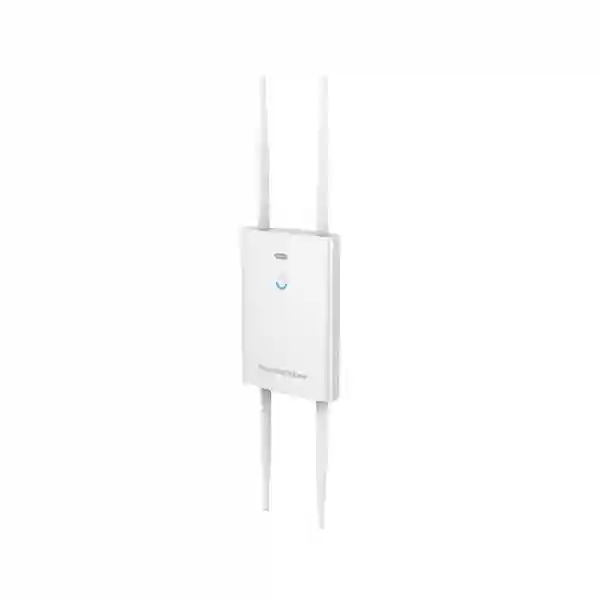
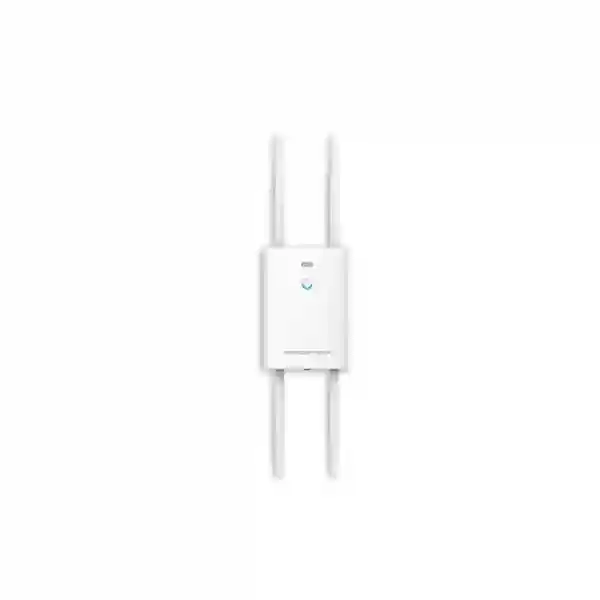
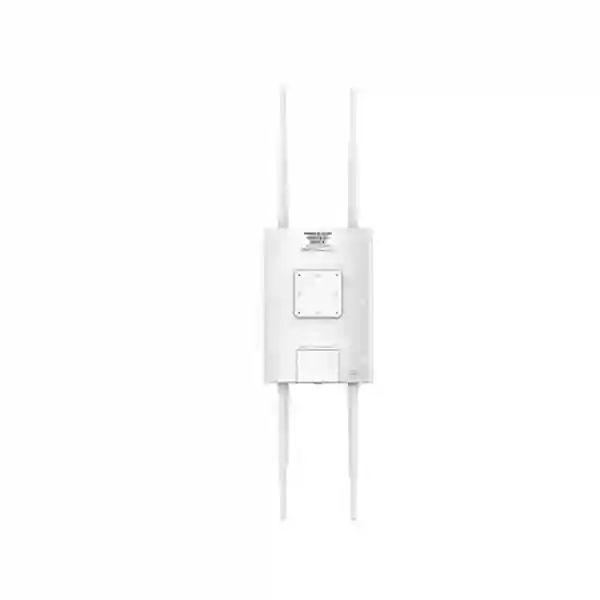
Grandstream GWN7664LR Tanzania
The Grandstream GWN7664LR is a high-performance outdoor 802.11ax Wi-Fi 6 access point designed for medium-to-large businesses, campuses and enterprise sites that need stronger capacity across large indoor or outdoor areas. Grandstream specifies dual-band 4×4:4 MU-MIMO with DL/UL OFDMA, 3.55Gbps aggregate wireless throughput, support for 750+ concurrent Wi-Fi clients and an expanded coverage range of up to 300 metres under suitable conditions. It also includes weather-resistant construction, detachable antennas, PoE/PoE+ powering, advanced QoS and several management paths for single-site or multi-AP deployments.
Choose the GWN7664LR when the project needs an outdoor Wi-Fi 6 AP with higher client density, long-range coverage, rugged deployment capability and centralized management. Final AP count and placement should still be based on a site survey, mounting height, interference, required data rates, client mix and the physical environment.
What the GWN7664LR is designed to solve
Outdoor business Wi-Fi is rarely solved by simply choosing the access point with the highest headline speed. Open yards, courtyards, warehouses, schools, hospitals, resorts, logistics areas, multi-building offices and public-facing business spaces create a combination of coverage, capacity and environmental challenges. The GWN7664LR addresses these scenarios with Wi-Fi 6 efficiency, a 4×4:4 radio design on both 2.4GHz and 5GHz, OFDMA for handling many active devices more efficiently, and weatherproof construction intended for exposed installation. The model is particularly relevant where organizations need a single wireless platform that can support staff devices, handheld terminals, voice-over-Wi-Fi, guest access and operational endpoints without forcing every outdoor segment onto consumer-grade equipment.
The access point should be treated as one layer of a complete network. Real-world performance depends on the wired uplink, PoE availability, VLAN design, channel plan, internet capacity, mounting position, antenna orientation, client capabilities and RF conditions. For Tanzania projects, FourTeck can help buyers connect the access-point requirement to switching, cabling, firewall, guest-network policy and wider infrastructure planning. Review the FourTeck Tanzania technology solutions overview for the broader network architecture context, or browse the FourTeck Tanzania business technology shop when the Wi-Fi project also requires switching, firewall, telephony or supporting infrastructure.
Verified GWN7664LR feature highlights
Wi-Fi 6 capacity
IEEE 802.11 a/b/g/n/ac/ax support with dual-band 4×4:4 MU-MIMO and DL/UL OFDMA helps the AP serve dense device populations more efficiently than older Wi-Fi generations.
Long-range coverage
Grandstream states coverage of up to 300 metres. Actual usable range depends on client radios, obstacles, interference, mounting, local regulatory limits and target data-rate requirements.
750+ clients
The platform is specified for 750+ concurrent Wi-Fi clients, making it suitable for high-density designs when RF planning, backhaul and application bandwidth are engineered appropriately.
Outdoor resilience
The unit provides IP66-level weatherproof capability when installed vertically and is specified for operation from -30°C to 60°C, subject to correct installation and environmental practice.
1G + 2.5G interfaces
One 1 Gigabit Ethernet interface and one 2.5 Gigabit Ethernet interface support faster wired backhaul design and help reduce the chance that a high-capacity radio is constrained by a single slower uplink.
Flexible management
An embedded controller can manage up to 50 local GWN APs, while GDMS Networking provides cloud management and GWN Manager provides an on-premises software management option.
Technical specifications for procurement planning
| Wireless standards | IEEE 802.11 a/b/g/n/ac/ax |
| MIMO | 4×4:4 on 2.4GHz and 4×4:4 on 5GHz, with MU-MIMO and DL/UL OFDMA |
| Aggregate wireless throughput | Up to 3.55Gbps stated aggregate wireless throughput |
| Coverage | Up to 300 metres, environment dependent |
| Concurrent clients | 750+ |
| SSIDs | 32 total, 16 per radio |
| Ethernet | 1 × 1G RJ45 and 1 × 2.5G RJ45 |
| Power | 802.3af / 802.3at PoE; maximum power consumption 18W |
| Security | WPA/WPA2 personal and enterprise modes, WPA3, secure boot, signed critical data/control protection, per-device certificate and randomized default password |
| Network features | IPv4, IPv6, 802.1Q, 802.1p, 802.1x, 802.11e/WMM, 802.11h, VLAN, TOS |
| Mounting | Wall or pole mount; mounting kits included |
| Environmental | Operating temperature -30°C to 60°C; IP66-level weatherproof capability when installed vertically |
Important: quoted maximums describe product capability, not guaranteed site performance. Regulatory limits, local frequency availability, RF noise, building materials, antenna orientation, client-device capability and required application throughput can change practical results.
Deployment, switching and security considerations
A GWN7664LR deployment should start with the intended service area and the experience users need. A parking area that only needs basic messaging and scanning has a different design target from an outdoor event area carrying video calls, or a warehouse yard where handheld terminals need fast roaming. The 300-metre stated range is useful as a capability reference, but it should not be converted into a fixed coverage circle. Wi-Fi is two-way communication: a phone or handheld device may transmit at lower power than the access point, and obstacles or interference can weaken the return path.
Power and backhaul also need confirmation. The unit accepts PoE/PoE+, so procurement teams should check both the Ethernet run and the PoE budget of the switch. Where multiple APs, cameras and phones share the same switch, the total power budget can matter as much as the number of physical ports. For larger sites, faster uplinks, VLAN separation and documented cabling help prevent hidden bottlenecks. FourTeck’s Tanzania IT and network services page explains the broader design and implementation approach around wireless, switching, security and infrastructure.
Security design should separate staff, guest and operational traffic where appropriate. WPA3 support provides a modern security option, while 802.1Q VLAN integration can help map SSIDs to different network zones. The firewall should enforce the intended policy between those zones, and guest access should normally avoid unnecessary reachability to business resources. Management credentials, firmware, backups and administrator permissions are operational controls that should be included in the handover plan rather than left as defaults.
Grandstream GWN7664LR Tanzania
For organizations evaluating the Grandstream GWN7664LR in Tanzania, the most important question is whether the site needs a high-capacity outdoor wireless layer rather than a standard indoor access point. Business environments can include open compounds, warehouse yards, school campuses, hospitals, hospitality properties, logistics sites, offices with courtyards and multi-building facilities. In these locations, signal must travel through or around structures while maintaining enough capacity for the expected mix of phones, laptops, handheld terminals, scanners and operational devices. The GWN7664LR brings Wi-Fi 6 radio efficiency, 4×4:4 MU-MIMO, OFDMA and high client capacity to that problem, but a useful design still begins with a floor or site plan and an understanding of where people actually work.
Tanzania deployments should pay particular attention to mounting and cabling conditions. Outdoor Ethernet routes need to be protected, terminations should be properly housed, and the access point should be mounted in the orientation required for its weatherproof rating. PoE design can reduce the need to provide mains power at the AP location, but cable length, switch power budget and grounding or surge-protection practices must be reviewed as part of the overall installation. Where a site has intermittent power, the switch and upstream network equipment may also need suitable UPS support if wireless continuity matters operationally.
Procurement teams should share the intended coverage zones, estimated concurrent users, device types, internet capacity, existing switches, preferred management method and whether the network requires separate staff, guest, voice or device SSIDs. That information makes it possible to determine whether the GWN7664LR is appropriate and how many units are likely to be required. Buyers should not assume that one high-range AP will replace a correctly planned multi-AP system when buildings, trees, walls or heavy device density change the RF environment.
For organizations with a broader infrastructure project, the GWN7664LR can be planned alongside managed PoE switching, firewalls, structured cabling and Grandstream voice endpoints. This is particularly valuable when voice-over-Wi-Fi or roaming applications are part of the requirement, because QoS, VLAN policy and consistent AP settings become part of service quality. FourTeck Tanzania can help define the quotation around the actual site rather than treating the AP as an isolated purchase.
Grandstream GWN7664LR Dar es Salaam
Dar es Salaam buyers often evaluate outdoor Wi-Fi in environments where a business campus combines office space, parking, loading areas, warehouse zones and public-facing customer areas. The GWN7664LR can suit these mixed environments when the requirement extends beyond indoor room coverage and users need stable connectivity while moving between buildings or outdoor work areas. A logistics company may need wireless access for handheld inventory devices around loading bays. A hotel or commercial property may want guest Wi-Fi around entrances and outdoor seating. A school or institution may need controlled student and staff connectivity across a courtyard. Each of these situations uses the same access-point platform differently, so the design should focus on service zones rather than simply counting square metres.
Dense commercial areas can introduce significant RF competition from neighboring networks. Channel planning therefore matters even when the AP itself has high radio capacity. A survey can identify which parts of 2.4GHz and 5GHz are congested and whether access points should operate at reduced transmit power to improve roaming and limit co-channel interference. The GWN7664LR supports multiple SSIDs and VLAN-aware design, which is useful where a Dar es Salaam business wants to keep employee traffic, visitor internet access and operational devices logically separated.
Wired infrastructure should be checked before ordering. If the access point is expected to carry large amounts of traffic, the available uplink and switch architecture should match that demand. The model provides 1G and 2.5G Ethernet interfaces and can be powered by PoE/PoE+. A quotation should therefore confirm whether the existing switch supports the required power standard and whether its total PoE budget is sufficient for all connected equipment. Cabling routes to rooftops, exterior walls or poles should be planned with weather exposure, maintenance access and physical protection in mind.
For organizations managing several Dar es Salaam sites, centralized management can simplify administration. The embedded controller is suitable for smaller local GWN environments, while cloud or on-premises management can provide a broader view across multiple APs. The best management choice depends on who will operate the network, where administrators are located, change-control requirements and the number of sites involved. A well-written handover should document SSIDs, VLANs, administrator access, AP locations, switch ports and firmware responsibility so the wireless service remains supportable after installation.
Grandstream GWN7664LR Mwanza
In Mwanza, the GWN7664LR can be considered for businesses and institutions that need to extend reliable Wi-Fi beyond conventional office interiors. Potential requirements include hospitality compounds, education facilities, light-industrial sites, warehouses, yards and multi-building offices. The model’s outdoor construction and long-range positioning make it especially relevant where installing a standard indoor AP near a window would provide unpredictable coverage or expose equipment to unsuitable conditions. A proper outdoor AP can be mounted where the radio signal is needed while remaining connected to the wired network through PoE.
Terrain, building construction and line of sight should be considered before estimating AP quantity. A stated coverage figure of up to 300 metres is not a guarantee that every client will achieve the desired throughput at that distance. Walls, roofs, metal structures, shelving and vegetation all affect signal quality. The client side also matters: a modern laptop with a strong radio can behave differently from a compact handheld terminal or phone. A Mwanza project should therefore define the weakest or most important client type and design for that device rather than assuming every client will match the AP’s radio capability.
Businesses planning operational Wi-Fi should identify the applications running over the network. Barcode scanning and messaging use modest bandwidth but can be sensitive to interruptions while a user walks through a facility. Video meetings and cloud applications consume more capacity and respond poorly to congestion. Voice-over-Wi-Fi requires good roaming behavior and QoS. The GWN7664LR supports advanced QoS and mesh features, but configuration, backhaul and neighboring AP placement determine whether those capabilities translate into stable user experience.
Before a quotation is finalized, Mwanza buyers should provide a simple site plan, approximate mounting locations, expected user count, existing switch model, available internet speed and whether a firewall or captive portal is already present. This information helps determine accessories, cabling and deployment effort. Where the AP will serve critical business activity, consider how upstream equipment is powered and protected. A robust outdoor access point cannot maintain service if the PoE switch, router or internet link is unavailable, so resilience planning should cover the whole network path.
Grandstream GWN7664LR Arusha
Arusha has a wide variety of business environments in which outdoor wireless can support operations, including hospitality properties, offices, institutional campuses, tourism-related facilities, schools, warehouses and compounds with separate buildings. The GWN7664LR is suited to projects where coverage must continue across semi-outdoor or exposed spaces and where client density can rise during busy periods. Wi-Fi 6 technologies such as OFDMA and MU-MIMO are valuable when many devices contend for airtime, but they should be combined with careful radio planning and adequate wired capacity.
Hospitality and guest environments often require a different design from employee networks. Guest users may arrive with many kinds of phones and laptops, and their traffic should normally be separated from internal business resources. Multiple SSID and VLAN support allows a design in which staff, guests, voice endpoints and operational equipment receive different policies. A captive portal can be considered where guest onboarding requires it, while the firewall can control internet access and block inappropriate communication between network segments. The access point itself is one part of that overall security model.
Outdoor installation should also account for maintenance. Mounting a device at maximum height is not automatically the best choice; the antenna pattern, target area, accessibility and surrounding structures all matter. The GWN7664LR includes wall and pole mounting options, and its detachable antennas provide flexibility for different scenarios. Installers should protect the cable route and follow the required vertical orientation for IP66-level weatherproof capability. Where lightning and electrical exposure are concerns for an exterior run, the project engineer should assess appropriate grounding and surge-protection measures within the wider site design.
For an Arusha quotation, it is useful to provide site photographs, a rough map, the number of buildings, intended outdoor coverage zones, peak users, existing switch infrastructure and any plan to connect Grandstream Wi-Fi phones or other real-time applications. This makes the proposal more accurate and helps avoid unnecessary equipment. If the site already has indoor APs, the new outdoor unit should be integrated into the same channel, roaming and VLAN plan rather than configured as an independent network that competes with existing radios.
Grandstream GWN7664LR Dodoma
Organizations in Dodoma considering the Grandstream GWN7664LR may be planning wireless access across institutional grounds, office compounds, education facilities, logistics areas, public-service sites or growing business premises. These projects benefit from defining both coverage and capacity. Coverage asks whether a device can connect in the intended area; capacity asks whether the network can carry the number and type of active devices at the expected performance level. Because the GWN7664LR is positioned for high density as well as long range, it is a strong candidate when both questions matter.
A government or institutional site, for example, may require separate wireless networks for staff, visitors and operational devices. The AP supports multiple SSIDs, WPA3 and VLAN-aware design, but policy should be coordinated with the switch and firewall. Staff networks may need internal application access, guest users may need internet only, and device networks may require tightly limited communication to specific servers. Separating these functions reduces unnecessary trust and can make troubleshooting easier because traffic has deliberate boundaries.
Dodoma projects should also consider how access points will be managed over time. A small site may find the embedded GWN controller sufficient, while an organization with several branches may prefer centralized cloud management. On-premises management may be appropriate where local control is a design priority. The management choice influences how configuration changes, firmware updates, monitoring and administrator roles are handled, so it should be agreed before rollout rather than decided after all devices are installed.
Procurement teams can improve quotation quality by documenting expected AP quantity, coverage zones, required SSIDs, VLAN IDs, user groups, upstream switch models, available PoE budget, firewall platform and internet links. It is also worth identifying any future expansion areas. A Wi-Fi installation that anticipates additional buildings or user growth can reserve switch ports, cabling pathways and management capacity from the beginning. The GWN7664LR is capable hardware, but long-term value comes from integrating it into a network that is easy to expand and maintain.
Grandstream GWN7664LR UAE
For UAE projects, the GWN7664LR is relevant to warehouses, logistics facilities, hospitality sites, education campuses, industrial compounds and businesses that need outdoor or semi-outdoor Wi-Fi 6. Heat exposure, reflective building materials and high device density can make wireless planning more demanding than a simple indoor office installation. Grandstream specifies a maximum operating temperature of 60°C for the unit, but environmental design should still consider direct sun exposure, mounting position, cable protection and the conditions surrounding the PoE switch or network cabinet.
Large warehouses and logistics areas should focus on device behavior, not only range. Handheld terminals may be used continuously while staff move through aisles or loading zones, so roaming design and cell overlap become important. Metal racks can create reflections and signal shadows. Outdoor yards may have clearer line of sight but wider areas. In both cases, AP placement should be based on RF conditions and operational routes. The GWN7664LR’s 4×4:4 Wi-Fi 6 architecture and 750+ client capability provide strong capacity potential, but the channel plan and wired network determine how effectively it is used.
UAE buyers should confirm that the intended frequency configuration follows local regulatory requirements and that the deployment uses approved operating settings. The access point supports both 2.4GHz and 5GHz, but not all channels or power levels are identical across regions. Central management simplifies consistent configuration across multiple APs and sites. Organizations with branches in Tanzania and the UAE can also benefit from a common wireless design standard covering SSID naming, VLAN mapping, security mode, administrator control and documentation, even if local RF settings differ.
A procurement request should include project location, indoor versus outdoor coverage, device types, expected concurrent clients, existing switches, internet bandwidth and whether guest portals, voice-over-Wi-Fi or multi-site management are required. Regional requirements can then be coordinated through FourTeck’s broader network rather than assuming that one configuration fits every country. The aim is a repeatable architecture with local implementation details validated for each site.
Grandstream GWN7664LR Uganda
The Grandstream GWN7664LR can support Uganda organizations that need business-grade outdoor Wi-Fi for compounds, schools, hospitals, hospitality, warehousing, agriculture-related facilities or multi-building offices. These sites often need a practical balance between reach and manageability. Rather than installing many consumer-grade devices with separate settings, a centrally managed GWN design can apply consistent SSIDs, security profiles and network policies while giving administrators a clearer view of connected APs.
Before deciding on AP quantity, the site should be divided into coverage zones based on actual work or user behavior. A courtyard used by visitors has different needs from a warehouse loading zone with scanners, or an outdoor staff area carrying voice calls. The GWN7664LR’s long-range capability can reduce the number of mounting points in suitable open spaces, but dense users or obstacles can still require additional APs. Designing for client throughput and roaming quality is more reliable than designing only for visible signal strength.
The wired network should be reviewed at the same time. PoE/PoE+ can simplify installation, but the switch must have enough total power budget and a suitable uplink. Separate VLANs can be used for business, guest and operational traffic, with firewall rules enforcing the allowed communication. Where voice-over-Wi-Fi is important, QoS should be end-to-end: marking or prioritization at the AP is only useful when switching, routing and internet paths are also configured to preserve the service intent.
Organizations with Uganda and Tanzania operations can use a common procurement template covering model, mounting kit, switch power, cable route, VLANs, management, testing and handover. FourTeck’s Uganda technology solutions site provides regional context for connected IT, telephony and networking requirements. A quotation should still reflect the individual site rather than assuming identical environmental or infrastructure conditions across branches.
Grandstream GWN7664LR Kampala
Kampala organizations may need outdoor Wi-Fi around offices, hospitality venues, campuses, retail compounds, warehouses and mixed-use business properties. In dense urban locations, surrounding networks can create additional interference, particularly in the 2.4GHz band. The GWN7664LR’s dual-band Wi-Fi 6 design gives administrators flexibility to favor 5GHz for capable clients while retaining 2.4GHz for compatibility and reach, but the right channel plan depends on the local RF environment.
For business properties with guest access, it is useful to separate visitor traffic from staff and operational devices. The GWN7664LR supports multiple SSIDs and VLAN integration, enabling the wireless layer to map different user groups into separate network segments. The upstream firewall can then provide internet-only access for guests, tighter controls for device networks and internal application access for authenticated staff. This layered design is more secure and easier to troubleshoot than placing every wireless client on one flat network.
Kampala deployments should also check physical installation details. Exterior cable runs need weather-resistant routing and should avoid unnecessary exposure or sharp bends. Pole and wall mounting positions should balance radio coverage with maintenance accessibility. Mounting the AP too close to large metal surfaces can alter RF behavior, while hiding it inside an enclosure can reduce performance and compromise thermal conditions. The installer should preserve the intended antenna orientation and vertical installation required for the product’s stated weatherproof capability.
When requesting a quote, businesses should describe whether the priority is a wide outdoor coverage area, high concurrent-user capacity, reliable roaming or connectivity for a particular application. They should also identify the existing switch, firewall and internet service. This lets the network design address the whole traffic path. A premium access point connected to a congested switch or undersized internet link will not deliver the user experience implied by its wireless specifications.
Grandstream GWN7664LR Arua
In Arua, outdoor wireless projects may involve compounds, education, health facilities, warehouses, NGOs, branch offices or operational sites where the distance between users and indoor network equipment makes a conventional access point unsuitable. The GWN7664LR can extend business Wi-Fi into these spaces with weather-resistant construction and a long-range radio design, while still supporting centralized administration. This is useful when local staff need simple day-to-day operation but a central IT team wants consistent configuration across locations.
The first planning step is to identify critical zones. If connectivity is most important around a gate, loading point, clinic wing or outdoor working area, AP placement should prioritize those areas rather than trying to maximize theoretical radius in every direction. The next step is to identify client devices and required applications. Handheld devices may have smaller antennas than laptops and can become the limiting factor. Cloud applications may need dependable internet capacity, while local applications may depend mainly on the LAN.
Power resilience can be particularly important for operational sites. Because the access point receives power through Ethernet, the availability of the PoE switch becomes central to service continuity. If wireless is needed during short mains interruptions, the switch, firewall and relevant upstream equipment should be included in UPS planning. Cabling quality also matters; a distant outdoor AP should not be connected through marginal cabling simply because the radio itself has long range.
Arua buyers can improve supportability by asking for a documented installation with clear AP names, mounting locations, switch-port assignments, VLAN mapping and management credentials. That documentation helps remote teams diagnose whether a future issue is related to the access point, the wired uplink, PoE, internet service or client behavior. The GWN7664LR’s management options are most valuable when configuration and ownership are organized from the start.
Grandstream GWN7664LR Mbarara
Mbarara organizations can use the GWN7664LR for business environments where wireless access must cross semi-open areas, yards or multiple buildings. Warehouses, education sites, hospitality properties, healthcare compounds and regional offices can all benefit from centrally managed outdoor Wi-Fi, but the correct design will differ by application. A warehouse may prioritize handheld roaming and reliability. A hotel may prioritize guest capacity and portal access. A school may need clear separation of staff and student networks. The access point provides the radio and management features to support these designs, while the broader network provides the policy and backhaul.
The 750+ client specification indicates substantial capacity potential, but it should not be interpreted as a recommendation to place hundreds of active high-bandwidth users on one AP. Airtime, application mix and client capability determine practical density. Video-heavy usage consumes much more wireless capacity than messaging or scanning. Where many users gather in one zone, additional APs operating on a coordinated channel plan can produce a better experience than relying on one device at maximum range.
For procurement, the PoE design should be confirmed before installation. The GWN7664LR supports 802.3af/802.3at power, and its maximum consumption is specified at 18W. That is manageable for modern PoE switches, but multiple APs combined with IP phones or cameras can consume a substantial total budget. Switch selection should therefore account for total powered-device demand and leave reasonable headroom for expansion.
Mbarara buyers should also consider how configuration will be maintained. A local embedded controller can be straightforward for a single small site. Cloud management can make sense for dispersed branches, while GWN Manager provides an on-premises path. The decision should reflect administrative responsibility, number of APs, internet availability and IT policy. Whichever method is chosen, firmware management, configuration backups and administrator access should be documented as part of normal network operations.
Grandstream GWN7664LR Gulu
The GWN7664LR can be considered in Gulu for organizations needing outdoor Wi-Fi across compounds, education facilities, healthcare sites, warehouses, offices and other locations where users move between indoor and outdoor areas. One practical advantage of an enterprise access-point platform is that the wireless service can be designed as a system rather than a group of standalone radios. SSIDs, authentication, VLANs, QoS and firmware can be managed consistently, reducing the risk that each coverage area develops different settings over time.
Outdoor range should be tested against real devices. A good design does not stop once a phone can see the network name; it checks signal quality, data rate, latency and application behavior at the edges of the required coverage area. If roaming is important, testing should include movement between AP cells. Where the GWN7664LR is used with other GWN access points, consistent configuration and deliberate overlap help clients transition more smoothly.
Physical planning is equally important. The device supports wall or pole mounting, and the cable route should be protected from weather, accidental damage and unnecessary electrical exposure. Network cabinets and PoE switches need their own suitable environment. A rugged outdoor AP cannot compensate for a poorly ventilated switch cabinet, unstable power or damaged Ethernet cabling. For mission-relevant wireless, the entire service chain should be treated as infrastructure.
A Gulu quotation should identify the target area, peak users, applications, existing network equipment, required security zones and any future expansion. It is also useful to state whether the project requires only equipment supply or includes design, installation, testing and documentation. Clarifying scope avoids comparing quotations that include different assumptions. The most useful commercial comparison is not just unit price; it is whether each proposal includes the switching, mounting, cabling and configuration needed to make the access point perform correctly.
Grandstream GWN7664LR Kenya
Kenya deployments of the Grandstream GWN7664LR can serve businesses that need Wi-Fi 6 across warehouses, schools, hotels, office campuses, hospitals and outdoor operational areas. The combination of long-range coverage, high client capacity and weather-resistant design makes the model relevant to larger sites, but project success still depends on planning around the building and client environment. In urban offices, neighboring networks can increase interference. In warehouses, shelving and machinery can create reflections. In hospitality, guests may use many different devices and applications. Each environment changes how the access point should be positioned and configured.
A multi-site Kenya organization may also value standardized management. Cloud management can provide centralized visibility across sites, while an on-premises controller can suit organizations that want local software control. The embedded controller can manage a smaller local GWN environment without dedicated hardware. This flexibility can reduce dependence on a single management model and lets the network architecture scale from a modest branch to a broader rollout.
Procurement should verify the supporting network. A 2.5G-capable Ethernet interface creates the opportunity for faster backhaul, but the switch port and upstream design must support the intended speed. Likewise, PoE/PoE+ simplifies power delivery only when the switch has sufficient budget. Guest and staff wireless should be mapped to deliberate VLANs where separation is required, and the firewall should enforce policy between them. These infrastructure details often have more impact on daily reliability than a small difference between access-point specifications.
Organizations coordinating projects across Tanzania and Kenya can use a common bill-of-materials framework while adjusting quantities and RF configuration to each site. The FourTeck Kenya technology solutions site provides regional context for networking and related requirements. For each site, the quotation should still confirm coverage zones, user density, switch model, cable routes, management method and testing scope.
Grandstream GWN7664LR Kuwait
Kuwait projects can use the GWN7664LR where outdoor or semi-outdoor Wi-Fi 6 is needed across business compounds, logistics sites, hospitality, education and large commercial properties. Environmental planning is an important part of these deployments. Grandstream specifies an operating range up to 60°C, but installers should still evaluate direct solar exposure, airflow, cable protection and the location of switches or network cabinets. A device suitable for outdoor use should be installed according to its mounting and weatherproofing requirements rather than treated as indestructible equipment.
The RF design should reflect building materials and surrounding networks. Concrete, metal and reflective surfaces can change propagation in ways that simple distance estimates do not capture. In an outdoor hospitality area, user density may vary sharply by time of day. In a logistics yard, devices may be distributed over a large area but require consistent roaming. In a campus, several buildings may need coordinated channels and common SSIDs. The GWN7664LR supports these different roles, but AP count and power settings should be tuned to the site.
Security can be organized with WPA3, enterprise authentication where appropriate, VLANs and firewall policy. Guest Wi-Fi should normally be isolated from corporate systems, while operational devices may need access only to specific services. Administrator access should be restricted, and firmware should be maintained as part of routine network operations. Where multiple APs are deployed, centralized management can reduce inconsistent configuration and simplify updates.
Kuwait procurement teams should request a clear scope showing whether the quotation includes only the AP or also PoE switching, cabling, mounting, configuration, testing and documentation. The final design should state expected coverage, client density and management method. This makes commercial comparison more meaningful and reduces the chance that installation dependencies appear as unplanned costs after hardware has already been purchased.
Grandstream GWN7664LR Ghana
For Ghana organizations, the Grandstream GWN7664LR can support outdoor enterprise wireless across education, healthcare, hospitality, offices, warehouses, logistics facilities and multi-building compounds. Buyers should begin by identifying the business process that depends on Wi-Fi. A guest service network has different priorities from an operations network used for scanning, VoIP or cloud applications. Once the required applications are clear, the wireless design can be matched to the right coverage, capacity and resilience targets.
The GWN7664LR’s high client specification and Wi-Fi 6 efficiency are particularly useful in shared spaces, but every high-density project should assess airtime demand. A large number of mostly idle devices creates a different load from a smaller number of users streaming video or joining meetings. Where demand is concentrated, several coordinated APs can be preferable to one AP attempting to serve every client from a distant mounting point. This improves signal quality and gives the design more aggregate airtime.
The supporting network should be sized accordingly. 2.5G-capable backhaul can help preserve wireless capacity when upstream switching supports it. PoE makes installation simpler, while VLANs allow staff, guest and device traffic to be separated. Internet bandwidth should be reviewed independently from Wi-Fi capacity; a strong local wireless network cannot create more internet capacity than the service provider delivers. Conversely, a fast internet circuit can still feel slow if the wireless design is congested.
Ghana project teams should include maintenance in the purchasing decision. Ask who will manage AP configuration, how firmware will be updated, where backups are stored and how faults will be isolated. A centralized management platform is useful when several locations share the same wireless standards. Documentation should include AP names, mounting points, switch ports and network segments so future changes can be made without rediscovering the installation from the beginning.
Grandstream GWN7664LR Nigeria
Nigeria businesses evaluating the GWN7664LR may have particularly diverse requirements, ranging from corporate campuses and hotels to factories, logistics yards, schools, hospitals and branch networks. In a large operational site, wireless coverage should be mapped to specific work zones and user groups. Management may need broad outdoor coverage for visitors, while operations teams need consistent connectivity around loading areas or production-adjacent spaces. Separating those needs during design helps prevent the network from being optimized for one group at the expense of another.
Power and network resilience deserve attention where Wi-Fi supports critical workflows. The GWN7664LR itself is powered by PoE, so upstream switches can be included in centralized UPS planning. If internet failover is part of the site architecture, the wireless network should be configured so users and critical devices continue to use the correct gateway or policy during a WAN event. An outdoor AP is therefore linked to switching, routing and firewall design rather than being a standalone utility.
For larger deployments, administrator workflow matters. Cloud management can provide visibility across many APs and locations; on-premises management can suit organizations with different governance preferences; the embedded controller supports smaller local environments. IT teams should decide who can change SSIDs, security settings and firmware, and should use consistent naming and backup practices. This reduces accidental configuration drift across branch networks.
When comparing Nigeria quotations, look beyond model price. Check whether the scope includes the correct mounting accessories, structured cabling, PoE capacity, switch uplinks, VLAN configuration, firewall rules, guest-network requirements and post-installation testing. A cheaper hardware-only quote can become more expensive if these dependencies are discovered later. The best proposal will explain how the GWN7664LR fits into the site architecture and what assumptions were used to calculate AP quantity.
Grandstream GWN7664LR Seychelles
Seychelles projects can place unusual demands on outdoor Wi-Fi because hospitality, resort, office and institutional properties may spread users across open areas, separate buildings and landscaped spaces. The GWN7664LR’s weather-resistant construction and long-range positioning make it relevant to these environments, but site planning should take account of terrain, vegetation, building materials and the path between the AP and client devices. The goal is not merely to make an SSID visible across a property; it is to provide useful application performance where guests and staff actually need it.
Hospitality networks should distinguish guest experience from operational security. Guest traffic can be separated into its own VLAN and controlled by the firewall, while staff devices, payment-related systems or operational endpoints receive different policies. Captive portal functionality can be used when an onboarding workflow is required. The GWN7664LR supports multiple SSIDs, allowing one physical radio system to serve these different logical networks without mixing their access rights.
Outdoor installation in coastal or exposed environments should be approached conservatively. IP66-level capability provides protection when the unit is installed correctly, but cabling, connectors, mounts and upstream enclosures need appropriate protection as well. Maintenance accessibility matters because any exterior device may eventually require inspection, replacement or cabling work. Planning safe access at installation time can reduce disruption later.
A Seychelles quotation should ideally include a property map with intended coverage zones, approximate user density, high-demand areas, existing switch locations and available cable pathways. This allows AP placement to be designed around actual site geometry. If several buildings need wireless service, fiber or suitable copper backhaul between network areas may be more dependable than forcing the radio layer to solve every distance. The GWN7664LR is strongest when it is part of a well-structured wired-and-wireless architecture.
Use cases and decision guidance
Warehouses and logistics
Use the GWN7664LR where yards, loading bays or open operational areas need Wi-Fi 6. Validate roaming with the actual scanners and handheld terminals used by staff, and account for metal structures and changing inventory.
Education and campuses
Outdoor courtyards, paths and shared learning spaces can benefit from long-range access. Separate staff, student and guest networks when policy requires it, and size the design for peak class or event periods.
Hospitality
Hotels and resorts can use centralized AP management to maintain consistent settings across indoor and outdoor guest areas. Guest isolation, captive portal behavior and internet capacity should be planned alongside coverage.
Healthcare and institutions
Business, visitor and device traffic may need different policies. The access point’s VLAN and security capabilities can support this segmentation when coordinated with switching, authentication and firewall rules.
Voice over Wi-Fi
Advanced QoS and Grandstream ecosystem integration make the AP suitable for voice-over-Wi-Fi designs. Roaming, channel overlap and end-to-end QoS should be tested rather than assumed from product capability alone.
Multi-site business
Cloud or on-premises centralized management can help standardize SSIDs, firmware and policy across branches. Keep site-specific RF settings flexible because each location has different interference and geometry.
Quotation checklist for GWN7664LR projects
A useful quotation request should provide enough information to distinguish a product price from a complete deployable solution. Before asking for the GWN7664LR, confirm the following items with your technical or procurement team.
GWN7664LR FAQs
Is the GWN7664LR an outdoor Wi-Fi 6 access point?
Yes. Grandstream positions it as a high-performance outdoor long-range 802.11ax Wi-Fi 6 access point. It has IP66-level weatherproof capability when installed vertically and is designed for medium-to-large business and enterprise environments.
How many clients can the GWN7664LR support?
Grandstream specifies support for 750+ concurrent Wi-Fi clients. This is a platform limit reference, not a promise that hundreds of high-bandwidth users should be assigned to one AP. Practical density depends on application demand, airtime, RF conditions and client capabilities.
Does it really cover 300 metres?
Grandstream states an expanded coverage range of up to 300 metres. Actual usable range varies with obstacles, interference, mounting, antenna orientation, local regulatory limits and the transmit capability of client devices. Design for the required application at the edge, not only for signal visibility.
Can the GWN7664LR be powered by PoE?
Yes. It supports 802.3af/802.3at PoE. Grandstream specifies maximum power consumption of 18W. Check the switch’s per-port capability and total PoE budget, especially when the same switch also powers cameras or IP phones.
Does it have a 2.5 Gigabit Ethernet port?
Yes. The technical specification lists one 1G Ethernet port and one 2.5G Ethernet port. A 2.5G uplink is useful only when the connected switch port and upstream network can also support the intended rate.
How is the GWN7664LR managed?
It includes an embedded controller that can manage up to 50 local GWN APs. It is also supported by GDMS Networking for cloud management and GWN Manager for on-premises software management. The right method depends on site count, governance and administrative workflow.
Can I use it for guest Wi-Fi?
Yes. The platform supports multiple SSIDs, VLANs and captive portal functionality. Guest traffic should be separated from internal business resources using an appropriate VLAN and firewall policy rather than relying only on the wireless network name.
Is it suitable for voice over Wi-Fi?
Grandstream identifies the GWN7664LR as suitable for voice-over-Wi-Fi and provides advanced QoS features. Real-world voice quality also depends on roaming, channel planning, client behavior, switching QoS, internet capacity and PBX or voice-platform design.
How many GWN7664LR access points do I need?
There is no reliable fixed square-metre rule. Quantity depends on site geometry, obstacles, mounting, user density, required applications, channel reuse and client capabilities. A site survey or at least a detailed floor/site plan is the best basis for estimation.
Decision recap: when the GWN7664LR is a strong fit
The Grandstream GWN7664LR is a strong fit when the site needs an outdoor Wi-Fi 6 AP with high client capacity, long-range positioning, 4×4:4 radio capability, PoE powering and flexible management. It is especially useful for campuses, hospitality, warehouses, logistics areas, education, healthcare and business compounds where standard indoor access points are not appropriate for exposed deployment.
It should not be selected only because the specification lists 300 metres or 750+ clients. The correct decision also depends on the weakest client device, required application performance, interference, mounting, switch capacity, PoE budget, VLAN policy, internet bandwidth and future growth. FourTeck can help translate those project details into a bill of materials and deployment approach rather than treating the AP as an isolated line item.
Plan your GWN7664LR deployment with FourTeck
Share the site location, intended coverage area, estimated users, client types, switch model, internet capacity and required network separation. FourTeck can use that information to discuss access-point quantity, PoE switching, cabling, VLANs, firewall policy, management options and installation scope. For organizations that want a broader view of solution design, the FourTeck Tanzania approach explains how networking is considered alongside security, communications and infrastructure rather than as a standalone product purchase.
A good quotation should make the assumptions visible. That gives technical teams, procurement and management a common basis for comparing solutions and reduces the chance that mounting, PoE, cabling or configuration requirements are discovered only after hardware arrives.


Reviews
There are no reviews yet.