
Grandstream GWN7665 Tanzania
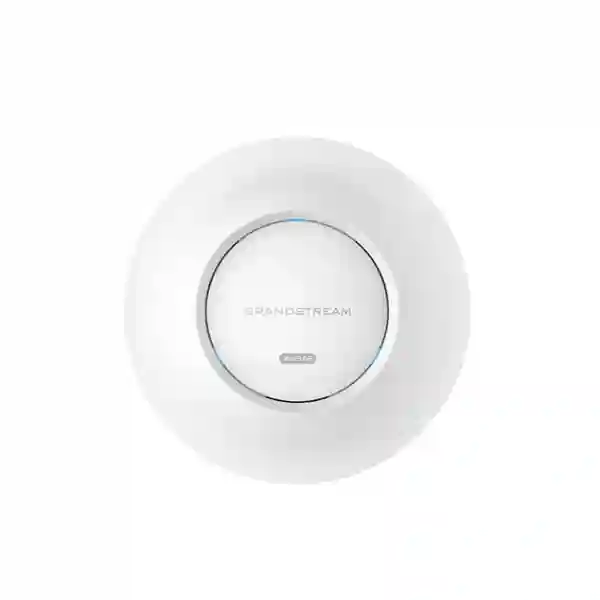
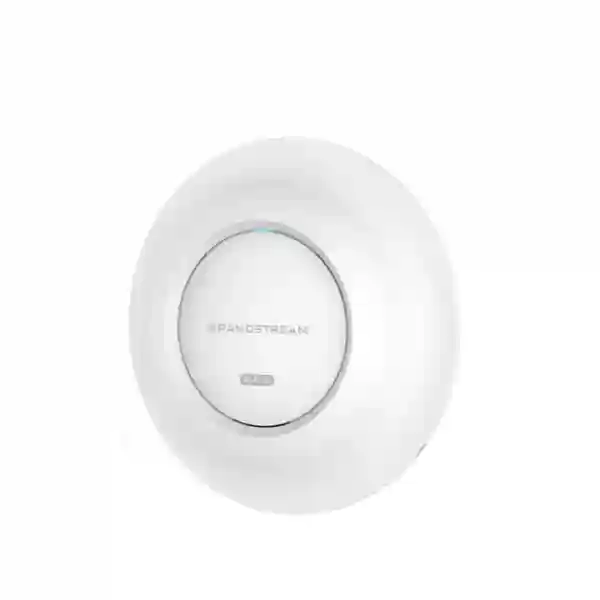
The Grandstream GWN7665 is a business-grade indoor Wi‑Fi 6E access point designed for organisations that need higher wireless capacity, modern 6GHz connectivity and flexible network management without relying on a dedicated hardware controller. It combines 2.4GHz, 5GHz and 6GHz radios in a tri-band 2×2:2 MU-MIMO architecture with downlink and uplink OFDMA, giving network planners more spectrum choices for offices, hotels, schools, clinics, retail locations, shared buildings and other medium-to-high-density environments.
Official Grandstream specifications list up to 5.4Gbps aggregate wireless throughput, support for up to 384 concurrent Wi‑Fi clients, one Gigabit Ethernet port, one 2.5 Gigabit Ethernet port, 48 SSIDs in total, WPA3 security, BLE 5.2, PoE power and up to 175 metres of published coverage in suitable conditions. Actual performance varies with building materials, interference, client capabilities, channel widths, regional radio rules and network design, so a practical deployment should be based on coverage and capacity planning rather than headline figures alone.
Confirm the expected user count, floor plan, wall construction, PoE switch model, multi-gigabit uplink availability, VLAN requirements, guest access policy and management preference before ordering.
Grandstream GWN7665 Overview
The defining capability of the GWN7665 is tri-band operation. Traditional dual-band wireless networks place compatible devices on 2.4GHz or 5GHz. Wi‑Fi 6E adds the 6GHz band for supported client devices, giving designers access to additional spectrum and more options for handling dense user populations. This matters when a business is introducing newer laptops, smartphones or specialist devices that can use 6GHz while still supporting existing 2.4GHz and 5GHz clients. The extra band does not automatically make every device faster, but it can reduce contention and create a cleaner place for compatible modern endpoints when the radio plan is designed correctly.
The access point uses 2×2:2 MU-MIMO on each band and supports OFDMA, technologies intended to improve efficiency when many devices are sharing the wireless medium. The official Grandstream documentation specifies up to 573.5Mbps on 2.4GHz and up to 2403Mbps on each of the 5GHz and 6GHz radios. Those values describe maximum supported PHY rates rather than guaranteed application speed. Real-world throughput is affected by channel width, signal quality, distance, interference, connected-client capability and the available wired and internet capacity behind the access point.
For Tanzania organisations, the model is particularly relevant where business applications, cloud services, video conferencing, voice over Wi‑Fi, staff mobility and guest access must share the same wireless infrastructure. The unit supports advanced QoS, VLAN-related network design, multiple SSIDs, captive portal options and modern Wi‑Fi security. It can be managed by its embedded controller, through Grandstream cloud management, or through GWN Manager for on-premises administration. This gives an IT team the ability to select the control model that fits a single site, a distributed branch network or a policy-driven environment.
Verified GWN7665 Technical Specifications
| Specification | Grandstream GWN7665 |
|---|---|
| Product class | Indoor tri-band 802.11ax Wi‑Fi 6E access point |
| Wireless bands | 2.4GHz, 5GHz and 6GHz, subject to regional regulatory availability |
| Radio architecture | Tri-band 2×2:2 MU-MIMO with DL/UL OFDMA |
| Aggregate wireless throughput | Up to approximately 5.4Gbps across the three radios |
| Concurrent clients | Up to 384 |
| Coverage | Up to 175 metres in favourable conditions; real coverage is environment dependent |
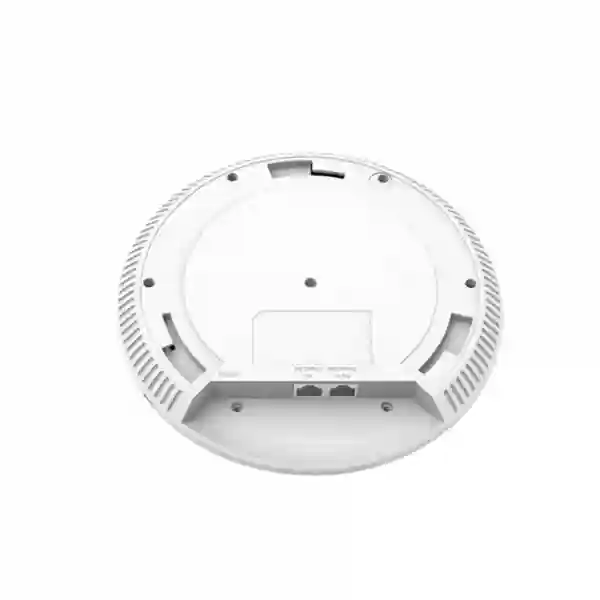
| Network interfaces | 1 × 10/100/1000 Base-T and 1 × 10/100/1000/2500 Base-T Ethernet |
| Power | PoE with automatic power adaptation; official documentation lists 802.3at and a maximum power consumption around 22.55W |
| SSIDs | 48 total, up to 16 per radio |
| Security | WPA/WPA2, WPA3, enterprise options, secure boot, unique device certificate and random default password |
| Bluetooth | BLE 5.2 |
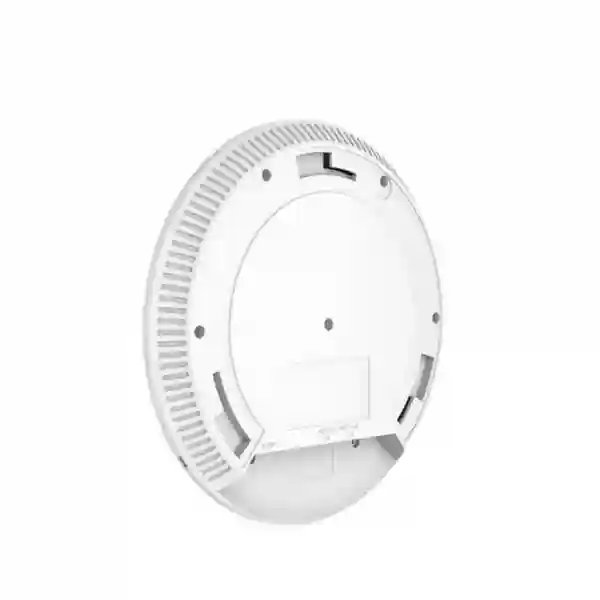
| Mounting | Indoor wall or ceiling mounting; mounting kit included |
Published ranges and speeds are design references, not guaranteed site results. A proper bill of materials should consider client mix, room layout, wall density, access-point overlap, switch PoE budget, uplink capacity, cable category, internet bandwidth and regulatory requirements for the 6GHz band.
Management, Security and Deployment Control
The GWN7665 gives organisations several ways to administer wireless infrastructure. The embedded controller is useful for a local deployment because management capability is built into the access-point platform itself. Grandstream documentation states that the embedded controller can manage up to 50 local GWN access points. For organisations with several sites or teams that need remote visibility, Grandstream cloud management provides another path. GWN Manager supports an on-premises approach for businesses that prefer to host network management in their own environment. The correct choice depends on number of sites, operational policy, IT skills, internet reliability, reporting expectations and how the organisation controls administrator access.
Security should be planned as a full network design rather than a wireless-only feature. The GWN7665 supports WPA3 as well as enterprise authentication options. Secure boot, digital-signature controls and unique device credentials add protection at the device layer, while multiple SSIDs and VLAN design can help separate staff, guest, voice and operational networks. A secure deployment should also include strong administrator access, firmware maintenance, firewall policy, identity control, switch configuration, logging and documented change procedures. For guest Wi‑Fi, captive portal and bandwidth controls can provide a more structured user experience without placing visitors on the same logical network as internal systems.
Related FourTeck Tanzania Resources
Wireless access points are only one part of a business network. The verified FourTeck Tanzania technology solutions page explains how Wi‑Fi, switches, firewalls, voice, cameras and structured cabling fit into a coordinated environment. Buyers planning the GWN7665 can also review FourTeck Tanzania services for design, installation and lifecycle support, browse the Tanzania product shop for related infrastructure, read the FourTeck Tanzania company page for business context, and use the Tanzania contact page to submit quantities, floor plans and deployment requirements. The current Tanzania website exposes a limited number of unique same-domain pages, so only verified URLs are used here rather than inventing product paths.
For projects spanning several countries, FourTeck’s regional network can support consistent technical discussions. Buyers can review FourTeck Kenya for Kenya business IT requirements, FourTeck Uganda for Uganda networking and communications, FourTeck Kuwait for Kuwait technology procurement, FourTeck UAE for UAE integrated IT and telecom projects, and FourTeck Africa for wider regional product research and cross-border project coordination.
Grandstream GWN7665 Tanzania
Businesses evaluating the Grandstream GWN7665 in Tanzania are often trying to solve more than a simple coverage problem. Modern offices, hospitality properties, schools, clinics, retail operations and shared workspaces may already have Wi‑Fi, yet users can still experience congestion at busy times, slow cloud applications, unstable video meetings or inconsistent performance in rooms where many devices are active at once. The GWN7665 is most valuable when the project treats coverage and capacity as separate design goals. Coverage asks whether a usable signal reaches the required spaces. Capacity asks whether the access point can handle the number and behaviour of connected devices when the network is busy. A Tanzania deployment should therefore begin with the expected user count, device types, floor plan and applications rather than with a simple square-metre estimate.
The tri-band architecture can be useful for organisations introducing Wi‑Fi 6E-capable laptops and phones while still supporting older devices on 2.4GHz and 5GHz. The 6GHz band can provide additional spectrum for compatible clients, but its usefulness depends on local regulatory availability and the actual client population. A company where nearly every device is older dual-band hardware may gain more from better placement, channel planning and switching than from 6GHz alone. Conversely, a site with newer endpoints, high user density and significant video or cloud traffic may benefit from placing 6GHz-capable clients on cleaner spectrum. FourTeck can help Tanzania buyers review this device mix before a quotation is finalised.
Infrastructure behind the access point is equally important. The GWN7665 includes a 2.5GbE interface, so a multi-gigabit PoE switch and suitable cabling can help prevent the wired uplink from becoming a bottleneck. If the AP is connected to an older 1Gbps-only switch, it can still operate, but the overall design may not take full advantage of the platform’s aggregate wireless capacity. Buyers should also check switch PoE budgets across all planned access points, especially when the same switch powers IP phones, cameras or other endpoints. VLANs can separate staff, guest, voice and operational traffic, while firewall policy controls what each group can reach.
For procurement, request a current quote rather than assuming stock, delivery time or price from another country. Share the required quantity, delivery destination, desired timeline, existing switch model, floor layout, estimated concurrent users and management preference. If the project includes installation, include ceiling heights, cable routes, rack location and any areas that require particularly strong coverage. This produces a more useful Tanzania quotation and reduces the chance that access points arrive before the switching, cabling or power design is ready.
Grandstream GWN7665 Dar es Salaam
Dar es Salaam organisations often operate in buildings with a mixture of open offices, meeting rooms, reinforced walls, shared floors, reception areas and high-traffic customer spaces. In that environment, selecting the GWN7665 should involve more than placing one access point at the centre of each floor. Radio signals behave differently around concrete, glass, lift cores, partitions and neighbouring wireless networks. A professional design considers where people actually work, which applications they use and how many devices are active during peak periods. The goal is not simply to show full signal bars; it is to provide stable airtime, predictable roaming and enough capacity for business workloads.
The GWN7665 can support dense office areas where employees use cloud applications, collaboration tools, softphones, video meetings and browser-based business systems. It can also support guest access for reception, hospitality or customer environments using separate SSIDs, network segmentation and captive portal options. When voice-over-Wi‑Fi is part of the requirement, Quality of Service and roaming design deserve special attention. Voice traffic is sensitive to delay and packet loss, so the access-point configuration must be coordinated with switch QoS, VLAN design, firewall rules and the internet connection rather than treated as a stand-alone feature.
Dar es Salaam buyers should also consider the wired layer before installing multi-gigabit wireless. A 2.5GbE uplink is most useful when the switch port, cable run and upstream network can support it. The switch must also supply appropriate PoE power across all connected devices. In an existing office, it is worth checking whether cabling is documented and tested, whether uplinks between floors have adequate capacity, and whether the rack has enough power and cooling. In a new office fit-out, wireless planning should be done while cable routes and ceiling access are still easy to modify.
For a Dar es Salaam quotation, provide floor plans where possible, indicate meeting rooms and high-density areas, and list the expected mix of laptops, phones, tablets, scanners, televisions, IoT devices or guest endpoints. If multiple branches are involved, indicate whether central cloud management or an on-premises platform is preferred. This information helps determine whether the GWN7665 is the right AP, how many units are practical, which switch should power them and whether a different Grandstream model would better fit a particular zone.
Grandstream GWN7665 Mwanza
Mwanza businesses considering the Grandstream GWN7665 may be upgrading from consumer Wi‑Fi routers or older business access points that were designed for fewer devices. The difference is important because a modern office can have several endpoints per person: a laptop, smartphone, tablet, Wi‑Fi handset, smart display or specialist device. A wireless network that looked adequate when it was installed can become congested as device counts and cloud applications increase. The GWN7665 provides a platform for handling a larger, more diverse client population, but the design must still account for building layout and how people use the network throughout the day.
In hotels, training facilities, schools, clinics and larger commercial spaces, the 48 available SSIDs can provide flexibility, although creating many networks simply because the device supports them is not good practice. A cleaner approach is to define only the SSIDs required for operational separation. Staff, guests, voice devices, operational equipment and management traffic may need different policies, VLANs and access rules. Keeping the design simple improves troubleshooting and reduces the risk of inconsistent settings across multiple access points. Central management can help standardise these settings when several units or sites are deployed.
The 6GHz radio should be evaluated against the client mix. Newer Wi‑Fi 6E and Wi‑Fi 7 devices can use 6GHz, while older equipment remains on 2.4GHz or 5GHz. In practical terms, this makes the GWN7665 a good candidate for organisations that want to support current users while preparing for a gradual shift to newer client hardware. The higher-frequency band can be more sensitive to walls and distance, so more access points may be needed to deliver strong 6GHz performance through complex indoor spaces. A site survey or floor-plan review helps avoid unrealistic coverage expectations.
Mwanza procurement teams should request a project quotation that includes supporting network components rather than pricing the AP in isolation. Useful information includes quantity, required coverage areas, existing switch ports, PoE budget, cable category, firewall model, internet bandwidth and any requirement for guest access or voice. If installation is included, identify ceiling types and cable routes. This approach produces a more complete bill of materials and gives the business a clearer understanding of what must be ready before deployment.
Grandstream GWN7665 Arusha
Arusha has business environments ranging from offices and professional services to hospitality, tourism, education and mixed-use commercial properties. Wireless requirements can therefore vary widely between a compact administration office, a guest-facing property, a training venue and a multi-building operation. The Grandstream GWN7665 is suitable for indoor deployments where organisations need Wi‑Fi 6E capability, strong multi-user handling and central management options. The correct quantity should be determined from expected device density and the physical environment rather than from a simple maximum-range claim.
Hospitality and guest-oriented deployments require especially careful separation between customer access and internal business systems. The GWN7665 supports multiple SSIDs, VLAN-related network designs and captive portal functions that can help create a dedicated guest experience. Those capabilities should be paired with suitable firewall policy so guest users receive internet access without unnecessary visibility into staff devices, point-of-sale systems, administration networks or other internal services. Bandwidth limits and QoS can also help prevent a small number of users from consuming disproportionate capacity during busy periods.
For conference areas, training rooms and event spaces, capacity is often more important than raw distance. A single room can quickly contain many laptops and phones, and users may be sharing video, cloud documents and streaming content at the same time. The GWN7665’s OFDMA and tri-band design can support efficient airtime use, but access-point placement and channel planning determine how well multiple units cooperate. Poorly placed APs can interfere with each other, while too few units can force many users onto one radio. Professional planning balances cell size, transmit power and overlap to support roaming without excessive contention.
Arusha buyers should provide the type of venue, floor plan, guest capacity, typical meeting sizes, internet bandwidth and existing network hardware when requesting a quote. If the site uses IP phones, security cameras or other PoE devices, the switch’s total power budget should be reviewed across the entire network. If multiple properties or branches are involved, management preference becomes important: cloud visibility can simplify distributed operations, while on-premises management may suit organisations with specific internal policies. FourTeck can structure the discussion around those operational needs rather than assuming one configuration fits every site.
Grandstream GWN7665 Dodoma
Dodoma organisations planning a wireless upgrade may need reliable connectivity across government-related offices, professional services, education, healthcare, hospitality and growing commercial operations. The Grandstream GWN7665 fits indoor environments where a business needs modern Wi‑Fi 6E features and a controlled management platform. It is particularly relevant where users depend on cloud applications, video conferencing, collaboration tools and mobile devices throughout the day. Instead of treating Wi‑Fi as a convenience layer, the deployment should recognise it as part of the business network with clear performance, security and support requirements.
An important buying question is whether the surrounding network is ready for a multi-gigabit AP. The GWN7665 provides a 2.5GbE Ethernet interface, but the practical benefit depends on the switch and cabling. A PoE switch with a compatible multi-gigabit port can provide both power and a faster uplink, while VLAN support can place different SSIDs into separate network segments. Where a legacy switch is being retained, verify its PoE standard, available power and port speed. It may be more cost-effective to upgrade selected switch ports or an access layer rather than replace the entire network, depending on the project.
For sites with several access points, management architecture should be chosen before installation. A small local environment may use the embedded controller, while a distributed organisation may prefer Grandstream cloud management for remote visibility. An on-premises GWN Manager deployment can suit teams that want central control within their own infrastructure. The decision affects how configurations are standardised, how firmware changes are coordinated, and how support staff diagnose issues across multiple locations. Administrator credentials and access permissions should also be part of the network security plan.
When requesting a Dodoma quotation, identify the number of floors, expected concurrent users, applications that are sensitive to latency, and areas where guest access is required. Include existing switch and firewall models if known. For offices with meeting rooms, note which spaces host the most video sessions or large gatherings. For education or training locations, provide class or session sizes rather than just total building occupancy. This information helps size for actual peaks, which is more useful than estimating from the total number of employees or students alone.
Grandstream GWN7665 UAE
UAE businesses evaluating the Grandstream GWN7665 often operate in office towers, clinics, schools, retail environments, hospitality properties, warehouses and multi-branch organisations where Wi‑Fi is expected to support cloud-first workflows. The GWN7665 can serve as a tri-band Wi‑Fi 6E platform for new fit-outs or upgrades where compatible client devices can make use of the 6GHz band. Its value is strongest when the project also addresses switching, cabling, firewall policy and central management, because wireless performance depends on the infrastructure behind the AP as much as on the radio specification itself.
In dense UAE office environments, neighbouring wireless networks can contribute significant 5GHz contention. The 6GHz band can provide additional spectrum for compatible devices and may help reduce congestion for modern clients. However, designers should still account for partitions, glazing, lift cores and other materials that can attenuate higher-frequency signals. Access-point density should be planned for the required data rate at the user location, not simply for basic signal presence. Meeting rooms and collaboration spaces often deserve additional attention because many devices become active at once and video conferencing creates sustained upstream and downstream traffic.
Network segmentation is another common requirement. Corporate devices, guests, IP phones, IoT systems and operational equipment should not automatically share one unrestricted wireless network. The GWN7665 supports multiple SSIDs and enterprise security features that can be mapped into a wider VLAN and firewall design. Captive portals can support controlled guest access, while QoS can help protect time-sensitive traffic. These capabilities should be configured consistently across all APs and documented so future changes do not create configuration drift between branches or floors.
For UAE procurement, specify project quantity, building type, user density, desired management platform and whether the existing switch has 2.5GbE PoE ports. Also include whether the project requires installation, cable testing, rack work or firewall configuration. FourTeck’s UAE technology resources at fourteck.ae can support broader project discussions, while the Tanzania page remains useful for organisations standardising the GWN7665 across East African and Gulf operations. Availability, lead time and commercial terms should be confirmed through a current quotation rather than assumed from online listings.
Grandstream GWN7665 Uganda
Uganda organisations planning business Wi‑Fi may need one platform that can serve headquarters, branch offices, schools, clinics, hotels, retail locations and training facilities. The Grandstream GWN7665 provides tri-band Wi‑Fi 6E, multi-gigabit wired connectivity and flexible management options that can support both stand-alone and multi-site deployments. The most important planning step is to separate requirements for signal coverage, client capacity and business continuity. A site can have strong signal while still performing poorly when too many devices compete for airtime or when the internet and switch uplinks are undersized.
The GWN7665 supports newer 6GHz-capable devices without removing compatibility for existing 2.4GHz and 5GHz clients. This makes it useful for organisations transitioning over time rather than replacing every endpoint at once. Because 6GHz availability and operating parameters are subject to country regulation, wireless design should confirm local regulatory settings and use only permitted channels and power levels. Client support also matters: a Wi‑Fi 5 or Wi‑Fi 6 device without 6GHz capability will continue to use the traditional bands, so the business case should reflect the actual endpoint population.
For branch environments, central management can simplify configuration standards. A common SSID structure, VLAN plan, security policy and firmware process can reduce support effort when the same network model is used in several locations. Cloud management is useful when IT staff need remote visibility, while an on-premises platform may better match some internal security policies. Smaller local installations can use the embedded controller without adding a separate controller appliance. Whichever option is chosen, administrator access should be protected and configuration backups should be part of normal network operations.
Uganda buyers can use FourTeck Uganda for regional technology discussions while preparing a GWN7665 quotation. Provide the location, quantity, floor plans, number of users, existing switch model and internet connection. If the wireless network supports IP phones or video conferencing, highlight those applications so QoS and roaming can be considered from the start. If the site also carries CCTV or other high-bandwidth traffic on the same LAN, uplinks and VLANs should be reviewed to keep one workload from creating unnecessary congestion for another.
Grandstream GWN7665 Kampala
Kampala businesses frequently need wireless networks that work across dense offices, retail floors, hospitality spaces, clinics, schools and shared commercial buildings. The Grandstream GWN7665 is a practical fit where organisations want Wi‑Fi 6E capability and a central management path without relying on a separate controller appliance at every site. A good Kampala deployment begins by mapping where users actually work and move. Reception areas, meeting rooms, executive offices, training rooms, service counters and open workspaces can have very different density and performance requirements even when they are on the same floor.
The access point’s published maximum of 384 concurrent clients should not be interpreted as a recommendation to place that many heavy users on one AP. Real capacity depends on applications, radio conditions and client behaviour. Hundreds of mostly idle devices create a different load from a smaller number of users on continuous video calls, cloud backups or large file transfers. Designers should estimate active concurrency and airtime demand, then place enough APs to keep performance predictable. Where newer client devices support Wi‑Fi 6E, moving some traffic onto 6GHz can provide additional spectrum and reduce contention on 5GHz.
The wired network must support the wireless plan. A multi-gigabit PoE switch is useful when the project intends to make practical use of the GWN7665’s 2.5GbE interface. Managed switching also provides VLANs and visibility that help separate staff, guest and device traffic. For businesses running VoIP or Wi‑Fi calling, the switch and firewall should preserve QoS markings and avoid unnecessary bottlenecks. UPS protection for network switches and internet equipment can also improve continuity during short power events, depending on the site’s resilience requirements.
Kampala procurement teams should ask for a bill of materials that includes access points, PoE switching, uplinks, cabling, mounting and management requirements rather than purchasing APs alone. Share floor plans, branch count, user numbers and the current network topology. If the project is replacing existing APs, provide the old model and describe the main problems: dead zones, congestion, roaming, guest access, management difficulty or insufficient speed. That information helps determine whether the GWN7665 addresses the root issue or whether the network requires changes in placement or wired infrastructure as well.
Grandstream GWN7665 Arua
Arua organisations choosing wireless infrastructure may place a high value on simple administration, dependable local performance and the ability to expand without redesigning the entire network. The Grandstream GWN7665 can suit indoor offices, schools, clinics, hotels, training centres and commercial sites where client counts are growing and cloud applications are becoming more important. Its tri-band Wi‑Fi 6E platform provides additional spectrum for compatible clients while continuing to serve older devices on 2.4GHz and 5GHz. This mixed-client capability can make upgrades more practical because endpoint replacement can happen gradually.
Smaller deployments may use the access point’s embedded controller, reducing the need for a separate management appliance. As the number of APs or sites grows, cloud or on-premises management can provide broader visibility and more consistent policy. That transition path is useful for organisations that are starting with one building but expect future branches or additional floors. The network should use clear naming, documented SSIDs, VLAN assignments and administrator permissions from the beginning so expansion does not create a patchwork of configurations that are hard to support later.
Arua sites should also plan around the available wired infrastructure. The AP can use a 2.5GbE interface, but older switches or cabling may limit the backhaul. This does not necessarily prevent deployment, but it changes where the upgrade delivers value. If the existing switch provides only Gigabit Ethernet, the AP can still offer better wireless efficiency and additional spectrum, yet the wired link may cap aggregate traffic. When replacing the switch, verify both multi-gigabit port support and total PoE budget, especially if cameras and IP phones share the same device.
For an Arua quotation, provide the number of rooms, expected daily and peak users, internet speed, existing AP and switch models, and any areas where coverage has historically been weak. If the building has thick walls or separated structures, floor plans or simple sketches can be highly useful. Identify whether guest Wi‑Fi, staff authentication or voice-over-Wi‑Fi is required. These details allow the design conversation to focus on practical outcomes, such as stable coverage, controlled guest access and simpler network support, rather than only the maximum specifications printed on the product datasheet.
Grandstream GWN7665 Mbarara
Mbarara businesses and institutions considering the Grandstream GWN7665 may be planning new offices, expanding existing premises or replacing aging access points that can no longer cope with modern device density. Wi‑Fi usage has changed significantly: employees now depend on cloud applications, video meetings and mobile workflows, while guests, IoT devices and business equipment also consume wireless airtime. The GWN7665 is designed for medium-to-high-density indoor environments and provides a tri-band Wi‑Fi 6E architecture that can distribute compatible devices across 2.4GHz, 5GHz and 6GHz.
For education and training environments, user density can change sharply by time of day. A classroom may be quiet between sessions and then suddenly fill with laptops and smartphones. Designing only for average usage can therefore underestimate peak demand. The access-point count should reflect the busiest periods, expected application mix and client capabilities. Captive portal and separate guest networks can also support visitor or student access while protecting administrative systems. Where enterprise authentication is required, the broader identity and RADIUS design should be reviewed as part of deployment.
Healthcare and professional environments may prioritise controlled access and predictable roaming. Multiple SSIDs should be used deliberately rather than excessively, and each network should map to an appropriate security policy. WPA3 support can strengthen wireless security for compatible clients, while secure device boot and unique credentials add protection at the AP level. These controls are most effective when paired with disciplined administrator permissions, firmware maintenance and firewall segmentation. Wireless security is not a replacement for a properly designed LAN and security gateway.
When requesting a Mbarara quote, share the intended use case, floor plan, number of staff and visitors, devices per person, switch model and whether the network must support voice or video as priority applications. If the organisation has several buildings, indicate whether they are connected by fiber or other uplinks. If the project includes structured cabling, plan AP positions before cables are terminated. Installing cable to an arbitrary ceiling point can limit later optimisation, while a placement plan based on user areas and building materials gives installers a clear target from the start.
Grandstream GWN7665 Gulu
Gulu organisations upgrading business connectivity can use the Grandstream GWN7665 as part of a structured wireless design for offices, schools, healthcare sites, hospitality venues and growing commercial operations. The AP’s Wi‑Fi 6E capability is most relevant where modern client devices and higher user density justify additional spectrum. A good project should first identify the business problem: insufficient coverage, slow performance at busy times, poor roaming, difficult management, weak guest controls or an aging wired network. Matching the design to the real problem avoids replacing hardware without solving the underlying cause.
For sites moving from one or two consumer routers to managed business Wi‑Fi, the improvement is not only speed. Centralised configuration can standardise SSIDs, security and VLAN settings across multiple APs. The GWN7665 supports embedded, cloud and on-premises management options, allowing the organisation to choose an operational model appropriate to its size. This becomes particularly useful when adding branches or multiple buildings because settings can be documented and repeated instead of re-created manually on each device.
The 2.5GbE uplink should be considered in network planning. If the switch supports a compatible multi-gigabit PoE port and the cabling is suitable, the AP can pass more than one Gigabit of aggregate wired traffic to the LAN. Where the existing network is Gigabit-only, buyers should evaluate whether that limitation matters for actual applications. For many ordinary office workloads, the upgrade may still deliver significant benefits through better wireless efficiency and management. For high-density or data-heavy environments, multi-gigabit switching becomes more important.
Gulu buyers should also plan for support and maintenance. Keep a record of AP locations, switch ports, SSIDs, VLANs, firmware versions and administrator access. Label cables and document rack connections. If network monitoring is available, watch for unusual client counts, channel utilisation and repeated disconnections rather than waiting for user complaints. A quotation request should therefore include not only hardware quantities but also any requirement for installation, configuration, testing or documentation. FourTeck Uganda can provide a regional contact path for broader Gulu networking discussions.
Grandstream GWN7665 Kenya
Kenya is a strong commercial market for managed business Wi‑Fi, and buyers comparing the Grandstream GWN7665 often see online pricing alongside alternatives from many vendors. The most useful comparison goes beyond purchase price. Evaluate wireless bands, client capacity, uplink speed, PoE requirements, security, management options and the practical cost of supporting the network over time. The GWN7665 adds a 6GHz radio and 2.5GbE connectivity to the traditional 2.4GHz and 5GHz bands, positioning it for organisations that want Wi‑Fi 6E while continuing to support older devices.
In Nairobi and other dense business areas, neighbouring wireless networks can contribute to channel congestion, especially on 2.4GHz and parts of 5GHz. 6GHz can create additional clean spectrum for compatible clients, but indoor building materials and shorter effective range at higher frequencies mean AP placement remains important. Large meeting rooms, co-working areas and training venues often require capacity-focused designs with more APs at lower power rather than one high-powered unit attempting to cover a very large area. Roaming performance improves when cells overlap appropriately and client devices can move without remaining attached to a distant AP.
Kenya businesses operating branches can use central management to maintain consistent wireless policy. Cloud management is attractive when IT teams need remote access to multiple locations, while on-premises management can fit internal policy or network architecture requirements. The embedded controller can work well for smaller local deployments. In every case, configuration should align with managed switches and firewalls. Guest Wi‑Fi, staff access, voice and operational devices may each require different VLANs and permissions, and these policies should remain consistent from AP to switch to security gateway.
Before ordering for Kenya, request current commercial terms and verify quantity availability. Include whether the project needs only hardware or also PoE switching, cabling, configuration and installation. Share the number of users, floors and high-density areas so the proposed quantity reflects actual demand. FourTeck Kenya can support wider infrastructure discussions, while a cross-border organisation can use common configuration standards between Kenya and Tanzania to simplify support. This is particularly valuable for companies that want the same SSID names, security policies and management practices across regional branches without assuming each site requires the same number of access points.
Grandstream GWN7665 Kuwait
Kuwait organisations looking at the Grandstream GWN7665 are often upgrading office, hospitality, education, healthcare or retail networks where wireless has become a primary access method for business devices. The model combines tri-band Wi‑Fi 6E with a 2.5GbE wired interface and flexible management, making it a useful option where newer 6GHz-capable clients are entering the environment. As with any Wi‑Fi 6E deployment, confirm the local regulatory operating profile and ensure that the AP is configured for permitted frequencies and power levels in the intended market.
A key planning point in Kuwait office environments is the difference between internet speed and local Wi‑Fi capacity. A business can have a high-speed internet circuit and still experience poor wireless performance if too many users share one access point, if APs interfere with each other or if the wired switch is oversubscribed. Conversely, excellent Wi‑Fi cannot make a slow WAN link faster. The best design considers the full path: client device, radio, AP, Ethernet uplink, access switch, core network, firewall and internet connection. Monitoring each layer makes troubleshooting far more effective than repeatedly changing wireless settings without data.
The GWN7665’s security and segmentation features can support different user groups. Staff networks may use enterprise authentication, while guest networks can be isolated and presented through a captive portal. IoT devices or meeting-room systems may need their own VLANs with limited access to internal resources. These policies should be defined according to business requirements and implemented consistently across switches and firewalls. The AP’s WPA3 and device security features add protection, but the network remains only as secure as its overall administrative and access-control practices.
For Kuwait quotations, include building type, user density, number of floors, switch models, cabling status and management preference. Multi-gigabit switching should be considered if high aggregate wireless traffic is expected. FourTeck Kuwait provides a verified regional technology portal for business IT, networking and Wi‑Fi discussions. Procurement teams should confirm current stock, warranty route, lead time and delivery terms through the commercial quotation rather than relying on static online prices, because project quantities and availability can change.
Grandstream GWN7665 Ghana
Ghana businesses can consider the Grandstream GWN7665 when planning an indoor wireless network for offices, education, hospitality, healthcare, retail or multi-branch operations that need modern client capacity and central management. The model is well suited to environments where organisations are adopting newer laptops and mobile devices while still supporting older Wi‑Fi hardware. Its tri-band architecture means compatible devices can use 6GHz while existing endpoints continue on 2.4GHz and 5GHz, providing a gradual path into Wi‑Fi 6E rather than forcing an immediate endpoint refresh.
In larger offices or multi-floor properties, AP quantity should be based on capacity and propagation. Floors, concrete, glass and dense walls can reduce signal strength, while open spaces may allow signals to travel farther than expected and create channel overlap. 6GHz generally requires more careful placement because high-frequency signals experience greater attenuation through obstacles. A floor plan combined with expected user density helps decide whether the design should prioritise coverage, high throughput or consistent roaming. Wireless site validation after installation is also valuable because real buildings can behave differently from plans.
Businesses should check whether the existing switch is ready for the AP. The GWN7665 can use PoE and offers a 2.5GbE interface, so managed multi-gigabit PoE switching is a strong fit for high-performance deployments. The switch should also provide enough total PoE budget for the planned AP count. Where the same switch powers cameras or IP phones, calculate the combined load rather than looking only at port count. Uplinks from access switches to the core should be reviewed as well, particularly in buildings where many APs and other high-bandwidth devices converge on a single link.
For a Ghana quotation, share quantity, delivery destination, current network hardware, number of users and whether the project includes installation or remote configuration. If guest access is important, describe the authentication and branding requirements. If the organisation has multiple branches, indicate whether a standard cloud-managed configuration is preferred. FourTeck’s regional network can support cross-border consistency for companies operating in Ghana, Tanzania, Kenya or other markets, while each site should still be surveyed and sized according to its own physical and operational conditions.
Grandstream GWN7665 Nigeria
Nigeria organisations evaluating the Grandstream GWN7665 may need wireless infrastructure for busy corporate offices, schools, clinics, hotels, retail chains, training centres or multi-site enterprises. In these environments, the number of connected endpoints can grow rapidly, and users increasingly expect wireless access to carry the same business applications once reserved for wired desktops. The GWN7665 supports up to 384 concurrent clients and provides tri-band Wi‑Fi 6E, but the practical design should distribute users across enough access points to preserve airtime and application performance rather than trying to place every possible client on one device.
For high-density areas, the 6GHz radio can be valuable when client devices support it. Moving capable endpoints onto additional spectrum can reduce competition on 5GHz, while legacy and IoT equipment can remain on traditional bands. Channel width should be selected according to density and interference, not simply set to the widest possible option everywhere. Wider channels can deliver higher peak rates, but they consume more spectrum and may reduce the number of non-overlapping channels available in a dense deployment. Good RF design balances individual speed with total network capacity.
Power resilience and network architecture can also be important considerations. Because the AP is PoE-powered, the switch and its power source become part of wireless availability. Where uninterrupted operation matters, organisations may protect network switches, firewalls and internet equipment with appropriate UPS systems and power design. The switch should provide sufficient PoE budget and ideally multi-gigabit ports if the deployment expects to use the GWN7665’s faster wired uplink. VLANs and firewall policy should separate staff, guest and operational traffic so one compromised or misconfigured device has less opportunity to affect the whole network.
Nigeria procurement teams should request a current project quote including quantity, destination, preferred delivery terms, switch requirements and any service scope. If the business operates branches, provide the number of sites and whether central cloud visibility is required. If a local IT team will manage the network, define the desired handover documentation and training. The best purchase decision includes not only hardware specifications but also a plan for installation, firmware maintenance, monitoring and future expansion, ensuring the network remains understandable after the original project is complete.
Grandstream GWN7665 Seychelles
Seychelles organisations may deploy business Wi‑Fi in hotels, offices, retail operations, service businesses, education and other environments where dependable guest and staff connectivity is important. The Grandstream GWN7665 offers tri-band Wi‑Fi 6E and flexible central management for indoor locations that need more capacity than a basic wireless router can provide. Hospitality properties in particular should treat wireless as an experience and operational platform: guests expect simple connectivity, while staff systems, payment devices, administration and property operations need secure separation and predictable performance.
A hotel or resort deployment should consider room construction, corridors, shared spaces, conference areas and public zones separately. Thick walls can limit propagation, and 6GHz signals are more easily attenuated by building materials than 2.4GHz. Access-point placement therefore needs to be based on desired performance at user locations rather than on the longest published range. Conference rooms and event spaces may require additional capacity because device counts rise sharply when groups gather. Outdoor or exposed zones may require different, weather-rated access-point models rather than the indoor GWN7665.
Guest access should be isolated from internal systems using suitable SSIDs, VLANs and firewall policy. Captive portal options can provide a managed login experience, while bandwidth controls can help protect service quality when many guests are online. Staff, voice and operational devices can use separate networks with more restricted access. Central management becomes valuable when several APs are spread across a property or across multiple sites, because administrators can standardise settings and investigate issues without manually logging into every device.
For a Seychelles quotation, share the type of property, room or office count, floor plans, guest capacity, conference-room sizes and internet bandwidth. Indicate whether the existing network uses fiber between buildings or floors, which PoE switches are already installed and whether the project includes cable work. If the location is close to outdoor or coastal exposure, clarify which APs will be placed indoors versus areas requiring environmental protection. FourTeck can help separate indoor GWN7665 requirements from any outdoor wireless requirement so the hardware selection matches the actual installation environment.
GWN7665 Selection and Quotation Checklist
Estimate peak concurrent users, not only employee count. Include phones, laptops, tablets, guest devices and specialist equipment.
Mark meeting rooms, dense seating, thick walls, lifts, storage areas and other obstacles that affect placement and roaming.
Confirm PoE budget, port speed, VLAN capability and whether 2.5GbE is required to avoid a backhaul bottleneck.
Define staff, guest, voice and device networks, authentication methods, VLANs and firewall permissions before rollout.
Choose embedded, cloud or on-premises management according to site count, policy and administrator workflow.
Provide quantity, destination, timeline and required services. Confirm current availability, lead time and warranty route in the quote.
Frequently Asked Questions
Is the GWN7665 Wi‑Fi 6 or Wi‑Fi 6E?
The GWN7665 is a Wi‑Fi 6E access point. It uses the 802.11ax standard and supports 2.4GHz, 5GHz and 6GHz. Only compatible Wi‑Fi 6E or newer client devices can use the 6GHz band, while other clients connect on supported legacy bands.
How many devices can connect?
Grandstream publishes support for up to 384 concurrent Wi‑Fi clients. This is a platform maximum rather than a guarantee of identical performance for every client. Actual usable capacity depends on applications, RF conditions, channel design and backhaul.
Does the GWN7665 require a separate controller?
No dedicated hardware controller is required for local management because the GWN platform includes embedded controller capability. Grandstream also provides cloud management and GWN Manager for on-premises administration, giving organisations several operational models.
Can the GWN7665 use a 2.5GbE switch?
Yes. The product includes a 2.5 Gigabit Ethernet interface. To benefit from multi-gigabit backhaul, the connected switch port and cabling must support the required speed and the switch must provide appropriate PoE power.
Is 175 metres guaranteed coverage?
No. The published range is a maximum reference under suitable conditions. Walls, floors, interference, antenna orientation, transmit-power rules and client capability can reduce real coverage. Business deployments should be planned from floor layout and performance goals.
Can it support guest Wi‑Fi?
Yes. The platform supports multiple SSIDs and captive portal options. A secure design should also isolate guest traffic through VLANs and firewall policy so visitors do not receive unnecessary access to internal business systems.
What should I send for a FourTeck quotation?
Provide required quantity, delivery location, project timeline, floor plans, expected concurrent users, current switch and firewall models, internet bandwidth, management preference and whether installation or configuration services are required.
Decision Recap
Choose the GWN7665 when an indoor business network needs Wi‑Fi 6E, additional 6GHz spectrum for compatible clients, strong multi-user handling, multi-gigabit wired connectivity and flexible management. It is especially attractive for medium-to-high-density environments where staff, guests, voice, video and cloud applications share the wireless network. Do not choose it only because of the maximum range or aggregate throughput number. The correct access-point count and switch design depend on real floor layouts, active user density, local radio rules, cabling and the applications that matter most to the business.
A strong procurement process connects the AP choice with PoE switching, VLANs, firewalls, cabling, management and support. That approach gives the organisation a wireless platform that is easier to troubleshoot and expand, rather than a collection of access points installed without a consistent network plan.
Consult FourTeck for GWN7665 Planning
FourTeck can help business buyers review whether the GWN7665 is appropriate for the intended environment and build a quotation around the complete deployment. Share your user count, floor plan, quantity, site location, current PoE switch, internet connection and management preference. The discussion can then cover AP quantity, switch capacity, multi-gigabit uplinks, VLAN structure, guest access, mounting, cabling and project documentation. Current availability, commercial terms, warranty route and delivery expectations should be confirmed in the formal quotation.



Reviews
There are no reviews yet.