
Grandstream GXP1780 Tanzania
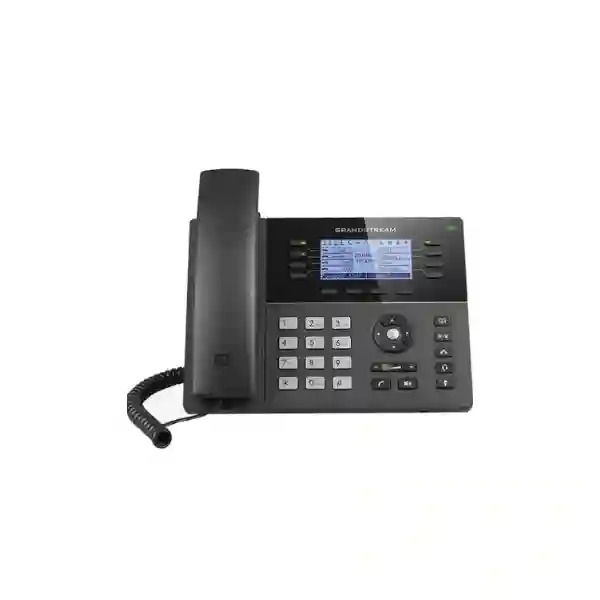
The Grandstream GXP1780 is a mid-range SIP desk phone designed for business users who need more call handling capacity than an entry-level handset without moving to a large touchscreen platform. Grandstream specifies 8 lines, 4 SIP accounts, 8 dual-color line keys, 4 XML programmable context-sensitive soft keys, 32 digitally programmable BLF/fast-dial keys, HD wideband audio, a full-duplex speakerphone, 5-way audio conferencing, integrated Power over Ethernet and dual switched 10/100 Mbps Ethernet interfaces. It is a practical fit for reception support, supervisors, sales teams, administrative users and office staff who benefit from visible line status and frequent one-touch dialing.
Grandstream currently lists the GXP1780/GXP1782 family in its Product Archive. For any new order, confirm current availability, firmware status, support expectations and whether a newer GRP-series model is more appropriate for the deployment.
What the Grandstream GXP1780 solves
The GXP1780 sits between basic two-line desk phones and higher-end executive endpoints. Its combination of eight line keys, four SIP accounts and thirty-two BLF/fast-dial positions is useful when a user regularly transfers calls, monitors colleagues, reaches departments by one-touch key, handles more than one SIP identity or needs greater visibility over active communication. A receptionist assistant, branch supervisor, sales coordinator or office administrator can keep frequently used destinations within quick reach instead of navigating menus for every call.
For network administrators, the phone supports automated provisioning through TR-069 or AES-encrypted XML configuration files and can use Grandstream UCM series IP PBX Zero-Config workflows. This matters when more than a few phones are deployed because repeatable templates reduce manual setup effort and help keep extension settings consistent. Integrated PoE also allows power and data to travel over the Ethernet connection when the access switch provides compatible PoE, simplifying desk cabling and helping centralize power protection through a UPS-backed switch.
The model is not a wireless handset and it does not provide Gigabit Ethernet; Grandstream distinguishes the GXP1780 from the GXP1782 by specifying dual 10/100 Mbps ports on the GXP1780 and Gigabit ports on the GXP1782. That difference should be checked when a workstation is intended to share the phone’s pass-through network connection. For modern new-build projects, buyers should also compare current GRP-series endpoints because Grandstream now places the GXP1780/GXP1782 in its product archive.
Verified GXP1780 features and technical highlights
| Area | Verified capability | Deployment relevance |
|---|---|---|
| Lines / accounts | 8 lines, 4 SIP accounts, 8 dual-color line keys | Useful for users handling several line appearances or monitored destinations. |
| Programmable keys | 32 programmable BLF / fast-dial positions | Helps users monitor extensions and reach contacts quickly. |
| Display | 200 × 80 pixel backlit LCD | Provides call, menu and key-label visibility without a color touchscreen. |
| Audio | HD wideband audio, full-duplex speakerphone, acoustic echo cancellation | Supports clearer business conversations and hands-free calls. |
| Conference | 5-way audio conferencing | Enables quick multi-party calls without a separate room endpoint. |
| Network | Dual switched auto-sensing 10/100 Mbps Ethernet, integrated PoE | Supports wired voice deployment and PC pass-through planning. |
| Headsets | RJ9 headset jack and EHS support for compatible headsets | Useful for call-heavy users who need hands-free working. |
| Security | TLS, SRTP and Kensington Security Slot | Supports secure signaling/media designs and physical anti-theft measures. |
| Directory | Up to 2,000 contacts and 500 call-history records | Suitable for staff with larger internal or customer contact lists. |
PBX compatibility, provisioning and network planning
The GXP1780 is built around SIP and supports common network and signaling standards including SIP RFC3261, TCP/IP, UDP, RTP/RTCP, HTTP/HTTPS, DNS, DHCP, NTP, STUN, LLDP, LDAP, TR-069, 802.1X, TLS, SRTP and IPv6. A successful deployment still depends on the selected PBX or hosted SIP service. Before procurement, confirm registration method, extension numbering, dial plan, voicemail, transfer behavior, ring groups, queues, call recording policy, emergency calling requirements and any feature codes that users rely on.
For Grandstream UCM environments, Zero-Config can simplify provisioning. For other SIP platforms, test a representative device with the actual PBX before a large rollout. Network teams should plan DHCP, DNS, NTP, voice VLANs, QoS, firewall rules, PoE budgets and switch capacity. Because the GXP1780 uses 10/100 Mbps Ethernet, organizations passing a high-speed workstation connection through the phone should verify whether that topology is acceptable or whether a Gigabit endpoint is preferable.
Grandstream GXP1780 Tanzania
In Tanzania, the Grandstream GXP1780 is best approached as a business telephony endpoint for organizations that already operate a compatible SIP platform or are planning an IP PBX deployment with multiple desk users. Its eight line appearances and thirty-two BLF/fast-dial positions make it more suitable for active call-handling roles than a basic two-line handset. Professional firms, hotels, schools, clinics, NGOs, logistics companies, retail administration teams and multi-department offices can use the phone where staff need visible colleague status, rapid transfers and several frequently used destinations. The exact fit should be based on user role: a general employee may not need all of the programmable keys, while reception support, sales coordinators and supervisors may use them every day.
Tanzania deployments should include the voice network in the buying decision. A PoE-capable managed switch can power the GXP1780 and reduce the number of separate desk adapters, but the total switch PoE budget must cover all connected phones and other powered devices. Voice VLANs, QoS, DHCP, DNS and firewall rules should be prepared before bulk installation. If the phone shares its second Ethernet port with a computer, remember that the GXP1780 is a 10/100 Mbps model. Users with high-throughput desktop requirements may be better served by a Gigabit phone or a separate switch connection.
Procurement teams should also treat lifecycle as a live question. Grandstream’s current website lists the GXP1780/GXP1782 under Product Archive. That does not make an existing installed base unusable, but it means a new project should compare current alternatives and confirm availability, firmware, support and replacement strategy. If an organization already has many GXP1780 units, adding compatible spares may make operational sense when sourced legitimately and supported by the organization’s lifecycle policy. If a new greenfield rollout is being designed, a current GRP-series endpoint may offer a longer lifecycle and more modern management options.
For broader project planning, use FourTeck Tanzania’s integrated IT and telecom overview to consider IP phones together with switching, cabling, firewall policy and power protection, and review the FourTeck Tanzania technology shop when comparing endpoint families. A quotation request should state quantity, PBX platform, city, headset needs, expected user roles and whether configuration assistance is required.
Grandstream GXP1780 Dar es Salaam
Dar es Salaam businesses often combine corporate offices, branch teams, service desks, hospitality operations, logistics functions and customer-facing departments in environments where reliable internal calling is still essential. The GXP1780 can be useful for desks that handle frequent transfers and need more visible line control than an entry-level handset provides. Eight line keys and thirty-two BLF/fast-dial positions can be mapped to colleagues, departments or common destinations according to the PBX configuration, allowing reception-support staff and coordinators to see status and act quickly. The phone’s 5-way local conference function also provides a convenient way to bring several participants together for short operational discussions.
A Dar es Salaam deployment should be reviewed in the context of the building network. Many offices mix older cabling, unmanaged switches and newer Wi-Fi or fiber uplinks. The GXP1780 itself is wired and should ideally connect to a managed access switch that provides PoE, VLAN support and consistent QoS. When a computer is daisy-chained through the phone, the 10/100 Mbps interface becomes a design constraint. If staff frequently transfer large files, use cloud applications with high bandwidth demand or expect Gigabit desktop connectivity, compare the GXP1782 or current Gigabit GRP models rather than placing the phone in the workstation data path by default.
Call quality depends on more than the handset. Confirm ISP stability, SIP trunk behavior, firewall session handling, latency, packet loss and the capacity of the PBX. If a hosted PBX is used, WAN resilience may be important for call-critical departments. If the PBX is on premises, the local LAN, UPS protection and system backup become more important. A pilot with several representative desks can reveal transfer, voicemail, headset and BLF behavior before the configuration is replicated across the office.
For organizations modernizing an older phone estate, lifecycle comparison should be part of the Dar es Salaam quotation. The GXP1780 remains a capable feature set for existing deployments, but Grandstream’s archive status means buyers should compare current models for a new standard. FourTeck’s Tanzania services page provides broader planning context for network, voice and infrastructure work, while the current GRP range on the Tanzania shop can help create a forward-looking endpoint policy.
Grandstream GXP1780 Mwanza
Mwanza organizations considering the GXP1780 may include branch offices, healthcare administration, education, tourism-related operations, warehouses, distributors and professional-service teams that need structured voice communications across departments. The phone’s greatest value appears where the user has more call-handling responsibility than an ordinary desk worker. A supervisor can monitor frequently called extensions through BLF, a coordinator can keep transfer destinations on dedicated keys, and an administrator can use multiple SIP accounts where the phone system design calls for separate identities or services. The backlit LCD is simple compared with modern color endpoints, but it presents the information needed for everyday calls without adding touchscreen complexity.
Branch resilience should be considered carefully in Mwanza. If extensions connect to a hosted or headquarters PBX, voice depends on the WAN path. A site can have a perfectly functioning handset and still experience poor calls if the internet circuit has packet loss, the router is overloaded or the firewall handles SIP traffic incorrectly. Test the full route under normal business load. Where communication is operationally important, decide whether backup connectivity is justified and ensure network equipment, including PoE switches and routers, receives suitable UPS protection for short power interruptions.
For larger deployments, provisioning policy matters as much as hardware. Use standardized extension naming, device labels, firmware baselines and configuration templates. Grandstream supports TR-069 and encrypted XML provisioning, and GXP1780 devices can be integrated with UCM Zero-Config workflows. A central IT team supporting Mwanza from another city can reduce repetitive setup when each device follows a documented template. Headset users should also verify the exact headset and EHS adapter combination rather than assuming every model is compatible.
Procurement should include a replacement plan because archived endpoints can become harder to source consistently over time. For a new site standard, compare current phones such as the Grandstream GRP2602P Tanzania, which represents a current-generation PoE desk-phone option. The goal is not simply to replace one model number with another, but to match line capacity, user role, network speed and management requirements to the Mwanza environment.
Grandstream GXP1780 Arusha
Arusha’s hospitality, tourism, education, professional services, NGO and corporate sectors often need dependable desk telephony for reservations, administration, procurement, finance, reception support and operations coordination. The GXP1780 provides a useful mid-range layout for these roles because it combines multiple line keys with a larger bank of digital BLF/fast-dial positions. A hotel back office, tour operator or administrative department can configure frequently used extensions and service points for quick access, while 5-way audio conferencing can support short internal coordination calls without requiring a separate room system.
Hospitality and multi-building sites should pay special attention to the wired network. IP phones rely on stable switching and power; they should not be treated as isolated telephone appliances. Managed PoE switching can simplify deployment, but the switch must have sufficient PoE budget and uplink capacity for phones plus any access points, cameras or other powered devices sharing the infrastructure. Separating voice with an appropriate VLAN and applying QoS can improve predictability when the network is also carrying guest traffic, surveillance streams and business data.
The GXP1780’s 10/100 Mbps pass-through interface is an important Arusha design detail. A hotel reservations desk or office workstation may need faster LAN performance than the phone can pass through. In those cases, use a separate data port or select a Gigabit-capable endpoint. Do not let a convenient daisy-chain connection unintentionally reduce desktop throughput. The phone itself needs very little bandwidth for voice, but the attached computer may not.
For organizations with several properties or offices, standardization should include both configuration and lifecycle. Grandstream’s current archive listing suggests that a new rollout should evaluate current GRP alternatives even if the GXP1780 is familiar to existing administrators. The Grandstream GRP2602G Tanzania is one current product page worth reviewing when Gigabit Ethernet matters. A quotation should include the number of call-heavy users, PBX platform, site network details, headset needs and whether phones will share desk Ethernet with computers.
Grandstream GXP1780 Dodoma
Dodoma offices, institutions, project teams and service organizations can use a phone such as the GXP1780 where users need structured SIP calling with more programmable capacity than a basic endpoint. The eight line keys can support richer call handling, while thirty-two digital BLF/fast-dial positions help staff reach departments, colleagues and commonly used numbers quickly. Administrative teams that coordinate across several departments may benefit more from this layout than users who mainly make one call at a time. Matching the device to job role is therefore the first buying step.
For an office refresh in Dodoma, review cabling and switch infrastructure before ordering phones. Integrated PoE can reduce desk clutter, but only when the switch supports PoE and has enough total power budget. If the building uses unmanaged switches, consider whether managed switching is needed for voice VLANs, QoS, monitoring and easier troubleshooting. The phone supports common standards such as LLDP, DHCP, NTP, 802.1X, TLS and SRTP, but these features only create value when they are incorporated into the network and security design.
The deployment should also define who owns configuration. A phone system becomes hard to support when extension numbers, passwords, key layouts and firmware versions are changed ad hoc. For multiple Dodoma departments, prepare a standard template, label devices clearly and maintain an extension inventory. Test voicemail, transfer, call pickup, conference behavior and any EHS headset function before handing devices to users. If the organization has branches, keep the naming and provisioning approach consistent so remote support can identify a phone quickly.
Because the GXP1780 is in Grandstream’s Product Archive, Dodoma procurement teams should ask whether the purchase is an expansion of an existing estate or the start of a new standard. Expansion may justify like-for-like compatibility where lifecycle risk is accepted. New deployments should compare current phones such as the Grandstream GRP2602 Tanzania and other GRP options, with the final choice based on line capacity, PoE, Ethernet speed, management and user requirements.
Grandstream GXP1780 UAE
For organizations coordinating Tanzania and UAE operations, the GXP1780 can appear in legacy or standardized Grandstream estates where branch users depend on a common SIP configuration. The device supports the same core business functions across locations: eight lines, four SIP accounts, programmable BLF/fast-dial keys, PoE and secure SIP media options. A cross-border IT team can benefit from using consistent extension plans, naming conventions and support procedures, but commercial and telecom requirements should still be validated separately for each country.
UAE offices often use high-speed structured networks, which makes the GXP1780’s 10/100 Mbps interface particularly relevant. If a user’s computer is connected through the phone, that design can become a bottleneck on a Gigabit LAN. A separate Ethernet outlet or a Gigabit-capable model may be more suitable for performance-sensitive desks. For existing GXP1780 estates, the phone can remain a functional SIP endpoint, but new projects should compare current GRP models that support more modern device-management strategies and current product lifecycle.
Regional standardization should include security as well as hardware. TLS and SRTP can protect signaling and media when supported and configured end to end, while 802.1X can be part of network-access control. Administrators should also protect management interfaces, use strong credentials, maintain controlled firmware practices and avoid exposing phone web interfaces directly to the public internet. The endpoint is one element in a larger voice architecture that includes the PBX, SIP provider, firewall, switches and WAN links.
FourTeck’s UAE IT and IP PBX solutions site provides broader regional telephony context. For multi-country procurement, keep one technical standards document but request country-specific quotations. Do not assume that stock status, accessories, warranty route, tax treatment or service scope are identical between Tanzania and the UAE. The archived GXP1780 should be ordered only after lifecycle needs are explicitly considered.
Grandstream GXP1780 Uganda
Uganda businesses with an existing Grandstream or standards-based SIP environment can use the GXP1780 for users who need more line visibility than a basic desk phone. The phone can serve supervisors, reception-support staff, sales coordinators, school or clinic administrators, logistics offices and branch teams where programmable BLF keys speed up internal calling and transfer workflows. Four SIP accounts make it possible to present multiple identities or services where the PBX design calls for them.
For cross-border organizations operating in both Uganda and Tanzania, a common configuration policy can reduce support complexity. Extension numbering, device names, firmware baselines, key layouts and security settings can be documented once and adapted per site. The network still needs local validation. Hosted PBX deployments depend on internet stability and firewall behavior, while on-premises designs depend more heavily on local switching, PBX availability and UPS-backed infrastructure. Voice quality should be tested under business-hour load rather than inferred from a simple speed test.
PoE can simplify phone power where the Uganda office uses compatible switches, but the total power budget and UPS runtime should be calculated across all powered endpoints. If phones are connected in series with PCs, review the GXP1780’s 10/100 Mbps Ethernet limitation. Modern office PCs may require independent Gigabit connections. This is a common reason to compare a newer endpoint when standardizing a new branch.
For broader Ugandan project planning, FourTeck Uganda covers IP PBX, VoIP and networking requirements. Procurement teams should verify lifecycle because Grandstream currently lists the GXP1780/GXP1782 in Product Archive. If the goal is new long-term standardization rather than maintaining an installed base, compare current GRP-series phones and document why the selected model best fits each user group.
Grandstream GXP1780 Kampala
Kampala organizations can deploy the GXP1780 in offices where call handling requires visible extension status and quick transfer access. Professional firms, NGOs, schools, healthcare administration, customer service coordination and logistics teams may have users who constantly call internal extensions or external contacts. The thirty-two BLF/fast-dial positions reduce repetitive dialing, while eight line keys and four SIP accounts provide flexibility for users who manage more than one call or identity. The phone therefore suits active communication roles better than desks with only occasional calling.
Dense commercial buildings can present network challenges that directly affect VoIP. The phone itself uses wired Ethernet, so cable quality, switch configuration, VLAN design and uplink utilization matter. If voice and data share the same network without planning, large file transfers or congested uplinks can increase delay and packet loss. Managed switching and QoS can help prioritize real-time voice traffic. Firewalls should be configured deliberately for the chosen PBX rather than relying on unpredictable SIP helpers or broad inbound exposure.
A staged rollout is useful when Kampala offices have dozens of extensions. Start with a pilot group representing different roles: reception support, ordinary staff, headset users and supervisors. Confirm inbound and outbound calls, transfer, hold, voicemail indicators, BLF behavior, conferencing and emergency dialing policy. Once the template is stable, provisioning can be expanded. Keep an asset record linking each device to its extension, physical location and user so support staff can identify failures quickly.
The archived lifecycle status should be part of the business decision. Existing GXP1780 estates may justify additional compatible units, but a new greenfield Kampala office should compare current alternatives with Gigabit interfaces and newer management platforms. Quote requests should include the PBX model or hosted service, quantity, headset requirements, network topology and whether computers will pass through the phone’s Ethernet switch.
Grandstream GXP1780 Arua
Arua offices, NGOs, healthcare facilities, education organizations, logistics operations and branch teams can use the GXP1780 where a desk user needs stronger call-handling capability than a basic two-line phone. Its combination of four SIP accounts, eight line keys and thirty-two programmable BLF/fast-dial positions can support administrators who coordinate across many people or departments. The 5-way audio conference feature can also handle quick internal discussions when several staff members need to join a call without moving to a separate conference room system.
For branch sites, resilience can be more important than feature count. If the phone registers to a PBX in another city or a cloud service, the internet path becomes part of the phone system. Review the reliability of the primary WAN and decide whether backup connectivity is justified for critical operations. Power protection should cover the router, firewall, switch and PBX where applicable; keeping the handset powered does not help if the upstream network has shut down. PoE from a UPS-backed switch is often cleaner than individual adapters when infrastructure supports it.
Support procedures should also account for distance from central IT resources. Standardized provisioning files, device labels and extension records allow remote administrators to guide local staff more effectively. Keep configuration backups and record which keys have been assigned to which departments. For headset users, verify compatibility and adapters before shipping equipment to the site. Small validation steps reduce the risk of discovering an accessory mismatch after deployment.
When evaluating procurement for Arua, determine whether the GXP1780 is being used to preserve compatibility with an existing estate or chosen for a new rollout. Grandstream’s archive listing increases the importance of replacement strategy. A current model may be a better long-term standard for new users, while remaining GXP1780 units can continue serving roles that already depend on the established layout and configuration.
Grandstream GXP1780 Mbarara
Mbarara businesses, educational institutions, clinics, hospitality operations and branch offices may find the GXP1780 useful for users who handle recurring internal communication throughout the day. Rather than searching a directory for every call, staff can use programmable BLF and speed-dial positions for coworkers, reception, security, stores, finance or external contacts. The eight line keys allow several call appearances to be handled visibly, and four SIP accounts can support more than one assigned service where the PBX architecture requires it.
A voice deployment should begin by mapping user roles. Standard employees may need fewer line keys, while front-desk and coordination roles benefit from the GXP1780’s larger control surface. This approach prevents over-specifying every desk while still giving call-heavy users enough capacity. In a mixed phone estate, provisioning templates should be organized by model and role so each user receives the correct key layout and feature permissions.
Mbarara network planning should verify switch PoE capacity, cabling quality and whether PCs will share the phone’s Ethernet connection. The GXP1780 supports 10/100 Mbps, so a user with a Gigabit desktop requirement should not be unintentionally constrained by a pass-through topology. Voice VLANs and QoS can improve manageability, and the organization should monitor packet loss and latency if calls cross the internet to a remote PBX.
Before purchase, specify quantity, PBX platform, required accessories, headset users, power design and expected support scope. Grandstream’s current Product Archive listing should be acknowledged in the quotation discussion. Where a long lifecycle is important, compare a newer GRP model. Where continuity with an installed GXP1780 estate is the priority, confirm sourcing, firmware and spares policy so the decision is intentional rather than based only on familiarity.
Grandstream GXP1780 Gulu
Gulu organizations can use the Grandstream GXP1780 for structured desk telephony in offices that need more than basic calling. The phone is particularly relevant for coordinators and supervisors who regularly contact many internal extensions and benefit from BLF status. Thirty-two programmable positions can reduce dialing effort, while five-way conferencing supports small operational discussions. The HD wideband audio capability and full-duplex speakerphone are useful for ordinary business conversation when the PBX and codec path support wideband audio.
The local infrastructure should be assessed before deployment. Stable Ethernet, a voice-ready switch and reliable upstream connectivity matter more than headline phone features. Integrated PoE can simplify power at the desk, but the access switch should be sized for the full device count. Where calls depend on a remote PBX, the WAN should be monitored for latency, jitter and packet loss. A voice problem is often caused by the network path rather than the handset itself, so troubleshooting procedures should include both layers.
For an organization with limited local IT staffing, centralized templates can make a major difference. Use documented extension ranges, standardized device names and repeatable provisioning methods. Grandstream supports TR-069 and encrypted XML configuration, and its UCM platform can provide Zero-Config provisioning. Administrators should also secure credentials, restrict management access and maintain a controlled firmware policy. Physical Kensington locking support can be useful where phones are installed in shared or publicly accessible areas.
Gulu procurement should explicitly consider lifecycle because the GXP1780/GXP1782 family appears in Grandstream’s Product Archive. Compare the feature requirement against a current GRP handset before deciding. If the existing estate already uses GXP1780 key layouts and accessories, continuity can be valuable; if the project is new, a current model may simplify long-term replacement and management.
Grandstream GXP1780 Kenya
Kenya organizations with regional operations may encounter the GXP1780 in existing VoIP estates, branch offices or procurement searches for mid-range Grandstream phones. Its feature set remains relevant to call-heavy desks: eight lines, four SIP accounts, thirty-two programmable BLF/fast-dial keys, PoE and five-way conferencing. A company standardizing across Tanzania and Kenya can use consistent extension templates and support procedures, but it should not assume that commercial availability or lifecycle conditions are identical in both countries.
Nairobi and other high-density business environments often use Gigabit access networks, so the GXP1780’s 10/100 Mbps pass-through deserves attention. Where a desktop PC shares the phone’s connection, users can be limited to Fast Ethernet. If the desk regularly handles large cloud files, backups or high-bandwidth applications, a separate data connection or Gigabit phone is preferable. The distinction between GXP1780 and GXP1782 should be confirmed carefully because the latter is the Gigabit version.
A multi-branch voice rollout should validate the PBX, SIP trunk and firewall architecture in each site. Use QoS and VLANs where appropriate, monitor WAN quality, and keep configuration templates consistent. Headset users should verify supported models and EHS adapters. For procurement, include quantity by branch, user role, PBX platform, whether phones will connect PCs, and the desired configuration scope. This allows a supplier to propose current alternatives when an archived model is not the best long-term fit.
For Kenya-specific project context, review FourTeck Kenya business VoIP and networking solutions. Tanzania buyers can also compare current endpoints such as the Grandstream GRP2601W Tanzania when wireless placement or newer lifecycle features are more relevant than the GXP1780’s larger line-key layout.
Grandstream GXP1780 Kuwait
Kuwait businesses with existing Grandstream deployments may use the GXP1780 for administrative and supervisory users who need multiple visible lines and a substantial bank of speed-dial or BLF positions. In regional groups that also operate in Tanzania, keeping consistent dialing plans and user training can reduce support effort. The phone’s SIP-based design allows it to work within standards-oriented architectures, but exact PBX interoperability and desired features should be tested with the actual platform.
Modern Kuwait offices commonly run high-speed wired networks, making Ethernet topology an important decision. The GXP1780 supports 10/100 Mbps, so organizations should avoid placing a high-performance workstation behind the phone when Gigabit access is required. A separate switch port or newer Gigabit endpoint can preserve desktop bandwidth. PoE remains useful for centralized powering, especially where switches are protected by UPS systems.
Cross-border voice teams should standardize security and provisioning. Use controlled configuration distribution, protect SIP credentials and management interfaces, enable TLS/SRTP where supported by the complete call path, and maintain documented firmware baselines. When a phone is moved between users or departments, update the asset record and provisioning profile. A disciplined process matters more as the product ages because troubleshooting should not depend on undocumented legacy settings.
FourTeck Kuwait provides regional context at FourTeck Kuwait IT and VoIP solutions. For new Kuwait or multi-country rollouts, request a comparison between the archived GXP1780 and current GRP options. Commercial terms, stock, accessories and warranty route should be confirmed per market rather than copied from another country’s quotation.
Grandstream GXP1780 Ghana
Ghana organizations can use the GXP1780 in existing Grandstream SIP deployments where supervisors, reception-support staff and administrators need frequent extension monitoring and one-touch calling. The model’s thirty-two BLF/fast-dial positions provide a useful operational advantage over basic phones in departments where people constantly transfer calls or coordinate with several teams. Four SIP accounts and eight line appearances also make the handset suitable for more complex user profiles when the PBX supports the required configuration.
Connectivity design should reflect whether the PBX is local, hosted or centralized in another country. Hosted voice places more dependence on internet reliability, while an on-premises PBX places more emphasis on local server and power resilience. In either case, the LAN should be voice ready, with suitable switching, cabling, VLANs and QoS. PoE simplifies power distribution, but UPS protection for the switch and edge router may be necessary if short power interruptions would disrupt important calls.
Ghana procurement teams should compare role needs before selecting a model. Not every employee requires 32 BLF keys. A mixed phone estate can be more efficient: basic current-generation handsets for ordinary staff and higher-key-count endpoints for reception or coordination roles. For an existing GXP1780 fleet, consistent spares and key layouts may justify continued use, but the product archive status should be considered in the replacement policy.
Regional buyers can review FourTeck Ghana technology solutions for wider network and communication requirements. Any quote should identify the exact quantity, PBX platform, city, expected call-handling role, headset requirements and whether configuration is required. This makes it easier to determine whether the GXP1780 remains suitable or a current GRP-series model offers a better lifecycle fit.
Grandstream GXP1780 Nigeria
Nigeria enterprises, education organizations, healthcare administration, hospitality operators, logistics businesses and service companies may have GXP1780 phones in existing SIP environments. The handset is useful where a user handles several calls and needs quick access to internal extensions. Its eight line keys and thirty-two BLF/fast-dial positions support visible call management, while HD audio and full-duplex speakerphone operation improve day-to-day conversation when network conditions and codecs are appropriate.
For multi-site Nigeria deployments, create one tested configuration before scaling. Validate registration, inbound and outbound routing, transfer, hold, voicemail, conferencing, BLF subscriptions and headset behavior. Once the template is approved, use provisioning rather than entering settings manually on every device. Manual configuration creates drift and makes troubleshooting harder, especially across several branches. Keep a record of extension, MAC address, site and assigned user.
Power and connectivity resilience can materially affect VoIP. An integrated PoE phone is convenient, but the switch, router, firewall and PBX must remain powered for calling to continue. Where uptime is important, size UPS systems for the entire voice path. If a hosted PBX is used, consider primary and backup internet links according to business impact. Call quality monitoring should focus on latency, jitter and packet loss rather than only advertised bandwidth.
For broader Nigeria coordination, see FourTeck Nigeria IT service solutions. Because Grandstream currently archives the GXP1780/GXP1782 family, new Nigeria projects should compare current endpoints before standardizing. An organization maintaining a legacy estate may prioritize compatibility; a greenfield project may prioritize current lifecycle, Gigabit Ethernet and modern centralized management.
Grandstream GXP1780 Seychelles
Seychelles hospitality, travel, administration and professional-service organizations can use the GXP1780 where fixed desks need structured SIP calling with substantial programmable-key capacity. Hotels and resorts, for example, may have operational roles that frequently contact reception, housekeeping, security, maintenance, reservations and management. Thirty-two BLF/fast-dial positions can place these destinations within quick reach, while eight line keys allow active calls to be managed visibly. The phone is therefore more aligned with coordination desks than with rooms requiring only basic extension calling.
Island logistics make lifecycle planning particularly important. Replacement hardware can take time to source, so organizations should keep an accurate inventory of deployed models, spare units, power accessories and configurations. A standardized provisioning method can shorten recovery when a phone fails because a replacement unit can receive the correct extension and key layout without recreating everything manually. For existing GXP1780 deployments, keeping a limited spare pool may be useful if procurement can source appropriate units and the organization accepts the archived lifecycle.
Network and power design should cover the whole communication path. Managed PoE switching can centralize phone power and simplify UPS protection. Hotels should separate operational voice from guest networks and ensure uplinks are not congested by surveillance or guest traffic. If calls traverse the internet to a cloud PBX, WAN quality and firewall configuration need testing during busy periods. The GXP1780’s 10/100 Mbps interface also means office PCs should not be routed through it where Gigabit desktop performance is needed.
When requesting a Seychelles quotation, provide property or office location, quantity, PBX platform, user roles, headset needs and desired configuration support. Compare current Grandstream GRP alternatives before committing to a new long-term standard. The decision should balance existing compatibility against lifecycle, network speed and management requirements rather than rely on model familiarity alone.
Related Grandstream IP phones on FourTeck Tanzania
A current-generation PoE desk phone option for organizations that want a simpler user interface and newer lifecycle.
A Gigabit-capable GRP alternative to review when desktop pass-through speed is important.
A wireless-capable GRP option for deployments where Wi-Fi placement is part of the endpoint requirement.
An essential Wi-Fi phone for standard users who do not need the GXP1780’s larger line and BLF capacity.
Buying guidance: when the GXP1780 still makes sense
The GXP1780 can still be operationally sensible when an organization already has a substantial installed base, has trained users on the key layout, uses provisioning templates built around the model and needs compatible spares or extensions to an existing deployment. In that scenario, consistency can reduce change cost. The procurement decision should still confirm legitimate sourcing, the organization’s firmware baseline, accessory requirements and the expected support horizon.
For a completely new deployment, compare current Grandstream GRP models before selecting an archived GXP. Newer devices may offer more current management, security and network options, while different GRP models can be matched to basic, Gigabit, PoE or wireless requirements. The correct endpoint mix often includes more than one model: standard staff may need simple phones, reception and coordinators may need more keys, and executives may prefer larger displays or richer connectivity.
The decision should be based on five practical questions: how many calls and SIP accounts does the user handle, how many programmable keys are genuinely useful, does the attached workstation require Gigabit Ethernet, what provisioning platform will the IT team use, and how long does the organization expect the endpoint standard to remain in service? Answering these questions produces a better result than buying by model familiarity alone.
Frequently asked questions
How many SIP accounts does the Grandstream GXP1780 support?
Grandstream specifies four SIP accounts and eight line appearances on the GXP1780.
Does the GXP1780 support PoE?
Yes. Integrated PoE allows a compatible network switch to deliver power and data over Ethernet.
Is the GXP1780 Gigabit Ethernet?
No. The GXP1780 uses dual switched 10/100 Mbps Ethernet ports. The GXP1782 is the Gigabit variant in this family.
How many BLF or speed-dial keys are available?
Grandstream specifies thirty-two digitally programmable and customizable BLF/fast-dial positions.
Can the GXP1780 be provisioned centrally?
Yes. Grandstream documents provisioning through TR-069 or AES-encrypted XML configuration files, and UCM deployments can use Zero-Config workflows.
Is the GXP1780 a current Grandstream product?
Grandstream currently places the GXP1780/GXP1782 family in its Product Archive. Buyers planning a new deployment should confirm lifecycle, availability and support expectations and compare current GRP alternatives.
Does the GXP1780 support headsets?
Yes. It has an RJ9 headset interface and supports EHS with compatible headset models and adapters. Verify the exact headset combination before purchase.
Quotation checklist
For a useful quotation, provide the exact model, quantity, delivery city, PBX or SIP platform, number of extensions, user roles, required headsets, PoE availability, whether PCs will connect through the phone, and whether configuration or installation assistance is needed.
If this is an expansion of an existing GXP1780 estate, include the current firmware baseline and provisioning method. If it is a new rollout, request a current-model comparison before final approval.
Decision recap
Choose the GXP1780 primarily when its 8-line layout, 4 SIP accounts and 32 BLF/fast-dial positions match an existing or deliberately maintained deployment.
For new installations, compare current GRP models, especially when Gigabit Ethernet, wireless connectivity, newer lifecycle or centralized device management are priorities.
Consultation panel: build the phone into a complete voice environment
An IP phone only performs as well as the system around it. FourTeck Tanzania can be considered alongside PBX, network switching, PoE, VLAN design, structured cabling, internet resilience, firewall policy and user provisioning. Review the FourTeck Tanzania company overview for background and use the verified Tanzania contact page to share your quantity and environment.
Regional organizations can also coordinate communication projects through FourTeck sites in Uganda, Kenya, Ghana, Nigeria and Kuwait. Country-specific commercial terms should always be verified separately.




Reviews
There are no reviews yet.