

Grandstream HT801 v2 Tanzania
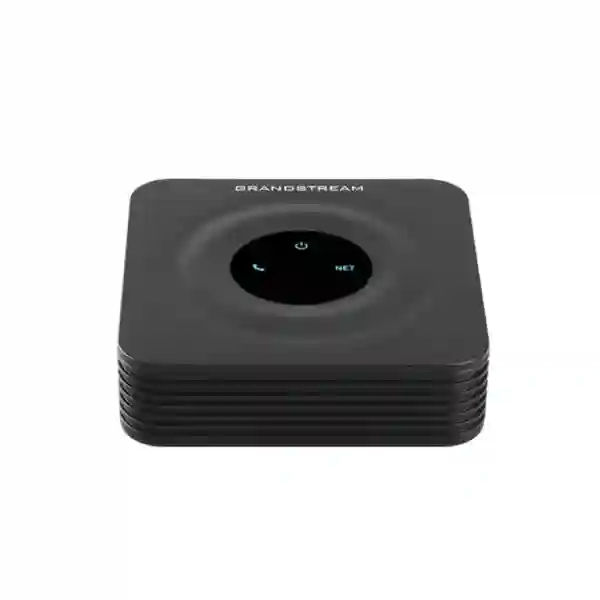
Grandstream HT801 v2 is a compact single-port analog telephone adapter designed for organisations and users that want to keep a traditional analog telephone or fax endpoint while moving the underlying voice service to SIP-based IP telephony. The device provides one FXS port for the analog endpoint, one 10/100Mbps Ethernet port for network connectivity and one SIP profile. For Tanzania buyers, this makes the HT801 v2 especially relevant to focused migration projects where only one analog device needs to join a modern VoIP environment without replacing an otherwise serviceable handset or fax machine.
Grandstream HT801 v2 overview
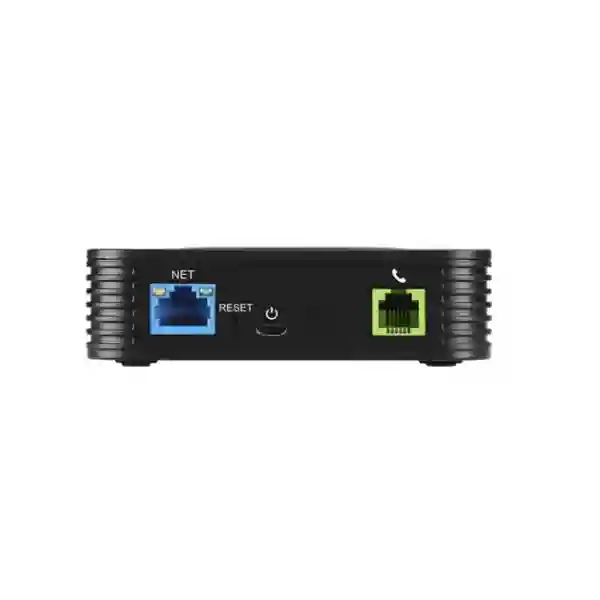
The HT801 v2 sits between an analog endpoint and an IP network. A standard RJ11 cable connects the analog phone or fax machine to the FXS port, while an Ethernet cable links the ATA to a router, modem or suitable network switch. Once a SIP account is configured, the adapter translates between the analog endpoint and the SIP-based voice service. This approach is practical where a business wants to modernise the voice platform but retain a familiar device, maintain a dedicated analog-style extension, or continue using a supported fax workflow.
Grandstream specifies one 10/100Mbps auto-sensing Ethernet interface, one RJ11 FXS port, Power/NET/Phone LED indicators and a factory-reset control. The adapter supports common telephony functions including caller ID display or blocking, call waiting, flash, blind and attended transfer, forwarding, hold, do-not-disturb and three-way conferencing. For fax use, it supports T.38 Group 3 fax relay up to 14.4kbps and can switch to G.711 fax pass-through in suitable environments. The device also supports multiple voice codecs, including G.711, G.722, G.723.1, G.729A/B, G.726-32, iLBC and OPUS, which gives administrators flexibility when matching a SIP platform or service.
Security and manageability are central to the v2 design. Grandstream documents SRTP for media protection, TLS/SIPS/HTTPS for control security, and provisioning options including HTTP, HTTPS, SSH, TFTP and TR-069. Administrators can use web-based management, syslog and automated provisioning workflows. The ATA also supports a failover SIP server so a configured secondary server can be used if the primary server becomes unavailable. In Grandstream UCM deployments, the HT801 v2 can also participate in Zero Configuration provisioning, reducing repetitive manual setup when the PBX and deployment model are compatible.
Keep one analog device
Ideal when a project needs a single analog handset or compatible fax machine to continue operating while the voice platform moves to SIP.
Secure voice transport
TLS and SRTP support helps protect SIP signalling and media when the surrounding PBX or service is configured to use those security options.
Central provisioning
TR-069 and configuration-file provisioning are useful for repeatable setup across branch, service-provider or managed voice environments.
Fax migration path
T.38 support provides a standards-based Fax-over-IP option where the upstream SIP service, PBX and network also support a compatible fax configuration.
Technical specifications and deployment facts
| Telephone interface | One RJ11 FXS port |
| Network interface | One 10/100Mbps auto-sensing Ethernet port (RJ45) |
| SIP profiles | One |
| Conferencing | Three-way voice conference |
| Fax | T.38 Group 3 fax relay up to 14.4kbps; G.711 fax pass-through support |
| Security | SRTP media; TLS/SIPS/HTTPS control security |
| Provisioning | HTTP, HTTPS, SSH, TFTP, TR-069 and automated provisioning options |
| QoS | Layer 2 802.1Q VLAN / 802.1p and Layer 3 ToS, DiffServ, MPLS support |
| Power | Input 100-240VAC, 50-60Hz; output 5.0VDC/1.0A |
| Dimensions | 100mm × 100mm × 29.5mm |
| Operating environment | 0°C to 40°C, 10% to 90% non-condensing humidity |
Buying and compatibility guidance
Before ordering the HT801 v2, confirm that the requirement is for one analog endpoint and one SIP account. An FXS port is intended to provide an analog station interface for a phone or suitable fax machine; it is not an FXO interface for bringing a traditional PSTN line into an IP PBX. Buyers who need multiple analog devices should compare higher-port-count ATA or gateway models instead of deploying several single-port devices without a clear design reason.
The SIP provider or PBX should also be checked for registration method, codec policy, DTMF handling, NAT traversal, TLS/SRTP compatibility and fax requirements. T.38 is useful only when the surrounding service path supports it correctly. Likewise, encrypted SIP depends on correct certificates, server configuration and network policy. For managed deployments, decide whether devices will be configured manually, through Grandstream UCM zero configuration, with Grandstream Device Management System workflows, or through another supported provisioning method.
For wider Grandstream planning, FourTeck maintains regional resources including the Grandstream business communications portfolio, Grandstream WP Series Wi-Fi phone guidance for Africa, Grandstream GWN7003 router planning, Grandstream GRP2602P desk-phone information and the FourTeck Tanzania technology site. These resources help buyers place the ATA within a complete voice and network architecture rather than treat it as an isolated device.
Grandstream HT801 v2 Tanzania
Tanzania organisations evaluating the Grandstream HT801 v2 are typically solving a targeted migration problem: one analog endpoint still has practical value, but the business is standardising on SIP voice. The adapter is particularly suitable where an existing analog desk phone, hotline handset, reception fallback device or compatible fax workflow should remain in service without maintaining a separate legacy voice platform. For procurement teams, the first question should therefore be whether the endpoint really needs one FXS port and one SIP profile. If the answer is yes, the compact HT801 v2 can be a clean fit. If several analog devices are involved, a multi-port model may provide a simpler design and lower management overhead.
Network readiness matters just as much as the adapter. The unit uses wired 10/100Mbps Ethernet, so the installation point should have a reliable network path to the PBX or SIP service, appropriate addressing, DNS and time services, and firewall rules that match the voice environment. Where VLANs are used, the HT801 v2 supports 802.1Q and voice QoS capabilities, but those settings need to align with the switch, router and PBX design. Organisations with distributed branches should also decide how devices will be provisioned and monitored. TR-069, XML configuration files and other supported provisioning methods can reduce repetitive setup when multiple ATAs are deployed.
For fax use in Tanzania, avoid assuming that simply connecting a fax machine guarantees reliable Fax-over-IP. The ATA supports T.38 and G.711 pass-through, but the PBX, SIP provider, codec policy and network must also be compatible. A pilot test is advisable before standardising a business-critical fax process. Voice users should likewise validate caller ID format, DTMF method, transfer behaviour and failover policy with their platform. The HT801 v2 supports a broad set of these functions, giving integrators flexibility, but the surrounding service determines how they behave end to end.
A Tanzania quotation should therefore identify quantity, intended analog device, SIP platform or provider, deployment sites, security preference, provisioning method and whether configuration assistance is required. This information helps avoid ordering a technically correct ATA that is mismatched to the actual line type or project design. FourTeck can use those details to help buyers compare the HT801 v2 with other Grandstream options and prepare a more accurate procurement plan.
Grandstream HT801 v2 Dar es Salaam
Dar es Salaam businesses often operate mixed communication environments where newer SIP extensions coexist with older analog endpoints. The Grandstream HT801 v2 is useful in exactly that narrow bridging role. A small office may want to retain a familiar analog handset at reception while moving other users to IP phones. A hotel or service desk may have a simple analog endpoint that does not justify replacement. A professional office may need to connect one supported fax machine to a SIP-based PBX. In these cases, the single FXS port and single SIP profile keep the design uncomplicated.
For offices in multi-tenant buildings, network planning should consider where the Ethernet connection is available and whether voice traffic shares the same switching infrastructure as general data. The adapter supports VLAN and QoS mechanisms, but they should be configured as part of the overall network rather than in isolation. IT teams should confirm IP addressing, gateway and DNS settings, PBX reachability and firewall behaviour before deployment. When the SIP server is hosted outside the office, stable internet access and sensible failover planning become important because the ATA depends on IP connectivity for registration and calls.
Security-conscious organisations can use TLS and SRTP when those options are supported and correctly configured by the SIP platform. This is relevant for legal firms, financial offices, healthcare practices and other organisations that want stronger protection of voice signalling and media. The HT801 v2 also provides HTTPS management and secure provisioning options, helping administrators avoid leaving management traffic unnecessarily exposed. For managed service environments, centralised provisioning can reduce configuration variation across branches or customer sites.
When requesting a Dar es Salaam quote, state whether the ATA will connect a telephone, fax machine or another supported analog station device; provide the PBX or hosted voice platform; specify quantity and site count; and mention whether the project requires pre-configuration. That information makes it easier to confirm whether HT801 v2 is the right device or whether a higher-port Grandstream ATA or gateway would be a better fit.
Grandstream HT801 v2 Mwanza
Mwanza organisations that are modernising business telephony do not always need to replace every analog endpoint on the first day. The HT801 v2 gives IT teams a controlled way to keep one analog phone or compatible fax device while registering it to a SIP service. This can be valuable for branch offices, clinics, education sites, logistics operations and small businesses that need to transition in stages rather than carry out a complete endpoint replacement at once.
A good Mwanza deployment starts by confirming the line role. The HT801 v2 is an FXS device-side adapter. It is appropriate for an analog station, not for terminating a traditional incoming PSTN line. Once that distinction is clear, the next step is to review the IP network. The ATA needs reliable Ethernet connectivity and access to the chosen SIP server. DHCP can simplify addressing, while static addressing may be preferred in controlled environments. DNS and NTP should be reachable, and any SIP ALG or firewall policy should be tested because inconsistent NAT handling can create one-way audio or registration problems in some voice networks.
Grandstream’s failover SIP-server capability is useful when the organisation operates primary and secondary voice infrastructure. Properly configured, the ATA can switch to a secondary server if the main server becomes unavailable. That does not replace network redundancy, but it can form part of a resilient voice design. Similarly, QoS support can help prioritise voice traffic when the LAN and WAN are correctly configured end to end.
For Mwanza buyers, procurement should focus on the complete use case rather than only unit price. Confirm the analog endpoint, SIP platform, network environment, security policy, quantity, power availability and desired management model. If a project includes several branches or many adapters, standard configuration templates and remote management planning can save significant operational effort after installation.
Grandstream HT801 v2 Arusha
Arusha has a broad mix of hospitality, tourism, professional services, education and commercial operations, and many such organisations rely on practical voice systems that evolve over time. The Grandstream HT801 v2 is relevant where a SIP migration still needs one analog endpoint. For example, a business can keep a basic handset at a service counter, connect a legacy extension in a back office, or maintain a supported fax workflow while the rest of the organisation moves toward IP phones and software clients.
The model’s value is strongest when simplicity is important. One SIP profile maps naturally to one analog station, and the single 10/100Mbps Ethernet port is straightforward to place on a wired LAN. The ATA does not act as a multi-user PBX or a replacement for network switching, so the overall voice architecture still needs a SIP server, hosted voice provider or IP PBX. In Grandstream UCM environments, Zero Configuration support can make onboarding easier, while other deployments can use web configuration, XML files or TR-069 depending on the management approach.
Arusha organisations should pay particular attention to power and network continuity for critical endpoints. Because the analog phone receives service through the ATA and the ATA depends on Ethernet and electrical power, the traditional expectation that an analog phone may work independently during an outage no longer applies. Where the extension is operationally important, include the ATA, network switch, router and PBX or access equipment in an appropriate backup-power strategy. The same applies to internet connectivity when a hosted SIP service is used.
A well-prepared quote request should therefore specify what the analog device is, where it will be installed, what SIP platform it must register to, whether encrypted SIP is required and how configuration will be managed. FourTeck can use that information to help determine whether HT801 v2 is suitable or whether an alternative Grandstream device better matches the number of analog ports and network requirements.
Grandstream HT801 v2 Dodoma
Dodoma offices and institutions planning a move to SIP telephony may still have selected analog devices that need to remain operational. The HT801 v2 provides a focused bridge for one such endpoint. It is compact, uses a single FXS port and supports one SIP profile, so it is particularly suitable when the requirement is clearly defined and does not justify a larger analog gateway. Procurement teams should distinguish this use case from projects that need multiple analog extensions, PSTN trunk interfaces or integrated routing, because those requirements point toward different products.
In administrative, professional or institutional environments, change control is often as important as hardware selection. The HT801 v2 supports remote and automated provisioning methods that can help standardise configurations across departments or sites. IT teams can define SIP server information, dial plans, security settings, codec choices and other parameters consistently instead of configuring each unit differently. Syslog support can also assist troubleshooting when calls, registrations or network behaviour need to be investigated.
The adapter supports common call functions such as transfer, forwarding, waiting, hold and three-way conferencing, but these features still depend on how the PBX and SIP account are configured. Where the connected endpoint is a fax machine, test T.38 or G.711 pass-through against the selected carrier before relying on it for critical document transmission. Where the endpoint is a phone, verify caller ID format and DTMF method so interaction with IVR systems works as expected.
For a Dodoma procurement request, include the intended device type, SIP service or PBX name, required quantity, deployment locations and any configuration or rollout support expected. A clear scope allows the HT801 v2 to be evaluated as part of the complete communications system rather than as a standalone box, reducing the risk of compatibility surprises after purchase.
Grandstream HT801 v2 UAE
UAE buyers often use analog telephone adapters during staged migration from legacy PBX extensions to SIP-based systems. The HT801 v2 is suited to projects that need only one analog station. Its compact form factor, one FXS port and one SIP profile make it easy to add a single analog handset or compatible fax endpoint to a business VoIP environment without deploying a larger gateway. This can be useful in offices, retail sites, service counters, residential projects and branch locations where one legacy device still serves a valid purpose.
The device supports TLS and SRTP, automated provisioning and failover SIP servers, making it appropriate for organisations that need more than a basic consumer adapter. Integrators can align it with centrally managed voice policies, and Grandstream UCM users can take advantage of Zero Configuration provisioning where supported. UAE projects with many locations can also standardise configuration files to reduce setup time and improve consistency.
A procurement decision should consider whether the network provides appropriate VLANs, QoS and firewall handling for voice. The ATA’s 10/100Mbps interface is more than sufficient for its own voice traffic, but the reliability of the call path depends on the wider LAN, internet service and SIP platform. For fax projects, verify carrier support for T.38 before rollout. For encrypted voice, verify certificate and TLS compatibility with the server. For branch deployments, decide whether primary and secondary SIP servers will be configured to make use of the device’s failover capability.
FourTeck’s Grandstream Dubai portfolio guide provides additional context for wider Grandstream projects involving IP phones, UCM PBX platforms, HT/GXW gateways and networking. Buyers should share model, quantity, destination and intended use so the quotation reflects the correct device rather than a generic ATA requirement.
Grandstream HT801 v2 Uganda
Uganda businesses moving toward SIP telephony may have a small number of analog devices that remain operationally useful. The HT801 v2 offers a simple bridge for one endpoint, letting an analog phone or compatible fax machine register through a SIP service without requiring a large gateway. This suits staged migration, branch-office standardisation and situations where a special-purpose analog handset is easier to retain than replace.
The main design decision is whether one FXS port is enough. If the requirement grows to several analog extensions, using a higher-density ATA or gateway may simplify cabling, power, management and provisioning. If one endpoint is all that is needed, the HT801 v2 keeps the installation straightforward. Ethernet connectivity, SIP credentials and power are the essential infrastructure elements, while optional security and provisioning features can be added based on the organisation’s standards.
Remote management can be especially valuable for organisations with sites spread across different Ugandan regions. Instead of relying on repeated manual setup, IT teams can use supported provisioning methods and consistent templates. SIP-server failover can also be configured where redundant voice services exist. These capabilities do not remove the need for reliable connectivity, but they make the ATA easier to operate as part of a managed communications environment.
When requesting pricing, buyers should provide the intended endpoint, SIP platform, number of locations and total quantity. If the project includes fax, confirm whether T.38 is supported by the PBX or carrier. If the project includes encrypted voice, confirm TLS and SRTP policy. These details make the procurement process more accurate and help determine whether the HT801 v2 or another Grandstream model is the best fit.
Grandstream HT801 v2 Kampala
Kampala organisations often balance new IP communication systems with existing analog equipment. A single-port ATA such as the HT801 v2 can be a practical transition tool when only one analog device needs to join the SIP environment. The device is suitable for office extensions, reception handsets, service desks and compatible fax endpoints where keeping the existing analog equipment is operationally or economically sensible.
The HT801 v2 supports one SIP account, so it should be treated as a one-extension adapter rather than a small PBX. The connected analog phone inherits its service from the configured SIP account. Call features such as forwarding, transfer, hold and three-way conferencing can then be used according to the device and PBX configuration. Caller ID and DTMF options help adapt the ATA to different telephony environments, but these should be tested against the chosen provider.
For Kampala offices using hosted VoIP, network quality becomes central. Stable internet service, suitable firewall rules and proper QoS can have more impact on call quality than the ATA itself. For local PBX deployments, the LAN design and switch configuration are important. If central management is required, automated provisioning and Grandstream management options can make deployments easier to maintain. The device’s failover SIP-server capability is useful only when a secondary server exists and is configured correctly.
A Kampala buyer should include quantity, SIP server, endpoint type and deployment support requirements in the quote request. This allows the supplier or integrator to verify that the HT801 v2 is appropriate, identify any accessory or configuration needs and avoid mistakenly selecting an FXS ATA when the requirement is actually for an FXO gateway or multiple analog ports.
Grandstream HT801 v2 Arua
Arua businesses, NGOs, education centres and branch operations may need straightforward voice solutions that can be managed without excessive hardware. The HT801 v2 is relevant where one analog device needs access to a SIP system. It avoids replacing a working analog handset solely because the underlying voice service has moved to IP, and it can also provide a path for selected fax workflows when T.38 or G.711 pass-through is supported end to end.
For remote or branch environments, installation planning should include more than the ATA. The device depends on power, Ethernet, routing and the SIP server. If the location uses a hosted service, internet continuity becomes part of the voice availability plan. A small UPS may be appropriate for the ATA and network equipment where uninterrupted calling is important. Likewise, the router or firewall should be configured to pass SIP and RTP traffic correctly without introducing unstable NAT behaviour.
Management choices can reduce travel and support effort. The HT801 v2 supports secure web management, SSH, syslog and automated provisioning methods. An organisation deploying several units across Uganda can create standard settings for SIP registration, codecs, dial plans, security and firmware policy, then apply them consistently. This is more maintainable than treating every adapter as a unique installation.
Arua procurement teams should specify whether the connected endpoint is a phone or fax, how many sites are involved and which SIP platform is in use. If the project could expand to multiple analog endpoints at each site, consider that future requirement before choosing a single-port model. The HT801 v2 is most efficient when the need is genuinely one analog station per adapter.
Grandstream HT801 v2 Mbarara
Mbarara organisations planning VoIP adoption can use the HT801 v2 to preserve a single analog extension while the rest of the communication system moves to SIP. This can reduce unnecessary device replacement during phased projects and allows teams to modernise the PBX or carrier service first. The adapter is intentionally compact and focused: one RJ11 FXS port for the analog endpoint and one Ethernet connection for the IP network.
The adapter supports a wide range of voice codecs and telephony functions, giving integrators options when matching existing SIP services. However, a correct configuration is essential. Codec priorities should align with the provider, DTMF should match IVR requirements, caller ID format should be tested and NAT traversal should be reviewed for internet-based services. For fax use, T.38 should be validated across the whole path rather than assumed from the ATA specification alone.
Security settings deserve equal attention. TLS can protect signalling and SRTP can protect media when supported by both sides. Management should preferably use secure protocols, and default credentials should be changed as part of commissioning. In business environments, standard provisioning reduces the risk of inconsistent settings. The HT801 v2 supports TR-069 and configuration-file methods that can help with this.
For Mbarara quotation requests, include quantity, intended endpoint, PBX or SIP provider, deployment address and whether remote or on-site configuration is expected. If a branch has several analog devices, ask for a comparison with multi-port alternatives. This simple step can prevent a fragmented design built from multiple single-port adapters when a larger gateway would be more efficient.
Grandstream HT801 v2 Gulu
Gulu companies and institutions can consider the HT801 v2 when a SIP deployment still needs one analog station. The use case is narrow but common: retain a functional analog handset or compatible fax device and connect it to an IP-based voice platform. This approach can support gradual migration and can be especially useful where users are comfortable with an existing handset or where the analog endpoint serves a specialist function.
Because the ATA has a single Ethernet port, it should be installed close to suitable network connectivity. It does not provide an integrated LAN pass-through for another desk device, so planners should account for available switch ports and cabling. The 10/100Mbps interface is sufficient for its own voice traffic. What matters more is network stability, correct SIP routing and appropriate QoS across congested links.
The HT801 v2 can use a secondary SIP server if the primary is unavailable, which may help organisations with redundant call-control infrastructure. It also supports central provisioning, allowing repeated deployments to use common templates. These features make the device appropriate not just for one-off home use but also for commercial voice deployments where consistency and remote administration matter.
Gulu buyers should describe the endpoint, number of units and SIP environment when asking for a quote. Where voice is mission critical, also explain the internet, power and redundancy strategy so the ATA can be considered in context. Where fax is required, request confirmation of T.38 support from the PBX or carrier. This practical information is more useful than choosing an ATA based solely on brand or price.
Grandstream HT801 v2 Kenya
Kenya businesses often operate mixed generations of telephony equipment, making analog-to-SIP adapters useful during transition projects. The Grandstream HT801 v2 is designed for one analog endpoint and one SIP profile, so it is suited to focused requirements rather than large analog migration projects. A company can use it to retain a handset, hotline, simple service phone or compatible fax device while consolidating the core voice platform onto SIP.
In Nairobi and distributed branch environments, manageability can be important. The ATA supports automated provisioning, syslog and secure management options, which can help an IT team standardise settings across many small offices. If a Grandstream UCM PBX is used, Zero Configuration can simplify supported deployment scenarios. Otherwise, provisioning files or TR-069 may be appropriate depending on the organisation’s management platform.
Network design should account for voice VLANs, QoS and firewall rules. The ATA supports common network and QoS protocols, but consistent configuration across switches, routers and WAN links is necessary for predictable call quality. For hosted SIP, internet reliability and NAT handling should be tested. For fax, validate T.38 with the service provider and use G.711 pass-through only when the full path supports it reliably.
Kenya buyers should prepare a quotation request with model, quantity, connected device, SIP provider or PBX and site locations. If several analog devices are required at a site, compare the HT801 v2 with higher-port Grandstream adapters before purchasing. The correct port density can simplify installation and reduce long-term support effort.
Grandstream HT801 v2 Kuwait
Kuwait organisations upgrading to IP telephony may still need to retain selected analog endpoints. The HT801 v2 provides a direct one-port approach: connect the analog phone or compatible fax machine to the FXS interface and register the ATA with a SIP platform. This is useful for offices, retail, hospitality and branch environments where one analog device has a continuing role but the core communications system is already IP based.
The ATA supports common enterprise requirements including encrypted signalling and media, automated provisioning and redundant SIP server configuration. IT teams can use these capabilities to apply stronger security and reduce manual work across multi-site deployments. In a Grandstream ecosystem, UCM Zero Configuration can simplify compatible provisioning; in mixed-vendor environments, the ATA can be configured through standard SIP and supported provisioning mechanisms.
For office networks, place the ATA on the appropriate VLAN and verify firewall, DNS and NTP behaviour. Avoid treating voice quality as a property of the adapter alone. WAN latency, packet loss, jitter and congestion can affect calls, so QoS should be considered where data and voice share links. For fax, ensure that T.38 is supported by the upstream platform. If it is not, a controlled G.711 pass-through design may be tested, but results depend on network quality and provider behaviour.
FourTeck Kuwait also publishes information on related Grandstream endpoints such as the GRP2602P PoE IP phone. When requesting an HT801 v2 quotation, include the number of analog devices and whether a broader IP phone rollout is also planned. This makes it possible to size the voice solution as a whole rather than sourcing isolated devices.
Grandstream HT801 v2 Ghana
Ghana businesses modernising communications can use the HT801 v2 when one analog endpoint still needs to operate on a SIP-based system. It is a useful transition device for offices and branches that want to retain a working handset or compatible fax machine while moving away from legacy telephony infrastructure. The key is to keep the scope clear: this is a one-port ATA for one analog station, not a multi-port gateway or PBX.
For organisations with multiple locations, central configuration can reduce deployment effort. The HT801 v2 supports TR-069, XML configuration files and other management methods. Administrators can standardise registration, codec, security and dial-plan settings, then deploy units consistently. Logging and remote management can also help diagnose issues without visiting every branch.
Security should be designed end to end. The ATA supports TLS and SRTP, but the PBX or hosted provider must support and correctly configure the same features. Firmware policy, password management and restricted administrative access should be included in operational procedures. Voice availability should also account for power and connectivity because analog devices connected through an ATA rely on the IP network and local power infrastructure.
A Ghana quote request should include quantity, intended analog device, SIP environment and deployment sites. If fax is involved, state whether the provider supports T.38. If the deployment may grow, identify the expected number of analog ports so the solution can be compared with higher-density Grandstream options. Accurate scoping makes the procurement decision more durable and avoids unnecessary rework.
Grandstream HT801 v2 Nigeria
Nigeria has a wide range of businesses using hosted SIP, on-premise PBX and hybrid communication systems. The Grandstream HT801 v2 is relevant to projects that need to connect one analog device into that environment. It can preserve a phone or compatible fax endpoint while the rest of the organisation moves to IP phones, soft clients or unified communications. Its compact design is useful where desk or cabinet space is limited and only one analog station is required.
For enterprise or service-provider deployments, automated provisioning and failover features are significant. A standard configuration template can be applied to multiple adapters, reducing manual errors. Secondary SIP server configuration can provide call-control resilience when redundant infrastructure is available. TLS and SRTP support can also align the ATA with secure voice policies, provided the server and certificates are configured correctly.
Network quality should be assessed before blaming endpoint hardware for call issues. Packet loss, jitter, poor NAT behaviour and unstable internet links can all affect SIP calls. Organisations should use appropriate QoS, reliable DNS and time synchronisation, and sensible firewall policies. Where the endpoint is a fax machine, test the complete path with T.38 because fax over IP is more sensitive to configuration and network conditions than ordinary voice.
Nigeria buyers should specify quantity, city or deployment region, PBX or SIP provider and connected analog device when requesting a quote. If several branches each need only one analog endpoint, the HT801 v2 can fit well. If a central site needs many analog ports, a higher-density gateway should be evaluated to simplify management and cabling.
Grandstream HT801 v2 Seychelles
Seychelles hotels, offices, service businesses and distributed properties may need to connect selected analog endpoints to modern SIP systems. The HT801 v2 is designed for exactly one analog station, making it appropriate where the goal is to retain a single handset or supported fax device without keeping an older PBX solely for that endpoint. The compact hardware is easy to place in a communications cabinet or near the endpoint as long as Ethernet and power are available.
Hospitality and property environments should check how the analog endpoint interacts with the wider PBX. Features such as caller ID, transfer, forwarding and DTMF may be important for service desks or room-related applications. The ATA supports these functions, but the SIP platform determines how they integrate into the call flow. If the endpoint serves a specialist application, test it before full rollout rather than assuming that every analog device behaves identically over an ATA.
For multi-property management, provisioning and remote administration can reduce support cost. The HT801 v2 supports central configuration approaches, secure management and logging. Organisations can standardise firmware and SIP settings, then monitor devices more consistently. Where internet links connect remote sites to a hosted SIP provider, redundancy and QoS should be part of the design because the endpoint depends on network availability.
Seychelles procurement teams should provide quantity, property or site count, SIP platform and endpoint type in the quote request. For fax, confirm T.38 support. For encrypted voice, confirm TLS and SRTP requirements. For growth plans, assess whether one FXS port per location remains appropriate or whether a multi-port model will better support future analog requirements.
Quotation checklist
For the fastest and most accurate HT801 v2 quotation, provide the model name, required quantity, destination, intended analog device, SIP PBX or hosted provider, number of sites, required security settings, whether T.38 fax is needed, and whether configuration or deployment assistance is required.
Frequently asked questions
What does the Grandstream HT801 v2 do?
It connects one analog telephone or compatible fax device to a SIP-based VoIP service through one FXS port and one Ethernet interface.
How many SIP accounts does the HT801 v2 support?
The model supports one SIP profile, matching its single FXS port.
Can HT801 v2 be used for fax?
Yes. Grandstream specifies T.38 Group 3 fax relay and G.711 fax pass-through support. The PBX, SIP carrier and network must also support the selected method.
Does it support encrypted calls?
The HT801 v2 supports TLS for signalling and SRTP for media. End-to-end use depends on the SIP server, certificates and configuration.
Can it work with Grandstream UCM IP PBX?
Yes. Grandstream documents Zero Configuration provisioning support with its UCM series, subject to compatible configuration and firmware.
Is HT801 v2 an FXO gateway?
No. It provides an FXS port for connecting an analog endpoint. Buyers who need to connect an analog PSTN line should select a product with the appropriate FXO interface.
Does it need internet access?
It needs IP connectivity to its SIP server. If that server is hosted on the internet, internet access is required. If the PBX is local, the ATA can register across the local network according to the deployment design.
How should I choose between HT801 v2 and a multi-port ATA?
Choose HT801 v2 when you need one analog station. If you have several analog devices in the same location, compare higher-port-count Grandstream models to reduce the number of adapters, power supplies and configuration points.
Decision recap
The Grandstream HT801 v2 is a strong fit when the requirement is precise: one analog phone or compatible fax device must connect to a SIP-based VoIP platform. It offers enterprise-relevant security, provisioning, failover and telephony features without unnecessary port density. Before buying, confirm FXS versus FXO requirements, SIP compatibility, fax method, network readiness, security policy and future port count. That short verification process is the best way to ensure the adapter fits the complete voice solution.
Talk to FourTeck about HT801 v2
Share your required quantity, destination, SIP platform and whether the adapter will serve a phone or fax endpoint. FourTeck can help align the HT801 v2 with the wider Grandstream voice and network requirement and prepare a quotation based on the actual deployment scope.




Reviews
There are no reviews yet.