
HANWHA VISION · NETWORK AUDIO · TANZANIA
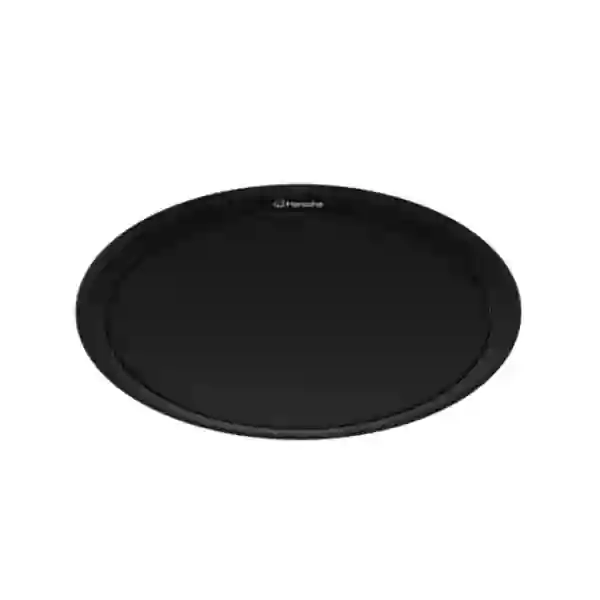
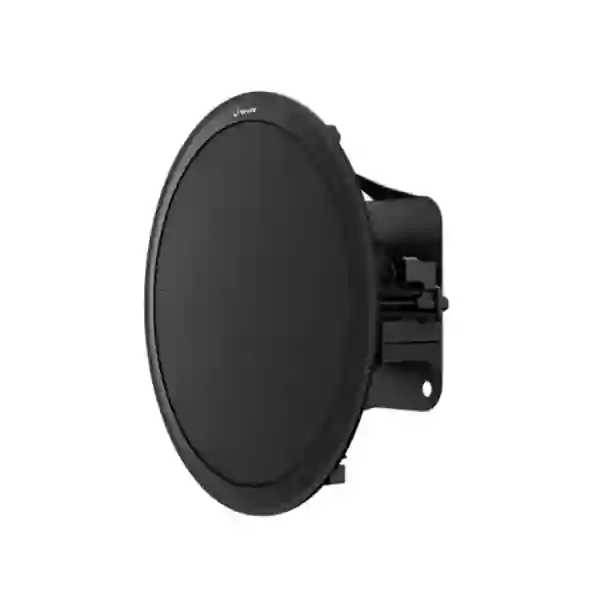
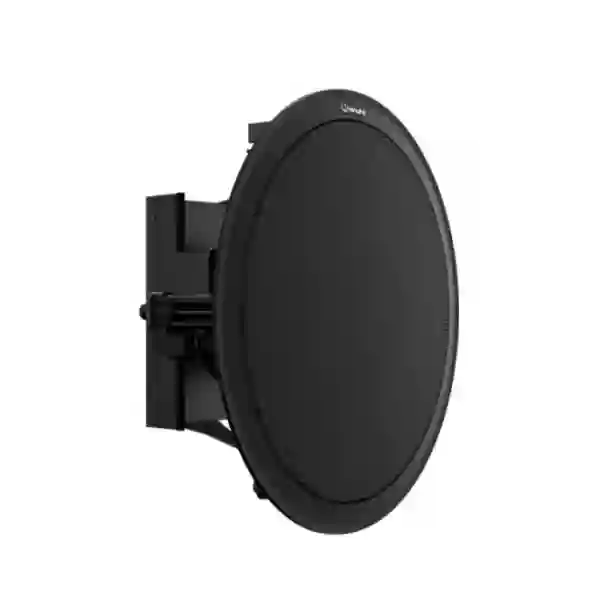
Hanwha SPA-C100B IP Ceiling Speaker
Bring controlled indoor announcements onto a compatible IP network with a ceiling-mounted speaker that includes its own 10 W Class D amplifier. Evaluate the SPA-C100B against your building layout, existing network, paging workflow and language needs before committing to the final design.
SPA-C100B technical specifications at a glance
The values below are manufacturer-listed product specifications. They should be read alongside the latest model-specific installation documents and an engineered system design. Commercial terms and Tanzania availability are not implied by these specifications.
| Product | Hanwha Vision SPA-C100B, black IP ceiling speaker |
|---|---|
| Amplifier | Built-in 10 W Class D |
| Connection | 10/100 Base-T Ethernet |
| Power | PoE IEEE 802.3af; PoE+ IEEE 802.3at |
| Maximum SPL | 96 dB with PoE; 100 dB with PoE+ |
| Speaker acoustic range | 120 Hz to 20 kHz (-10 dB) |
| Sensitivity | 90 dB at 1 W |
| Built-in memory | 1 GB |
| Audio formats | WAV and MP3 (within supported encoding limits) |
| Contact interfaces | 1 dry-contact input; 1 normally open dry-contact output |
| Operating conditions | -20 to +50 °C; 10–85% RH, non-condensing |
| Dimensions / weight | Ø269 × 142.5 mm / approximately 1.8 kg |
| Enclosure IP rating | Not specified |
| Factory TTS list | English (US/UK), German, French, Spanish, Russian |
What the SPA-C100B is designed to do
The Hanwha SPA-C100B IP ceiling speaker is an indoor network audio endpoint for organisations that need announcements and recorded messages delivered to selected spaces. Instead of relying on a traditional centrally amplified speaker line, it joins an IP network, receives audio instructions and uses its own built-in amplifier. This makes it worth evaluating where an IT-managed communications network and a coordinated public-address plan already exist or are being designed.
The product is particularly relevant when a facility needs understandable speech in multiple rooms, controlled message delivery or integration with a wider Hanwha Vision IP audio design. It should not be judged on output wattage alone. A successful installation also depends on listening distance, ambient sound, ceiling geometry, PoE capability, cable routes, network policies and the way announcements will be initiated.
For a project in Tanzania, begin with the purpose of the announcements. A reception area making occasional visitor calls has different requirements from a busy corridor or a campus with several independently controlled zones. Tell the supplier how many areas need sound, what kind of audio will play and how staff expect to control it. That short brief is more useful than choosing a speaker quantity before coverage has been checked.
Why an IP speaker can suit a managed building
Conventional public-address designs commonly use amplifier channels and speaker cabling that must be planned around physical audio circuits. An IP audio design transports digital audio over the data network and can address devices logically. The SPA-C100B therefore belongs in a conversation that includes network configuration and operational workflow, not just speaker placement. The right approach depends on the building and existing equipment.
Logical zones can be useful when different departments need different information. For example, a front desk might address a waiting area without interrupting adjoining rooms, while an authorised operator could make a building-wide announcement where the system configuration permits it. These are possible design patterns rather than promises that a particular control system or integration is included in every purchase.
Using network audio also creates dependencies that a speaker-only quotation may hide. Switches, network links, source devices, user permissions and power backup may all influence whether an announcement reaches its destination. Ask for a system diagram showing each component, who configures it, and which functions have been tested together. This makes the buying decision clearer and the completed system easier to support.
Who should consider this ceiling model
Offices and administrative buildings may consider the SPA-C100B for reception notices, departmental calls and scheduled communication in occupied indoor spaces. Ceiling integration can keep the sound source away from desks and walkways. The project still needs a check of working-room noise, speech clarity and the number of speakers required; one ceiling speaker is not automatically enough for a large open-plan floor.
Schools, colleges and training facilities may evaluate network audio for class changes, routine announcements and communication across separately managed rooms. A designer should establish who can broadcast, whether an operator needs selective zones, how changes to the timetable are managed, and what happens during a network interruption. Where safeguarding or emergency communications are involved, separate approval of the complete safety system is essential.
Clinics, service counters, hospitality interiors and retail premises may also have legitimate paging or informational-audio needs. For any healthcare or public-facing setting, assess privacy, sensitivity to noise, local operating procedures and the effect of repeated announcements on visitors. The SPA-C100B is an audio product; its presence does not by itself establish suitability for a regulated or life-safety purpose.
Verified audio and hardware essentials
Hanwha Vision identifies the SPA-C100B as a black IP ceiling speaker with a built-in 10 W Class D amplifier and a 10/100 Base-T Ethernet interface. It supports both IEEE 802.3af PoE and IEEE 802.3at PoE+. These are specific interface and power capabilities, not a guarantee that the speaker will reach the same maximum volume under either power arrangement.
The manufacturer’s current model page differentiates maximum sound pressure by power source: 96 dB with PoE and 100 dB with PoE+. Its stated frequency range at the minus-10-decibel point is 120 Hz to 20 kHz, with 90 dB sensitivity at one watt. The stated sound-pressure figure is not a room-wide measurement; the audible result at a listener’s seat depends on distance, reverberation, noise and actual programme content.
The speaker is described as a two-way assembly with an 8-inch low-frequency driver and a 2-inch high-frequency driver. A quoted line-output frequency response of 20 Hz to 20 kHz refers to the line-output specification, not the speaker’s acoustic low-frequency limit. This distinction matters when comparing brochures: it would be misleading to present the electronic line-output figure as proof of deep bass from the installed ceiling speaker.
PoE and PoE+ planning
Power over Ethernet can simplify a room by supplying power through the network connection rather than requiring a conventional local mains adapter at each speaker. The design still requires compatible switches or other approved PoE sourcing equipment. Before purchasing, confirm the switch standard, its available per-port budget, its total power capacity and whether other devices on the same switch share that budget.
The Hanwha specifications identify the PoE version as IEEE 802.3af Type 1 Class 3 and the PoE+ version as IEEE 802.3at Type 2 Class 4. Because maximum sound-pressure specifications differ by power mode, a design intended for louder reproduction should be reviewed against the PoE+ requirement. Do not assume that a speaker receiving power is necessarily operating with the expected audio headroom.
Think through electricity interruptions and the practical value of standby power in the building. A backup power source for the central network room will not protect a speaker fed from an unprotected remote switch. Conversely, power at the switch is of limited value if the required audio source, controller or network path is unavailable. For important routine communications, specify the complete supported power path and a realistic failure response.
Network readiness and communication paths
The SPA-C100B connects to a 10/100 Base-T Ethernet network and uses IP audio functions. That makes port availability, structured cabling, addressing and switch configuration early design questions. Confirm the intended network segment, method of address assignment, name resolution and time settings before the installer arrives. A diagram can identify which devices need to communicate instead of relying on a vague statement that they are all on the same LAN.
Hanwha lists protocols including IPv4, HTTP, HTTPS, SIP, DNS, NTP, TCP, UDP and additional discovery and management mechanisms on the model’s product information. The presence of a protocol in a specification does not prove that an existing firewall or managed switch has been configured to pass the relevant traffic. The correct deployment settings need to follow the supported system architecture and current security guidance.
For multisite or larger-building schemes, ask whether the planned audio path uses multicast or unicast and how switches handle that traffic. The manufacturer documents zoning capabilities within its IP audio system, but usable scale depends on the controller, transport design and system configuration. Have an integrator demonstrate the intended zones and message priority on the actual network before treating the headline limits as a deployment guarantee.
Announcement control and zoning
An announcement system needs a clear answer to three operational questions: who can initiate sound, where it should play, and what happens when two requests overlap. The SPA-C100B can form part of a network-controlled audio system that supports grouped destinations and multiple audio sources. Those functions should be designed around the particular controller and compatible source equipment selected for the project.
Hanwha’s current specification describes up to 48 multicast source channels, up to 256 multicast zones, up to 20 unicast zones and up to 255 groups in its multi-source dynamic public-address framework. Those figures describe platform capabilities and configuration limits, not the number of speakers included, the maximum capacity of any existing customer network, or a guarantee that all use cases can be run simultaneously.
Before ordering, draw a zone map using real room names. Mark areas that always receive messages, areas needing local-only broadcasts and any spaces that must remain quiet during certain periods. Establish an operator hierarchy and the procedure for testing changes. A well-documented zone plan often determines whether a technically capable system is straightforward or frustrating for everyday staff.
Audio files, storage and scheduled messages
The device includes 1 GB of internal memory according to Hanwha, and its specifications also list external microSD storage with SDHC support up to 32 GB using the stated compatible media family. This can be useful when designing repeated-message workflows, but storage capacity alone does not establish which scheduling and playback features are active in the final configured system.
Hanwha lists WAV and MP3 audio support, with defined bit-rate and sampling-rate ranges. Prepare voice announcements at a consistent level, use a quiet recording environment and listen to them through the actual installed speaker. An audio file that sounds clear on a laptop may be hard to understand in a reverberant hall or an area with fans, machines and conversation.
Create a small, controlled message library rather than allowing many unofficial copies to circulate. Keep a record of the approved wording, language, file version, responsible owner and applicable zones. Test how messages behave after a controller restart or maintenance event. These are operational recommendations for the complete system, not claims that the speaker itself supplies an automatic approval workflow or recording service.
English speech and Swahili requirements
The manufacturer’s listed built-in text-to-speech languages are English in US and UK variants, German, French, Spanish and Russian. Swahili is not included in that published list for the SPA-C100B. A Tanzania buyer who needs automatic conversion of Kiswahili text into spoken announcements should therefore not assume native Kiswahili TTS without explicit manufacturer confirmation of a supported software solution.
Pre-recorded announcements are a different requirement from text-to-speech. A professionally prepared Swahili voice recording may be usable as a supported audio file when the chosen playback and control configuration accepts it. Test file format, intelligibility and message initiation in the actual system. Do not advertise this distinction as a certified language pack, a translation feature or a guarantee of multilingual automation.
For workplaces that serve both English- and Swahili-speaking audiences, prepare a communications plan before settling on device quantity. Decide whether messages should be bilingual, whether separate zones need different languages and who approves the wording. The choice affects recording length and interruption frequency as much as it affects technical equipment. Clear terminology matters more than simply increasing playback volume.
SIP and telephony integration considerations
Hanwha identifies SIP among the supported protocols and lists testing with examples of SIP clients and an Asterisk-based PBX environment. This is a useful basis for investigating an intercom or paging workflow, but it does not mean that every PBX, hosted telephony service or configuration will operate without integration work. Ask for the supported signalling method, codec, authentication setup and documented test results.
The manufacturer’s model page names DTMF using RFC 2833 and audio codecs including PCMU, PCMA and specified Speex formats in its VoIP information. These technical details matter when a user hopes to dial a paging extension rather than operate a dedicated audio console. Confirm the chosen call route, audio source, permitted users and intended behaviour when paging is already in progress.
If a business already has a telephony platform, provide the PBX vendor, software release, network topology and desired call flow during product evaluation. A small controlled proof of concept is safer than buying based on the appearance of a SIP logo alone. The design should clarify whether external callers can ever reach the audio system and which security controls prevent unauthorised announcements.
Contact input, output and event workflows
The SPA-C100B specification includes one dry-contact input and one normally open dry-contact output. These interfaces can be relevant when evaluating basic event-triggered workflows or integration with suitable external equipment. However, the published existence of contact terminals does not establish the allowable electrical load, exact behaviour or safe wiring method for an arbitrary site device.
Ask the integrator to document what a contact transition is intended to do, what device originates it and how the audio system acknowledges the event. A door-related information message, for example, needs a clearly defined trigger, zone and repeat policy. Validate the configured event rather than assuming that connecting a wire will create an automatic announcement.
Separate everyday automation from any alarm, evacuation or statutory signalling requirement. Where an event has safety consequences, engineering assessment, system certification and applicable site approval are required beyond the specifications of this general IP audio endpoint. The speaker must not be represented as a complete fire alarm or emergency voice evacuation system merely because it has contact terminals.
Security, user roles and network governance
Network-connected speakers are part of the building’s digital infrastructure and deserve the same basic governance as other managed endpoints. Hanwha documents password protection, account roles, user-access logs and network security mechanisms. Confirm the supported settings for the installed firmware and replace any initial credentials during controlled commissioning, following the current manufacturer instructions.
Limit management access to authorised administrators and segment equipment where the network design requires it. Determine whether the system needs external network access at all, maintain an inventory of devices and document where configuration backups are held. A scheduled maintenance process for firmware and administrative changes can reduce the risk of a device remaining unmanaged after handover.
Network security also means checking the announcement path itself. Staff should know which accounts or physical stations can address each zone, how permissions change when personnel move roles and how suspicious broadcasting would be investigated. Do not assume support for a particular encryption policy, central identity provider or monitoring product solely from a general protocol list; verify each integration explicitly.
Ceiling placement and structural checks
The speaker’s published physical dimensions are approximately 269 mm in diameter and 142.5 mm in height, with a weight of about 1.8 kg. These measurements help estimate space and support requirements, but they should not be used as a substitute for the current installation drawing or a verified cut-out template. Confirm the exact mounting arrangement and clearances before any ceiling work begins.
Assess the ceiling material, the structure above it, the suspension method, access for maintenance and the route of the network cable. Ask the installer to follow the supported bracket and safety-cable procedure and any building requirements relevant to the ceiling construction. In an existing facility, coordinate the work with lighting, air-conditioning ducts, detectors and other concealed services.
Position should be chosen for intelligibility and safe installation, not simply for geometric symmetry. A central location may look tidy but leave a heavily occupied corner with poor coverage. Conversely, placing a speaker directly above a quiet desk may create unnecessarily high listening levels. A practical layout uses the room’s occupied zones, acoustic conditions and intended message levels to inform placement.
Indoor environmental fit for Tanzania projects
Hanwha specifies an operating temperature range of minus 20 to plus 50 degrees Celsius and relative humidity of 10 to 85 percent without condensation. The product page does not provide an enclosure IP protection rating for this model. These figures support evaluation of suitable indoor conditions, but they do not justify describing the SPA-C100B as weatherproof, washdown-safe or suitable for permanently exposed outdoor mounting.
In Tanzania, installation conditions can differ between an air-conditioned office, a ventilated corridor and a hot enclosed roof space. Measure or reasonably assess the actual conditions at the speaker, not just the occupied room below it. Avoid locations where water ingress, condensation, dust accumulation or unauthorised access could conflict with the device’s environmental limits.
If a project includes covered outdoor walkways, industrial zones or areas frequently exposed to moisture, ask whether a different speaker enclosure or mounting type is more appropriate. An IP-rated wall or horn design may merit evaluation, but its own environmental specification must be checked independently. Do not treat a black finish or ceiling-mount shape as evidence of all-weather protection.
How to plan audible coverage
Start with a floor plan and the normal ambient-noise condition in each area. Mark occupied positions, walls, doors, tall partitions and acoustic finishes. Then decide the priority of speech intelligibility versus general background sound. A paging speaker should be evaluated by whether listeners can understand the intended announcement at a comfortable level, not by whether music can be heard near the device.
The published coverage pattern is 90 degrees at 1 kHz and 60 degrees at 4 kHz. Frequency-dependent patterns help an acoustic designer estimate how high-frequency speech content may spread. They do not translate into a universal room area in square metres. Mounting height, ceiling reflectivity and the listener’s position all affect real-world performance.
Where the building is noisy or the ceiling is high, additional or differently positioned speakers may be preferable to raising a single unit’s volume. Request a commissioning test that checks the quietest and noisiest listening points. For projects with formal intelligibility requirements, use the applicable professional measurement method and system design rather than a rough loudness estimate.
System compatibility and control responsibilities
Ask which exact Hanwha audio controller, source device or supported integration is proposed. The model’s documentation refers to IP audio system capabilities, but the speaker is only one component in an operational installation. A quotation should distinguish endpoint hardware from any required server, microphone, controller, networking, licensing, setup or professional services.
The manufacturer also lists SUNAPI and ONVIF Profile S in its system integration section. This is useful for a technical discussion but should not be stretched into a promise that an existing video management system can perform every desired audio action. Confirm supported features with the current version of the chosen software and test the workflows that operators will actually use.
Clarify who owns the audio configuration after the installation. IT may control IP addresses and switch settings, while a facilities or security team may manage announcements and zones. Agree which team can modify each setting and how changes are approved. A documented division of responsibility prevents simple routine adjustments from accidentally disrupting a more complex network.
What to include in a quotation request
Request a model-specific quotation naming Hanwha Vision SPA-C100B and the required quantity, not a generic ceiling speaker description. Include the building type, floor plan, preferred speaker colour, expected listening level and whether the project is new or an extension. The exact model matters because nearby variants can differ in finish, enclosure or installation characteristics.
Ask whether the quoted scope includes compatible PoE switches, structured cabling, mounting materials, accessories, a message source, programming, testing and user orientation. List every excluded item as clearly as every included item. In particular, determine whether existing network equipment will actually be available to the project and whether its power budget has been checked.
For procurement in Tanzania, confirm a current written price, currency, product availability, delivery arrangements, applicable taxes, warranty conditions and post-sale assistance directly with the seller. None of those details should be inferred from overseas retail listings or manufacturer specifications. Also ask who will perform commissioning and whether acceptance testing is part of the agreed scope.
A practical commissioning sequence
First, inspect the delivered model identification and physical condition before work starts. Match the unit to the approved design and check the included installation documentation. Next, verify the mounting location, available ceiling space and network cable before securing the device. This catches avoidable fit problems before the ceiling opening or final bracket work is committed.
After physical installation, confirm the negotiated PoE mode, network address and basic connectivity using the approved setup process. Register the device in the chosen supported audio environment, assign the intended zone and verify account permissions. Any configuration involving multicast, SIP or third-party control should be tested according to a written integration plan rather than a default assumption.
Complete the handover with listening tests in the actual occupied areas. Verify local announcements, any building-wide message, stored audio, event triggers and the expected behaviour when an operator changes zones. Record configuration versions, access ownership and a simple fault-reporting process. The final sign-off should say what was tested and what remains outside the project scope.
Maintenance and long-term operation
Build a basic asset register recording each speaker’s installed location, exact model, network identity, controller association and responsible team. This helps an engineer distinguish an endpoint problem from a switch or audio-source fault. Keep the information in a controlled document rather than placing sensitive credentials on a ceiling plan that circulates widely.
Plan periodic tests using an agreed sample message at a controlled volume. Listen for distortion, missing zones or changes after office renovations. If a device has been moved, a ceiling has been altered or a new partition added, its original acoustic coverage may no longer be suitable. Physical layout changes can require a new listening assessment even when the network remains healthy.
When troubleshooting, start with the complete chain: power, Ethernet link, address, controller reachability, account permissions, audio source and the selected zone. A speaker that appears silent is not necessarily defective. Record the fault and evidence before changing multiple settings, and follow Hanwha Vision’s current maintenance instructions for any firmware or factory-reset activity.
Comparing a ceiling speaker with alternatives
A network ceiling model is a logical candidate for finished indoor rooms with suitable ceiling support. A pendant speaker may be more appropriate for certain high or open ceilings; a wall model can suit locations where overhead mounting is impractical; and a horn model may be considered when a different directional pattern or environmental design is required. Each alternative has its own specifications and coverage trade-offs.
If the building already uses a conventional amplifier and distributed analogue speaker circuits, evaluate the cost and practical benefit of moving to IP audio. Network flexibility may be valuable, but replacing functioning infrastructure can add cabling, switching and operational complexity. An appropriate comparison includes the source and control system, labour, ongoing support and the risk of disruption.
Within a Hanwha project, compare exact model variants rather than assuming a matching family name means identical mounting or performance. The SPA-C100B is the black model addressed here. Confirm the requested finish, compatible accessories and currently supplied documentation before ordering. Treat any other family member as a separate product that must be checked on its own merits.
Decision checklist before purchase
Before approving the order, establish whether the need is routine indoor speech paging, recorded information, an integrated telephony announcement or something else. Confirm that the ceiling location and occupied listening area are appropriate, that the proposed device quantity comes from a coverage assessment and that the selected PoE infrastructure can support the desired sound level.
Check the complete control path: source equipment, zone assignments, permissions, network traffic and any planned SIP or event interface. Decide how English and Swahili recordings will be prepared, and recognise that native Swahili text-to-speech is not stated in the current supported language list. Obtain sample configuration evidence for any function that would be operationally critical.
Finally, obtain a written supply and integration scope from the seller, with current commercial terms rather than assumptions. Ask who provides mounting, programming, acceptance testing, operator training and support after handover. This makes it possible to compare offers on practical completeness instead of comparing only the unit price for a single speaker.
Frequently asked questions
Is the Hanwha SPA-C100B an amplifier or a speaker?
It is an IP ceiling speaker with an integrated 10 W Class D amplifier. It is not merely an external amplifier module. It receives network audio as part of a suitable configured system and powers its speaker internally. For a complete project, verify the required audio source, controller and network equipment separately.
Does the SPA-C100B need a separate electrical power cable?
The manufacturer lists IEEE 802.3af PoE and IEEE 802.3at PoE+ through the network infrastructure. That can avoid a separate local power connection at the speaker. A compatible and correctly budgeted PoE source is still required, and the complete installation must follow the published electrical and cabling instructions.
What is the maximum loudness of the model?
Hanwha lists maximum sound pressure levels of 96 dB using PoE and 100 dB using PoE+. These are product specification figures, not a guarantee of intelligibility at every listener position. The project designer should assess noise, distance, mounting height and the number of devices before choosing a volume setting.
Can it speak automatically in Swahili from typed text?
Swahili is not among the built-in text-to-speech languages currently listed by the manufacturer. A buyer should request explicit confirmation before planning any automatic Swahili TTS workflow. A recorded Swahili message is a different question and may be evaluated using supported audio formats and the chosen playback configuration.
Can the speaker play MP3 or WAV announcements?
Hanwha lists MP3 and WAV among supported audio formats, subject to the published sampling and encoding requirements. Confirm how the chosen controller or audio source selects and triggers files. Before rollout, test the actual recorded material at the listening positions and make sure voice levels remain consistent.
Can it connect to a SIP phone system?
The manufacturer’s integration information lists SIP and several VoIP codecs and records testing with examples of SIP clients and an Asterisk PBX environment. Compatibility with a specific installation still requires validation of firmware, call flow, authentication, codec negotiation and network policy. Do not treat generic SIP support as a universal guarantee.
Can the SPA-C100B be installed outdoors?
The model has no IP enclosure rating stated in its published general specifications. It should not be marketed as outdoor-weatherproof or placed where water, condensation or harsh exposure could exceed its limits. For an exposed area, ask about a speaker specifically specified for the environmental conditions.
How large an area can one unit cover?
There is no reliable universal square-metre coverage figure in the specifications. The effective area depends on ambient noise, acoustics, ceiling height, listening distance and the required speech clarity. Provide a floor plan and request a practical coverage assessment rather than calculating quantity from speaker wattage alone.
Does it have local audio storage?
Yes. The manufacturer specifies 1 GB of internal memory and also describes supported external microSD media. This does not automatically mean that every scheduling or failover behaviour is included in the endpoint. Confirm the exact audio management workflow and any required controller functions.
Can speakers be assigned to separate announcement zones?
Hanwha documents zone and group capabilities for its IP audio framework. The usable configuration depends on the source and control architecture, network design and system settings. Define the proposed zones with meaningful room names and demonstrate selective and all-area announcements during commissioning.
Is the listed 20 Hz frequency response the speaker’s bass limit?
No. The 20 Hz to 20 kHz value shown for the line output is distinct from the speaker’s stated acoustic range of 120 Hz to 20 kHz at the minus-10-decibel point. Comparing those figures without their measurement context can create unrealistic sound expectations.
Can I use an existing network switch?
Possibly, provided that it offers the necessary Ethernet connectivity and compatible PoE power, with adequate capacity for all connected devices. The integrator must also check network addressing, multicast or unicast needs, access rules and any traffic management relevant to the chosen audio architecture.
Is this a certified emergency evacuation system?
The SPA-C100B is a network audio speaker, not proof that the overall installation meets any life-safety or evacuation standard. Emergency applications require separately specified system architecture, relevant certification, qualified design and approval as appropriate. Never substitute a general audio endpoint for a validated safety system without assessment.
What should a Tanzania buyer confirm before ordering?
Ask for the precise model and colour, current price and currency, stock and delivery confirmation, warranty terms, accessories, compatible network equipment and installation scope. Also verify which team will configure the audio controller, prepare messages and support the system after acceptance. No Tanzania price or availability is asserted on this page.
Discuss your SPA-C100B requirements
Request a model-specific quotation for your Tanzania project. Share the number and type of indoor areas, a floor plan if available, expected announcement sources, target languages, current network equipment and any integration requirements. Ask for written confirmation of price, stock, delivery, compatible accessories and the commissioning scope before purchase.
A useful supplier response should identify the speaker quantity, supporting network and control components, important exclusions and the tests proposed at handover. If you are replacing an existing device, provide the full model identifier and information about the present installation. This helps distinguish a straightforward endpoint replacement from a system redesign.
Request a product quote and compatibility review




Reviews
There are no reviews yet.