
FOURTECK TANZANIA • NETWORK AUDIO SOLUTIONS
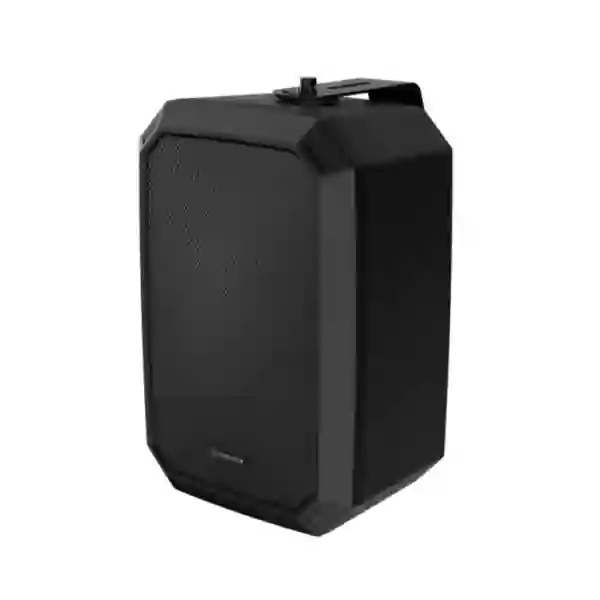
Hanwha SPA-W200B IP Wall Speaker – Black
Network-ready wall speaker with integrated 10W amplification, PoE/PoE+ support and practical options for managed announcements. Assess the exact model, message workflow, language requirements and installation environment before procurement.
Start with the audio task, not just the hardware
The Hanwha SPA-W200B IP wall speaker is a network-connected, black wall-mounted audio device for organizations planning announcements, recorded messages and event-related sound. Instead of treating sound as a separate analogue system, planners can evaluate this speaker as an addressable part of their IP infrastructure. Its built-in 10W Class D amplifier and IEEE 802.3af/at Power over Ethernet support are useful when a network cable and suitable switch capacity are available. The device is not a complete public-address system by itself: message sources, operator controls, network configuration and the actual coverage plan still need to be specified.
For a Tanzania project, the key buying questions are straightforward: will the chosen version support the languages and audio workflows you require, can the intended location be covered clearly at a comfortable volume, and can it be powered, mounted and managed reliably? Review the practical guidance below, then request a project-specific quotation and compatibility confirmation before ordering.
At-a-glance verified specifications
The following manufacturer-published characteristics are a buying reference. They do not confirm regional supply, integration compatibility, output levels in a particular building or commercial terms.
| Product category | IP wall-mounted network speaker |
|---|---|
| Manufacturer / model | Hanwha Vision / SPA-W200B |
| Colour | Black |
| Amplifier | Built-in 10W Class D |
| Network connection | 10/100 Base-T Ethernet |
| Power | PoE IEEE 802.3af Class 3; PoE+ IEEE 802.3at Class 4 |
| Speaker arrangement | Two-way: 5-inch LF and 0.5-inch HF driver |
| Published speaker range | 120Hz–20kHz (-10dB) |
| Internal memory | 1 GB |
| Supported recorded audio | WAV and MP3 (check firmware/format) |
| Ingress protection | IP54 |
| Dimensions (W × H × D) | 170 × 250 × 134 mm |
| Approximate weight | 2.5 kg |
| Operating temperature | -20°C to +50°C |
| Dry-contact I/O | One input; one normally-open output |
Verify the precise current datasheet, software version, language support and project conditions before ordering. In particular, IP54 does not mean IP66 or unrestricted outdoor exposure.
What the SPA-W200B is designed to do
The SPA-W200B is an IP wall speaker rather than a conventional passive loudspeaker or a simple camera bracket. The speaker assembly incorporates its own Class D amplification and connects to an Ethernet network. This makes it a candidate for announcements that originate from a supported IP-audio controller, SIP-related workflow, stored sound file or appropriately configured event. It is especially relevant when the buyer wants individually addressable audio endpoints or a coordinated design spanning more than one part of a building.
The distinction matters commercially. A passive speaker normally needs a separately designed amplifier and speaker cable. An IP speaker instead depends on a network, power sourcing equipment and application logic. Neither design is automatically better: the right choice depends on how announcements will be triggered, how many listening areas are involved, and who will manage the system after handover. Buyers should specify those requirements before comparing line-item device costs. An IP model can make sense in a network-centric project, whereas an existing analogue public-address installation might favour a different interface or a gateway after proper compatibility assessment.
Quick specification guide
The manufacturer identifies a built-in 10W Class D amplifier, 10/100 Base-T Ethernet, 1 GB of internal memory, PoE under IEEE 802.3af Class 3 and PoE+ under IEEE 802.3at Class 4. It describes a two-way assembly using a 5-inch low-frequency driver and a 0.5-inch high-frequency driver, with a published speaker frequency range of 120 Hz to 20 kHz at minus 10 dB. Its separate line-output specification should not be confused with the acoustic frequency range of the speaker itself.
The detailed technical listing identifies IP54 ingress protection, dimensions of 170 by 250 by 134 mm, approximate weight of 2.5 kg and an operating temperature specification from minus 20 to plus 50 degrees Celsius. It also lists an alarm input and an alarm output as dry-contact channels, along with WAV and MP3 playback support. Manufacturer pages may show different sound-pressure and text-to-speech details across summaries or regional configurations; verify the datasheet and firmware for the exact unit offered before stating a guaranteed peak output or a particular text-to-speech language. These are selection facts, not a substitute for an acoustic survey.
Why network audio can help a commercial site
In a distributed workplace, announcements may be needed in a reception area, a corridor, a loading bay or a supervisor station at different times. A network-audio approach permits each endpoint to have an IP identity and creates opportunities for targeted control when the chosen management platform supports it. A building operator may want a routine closing message in one zone while another team needs an incident-related instruction somewhere else. Designing these requirements is easier when the audio architecture is considered at the same time as switching and site operations.
The advantage is not simply ‘digital audio’. Buyers should evaluate how messages are initiated, prioritized, logged, repeated and cancelled. They should ask whether a missed broadcast can be detected and who is responsible for checking microphone, controller and endpoint health. The device’s documented audio monitoring and connection-testing functions can support a commissioning checklist, but operational procedures still matter. A reliable announcement must reach the appropriate people in language they understand, without clipping, excessive reverberation or dependence on a single unprotected upstream device.
Deciding whether a wall speaker is the right form factor
A wall-mounted enclosure is often considered where ceiling access is limited or the intended listening area faces an accessible wall surface. Placement can help direct sound toward people rather than wasting it in a large void above a room. The SPA-W200B has a black finish and a substantial enclosure, so designers should account for visual appearance, mounting position and available clearance instead of assuming it will disappear into the architecture.
Wall placement also introduces constraints. Shelves, signs, partitions and moving stock can obstruct the sound path. A listener close to the speaker may hear a high level while someone beyond a doorway struggles to understand speech. In reflective spaces such as tiled lobbies or narrow corridors, adding volume may increase echoes without improving intelligibility. Mark the actual occupied areas on a floor plan, identify the typical ambient noise and have the installer assess speaker positions before fixing quantities. The correct count depends on the rooms and use, not merely on floor area. Where coverage must extend into a yard or across a noisy exterior, evaluate a suitable horn-style or higher-protection device instead.
Power over Ethernet planning
Power over Ethernet is a major design feature because a compatible Ethernet cable can carry both network data and electrical power. The published SPA-W200B specifications include IEEE 802.3af Class 3 and IEEE 802.3at Class 4 support. In practice the engineer must check the actual power budget available from the chosen switch or injector, the number of connected devices and the power mode required by the audio configuration. The mere presence of ‘PoE’ on a switch label is not enough to establish that every port can deliver the intended power simultaneously.
Hanwha’s general IP-speaker support guidance advises selecting PoE+ in a relevant configuration when available and using PoE if PoE+ is unavailable. That does not eliminate the need to test the exact unit and firmware. Budget for every endpoint at full expected operation, include other powered devices such as cameras, and examine switch uplinks and uninterruptible power supply requirements. Network power failure can silence an otherwise functional speaker. If operational announcements are important during local outages, evaluate backup power for the switches, controllers and upstream network as a complete chain. Do not assume PoE alone makes a system resilient.
Network design and site readiness
Before installation, decide whether the speakers will receive fixed IP addresses or addresses reserved through DHCP. Document the subnet, gateway, time synchronization method, switch port, VLAN and administrative owner. The device is listed with common IP protocols including IPv4, HTTP, SIP, DNS, NTP, TCP, UDP and DHCP, but the supported functions and access controls of the exact software should be confirmed during staging. An endpoint can be reachable on the network while its audio control path is still incorrectly configured.
For multi-zone or multi-building deployments, ask the network team to review multicast routing, switch configuration, bandwidth policies and any firewall rules applicable to the specific architecture. It is a mistake to assume traffic that works within one small test subnet will automatically work across routed networks. Maintain a naming scheme that identifies physical location and zone, and keep a drawing of each device’s wall position. Before live cutover, test the full communication path from the actual microphone, controller, video system or scheduling platform, rather than relying only on a successful ping. The result should be a repeatable installation, not a one-off demonstration.
Live announcements and SIP-based possibilities
The manufacturer lists SIP among the product’s protocols and describes tested combinations with certain SIP clients and PBX technologies in its detailed product information. This creates a useful evaluation route for organizations interested in announcements launched from a desk phone, softphone or another approved interface. However, a SIP label should never be interpreted as universal compatibility with every telephone system, cloud PBX, codec, authentication mode or call-routing policy.
During design, verify the precise endpoint firmware, approved call scenario, supported codec, user permissions and the way a live broadcast starts and ends. Ask what happens when a second call arrives, when an operator hangs up unexpectedly or when a scheduled message is already playing. Speech intelligibility, delay, echo and operator feedback should be assessed on site. If the organization has an existing IP telephony system, the project team should provide its make, version and sample call flow for technical review before asserting integration. Separate the ability to register or receive SIP audio from a wider promise of emergency calling or certified life-safety communications.
Recorded messages and scheduled-use considerations
The SPA-W200B manufacturer information includes WAV and MP3 support and 1 GB of internal storage. Stored audio can be useful for routine announcements where consistent wording is more important than a person speaking live: a visitor instruction, scheduled reminder, shift-change cue or a controlled alert message. The audio files should be prepared at an appropriate level, in a format accepted by the chosen firmware, and checked through the speaker after upload.
A library of recorded messages needs governance. Assign responsibility for approving scripts, pronunciation, languages, volume, revision dates and retirement of old files. Avoid two similarly named files with different instructions. If messages are triggered automatically, document the triggering event and replay behaviour. For an incident procedure, confirm that the intended audience can understand the recorded message under real site noise conditions. Internal memory does not mean unlimited storage, and a stored file does not prove that the system will operate during loss of network power or controller access. Test the complete triggering and playback sequence, including recovery after interruption.
Text-to-speech language verification for Tanzania
Language support deserves special attention in Tanzania because many projects may need English, Swahili or both. Hanwha’s public SPA-W200B material is not fully consistent: one summary describes Korean text-to-speech, while another specification section lists several other languages. Hanwha’s general support information also warns that TTS input languages can vary by region. Therefore this listing does not promise a specific TTS voice or Swahili generation capability for the SPA-W200B.
If text-to-speech is part of the requirement, ask for a demonstration on the exact model, regional variant and firmware being supplied. Confirm available languages, voice quality, punctuation handling, message length and the process for future updates. An alternative is to supply human-recorded WAV or MP3 announcements in the required language, provided the files are tested and the deployment workflow supports them. That is not the same as built-in Swahili TTS. For public-facing announcements, the buyer should approve the wording with local staff who understand the intended audience and operational context.
Security-event audio and dry-contact integration
The SPA-W200B product details identify one dry-contact input and one normally open dry-contact output. Such interfaces may be useful when a project needs to connect an appropriate alarm relay or another controlled I/O signal to an audio workflow. Hanwha’s support material demonstrates event-driven playback with IP speakers, including local audio files selected for an alarm-input event. These capabilities can add context to a security operation: a permitted visitor direction at a gate, an operational warning in a restricted work area or an alert to staff in a monitoring room.
A contact input is not a substitute for detailed electrical design. The team must verify contact ratings, isolation, wiring, grounding, event logic, fail states and the permissions required to change configuration. Test false triggers, repeated triggers and the reset sequence. Any connection to fire alarm, evacuation or life-safety arrangements requires a separate assessment by suitably qualified professionals and the relevant approved system design. Do not market this speaker as a certified emergency notification or fire-alarm product merely because it can play an audio message when an event occurs.
Using audio alongside video security
Some security teams want an audio response to accompany a camera event. For example, an approved analytic rule could ask an operator to review activity, or a verified condition could trigger a pre-recorded message where that is appropriate. Hanwha publishes support articles describing IP speakers used with its video-management workflows, but the existence of a support article does not establish that every camera, VMS edition, analytic type or firmware combination works with every speaker model.
Buyers should describe the intended chain: which device detects the event, which platform decides what to do, how the audio endpoint is addressed and what the operator can override. Record how many false positives are tolerable and what happens if the speaker is offline. Prevent an automatic announcement from becoming an uncontrolled nuisance to workers or neighbours. Before procurement, request a compatibility matrix or a controlled proof-of-concept for the exact VMS, network architecture and speaker version. This avoids discovering at commissioning that an apparently simple ‘camera talks through speaker’ concept needs additional licenses, rules or integration components.
Audio coverage, volume and speech intelligibility
The manufacturer publishes acoustic characteristics for the SPA-W200B, including a two-way driver arrangement, an acoustic frequency range and a directional coverage pattern that varies with frequency. These figures are starting points for a design; they are not a promise that a single device will cover a specified number of metres in every building. Sound level falls with distance and is affected by walls, obstacles, ambient noise, orientation and room acoustics. A warehouse aisle, a quiet office corridor and an echoing entrance require different judgments.
For announcement projects, prioritize whether an average listener can understand the words clearly. Ask the installer to make test broadcasts at the usual occupancy level and at the times when machinery, vehicles or crowds produce the highest normal noise. Keep volume comfortable near the speaker and intelligible at the farthest required listening point. Consider multiple appropriately positioned endpoints instead of forcing one speaker to operate too loudly. If intelligibility or accessibility requirements are formal project criteria, specify a suitable measurement method and acceptance threshold in advance rather than relying on a subjective claim of ‘loud enough’.
Placement, mounting and physical protection
The published enclosure dimensions and approximate 2.5 kg weight mean the supporting wall, bracket and fixings deserve attention. The installation team should follow the manufacturer’s installation guidance for the supplied unit, use fixings rated for the substrate and account for vibration, accidental impact and access for servicing. Avoid mounting where a door, forklift, moving pallet or maintenance ladder could strike the enclosure. Keep the final placement away from ventilation outlets, obstructing signs or positions that create an unnecessarily loud listening point.
Cable routing is part of the installation. Plan a protected network route, strain relief, suitable glands or seals where required, and a service loop or access arrangement compatible with the manufacturer’s instructions. Do not drill extra openings or modify the enclosure casually, since this can compromise ingress protection and electrical safety. Photograph the final location, record the switch port, and include a label or asset identifier appropriate to the site. A clean mechanical installation reduces both fault-finding time and the likelihood of future damage during ordinary building maintenance.
Environmental suitability and IP54 limits
The manufacturer’s detailed product table identifies the SPA-W200B as IP54 and specifies operation between minus 20 and plus 50 degrees Celsius, with a non-condensing humidity range. IP54 indicates a level of dust and water-splash protection; it does not mean the device can be submerged, pressure washed or left in every exposed rain and wind condition. Buyers should not equate its rating with IP66 or treat it automatically as a rugged all-weather horn speaker.
For Tanzania installations, the important question is the particular environment, not simply the country. A sheltered corridor, coastal-adjacent entrance, hot service room and uncovered yard can create different exposure conditions. Check direct rain, wind-driven moisture, dust accumulation, sunlight, condensation, salt exposure, cleaning procedures and enclosure temperature. Use suitable shelter or select a differently rated device when the actual conditions exceed the manufacturer’s stated limits. Do not assume tropical suitability or corrosion resistance beyond the published specification. An installer should confirm the precise mounting and environmental design before the final quotation is approved.
Security configuration and administration
An IP speaker is a network device that should be administered with the same discipline as other managed endpoints. Give it a strong unique administrative credential, restrict management access to authorized personnel, maintain a record of the installed firmware and remove unnecessary exposure from the public internet. Where supported, prefer encrypted management methods and keep the management VLAN separate from casual guest access. These are system-design practices; available security functions must be confirmed on the firmware being delivered.
Define who can upload a message, initiate a broadcast, change a zone, restore defaults and update firmware. An unintended or malicious audio announcement can interrupt operations or create safety confusion, even without access to video or business data. Keep configuration backups under change control and restrict physical access to network equipment. When updates are needed, read the manufacturer release notes and test in a controlled window instead of applying unreviewed settings to every site device at once. Security is a continuing operational responsibility, not a box ticked only during installation.
What a complete solution may still require
The SPA-W200B is one endpoint in a broader design. Depending on the desired outcome, a complete deployment may require PoE-capable switching, a supported audio management platform or controller, compatible microphones or SIP clients, a VMS integration layer, network cabling, mounting materials and power backup. It may also need installation labour, commissioning, training, message production and ongoing support arrangements. None of these items should be assumed included merely from the speaker model name.
Start the quotation with the user’s workflow, not the product quantity. Is the requirement a person speaking to one zone, a timed recorded notice, a camera-linked intervention or an operational contact alarm? Are there two adjacent rooms or dozens of separated buildings? Does the site need an operator console or is a controlled fixed message sufficient? Answering these questions determines which extra components are necessary and whether any existing infrastructure can be reused. Request that the quote list inclusions, exclusions, licensing dependencies and acceptance tests clearly so competing offers can be compared on like-for-like scope.
Example: reception, visitor and customer areas
A reception area often needs short, intelligible instructions rather than extreme volume. A network wall speaker could be evaluated for approved visitor notices, closing reminders or queue guidance if the organization wants centralized content and the chosen software supports the workflow. It is worth checking aesthetics because the black enclosure may be visible against a pale wall. A demonstration should confirm the message remains understandable during conversation and normal movement without becoming intrusive for people seated nearby.
For a customer-facing area, prepare test recordings with natural speech, a moderate pace and the language actually used by the audience. Measure satisfaction by comprehension rather than simply by maximum sound level. Set a policy for message frequency so staff and customers are not subjected to repeated broadcasts without purpose. Document who can initiate the announcement and how staff can stop it if an incorrect message is selected. If the area depends on evacuation announcements, keep the approved life-safety system requirements separate from ordinary operational audio.
Example: warehouse, office and staff facilities
In a warehouse or processing facility, people may need shift information, internal notices or an operator request directed to a particular section. Wall-mounted network audio can be evaluated where a protected location and reasonable listening path exist. The presence of racks, moving equipment and high background noise makes a site survey especially valuable. One speaker in a test corridor should not be taken as proof of performance across an entire storage floor.
In offices and staff areas, more focused zone control may help avoid disturbing teams that do not need a message. Map the floor plan into logical listening areas that operators can understand. Test announcements with doors in their usual positions and with the site’s normal background music, ventilation or machinery running. Create separate procedures for routine messages and exceptional warnings, and check that staff know where the controls are. A small successful pilot with real users offers better evidence than projecting coverage from a catalogue photograph.
Example: campus corridors and managed facilities
A campus or multi-building facility may want announcements divided by building, floor or department. Hanwha’s detailed product description refers to multi-source and zone-related IP-audio features, but system capacity must be validated for the chosen controllers, software and network arrangement. Avoid multiplying a published headline capacity into a promise that any arbitrary number of speakers can run concurrently without design work.
The project team should first map each required listening zone to a responsible operator and a set of approved announcements. For buildings on separate network segments, discuss routing, multicast handling and link resilience with the IT team. For facilities operating with different language requirements, verify how the message library is organized and tested. Maintain a location list that aligns speaker names, drawings and the actual access-control or security zones. This administrative detail helps prevent an operator from playing the right message in the wrong place, which can be more consequential than a minor difference in loudspeaker specifications.
When a ceiling, pendant or horn speaker may be better
The SPA-W200B’s wall-mount format is only one way to solve a site-audio problem. A ceiling speaker may be more suitable where there is a suspended ceiling and distributed listening coverage is important. A pendant design can be considered for certain high-ceiling interiors where suspension is appropriate. A horn speaker may be the better starting point for louder industrial zones or suitable external areas, subject to the exact model’s weather rating, directionality and intelligibility characteristics.
These alternatives should not be ranked by headline wattage alone. Compare the target speech quality, intended audience, ambient noise, coverage angle, enclosure protection, visual constraints, maintenance access, network compatibility and total installed cost. A smaller number of more powerful devices does not always make for a better system. The right selection may mix speaker types while using a compatible control strategy. If the client already has a traditional amplifier and 100-volt-line loudspeakers, ask whether keeping part of that installation is more sensible than replacing every endpoint with IP audio.
Procurement questions to resolve before ordering
Ask the seller to identify the exact SPA-W200B model and regional configuration, and to verify that the proposed item can be supplied for your project. Request the current manufacturer datasheet and installation instructions for that exact unit, together with the supported firmware and language options where they matter. Confirm the required PoE class and the expected operating mode. For integrations, provide details of the switch, PBX, audio controller or VMS rather than asking for a vague statement of ‘works with everything’.
The commercial quotation should describe what is included: the speaker, any required mounting parts, power infrastructure, cabling, commissioning, message configuration, software or licensing, training and after-sales arrangements. Ask for the project’s actual lead time, warranty terms and installation coverage in writing, because those details are not established by generic product specifications. Do not infer Tanzania stock or a Tanzanian shilling price from overseas listings. When comparing offers, make sure they refer to the same product version, environmental conditions, scope and responsibility for integration testing.
Site survey checklist
A useful first survey begins with a marked plan and a short list of messages the system must deliver. Identify each occupied listening point, normal and peak ambient-noise conditions, likely acoustic obstructions and the wall locations that can accept safe fixings. Determine whether the proposed enclosure might be exposed to direct rain, heavy dust, humidity or cleaning sprays. Check that the operating-temperature specification is appropriate and that maintenance staff can safely reach the device.
Next survey the network: available switch ports, port power budgets, cable routes, existing VLAN rules, network resilience and access for the configuration team. Record whether the source is a live microphone, recorded message, alarm contact, SIP client or video event. Identify languages, who will approve the announcements, and who will operate or silence them. Finally, define an acceptance demonstration that everyone can observe: correct message, correct zone, clear listening level, acceptable response, recovery after a planned interruption and a documented handover. A survey that captures these details prevents later changes caused by unspoken expectations.
Commissioning sequence for a controlled rollout
Begin by inspecting the unit against the order and checking that the model, accessories and documents match the agreed design. Install in accordance with the manufacturer’s instructions and confirm the physical mount and cable management are secure. Verify the switch’s PoE delivery mode and budget before connecting the device. After power-up, confirm link status, IP addressing and time settings, then document the firmware version. Apply administrative access controls before putting the endpoint into normal operation.
Configure the actual audio path and upload a small approved test message. If the chosen architecture uses live SIP, demonstrate a real call from the specified phone or application. If it uses local-file playback, test the required format and playback trigger. If it uses contact signals or video analytics, perform a controlled activation and reset under the intended permissions. Listen at several positions with typical background noise and adjust orientation or zoning if required. Test an intentional disconnection and restoration, check how faults are reported, and capture the final settings and asset inventory. Commission the first area fully before replicating the configuration across a larger site.
Daily operations, maintenance and message control
Once live, the system needs a designated owner. Create a routine check for endpoint availability, intelligible playback, unexpected configuration changes and the condition of mounting and cabling. Keep a list of speaker locations, IP addresses, firmware versions, network ports and approved message files. For larger sites, arrange checks so a silent device can be found before an important announcement is needed, rather than after an incident.
Scheduled content should be reviewed when opening hours, operational processes, staffing or building access rules change. Use clear file names and a simple approval record for new recordings. Train more than one authorized operator, but avoid giving everyone unrestricted configuration access. Maintenance planning should include safe access to elevated units and coordination with IT before any network changes. Where a device is part of an incident-related workflow, periodically run the complete triggering scenario with relevant staff and document the result. That sustained discipline contributes as much to system usefulness as the initial product purchase.
Costs, scope and value over the project life
The price of an IP speaker is only one component of its economic value. Installation complexity, PoE switching, controller software, audio interfaces, commissioning, power resilience and maintenance time all affect total cost. A design that reuses suitable existing network infrastructure may have a different cost profile from one that requires new cabling and protected switches. Conversely, a lower unit price can be misleading if it leaves out control equipment or a required integration service.
Ask for a bill of materials that clearly separates speaker quantities from shared infrastructure and professional services. Compare whether quotes include configuration of multilingual messages, supervised acceptance testing, documented training and future content updates. Budget for the operational team that will maintain announcements and approve changes. Because the current request does not include verified Tanzania pricing or commercial terms, no price, stock status or delivery promise is displayed here. Request a project-specific quotation to evaluate availability and scope with confidence.
Selecting this model with realistic expectations
The strongest case for the SPA-W200B is a project that values network addressing, wall-mounted placement and integration into a properly planned announcement workflow. The built-in amplifier and PoE options simplify certain wiring decisions, while documented support for stored media, SIP-related networking and contact events opens several potential design routes. Yet these features are not a turnkey guarantee of coverage, interoperability or language support.
Before approval, validate the acoustic environment, the exact regional model, the software workflow and the required power provision. Be cautious where the installation is fully exposed to weather, where mechanical protection is demanding, where formal life-safety certification is required or where the buyer assumes Swahili TTS without a demonstration. Resolve those constraints early and there is a clear basis for deciding whether this wall speaker, another speaker style or a mixed audio system is appropriate. A written design and acceptance checklist turns a product selection into a workable site solution.
Frequently asked questions about the SPA-W200B
Is the Hanwha SPA-W200B an IP speaker or a passive loudspeaker?
It is a network-connected IP wall speaker with a built-in 10W Class D amplifier. It is not simply a passive loudspeaker that can be connected directly to any conventional amplifier output. The installation requires suitable network connectivity and power. A complete solution may also need a compatible message source or management platform. Describe the actual announcement workflow before choosing other components.
Does it work with ordinary PoE and PoE+ switches?
Hanwha lists IEEE 802.3af Class 3 and IEEE 802.3at Class 4 power support for the SPA-W200B. The installer should verify that the specific switch or injector meets the device’s requirements in the chosen operating mode and has adequate total power budget. Test with the actual cable run and audio workload. A network port with data connectivity does not necessarily guarantee correct power delivery.
Can I use it outdoors in Tanzania?
The published ingress-protection rating is IP54, not IP66. Whether a particular sheltered or semi-exposed location is suitable depends on rain, wind, dust, condensation, sunlight and the manufacturer’s mounting guidance. Do not assume it is suitable for an uncovered yard or washdown area. For such conditions, discuss a different enclosure rating and proper acoustic design before ordering.
Does the SPA-W200B support Swahili text-to-speech?
Swahili text-to-speech is not verified for this exact model and regional configuration. Hanwha’s available information also varies in how it describes other TTS languages. If automatic spoken Swahili is essential, request a demonstration on the proposed hardware and firmware. Human-recorded Swahili audio may be an alternative if the complete playback workflow and file format have been verified.
Can announcements be made using a phone system?
SIP appears in the manufacturer’s network specifications, and Hanwha describes certain tested SIP-related setups. However, compatibility depends on the actual PBX, clients, codecs, firmware, credentials and call-flow design. It is not safe to promise that any IP phone or cloud telephony service will work without a test. Share the telephony platform details so the integrator can plan a demonstration.
Can the speaker play an alert when an alarm input changes?
The detailed specification lists a dry-contact input and output. Hanwha also provides guidance for event-triggered audio playback on its IP speakers. Exact configuration and electrical compatibility should be verified in a controlled test. A message-triggering feature does not, by itself, make the installation a certified fire alarm or emergency voice evacuation system.
Can it be used with cameras or video analytics?
A camera-event-driven announcement is a possible integration concept, and Hanwha documents relevant IP-speaker workflows. Whether it works in a particular installation depends on the camera, video platform, software version, event rules and selected speaker configuration. Ask for a proof-of-concept showing the entire detection-to-audio sequence, including reset and behaviour when the network is interrupted.
How many speakers are needed for a building?
There is no reliable building-size-to-speaker-count rule from the model name alone. Quantities depend on floor plans, noise, partitions, mounting heights, acoustics and the required clarity of messages. A quiet corridor and a busy loading area need different layouts. Provide the planned listening areas and arrange an acoustic survey or controlled pilot before finalizing the number of units.
Does the unit store recorded announcements?
The manufacturer lists 1 GB of internal memory and support for WAV and MP3 audio. The project team should confirm permitted formats and available storage on the delivered firmware, as well as the software used to upload, select and trigger messages. Message approval, naming and revisions should be included in the operating procedure so the correct recording plays in the correct location.
What should I send when requesting a quotation?
Provide the site or project type, approximate number of listening zones, basic floor plan, mounting environment, required languages, preferred message sources and any existing IP network or PBX details. Explain whether the purpose is routine operational announcements, monitored security intervention or something with formal safety requirements. Request confirmation of exact model availability, included accessories, compatible software, installation scope and commercial terms.
Request a Hanwha SPA-W200B project quotation
Tell FourTeck Tanzania what you need the announcement system to do, where the speakers would be mounted, how many zones you envisage, and which existing networks or management platforms must be considered. Request confirmation of the specific model configuration, supply position, suitable accessories and any necessary integration work. A detailed scope can then address installation, testing, training and support without assuming features that have not been demonstrated.
Ask FourTeck Tanzania for model confirmation and a tailored quotation.




Reviews
There are no reviews yet.