
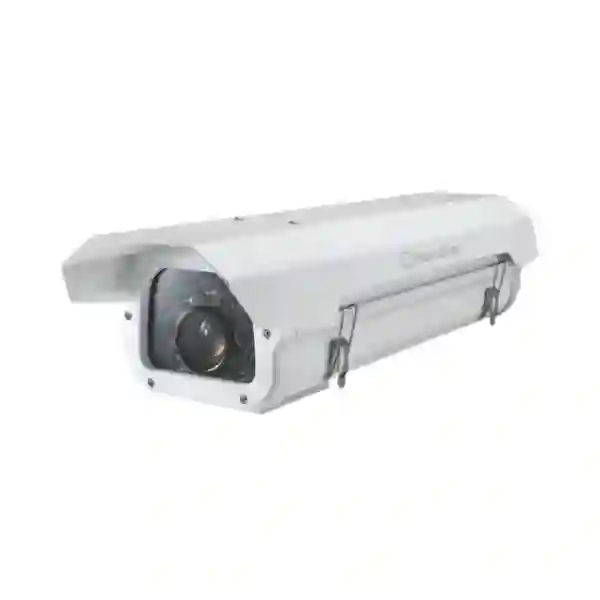
Hanwha Vision | Network ANPR camera
Hanwha Vision TNO-6071RHLP 2MP License Plate Recognition Camera | ANPR Camera Guide for Tanzania
The Hanwha TNO-6071RHLP is a specialist 2MP ANPR camera for planned vehicle capture points. Its original design supports number-plate monitoring with a 12–50mm lens, infrared illumination and a published maximum recognition range of 25 metres. The manufacturer now lists this model as discontinued. Buyers in Tanzania should therefore verify sourcing and the exact recognition software’s support for their local registration plates before using it in a new project. This guide explains where the camera may fit, which specifications have been published and how to assess a complete deployment responsibly.
At a glance
| Model | Hanwha Vision TNO-6071RHLP |
|---|---|
| Camera type | 2MP network licence plate recognition camera |
| Sensor | 1/2-inch CMOS |
| Lens | 12–50mm, approximately 4.17× |
| Recognition envelope | Up to 25m; vehicles up to 80 km/h, conditions apply |
| Lanes | Up to two lanes under suitable configuration |
| Infrared visibility | 25m |
| Video codecs | H.265, H.264, MJPEG (manufacturer lineup) |
| Power | AC 100–240V, 50/60Hz; up to 30W (manufacturer lineup) |
| Ingress protection | IP66 (manufacturer lineup) |
| Availability status | Manufacturer lists the model as discontinued |
| Tanzania plate compatibility | Unconfirmed; must be checked and field-tested |
Before you buy
Hanwha Vision lists this model as discontinued. This page does not confirm local availability or support. Do not assume Tanzanian licence-plate OCR compatibility from the published Korean-market features; require a written compatibility check and practical test using your intended plates and traffic conditions.
Product overview and who should consider it
The Hanwha Vision TNO-6071RHLP is a purpose-built network camera for capturing and recognising vehicle registration plates in managed traffic environments. It combines a 2MP image sensor, a 12–50mm lens and infrared illumination with licence plate recognition functions. Organisations evaluating vehicle access, parking oversight or traffic analysis may find its original design relevant, especially when reviewing an existing installation or planning a like-for-like maintenance strategy. The model is not a general-purpose substitute for a wide-area security camera: its value depends on obtaining a clear plate image at a carefully selected point in a vehicle’s journey.
The manufacturer’s current catalogue marks the TNO-6071RHLP as discontinued. That changes the buying decision. A site considering this model should confirm whether a genuine, serviceable unit can still be sourced, what software and support arrangements are available, and whether a currently supported alternative would offer lower long-term risk. In Tanzania, buyers must also verify recognition of their exact plate formats rather than assume that every regional ANPR implementation recognises them. A sensible first step is a compatibility and sourcing review, not an unconditional order.
What the camera is designed to do
A conventional CCTV camera records a scene that an operator later searches visually. An ANPR or LPR camera is positioned and configured to obtain a readable image of a vehicle registration plate and, where supported by the application, generate plate-related information for a wider system. The TNO-6071RHLP is associated with number-plate recognition, traffic-event analytics and a specific capture envelope. The device therefore belongs at a defined approach, lane, driveway or monitoring point where direction, speed, distance and lighting can be controlled or measured.
The output that matters is not simply whether a passing vehicle appears in video. Buyers should ask whether a complete, correct plate string can be obtained reliably, associated with the right lane and timestamp, retained appropriately, and passed to an authorised operator or integrated platform. The workflow may involve the camera, a recorder, management software and access-control equipment. Those downstream capabilities must be confirmed for the exact software version and deployment; a camera specification alone does not promise automatic gate opening, billing, enforcement or a complete parking-management solution.
Manufacturer-confirmed technical snapshot
Hanwha identifies the model as a 2MP, housing-integrated number-plate recognition camera using a 1/2-inch CMOS sensor. The stated lens range is 12–50mm, approximately 4.17×, with a published 20-degree field-of-view reference. The manufacturer’s overview cites recognition at up to 25 metres and for vehicles travelling at up to 80 km/h under suitable conditions. It also cites recognition across up to two lanes and an infrared visibility distance of 25 metres. These are published capabilities, not guarantees for any particular site, plate format or weather condition.
The 2026 Hanwha Vision lineup additionally identifies H.265, H.264 and MJPEG video options, WiseStream III, and network integration interfaces that include ONVIF Profiles S, G and T and SUNAPI. It lists an IP66 enclosure rating and mains AC power for this specific model. Those details provide a useful design starting point, but installed firmware, region-specific configuration and system compatibility must still be checked. In particular, the model must not be treated as a PoE-powered camera merely because many modern IP cameras use PoE.
Discontinued status and responsible procurement
The official product record labels TNO-6071RHLP as discontinued. A discontinued model may still exist in an installed system, a service inventory or specialist supply channel, but its appearance in an older brochure does not establish present stock. For a new Tanzanian project, procurement should confirm the exact unit’s provenance, hardware condition, firmware state, accessory requirements, service eligibility and any applicable support limitations. No stock level, current price, authorised-channel status or local warranty is established here.
If the intention is to replace a failed camera in an operating system, document the current unit’s part number, firmware, recogniser configuration, field of view, power input and integrated software before choosing a replacement. If the intention is a completely new installation, compare a currently supported ANPR model against the site’s required plate types, lane geometry and integration functions. The camera with the closest numerical specification is not necessarily the best operational substitute. Plan procurement around a demonstrated workflow and total cost of ownership.
An essential check for Tanzanian number plates
A camera can capture a sharp image without successfully interpreting the characters on a particular country’s number plate. Recognition software is sensitive to plate layout, character sets, font styles, reflective materials, mounting positions, lighting and the regional models or firmware it supports. Published recognition figures for the TNO-6071RHLP should therefore not be read as a manufacturer guarantee for Tanzanian registration formats. Local OCR and country-format support have not been independently established for the intended installation in this content.
Before approving a deployment, ask for explicit written confirmation of the exact recognition package and supported plate jurisdictions. Test actual authorised vehicles from the intended site, including common private, commercial and other relevant plate styles, without assuming that a successful test with a different country’s plates transfers automatically. Separate image quality from decoded-text accuracy in the test report. If Tanzania plate recognition is unsupported, the product may be relevant only for image capture or a legacy integration after appropriate assessment, and a different solution may be necessary.
Understanding the 25-metre recognition claim
Hanwha describes the TNO-6071RHLP as supporting plate recognition up to 25 metres. This figure helps establish the intended working range, but the usable distance for a specific lane depends on lens adjustment, viewing angle, plate size in the image, vehicle position and environmental conditions. A camera mounted far outside its effective recognition zone may still show a passing vehicle clearly enough to identify its colour while failing to produce enough plate detail for accurate OCR. Distance should be measured along the actual capture line, not estimated from a site drawing.
At survey stage, establish a proposed capture point and physically measure the shortest and longest expected distances for the target vehicle path. Assess the nearest and farthest lanes individually if more than one is included. Record sample frames at the intended focus and zoom settings. A practical acceptance test uses repeated approaches at different positions within the lane, at realistic speeds and under representative daylight and night conditions. The aim is dependable results at the actual installation, rather than reproducing a catalogue maximum.
Vehicle speed: what up to 80 km/h means
The manufacturer’s published maximum of 80 km/h indicates a possible recognition operating envelope under suitable conditions. It does not mean that every vehicle at that speed, in every direction and lighting condition, will be correctly read. Motion blur, exposure time, plate angle and the number of usable frames can all affect capture. A straight approach to the camera may present a different challenge from a diagonal movement across a busy access point. A test at slow gate speed is not enough to qualify a road-side installation.
A project brief should specify realistic speeds, including the slowest traffic, the normal operating band and occasional faster vehicles. Installers can then evaluate the camera’s shutter behaviour, illumination, field of view and mounting geometry against that range. For a gate, safe stopping and barrier sequencing may matter more than high-speed recognition. For a road approach, the number of attempts and the proportion of correctly decoded plates under realistic flow are critical. Treat the published speed as a selection guide, not a performance service-level commitment.
Choosing a suitable position and viewing angle
ANPR camera placement determines whether the plate is large enough, unobstructed and sufficiently face-on when the vehicle crosses the capture zone. The ideal position is generally a stable vantage point aimed at the travel path rather than a decorative high corner chosen for general surveillance coverage. Excessive side angle, steep downward tilt or long oblique views can distort the plate and complicate OCR. Mounting too close can also leave insufficient time for a usable capture if vehicles pass through the field very quickly.
Survey the approach from the driver’s direction, account for left- and right-turning vehicles, and check whether large vehicles may block smaller ones. Where traffic is bidirectional, consider whether one field of view can reliably cover both approaches or whether separate capture positions are more appropriate. Document mounting height, horizontal offset, capture distance and a representative still image before fixing brackets permanently. The bracket, wall or pole must remain stable during wind and vibration, because a moving mount can undo otherwise correct lens and camera settings.
Lens range and framing decisions
The 12–50mm lens gives an installer room to select a narrower or wider field of view for a defined lane geometry. More zoom is not automatically better. A tight image may make one plate larger but increase the chance that a turning vehicle enters the frame too late or falls outside it. A wide image may cover the path comfortably while making characters too small for consistent decoding. The correct balance depends on the capture distance, expected vehicle positions and the width of the usable traffic corridor.
During commissioning, begin with the precise recognition location rather than an attractive wide CCTV shot. Adjust zoom and focus while watching sample vehicles and compare plate readability near the centre and edges of the required area. Verify that headlights, reflective plates and windscreen reflections do not dominate exposure. If the site requires a broad overview as well as high-confidence plate capture, using a separate overview camera may be a better architecture than forcing one recognition camera to perform both tasks. Record lens settings for maintenance and future replacement.
Night-time capture and infrared illumination
The manufacturer lists infrared visibility at 25 metres for this model. IR support is valuable because plate recognition often needs to operate through low-light periods and against vehicle headlights, but it is not an assurance of correct recognition in darkness. Plate reflectivity, weather, dirt, exposure control and the precise alignment of illumination can produce underexposed characters or washed-out reflections. A camera that performs well in daylight can fail at the same distance at night if its illumination and exposure are not tuned for the approach.
Night commissioning should use real vehicles with their normal headlamps illuminated. Include oncoming traffic, turning movements and rain-wet surfaces where these are representative of the site. Review raw plate frames rather than only viewing a compressed video preview on a monitor. Inspect glare from signs, barriers and reflective road paint. Confirm the actual illuminated capture area before approving placement. If additional lighting is proposed, check equipment compatibility and safety; do not assume that any third-party IR illuminator will produce the same result as the tested arrangement.
Daylight, weather and seasonal conditions
Strong tropical sunlight, deep shade, rain and dust can each affect a vehicle recognition system in different ways. Sunlight at a low angle can cause backlighting or flare, while shaded entrances can introduce a sharp exposure transition. Heavy rain can obscure characters or cause reflections from wet number plates, and dust on a housing window can reduce contrast gradually. The camera’s enclosure rating is a starting point for environmental resilience, but it does not remove the need for site-specific protection and periodic cleaning.
For sites in Tanzania, assess the actual road surface, shelter, mounting exposure and operating environment rather than assuming every location has the same conditions. Include a test at the periods when glare is most severe and an agreed maintenance routine for the window and mount. Avoid placement where vehicles routinely splash muddy water onto the lens area. Design cable routes to prevent water ingress and use equipment suitable for the local installation method. A recognition system is only as reliable as the scene it captures over time.
One or two lanes: avoiding overextension
Hanwha publishes a maximum recognition coverage of up to two lanes for the TNO-6071RHLP. That statement is useful for preliminary design, but it should not be interpreted as a commitment to recognise two arbitrarily wide lanes from any mounting position. The image must preserve sufficient plate detail over the entire required area, and vehicles may overlap or obscure one another during simultaneous movements. A two-lane arrangement also introduces questions about which lane generated a plate event and how that event reaches the correct downstream application.
Map individual vehicle trajectories, lane widths, separation and likely traffic patterns. If a central camera position produces a poor plate angle for either lane, dedicated cameras may be justified. Test simultaneous passages and closely spaced vehicles, not only one car at a time. Where the camera is expected to support an entry and exit, verify direction classification and event logic explicitly. The safest design is one that meets the required accuracy for real traffic while keeping the installation straightforward to diagnose and maintain.
ANPR events versus traffic-rule analytics
The published feature list includes number-plate recognition and detection associated with speeding, illegal parking, illegal U-turns and wrong-way movement. These are analytical functions whose usefulness depends on configuration, scene conditions, compatible software and the intended operational process. Their presence in a product overview should not be interpreted as legal evidence certification, automated citation authority or guaranteed detection of every incident. Such a distinction matters for organisations planning more than basic vehicle logging.
Specify each required event separately. A property manager may need a notification when a vehicle enters in the wrong direction, while a road operator may need an event review process for suspected speeding. Determine what time, location, still image and video evidence an operator will receive and how false positives will be handled. Before using analytics for formal enforcement, obtain competent technical and legal assessment of the complete system, applicable local permissions and required measurement validation. A camera event should be treated as information requiring appropriate governance.
Vehicle information and software dependencies
Hanwha notes that vehicle attributes such as manufacturer, model, colour and type may be available when the TNO-6071RHLP is connected with an appropriate SSM Appliance. This is a conditional ecosystem feature, not proof that the camera alone produces every attribute in every deployment. Availability can vary with software edition, device firmware, regional support and configuration. Where vehicle classification is a buying requirement, ask for a demonstration using the exact components and data fields the project will use.
Separate essential functions from useful extras in the design brief. A car park may primarily need the plate string and an image, whereas a security operator may want a searchable record that includes vehicle characteristics. Each field has an associated accuracy, privacy and storage consequence. Confirm how a user searches for a vehicle event, what happens when an attribute is unavailable and whether the system supports corrections or operator review. Do not purchase hardware on the assumption that optional software intelligence is automatically bundled.
Practical uses at controlled entry points
A gated estate, commercial compound, warehouse or employee parking area can benefit from a clearly defined vehicle capture point. The camera can be positioned where approaching vehicles slow, align and present their registration plates. In a complete access-control design, the recognition result may be evaluated against an approved list or operator workflow before a barrier is activated. That workflow depends on the relevant management software and barrier integration; the TNO-6071RHLP should not be described as a standalone gate controller.
A good design preserves safe access when the plate is unreadable, the network is unavailable or the vehicle is not on the expected list. Define an intercom or operator-assisted fallback, maintain emergency access procedures and avoid relying on a single recognition event for safety-critical decisions. Test tailgating, visitors, delivery vehicles and temporary plates as distinct use cases. At approval, record not only successful reads but also how the system behaves when it cannot recognise a plate. Effective automation includes a sensible exception-handling process.
Parking management and movement records
For parking applications, the practical value of licence plate capture is to create a searchable record of movements at designated entrances and exits. Such records may help authorised staff investigate an incident, reconcile access activity or support a larger parking process. The accuracy of entry-exit matching depends on complete event capture, synchronized clocks, plate interpretation and software rules. A camera alone does not establish dwell-time billing, fee collection, space counting, visitor entitlement or payment integration.
Before specifying the system, define the record that operations staff actually need. Is it an image, a validated plate string, a timestamp, a lane identifier or a verified link between entry and exit? Establish how long the records should be retained and who may search them. Test vehicles that enter and leave through different gates and consider how misreads are corrected without creating misleading customer records. A purpose-built workflow reduces administrative effort more effectively than a long list of camera features without an end-to-end design.
Industrial sites and logistics entrances
Industrial facilities often have more difficult capture conditions than a residential driveway. Trucks may have varying plate positions, trailers can hide the plate of a towing vehicle and vehicles may arrive close together or stop at different points. A logistics entrance can also combine access control, operator verification, weighbridge activity and delivery scheduling. The camera may contribute a useful plate image or recognition event, but it should be selected around the actual vehicle fleet and process rather than a generic passenger-car example.
During the survey, include heavy vehicles, motorcycles, delivery vans and any other authorised classes that use the entrance. Inspect actual mounting heights and plate positions; test dirty or partly obscured plates where these are normal operating risks. Determine whether the gate operator requires a rear or front plate and whether the vehicle can be guided into a repeatable stopping position. Where the installation must support multiple independent checks, design separate verification steps instead of assuming a single ANPR result identifies the driver, cargo or delivery authorisation.
Road monitoring and directional movement
At a road-side monitoring point, the most important question is whether the plate can be captured consistently at the real travel speed and viewing angle. The TNO-6071RHLP’s published operating envelope makes it relevant to evaluating certain controlled road approaches, but its performance for a particular route must be established by a site survey and field test. Traffic flows can include motorcycles, closely spaced vehicles, lane changes and large variations in plate orientation. Each of these conditions can reduce confidence in a particular event.
Plan the capture zone where road users can be monitored without creating unsafe mounting or maintenance conditions. Consider the impact of surrounding headlights and backlighting, and whether one camera can clearly distinguish adjacent lanes. Identify who will review events and how long associated images or records will be held. Where public-road enforcement or regulated monitoring is contemplated, confirm the necessary approvals and evidential standards independently. Do not infer legal enforcement suitability from the presence of traffic-analytics features in the manufacturer’s product summary.
Video streams, compression and storage planning
Hanwha’s lineup identifies H.265, H.264 and MJPEG compression, multiple video profile capability and WiseStream III. These features can support different recording and viewing needs, but storage requirements depend on selected resolution, frame rate, scene activity, retention policy and the recording system. Compression technology does not eliminate the need to preserve readable plate detail. A stream optimised for low-bandwidth remote viewing may not be the best evidence source when a character is difficult to identify.
Specify which stream or event image is used for recognition review, which is recorded centrally and which is available to authorised remote operators. Calculate expected retention from measured data rates under representative traffic, not from an unsupported fixed bitrate estimate. Check that the VMS or NVR can ingest the required profile and preserve metadata if that is part of the workflow. Establish procedures for time synchronization, export and integrity checks. Buyers should confirm installed software support before investing in storage based on the camera’s published codec list.
Network integration and compatibility verification
The 2026 manufacturer lineup identifies ONVIF Profiles S, G and T and Hanwha’s SUNAPI among the interfaces associated with this model. These standards and interfaces can improve the chances of integrating video, events and recordings with supporting systems, but an advertised profile does not promise every proprietary analytic result will work with any third-party platform. A video management system may display live video successfully while failing to collect the specific plate event or vehicle-attribute fields a buyer wants.
Prepare an integration matrix listing camera firmware, VMS or NVR version, recording profile, event transport, authentication, alert rules and required data fields. Demonstrate the actual receiving application before treating a system as compatible. Test recovery after temporary network disconnection and ensure each camera has a clear device name and time source. If an existing installation uses older integration methods, review security and software lifecycle implications before reusing them. The goal is operational interoperability, not simply an ONVIF checkbox on a procurement form.
Power, enclosure and physical installation
The manufacturer lineup lists mains AC 100–240V, 50/60Hz and a maximum power consumption of 30W for the TNO-6071RHLP. It also identifies IP66 protection, an operating temperature range of approximately minus 20 to plus 55 degrees Celsius, and a housing size of about 200 × 150 × 570mm with a mass of approximately 4.1kg. These are planning specifications, not confirmation of a particular installation’s power quality, structural capacity or electrical-code compliance. Obtain the exact installation documentation before energising any unit.
Unlike many small network cameras, this model should not be assumed to accept power over Ethernet. A qualified installer should verify the actual rating label, suitable local electrical supply, earthing, isolation, surge protection and weather-safe cable entry. The mount must carry the camera under site wind and vibration conditions, and maintenance access should be planned safely. Where grid interruptions are a concern, size a suitable backup supply for the complete chain, including camera, network equipment, recorder and any barrier controller. A power strategy is part of reliable recognition.
Local recording and resilience
The 2026 lineup lists two microSD-family card slots for the TNO-6071RHLP, providing a possible edge-storage capability depending on supported cards, firmware and configuration. This is not a promise that the camera will independently back up all recognised plate data or replace a central recorder. Card capacity, recording mode, endurance and failure handling must be checked in the actual system. A temporary video buffer and a fully retrievable event history are different requirements and should be specified separately.
Define the behaviour when a recorder, network link or application server is unavailable. Determine whether the camera continues recording, whether events queue for later transfer, and what an operator sees when service returns. Confirm these behaviours with an end-to-end test rather than relying on the presence of an SD card slot. Where records are important, set retention and retrieval policies and monitor storage health. Resilience comes from proven recovery procedures, accurate clocks and clear responsibilities, not from storage hardware alone.
Cybersecurity and account management
A networked camera becomes part of an organisation’s information infrastructure. Even at a gate, it may handle identifiable vehicle movement records and expose services that should be limited to authorised users. Basic deployment controls include unique administrator credentials, least-privilege access, appropriate network segmentation and restricting public internet exposure. Software and firmware versions should be verified against trusted manufacturer documentation before commissioning. Discontinued hardware needs particularly careful lifecycle assessment because support options and security maintenance may change over time.
Create named operator roles instead of shared passwords, log privileged configuration changes where the platform permits, and define how access is revoked when personnel leave. Use secure transport and authentication methods supported by the actual device and receiving system; do not assume that a marketing reference to a standard means every security control is enabled by default. Restrict exports of still images and plate records and protect backups. Record who owns patch decisions and who reviews security advisories so the system remains governable after installation.
Privacy and data protection in Tanzania
Vehicle registration data and the images or movement history associated with it can have personal-data implications. Tanzania’s Personal Data Protection Commission explains that data collection and processing are governed by the country’s Personal Data Protection Act, and it provides registration guidance for data controllers and processors. An organisation deploying ANPR should determine its obligations with competent local advice before storing, searching, exporting or sharing identifiable vehicle records. Camera technology does not make the resulting data exempt from privacy responsibilities.
A practical privacy design records a clear purpose, limits camera views to relevant operational areas, uses appropriate notice where required and restricts access to people who need it. Decide retention periods based on the lawful purpose rather than keeping data indefinitely because storage is available. Document procedures for responding to requests, correcting inaccurate recognition records and handling potential breaches. The PDPC also highlights the importance of responsible CCTV use. This content is a technical buying guide, not a legal determination or claim that any particular FourTeck installation has been registered or certified.
What to collect during a site survey
A useful survey begins with an annotated approach drawing. Mark traffic direction, number of lanes, approximate lane widths, proposed capture line, mounting location, measured camera-to-plate distance and expected speed range. Capture photographs from the proposed camera viewpoint in daylight and after dark when possible. Note any nearby reflective signs, barriers, high-mounted lights, trees or structures that could obstruct the view. Include both common and exceptional vehicles so the proposed design does not fit only the easiest test car.
Record the available electrical supply, cable distance, network topology, communications cabinet, time synchronization source, recorder location and maintenance access. Identify who operates the gate or monitoring system, what must happen after a valid plate read, and what fallback is required. List data-protection and site-permission questions for the responsible team. The final survey should turn these observations into measurable acceptance criteria, a list of required components and a statement of unresolved risks. This is more valuable than buying solely from a headline distance specification.
Designing an acceptance test that matters
A purchase decision should rely on a defined acceptance procedure, particularly when evaluating a discontinued camera and unverified local plate recognition. Start with representative authorised plate formats and vehicle categories. Run multiple passes at realistic speeds in each required lane, by day and by night. Record the number of opportunities, the number of plates detected, the number of complete and correctly decoded results and any failures due to obstruction or environmental conditions. Keep the original image available for legitimate technical review.
Avoid reporting only a single percentage without sample size or context. Separate failed captures from wrong character interpretation, missed vehicles, duplicated events and events assigned to the wrong lane. Compare results with the buyer’s operating requirements and document conditions under which performance falls below the agreed threshold. Confirm data transfer into the actual receiving software, and repeat critical tests after changes to lens settings, firmware or mounting. A jointly agreed pass-fail procedure prevents a successful demonstration under ideal conditions from becoming an unsupported claim about long-term real-world operation.
Interpreting errors and handling exceptions
A plate-recognition event can fail in several different ways. A frame may be too blurred to read, a plate may be partly hidden, recognition may identify an incorrect character, or software may associate a correct read with the wrong vehicle or lane. These cases require different remedies. Improving lighting may help a dark image but will not add support for an unsupported national plate format. Changing the lens setting may improve size in the frame while reducing the width of the capture zone.
Operational teams should retain a clearly defined manual review path for uncertain events. Where a plate is used to grant access, the decision logic must handle false positives and false negatives without compromising safety. Use authenticated staff corrections where appropriate and preserve an audit trail of manual changes. If performance degrades suddenly, inspect the scene, camera window, mount, time settings, network connection and recognition software before replacing hardware. Evidence-based fault diagnosis avoids unnecessary expenditure and helps distinguish a camera problem from a workflow problem.
What a complete solution may need
Beyond the camera, a practical solution may require a suitable support structure, reliable mains supply, protected network cabling, switches, recording storage, a time source, licensed or compatible management software, access-control integration and clear operating procedures. The precise set of components depends on the use case. A simple monitoring point and a controlled entrance with visitor workflows have very different requirements, even when their cameras share similar sensor and lens specifications.
Ask which functions are performed on the camera, which depend on an SSM Appliance or another application and which need a separate controller or service. Clarify who configures the recognition rules, administers user permissions, manages updates and maintains the system. A quote should identify exclusions and critical dependencies as carefully as included items. For a discontinued unit, also ask whether spare parts, software compatibility and service options can be confirmed. An accurate bill of materials is essential for a functioning installation.
Comparing this model with current alternatives
A replacement decision should compare outcomes rather than only megapixels. The TNO-6071RHLP offers a published 2MP capture format, 12–50mm lens, integrated housing and defined recognition envelope. A newer camera may use a different sensor, focal range, power method, illumination arrangement or OCR engine. That does not automatically make it more suitable. A design based on a narrow two-lane capture zone may need very different hardware from a barrier-mounted camera used only when vehicles stop.
For each candidate, compare verified local plate-format support, suitable capture distance, speed, lane geometry, low-light results, event interfaces, power and mounting requirements, software compatibility, cybersecurity lifecycle and supportability. Demand a field demonstration wherever the risk is material. Do not assume that the related TNO-6081RLP has the same recognition distance, illumination requirements or mounting form as the TNO-6071RHLP; the manufacturer describes them as distinct models. A supported device that meets the actual operating brief is usually preferable to a nominally similar legacy unit with uncertain support.
How to evaluate cost without an invented price
There is no verified Tanzania selling price, stock figure or warranty for the exact TNO-6071RHLP listing in this brief. A meaningful project budget should therefore begin with a confirmed sourcing position. Hardware alone may represent only one portion of total project cost. Other categories include mounting and civil work, safe electrical connection, surge and backup power provisions, network equipment, software licensing, video storage, installation, testing, user training and planned maintenance.
Compare the cost of a complete, tested outcome rather than one camera against another. Include the effort required to adapt existing systems, potential costs from unsupported software, spare-unit strategy and the consequences of recognition failure at a busy gate. If equipment is unavailable, assess the operational impact of selecting a current alternative before finalising a budget. Buyers can request a technical suitability review and an itemised quote once the site conditions, system architecture and local plate-recognition requirements have been documented.
Commissioning checklist before handover
Before handing over a system, confirm the exact model and serial record, power input, approved mounting, weather sealing and installed firmware. Verify that camera time matches the recording and event platform, that administrators are individually controlled and that only required network services are exposed. Save configuration documentation securely and record the field of view, focal setting and sample plate images. The contractor and site operator should agree who may change settings after acceptance.
Next, run the approved day, night and speed tests, verify all required lanes and make sure each camera event reaches the intended management workflow. Test power interruption, network loss, system restart and manual operating fallback. Check that any access-control gate or barrier responds safely under both recognised and unrecognised cases. Confirm privacy notices and organisational data-handling procedures as applicable. Deliver operator guidance, escalation contacts, a fault-reporting process and a list of items still awaiting written confirmation. Handover should demonstrate operations, not merely a green status light.
Routine maintenance and operational ownership
Camera maintenance is more than occasional cleaning. Over time, a loosened bracket, dirty window, changed road markings, new barrier or altered vehicle flow can shift the recognition environment away from the originally tested conditions. Schedule inspections of mount alignment, protective seals, cabling and illumination. Review representative recognised and unrecognised events under normal conditions and compare them with acceptance baselines. If the system starts missing plates, investigate changes to the scene and configuration before making assumptions about hardware failure.
Assign clear responsibilities for technical support, user access, storage health, firmware decisions and privacy governance. Maintain a secure inventory of installed devices and the versions of connected applications. For legacy equipment, periodically review whether a supported replacement is justified by risk, maintenance cost or requirements that the original recogniser cannot meet. A vehicle monitoring installation is an ongoing process whose reliability depends on operations, evidence review and measured improvement, not only on the camera fitted during the first project.
Questions to answer before requesting a quote
Prepare a short brief describing the site, number of lanes, direction of traffic and expected vehicle speeds. Include approximate capture distances, a photograph of the proposed mounting view and a description of any existing recorder, management system or barrier. Identify which Tanzanian plate styles must be recognised and whether the project needs only readable images or a confirmed OCR text output. State the expected business action after recognition, including how exceptions will be reviewed.
Also identify the operating schedule, night conditions, planned retention period and any constraints on network, power or mounting access. Explain whether the enquiry concerns maintaining an existing TNO-6071RHLP installation or sourcing equipment for a new project. This distinction affects the responsible recommendation because the manufacturer now marks the model as discontinued. With these details, a technical reviewer can assess compatibility and propose a test procedure or suitable alternative without making unsupported claims about availability, regulatory approval or recognition accuracy.
Frequently asked questions
Is the TNO-6071RHLP a 2MP ANPR camera?
Yes. Hanwha Vision describes the TNO-6071RHLP as a 2MP housing-integrated number-plate recognition camera. It is intended for defined vehicle capture points, not necessarily for wide-area general CCTV viewing. Recognition results still depend on the scene, the installed software and the plate formats actually supported.
How far away can it recognise a plate?
The manufacturer’s stated maximum recognition distance is up to 25 metres under suitable conditions. This is not a guaranteed working distance for every vehicle or site. Validate recognition at the proposed installation distances using representative vehicles and lighting conditions.
What vehicle speed is supported?
Hanwha publishes a recognition capability of up to 80 km/h in appropriate conditions. Real results depend on plate visibility, camera position, exposure, recognition configuration and the traffic pattern. A field test at the intended speed is the appropriate procurement check.
Can it read Tanzanian number plates?
Support for the specific Tanzanian registration formats required at your site has not been confirmed here. Request written confirmation of the recognition package’s regional support and test actual authorised plate examples. Capturing an image of a plate does not necessarily mean its characters will be decoded correctly.
Can it cover two lanes?
Hanwha lists recognition for up to two lanes. Whether that is suitable depends on lane width, angle, distance, simultaneous vehicle movements and the image detail available at both lane positions. Test each lane and overlapping traffic before approving a shared-camera arrangement.
Does the camera work at night?
The manufacturer lists infrared visibility of 25 metres. Night recognition should still be tested with real headlights, reflective plates and realistic weather. Image clarity and correct OCR output are separate performance checks.
Is it powered by PoE?
The 2026 manufacturer lineup specifies mains AC 100–240V, 50/60Hz for this model. Do not assume PoE support based on other IP camera products. A qualified installer should verify the exact unit’s rating label and installation requirements.
Can it open a gate automatically?
A licence plate event may form part of an integrated access-control process, but automatic barrier operation depends on compatible software, rules and control hardware. The camera should not be assumed to be a standalone gate controller. Safe fallback procedures remain necessary.
Does it provide vehicle make and colour data?
Hanwha describes manufacturer, model, colour and vehicle-type information as available when used with an appropriate SSM Appliance. Verify the exact software configuration, regional applicability and available fields before treating these attributes as required deliverables.
Is the model still manufactured or available in Tanzania?
Hanwha Vision’s current product page labels the model discontinued. No Tanzania stock, price, warranty or sourcing availability has been verified. A buyer should request a sourcing review and evaluate currently supported alternatives, particularly for new installations.
Which software platforms are compatible?
Manufacturer lineup documents identify interfaces including ONVIF Profiles S, G and T and SUNAPI. They do not guarantee that every third-party VMS receives all proprietary number-plate or vehicle-attribute events. Test the actual camera firmware and receiving application for your required workflow.
What should be checked about privacy?
Organisations handling vehicle images and registration records should assess duties under Tanzania’s Personal Data Protection Act and guidance from the Personal Data Protection Commission. Consider lawful purpose, authorised access, appropriate notice, retention, security and registration obligations with qualified local advice.
Request a sourcing and compatibility assessment
Tell the FourTeck Tanzania team whether you are supporting an existing TNO-6071RHLP installation or planning a new vehicle-monitoring system. Provide your lane count, expected plate formats, capture distance, typical speeds, lighting conditions and any existing software or barrier equipment. Request written clarification of model availability, manufacturer support and country-specific recognition capability before making a purchasing decision.
Next step: Request a technical review and a site-specific quotation.




Reviews
There are no reviews yet.