
THERMAL PERIMETER SURVEILLANCE / TANZANIA
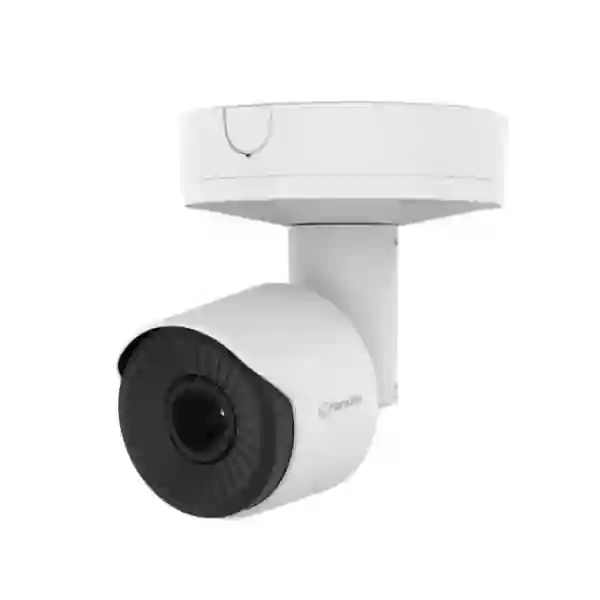
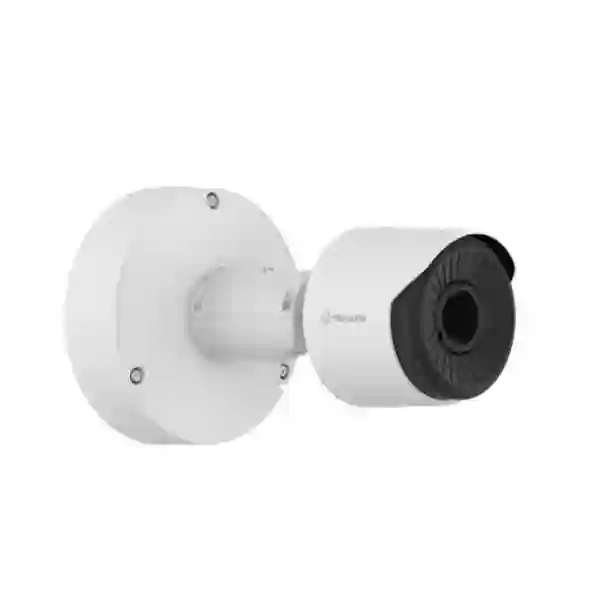
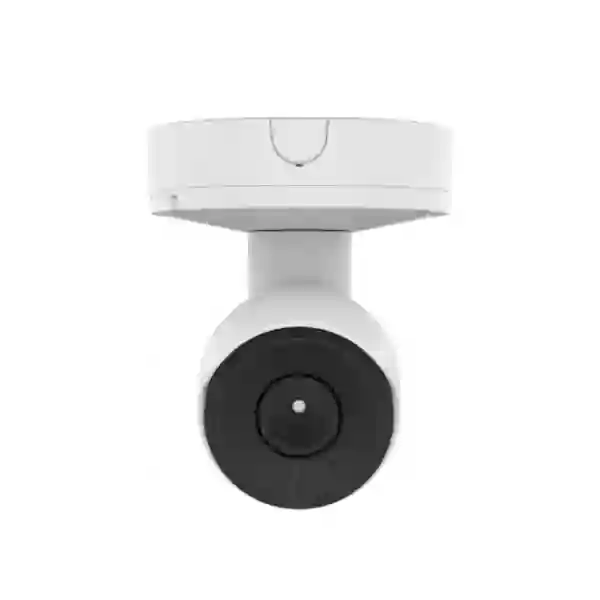
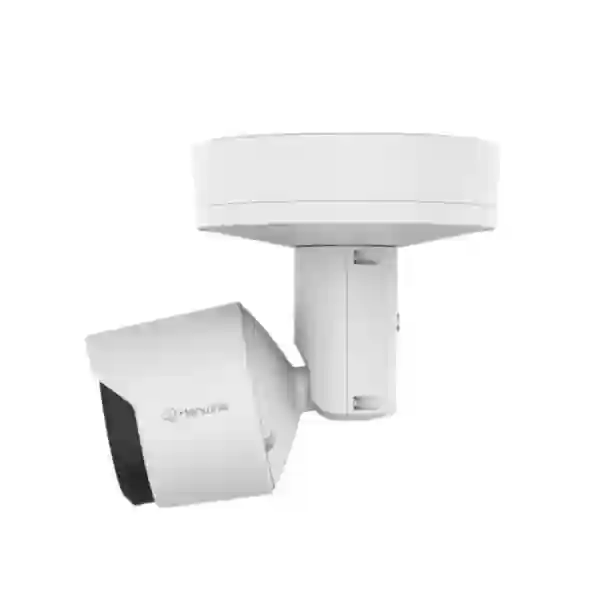
Hanwha TNO-C3050T AI Thermal Bullet Camera
Security teams need to know where movement is occurring, not just how a scene looks in good lighting. The Hanwha TNO-C3050T thermal camera combines a 384 x 288 thermal detector, a fixed 19 mm lens and AI person/vehicle analytics in a rugged network bullet form. It is a candidate for defined perimeter approaches and outdoor restricted zones where operators require thermal awareness and a structured alarm response. The appropriate installation depends on field of view, realistic classification distance, background contrast and the connected recording system.
Discuss your coverage plan and request a configuration-specific quotation from FourTeck Tanzania. Model availability, local price and installation scope require confirmation.
At a glance
Technical specification summary
The figures below refer to the exact TNO-C3050T model in Hanwha Vision’s published specification. Confirm the latest version and any region-specific variations before procurement.
| Manufacturer / model | Hanwha Vision / TNO-C3050T |
|---|---|
| Imaging device | 384 x 288 uncooled microbolometer; 17 micrometre pixel size |
| Selectable video resolution | 384 x 288 and 768 x 576 output |
| Thermal spectral range | 8 to 14 micrometres |
| Thermal sensitivity | NETD at or below 20 mK at 25°C, F1.0 |
| Lens | 19 mm fixed, athermalised, F1.0 |
| Angular field of view | 19.3° horizontal; 14.6° vertical; 23.9° diagonal |
| Minimum object distance | 10.6 metres |
| Frame rate and codecs | Up to 30 fps; H.265, H.264 and MJPEG |
| AI analytics | Person and vehicle classification; defined virtual line and area events |
| AI detection distance, stated maximum | Person up to 128 m; vehicle up to 170 m under manufacturer conditions |
| Network / API | Shielded RJ-45 10/100/1000BASE-T; ONVIF S/G/T/M; SUNAPI |
| Power | IEEE 802.3af Class 3 PoE or 12 VDC |
| Maximum consumption | PoE 10.8 W; 12 VDC 9.4 W |
| Edge storage | One microSD/SDHC/SDXC slot, up to 1 TB |
| Operating range | -40°C to +60°C; up to 95% RH non-condensing |
| Outdoor / impact protection | IP66, IP67 and IK10 as listed by manufacturer |
| Approximate physical size / weight | Diameter 93.8 x 233.5 mm; 1,730 g |
Manufacturer performance figures represent specified reference conditions, not a site acceptance guarantee.
Who should consider this thermal camera
A security manager considering the Hanwha TNO-C3050T thermal camera is usually trying to answer a practical question: will it provide timely awareness of a person or vehicle approaching a protected area when standard cameras struggle with darkness or uneven lighting? This model is relevant to defined outdoor approaches, fence lines, restricted access zones and similar locations where the project needs thermal awareness alongside a suitable response procedure. Its compact bullet format can be easier to accommodate than a larger thermal unit, but the exact mount, surrounding structures and permitted viewing angles should be assessed before purchase.
It is best considered as one element of an integrated security design, not as a complete perimeter protection system on its own. The value depends on the width of the monitored zone, target characteristics, scene clutter, event configuration and the control room’s ability to assess alerts. Buyers should describe what must be detected, where the alarm should occur and what action follows. These questions often change the lens or camera placement decision more than a specification headline does.
What the camera sees and what it does not
Thermal cameras register differences in infrared energy emitted by objects rather than relying on visible colours and reflected daylight. This is useful for surveillance at night, around dark boundaries and at places where conventional illumination would be costly, distracting or impractical. The sensor produces a thermal representation that can help an operator recognise the shape and movement of a person or vehicle against a contrasting background. The instrument is not a conventional colour CCTV camera and will not reproduce clothing colour, vehicle paint or the facial detail expected from a suitable optical identification camera.
Thermal contrast depends on the scene. Sun-heated surfaces, nearby machinery, reflective materials, rainfall and other environmental effects can alter the image or classification performance. Thermal observation should be tested at the actual site, across the hours and conditions that matter. For forensic identification, licence plate capture or evidence requiring visible detail, a properly positioned optical camera may be needed in parallel. Explain the intended outcome to the integrator rather than assuming one camera can satisfy every security objective.
Thermal detector resolution versus output resolution
The TNO-C3050T uses an uncooled 384 x 288 microbolometer with 17 micrometre pixels and an 8 to 14 micrometre spectral range. Hanwha also lists selectable video resolutions of 384 x 288 and 768 x 576. The second figure describes a video output option; it does not transform the underlying 384 x 288 thermal detector into a higher-pixel-count sensor. This distinction matters when a project specification asks for native thermal detail, because the amount of information acquired at the detector is the starting point for judging distant objects.
The nominal thermal sensitivity is NETD at or below 20 mK at 25 degrees Celsius with an F1.0 lens. A lower NETD generally indicates an ability to resolve smaller scene temperature differences under the defined test conditions, but it cannot by itself establish detection accuracy at a particular perimeter. Lens coverage, scene temperature distribution, weather, mounting stability and alarm configuration still matter. The sensible selection approach combines the manufacturer specification with a site-specific layout and representative test images.
Choosing the 19 mm fixed lens
The integrated 19 mm athermalised lens is a tele-oriented choice within the compact thermal range. Hanwha specifies a horizontal angular field of view of 19.3 degrees, vertical field of view of 14.6 degrees and diagonal field of view of 23.9 degrees. The relatively focused view can make sense for an approach corridor or an area where the critical region lies farther from the camera. It is not automatically appropriate for a very wide yard or a short, sprawling frontage. A broad scene may require multiple devices or a different focal length.
The lens is fixed-focus, with a stated minimum object distance of 10.6 metres. Consequently, the camera should not be selected as if it were an adjustable zoom unit for close-up inspection at a gate. Survey the distance to the nearest and farthest relevant areas, calculate the coverage at those positions and check for blind zones caused by structures, vehicles or landscaping. Ask for a layout that shows where a person can enter the scene and where classification and verification are expected to happen.
Understanding detection, recognition and identification
Thermal range tables require careful interpretation. Hanwha lists Johnson-criteria DRI figures for the TNO-C3050T, including person detection at 678 metres, recognition at 169 metres and identification at 85 metres, under the listed criteria. Vehicle figures are different. These are calculated visibility-oriented DRI metrics and should not be presented as guaranteed automated alarms, facial identification, identification of an individual or effective performance at any specific property. In particular, thermal identification in a DRI table should not be confused with conventional identity verification.
Hanwha separately specifies AI detection distances of up to 128 metres for a person and up to 170 metres for a vehicle under its stated reference conditions. These shorter values are more relevant when evaluating an AI-triggered operational requirement, but are still not universal site guarantees. Installation angle, thermal contrast, atmospheric conditions, target size and software settings influence real results. A procurement document should identify which criterion it requires and where the event must be dependable, rather than quote the longest number without context.
AI classification of people and vehicles
The camera’s edge analytics classify person and vehicle object types. For a project where ordinary motion alarms produce too many notices from vegetation or benign movement, classification can help create a more meaningful event workflow. The equipment supports AI-based object detection and event rules such as virtual line crossing, direction, loitering, intrusion and area enter or exit. The useful question is not simply whether AI is present, but how the rules map to authorised and unauthorised site movement.
Define separate zones for staff access routes, service roads and sensitive boundaries; give each a specific purpose. A vehicle alarm near a perimeter gate may need different hours and operator action than a person crossing a restricted yard after closing. Analytics cannot establish intent, and a classified object is not automatically an intrusion. Review false alerts and missed events during commissioning and after material changes to the scene. A documented alarm response and verification stage makes classification useful rather than merely generating more recordings.
Virtual lines, directional alerts and zones
A virtual line is useful where a clear boundary exists in the camera view and security teams want to know when relevant objects cross it. Direction can distinguish arrival from departure where the implementation and scene geometry support that distinction. Area analytics can be configured for intrusion, loitering or entry and exit to represent the actual operational rule. The camera also supports conventional motion detection and other event sources, providing options for layered alarm logic.
Good configuration begins with a drawing. Mark the boundary, likely crossing paths, authorised circulation areas, stopping points and any segments obscured by containers or parked vehicles. Avoid putting critical trip lines on the edge of the field of view or in places where an object appears too small for the intended rule. Test with representative people and vehicles, including movement at different angles, rather than relying solely on software preview. Agree who is allowed to adjust zones after handover, and keep a record of changes so alarm behaviour can be explained.
Turning an event into a useful response
An alert has limited value without a clear action. Hanwha lists configurable alarm inputs and outputs, analytics-triggered events, email notifications, event recording, FTP or SFTP transfers, MQTT publication and handover to a PTZ preset, depending on the connected system and setup. These capabilities provide several architectural choices, but they do not mean every recorder, alarm panel or automation system will work without configuration. The route from camera event to operator screen must be designed and tested.
For example, an after-hours line-crossing event might trigger a bookmark in the recorder, bring a neighbouring optical camera onto a monitoring display and notify a trained operator. A different site may prefer local event recording and periodic review. Document the intended recipient, notification mechanism, network dependencies and expected follow-up. Include nuisance-alarm handling, audit trails and escalation rules. If the facility has limited connectivity, decide what should remain operational locally when the external link fails. Test actual end-to-end behaviour, not just the camera’s internal test event.
Perimeter security applications
A long boundary is rarely one uniform viewing problem. Curved fences, undulating ground, gates, vegetation, buildings and vehicle movements create separate scenes. The 19 mm lens can suit a defined observation segment when its view and projected AI distance match the required area. It should not be expected to provide unrestricted panoramic coverage from one mounting point. Even when an object can be detected at a distance, reliable classification and timely intervention are separate requirements.
For a perimeter proposal, divide the site into sectors and record for each sector the entry routes, required warning distance, response time and the anticipated number of cameras. Use this information to compare candidate positions and potential overlaps. Consider how security personnel will confirm an event, including whether a visible camera or lighting can support their response. Ask for performance acceptance criteria that distinguish observation, automatic alerting and identity-related evidence. This reduces the risk of buying on the basis of a single impressive range figure.
Industrial sites and equipment yards
Industrial areas can contain shadowed structures, storage stacks, moving equipment and long overnight periods with relatively few legitimate visitors. Thermal analytics may offer a useful observation layer for selected approaches to restricted buildings, machinery compounds or outdoor storage. The project must nevertheless account for thermal backgrounds created by exhaust systems, active machinery, hot roofs and surfaces warmed during the day. These features can alter contrast and create complicated scenes.
Before selecting a mounting location, walk the route during operating and non-operating periods. Note the direction of plant exhaust, high-traffic delivery lanes, seasonal storage changes and any reflective or obscuring objects. Define whether the camera is for security presence detection or for a separate industrial condition-monitoring objective. The TNO-C3050T has a listed ROI condition-monitoring function, but it should not be sold as a precision calibrated temperature-measurement instrument without a verified measurement specification. Keep a clear separation between surveillance requirements and process safety instrumentation.
Warehouses, logistics and transport approaches
At a warehouse or logistics yard, the most valuable view is often the path between a perimeter approach and a controlled entry point, not the widest possible picture of the entire property. People, delivery vehicles and authorised security patrols may share parts of the scene at different times. Classifying person and vehicle objects can support differentiated alert rules, but only when the camera has a suitable view and the event policy is aligned with site operations.
Study loading schedules and temporary obstructions before creating virtual areas. A truck parked in front of a camera can hide an otherwise well-covered line. Avoid treating vehicle classification as automatic number plate recognition or as proof of a vehicle’s authorisation. Where visual identity or transaction evidence is needed, coordinate thermal coverage with a purpose-designed optical camera and access control records. Set after-hours rules thoughtfully so an expected delivery does not continually disturb monitoring personnel. Record the response process for both security alerts and routine exceptions.
Energy, utilities and remote compounds
Utility compounds and remote infrastructure can have large open spaces, limited lighting and requirements for prompt awareness of people approaching protected equipment. A compact outdoor thermal device may be considered for selected sectors, but the entire deployment needs a reliability assessment. Power continuity, communications resilience, mounting security and environmental exposure may matter as much as imaging specifications. An isolated camera with no reliable network or response arrangement does not deliver the same value as a monitored system.
Prepare a site survey that notes camera-to-switch distance, cable protection, available power, cabinet condition, earthing and surge exposure, environmental temperature and the security team’s access to alerts. Identify whether local recording is needed during link interruptions and who maintains the system. For a Tanzania project, do not assume a particular mobile network, service footprint or data-hosting location without checking the exact site. Evaluate the connectivity path empirically and choose recording and notification arrangements that remain appropriate during foreseeable outages.
Day, night and changing weather
Thermal surveillance is often proposed specifically because the scene is difficult for a visible-light camera after dark. The TNO-C3050T does not depend on scene illumination in the same way as an optical camera, yet real-world performance still varies. Atmospheric moisture, heavy rainfall, dust, obscuring objects, strong thermal backgrounds and reduced target-background contrast can degrade the useful scene. It is therefore better to plan around representative operating conditions than to promise unrestricted performance in every kind of fog, rain or heat.
Consider how the field of view changes when a gate is open, storage stacks move or vegetation grows. Include periods before sunrise and after a sunny afternoon because background temperatures can be different. Establish how operators will distinguish genuine intrusions from expected activity when contrast is low. A practical demonstration should use the intended mounting height and distance, not a convenient showroom location. Design for routine cleaning and inspection so physical contamination does not gradually defeat a carefully configured analytics rule.
Weather resistance and mechanical protection
Hanwha lists IP66 and IP67 environmental ingress ratings, IK10 impact protection, NEMA 4X, NEMA TS 2 and selected MIL-STD-810H test references for this model. These are manufacturer-listed characteristics of the camera; they are not evidence that every enclosure, cable gland, junction or mounting accessory in a final system has the same protection. External water paths and weak cable entries can still cause failures if installation quality is poor.
The specified operating-temperature range is minus 40 to plus 60 degrees Celsius, with non-condensing relative humidity up to 95 percent. This provides an equipment rating, not an assurance that every exposed mounting location will remain within operating limits. Inspect locations near heated roofs, direct exhausts and poorly ventilated cabinets. Use compatible accessories, protected cable routing and appropriate installation practice. Confirm the actual security requirement before treating impact ratings as vandal-proof guarantees. The camera needs a stable support and periodic physical inspection, particularly in areas where movement, corrosion or accidental contact may affect aim.
Power supply and electrical planning
The published input options are PoE compliant with IEEE 802.3af Class 3 or 12 VDC. Hanwha states a maximum PoE consumption of 10.8 W and maximum 12 VDC consumption of 9.4 W. Power budgets should be designed against the relevant maximum values, not just typical demand. An appropriate switch port, power supply, surge protection, cable run and continuity strategy must be chosen for the actual installation. Do not assume support for 24 VAC merely because another Hanwha thermal model uses it.
For remote placements, verify the complete path between the camera and a protected communications cabinet. Confirm the switch’s available PoE budget when several cameras share it, cable length and quality, connector protection, earthing provisions and any interruption requirements. Decide whether UPS-backed recording and networking are necessary, and test failover. Local electrical and site safety requirements should be reviewed by qualified personnel. A small saving on infrastructure can be outweighed by recurring faults, corrupted recordings or an alert route that fails whenever utility power is interrupted.
Mounting height, aim and coverage overlap
The camera’s physical position sets the geometry that analytics will see. Too high a viewpoint may reduce an object’s visible profile; too low a placement can invite obstruction or tampering. The 19.3 degree horizontal field of view means every mounting location represents a trade-off between width and usable detail. A good plan shows the monitored ground area, mounting point, approach direction and any neighbouring camera coverage. Avoid choosing a pole or wall location solely because it is convenient for cable routing.
Hanwha lists adjustable pan, tilt and rotation ranges for positioning the housing, but these are mechanical installation adjustments and should not be mistaken for an actively controlled PTZ camera. Provide clearance for the chosen bracket and maintenance access. Check what happens when a vehicle stops in the critical view or when a gate swings through the camera’s line of sight. Where multiple cameras cover one boundary, test the overlap so a moving person or vehicle is not lost exactly where an event should be detected.
Network connectivity and video streams
The TNO-C3050T uses a shielded RJ-45 Ethernet connection, with Hanwha listing 10/100/1000BASE-T connectivity. It supports H.265, H.264 and MJPEG encoding and up to 30 frames per second. The camera also lists multiple streaming profiles and unicast or multicast options. These features allow a project designer to balance image quality, compatibility and bandwidth across live monitoring, recording and mobile or secondary clients. The actual configuration should match the capabilities of the chosen recording platform.
Calculate network and storage demand using the intended resolution, frame rate, compression profile, scene complexity, retention policy and event frequency. Do not derive a fixed recording capacity from the maximum frame rate alone. Decide whether operations require continuous streaming, event-triggered recording or both. Keep the camera and recorder on an appropriate network segment, and avoid exposing management interfaces unnecessarily. Document addresses, firmware versions, user permissions and time synchronisation so troubleshooting is possible after the system is handed over.
Recording retention and local storage
Hanwha lists one micro SD, SDHC or SDXC slot with support for cards up to 1 TB, alongside options for NAS or other event-recording workflows. This rating is a supported capacity specification, not an assurance of a certain number of days of video. Actual retention depends on resolution, encoding, scene content, recording schedules, event volume and the health and endurance of the selected storage media. Treat any promised retention period as a result of a separate, documented calculation.
Define the role of local edge storage before procurement. It might be a buffer during network disruption, an event record for later retrieval or one part of a larger recording architecture. Confirm compatible media and format requirements through current integration documentation. Arrange health monitoring and replacement policies, and verify that stored video can actually be reviewed and exported by authorised staff. Test the response to a full card, a failed card and loss of network connection. Evidence retention and access control should follow the organisation’s own legal and operational policies.
ONVIF, integrations and recorder checks
Hanwha lists ONVIF profiles S, G, T and M as well as SUNAPI and Hanwha Vision Open Platform interfaces. These are useful integration indicators, but they do not guarantee that every recording platform will display all analytics metadata, interpret events identically or expose each camera setting. Compatibility must be checked against the exact version and licence of the VMS, NVR or integration software intended for the project.
Ask the integrator to demonstrate live thermal video, recorded playback, camera health, time synchronisation, relevant analytics events and alarm acknowledgement on the selected platform. Clarify which analytics run on the camera and which require features in the recorder or management software. Confirm PTZ handover and alarm I/O only when those functions are part of the design. Document dependencies such as firmware, platform plug-ins and user roles. A successful generic ONVIF video stream is a useful start, but it does not by itself confirm that the security team’s desired alarm workflow is complete.
Cybersecurity and system administration
A perimeter camera is also a network endpoint. Hanwha specifies secure boot, signed and encrypted firmware, HTTPS, encrypted credentials, network authentication options including IEEE 802.1X and a secure element with the manufacturer’s stated FIPS 140-3 Level 3 and CC EAL6+ characteristics. Those features support the design of a more defensible system, but do not replace good deployment practice or establish blanket certification for every installed subsystem. Security posture depends on policies, network configuration and ongoing management.
Use individual administrator accounts or approved identity-management procedures, strong access controls, secure time configuration and an organised patch process. Disable unnecessary services, restrict remote access and segment surveillance equipment as appropriate. Keep an inventory of cameras, configuration backups and firmware versions. Assign responsibility for reviewing advisories and for handling retired devices securely. Where remote vendor support is contemplated, decide in advance how access is authorised, logged and revoked. Include cyber acceptance tests in commissioning, not just image quality and alarm demonstrations.
Radiometry and condition-monitoring limits
The manufacturer describes hybrid thermal palettes and region-of-interest condition monitoring with increase and decrease options. A buyer may be interested in using these functions to observe changing thermal patterns in equipment or site areas. However, the specifications visible for this exact model should not be interpreted as a complete calibrated temperature-measurement range, guaranteed absolute accuracy or a certified industrial protection function. Security surveillance and process protection have different acceptance criteria.
If the requirement is to alarm on a precise equipment temperature, identify the required measurement range, tolerances, response time, emissivity assumptions and reference method before choosing a camera. Request manufacturer confirmation for the exact radiometric capability and software workflow. Where personnel safety, process shutdown or fire protection depends on temperature values, use appropriately specified and independently validated systems. The TNO-C3050T can be evaluated for its documented region-of-interest monitoring feature without overstating what it proves. This distinction protects the buyer from specifying a security camera as a substitute for a dedicated calibrated sensor.
How to read the security specifications correctly
Different specification numbers answer different questions. A detector resolution states how much native thermal image data is captured; an output resolution states what encoded frame size is available. NETD describes sensitivity under specified conditions; it is not an alarm-accuracy percentage. A lens field of view describes geometry; it does not guarantee coverage of every object within that geometry. AI detection figures refer to specified classification performance conditions, while DRI values use a separate observation criterion. These distinctions should be carried into project quotations and acceptance tests.
When a supplier proposes a thermal solution, ask them to state native sensor resolution, focal length, required alarm distance, scene width and expected classification type on one drawing. Have them identify whether any range claim is theoretical, manufacturer-tested or demonstrated on your property. State whether a successful event must be recorded, shown on a control screen or sent to a remote team. These simple clarifications make competing proposals easier to compare and help avoid an installation that meets a brochure headline but misses the real operational objective.
Selecting thermal, optical or a combined system
There is no universally best camera for every perimeter. A thermal camera is valuable when the requirement prioritises observing heat contrast without visible illumination. A standard optical camera is better suited to tasks such as colour recognition, visually identifying people, reading signs or observing fine scene detail when the chosen optics and lighting permit. A combined design can use thermal analytics for early awareness and optical imagery for contextual verification. The investment decision should follow the security outcome, not a preference for any one technology.
Compare expected activity, night lighting, critical distances, evidence needs, camera mounting opportunities and how an event will be investigated. If a target must be positively identified, thermal surveillance alone may be insufficient. If operators need a timely indication of movement in a dark corridor, thermal may be a useful detection layer. In a mixed system, define how an alarm from one device directs attention to the correct view on another. Also check network, licence and storage costs for the full system rather than comparing camera prices in isolation.
Tanzania site planning considerations
For a Tanzania deployment, the relevant operating question is the condition of the actual site, not a generic claim about the country as a whole. An urban warehouse, an inland industrial facility and a remote utility compound can have very different security processes, cable infrastructure and environmental exposures. Ask for site-specific information on power quality, network reliability, installation access, exposure to dust or moisture and the hours when security operators are available. These factors determine whether the proposed thermal observation will become a dependable workflow.
A quotation should separate camera hardware from mounting accessories, switching, storage, software, cabling, commissioning and any support or maintenance scope. Do not assume local stock, import terms, currency pricing, regulatory approvals, service coverage or an installation schedule without confirmation for the actual proposal. If the project involves multiple sites, prepare one design and acceptance brief per location rather than cloning camera counts from a different compound. A responsible supplier should be able to explain what has been confirmed and what still requires site verification.
Information to include in a quotation request
A useful request describes the property and the security problem. Provide approximate perimeter length, a simple site drawing, the positions of gates and access routes, the width and depth of each required view, and the desired distance at which an intruder or vehicle should generate an alert. Note whether operators need recorded evidence, a live alarm, integration with an existing recorder or remote monitoring. State existing network and power provisions, environmental exposure and any restrictions on pole or wall mounting.
Include the model name TNO-C3050T explicitly so another Hanwha thermal product is not substituted inadvertently. If a different focal length is offered, ask for an updated coverage drawing and explanation. Request a bill of materials identifying the camera, bracket or adaptor, storage assumptions and software dependencies. Require a statement of commissioning tests and acceptance criteria. This level of detail makes the conversation more productive and helps separate optional features from must-have functionality before budget decisions are made.
Recommended pre-installation survey
A structured survey reduces uncertainty before hardware is ordered. Start by marking likely mounting locations and walking the paths a person or vehicle might use. Measure or estimate target distances carefully and record height changes, obstructions, gates, moving equipment and reflective surfaces. Revisit relevant locations after dark when possible. Photograph the proposed views for layout discussion, but avoid treating a daylight photograph as proof of thermal performance. Establish the nearest critical target location in view because this lens has a 10.6 metre minimum object distance.
Next, confirm power and network routes, safe access for installation, maintenance reach, local recording needs and existing system integration. Define the conditions in which the alarm should be tested and the operator who will witness acceptance. Where several cameras are planned, document coverage transitions and site changes that could introduce blind zones. Review physical security of the enclosure and cable terminations. The objective is a design decision backed by evidence, rather than ordering equipment first and trying to make the chosen lens fit afterwards.
Commissioning and acceptance tests
At commissioning, first verify stable power, network address, security settings, time synchronisation and the correct camera orientation. Confirm the selected recording profiles and expected live and playback quality. Then test people and vehicles moving along the intended routes at relevant times. A rule should be accepted only when its geometry and operational purpose have been explained to the security team. Record the test conditions, firmware version, analytics settings and actual observed alarm behaviour.
Test several crossing directions and realistic speeds, plus legitimate traffic that should not create an incident. Include a controlled test of any notification, relay, MQTT event or PTZ handover required by the specification. Check behaviour after a connection interruption and after restoration. Ask operators to demonstrate acknowledgement and footage retrieval without assistance. An acceptance report should list limitations and follow-up adjustments, not simply state that the camera is online. Changes after handover should be traceable so later maintenance does not silently undermine the approved alarm design.
Operation, maintenance and lifecycle
The quality of an installed thermal system can change as the site changes. Vegetation growth, new fencing, relocated containers, altered traffic patterns and changes in the thermal background can affect a previously successful scene. Schedule visual inspection of the mounting assembly, cable entry points, housing condition and lens surface, together with analytics review and test events. Maintenance must follow the manufacturer’s instructions and local site safety procedures. Do not assume that a sealed enclosure needs no inspection.
Keep system documentation accessible: camera position, device inventory, IP configuration, firmware, recording settings, virtual zones, responsible users and the alarm escalation route. Monitor storage health, network status and equipment faults. Retest high-priority crossings periodically, especially after a change to the yard or perimeter layout. Review authorised access to recordings and management interfaces. The long-term benefit of analytics comes from controlled adjustments and reliable operator practice, not from a one-time installation. Confirm support and warranty terms in the actual procurement documentation rather than relying on a generic brand assumption.
Comparison checklist before the purchase decision
Compare proposals against an agreed outcome-based checklist rather than a list of unrelated specifications. First, does each solution cover the right ground area with an appropriate lens? Second, does the required person or vehicle alarm distance fall within a defensible design and test plan? Third, will the existing VMS or recorder receive the specific metadata and alarm events the team needs? Fourth, is power, network, recording and physical protection included in the scope? Fifth, can users review and verify an incident within their normal working process?
Also identify which claims are documented by the manufacturer and which rely on a proposed integration or site trial. Determine whether additional optical cameras are necessary for identification or contextual evidence. Ask for clear exclusions covering civil works, networking, subscriptions and remote services. Require a realistic commissioning test and ownership of future settings. If two quotations differ substantially, compare their assumptions before comparing prices. A narrower but correctly placed device can serve a defined corridor better than an expensive wide-view camera positioned with poor geometry.
Common design mistakes to avoid
The first mistake is to equate the longest published thermal detection figure with the distance at which AI will reliably notify an operator. The second is to ignore the lens field of view and assume one camera can cover a broad yard and distant entry point simultaneously. The third is to treat a thermal image as conventional visual identification. The fourth is to choose the camera before checking how its analytics events reach the actual recorder or response team. Each error can produce a system that appears impressive in a specification table but fails the customer’s security need.
Other mistakes include placing the camera too close to the critical zone for its minimum object distance, failing to protect exposed cabling, omitting power continuity and never retesting zones after site changes. Avoid vague guarantees such as all-weather accuracy or automatic elimination of false alarms. Instead, choose measurable coverage objectives, test the right targets, document the limitations and assign responsibility for monitoring and maintenance. A successful project makes the operator’s next action obvious and gives the buyer a defensible reason for every installed camera.
A practical next step with FourTeck Tanzania
The best starting point is a short requirements discussion centred on the proposed view and the alarm you need. Share a site plan, approximate distances, example target routes, available power and the recording platform already in use. Request confirmation that the exact Hanwha Vision TNO-C3050T configuration and accessories are suitable for the design. If a thermal camera is only one part of the solution, ask how optical verification, network infrastructure and storage will be accounted for.
FourTeck Tanzania can be asked for a configuration-specific quotation and clarification of current supply and commercial terms; availability, price, installation coverage and lead time should be confirmed rather than assumed. There is no need to select a number of units solely from the product name. A measured coverage diagram, compatibility check and acceptance plan will provide a stronger basis for procurement. Use the camera’s published strengths thoughtfully and make every final performance commitment specific to the proposed site.
Frequently asked buyer questions
Is the Hanwha TNO-C3050T a thermal or standard CCTV camera?
It is a thermal network bullet camera built around a 384 x 288 uncooled microbolometer. It represents infrared scene information, not a normal colour view. It can support detection in darkness without relying on visible illumination, but is not a replacement for a properly specified optical identification camera.
Does the 768 x 576 output mean a native 768 x 576 sensor?
No. Hanwha specifies a 384 x 288 thermal detector and separately lists 768 x 576 as a video resolution option. Buyers should use the native detector resolution when comparing thermal imaging capability and should not describe an output option as additional thermal sensor pixels.
How far can this model detect a person with AI?
Hanwha lists an AI person detection distance of up to 128 metres under specified conditions. It also publishes longer Johnson-criteria DRI detection figures, which describe a different metric. Neither number guarantees a dependable event at every location; the actual view and scenario need validation.
Can it classify vehicles as well as people?
Yes. The listed AI object categories are person and vehicle, with supported rules including line crossing and intrusion-related virtual areas. Classification does not determine permission, intention or identity. Alarm logic should reflect authorised site movement and be tested before operational handover.
Can I use the camera for licence plate or face identification?
Do not select thermal imagery alone for conventional facial recognition, clothing colours or reading a number plate. The project may need an appropriate visible-light camera and supporting illumination or optics. Decide on the required evidence type before specifying the camera arrangement.
Can it operate outdoors in difficult environments?
Hanwha lists IP66/IP67, IK10, NEMA 4X and environmental test references, along with an operating range of minus 40 to plus 60 degrees Celsius. Installation materials, cable entries and actual site exposure must still be considered. Environmental ratings do not eliminate maintenance or guarantee unchanged image quality in every condition.
What power does the camera require?
The model supports IEEE 802.3af Class 3 PoE or 12 VDC according to Hanwha. A design should account for published maximum consumption, protected cabling and any backup-power needs. Do not assume a 24 VAC input or reuse a power design from a different camera model.
Will it work with my existing NVR or VMS?
Hanwha lists ONVIF profiles S, G, T and M, plus its own integration interfaces. Live video support is not proof that every analytic event or metadata field will be available. Check the exact recorder version, software licence and firmware combination, and test the operational workflow.
Does it measure precise equipment temperatures?
The published product specification includes a region-of-interest condition-monitoring feature, but that is not enough to claim a particular calibrated measurement range or industrial safety accuracy. Buyers needing exact temperature thresholds should request separate manufacturer verification or select a suitable measurement instrument.
Does the camera include storage?
The camera has an edge microSD card slot with a manufacturer-listed maximum capacity of 1 TB. Retention depends on media, codec, scene, recording mode and event volume. A storage plan should calculate required duration and verify playback, export and failure handling.
What is the nearest useful working distance?
The manufacturer lists a minimum object distance of 10.6 metres with this fixed 19 mm lens. A very close gate or narrow entrance may therefore require a different camera position or optical choice. Include the nearest relevant area on the coverage drawing before ordering.
How can I request a Tanzania quotation?
Provide the exact model, a site plan, approximate observation distances, critical target routes and existing network or recorder details. Request a scope that identifies the camera, accessories, integration, commissioning and any exclusions. Ask for explicit confirmation of current availability, pricing and applicable commercial terms.
Request a site-specific thermal camera quotation
Share your site layout, approximate target distances, required people or vehicle alert rules, network and power provisions, and existing recorder details. Ask FourTeck Tanzania to confirm the exact TNO-C3050T configuration, compatible accessories and the proposed integration before purchase. Any stock, pricing, service or delivery commitments must be verified in the actual quote.
Contact FourTeck Tanzania to discuss your project requirements




Reviews
There are no reviews yet.