
Tanzania • Security camera buying guide
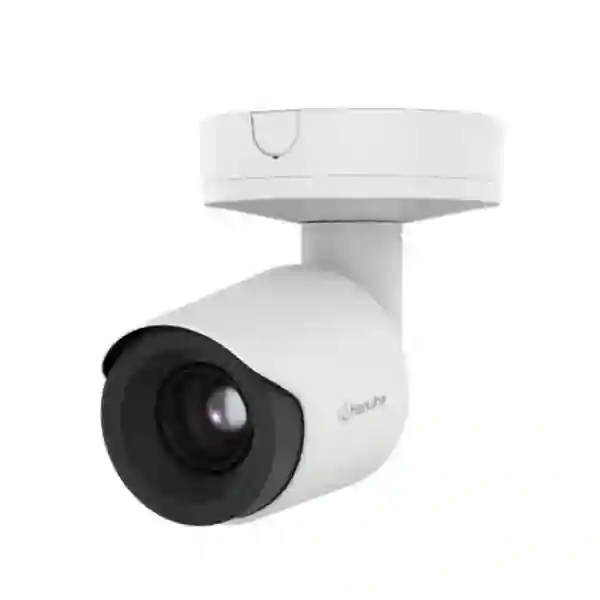
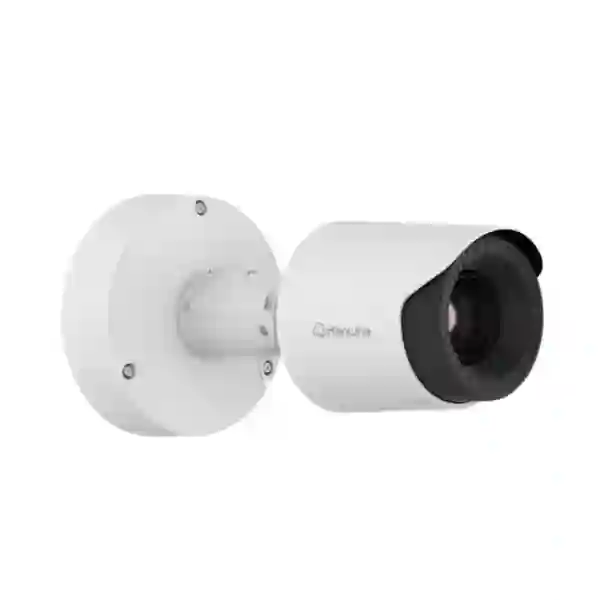
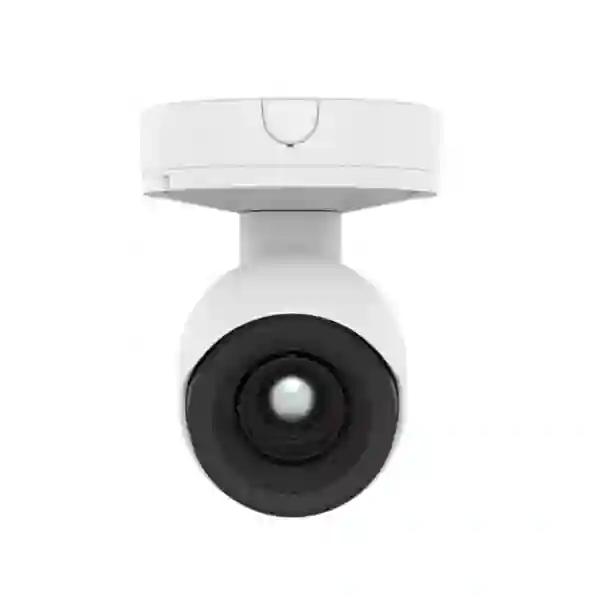
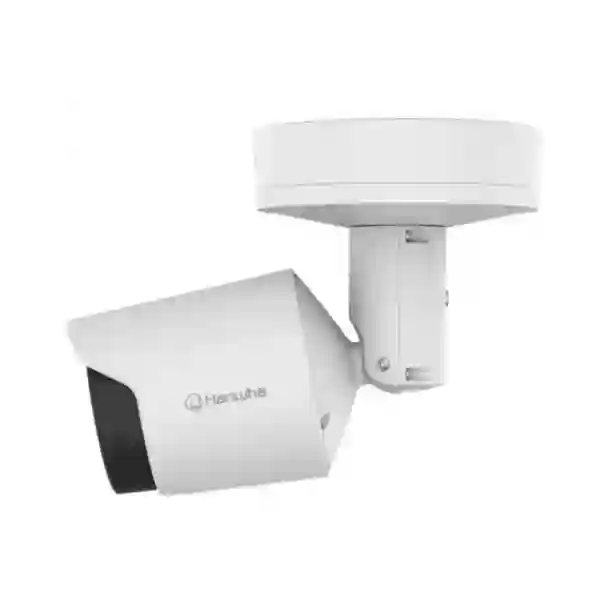
Hanwha TNO-C4062T 35 mm AI Thermal Camera
Need to detect a person, vehicle or vessel along a difficult outdoor boundary? The Hanwha TNO-C4062T combines a native VGA thermal detector, fixed 35 mm telephoto lens, on-device subject classification and an 8 fps network video stream. It is worth evaluating for defined perimeter, infrastructure and waterside observation corridors where thermal detection matters more than natural-colour detail. This guide explains its real specifications, deployment limitations and the questions to settle before requesting a Tanzania project quote.
Who should consider this camera?
Security managers, technical buyers and integrators evaluating a defined outdoor detection corridor should shortlist this camera when people, moving vehicles or vessels are the relevant target classes. Ask first for the distance to the smallest subject, the scene width and the operator action after an event. The camera may complement existing optical CCTV; it does not promise facial recognition, licence-plate reading, radiometric thermography or full weather immunity.
For Tanzania procurement, confirm project suitability, the exact model, integration and local commercial terms before ordering. No verified Tanzania stock position, local price, warranty or installation commitment is stated here. The next useful action is a site-specific technical and commercial enquiry, not a purchase based solely on a maximum-range number.
Verified technical specifications at a glance
These are manufacturer-stated model specifications. Check the latest regional documentation and project requirements before procurement; distance figures are conditional reference values, not field guarantees.
| Manufacturer / exact model | Hanwha Vision / TNO-C4062T |
|---|---|
| Camera class | Fixed outdoor AI thermal bullet camera |
| Thermal detector | Uncooled microbolometer, 640 × 480 native |
| Output resolutions | Up to 1280 × 960 upscaled; native 640 × 480 and lower streams |
| Focal length / focus | 35 mm, F1.0, fixed athermalized lens |
| Angular field of view | 17.5° horizontal; 13.2° vertical; 21.7° diagonal |
| Minimum object distance | 36 m |
| Thermal sensitivity | NETD ≤16 mK at 25 °C, F1.0 |
| Spectral response / pixel pitch | 8–14 μm / 17 μm |
| Frame rate | Maximum 8 fps |
| AI object classes | Person, vehicle and vessel |
| Compression / interfaces | H.265, H.264, MJPEG; Ethernet; ONVIF S/G/T/M; RTSP; SUNAPI |
| Power inputs | IEEE 802.3af Class 3 PoE or 12 V DC |
| Maximum specified power | 7.8 W PoE; 8.1 W 12 V DC |
| Edge storage | One microSD/SDHC/SDXC slot, up to 1 TB |
| Environmental ratings | IP66 / IP67, IK10; NEMA 4X-related rating |
| Operating temperature | -40 °C to +60 °C |
| Body / approximate weight | Aluminium and polycarbonate / 2 kg |
| Manufacturer AI reference distances | Person up to 296 m; vehicle up to 423 m; vessel up to 1,010 m; conditional test references |
Why choose this thermal camera for a security perimeter?
A conventional CCTV camera records reflected light, so its useful image can be affected by darkness, glare, backlighting and the absence of suitable illumination. Thermal imaging instead detects differences in emitted infrared energy. For a security team responsible for a fence line, open yard or waterfront boundary, that changes the monitoring question from whether a scene looks bright enough to whether a person or vehicle produces a detectable thermal contrast against its surroundings. The Hanwha TNO-C4062T is intended for this type of observation, with a 640 × 480 thermal detector, an application-specific 35 mm lens and on-camera classification for people, vehicles and vessels. It is not a replacement for every visible-light camera; it is a useful additional view when early awareness of movement is more important than reading fine visual details.
The buying decision begins with the event you want to recognize. An operator may need to know that someone has entered a restricted strip, that a vehicle is approaching a service road, or that a boat is moving near a monitored shoreline. Those are different tasks from reading a licence plate, identifying an individual by facial features or inspecting the colour of cargo. A sound design often pairs thermal detection with a suitably positioned visible-light camera for verification. Define those duties before selecting a mounting point or planning recorder capacity. That approach gives the thermal camera a specific job and helps avoid buying expensive capability without a corresponding operational response.
Understanding the native thermal image
The camera uses an uncooled 640 × 480 microbolometer with a nominal spectral response of 8–14 micrometres. This is its native detector resolution. Hanwha also lists an output mode upscaled to 1280 × 960, which can make a displayed stream easier to handle in some viewing layouts but does not turn the detector into a native 1280 × 960 thermal sensor. When comparing thermal cameras, prioritize native pixels, lens coverage, sensitivity and real target size rather than the largest advertised output dimension alone. For identification tasks, the number of meaningful pixels on the target matters much more than the size of a digitally enlarged image.
Thermal sensitivity is listed as a noise-equivalent temperature difference of 16 mK or less under the manufacturer’s stated test conditions of 25 °C and F1.0. NETD describes the detector’s ability to resolve small temperature contrasts; it is not an accuracy specification for measuring an object’s temperature. Environmental contrast, target size, surface materials, distance, atmospheric conditions and image processing all influence what an operator ultimately sees. Buyers considering equipment-temperature monitoring or quantitative temperature alarms should confirm whether a radiometric model is required. This model should be evaluated first as a thermal security detector rather than assumed to be a calibrated temperature measurement instrument.
What the 35 mm lens means on a real site
The fixed 35 mm athermalized lens has an approximately 17.5° horizontal, 13.2° vertical and 21.7° diagonal angular field of view. Compared with a wider thermal lens, that narrower view concentrates the available detector pixels into a smaller scene, which can be helpful when monitoring a distant access corridor, shoreline or exposed boundary. It also makes the camera less suitable as a single device for a broad courtyard immediately beneath a pole. A narrow image is not inherently better; it is better only when the required observation strip falls inside it with enough margin for expected movement.
Hanwha lists a minimum object distance of 36 metres. This is a meaningful constraint for a gate, driveway entrance or fence corner where someone can approach very close to the camera. A near-field blind area should be identified in the site plan and covered with another viewpoint if necessary. The lens is fixed focus, so buyers should not assume that a guard can zoom optically between wide and narrow views. The listed pan, tilt and rotate ranges concern mechanical alignment, not motorized pan-tilt-zoom operation. The useful pre-purchase exercise is to sketch the intended detection corridor at several distances and check the horizontal scene width and likely target pixel coverage.
Interpret detection ranges without overpromising
The manufacturer publishes AI detection distances of up to 296 metres for a person, 423 metres for a vehicle and 1,010 metres for a vessel under its defined target assumptions. These figures are helpful preliminary design references, not guaranteed detection distances for every site. A partly hidden person, small vehicle, low-contrast background, intense rain, hot ground or a moving structure can change real performance. The vendor also lists Johnson-criteria DRI figures, including longer theoretical detection distances for certain target classes. DRI uses a different method and should not be presented as an assurance that the AI will classify a subject at those longer distances.
For a practical acceptance test, write down the smallest required target, the distance from each mounting point, the direction of travel and the events that must reach the operator. If staff need a credible alarm for a person walking at the far fence, verify that specific scenario during design and commissioning. If a boat approaches from different headings, evaluate the vessel profile and how much of it sits above the waterline. A pilot that includes daytime, evening and poor-visibility conditions will be more useful than comparing headline range numbers in isolation. Build a margin for scene changes rather than treating the outer published limit as a dependable boundary.
AI classification for people, vehicles and vessels
The built-in analytics recognize three subject classes: person, vehicle and vessel. That is especially relevant to sites where unrelated moving features can create workload for operators. A perimeter rule can be written for the subject that matters instead of responding to every visible change in a scene. The camera also supports event concepts such as virtual-line crossing and virtual-area intrusion, loitering, entering, exiting, appearing and disappearing. These capabilities allow an integrator to relate a particular class of target to a physical security boundary, rather than relying on a generic motion alarm across the full image.
Classification is a decision aid, not an infallible identity check. Vegetation, animals, thermal reflections, weather, occlusion and unusual target shapes can complicate analytics. Establish the required balance between nuisance alerts and missed events, then tune it against actual footage. An alert for a vessel may need an operator to review approach direction and location, while a person crossing into a hazardous yard may justify a different escalation. For higher-risk sites, use thermal analytics as one layer in a wider response process that includes trained personnel, an appropriate visible view, lighting where useful, access control or a separate detection technology. Do not promise automated interception or proof of identity solely from the AI label.
Design virtual-line and virtual-area rules properly
A virtual line is most useful when it crosses a genuine movement path, for example a track leading through a boundary or the entry point to a dock zone. The direction setting can distinguish expected outbound traffic from an unusual inward approach. Area rules are more appropriate when the issue is presence in a defined yard, time spent near infrastructure or movement inside a restricted strip. Start with a small number of clearly named rules whose alarms have operational meaning. Operators should be able to understand why an event occurred without decoding a confusing map of overlapping polygons.
Keep rules away from routinely moving branches, heat sources and foreground objects that repeatedly obstruct the subject. Verify that people and vehicles at the required distances occupy enough pixels for stable classification. Revisit rule placement after the camera has experienced seasonal vegetation growth, changes in stored materials or construction near the monitoring corridor. If the site has legitimate maintenance activity, agree on access windows and notification policies rather than simply disabling alarms whenever there is noise. Record the final rule definitions, intended hours, target classes and alarm recipients as part of the commissioning handover. This makes future troubleshooting and security audits considerably easier.
Why an 8 fps stream may fit—and when it may not
The TNO-C4062T supports a maximum of 8 frames per second in its listed H.265, H.264 and MJPEG modes. For many fixed surveillance scenes where the objective is to notice a person entering a large zone, that rate may be workable. The critical issue is whether the planned event can be captured consistently enough for an operator and recorder to review it. A slower rate means larger time gaps between consecutive images than a 25 or 30 fps stream, and those gaps can become relevant for fast-moving vehicles, close objects, rapidly crossing targets or detailed movement analysis.
Do not assume that every camera sharing the same thermal sensor has the same frame rate. Hanwha offers a related 35 mm variant, the TNO-C4060T, with a higher published frame rate; that is a different model and should be compared separately if smoother motion is necessary. Evaluate the anticipated traffic speed, apparent target size and alarm response workflow before accepting the 8 fps specification. For a fixed coastal lookout, range and classification may be the dominant factors. For rapid passage through a short access point, temporal detail may matter much more. The procurement document should name the exact model and required frame rate to avoid substitution mistakes.
Thermal and optical cameras do different jobs
A thermal camera can reveal a warm target against a cooler background without relying on visible illumination, which can help with after-dark security. It generally does not show natural colours, clothing descriptions, printed markings or faces in the same way as a conventional high-resolution optical camera. Although the thermal unit provides selectable palettes such as white-hot and black-hot, changing a palette does not create colour evidence or additional detector detail. It changes how the relative heat information is displayed. This distinction is important when security staff later need to explain what a recording actually proves.
An effective dual-view design assigns thermal cameras to detection corridors and visible-light cameras to areas where incident verification needs visual detail. The two views should be coordinated so that staff can move quickly from an alert location to a meaningful optical image. Lighting may still be needed for the optical layer, and thermal performance should never be described as unaffected by all weather. Heavy rain, fog, atmospheric moisture, intervening glass and scene temperature relationships can reduce useful contrast or obstruct sensing. The best camera selection reflects the evidence and response needed after detection, not simply which image looks more dramatic on a sales screen.
A closer look at coastal and harbour applications
The inclusion of vessel classification makes this model worth considering for controlled waterfront facilities, marine access approaches and coastal perimeters. The 35 mm lens can concentrate attention on a defined patch of water or a passage between monitored structures. For security planning, distinguish between noticing a target at a distance, recognizing its class, and understanding whether it is an authorized arrival. Vessel detection does not by itself determine registration, identity, intent or legal status. Those judgments require additional information and a responsible human process.
Waterfront scenes create special problems. Water temperature and weather change during the day; reflections, waves, shoreline clutter and overlapping boats can alter target appearance. Vessels may present a small bow profile on approach and a much larger side profile while moving across the view. A reliable design tests both. Place the camera where static masts, cranes and other equipment do not repeatedly obscure the monitored water. If the site needs a broad panorama as well as long-distance observation, consider complementary viewpoints instead of expecting one narrow-lens bullet camera to cover the whole shore. For Tanzanian coastal projects, assess local site conditions without assuming particular port access rights, permissions or supply arrangements.
Industrial yards, depots and restricted boundaries
Large outdoor industrial areas often contain long straight boundaries, unlit service lanes and equipment zones where early notification is valuable. This is a plausible application for a fixed thermal camera with class-based analytics. A project might prioritize movement across a rarely used rear fence, vehicles approaching a controlled storage yard or people entering a marked exclusion area after hours. These are different questions from inspecting equipment condition or recognizing workers’ personal details. Thermal surveillance should therefore be designed around the security rule and a defined incident response.
At the design stage, consider raised storage stacks, parked vehicles and frequent changes in the yard layout. A scene that appears open during installation may become obscured when containers, machinery or construction materials are moved. Mounting too close to machinery can also place hot structures in the foreground, complicating interpretation and masking useful targets. A site-specific survey should record likely obstructions, legitimate traffic paths and nearest access points. The system can then use virtual areas, line crossing and schedule rules where those functions serve an actual need. For a high-risk depot, alarms should be cross-checked against access permissions and supported by suitable recording retention and an escalation policy.
Gate corridors, roads and logistics movement
At a gate approach or logistics corridor, a thermal view can help operators notice movement before a vehicle reaches an illuminated checkpoint. The 35 mm lens is most appropriate when there is sufficient stand-off distance and a limited corridor to monitor. It is less suitable as the only view for a broad forecourt with multiple lanes passing close beneath the mount. Because the model’s minimum object distance is 36 metres, a near gate view often needs its own camera. A thermal detection alert should not be interpreted as a licence-plate reading, cargo inspection or access-control decision.
Choose the event with precision: vehicle entering a restricted road, person walking through a prohibited area or unexpected traffic at night. Then identify the operator’s next step, such as viewing a linked visible-light camera or contacting the gatehouse. If vehicles may pass quickly across the frame, check whether 8 fps provides enough temporal information for the desired alert and playback. A short demonstration with representative speeds is helpful. Avoid setting intrusion zones across legitimate traffic unless there is a documented reason, as repeated routine alarms teach operators to ignore the system. Pair the thermal layer with gate barriers, credential systems and procedural controls where the project requires them.
Utility corridors and remote infrastructure
Electrical substations, water-treatment sites, communications compounds and remote utility boundaries can involve long fence lines and limited after-dark lighting. The TNO-C4062T can be considered for detecting human or vehicle movement in a chosen outside corridor, subject to site testing. Its network interfaces and on-device analytics can support event-led monitoring rather than relying solely on an operator watching a live screen continuously. However, thermal security imaging should not be confused with a certified diagnostic temperature inspection of switchgear, transformers or electrical connections.
Remote deployments require more than a camera specification. Confirm a sustainable power source, protected PoE path, reliable time synchronization, suitable uplink, sufficient storage and a plan for restoring service after a network outage. At critical facilities, lightning protection, earthing, surge management and physical security of cable runs may matter as much as the detector’s published sensitivity. The monitoring team also needs to know what should happen if the site becomes unreachable. A camera that records locally but cannot report its disconnection does not provide the same operational outcome as a managed security system with health monitoring and clear responsibility for faults.
Positioning, height and line of sight
Begin a mounting study with the real terrain rather than a generic recommended pole height. Walk the boundary, mark expected target routes and note vegetation, structures, slopes, lights and heat-producing equipment. A higher mount may help reduce occlusions but can change the view of a person into a smaller, less informative thermal shape. A lower mount may improve side-on visibility but make the camera easier to obstruct or tamper with. The correct height balances scene geometry, maintainability, cable route, physical protection and the amount of the target visible at the required distance.
The product offers mechanical adjustment ranges for pan, tilt and rotation during alignment. These should not be mistaken for remote motorized tracking. After the bracket is fixed, the optical axis remains aimed at the selected corridor unless adjusted manually. Avoid placing the crucial detection zone at the very edge of the image, where movement or slight alignment changes may push targets outside the field. Document aiming landmarks so the installer can restore alignment after maintenance. Where a single camera cannot observe both the near corner and the distant boundary, a second view is usually a better engineering answer than a compromised aim intended to cover everything.
Power, PoE and electrical planning
The manufacturer’s electrical specification lists IEEE 802.3af Class 3 Power over Ethernet or 12 V DC input. Listed maximum consumption is 7.8 W on PoE and 8.1 W on 12 V DC, with typical figures below those maxima. Those numbers describe the camera, not the complete power budget for a remote installation. Switch losses, accessories, network equipment, surge protection, heaters external to the camera and a backup battery can change the requirements. Leave engineering margin rather than choosing a supply that only meets the nominal camera draw.
For an outdoor pole, determine the cable length and whether the network installation needs an intermediate protected cabinet or fiber conversion. Follow qualified electrical practices for earthing and surge protection, especially for exposed mounts and long outdoor cable paths. Size any uninterruptible power supply against the whole connected load and the desired operating duration. An 802.3af-compatible port should not be confused with a promise that any existing switch is correctly configured, healthy or able to supply power at the far end of a damaged cable. Record the intended power method and site isolation arrangements before installation to reduce avoidable service calls.
Network protocols and video integration
The camera provides wired Ethernet networking and supports H.265, H.264 and MJPEG video formats. Hanwha lists ONVIF Profiles S, G, T and M, RTSP and its SUNAPI interface. These capabilities are relevant when an organization wants to place thermal cameras beside existing IP cameras and video management systems. They do not remove the need for a compatibility check with the exact recorder, VMS version, device firmware and analytics workflow. Displaying video is one integration milestone; receiving class-aware events and controlling recordings reliably can require additional configuration.
Plan the network architecture around security and maintainability. Assign stable camera addresses or managed reservations, time sources, appropriate network segmentation, access restrictions and an inventory of device names. Choose codec and stream profiles against the capacity of the viewing clients and recording system rather than simply selecting the largest available output. Test whether alerts, time stamps and playback remain synchronized across the security platform. If a system uses analytics metadata, validate the supported ONVIF or vendor-specific event path before buying multiple units. For sites with several remote cameras, quantify uplink performance and failure behavior under realistic concurrent traffic, not only an isolated demonstration stream.
Recording strategy and edge storage
Hanwha specifies one microSD-family slot supporting media up to 1 TB. Edge storage may be useful as part of a resilient recording design, particularly where a remote uplink is less reliable than a local network. However, an SD card is not a substitute for an overall retention, backup and evidentiary policy. Recording duration depends on codec, bit rate, scene complexity, frame rate, event frequency and the selected stream profile. A capacity figure in terabytes does not translate to a guaranteed number of days without defining those variables.
Decide whether the site requires continuous recording, event-triggered clips or a combination. Continuous footage can provide context before a rule triggers, while event-led workflows can reduce review time when designed carefully. Ask how the recorder handles network interruptions, file integrity, time synchronization and storage failure. Ensure storage media is chosen for the write conditions of the application and that device compatibility has been checked. If a cloud or remote service is proposed, confirm the exact service, security architecture, location of stored data and commercial terms independently. Do not infer that an advertised cloud connection means a subscription or local hosting service is included with the camera.
Cybersecurity features and deployment responsibilities
Hanwha lists secure boot, signed or encrypted firmware, protected communications, IEEE 802.1X network authentication options, access controls and audit logging for this model. These are useful building blocks for a security installation, but the existence of a capability is not the same as its deployment. A camera left with inappropriate credentials, exposed management access or outdated firmware can undermine the intended protection. The project should assign ownership for credential storage, account roles, firmware review, access logs and removal of unused services.
Use encrypted management channels where supported, restrict camera administration to authorized networks and document any necessary connections to the VMS, NVR or monitoring platform. Consider separate privileges for installers, operators and administrators. Establish a procedure to rotate credentials after contractor access and to review remote connectivity. A firmware update process should include configuration backup, release-note review, maintenance windows and acceptance testing because changes may affect integration behavior. The manufacturer’s security specifications are not a declaration that a complete customer system automatically complies with every local policy or regulation. The system owner’s governance, infrastructure and operational habits remain important.
Outdoor durability, exposure and maintenance
The published environmental specification includes IP66 and IP67 protection, IK10 impact classification and NEMA 4X-related enclosure testing. Hanwha lists an operating temperature range from -40 °C to +60 °C and 0–95% non-condensing humidity. These are manufacturer product specifications; their presence does not guarantee fault-free use in every exposed environment. Cable glands, brackets, connectors, seal integrity, local corrosion conditions and mounting practices affect the installed system. For a coastal application, pay particular attention to material exposure, salt deposits and the maintenance schedule of the entire assembly.
During commissioning, verify the waterproofing method and that any conduit adapters are the correct accessories for the installation. The camera body is specified as aluminium and polycarbonate, with a weight of approximately 2 kilograms, so the mounting structure needs to support the device and anticipated site loads. Keep service access safe and practical. Inspect the field of view after storms or construction work, clear significant visual obstructions and check that seals and cabling remain intact. The need for outdoor security is continuous, but an outdoor rating should never be treated as permission to omit periodic inspection and a clear fault-repair process.
Alarm outputs and security workflows
The camera’s operational specifications include configurable alarm interfaces and support for event-triggered notifications, recording actions and network-based communication. This opens several ways to integrate it into an existing response process, but the buyer should avoid thinking of every possible interface as a ready-to-use deployment. A VMS may handle alarms differently from a standalone recorder, and an external alarm device may need its own power and control equipment. Create a simple event matrix before procurement so that each analytics rule has a destination, severity, time schedule and authorized response.
For example, an after-hours person crossing a designated line may require a control-room alert plus a retained video clip. A vehicle in a normal service lane during working hours might only need recording. A vessel entering a monitored marine area may prompt a second-camera view rather than an automatic siren. These are planning examples, not guaranteed delivered integrations. Run end-to-end tests for the actual rule, recorder, user interface and notification recipient. Include fault cases such as network loss, device restart and operator acknowledgement. A useful alarm system is defined by what staff can act upon reliably, not by the sheer number of event options listed on a specification sheet.
Privacy, evidence and sensible use of analytics
Although thermal images contain different detail from visible-light footage, a camera installation can still involve information about identifiable people, movement and workplace activity. Site owners should determine the lawful purpose of surveillance, notice requirements, authorized access and retention rules for their own jurisdiction and sector. Avoid broad claims that thermal video is automatically anonymous or exempt from privacy obligations. A properly designed thermal corridor limits observation to the area actually needed for safety or security and avoids unnecessary intrusion into adjacent spaces.
The model supports privacy masking features that may help with certain scene restrictions. Whether masking meets a particular project’s obligation depends on how it operates in the live view, recorded streams and integrated platform. Document who may view or export recordings, how incident clips are protected and when they must be deleted. If personnel are asked to act on automated classification, give them procedures for confirming events and recording the basis of decisions. A responsible design combines useful sensing, proportionate coverage and traceable operational practice rather than assuming advanced analytics alone makes the system fair or compliant.
How to compare lens and frame-rate variants
Hanwha’s broader range includes different thermal lens focal lengths and frame-rate options. A shorter lens tends to cover a wider angle at the cost of fewer detector pixels on distant targets, while a longer lens narrows the field for more distant observation. The TNO-C4062T sits in the 35 mm, 8 fps part of that choice. Buyers should compare scene width at the planned distance, minimum focus distance, smallest required target, mounting constraints and expected movement rather than selecting only by a product series label. Two cameras with the same native detector can perform very differently on the same fence if the lenses do not match the geometry.
Create a comparison sheet that separates the need for overview, early detection, event verification and motion detail. A wider device may be more useful near a busy yard corner, while the 35 mm lens may be better assigned to a straight, distant corridor. A higher-frame-rate version could be preferable when rapid movement is central to the application. If the site needs both overview and telephoto sensing, a multi-camera design may outperform a single compromise. Confirm exact model names in each quotation because small suffix changes can correspond to significant performance and procurement differences. Availability of any variant in Tanzania must be checked for the requested project rather than assumed.
Practical steps for a Tanzania project survey
Start with a simple site document: the perimeter or water approach to be monitored, dimensions, existing lighting, current camera infrastructure, network cabinet locations and known operational incidents. Record which hazards matter at night and which are equally important in daylight. Ask what operators will do after a detection alert and how quickly they need the scene to be verified. Where a site has a coastal aspect, include changing weather and water conditions in the acceptance plan. Where it is an industrial or remote installation, include access routes, exposed cables and backup power.
Next, identify possible mounting positions and the desired minimum target size at each position. A qualified surveyor or integrator can calculate coverage using the listed 35 mm field of view and validate the result with appropriate site tools. Decide on visible-light companions, network path, recording architecture and event management. Confirm any local permissions, sector-specific conditions and purchasing requirements separately. This page does not claim particular FourTeck stock, delivery, installation coverage or local certification. A project-specific quotation should clarify those items and confirm that the exact TNO-C4062T model is offered for the proposed deployment.
Commissioning and acceptance checklist
A successful commissioning process begins before a camera is mounted. The customer and integrator should agree on the target classes, required distances, prohibited crossing lines, normal traffic exceptions and acceptable notification workflow. During installation, record mounting height, angle, network settings, power source, firmware version and naming convention. Test the field of view at the actual target locations and inspect the near-field area for coverage gaps. Confirm the 8 fps stream in the intended recorder and verify whether the operator’s playback provides sufficient information for the task.
Then test the complete alarm chain using representative people and vehicles, and vessels when relevant. Repeat under different thermal conditions where practical. Check both successful alerts and expected non-alerts; a system that constantly alarms on normal activity can become unusable. Validate recording retrieval, timestamps, export permissions, local storage behavior, power recovery and network-loss indication. Provide the operator with a concise response guide rather than only a device password. Handover documentation should describe inspection intervals, fault contacts, authorized configuration access and a method for reassessing analytics rules after a layout change. Acceptance is the proven operational result, not merely the appearance of live video.
Plan the full cost rather than only the camera
The total cost of a thermal perimeter point can include the camera, mounting hardware, protective conduit, network switch capacity, transmission equipment, surge protection, backup power, storage and platform configuration. A location on an existing suitable pole with a nearby secure network cabinet differs materially from a remote exposed boundary that needs a new power and communications route. The camera’s listed power draw is modest relative to some infrastructure elements, but that alone does not predict installation cost. Consider safe maintenance access, environmental exposure and the labor needed for an end-to-end acceptance test.
Ask suppliers to itemize the exact model, included accessories, integration work, commissioning criteria and any optional licenses or subscriptions. Clarify whether existing VMS event integration has been tested or is subject to a compatibility review. If pricing is requested, request a quotation for the precise quantity and project conditions; do not assume a public online figure applies to Tanzania or includes taxes, shipping or field work. Also ask who owns firmware upkeep, analytics tuning and incident export support after handover. A transparent scope helps procurement teams compare solutions on the same requirements rather than rewarding the least complete equipment-only offer.
Decision guide: is the TNO-C4062T the right fit?
Consider this model when the job is a fixed, relatively narrow observation corridor where thermal contrast and class-aware alerts are more valuable than visible image detail. The 35 mm lens and 640 × 480 sensor are particularly relevant when an object needs to occupy a useful share of the thermal image at a distance. Its person, vehicle and vessel classes widen the possible security uses, including some waterside projects. Ethernet, standard video formats and event-related capabilities make it a candidate for integration with a managed security platform, subject to verification in the chosen system.
Choose a different arrangement if the immediate area within roughly 36 metres is the main focus, a panoramic view is essential, a rapid event demands higher frame rate or the project requires readable faces, colours, plates or measured equipment temperatures. Those goals may call for another lens, a different model, visible-light imaging or dedicated radiometric equipment. The most efficient next step is to supply the intended observation distance, site sketch, target type and recorder make or VMS version. With those facts, a project team can assess whether one TNO-C4062T, several complementary views or a different solution is likely to meet the security requirement.
Frequently asked questions about the TNO-C4062T
Does the TNO-C4062T work at night without floodlights?
It senses thermal infrared energy rather than relying on visible illumination, so it can detect suitable temperature contrast in darkness. The result still depends on target size, environmental conditions and line of sight. If guards must identify clothing, faces or numbers, pair the thermal view with an appropriate optical camera and lighting strategy.
Is the camera 1280 × 960 native resolution?
No. Hanwha specifies a native 640 × 480 uncooled microbolometer. The model supports upscaled output up to 1280 × 960. Upscaling changes stream dimensions, not the number of original thermal sensing elements. Compare native resolution and lens characteristics when evaluating long-range performance.
What is the maximum video frame rate?
The exact TNO-C4062T model is specified at a maximum of 8 fps for H.265, H.264 and MJPEG. If a project needs higher temporal detail for fast motion, assess a separately specified higher-frame-rate model rather than assuming this one supports 30 fps.
Can the camera identify a person from a face?
Thermal person classification means the system can label a heat-shaped target as a person under suitable conditions. It does not establish facial identity or provide the visible detail typically needed for personal identification. Plan a separate verification camera and response workflow if identification is necessary.
Can it measure temperatures for electrical inspections?
The published capabilities support thermal security imaging and analytics, but this page does not establish calibrated radiometric temperature measurement. Buyers who need measured component temperatures, thermography reports or defined temperature thresholds should request a separately verified radiometric solution.
How far can it detect people, vehicles or boats?
Hanwha lists AI detection distances of up to 296 metres for a person, 423 metres for a vehicle and 1,010 metres for a vessel under stated assumptions. These are design references, not guarantees in rain, partial obstruction or every thermal scene. Require site-specific validation.
Does it use standard PoE?
Yes. Manufacturer information lists IEEE 802.3af Class 3 PoE or 12 V DC input. Confirm the actual switch power budget, protective network path and installation conditions, and size backup power for all connected equipment rather than for the camera alone.
Will it work with my existing NVR or VMS?
It supports common IP video and interoperability standards, including ONVIF Profiles S, G, T and M, plus RTSP and SUNAPI. Compatibility with a particular recorder, version and analytics-event workflow still needs a model-specific test. Basic video playback does not guarantee every metadata or alarm feature.
Can the unit cover a near gate and a far fence at once?
The fixed 35 mm lens has a relatively narrow field of view and a listed minimum object distance of 36 metres. A near gate may require an additional camera. Use a site drawing to test the required field of view before assuming one device can cover both targets adequately.
Is this a motorized PTZ camera?
No motorized PTZ function is established by the model’s listed mechanical pan, tilt and rotate adjustment ranges. Those figures describe physical alignment capability. If operators need remote camera movement, specify a product expressly designed for motorized positioning.
Is it designed for exposed outdoor locations?
The manufacturer’s specifications include IP66/IP67 and IK10 ratings, NEMA-related enclosure testing and a broad operating-temperature range. Proper mounting, glands, cable sealing, corrosion assessment, service access and inspection remain essential, especially at exposed industrial or coastal sites.
Can FourTeck confirm pricing and availability in Tanzania?
Request a project-specific quotation for the exact TNO-C4062T model, intended quantity and installation requirements. This page does not present verified stock, local prices, delivery commitments or service coverage. These should be confirmed directly before making a purchasing decision.
Request a project-specific Hanwha TNO-C4062T quotation
Share the observation distance, approximate scene width, target classes, intended mounting position, quantity, power and network availability, and the model of your recorder or video management system. Include whether the site is a land boundary, industrial compound or waterside approach. These details help determine whether the fixed 35 mm, 8 fps configuration matches the required alarm and verification workflow.
Ask FourTeck Tanzania to confirm the exact product, compatible accessories, project scope and current commercial terms. Do not assume local stock, delivery timing, installation availability, certification or pricing until confirmed in the quotation.




Reviews
There are no reviews yet.