
Hanwha Vision | Tanzania product guide
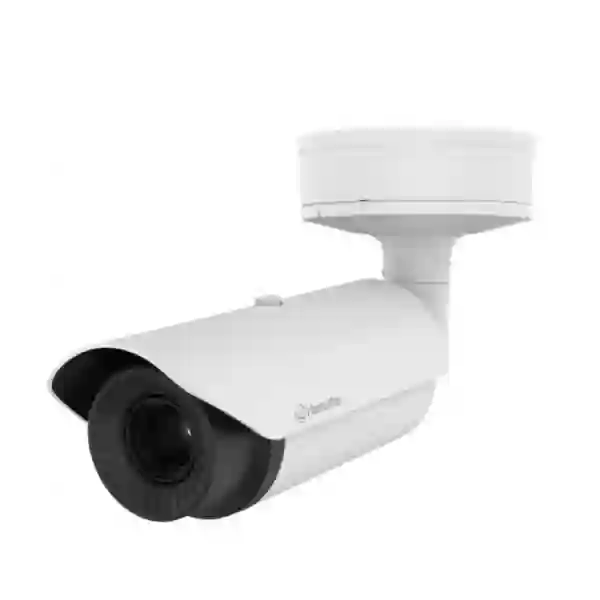
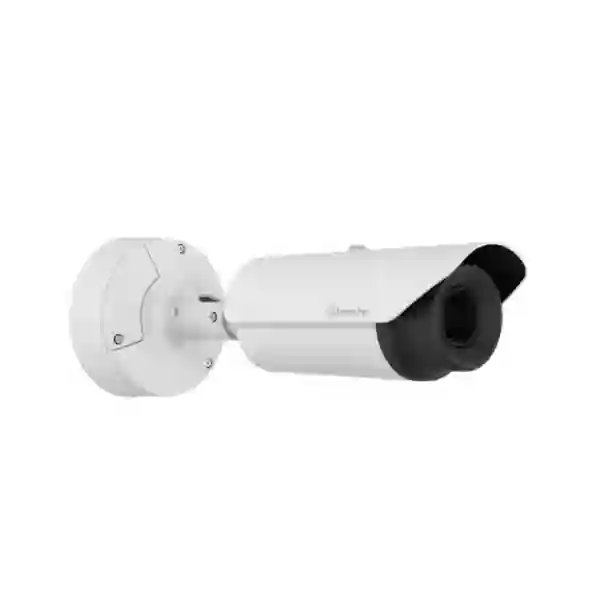
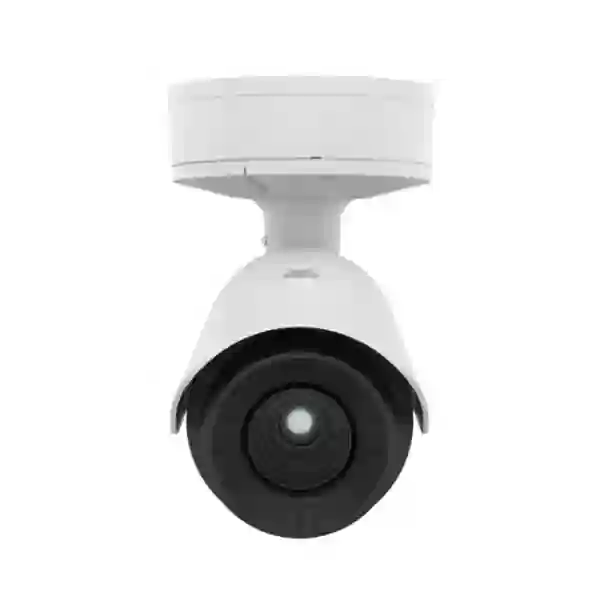
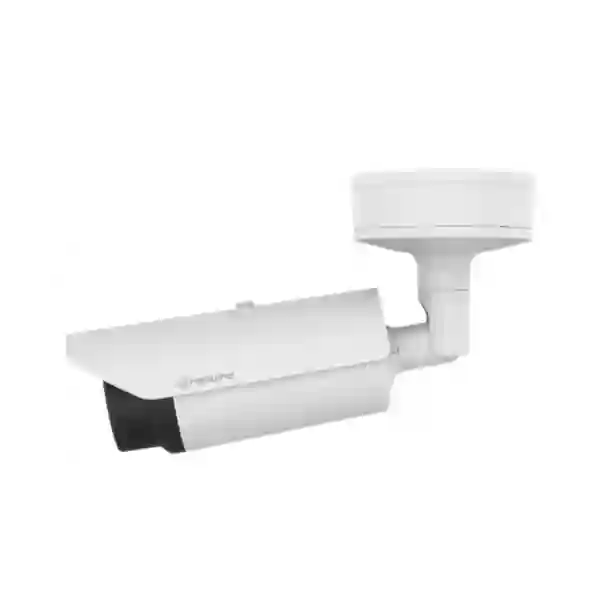
Hanwha TNO-L4040TR Radiometric Thermal Bullet Camera
See thermal contrast, configure temperature monitoring zones, and plan a properly integrated outdoor camera deployment. This guide explains the exact 8 fps model, its measurable capabilities, limits, and the information a Tanzania buyer should check before requesting a quotation.
At-a-glance specifications
| Manufacturer / model | Hanwha Vision / TNO-L4040TR |
|---|---|
| Camera type | Outdoor radiometric thermal network bullet |
| Thermal image | 640 × 480 pixels maximum; uncooled microbolometer |
| Frame rate | Up to 8 frames per second |
| Lens / view | 19 mm fixed F1.0; approximately 32° horizontal |
| Temperature detection | −20°C to +130°C; six programmable areas |
| Published accuracy | ±5°C at or below 100°C; ±20% above 100°C |
| Encoding | H.265, H.264, MJPEG; WiseStream II |
| Local storage | One microSD-family slot, up to 256 GB |
| Power | 802.3af PoE / 12 V DC / 24 V AC |
| Housing | IP66, IK10, NEMA 4X |
| Network compatibility | Ethernet; ONVIF Profiles S/G/T; RTSP |
Specifications are manufacturer-listed figures for this exact model and require project-specific verification. They are not guaranteed results at every installation.
What this radiometric thermal camera is designed to solve
The Hanwha TNO-L4040TR is intended for teams that need to detect heat patterns or observe temperature changes where an ordinary daylight camera cannot provide the same information. Thermal imaging translates infrared energy into an image that makes warmer and cooler areas visible. That can help an operator notice a person against a darker background, monitor a selected process area, or investigate unexpected heating without relying on visible illumination. The image is thermal rather than a conventional full-colour view of a scene.
Unlike a temperature-only handheld instrument, a fixed network camera can be positioned to watch a defined field of view and send event information to an appropriate monitoring system. This makes it useful for assessing conditions over time at remote or restricted sites. The important requirement is to decide whether the project needs general thermal awareness, temperature alarms, or both. Each objective affects the lens position, alarm logic, integration plan, and acceptance tests.
For a Tanzanian buyer, a good specification starts with the actual problem: which asset or boundary must be watched, from what distance, during which hours, and what action should follow an alert? The camera should be selected as part of a designed system, not on resolution alone. Ask for a documented view plan and temperature-monitoring criteria before purchasing, especially where alarms will prompt staff to investigate an operational or safety-related condition.
Fast specification snapshot for procurement
The model identifier matters. The TNO-L4040TR uses a 640 × 480 uncooled microbolometer and provides a maximum frame rate of 8 fps, not the higher frame rate associated with the similarly named TNO-4040TR. Its 19 mm fixed-focus F1.0 lens provides a manufacturer-stated horizontal field of view of approximately 32 degrees. These values determine how much scene fits in the image, how smoothly movement can be observed, and whether the target will occupy enough pixels for the intended task.
Hanwha specifies a thermal temperature detection range of −20°C to +130°C, six programmable quadrilateral regions for temperature monitoring, hybrid palettes, and a spot temperature reading feature. Compression options are H.265, H.264, and MJPEG, with WiseStream II available. A single microSD, microSDHC, or microSDXC slot supports cards up to 256 GB. The camera connects through Ethernet and supports standard network-video interoperability features, although exact software support should be tested.
The housing is specified with IP66 ingress protection, IK10 impact resistance, and NEMA 4X enclosure classification, plus PoE, 12 V DC, and 24 V AC power choices. These ratings are valuable when assessing outdoor installation, but they do not replace weatherproof termination practices or correctly designed mounting hardware. A bill of materials should still include power, cable protection, recording arrangements, any external audio equipment, and system commissioning.
- Thermal sensor: uncooled microbolometer, maximum 640 × 480 pixels, NETD at or below 50 mK.
- Lens and video: fixed 19 mm, F1.0, approximately 32° horizontal field of view, up to 8 fps.
- Temperature functions: −20°C to +130°C specified detection range and up to six regions of interest.
- Interfaces: RJ-45 Ethernet, microSD slot up to 256 GB, alarm input and outputs, and audio line connections.
- Outdoor design: IP66, IK10, NEMA 4X; alternative PoE, 12 V DC, or 24 V AC power.
How thermal imaging differs from an ordinary security camera
A conventional optical camera records reflected visible light and can show clothing colour, signs, faces, and other scene details when lighting is adequate. A thermal camera detects infrared energy associated with temperature differences. Its image can therefore remain meaningful in darkness without a white-light lamp or infrared illumination. However, the thermal image does not naturally preserve the same identifying details as a visible-light image, and it should not be marketed as a substitute for face identification or evidential colour footage.
Thermal performance is not identical in every environment. Rain, high humidity, atmospheric conditions, reflected heat, background temperatures, target size, and an obstructed line of sight can all influence what is visible or measured. A fence, glass pane, tree, or other barrier may block the relevant thermal view. A camera that is excellent at highlighting a warm target can still be unsuitable if the mounting point hides it behind a wall or the target occupies very few image pixels.
Many organizations benefit from pairing a thermal camera with a conventional network camera. The thermal view can help identify abnormal activity or heating; the optical view may provide recognizable contextual details when conditions allow. This is a project design option rather than a claim that the TNO-L4040TR contains a second optical sensor. Decide whether operators need one thermal stream, a separate optical camera, or coordinated views in their video management platform.
Radiometric monitoring: temperature ranges and accuracy
The radiometric capability distinguishes this model from a thermal imager intended only for visual detection. Hanwha specifies a temperature detection range from −20°C to +130°C. Within that range the camera can be configured to watch thermal information in defined regions and react to selected temperature conditions. A detection range is not the same as a guarantee that any object in any setting will be measured accurately. The object’s surface, distance, background, and installation geometry matter.
The published temperature accuracy is ±5°C for readings at or below 100°C and ±20 percent for temperatures above 100°C. Buyers should consider these tolerances when selecting alarm thresholds. A system designed around a narrow difference of one or two degrees, for example, would need a different measurement approach. The device is suitable for screening and monitoring use cases that can accommodate its specified uncertainty, not for laboratory calibration, medical diagnosis, or a certified safety control function.
Set the monitoring objective before setting numerical alarms. Teams should identify the normal temperature range of the object, expected environmental changes during the day, the point at which intervention is required, and the consequence of nuisance alerts. Compare observed readings with an appropriate reference instrument during commissioning. If the object exceeds the stated measurement range, is behind a barrier, or has an unsuitable reflective surface, do not assume the alarm will behave as expected.
Six programmable regions of interest: practical design
The TNO-L4040TR supports as many as six temperature monitoring regions, each configurable as a quadrilateral area. This allows an operator to distinguish separate parts of a view instead of assigning the same condition to the entire image. For example, one camera might observe several sections of equipment that operate within different temperature bands, provided all monitored targets are clearly visible and sufficiently large in the thermal scene.
A region should tightly cover the relevant target while allowing for normal variation in position. Including the sky, moving traffic, or sun-heated background surfaces in the same region can complicate interpretation. If a machine shifts or vibration changes the view, the selected area may no longer contain the intended surface. Commissioning should therefore confirm the actual pixels covered by each region, not merely save a configuration and assume continuous relevance.
Operators should decide whether they need alerts for a temperature crossing a threshold, falling below an expected value, or changing rapidly. Hanwha describes support for such temperature-event behavior, with region visualizations available in supported firmware. Features and presentation can depend on software version, so the final installation should document firmware, tested event rules, and the actions produced by each alert. Review the regions whenever the site layout or monitored equipment changes.
Lens choice, field of view, and viewing distance
The fixed 19 mm lens has a manufacturer-stated horizontal view of about 32 degrees and vertical view of about 24.3 degrees. A narrower field lets a thermal subject occupy more of the available image than an otherwise similar wider field, but it watches less of the surrounding scene. The correct compromise is site-specific. A long boundary may need multiple planned viewpoints; a machine room may need the camera positioned so that every important component remains visible.
The manufacturer lists a minimum object distance of 11 metres. Do not assume this lens is suitable for a very close target simply because the camera can physically be mounted nearby. Also avoid treating minimum object distance as a promised long-range detection distance. Detecting a warm target, recognizing the kind of target, and obtaining useful temperature information are different tasks, each needing sufficient image detail and a suitable scene.
For procurement, provide a rough drawing with the mounting position, target width and height, expected distances, areas hidden by equipment, and desired detection objective. A field-of-view simulation or representative site test can then show whether a single 19 mm thermal camera covers the required area. The drawing should note access for servicing and the structural strength of the mounting point, rather than focusing solely on how far the camera appears to see.
Understand 640 × 480 resolution and the 8 fps limit
The 640 × 480 thermal sensor offers VGA-class image detail for interpreting thermal contrast across a field of view. That is a meaningful specification for thermal equipment, but it should not be compared directly with a multi-megapixel visible-light camera as though both measure the same type of image. The relevant question is whether a target has enough thermal pixels to support the intended observation, alert, or investigation at its actual installed distance.
Video is limited to a maximum of eight frames per second. This can be reasonable for observing a mostly fixed installation, a defined perimeter area, or temperature trends that change relatively slowly. It is less suitable where users expect fluid footage of fast-moving subjects or need high-frame-rate recording to analyze rapid movement. Network bandwidth or a faster recorder cannot turn an eight-frame source into true thirty-frame thermal footage.
Ask the system designer to demonstrate a representative target in motion at the intended range and to review recorded clips, not just live still images. Include day and night conditions and likely thermal background changes. A trial should verify that alarms and operator interpretation remain usable despite the slower video refresh. Buyers needing smoother motion should assess the differently specified TNO-4040TR rather than accidentally assuming that model’s frame rate applies here.
Smart analytics and alarms for site awareness
The manufacturer lists motion detection, tampering, loitering, directional events, virtual-line crossing, enter and exit conditions, appear or disappear events, audio detection, sound classification, shock detection, and temperature-related detection. The purpose of these functions is to filter streams of video into conditions worthy of attention. Which rule is useful depends on the actual operation: perimeter crossing may matter at a restricted boundary, while temperature thresholds matter around specific plant equipment.
Analytics require calibration. A warm animal, moving machinery, hot vehicle, or drifting environmental pattern may be relevant to the thermal scene without representing the incident the security team wants to catch. Define where alerts are permitted, what triggers escalation, and what actions should follow. A quiet log of well-targeted events is generally more useful than an overwhelming stream of alarms that operators learn to ignore.
The device provides one alarm input and two alarm outputs, and Hanwha describes event options including network notification, supported recording actions, and PTZ preset handover. These possibilities must be verified in the chosen recorder or management software rather than assumed to work universally. Sound-related functions may require appropriately connected audio equipment; buyers should not infer the presence of a built-in microphone from an analytics feature name.
Video recording, compression, and data retention
H.265, H.264, and MJPEG provide options for accommodating recorders and networks with different requirements. WiseStream II can help optimize video encoding according to scene characteristics. Compression choices affect bandwidth, storage consumption, compatibility, and image quality. A security design should be based on the actual desired image quality and recording schedule, not on an unsupported promise of a fixed number of storage days.
The camera includes a memory-card slot supporting up to 256 GB of compatible microSD-family storage. This can provide local recording capability where configured, but a card’s maximum capacity does not establish the real retention period. File size depends on stream settings, compression, activity, image content, and whether recording is continuous or event-triggered. Confirm supported cards and recording behavior against the installed firmware before the site is handed over.
For longer retention or centralized investigations, define an appropriate network video recorder, video management system, or approved storage arrangement. Decide whether temperature event snapshots, full thermal footage, and associated audit information must be retained, and for how long. Include access rights, backups where appropriate, recovery procedures, and a process for checking that recordings are actually being captured. Card recording alone should not be treated as a complete resilience strategy.
ONVIF, streaming, and software integration
Hanwha lists ONVIF Profiles S, G, and T for the TNO-L4040TR, together with RTSP, HTTPS, SRTP, MQTT, SUNAPI, and Hanwha’s open platform capabilities. These interfaces are useful starting points for integration with network security infrastructure. However, an ONVIF claim is not proof that every recorder supports every camera event, temperature overlay, analytics rule, audio mode, or device setting. Feature-level interoperability must be checked before the purchase order is finalized.
A basic integration test should confirm discovery, authentication, the live thermal stream, recorded playback, clock synchronization, and network disconnection behavior. Where alarms are important, trigger representative temperature and intrusion events and confirm exactly what the monitoring application displays and stores. This avoids a common problem in which the picture works but the specialized metadata never reaches the people expected to respond.
Where multiple network segments are used, involve the customer’s IT team early. The design may require planned IP addresses, routing, VLANs, firewall allowances, naming conventions, and a defined approach to time synchronization. Choose encrypted interfaces where supported, avoid exposing camera administration directly to the public internet, and keep a record of tested firmware and system versions. Integration should be accepted against a simple written test plan, not merely a successful camera ping.
Power planning: PoE, 12 V DC, and 24 V AC
The camera accepts IEEE 802.3af Class 3 PoE, 12 V DC, or 24 V AC. Published maximum power use is about 10 watts through PoE, 9 watts through 12 V DC, and 10.5 watts through 24 V AC. This gives designers flexibility to fit the site, but the selected supply and cable layout must be electrically suitable. Avoid mixing power options without checking the manufacturer installation guidance and qualified installation requirements.
A PoE installation can simplify cabling when an appropriate switch and structured copper run are available. The switch still needs enough total power budget for every connected device, including other cameras and accessories. At long distances, check cable length, quality, connector protection, and voltage behavior. For isolated or outdoor enclosures, environmental sealing and surge protection can be as important as the power source itself.
Power continuity matters at facilities where an alert is most valuable during a disturbance. Consider whether the network switch, recorder, communication links, and monitoring workstation need battery-backed supply; keeping only the camera energized may not keep the alert pathway operational. In Tanzania, confirm the site’s actual electrical arrangement and conditions rather than assuming a common setup. Review restart behavior, equipment grounding, and maintenance access during system commissioning.
Outdoor housing, mounting, and site durability
Hanwha specifies IP66 ingress protection, IK10 impact resistance, and NEMA 4X enclosure classification for this bullet camera. The environmental operating temperature range is −40°C to +60°C, with 0 to 90 percent relative humidity in non-condensing conditions. These are equipment specifications, not assurances that any mounting position or cable joint is protected under every exposure. The housing is intended to be assessed as one part of the outdoor installation.
The camera is roughly 402 millimetres long and has a published weight of about 3.2 kilograms. Allow for the camera, mounting hardware, cable routing, and the forces acting on its bracket. Avoid relying on lightweight sheet surfaces without checking support. Suitable mounting height should balance target visibility against tampering risk and maintenance access. Keep the lens view clear of roof edges, vegetation, exhaust paths, and reflective equipment that could compromise thermal observation.
Outdoor Tanzanian sites can differ considerably, from sheltered industrial buildings to humid coastal facilities or exposed dusty yards. The design should match the specific conditions and follow applicable electrical and construction requirements. Inspect cable gland seals and terminations, allow for equipment inspection, and document how the camera can be safely reached for cleaning or service. No IP or impact rating eliminates the need for planned maintenance.
Security and lifecycle management
A network thermal camera is also an information technology endpoint. The product lists encrypted firmware protection, HTTPS and SRTP communication options, 802.1X network authentication, IP-based access controls, and access or event logs. Those capabilities help support a controlled deployment when correctly configured. They do not mean the equipment is secure without configuration, patch management, network segmentation, and clear ownership of its administrative accounts.
At commissioning, assign unique credentials, remove unnecessary access, document permitted management systems, and ensure the camera clock agrees with the recording platform. Check the manufacturer’s current software and firmware guidance for the exact model before applying updates, especially if the camera is integrated with an existing NVR. Schedule reviews of authorized users and of any remote support path. A site administrator should know how to recover access without using shared credentials indefinitely.
Agree in advance who is responsible for software updates, certificate management, event logs, network changes, and failed-storage warnings. If audio recording or monitoring is proposed, check the customer’s policies and applicable local legal obligations rather than treating audio capture as automatic. The camera is a specialized sensor whose value depends on ongoing configuration and trustworthy alerts, not simply on how well the hardware operates at installation.
Where thermal monitoring can add value in Tanzania
Perimeter operators may use thermal contrast to investigate activity in low illumination around restricted yards, utilities, logistics areas, or critical equipment sites. The camera’s virtual-line and area analytics can be evaluated for defined access boundaries. A useful deployment starts with the location of real approach routes, background heating, and likely obstructions. It should also identify what the operator will do when an event occurs and whether a companion visible-light camera is needed for visual identification.
Facility and maintenance teams may evaluate radiometric monitoring for assets where abnormal surface heating is a useful early indication that further investigation is needed. Examples include selected electrical or mechanical surfaces visible from a safe location. Such applications require correct target selection, an awareness of the specified ±5°C or ±20 percent accuracy limits, and a response procedure. This camera must not be described as certified to shut down a dangerous process or diagnose the condition of a machine by itself.
Warehouse or infrastructure planners might value a thermal view where ordinary lighting is poor or maintaining permanent illumination is impractical. Evaluate lines of sight around shelving, parked vehicles, walls, and doors. Thermal imaging cannot see through common physical barriers merely because they look transparent in visible light. For any Tanzania application, suitability and installation coverage should be confirmed for the particular project; the presence of a product page does not establish local stock or installation services.
Temperature monitoring for industrial and electrical assets
Before specifying the camera for an electrical cabinet, switchgear area, motor, conveyor, or heated process, determine whether the relevant part of the asset is visible to a thermal sensor. A closed opaque enclosure can hide internal heat sources. Reflections from shiny surfaces can also distort apparent readings, and different materials radiate heat differently. A camera may show a compelling colour pattern without delivering a dependable number for the critical component inside.
Use an engineering-led assessment to identify a target whose surface temperature meaningfully reflects the problem of concern. Document its normal operating states, load changes, maintenance intervals, and environmental exposure. Confirm whether the required alarm threshold is wider than the camera’s stated uncertainty. If the decision requires a narrow tolerance, a measurement outside the supported range, or certified functional safety, plan a separate qualified measurement or control system.
A practical workflow is to watch for a change, ask a trained operator to evaluate the context, and verify the condition with an appropriate method before intervening. Keep a record of threshold revisions and the reason each rule was chosen. This balances the value of continuous awareness with the physical limits of remote thermography. The strongest use case is one where a thermal anomaly supplies actionable context, not where the device is expected to prove a root cause.
Perimeter surveillance and response workflow
For perimeter security, start by drawing the real boundary and identifying likely paths of movement. A 32-degree horizontal thermal field may provide useful detail along one sector but may not cover the full width of a large compound. Divide the boundary into observable areas and check potential blind spots. The camera should face the scene that matters rather than merely the part of the property that is easiest to cable.
Thermal analytics can support event filtering, but every site should test false alarms caused by animals, service vehicles, machinery, and personnel carrying out authorized tasks. Establish operating schedules and permitted crossing routes. If monitoring relies on staff response, the alert must display enough information to help them judge its significance. Consider how a separate optical camera, lighting, or access-control record could provide additional context when the thermal frame alone cannot identify someone.
An effective acceptance test should include representative movement at realistic distances, changing backgrounds, different times of day, and a simulated loss of network connectivity. Confirm both that important events are detected and that irrelevant activity does not make the system unusable. Establish who receives alerts, who can change detection rules, and where an incident record is stored. These operational details often matter more than adding another analytics label to a specification.
How to scope a quotation and installation
A useful request for quotation should include the exact model TNO-L4040TR, the application, mounting positions, estimated target distances, and whether the user needs temperature-event alerts or security detection. Add a sketch or photographs of the site, subject to the customer’s confidentiality requirements. State whether existing switches, fibre runs, recorders, and network management software will be reused. These inputs allow the designer to identify missing components and compatibility questions.
For a radiometric project, supply the expected object-temperature range, the number of areas to be monitored, the accuracy the operational decision requires, and the proposed response to an alarm. For security, describe movement paths, restricted zones, and what constitutes a true incident. For both applications, specify retention, authorized users, remote access requirements, and available power. Do not leave success criteria until after the camera has been installed.
Ask the supplier to identify model-specific accessories and to explain whether the quotation covers installation, configuration, site testing, operator training, and ongoing support. Confirm current stock, lead time, local commercial terms, warranty provisions, and any project approvals directly rather than relying on assumptions. The relevant next step with FourTeck Tanzania is a model-specific, site-specific quotation that records what is included and what still needs verification.
Commissioning checklist and acceptance tests
Physical installation should begin with a clear view, a secure mount, appropriate protective termination, and reliable network or power connectivity. Check camera orientation against the agreed scene drawing. Confirm that the visible thermal field covers the target without excessive obstruction, then inspect the view during realistic operation. For temperature projects, compare representative readings with an appropriate reference measurement while respecting differences in sensor physics and measurement locations.
Configuration should include named users, network settings, current approved firmware, stream formats, recording schedules, storage warnings, and time synchronization. Program the six temperature regions only when needed and document every threshold. If intrusion or direction analytics are enabled, test their behavior using real permitted and non-permitted activity. Verify that any email, MQTT, relay, recording, or PTZ handover action is received by the intended destination.
Finally, test failures rather than only successful operation: temporarily disconnect the network, check power recovery, review missed or duplicate alerts, and confirm access to recorded evidence. Provide the customer with drawings, inventory details, event rules, access procedures, and a maintenance plan. A signed acceptance record should state what was demonstrated, what remains outside scope, and any environmental or accuracy limitation that affects the project’s intended use.
Maintenance, calibration expectations, and troubleshooting
Keep the thermal viewing path clear and inspect the housing and mounting assembly on a schedule suitable for the exposure. Dirt, debris, new construction, altered machinery, or seasonal vegetation can change the usefulness of a carefully aligned view. Operators should review example images periodically so that the reference appearance of the scene is familiar. A camera that remains online can still deliver poor monitoring if the target moved or the original alarm region no longer fits.
When temperature alerts become inconsistent, first check the physical scene: Has the target temperature changed for a legitimate reason? Is there a new reflective surface or hot source? Has the mounting angle shifted? Then review firmware, region settings, timestamps, event routing, and recording availability. Avoid responding to every unexpected reading by simply raising thresholds. That can hide the condition the system was installed to detect.
Where the application requires traceable calibrated measurement, consult an appropriately qualified instrumentation specialist about a different measurement architecture. Do not interpret the manufacturer’s published radiometric specification as an on-site calibration certificate. Keep a service log of configuration changes and comparative checks. The objective of maintenance is to preserve useful operational decisions and auditable alert behavior over time, not to assume that a visually clean image proves numerical accuracy.
Compare the TNO-L4040TR with nearby model names
The suffixes in this product family have practical significance. The TNO-L4040TR is the low-frame-rate radiometric option specified here, delivering up to 8 fps. The TNO-4040TR, without the L, is a different radiometric model with a manufacturer-listed frame rate reaching 30 fps. A buyer evaluating motion performance must compare exact model numbers, because a quotation or catalogue description that drops one character can lead to an incorrect expectation.
Similarly, thermal models ending in T are not automatically equivalent to the radiometric TR models. The correct question is whether the camera can report the temperature quantity needed for your project, or whether it provides thermal image and temperature-change awareness only. Hanwha’s support guidance distinguishes these functions. The exact variant, regional version, firmware support, and desired monitoring workflow should be confirmed before deciding that a lower-cost or alternative camera is interchangeable.
If the intended job is conventional colour identification, the correct alternative may be an optical security camera rather than another thermal model. If it demands high-frequency motion analysis, a higher-frame-rate model deserves evaluation. If it demands narrow numerical temperature tolerances or certified protection, a dedicated sensor system may be necessary. Specify the job first and use a side-by-side acceptance test, instead of treating model family similarity as proof of matching capability.
What this camera cannot guarantee
The camera is not an all-purpose long-range detector. Its usefulness is affected by the apparent size of a target, scene contrast, barriers, mounting position, and thermal conditions. The 640 × 480 image and 19 mm lens should be judged against an actual site drawing or demonstration. Avoid assigning a detection distance that the manufacturer has not promised for the exact object and conditions. Likewise, an IP rating does not mean maintenance and weatherproof installation details can be ignored.
It is also not a precision thermometer across every situation. Published accuracy tolerances, thermal reflections, target emissivity, environmental conditions, and the −20°C to +130°C measurement window all constrain decisions. A thermal image is not proof of a defect or fire risk, and no video camera replaces a safety-rated shutdown, alarm panel, or properly specified fire-detection system. If an alert is life-critical, independent protection and a qualified risk assessment are essential.
Finally, compatibility is broader than connecting a network cable. Confirm the specific NVR or software can display the stream and the required radiometric metadata, handle alerts, and retain the needed recordings. Never assume that a supported protocol guarantees every optional feature. A thorough buying decision also addresses price, availability, responsibilities, training, and maintenance, none of which should be inferred from an equipment specification alone.
Why a requirements-led selection is better than a spec-only purchase
Technical specifications tell you what the camera is designed to offer, but they do not establish the outcome at an individual site. A 640 × 480 sensor may be appropriate for one boundary and inadequate for another. Six temperature regions may simplify monitoring of several visible assets or be irrelevant to a camera used solely to detect movement. The correct frame rate depends on how quickly the subject changes. These choices should be made explicitly before ordering.
The customer should be able to answer five questions after a supplier discussion: What must be observed? Where can the camera see it? Which alert or recording is required? What measurements or identification details matter? Who will act when something happens? A written answer makes it easier to compare proposals fairly, identify optional equipment, and avoid paying for a system that looks impressive but does not support the actual operating procedure.
FourTeck Tanzania can be approached for a project-specific assessment and quotation for the requested model. Supply the site details, system requirements, and the exact product name, and request confirmation of availability, compatibility, and commercial conditions. No local price, stock position, delivery timeline, warranty term, or installation entitlement is assumed here. The useful outcome is a verifiable scope that the buyer can approve with clear technical and operational expectations.
Frequently asked questions
Is the Hanwha TNO-L4040TR a thermal camera or a normal CCTV camera?
It is a network thermal bullet camera that forms images from thermal infrared differences. It does not generate the same full-colour, detail-rich scene as an ordinary visible-light CCTV camera. Choose it when thermal contrast, temperature monitoring, or observation in low illumination supports the requirement. Use a separate conventional camera if colour or recognizable identity is important. The two technologies can complement one another, but they should not be treated as interchangeable.
What resolution and frame rate does this specific model provide?
Hanwha lists a maximum thermal resolution of 640 × 480 and a maximum frame rate of 8 fps for the TNO-L4040TR. It also supports additional lower-resolution modes. Some search results describe a TNO-4040TR capable of 30 fps; that model does not have the L and should not be used to define this product’s recording expectations. Ask the supplier to repeat the complete model number on the quotation and commissioning record.
Does it provide actual temperature information?
Yes. This is a radiometric thermal model with a specified −20°C to +130°C temperature detection range, spot temperature reading, and up to six configurable temperature areas. Its published accuracy is ±5°C at or below 100°C and ±20 percent above 100°C. These tolerances and the behavior of real surfaces must be considered before using values to trigger an operational decision. It is not a medical thermometer or a certified protection instrument.
Can it monitor more than one equipment area?
The camera supports up to six programmable quadrilateral temperature-monitoring regions within the thermal view. This can help distinguish separate pieces of visible equipment, but it does not provide six independent viewing directions. Every region must fit within the fixed 19 mm lens field and be clearly visible. Confirm that targets occupy enough pixels and that each threshold is based on a meaningful operating condition before relying on alerts.
Will the camera see through walls, glass, or heavy obstructions?
No. A thermal imager is not a tool for seeing through ordinary walls or other opaque barriers. Many materials transparent to visible light, including common glass, can prevent a useful thermal view of what is behind them. Smoke, humidity, and weather may also affect visibility depending on conditions. Position the camera with a direct, unobstructed line of sight to its intended target and assess the scene in realistic operating conditions.
Does the camera need lighting at night?
Thermal imaging does not rely on visible lighting in the way an ordinary colour CCTV camera does. This can make it useful in darkness, provided the target and background produce interpretable thermal contrast. It does not mean every target will be obvious in every environment, and it does not add colour identification details. Test the actual scene at different times, especially where objects and the background may approach similar apparent temperatures.
Can I connect it to an existing NVR or VMS?
The manufacturer lists standard networking and ONVIF Profiles S, G, and T, as well as RTSP and its own SUNAPI interface. These can make integration possible, but the intended recorder or VMS must be tested for exact firmware compatibility, recording, user access, and specialist alerts. A successful live video connection alone does not prove that all temperature zones and analytics events are supported by the third-party platform.
How is the TNO-L4040TR powered?
Power choices include IEEE 802.3af Class 3 PoE, 12 V DC, and 24 V AC, with manufacturer-stated maximum consumption varying by input. For PoE, plan around the specified maximum of approximately 10 watts and leave adequate switch power budget. Electrical design should address suitable cable runs, protective terminations, grounding, and backup power for the whole alerting path, not just the camera.
Is it suitable for an outdoor project?
The product has manufacturer-listed IP66 and IK10 ratings, a NEMA 4X enclosure classification, and an operating temperature specification of −40°C to +60°C. These are useful selection factors for a planned outdoor installation in Tanzania, but site conditions still govern suitability. Mounting, corrosion exposure, cable glands, surge protection, condensation, and access for service should be assessed by the installer. The rating does not guarantee performance in every environment.
Does it have onboard recording?
The camera includes one slot supporting a compatible microSD, microSDHC, or microSDXC card of up to 256 GB. Actual recording settings, event logic, and retention depend on the configured system and installed media. A full recording solution may also require an NVR, network storage, backups, and operator procedures. Ask for a retention calculation based on the stream settings and whether footage is continuous or event triggered.
Can thermal alerts replace a fire alarm or industrial safety system?
Do not use the TNO-L4040TR as a substitute for a certified fire-alarm system, safety interlock, or precision temperature control without a qualified assessment and appropriate independently designed protections. It can provide supplementary monitoring information and configurable temperature-event alerts within its specified range and accuracy limits. Alarm behavior should be verified on site, with clear human response procedures and reference measurements where they are needed.
What information is needed for a Tanzania quotation?
Share the exact model TNO-L4040TR, application, site conditions, target distance, expected temperatures, proposed mounting position, preferred recorder, power availability, and any integration requirement. Explain whether the primary goal is perimeter detection or temperature-event monitoring. Ask FourTeck Tanzania to confirm current supply, accessories, technical fit, local commercial terms, and service scope through the quotation process. No unverified price or stock guarantee is implied.
What is the most important point when comparing similar Hanwha cameras?
Check the complete manufacturer model and the particular function the project needs. The L in TNO-L4040TR is material to the published 8 fps specification, while TR denotes radiometric capability. Confirm lens angle, viewing distance, required temperature tolerances, storage, and integration before comparing prices. If the project needs smoother motion or precise industrial measurements, evaluate an appropriately different camera or sensor instead of assuming all T-series units offer identical performance.
Request a Hanwha thermal camera quotation
Contact FourTeck Tanzania with your site description, viewing distances, monitoring objective, and existing network or recording platform. Request confirmation of the TNO-L4040TR’s technical suitability, current availability, required accessories, and quotation terms. A properly scoped proposal should clearly separate verified manufacturer specifications from site-specific assumptions, installation requirements, and ongoing service responsibilities.
Next step: Request a site-specific product quotation from FourTeck Tanzania.




Reviews
There are no reviews yet.