
Industrial security • Tanzania enquiries
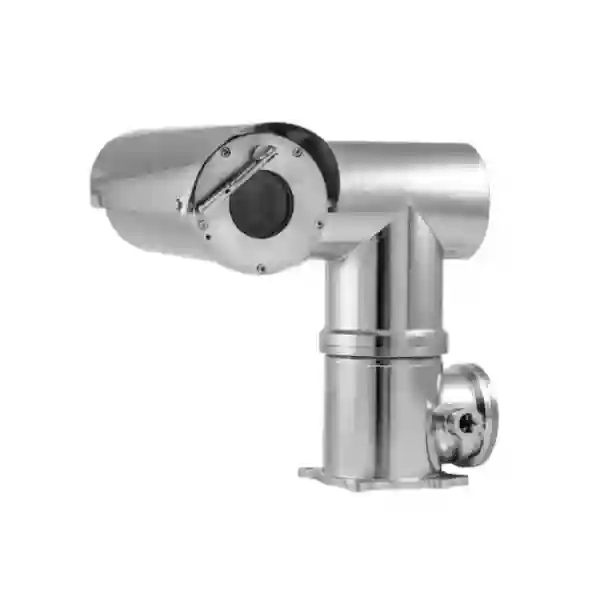
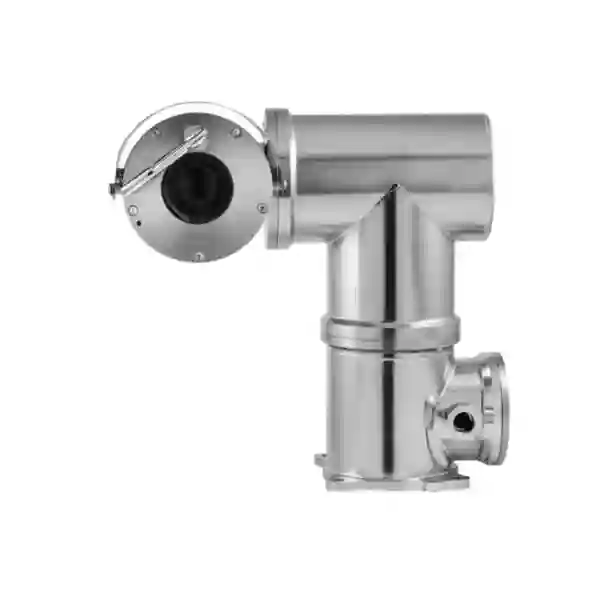
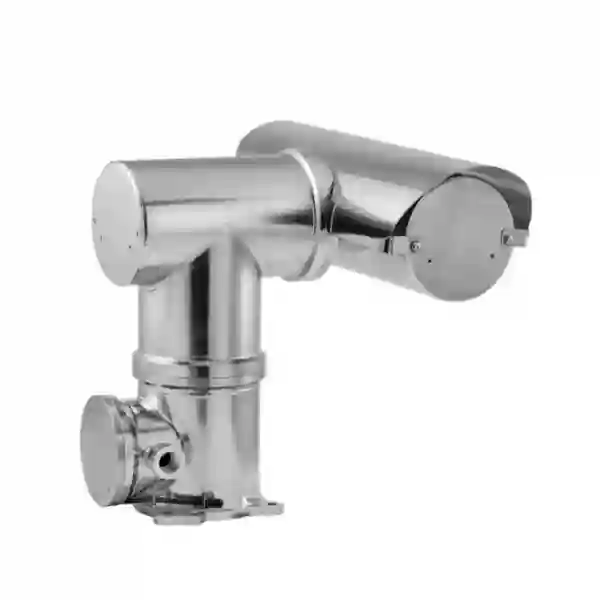
Hanwha TNU-X6320A2F2WT2-C Explosion-Proof PTZ Camera
A specialized Full HD positioning camera station for selected hazardous industrial sites. It combines 32x optical zoom, single-mode fiber, 110VAC input, a built-in wiper, and a 316L stainless-steel assembly. Selection depends on exact certification, site power, and installation design.
Enquiry: Request a model-specific technical quotation from FourTeck Tanzania.
What makes this industrial camera different?
The Hanwha TNU-X6320A2F2WT2-C explosion-proof PTZ camera is a specialized network surveillance station, not a general-purpose dome. Buyers should evaluate the hazardous-area approvals, single-mode fiber interface, dedicated 110VAC supply, 33kg mechanical assembly, recording requirements, and optical coverage together. The main customer value is remote visual observation from suitable engineered locations, with the ability to change position and zoom toward selected targets.
For a project in Tanzania, local product price, stock, delivery, warranty, and area-specific installation acceptance must be confirmed rather than assumed. Current public manufacturer documentation also shows conflicting upper operating-temperature figures, which require clarification before final specification. Start with a site survey and an exact-model technical quotation.
Key technical specifications
The following values are drawn from Hanwha Vision’s product information for the exact model. Confirm approval documents and disputed limits with the manufacturer before an engineered installation.
| Item | Published specification |
|---|---|
| Camera type | Explosion-protected network PTZ positioning station |
| Imaging | 2MP Full HD, 1920 × 1080; H.265/H.264/MJPEG |
| Lens | 4.44–142.6mm; 32x optical and 16x digital zoom |
| Movement | Pan 0–360°; tilt -90° to +90° |
| Image features | 120dB WDR, day/night ICR, gyro-assisted stabilization |
| Network | Single-mode 9/125μm fiber (F2); 10/100Mb Ethernet |
| Storage | Two microSD-family slots; maximum 256GB each |
| Power | 110VAC; maximum 80W |
| Structure | 316L stainless steel; toughened-glass window; integrated wiper |
| Weather rating | IP66 / IP67 |
| Physical size | 418 × 457 × 401mm; 33kg |
| Temperature | Summary -60°C to +40°C; detailed table conflicts—confirm |
Purpose-built hazardous-area surveillance
The Hanwha TNU-X6320A2F2WT2-C explosion-proof PTZ camera is intended for projects where a normal weatherproof CCTV device may be inappropriate. Its specialized positioning station combines industrial enclosure construction with pan, tilt, optical zoom, and network imaging. Potential deployment scenarios include selected observation points at oil and gas facilities, processing plants, and other sites whose engineers have identified hazardous locations. The fact that a facility handles fuel or chemicals does not itself prove that this particular unit is permitted at any chosen mounting location.
Selection must start with the site’s formal hazardous-area classification and the exact equipment marking and certificates supplied for the ordered configuration. Consult the relevant safety engineer and the current installation manual for approved conditions, cable-entry arrangements, installation practices, and operating limits. IP66 or IP67 weather protection is not equivalent to explosion protection. Equipment approval also does not automatically certify a complete field installation, electrical circuit, or locally manufactured mounting system.
The right procurement result is a camera whose optical coverage, exact certification, power input, fiber connection, and mechanical installation all fit the documented site need. Use this product information as a buyer’s design checklist rather than as a substitute for engineering approval.
Why the complete model number matters
The requested identifier is TNU-X6320A2F2WT2-C. Industrial camera models with almost identical names may differ in supply voltage, network media, environmental variant, or hazardous-area certification. Hanwha’s published literature associates this configuration with 110VAC supply, the F2 single-mode fiber arrangement, an integrated wiper, a low-temperature option, and a C certification variant. Those characteristics are not interchangeable procurement details; they can change the complete field design.
When comparing quotations, check every character of the ordered model and ask the supplier to confirm the camera body, power configuration, fiber interface, applicable approval documentation, and any optional accessories. A product with the same main family designation but without the F2 element may call for different network terminations. A different certification suffix may not provide the marking required for the site’s location. A different electrical configuration could invalidate a prepared power design.
Hanwha identifies an older TNU-X6320E2F2WT1-C model as discontinued and names this A-series configuration as its replacement. That manufacturer relationship is useful during an upgrade assessment, but it does not prove that the older unit’s bracket, cables, software configuration, or installation certification can be reused without verification.
What the 2MP Full HD image delivers
Hanwha specifies 1920 by 1080 pixel imaging for this network camera. In an industrial control-room application, Full HD can support general observation of equipment areas, access routes, yard movements, and selected operational conditions. The real value depends on whether the operator can distinguish the intended subject. A broad scene may reveal movement but not fine print on a distant instrument. A narrow scene may show better detail while losing awareness of surrounding activity.
The published imaging device is a 1/2.8-inch CMOS sensor. H.265 and H.264 support up to 60 or 50 frames per second according to the configured video system, while MJPEG is listed up to 30 frames per second. Higher frame rates can help with motion analysis, but require an appropriate encoding and storage design. The choice should reflect actual movements rather than a blanket rule to run everything at maximum settings.
Before purchasing, record the observation distance, necessary target size, expected lighting, and retention requirement. A site-specific sample-view assessment is stronger evidence of fitness than resolution alone. If the security objective is to read small details at substantial distance, verify achievable pixel coverage at the actual zoom and mounting position.
Optical zoom and framing
The focal length range is 4.44 to 142.6 millimetres and the manufacturer lists 32x optical zoom plus 16x digital zoom. Optical zoom changes lens framing to make a remote point of interest occupy more of the sensor. Digital zoom enlarges image content already captured, so it should not be mistaken for additional real optical information. The listed horizontal viewing angle ranges from approximately 64.4 degrees at the wide end to 2.29 degrees at maximum optical zoom.
A site layout can use the wide view to orient an operator and the narrow view to inspect selected equipment or activity. The compromise is important: as the operator zooms in, less of the surrounding site remains visible. One PTZ camera normally cannot capture several remote close-up views at exactly the same instant. Where continuous coverage of multiple critical areas is required, combine carefully positioned fixed cameras with the PTZ.
The lens supports automatic, manual, and one-shot autofocus, and the manufacturer lists a minimum object distance of 1.5 metres. Confirm any near-field use, glare conditions, and focusing performance in the actual scene. Avoid promising identification performance from the zoom figure alone.
Pan and tilt design
The manufacturer’s movement specification gives a full 0-to-360-degree pan range and tilt between minus 90 and plus 90 degrees. Maximum listed preset speeds are approximately 45 degrees per second for pan and 24 degrees per second for tilt. These values make the unit suitable for planned transitions between observation points, provided that local structures do not obstruct the view or moving enclosure.
Design presets around named areas rather than arbitrary camera angles. A control room might require a primary equipment overview, an access-path view, and a selected inspection position. Decide which view should be treated as home and whether automatic events may override manual operation. Verify the camera’s available control functionality with the intended video management system rather than presuming every platform supports every setting.
During the site survey, check pipework, steel beams, cable trays, handrails, access platforms, and other possible obstructions. Range of movement is not the same as a guaranteed usable field of view. Confirm structural clearance, available space for movement, and the ability of operators to return quickly to their highest-priority observation point.
Lighting and day-night performance
The camera includes automatic day and night operation through an infrared-cut filter. Published minimum illumination values include 0.05 lux for colour and 0.005 lux for black-and-white at stated test conditions. These figures do not mean that every subject will be identifiable at those light levels. Motion, reflections, atmospheric haze, lens position, camera exposure, and surrounding light can materially change the picture.
Hanwha lists 120dB wide dynamic range and controls for backlight and highlight compensation. These may help in scenes with bright security lighting, shadowed access ways, reflective surfaces, or strong lighting near an entry. Careful placement remains critical. A strong lamp directly facing the camera can still reduce useful detail, and excessive exposure time can blur moving subjects.
For night-time projects, document whether lighting remains on during normal operation, power interruptions, and emergencies. Consider what must be visible if site lighting fails. This is an optical video camera, not a verified thermal-imaging instrument. If the task requires thermal sensing or temperature measurement, that need must be assessed through a different specified solution.
Stabilization, defog, and image quality
The product features digital image stabilization with a built-in gyro sensor. That may improve visual usability when a supported camera structure experiences vibration, particularly at longer focal lengths. However, stabilization is not permission to install the unit on an inadequately designed support. A stable base remains essential for image quality and safe mechanical operation.
Hanwha also lists digital defog and image noise reduction. These are image-processing functions. They cannot see through a physically blocked window, opaque smoke, dense steam, or an obstructing piece of equipment. Their performance should be assessed in representative weather and lighting. Excessive noise reduction can affect visible fine detail, while a narrow telephoto view can be sensitive to movement that is barely noticeable at wide angle.
During commissioning, use actual views that matter to operators. Test at several zoom positions and during the light conditions expected at the location. Inspect lens focus, digital stabilization behaviour, WDR settings, and frame rate together. Keep sample footage for acceptance records so later configuration changes can be compared with a documented baseline.
Analytics that assist operators
The manufacturer’s functional list includes motion detection, tampering, fog detection, face detection, shock detection, virtual-area events, and virtual-line rules. Virtual-area options describe intrusion, entry and exit, appearance or disappearance, and loitering. These are potentially useful ways of directing attention to important picture changes, but the camera should not be presented as a replacement for dedicated safety sensors or certified process interlocks.
A virtual line can help monitor a defined passage. A tampering rule may signal a changed camera view. Fog detection can support recognition of degraded visibility. None is guaranteed to work without tuning. Rain, steam, shadows, vegetation, headlights, and normal industrial movement can create false or missed alerts. The exact available functions should be confirmed for the installed firmware and selected recording platform.
Start by choosing a small number of meaningful rules, then assess performance in live conditions. Document the expected event, operator responsibility, and escalation process. A reliable response procedure is often more valuable than a long list of unattended alerts.
Events and alarm handover
Hanwha’s published event actions include notification and recording options, as well as interaction with PTZ presets. A project could use an event to request closer operator attention or to move toward a designated view. But events must be designed to avoid losing a higher-priority observation when an automatic rule triggers. Alarm handling should therefore be mapped to the site’s actual operations.
For each important event, define its source, location, naming convention, recipient, expected recording action, and acknowledgement procedure. Establish what happens during a temporary network interruption. Test whether a notification arrives and whether the expected footage is available afterward. The presence of a protocol in a specification does not prove that the site’s email server, VMS, network firewall, or alarm workflow has been configured successfully.
Treat analytics-driven alerts as aids to security and situational awareness. When an event affects life safety, process control, or emergency response, rely on the appropriate site-approved systems and trained personnel rather than making the camera the sole decision mechanism.
Single-mode fiber is a key model feature
This F2 configuration lists duplex single-mode 9/125-micrometre fiber networking and a 10/100Mb Ethernet capability. An engineered optical connection may be attractive where an industrial site has long cabling routes or needs a suitable communications network between remote camera stations and central recording systems. But the term single-mode does not identify every component needed for a working link.
Confirm the optical module’s current documentation, connector details, approved field termination, power budget, cable specification, switching equipment, patch panel, and route protection. Do not invent a link distance or assume a generic transceiver will match. The camera’s data link is separate from the power circuit; fiber networking does not provide electrical power to the housing.
When preparing a Tanzanian project bill of materials, distinguish what is inside the camera from separately required site infrastructure. Request a simple fiber diagram showing each endpoint and the responsibilities of the camera supplier, network contractor, and site owner. This reduces the chance of a camera arriving before compatible field termination hardware has been specified.
IP networking and integration protocols
The manufacturer’s network list includes RTSP, RTP, TCP/IP, HTTPS, and other common protocols, and identifies ONVIF profiles S and G and Hanwha’s SUNAPI interface. These are valuable integration starting points for a wider video system. They do not certify compatibility with every recorder, VMS version, event engine, or third-party controller.
A successful integration test should cover device discovery, live video, frame rate, PTZ movement, zoom, presets, correct timestamps, event presentation, recorded playback, and recovery from planned interruptions. A camera may stream perfectly while advanced alarms or storage coordination remain unavailable. Check the supported features of the selected software release, not just the product brand or a standards logo.
Keep industrial video networks segmented according to the facility’s cybersecurity design. Define IP addressing, time synchronization, approved administration, recording destinations, and bandwidth allocation before commissioning. A network plan that identifies responsibility for every switch port and fiber termination is more useful than a vague statement that the device is IP compatible.
Compression and stream planning
H.265, H.264, and MJPEG are listed as supported codecs, together with WiseStream II and multiple stream profiles. Up to ten video profiles are indicated in the manufacturer’s technical information. Separate profiles can help deliver an appropriate stream to a recorder and a different stream to a monitoring client, if the integrated system supports the arrangement.
Storage and bandwidth use depend on the selected bitrate, codec, frame rate, scene detail, motion, and number of simultaneous consumers. No fixed retention duration or guaranteed network bitrate can be concluded from the product name. Plan using the project’s required recording quality and available infrastructure, then measure performance during commissioning. Where old systems lack H.265 playback support, an H.264 profile may be more practical.
When many cameras share a switch, account for peak traffic and management operations as well as nominal viewing. If multicast is considered, verify that the network is designed to handle it. Define which stream must remain available after a recorder restart or temporary communication problem, and test the result.
Cybersecurity configuration
Hanwha lists HTTPS and SRTP communication options, IEEE 802.1X network authentication, IP-based access controls, digest authentication, and log functions. Those features can contribute to secure operation, but they require configuration and administration. A camera being physically installed in a secure industrial compound does not remove the need to protect its management interfaces.
Before handing the unit over, create authorized accounts, apply the site’s credential policy, minimize unnecessary services, and restrict access to trusted management networks. Document a controlled firmware update and configuration backup procedure. Confirm which team owns security monitoring and which team approves remote service sessions. Keep time synchronization accurate so access logs and video events can be correlated with other site records.
An industrial camera may sit near sensitive operational equipment, so network changes should follow established IT and operational technology procedures. Test interoperability after material software updates. Avoid unsupported assurances that a product is secure simply because particular protocol names appear in the datasheet.
Local microSD recording
The model has two microSD-family card slots, and Hanwha lists up to 256GB per slot, or 512GB combined. These limits establish supported media capacity, not a promised number of recording days. High frame rates, moving scenes, encoding quality, and continuous recording can consume space quickly. Event-based recording may reduce storage needs, but also raises questions about whether an incident will be captured when a rule fails to trigger.
Decide early whether local storage is an auxiliary feature, a short-term buffer, or part of a formally tested evidence strategy. Central recording, backup, user permissions, time integrity, and footage export should be assessed separately. A remote industrial station may be hard to access safely, and a routine card replacement can require a work permit or other qualified intervention.
Choose media according to manufacturer guidance and test event recording and playback as part of commissioning. The ability to insert memory cards should not be treated as a substitute for designing retention, resilience, and evidence handling around operational requirements.
Power supply: a critical Tanzanian design check
The exact TNU-X6320A2F2WT2-C configuration is listed for 110VAC input and a maximum consumption of 80W. Do not assume the unit accepts an arbitrary local mains voltage, and do not mistake fiber connectivity for a PoE power input. The supplying electrical engineer should verify the approved input conditions and design a safe field supply suited to the actual facility distribution.
The electrical scope can include conversion or dedicated distribution equipment, upstream protection, isolation, earthing, power cable selection, enclosure arrangement, and backup power where required. Each component must be chosen against the facility’s electrical and hazardous-area requirements. The camera must not be connected to a 230V circuit on the assumption that its electronics will automatically accommodate it.
For a procurement enquiry in Tanzania, share the available supply at the mounting point instead of simply saying that site power is available. Confirm whether the quotation includes any required separate power equipment and whether commissioning by qualified electrical personnel is part of the project scope.
Cable entries and certified installation methods
Hazardous-area installation depends on cable entry and enclosure integrity. Family documentation describes provisions for industrial cable entry and conduit work, but the exact model-specific mechanical and installation instructions should determine approved threads, glands, plugs, sealing arrangements, and service access. Do not select a fitting solely because its dimensions seem to match.
Engineering should verify that the complete wiring method is acceptable for the designated area. Modifying the enclosure or improvising field entry arrangements can compromise the protection concept. Power and fiber routes also need protection from mechanical damage, water entry, vibration, and foreseeable maintenance activity. All work should follow the site’s permit and competence requirements.
Keep records of the installed components, cable identifiers, isolation arrangements, inspection results, and manufacturer instructions. An as-built record should allow future technicians to identify the correct equipment without relying on informal knowledge. The camera’s published approvals are not a blanket approval for every combination of accessories and local installation practices.
316L stainless-steel housing and ingress protection
The manufacturer describes electro-polished 316L stainless steel on welded assemblies, a toughened-glass viewing window, and IP66/IP67 ratings. These design details may be relevant for industrial exposure to water, dust, and corrosive conditions. They do not mean the unit tolerates every chemical, every cleaning procedure, or unlimited water pressure. A site-specific environmental assessment remains important.
Consider airborne salt, washdown methods, chemical deposits, temperature extremes, vibration, and possible physical impacts. Even stainless-steel assemblies need suitable inspection and maintenance in aggressive environments. Check the compatibility of mounting accessories and fasteners rather than assuming the complete installation has the same environmental characteristics as the camera body.
The manufacturer lists environmental and approval information that should be reviewed together. Ingress protection is one aspect of the design, hazardous-area suitability another, and mounting safety a third. Make each an explicit item in the technical approval rather than merging them into a general claim that the camera is suitable for all harsh environments.
Dimensions, weight, and mounting access
The published dimensions are approximately 418 by 457 by 401 millimetres, with a listed weight of 33 kilograms. That is a substantial positioning camera assembly. Its size affects crane or access equipment, bracket selection, support loads, maintenance clearance, and the available sweep of the moving station. A generic light-duty security-camera mount is not an appropriate assumption.
A structural designer should evaluate the actual mounting point against the camera mass, dynamic forces, vibration, and local exposure. Check the manufacturer drawing and any specified attachment arrangements. Avoid inventing load ratings or approving a bracket based on appearance. The position must allow the desired pan and tilt views without colliding with structures or obscuring nearby working areas.
Plan how authorized technicians will access the equipment for inspections or window cleaning. If maintenance requires specialized access or plant shutdown coordination, acknowledge that early. A well-designed mount should support useful imaging, safe installation, and realistic long-term service, not simply hold the unit during the first day of testing.
Temperature range requires written clarification
Hanwha’s public page for the exact model contains an important discrepancy. The key-feature summary gives an operating-temperature range of minus 60 to plus 40 degrees Celsius. The environmental specification table on the same page gives minus 60 to plus 60 degrees Celsius. These figures should not be presented as interchangeable or resolved by assumption. The correct upper limit may matter for sun-exposed industrial installations.
Before final selection, request the latest datasheet for the exact suffix and written confirmation of the applicable operating range, including any certification-related ambient limitations. Use the confirmed value in electrical, mechanical, and environmental calculations. A general family datasheet or a near-identical model may not resolve the exact conditions required for this configuration.
The detailed table also lists a non-condensing humidity range. Industrial sites may experience condensation or local heat buildup that differs from nominal weather conditions. Consult the project’s environmental design requirements and determine whether the selected mounting location stays within the approved conditions throughout expected operation.
Integrated wiper and optical maintenance
An integrated wiper is part of this configuration. It can help operators regain visibility when suitable water or surface contamination affects the viewing window. However, a wiper cannot remove every deposit, and it does not let an optical camera see through dense smoke, steam, or opaque airborne contamination. An effective maintenance plan is still necessary.
Determine whether a compatible washer system is needed and whether such an accessory is available and permitted in the site’s installation. Do not infer that a washer tank, pump, or cleaning-fluid supply is included. The exact accessory and certification relationship should be checked against current manufacturer information. Cleaning methods also need to respect the window and housing materials.
During handover, verify the wiper’s normal operation and document when inspection is required. If the camera monitors an important process route, operators should know how to report degraded images and what alternate observation method to use while the window is obstructed. Routine image checks can catch problems long before a critical incident.
Use case: oil and gas installations
The product may be considered for selected views in onshore or offshore oil and gas settings when a suitable hazardous-area assessment supports that choice. Possible observation tasks include watching equipment approaches, looking toward a designated access route, or remotely checking visible activity around process structures. These are examples of surveillance needs, not guarantees that this unit has the correct approval for any specific facility.
Define whether operators need broad situational awareness, occasional detailed zoom, or continuously recorded views. A PTZ performs the first two tasks differently from a network of fixed cameras. A distant target may require optical zoom, but an adjacent fixed overview may be necessary while the PTZ is turned away. Project layouts should reflect that operational reality.
The camera is not a gas detector, thermal measurement instrument, process interlock, or substitute for emergency procedures. Coordinate video monitoring with the plant’s established safety and security arrangements. The chosen recording, lighting, mounting, and communications design should be reviewed as a complete system rather than a stand-alone purchase.
Use case: terminals, industrial yards, and plants
A terminal or industrial yard may need flexible observation of gates, vehicle routes, equipment approaches, and exposed working areas. The model’s pan and tilt functions and 32x optical zoom can provide useful remote examination of selected targets when the field of view and site safety requirements are properly designed. However, not every terminal or industrial yard needs an explosion-protected enclosure.
Ask the facility to identify the precise mounting zone and justify the relevant equipment protection. Then review the expected viewing distances, night lighting, weather, fiber route, and available power. A full system may include fixed cameras for continuous coverage, a recorder sized for retention, access-controlled operator stations, and routine maintenance provisions.
In Tanzania, describe the actual project conditions instead of assuming every facility has the same network infrastructure or distribution voltage. A specification grounded in the particular site will be more useful than generic claims of nationwide availability or suitability. Supplier quotations should clearly separate confirmed products from installation services that need independent verification.
Choosing between PTZ, fixed, and thermal alternatives
An explosion-protected PTZ camera is not automatically the best answer for every surveillance task. If a single entrance needs permanent recording from one angle, a fixed camera can be a better match. If the location is outside a hazardous area, a conventional industrial PTZ might satisfy the operational requirement with a simpler enclosure and electrical design. If temperature-based detection is essential, a suitable thermal device needs to be specified separately.
Compare cameras on complete suitability rather than optical zoom or unit price alone. Important factors include certification, power, network media, mounting loads, image detail, operator workflow, software integration, maintenance, and total project cost. Alternatives inside the Hanwha range may look nearly identical but use different power, fiber, temperature, or certification options.
Where a project is replacing an older camera, inspect the legacy mounting design and operating requirements before selecting a replacement. The manufacturer’s replacement recommendation does not eliminate the need to test software integration or verify field installation compatibility.
Early engineering questions to answer
A useful site survey should capture the area classification, proposed mounting point, location photographs, structural constraints, target views, estimated viewing distances, normal and emergency lighting, and access requirements. Add the existing recorder or VMS, network topology, fiber termination plan, and actual available power. The site team should also identify corrosive exposure, cleaning activities, local heat sources, and expected operational temperature extremes.
Describe the job the camera must do. Is it a continuously monitored overview, a remote inspection station, or an alarm-guided viewing tool? Who may control the PTZ, and what should happen when two users request movement? How long should video be retained, and what evidence export requirements apply? These are practical questions that determine design quality.
Supply this information with a product enquiry so the exact model and any necessary accessories can be checked. Where critical facts remain unknown, mark them as outstanding rather than guessing. The best time to discover a wrong voltage or missing fiber component is before the camera has been ordered.
A practical procurement checklist
Ask the supplier to name the exact model TNU-X6320A2F2WT2-C on the offer and to confirm the fiber, wiper, and 110VAC configuration. Request the current manufacturer datasheet, approval documentation, installation manual, mechanical drawing, and any compatible accessory information. Confirm the correct upper operating temperature in writing because current public model information contains conflicting figures.
Separately confirm the site’s certification needs and whether the selected unit and installation arrangements satisfy the project’s authorized engineering review. Ask who supplies the mount, cable-entry accessories, power conversion or distribution equipment, fiber terminations, network switches, video licenses, recorder capacity, and commissioning. The equipment price alone may not include these items.
A current Tanzania price, local stock position, import terms, delivery schedule, or warranty offer has not been established by this description. Obtain these commercial details on a written project-specific quotation. A transparent statement of inclusions and exclusions supports meaningful comparison and reduces costly site changes.
Commissioning: test the complete installation
A disciplined acceptance process begins with document verification, electrical checks, mechanical inspection, fiber testing, and compliance with site permits. Competent personnel should confirm the exact installed equipment marking and the mounting, cable entries, and electrical design before normal operation. Do not treat a successful power-on test as proof of hazardous-area installation suitability.
Once the device can be operated safely, test live video, focus, wide and telephoto views, PTZ travel, presets, day/night behaviour, and recording. Then test event rules, timestamps, operator access, and playback in the selected VMS. Check the expected reaction to planned network interruption and recovery. Where multiple users can operate the camera, test control priority and a method for returning to the normal view.
Document the final configuration, network addressing, camera identification, approved passwords or secret-handling process, test outcomes, and any unresolved issues. Handover should provide maintenance and support information as well as the actual acceptance record. Operators should understand both capabilities and limitations before relying on the camera in daily work.
Routine maintenance and operating responsibility
Industrial surveillance reliability depends on more than installation day. Establish an asset owner, planned inspections, window-cleaning guidance, wiper checks, mounting reviews, fiber-path monitoring, and electrical maintenance under appropriate authorization. Follow manufacturer and site procedures for any work affecting the explosion-protected assembly. Improvised enclosure maintenance can undermine a carefully engineered installation.
Review recording health, image clarity, preset accuracy, timestamps, analytics false alarms, and permissions on a defined schedule. Maintain controlled configuration backups and plan firmware changes with the site’s IT or operational technology team. A device showing online status is not proof that useful footage is being recorded or that the required event is reaching an operator.
Commercial support, spares availability, on-site service, and warranty terms should be confirmed with the supplying organization. No specific FourTeck Tanzania response time or service entitlement is established here. Keep the camera’s model number, installation documents, and confirmed purchase terms in the project asset register.
Total cost of ownership
The camera’s acquisition price is only one part of the industrial surveillance project. Total costs may include hazardous-area engineering, certified accessories, structural work, access equipment, electrical conversion, fiber terminations, network configuration, video-management licensing, storage, and future maintenance. A comparison against a standard CCTV camera without accounting for these requirements can be misleading.
Ask for a bill of materials that separates the camera from mounts, washers, power components, cabling, and integration work. Specify which party is responsible for procurement, testing, installation, commissioning, training, and documentation. Confirm the status of every accessory rather than assuming it is packaged with the main unit.
Request current pricing and lead-time confirmation for Tanzania from FourTeck Tanzania. Do not adopt a foreign dealer price or an overseas shipping estimate as a local offer. Agree in writing on the complete required scope before purchase authorization.
Design mistakes worth preventing
A common mistake is to confuse ingress protection with hazardous-location approval. Another is to presume that optical zoom provides continuous observation of every direction. A third is to specify an F2 fiber model without checking the optical interface and field network. All three are preventable when the project begins with the actual site task and approved engineering requirements.
Electrical assumptions are particularly serious here: the camera specifies 110VAC, not ordinary PoE. Mechanical assumptions also matter because the assembly weighs approximately 33 kilograms. Do not choose a mounting bracket or cable gland by convenience alone. Verify the manufacturer’s instructions, actual loads, approved accessories, and hazardous-area conditions.
Avoid inventing analytics accuracy, record retention, VMS compatibility, absolute temperature limits, local certifications, stock, warranty, or delivery promises. Keep a visible list of open questions and resolve them with the manufacturer, competent engineers, or the written supplier quotation. Honest specification reduces uncertainty for buyers.
How to request a model-specific quotation
Provide FourTeck Tanzania with the exact Hanwha TNU-X6320A2F2WT2-C model number, intended quantity, application, and project location details needed for quotation. Include the area’s safety classification, desired observation distances, available power, fiber infrastructure, and VMS or NVR platform. Clarify whether the enquiry is for equipment supply or a wider system design and installation scope.
Ask for written confirmation of the exact fiber and wiper configuration, relevant product certificates, current technical documentation, recommended compatible accessories, local pricing, and commercial availability. The temperature discrepancy on the manufacturer product page should be resolved before a design relies on a particular high-temperature limit.
Keep procurement and site authorization separate. A supplier can offer technical product information, while the facility’s authorized personnel must approve the installation method and area suitability. A clear enquiry avoids assumptions and gives the buyer a practical route to a comparable quotation.
Frequently asked questions
Is this really an explosion-proof camera?
Hanwha markets the model as an explosion-proof PTZ positioning camera. Actual use depends on the installed unit’s certification marking, certificate conditions, hazardous-area classification, and compliant installation. IP66/IP67 ratings alone are not enough. Have the responsible site engineer verify the exact model and documents before approval.
What resolution does the model provide?
It is listed as a 2MP Full HD camera with a 1920 by 1080 pixel maximum image. Actual usable detail depends on distance, lighting, motion, optical zoom, camera settings, and recording quality. Validate the target image requirements with a planned field of view and site acceptance test.
Does it use single-mode fiber?
Yes. The manufacturer lists a duplex single-mode 9/125-micrometre module for the F2 configuration and 10/100Mb Ethernet networking. Confirm connectors, optical budget, terminal equipment, and cable length against exact documentation. Fiber carries data; the camera separately requires its specified electrical supply.
Is it powered by PoE?
No PoE supply is specified for this configuration. Hanwha lists a 110VAC input with a maximum power consumption of 80W. Have a qualified electrical engineer plan the supply and any necessary conversion, protection, and isolation according to the actual facility and approved installation requirements.
Does the camera offer 360-degree pan?
Hanwha lists a 0-to-360-degree pan range and minus 90-to-plus 90-degree tilt. This is movement capability, not simultaneous viewing in every direction. Surrounding structures may limit usable coverage. A PTZ should be complemented by fixed cameras where multiple views must remain continuously recorded.
How much zoom is available?
The published lens range is 4.44 to 142.6 millimetres with 32x optical zoom and 16x digital zoom. Optical zoom provides a narrower, more detailed field of view, while digital zoom enlarges existing image content. Define subject size and distance before deciding whether this meets the visual objective.
Is a wiper included?
Yes. An integrated wiper is listed on the exact model. It may help clear suitable water or dirt from the viewing window. It does not guarantee image clarity in smoke, dense steam, or heavy deposits. Do not assume a separate washer system is included; check compatible accessories before specifying one.
What video analytics are supported?
Hanwha lists motion, tampering, fog, face, shock, virtual-area, and virtual-line events. Validate the actual installed firmware and VMS support for each required function. Environmental conditions can produce false or missed events. These analytics should not be treated as a certified process safety system.
Can it record to memory cards?
Two microSD-family slots are listed, with up to 256GB per slot and 512GB combined. This indicates maximum memory capacity, not a guaranteed recording duration. Decide retention from frame rate, bitrate, codec, motion, and recording mode, and test the required playback and evidence handling.
Will it work with any ONVIF recorder?
The manufacturer lists ONVIF S and G, RTSP, and SUNAPI capabilities. These are integration starting points, not a promise that every recorder supports presets, event functions, edge recording, or all controls. Test the exact recorder or VMS software version before relying on interoperability.
What temperature range should be specified?
The manufacturer’s published feature summary states minus 60 to plus 40 degrees Celsius, but its detailed environmental table says minus 60 to plus 60. Seek written confirmation using current documents for the exact certification variant. Do not design to the higher figure solely because it appears in one table.
Is the camera a thermal camera?
No thermal-image capability is established for this exact optical Full HD model. Day and night operation and low-light sensitivity are not equivalent to thermal sensing or temperature measurement. Specify thermal capability separately if the operational task requires it.
Is it suitable for every oil and gas location?
No. It is intended for certain hazardous industrial scenarios, but approval must be checked against the exact mounting location, area classification, certification conditions, site conditions, and installation method. Video equipment does not replace gas detection, process interlocks, or emergency procedures.
Can buyers obtain a Tanzania price and delivery quote?
FourTeck Tanzania pricing, stock, delivery, warranty, and installation services have not been independently confirmed. Request a written quote for the exact TNU-X6320A2F2WT2-C with the necessary accessories and project requirements. Avoid interpreting foreign distributor listings as Tanzania commercial terms.
What information should be sent with an enquiry?
Include the complete model, intended quantity, installation environment, required approval documents, available supply voltage, fiber network design, mounting location, observation targets, and proposed video platform. State whether equipment supply alone or separate engineering and commissioning are requested. This helps avoid near-match quotations.
Request a technical quotation from FourTeck Tanzania
Enquire about the exact Hanwha TNU-X6320A2F2WT2-C configuration. Supply your quantity, project description, hazardous-area documentation, available power, fiber topology, mounting conditions, and VMS requirements. Ask for confirmation of manufacturer documentation, compatible accessories, commercial availability, and the temperature-range discrepancy. No local price or delivery promise is implied.
Next step: Contact FourTeck Tanzania for a model-specific quote.




Reviews
There are no reviews yet.