
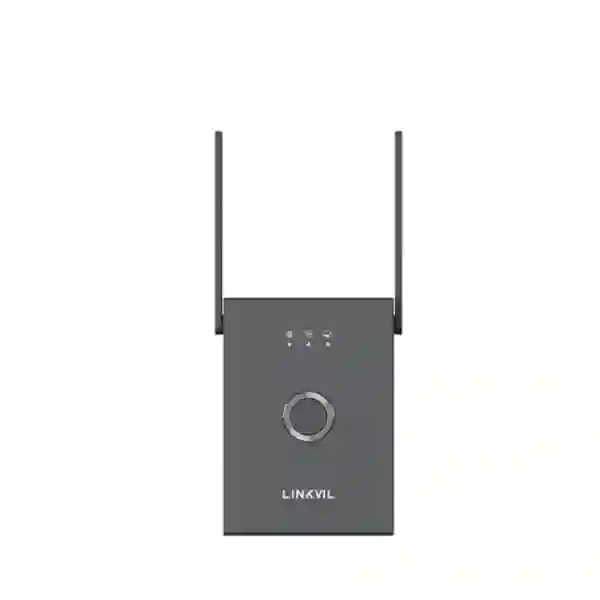
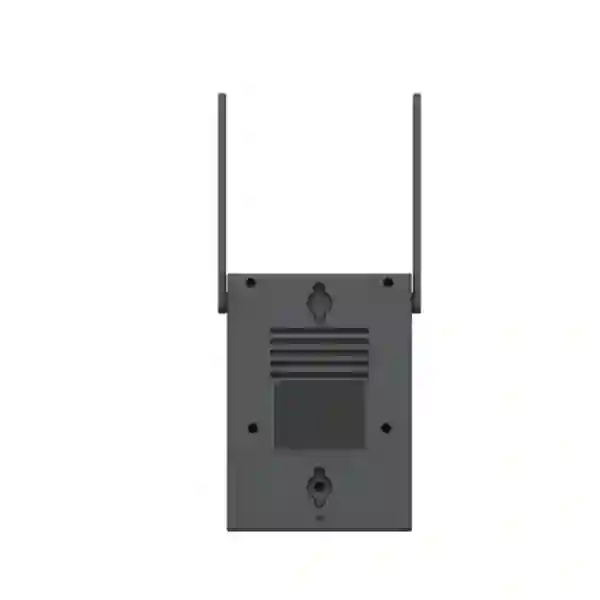

LINKVIL W710D DECT IP Base Station
The LINKVIL W710D is a single-cell DECT IP base station built for small and medium business environments that need mobile voice users without extending desk-phone cabling to every work position. Official Fanvil/LINKVIL documentation states support for up to 10 compatible W610D DECT handsets, up to 20 SIP accounts, up to 10 simultaneous calls and up to 10 internal extensions. Vendor documentation also states wireless coverage of up to 50 metres indoors and 300 metres outdoors, subject to the actual building layout, obstacles, radio environment and installation conditions. For Tanzanian organisations evaluating wireless VoIP for offices, shops, clinics, warehouses, hospitality areas, workshops and service counters, the W710D can provide a practical bridge between a SIP-based telephone platform and cordless users who need to move while remaining reachable.
What the LINKVIL W710D solves
Conventional desk phones work well for people who remain at a fixed workstation, but many business roles are naturally mobile. Warehouse supervisors move between aisles, retail staff move between a counter and stock areas, clinic personnel move between rooms, hotel teams circulate through service zones, and office support staff frequently leave their desks. A DECT IP system addresses that gap by keeping the voice endpoint cordless while using the business IP network and SIP platform behind the scenes. The W710D is intended for that type of compact single-cell deployment rather than a large multi-cell roaming design.
The base station connects to the LAN and acts as the DECT radio point for compatible handsets. Fanvil documentation identifies the W610D as the paired handset family for the W710D. The system can be configured with SIP accounts for outside calling and also supports internal LAN communication scenarios described by the manufacturer. For a business buyer, the key design questions are therefore not only how many handsets are required, but also how many concurrent calls are expected, where users need to walk, which PBX or hosted SIP service will be used, whether the Ethernet switch provides suitable PoE, how voice traffic will be segmented, and whether the proposed mounting point gives adequate coverage.
Cordless users can move through the covered area while maintaining business voice access through compatible DECT handsets.
Up to 20 SIP accounts and 10 simultaneous calls provide useful capacity for compact teams with multiple numbers or extensions.
The platform supports endpoint configuration, firmware management, phonebook functions and call-record administration.
Verified LINKVIL W710D features and technical specifications
| Area | Verified specification | Practical buying relevance |
|---|---|---|
| Handsets | Up to 10 compatible handsets | Suitable for compact teams; confirm handset count before ordering. |
| Calls | Up to 10 simultaneous calls | Compare expected peak call concurrency with this platform limit. |
| SIP accounts | Up to 20 SIP accounts | Allows multiple SIP identities depending on PBX and provider design. |
| Internal extensions | Up to 10 | Useful when structuring cordless users as internal business extensions. |
| Coverage | Up to 50 m indoors / 300 m outdoors | Real coverage depends on walls, metal, shelving, interference and mounting. |
| Ethernet | 2 × 10/100 Mbps Ethernet, bridged network/PC arrangement | Plan switch port, VLAN and cabling before installation. |
| Power | DC 5V/1A or PoE | PoE can simplify mounting where the selected switch and cabling support it. |
| IP/networking | IPv4/IPv6, DHCP/static IP, VLAN, LLDP, 802.1X | Supports structured enterprise LAN deployment and segmentation. |
| Security/transport | TLS, SRTP, HTTPS supported | Use secure transport where the PBX/SIP provider and policy support it. |
| Directories | XML/LDAP remote phonebook; local phonebook capability | Useful for organisations that want consistent shared contact access. |
The specification table above reflects manufacturer-published capabilities. Coverage figures are maximum stated values rather than a site guarantee. Dense concrete, reinforced walls, metal racks, machinery, vehicle bays, lifts, electrical noise and poor mounting position can reduce practical radio reach. A site that appears small by floor area can therefore still require careful placement or a different DECT architecture.
Compatibility, PBX integration and network planning
The W710D should be treated as one part of the business voice solution rather than an isolated appliance. A complete deployment normally includes the compatible cordless handsets, a SIP PBX or hosted voice service, LAN switching, a voice VLAN where appropriate, internet access for external SIP services, DNS and time services, firewall rules, and an agreed numbering and call-routing plan. Before procurement, confirm that the intended PBX or SIP platform supports the required registration model and codecs and that any required provider credentials are available.
Network quality matters because DECT solves the radio connection between handset and base station, while the base station still relies on Ethernet and IP transport for the rest of the call path. Packet loss, unstable WAN links, incorrect QoS, poor switch configuration or NAT/SIP handling can affect call quality even when DECT signal strength is excellent. FourTeck’s Tanzania business technology overview explains how IP telephony, switching, firewalls and supporting infrastructure should be planned together, while the FourTeck Tanzania services page provides context for design, installation, configuration and support activities.
For teams upgrading from analogue cordless phones, a key difference is that the W710D is part of an IP/SIP environment. Extension numbering, SIP credentials, outbound routing and inbound destinations are generally governed by the PBX or hosted service. Buyers should document which users need cordless mobility, whether any shared lines or ring groups are required, how missed calls and voicemail should behave, and whether reception or call-queue functions remain on separate desk phones. This avoids purchasing cordless units for roles that would be better served by a feature-rich fixed endpoint.
Where the W710D fits best
Warehouses and stock areas
Supervisors can carry a cordless handset instead of returning to a desk for every call. Radio testing is important around racking, loading areas and metal structures.
Retail and showrooms
Staff can remain reachable while assisting customers away from the counter, with call routing coordinated through the business PBX.
Clinics and service facilities
Cordless extensions can support staff movement between rooms where fixed phones are inconvenient, subject to the organisation’s communication and privacy policies.
Hospitality operations
Back-office, maintenance and service teams can use mobile extensions within a compact property where a single-cell coverage model is appropriate.
Buying checklist before requesting a quote
Prepare the following information so the base station, handsets and voice environment can be assessed together: the number of cordless users, expected peak simultaneous calls, PBX or hosted SIP platform, required telephone numbers or extensions, floor layout, indoor and outdoor coverage areas, approximate wall and partition construction, switch model, PoE availability, voice VLAN requirements, internet connection type, firewall model, and whether shared contacts through LDAP or XML are required. If the site has multiple floors, detached buildings or very long corridors, note that clearly because a single-cell system may not be the correct architecture.
Businesses comparing the W710D with desk phones can browse the FourTeck Tanzania technology shop for broader endpoint and infrastructure options. For project enquiries, the verified FourTeck Tanzania contact page is the correct route for a requirements discussion and quotation request.
LINKVIL W710D DECT IP Base Station Tanzania
For organisations in Tanzania, the LINKVIL W710D is relevant when staff mobility matters more than a fixed handset at every desk and the required coverage can be served by a single DECT cell. A typical Tanzanian deployment may involve an office with reception and roaming support staff, a retail branch where supervisors move between front-of-house and storage, a clinic with several treatment rooms, a workshop where technicians are rarely seated, or a warehouse where voice communication must follow the user. In these environments, selecting the W710D should begin with workflow: identify who actually needs a cordless extension and how far that person moves during a normal shift.
The published capacity of up to 10 compatible handsets and 10 concurrent calls gives buyers a clear sizing boundary. If a Tanzanian site expects more than ten cordless users, needs overlapping cells, or requires seamless movement between several base stations, the project should be reviewed as a larger DECT design rather than assuming additional W710D units will behave as a multi-cell system. The W710D is documented as a single-cell base. That distinction is important for hotels, large warehouses, campuses and multi-floor buildings where users could leave one radio zone and enter another.
Infrastructure planning is equally important. The base station connects to Ethernet and supports PoE or DC input, so the installation point should have reliable structured cabling and suitable power. Where voice VLANs are used, switch tagging, DHCP options, QoS and firewall policies should be checked. If the SIP service is hosted outside the site, internet stability becomes part of the voice solution. For branch offices using an on-premises IP PBX, the LAN path may carry most internal calls locally while external calls depend on a SIP trunk or gateway.
FourTeck can help Tanzanian buyers define handset count, call concurrency, PBX compatibility, switch requirements, coverage expectations and configuration scope before equipment is selected. That approach is especially useful for procurement teams that want a complete bill of materials instead of ordering only the base station and discovering later that compatible handsets, PoE capacity, SIP credentials or network changes are also required. Buyers can also reference FourTeck’s wider regional resources at FourTeck Africa when planning multi-country technology standards.
LINKVIL W710D DECT IP Base Station Dar es Salaam
Dar es Salaam businesses often combine offices, retail spaces, logistics operations, hospitality venues and service facilities within busy commercial environments. For a compact site where key staff need to remain reachable while moving, the W710D can provide cordless SIP extensions without placing a desk phone at every working point. The strongest use cases are locations where the walking area fits within realistic single-cell coverage and where the wired network already reaches a sensible central mounting position.
A Dar es Salaam deployment should be planned around the physical site rather than only the manufacturer’s maximum range. Reinforced concrete, metal shelving, machinery, lifts, electrical rooms and dense partitions can shorten DECT reach. In a warehouse, the best base location may be elevated and central rather than inside a communications rack. In a shop or clinic, it may need to be positioned away from metal cabinets and other RF obstacles. A quick floor-plan review followed by practical coverage testing is more reliable than assuming a straight-line radius.
Procurement teams should also decide whether all ten possible handsets are needed immediately or whether the system will start smaller and expand. The PBX plan should define extension numbers, caller ID, ring groups, outbound permissions, voicemail and transfer behaviour. If several departments share the same incoming number, the call-flow design should explain which cordless users ring first and what happens when they are busy or outside the covered area. This is especially important in customer-facing businesses where missed calls directly affect service.
When the W710D is connected to a managed switch, voice traffic can be placed in an appropriate VLAN and prioritised according to the broader network design. Businesses should avoid treating QoS as a cure for poor internet; a stable WAN, correctly configured firewall and appropriate SIP provider remain necessary. For companies with branches in East Africa, the same deployment checklist can also be standardised through the regional resources available from FourTeck Uganda and FourTeck Kenya, while keeping each site’s PBX, telecom and regulatory requirements separate.
LINKVIL W710D DECT IP Base Station Mwanza
In Mwanza, the W710D can suit businesses that need a small cordless voice system for users who move between offices, counters, stock rooms, service bays or adjacent operational areas. The main buying advantage is not simply removing a telephone cable; it is giving selected staff a business extension that follows them through the working area. A sales counter can reach a store supervisor, a service desk can contact a technician, and an office can route calls to an employee who is regularly away from a fixed desk.
Sizing should start with concurrent activity. Ten registered handsets do not mean every organisation needs ten simultaneous outside calls, but the system is capable of up to ten concurrent calls according to the vendor. A buyer should estimate busy-hour usage and compare it with SIP trunk capacity as well as the base station limit. If the PBX has only a small external trunk capacity, adding more cordless users will not create more external channels. Conversely, if the PBX and SIP service can handle more than ten simultaneous calls, the W710D still remains limited by its own documented capacity.
Power and resilience should be considered at the same time. When the base station is powered from a PoE switch that is connected to a UPS, the cordless voice platform may remain available during short power interruptions, provided the PBX, router, firewall and internet equipment are also protected. A battery-backed handset alone cannot keep calls working if the supporting network equipment loses power. For critical operations, the entire voice path should therefore be reviewed rather than focusing only on the endpoint.
Mwanza organisations requesting a quotation should provide the site type, number of handsets, floor plan, existing PBX brand or hosted provider, available Ethernet ports, PoE switch information and any directory integration requirements. That information helps determine whether the W710D is a clean fit or whether the site needs a different cordless architecture. The goal is a dependable operational design, not simply matching a model number to a purchase request.
LINKVIL W710D DECT IP Base Station Arusha
Arusha has a broad mix of offices, tourism businesses, hospitality operations, NGOs, education facilities and commercial services that can benefit from cordless business telephony when staff move throughout a compact property. The W710D is particularly relevant for back-office and operational roles that do not need a full desk-phone interface but do need dependable access to an internal extension and external SIP calling. Front-desk users may still prefer a fixed phone with more programmable keys, while mobile staff carry W610D handsets registered to the W710D.
Hospitality environments require careful interpretation of the coverage figure. Guest-room corridors, stairwells, concrete walls, service areas and multiple floors can create radio boundaries that are not obvious from a simple floor plan. If users are expected to move across an entire hotel or lodge complex, a single-cell base may be insufficient even when the theoretical outdoor distance appears large. The W710D is better evaluated for a defined zone such as reception and back office, a restaurant/service area, a small administrative building or another compact operational section.
For offices, the directory capabilities can be valuable. The platform supports XML and LDAP remote phonebook functions, while each terminal can maintain local contacts according to the manufacturer’s documentation. Organisations with central directories should confirm the exact LDAP fields, authentication requirements and directory format used by their environment before assuming integration will be automatic. A short technical review can prevent time being lost after installation because directory schemas and access policies vary.
Arusha buyers should also define ownership of administration. Someone needs responsibility for SIP account changes, firmware upgrades, handset replacement, password control, configuration backups and call-routing updates. Even a small system becomes easier to support when extension names, MAC addresses, switch ports and SIP assignments are documented from the start. FourTeck can help turn those operational requirements into a quotation scope that includes the base, compatible handsets and the relevant network or PBX services rather than treating the W710D as a standalone consumer cordless phone.
LINKVIL W710D DECT IP Base Station Dodoma
For businesses and institutions in Dodoma, cordless VoIP can be useful where staff need to move between reception areas, offices, records rooms, stores and service points while keeping the same extension identity. The W710D offers a compact single-cell approach for up to ten compatible handsets, which makes it easier to define a bounded deployment with a known user count. This is useful for an office floor, branch location or departmental area where mobility is required but enterprise-wide roaming is not.
A procurement specification should distinguish between user count and line count. The W710D supports up to twenty SIP accounts, but the required number of SIP registrations depends on the PBX design. Some organisations assign one account per user; others may use different account structures for lines, departments or hosted services. The base station supports up to ten simultaneous calls, so planners should consider peak voice demand and not simply purchase based on the headline number of SIP accounts.
Network segmentation is another practical concern. Many organisations already separate users, servers, guest Wi-Fi and surveillance devices into VLANs. Voice can be given its own VLAN where appropriate, with DHCP, DNS, NTP, routing and firewall rules configured accordingly. The W710D supports VLAN-related network functionality and standard IP methods such as static addressing or DHCP. Exact settings should match the organisation’s network standard instead of being chosen independently at the telephone layer.
For Dodoma projects, the quotation conversation should include whether the system is new or replacing an existing cordless platform. A replacement may need number portability or SIP trunk changes, while a new installation may require a PBX, switch ports, PoE, structured cabling and user training. Clear handover documentation should record administrator access, extension mapping and basic recovery procedures. This turns a small DECT installation into a manageable business system that can be supported consistently as users or call flows change.
LINKVIL W710D DECT IP Base Station UAE
UAE buyers evaluating the LINKVIL W710D commonly need a cordless SIP extension solution for offices, shops, warehouses, clinics, workshops and hospitality support areas. The purchasing logic is similar to Tanzania: define the mobile users, coverage zone, PBX platform and call concurrency first. The base station’s documented support for up to ten handsets and ten simultaneous calls makes it straightforward to evaluate for a compact department or branch, while larger campuses and multi-floor sites should be assessed for a different DECT topology.
In modern UAE office environments, voice is frequently part of a converged IP network. That means the DECT base may share switching infrastructure with computers, access points and other devices while remaining logically separated through VLAN policy. The W710D supports PoE, simplifying installation where the switch can supply power to the chosen mounting point. Where PoE is not available, the DC input can be used, but power resilience and cable placement should still be planned professionally.
Security should be aligned with the PBX and enterprise policy. The manufacturer lists SRTP, TLS and HTTPS among supported capabilities. Whether those functions can be used end to end depends on the SIP platform, certificates, provider configuration and local network policy. Buyers should avoid assuming that merely enabling one setting automatically secures every part of the call path. Instead, registration transport, media encryption, web administration, password policy and firewall exposure should be reviewed together.
Organisations procuring across Tanzania and the UAE can use FourTeck UAE as a regional technology reference while maintaining separate quotations, telecom services and site requirements for each country. This is useful for groups that want common endpoint standards but still need each branch to be engineered around its own LAN, SIP carrier, PBX instance, building layout and operational workflow.
LINKVIL W710D DECT IP Base Station Uganda
In Uganda, the W710D can serve small and medium organisations that want cordless IP telephony without building a large multi-cell DECT network. The model is suited to a defined area where up to ten users carry compatible handsets and where the base station can connect to a reliable Ethernet network. Common candidate environments include administrative offices, retail operations, healthcare support spaces, warehouses, workshops and hospitality back-office areas.
A useful first step is to map where calls originate and where the user must be able to answer them. If the user walks only between adjacent rooms, one central base may offer ample practical coverage. If the user moves between floors, across a courtyard or into a separate building, a site test becomes more important. The outdoor figure published by the vendor is based on open conditions; it should not be interpreted as guaranteed building-to-building coverage through concrete, metal or other obstructions.
Ugandan buyers should also consider the support chain around the base station. SIP credentials need to be documented, firmware should be maintained, configuration backups should be protected and user additions should follow a repeatable process. If the site uses a hosted PBX, internet availability may become a critical dependency. If the PBX is local, extension-to-extension calling can remain on the LAN, but external calling still depends on the trunk or gateway design.
For organisations standardising deployments between Uganda and Tanzania, FourTeck Uganda provides regional context while the Tanzania project can be handled through the verified Tanzania contact channel. A shared technical standard can define handset model, VLAN, extension naming and documentation, while each site retains its own coverage survey, PBX settings and carrier details.
LINKVIL W710D DECT IP Base Station Kampala
Kampala offices and commercial facilities can use the W710D where user mobility is concentrated within a branch, floor or operational zone. A retail manager may need to answer calls while moving between the sales floor and stock area. A clinic administrator may move between reception and records. A service centre supervisor may spend much of the day away from a desk. These are stronger use cases for DECT than giving a cordless handset to every employee regardless of role.
The network design should make the voice system easy to troubleshoot. Assigning a known switch port, documenting the IP address method, separating voice where appropriate and monitoring uplink quality can significantly simplify support. Because the W710D has Ethernet connectivity and standard IP functions, most faults can be approached systematically: first confirm power and link, then IP address and gateway reachability, then SIP registration, then media path and finally DECT handset behaviour.
For busy customer-facing teams, call concurrency should be reviewed alongside ring-group design. Ten handsets do not need ten external numbers, and a single incoming number can often ring multiple extensions depending on the PBX. Conversely, a team that frequently handles many independent outbound and inbound calls should verify both the W710D concurrent-call limit and the SIP trunk channel count. The lower of those limits can become the operational bottleneck.
Kampala procurement should therefore combine product choice with call-flow planning. A complete request should state how many users are mobile, whether there are existing fixed phones, the PBX brand, SIP provider, required call groups, physical coverage area and whether PoE is available. That information supports a more accurate bill of materials and reduces the risk of discovering after delivery that the base was expected to cover a larger site or a different handset family than the manufacturer specifies.
LINKVIL W710D DECT IP Base Station Arua
Arua businesses that need straightforward cordless SIP telephony can evaluate the W710D for branch offices, shops, clinics, stores and small operational facilities. The product is most appropriate when the user population and radio area are well bounded. With capacity for up to ten handsets, it can support a small mobile team without the complexity of a larger roaming infrastructure, while still integrating into a modern IP PBX environment.
In sites where network equipment is limited, buyers should confirm that at least one suitable Ethernet path is available from the communications area to the preferred base location. Putting the W710D directly beside a router or switch may be convenient, but it is not always the best radio location. A central wall position can provide better coverage, and PoE can make that placement easier because separate mains power may not be required at the exact mounting point.
The system’s management features are also relevant for remote branches. Manufacturer documentation describes web management, firmware upgrade, configuration management and terminal administration capabilities. These functions can help an IT team maintain the system, but remote management should still be secured. Administrative interfaces should not be exposed casually to the public internet, and credentials should be controlled as part of the organisation’s broader security practice.
For an Arua quotation, include handset quantity, expected extension numbers, PBX or hosted service, internet type, switch and PoE information, working area dimensions and any unusual walls or structures. If the site requires calls across a compound or between separate buildings, that should be highlighted immediately. The W710D may be excellent for one compact zone but should not be stretched beyond the single-cell use case for which it is intended.
LINKVIL W710D DECT IP Base Station Mbarara
Mbarara organisations can use the W710D to give selected employees a mobile extension while keeping the call-routing benefits of SIP telephony. This can be valuable in medical practices, retail stores, administrative offices, distribution operations and service businesses where staff frequently move away from a fixed work point. The cordless endpoint remains part of the business telephone system, so callers can reach it through the same extension and routing logic used by other users.
A well-designed deployment should establish a clear radio boundary. If staff expect to walk into outdoor yards, rear stores or neighbouring structures, test those areas before treating them as guaranteed coverage. Manufacturer figures are useful for comparison, but real buildings influence propagation. Metal doors, reinforced walls and dense shelving can create dead zones, while an elevated open position can improve reach. Small adjustments in mounting location can make a meaningful difference.
Voice quality depends on both radio and IP conditions. A strong DECT signal does not correct packet loss on the WAN or overloaded internet connectivity. If the PBX is hosted, monitor latency, packet loss and stability during busy periods. If the PBX is on premises, ensure the LAN is correctly configured and that the firewall does not interfere with SIP registration or RTP media. Where secure SIP transport is available, the W710D’s support for TLS and SRTP can be incorporated into the design.
Mbarara procurement teams should also plan spare strategy and user onboarding. A spare compatible handset may be useful for operations that cannot easily wait for replacement, while configuration documentation reduces setup time when staff change. The quote should clarify what is included: base station, number of handsets, power method, PBX configuration, network work, testing and user handover. Clear scope helps compare proposals fairly and prevents accessory or service assumptions from being hidden inside a single product line.
LINKVIL W710D DECT IP Base Station Gulu
For Gulu offices and commercial sites, the W710D offers a focused way to add cordless extensions to an IP telephone environment. The product is designed for small and medium business use, which makes it appropriate for a branch or department where the number of mobile users can remain within the platform limit. Instead of deploying fixed phones in every back room or operational corner, selected workers can carry a compatible W610D handset through the covered area.
The most important design decision is whether a single cell matches the building. An open office may be straightforward, but thick walls, separate wings and multiple floors complicate coverage. If a user must maintain a call while moving between distant zones, define that requirement before procurement. The base station should not be purchased solely because the outdoor range number looks large; outdoor open-air performance and indoor building penetration are different conditions.
Administrative planning can improve long-term reliability. Create a table that maps each handset user to extension, SIP account, handset identity and department. Record the base IP configuration and switch port. Keep PBX credentials protected and document the intended firmware update process. These small operational disciplines are valuable when a new administrator takes over or when troubleshooting is required months after installation.
A Gulu buyer should request a solution-level quotation if the PBX or LAN also needs work. The W710D can only deliver the expected experience when the underlying network is ready for voice. A managed PoE switch, stable uplink, correct VLANs, suitable firewall rules and reliable SIP service can matter as much as the cordless hardware itself. Defining these dependencies in advance leads to a more predictable deployment and a more meaningful total project cost.
LINKVIL W710D DECT IP Base Station Kenya
Kenyan businesses looking for the LINKVIL W710D are typically evaluating cordless SIP for offices, stores, warehouses, hospitality operations or service facilities. The model’s headline capacities—up to ten handsets, twenty SIP accounts and ten simultaneous calls—make it easy to compare against a defined department or branch. The decision should still be based on workflow and coverage rather than raw capacity alone.
For organisations with operations in both Kenya and Tanzania, the W710D can be considered as part of an endpoint standard where similar branch sizes and PBX architectures exist. However, each country and site may use different SIP providers, numbering plans, network equipment and support arrangements. Standardising the hardware can simplify training and spares, but configuration should remain site-specific. A shared deployment template can define naming, VLAN, administrator practices and handset assignment without forcing identical telecom settings.
Kenyan buyers should also check whether the physical environment truly suits single-cell DECT. Large logistics sites, resorts and multi-building compounds may require broader radio planning. Small clinics, branch offices and retail premises are usually easier candidates. Placing the base in a central, elevated position connected by PoE can often produce a cleaner installation than mounting it inside a metal cabinet or at one edge of the site.
FourTeck’s regional resource at FourTeck Kenya can support country-specific enquiries, while Tanzania-based projects should use the Tanzania contact page. Multi-country procurement teams should request separate confirmation of availability, pricing, telecom compatibility and deployment scope for each location rather than assuming commercial terms transfer unchanged across markets.
LINKVIL W710D DECT IP Base Station Kuwait
Kuwait organisations can consider the W710D for compact sites that need mobile extensions integrated with a SIP PBX. Examples include retail branches, administrative offices, workshops, clinics and hospitality support areas where staff move within one defined radio zone. The model’s single-cell architecture should be kept in mind from the beginning, particularly in buildings with reinforced walls, multiple floors or large back-of-house areas.
Air-conditioned indoor environments can still present RF challenges when there are dense partitions, metal fixtures or equipment rooms. Positioning is therefore a design choice rather than an afterthought. A central Ethernet outlet with PoE may allow the base station to be placed for better radio coverage while keeping the installation clean. If the switch is not PoE-capable, the available DC power option can be used, but the electrical outlet and backup strategy should be included in the plan.
Kuwait buyers with hosted PBX services should verify SIP registration requirements and security settings with the provider. TLS, SRTP and HTTPS support on the W710D can be valuable, but end-to-end use depends on the rest of the platform. Directory integration should likewise be validated where LDAP or XML contact sources are required. A successful procurement specification names the PBX, provider, expected codecs, number of users and desired phonebook behaviour.
For country-specific technology enquiries, FourTeck Kuwait provides a regional FourTeck destination. Organisations coordinating Kuwait and Tanzania branches can standardise documentation and endpoint policy while preserving local SIP, network and commercial requirements. This approach is especially useful for IT teams responsible for several offices and trying to reduce variation without overlooking site realities.
LINKVIL W710D DECT IP Base Station Ghana
Ghanaian businesses can evaluate the LINKVIL W710D when they need a small cordless extension platform that connects to SIP telephony. The product is best matched to organisations that can identify a defined coverage zone and a mobile user group of up to ten compatible handsets. Typical environments include retail branches, clinics, offices, stock areas and service facilities where staff cannot remain close to a desk phone throughout the working day.
The project should be specified around both radio and IP requirements. Radio planning covers where users walk and what materials stand between handset and base. IP planning covers switch connectivity, addressing, VLANs, QoS, PBX reachability, SIP registration and external call routing. Both layers must work properly. A deployment can have excellent radio signal but poor calls because of WAN packet loss, or excellent internet but dropped DECT coverage because the base is mounted in a poor location.
For organisations using central contact directories, the XML/LDAP phonebook support is worth including in the technical checklist. Buyers should clarify whether they need a shared corporate directory, individual local contacts or both. Security teams may also request TLS/SRTP where supported end to end, plus HTTPS for device administration. These requirements should be agreed before rollout so that the PBX and directory administrators can prepare the necessary services.
Regional information is available through FourTeck Ghana. For groups procuring the same model in Ghana and Tanzania, use the common product specification as a starting point but request country-specific quotations and deployment validation. That preserves consistency without making unsupported assumptions about stock, delivery, telecom providers or support coverage in either market.
LINKVIL W710D DECT IP Base Station Nigeria
Nigeria has many branch, retail, service, logistics and office environments where cordless SIP extensions can improve staff reachability. The LINKVIL W710D is suited to compact single-cell deployments that remain within its documented limits. Up to ten compatible handsets can be registered, up to ten calls can take place simultaneously, and up to twenty SIP accounts can be configured. Those figures make the model easy to assess for a small team, but they should not be stretched into an enterprise multi-cell requirement.
In larger Nigerian facilities, site layout can be the deciding factor. A warehouse with tall metal racks can behave very differently from an open office of the same area. A clinic with concrete treatment rooms differs from a retail floor with lightweight partitions. The practical design should identify the most distant points where a handset must remain usable and then confirm whether one base location can serve them. Where continuous coverage across several floors or buildings is mandatory, another architecture should be evaluated.
Network resilience may also be a priority. The W710D supports PoE, so power can be centralised through the Ethernet switch where suitable. If the switch, firewall, PBX and internet equipment are protected by UPS, the voice platform may tolerate short interruptions more effectively. However, power backup should be sized and tested as a complete system. It is not enough to protect only the base station if the router or SIP gateway loses power.
Businesses coordinating West African deployments can use FourTeck Nigeria for regional enquiries. A multi-country procurement request should specify the exact quantity, destination, handset count, PBX environment and service scope for each site. This avoids assuming that a configuration or commercial arrangement from one country automatically applies to another.
LINKVIL W710D DECT IP Base Station Seychelles
Seychelles organisations in hospitality, professional services, retail and administration may consider the W710D when a compact property needs cordless SIP extensions. The model can be useful for teams that move between reception, offices, stores or service areas but do not require a large roaming DECT network. Its support for up to ten compatible handsets makes it a clearly bounded option for small operational groups.
Hospitality use should be assessed carefully because resorts and guest properties can spread across several buildings or levels. The vendor’s outdoor range figure does not automatically translate into reliable coverage through walls, landscaped areas and separate structures. A base station installed centrally in one building may work well for that zone while failing to serve distant service blocks. The requirement should therefore define whether staff need mobility within one building, around an outdoor area, or across a wider property.
For remote or island operations, maintainability can be as important as the purchase price. Configuration backups, documented SIP credentials, spare handset strategy and clear escalation procedures can reduce downtime. The W710D supports centralized management functions such as firmware and configuration administration, and these should be incorporated into the operating process. Secure remote support can be planned where the organisation permits it, without exposing the management interface directly to the internet.
Seychelles buyers should send a detailed request covering user count, working areas, building layout, network switching, PBX or SIP provider, internet connectivity and desired support scope. Where the project is part of a wider African standardisation programme, FourTeck Africa can provide regional context while the final design remains specific to the Seychelles site.
Installation and configuration considerations
Installation begins with selecting a radio-friendly position, not merely the nearest available switch. The official quick-installation guidance supports wall mounting, and practical deployments should keep the base away from large metal surfaces and avoid hiding it in a closed rack where radio propagation can be compromised. Run Ethernet to the chosen point, verify PoE if that power method will be used, then confirm network link and IP addressing before configuring SIP services.
After network connectivity is established, configure the PBX or SIP accounts, add compatible terminals, assign extensions and verify inbound, outbound and internal calling. Test transfer, hold, caller ID, voicemail and any ring groups that matter to the customer. Walk the complete required coverage path during an active call and listen for audio problems or disconnection. Coverage validation should include the places where staff actually work, not only a corridor near the base station.
Finally, document the base IP address, administrator method, SIP account mapping, handset assignments, switch port, VLAN and firmware version. Store configuration backups securely and establish who can approve future changes. Good documentation is inexpensive but becomes extremely valuable during troubleshooting, staff turnover or expansion.
Related FourTeck Tanzania solutions
A DECT base station depends on a broader voice and network foundation. FourTeck Tanzania positions IP PBX, IP phones, network switching, firewalling, Wi-Fi and structured infrastructure as connected business technologies rather than isolated devices. Buyers considering the W710D can review the FourTeck Tanzania integrated technology portfolio to understand how voice fits into the wider LAN and security environment. The services overview is relevant when installation, configuration, testing or documentation is required, while the technology shop can be used to explore related endpoint and infrastructure categories.
If the requirement includes a broader PBX replacement, describe current extensions, telephone numbers, trunks, call queues, IVR, voicemail and any recording requirements. If the project also needs switching, state the number of PoE ports, uplink speeds and VLAN requirements. If security changes are involved, include the firewall model and any site-to-site or remote-access requirements. Connecting these dependencies early makes the final solution easier to commission and support.
Frequently asked questions about the LINKVIL W710D
How many handsets can the W710D support?
Fanvil/LINKVIL documentation states support for up to 10 compatible DECT handsets. The W610D is the handset specifically identified for pairing with the W710D. Confirm the exact handset model and firmware compatibility when ordering.
How many simultaneous calls are supported?
The W710D supports up to 10 simultaneous calls according to the manufacturer. The real number of external calls also depends on SIP trunk or provider channel capacity and PBX configuration.
What is the stated DECT range?
The manufacturer states up to 50 metres indoors and up to 300 metres outdoors. These are maximum stated figures, not a guaranteed site result. Walls, metal, shelving, floors, interference and mounting position can reduce practical coverage.
Can the W710D be powered by PoE?
Yes. Manufacturer specifications list PoE as well as a 5V/1A DC input. Confirm that the selected Ethernet switch supports the required PoE standard and that the cabling path is suitable.
Does the W710D support secure SIP and media?
The platform lists TLS and SRTP support, along with HTTPS management. Secure end-to-end operation still depends on matching capabilities and configuration on the PBX or SIP service.
Is the W710D a multi-cell DECT system?
The W710D is presented by the manufacturer as a single-cell DECT base station. If users need seamless roaming across several cells, floors or buildings, discuss that requirement before purchase so a suitable multi-cell architecture can be evaluated.
Can it use LDAP or XML directories?
Yes. Official specifications include XML and LDAP remote phonebook support. Exact integration depends on the customer directory service, authentication and field mapping.
What information should I send for a Tanzania quotation?
Send the required quantity of bases and handsets, number of users, expected simultaneous calls, PBX or SIP provider, site layout, required coverage areas, PoE availability, switch model and whether configuration or installation support is required. This allows the quotation to reflect the complete deployment rather than only the base station.
Decision recap
Choose the LINKVIL W710D when you need a compact single-cell DECT IP base for up to ten compatible cordless users, with up to twenty SIP accounts and up to ten concurrent calls. It is strongest for small and medium business spaces where mobility is required inside one practical radio zone and where the LAN, PBX and SIP service are already available or can be designed as part of the project.
Do not select it solely on the maximum coverage figure. Verify the site layout, handset compatibility, PBX requirements, call concurrency, PoE, voice VLAN and support scope. If your users must roam between large buildings or across multiple floors with continuous call handover, state that requirement up front so the DECT architecture can be reassessed.
Plan your LINKVIL W710D deployment with FourTeck
A useful quotation should cover more than the model number. FourTeck can review how many cordless users you have, where they move, what PBX or SIP platform is in use, whether the switch provides PoE, how voice traffic is segmented and which call flows need to be tested. The result can be scoped as hardware supply only or as a wider deployment that includes network and telephony work where required.
Use the FourTeck Tanzania contact page and include your city, quantity, handset requirement, PBX platform and coverage description. This provides the information needed to prepare a more relevant response without making assumptions about stock, price, delivery time or site conditions.



Reviews
There are no reviews yet.