
UBIQUITI • CARRIER-CLASS POINT-TO-POINT
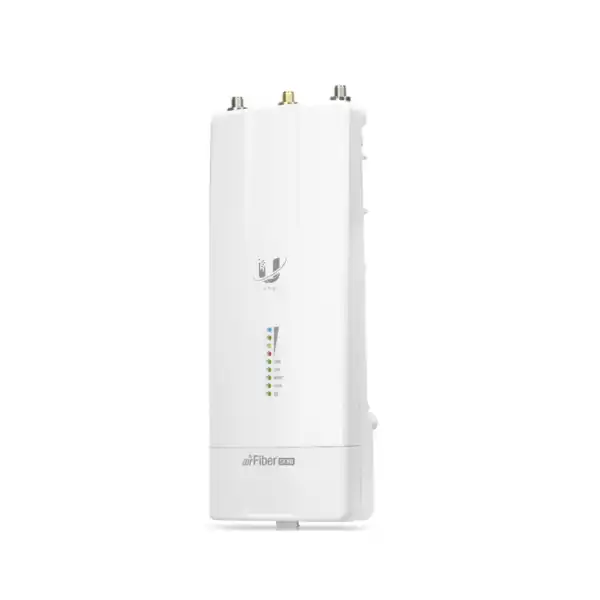
Ubiquiti airFiber 5XHD AF-5XHD in Tanzania
Build a dedicated 5 GHz backhaul connection between fixed network sites with LTU technology, flexible channel widths and manufacturer-rated 1+ Gbps capability. Request a site-specific equipment quotation and RF assessment before deployment.
Technical specifications at a glance
| Product | Ubiquiti airFiber 5XHD (AF-5XHD) |
|---|---|
| Radio role | Outdoor point-to-point backhaul |
| Technology | LTU |
| Maximum manufacturer-listed throughput | 1+ Gbps; real results vary |
| Maximum manufacturer-listed range | 100+ km; site-dependent |
| Channel bandwidths | 10 / 20 / 30 / 40 / 50 / 60 / 80 / 100 MHz |
| Network ports | 2 × Gigabit RJ45 |
| Power supply | 24 V, 1 A Gigabit passive PoE adapter listed as included |
| Supported input voltage | 18–54 V DC |
| Maximum power consumption | 12 W |
| Security | AES-256 |
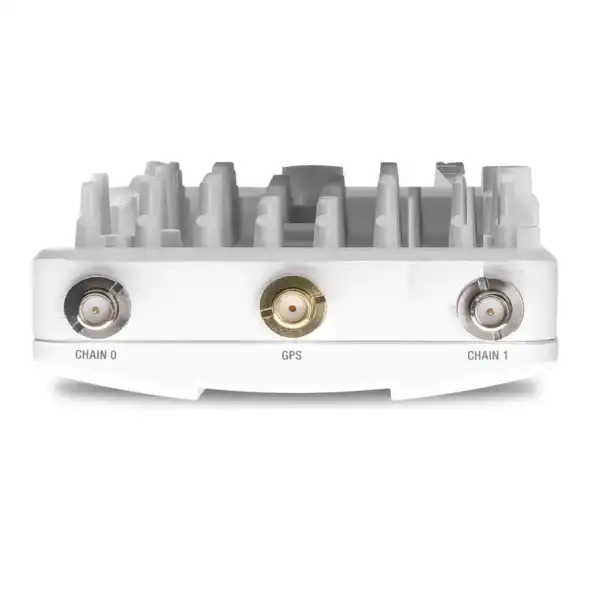
| GPS antenna | External magnetic-base antenna |
| Outdoor protection | IP67 after installation of included upgrade kit |
| Operating temperature | −40 to 55 °C |
| Antenna | Compatible external antenna required |
| Regional frequency permission | Verify locally before use |
These are manufacturer product specifications, not guaranteed performance in a particular network or a statement of local frequency authorization.
What the airFiber 5XHD does
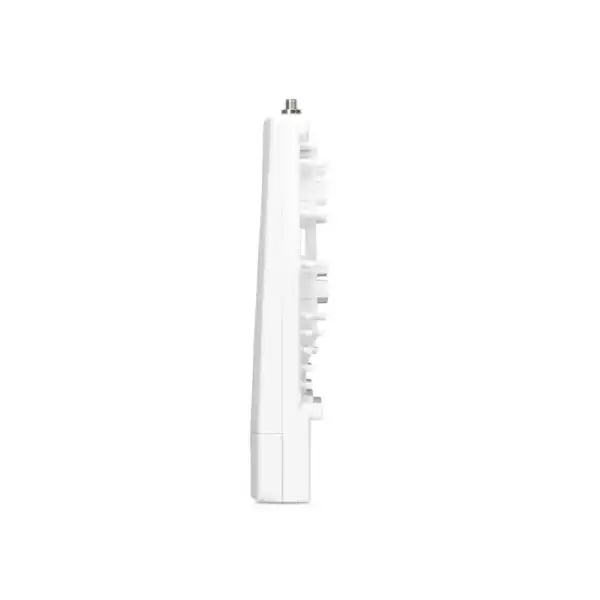
The Ubiquiti airFiber 5XHD (AF-5XHD) is a dedicated outdoor point-to-point radio for carrying network traffic between two fixed locations. It is intended for wireless internet service providers, network integrators and organizations that need to connect buildings, towers or operational sites without relying solely on a physical fibre run. One radio is installed at each end of the link and paired with a suitable directional antenna. A successful deployment also requires a clear path, suitable mounting, a power and Ethernet plan, and careful RF design. The AF-5XHD is not an indoor Wi-Fi access point, a cellular modem or a complete link in a single box. It is the radio element of a professional backhaul system. For a buyer in Tanzania, the sensible starting point is to define the two endpoints, approximate distance, required traffic capacity and available tower or rooftop infrastructure. Those details determine whether this radio is appropriate and what else must be included in the project.
Why LTU matters for a backhaul network
AF-5XHD uses Ubiquiti’s LTU radio architecture rather than ordinary consumer Wi-Fi signalling. The purpose is to deliver predictable, high-capacity fixed wireless transport in a purpose-designed point-to-point configuration. Its digital signal processing, channel configuration options and proprietary air interface are relevant where a network operator must move traffic between aggregation sites. This does not mean it interoperates over the air with every other Ubiquiti 5 GHz radio. Air-interface compatibility must be assessed for the exact peer model and firmware; planning a matched AF-5XHD pair is the straightforward approach. Choose a system based on end-to-end link requirements, not simply an advertised maximum speed. The site noise floor, interference, antenna gain, link distance, local spectrum rules and traffic direction can have greater practical impact than a headline figure. Using a specialist backhaul radio also makes it easier to plan distinct access and backbone layers rather than overloading one device with unrelated roles.
Throughput: how to interpret 1+ Gbps
Ubiquiti specifies maximum throughput of more than 1 Gbps and describes advanced processing capable of high packet rates. Those figures express capability under suitable conditions, not an unconditional bandwidth service level. The realized payload depends on radio signal quality, modulation, channel width, interference, link geometry, settings and traffic mix. Narrower channels may be attractive at a noisy site even if their available capacity is lower. Packet size and directional traffic demand also matter. Plan around sustained traffic at busy hours and growth, leaving engineering headroom rather than assuming the highest figure is continuously available. It is useful to separate the radio’s reported capacity from application throughput, because Ethernet, routing, encryption elsewhere in the network and network contention can affect what users actually experience. Before purchase, ask what measured throughput is required in each direction, what latency is acceptable, how interruptions will be handled and whether backup transport is needed. Proper acceptance testing is a better basis for a service promise than copying a laboratory maximum.
Range and line-of-sight planning
The manufacturer’s specification lists 100+ km as a maximum range capability and explicitly cautions that actual range and throughput depend on environmental conditions. That number should not be read as a promise that any two points 100 kilometres apart will connect reliably. Long paths demand careful analysis of antenna heights, terrain, curvature, clearance of the Fresnel zone, local obstructions and rain or atmospheric effects. A visual view from one rooftop to another is a useful preliminary check, but it does not replace a path profile and field survey. Tree growth, new construction, tower movement and seasonal changes can alter a link after installation. In many projects a shorter, robust link with sensible margin offers better lifetime value than an extremely long path operating near its limits. When preparing a quote, provide proposed endpoint coordinates, heights and photos so the installer can estimate whether the link is feasible. If a complete direct path is unavailable, an intermediate relay or another access method may be more appropriate.
Channels, spectrum and interference
The AF-5XHD supports selectable 10, 20, 30, 40, 50, 60, 80 and 100 MHz channel bandwidths. Wider channels can provide more aggregate capacity when the spectrum is available and sufficiently clean. They also occupy more spectrum and may be more difficult to use in busy RF environments. Selecting a channel therefore involves balancing bandwidth demand, interference, receiver sensitivity, permitted frequencies and regulatory restrictions. Ubiquiti also documents split transmit and receive frequency capabilities with relevant firmware requirements, offering additional flexibility for complex paths. A dedicated spectral-analysis receiver is valuable for observing the RF environment while the link is running, though site measurements and ongoing monitoring remain essential. The manufacturer describes a broad worldwide hardware frequency range, but that is not authorization to operate on every frequency in Tanzania. The installer must establish the permitted national bands, licensing conditions where applicable, effective radiated power limits and DFS requirements before activation. Equipment configuration must match the actual deployment country and approval requirements.
Choosing compatible antennas
The radio requires a compatible external antenna; it is not a complete dish assembly. Ubiquiti documents airFiber X antennas AF-5G23-S45, AF-5G30-S45 and AF-5G34-S45 with respective nominal gains of 23, 30 and 34 dBi. These are designed for the slant-polarized airFiber X arrangement. The manufacturer also documents selected RocketDish antennas, including RD-5G30 and RD-5G34, with the necessary mounting arrangement or the separate AF-5G-OMT-S45 conversion kit where appropriate. Antenna choice should follow the path budget and mounting environment, rather than always selecting the largest dish. Larger dishes may offer valuable gain and narrower beamwidth, but impose different mechanical alignment and wind-loading requirements. Check the entire antenna assembly, brackets, cabling, connector protection and tower loading. A product quote should identify the antenna model for both ends and clarify whether adapters, mounting accessories and weatherproofing materials are included. Never assume that an available 5 GHz antenna is mechanically or electrically suitable merely because the nominal frequency matches.
Point-to-point architecture
A normal deployment uses two matched radios, configured at opposite ends of a fixed path. One is assigned the master role and the other the slave role, with coherent wireless parameters and a shared security configuration. Ethernet traffic enters the radio at one end and is transported over the wireless path to the far end. This makes the system useful for a service provider aggregation link, a connection between office buildings or transport from a remote communications mast. It is not intended to replace a multi-client sector access point. A sound network design addresses addressing, routing, switching, VLAN handling, failure domains and management access around the radio link. If the connection carries business-critical services, consider what happens when the radio or its upstream power fails. A separate diverse route may be appropriate for high-availability environments. Capacity planning should account for all services sharing the backhaul, including monitoring, voice, video, business applications and internet traffic. The radio cannot compensate for underpowered upstream connectivity or congested switching equipment.
Ethernet interfaces and power
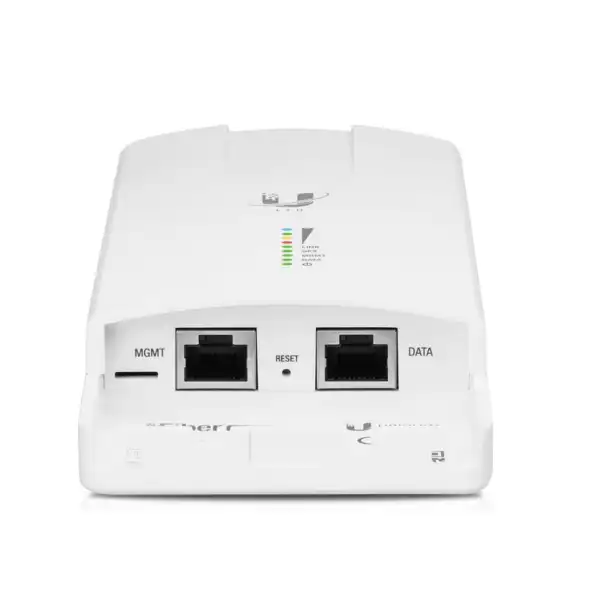
The AF-5XHD has two Gigabit RJ45 Ethernet ports. The manufacturer’s installation documentation distinguishes DATA and MGMT connections and describes the use of the management port for configuration and potentially redundant PoE power. Ubiquiti specifies a 24 V, 1 A Gigabit PoE adapter as included, a supported input voltage range of 18–54 V DC and maximum device consumption of 12 W on its current product specification. These are device specifications, not a recommendation to substitute any convenient PoE supply. Confirm injector type, passive PoE wiring, surge protection and power compatibility against the radio and installation instructions. A tower deployment needs a complete power design including mains reliability, backup supply and appropriately grounded outdoor cabling. The spare Ethernet port should not be assumed to function as a general-purpose two-port switch. Its management and power roles depend on configuration and documentation. Include cable length, outdoor cable rating, connector sealing and grounding in the bill of materials rather than treating them as optional details.
Outdoor reliability and IP67 conditions
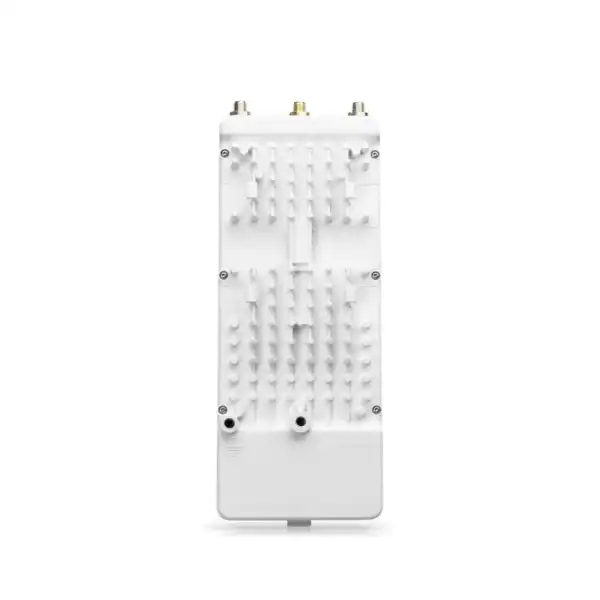
AF-5XHD is built for outdoor installation, with the manufacturer’s current listing describing an operating ambient temperature range of -40 to 55 degrees Celsius. It also lists IP67 weather protection specifically after the included IP67 upgrade kit has been installed. The distinction matters: a radio still needs the specified seal, vent and gasket installation, correct cable entries and good mounting practice to achieve the stated level of protection. Poorly seated covers or improperly routed cables can compromise the enclosure. Tanzania installations may face prolonged sun exposure, heavy seasonal rainfall, dust, wind and power disturbances depending on location; the precise environment must be reviewed on site. Use proper outdoor shielded Category 6 or higher cable as described in the quick-start guidance. Ground the radio and tower structure in accordance with manufacturer instructions and applicable electrical practices, and evaluate surge protection. Weather protection is not the same as immunity to lightning or a guarantee against power-related damage. Schedule periodic physical checks where access and safety procedures permit.
GPS timing and synchronization
An external magnetic-base GPS antenna is documented for the AF-5XHD. GPS synchronization can be useful in managed deployments where multiple links share or compete for spectrum at a site. Ubiquiti also documents configurable timing and directional downlink/uplink allocation. The installer must establish why synchronization is needed, whether neighbouring radios are configured consistently, and whether the GPS antenna has adequate sky visibility. GPS hardware alone does not eliminate interference, and synchronization does not replace channel planning or careful link separation. Antenna placement, cabling and satellite reception can affect synchronization reliability. When multiple high-capacity backhaul links share one tower, coordinate channel widths, polarizations, timing settings and traffic direction as an integrated RF plan. Document those choices so later maintenance does not accidentally upset co-location performance. If the installation is a simple isolated link, additional timing features may be less important than antenna alignment, adequate receive signal and a clear RF channel.
Security and operational management
Ubiquiti lists AES-256 wireless encryption for this model. Configure a strong, unique wireless security key and avoid default or shared administrative credentials. Protect the management plane using segmented network access and appropriate firewall controls. The airFiber configuration interface allows installers to set link roles, wireless parameters, network addressing and other operating values. Firmware features can vary by version, so consult the current release notes before relying on advanced functionality such as particular modulation or frequency-splitting options. Record the installed firmware version at handover and maintain a controlled update process. Regularly review health indicators, logs, link quality and resource utilization. Remote monitoring is helpful but does not replace occasional physical inspections for alignment drift, water entry, failing cable assemblies or power supply problems. Keep secure backups of configuration and store recovery procedures in an authorized operations system. A strong operational plan helps convert nominal hardware capability into dependable service.
Link commissioning and alignment
Installation begins with verifying the planned path, securing permissions and examining mast integrity, wind loading and safe access arrangements. Mount the specified antenna, attach the radio according to the manufacturer guidance and install the GPS antenna where required. Apply the IP67 kit correctly and route shielded outdoor Ethernet cable with proper strain relief and grounding. After connecting approved power, configure the two radios with their complementary roles and matching essential RF settings. Align each directional antenna while observing link signal and quality indicators rather than relying on visual aiming alone. Review the received signal levels, modulation, noise environment, error behaviour and real traffic throughput. Repeat testing at different traffic levels where practical and document the final channel plan. Record device locations, antenna models, mounting heights, software versions and management addresses. Handover should include the expected service baseline and the procedure for investigating deterioration. Professional installation matters because a poorly aligned or inadequately protected link can underperform even when the hardware itself is functioning correctly.
How to evaluate a Tanzania deployment
For a Tanzanian wireless service provider, the first question is whether the AF-5XHD helps transport traffic between a point of presence and another network node at the required capacity. For a school, institution or enterprise campus, the question may be whether a clear rooftop-to-rooftop path can avoid costly civil work. For remote facilities, power reliability and maintenance access may be as important as radio bandwidth. These are planning scenarios, not claims of current local inventory or installation coverage. The right design begins with a measured site survey, anticipated network loads, equipment mounting details and regulatory review. Any frequencies and output powers must be checked under applicable Tanzania Communications Regulatory Authority requirements, including whether specific authorization is necessary. Do not assume that international marketing specifications establish local permission. Procurement should also verify model regional variant, supported firmware, accessory compatibility, warranty terms and project-specific supply conditions. Request a written equipment list showing precisely which radio, antenna, power equipment and protective accessories are included.
Where AF-5XHD is a strong candidate
Consider the AF-5XHD when two fixed network locations have an unobstructed path and the operator needs a dedicated, high-capacity 5 GHz backhaul connection. It is particularly relevant where an existing radio link cannot meet growing traffic demand, where laying fibre would introduce major construction work, or where a new point of presence needs wireless transport. The project must still establish whether usable spectrum and mounting rights are available. AF-5XHD can be suitable for short and extended links, but suitability changes dramatically with antenna selection and local conditions. It may also be a component in a larger routed or switched network that includes other microwave, fibre or access technologies. In that setting, the radio supplies one transport segment rather than the whole service architecture. Buyers should evaluate total installed and maintained cost instead of comparing the price of a single radio to the full cost of an alternative link. Mounting, protection, cabling and ongoing support can be significant project elements.
When another solution may be preferable
This model is not automatically the right answer for every outdoor network. If there is no clear radio path, no permitted operating channel or unacceptable interference, a different band, relay design, fibre connection or leased service may be a better choice. If the objective is to serve many subscriber devices directly, select equipment designed for point-to-multipoint access rather than this dedicated point-to-point link. If the project requires multi-gigabit guaranteed throughput in difficult weather, examine the service objectives and possible alternative architectures rather than treating the AF-5XHD’s maximum as a contract commitment. If rooftop access is restricted, antenna dimensions and structural works may defeat the economics of an otherwise good wireless path. The comparison should use a common set of measures: required bandwidth, actual path distance, service availability target, spectrum rights, total capital cost, maintenance access, upgrade potential and lead time. A clear statement of constraints can save both equipment expenditure and installation rework.
Understanding the complete bill of materials
A complete working link usually needs two AF-5XHD radio units, two compatible antennas, suitable mounting hardware, shielded outdoor Ethernet cabling, correctly specified power injection, grounding and surge protection. Other items may include antenna conversion hardware, tower or pole reinforcement, cable management and backup power. Exact requirements depend on the site survey. Check what the chosen product package contains and which accessories must be ordered separately. The manufacturer lists an external GPS antenna, a compatible GPS mounting arrangement, an IP67 upgrade kit and a 24 V Gigabit PoE adapter among supplied items, but buyers should still verify the regional package contents with the actual offer. Antennas are chosen for the link and should not be assumed included with an individual radio listing. Ask whether the proposal covers equipment only, configuration assistance, installation, testing or maintenance, because those are distinct services. Comparing quotations is easier when quantities, model numbers, accessory scope and acceptance testing are itemized.
Performance testing at handover
Commissioning should confirm that the two radios maintain a stable wireless association and that Ethernet traffic flows correctly in both directions. The most useful results are measured under the actual installed channel plan and antenna alignment, not copied from generic product literature. Test throughput in both directions, response latency, packet loss and behaviour at realistic traffic loads. Check management accessibility, secure credentials, the operation of monitoring and power resilience under controlled conditions. Where a link carries time-sensitive traffic, inspect variation in delay and performance during busier periods. Record baseline signal, noise and modulation indicators so operations teams can identify gradual deterioration. When the business requirement includes service availability, document realistic recovery and escalation procedures and consider whether an independent fallback path is warranted. A successful speed test on the installation day is valuable evidence, but it should be part of a broader commissioning record. This approach gives a purchaser a practical standard against which to judge delivery.
Maintenance and lifecycle considerations
Network operators should treat the link as a managed asset. Keep an inventory of radio models, serial identifiers, antenna types, tower locations, configuration backups and firmware versions. Establish who is authorized to change channels and power settings, who responds to alarms and what spare components are economical to hold. Review software updates for security and compatibility, using planned maintenance procedures to reduce service disruption. Inspect cable terminations, grounding bonds, protective enclosures and antenna mounting after significant weather events when it is safe to do so. Compare monitoring data to the commissioning baseline before changing configurations; lower performance may originate from new RF interference, a damaged cable, antenna movement or upstream network congestion. The availability of vendor firmware and support should be checked at purchasing time rather than assumed indefinitely. Lifecycle planning is especially important for remote sites where travel and tower access are costly. Well-documented links are faster to troubleshoot and easier to upgrade.
Questions to answer before requesting a quote
A useful technical inquiry identifies the two endpoint locations and estimated distance, available mounting heights, expected throughput in each direction, existing antennas if any, cable lengths, power supply arrangements and the intended upstream and downstream network equipment. State whether the link supports internet access, an enterprise private network, video transport or several services together. Explain any preferred radio band and whether an initial spectrum survey has been completed. Include environmental constraints such as coastal exposure, strong winds or difficult site access when known. If this is an upgrade, provide the existing radio and antenna models, actual measured capacity and observed problems. This information allows the equipment list to be built around realistic assumptions. Without it, even a technically correct radio recommendation may omit necessary accessories or create an unrealistic expectation about achievable speed. Request confirmation of local regulatory suitability and the exact regional product version before deployment.
FAQ: Does one radio make a complete link?
No. A point-to-point deployment normally requires an appropriately configured radio at each end of the link, together with compatible directional antennas and the necessary power, mounting, cable and protection equipment. The antenna choices must suit the path and relevant installation constraints. An individual AF-5XHD should be understood as a link component, not a stand-alone internet service or a complete installed connection.
FAQ: Will I always get 1 Gbps?
No. The manufacturer advertises 1+ Gbps capability, but actual useful throughput varies with link length, channel bandwidth, signal quality, interference, radio configuration and traffic conditions. A professional link budget and measured commissioning results are needed to establish practical performance. Set the purchase requirement in terms of sustained real traffic demand and suitable operating margin instead of relying exclusively on the maximum specification.
FAQ: Can it connect directly to ordinary Wi-Fi devices?
No. AF-5XHD is designed for a specialist point-to-point airFiber LTU link. It should not be treated as a replacement for an indoor wireless router, a normal 5 GHz Wi-Fi access point or a subscriber sector radio. For the radio connection itself, plan the exact compatible peer equipment rather than assuming that any device using the 5 GHz band will connect.
FAQ: Is the dish antenna included?
The radio is a separate component and an external compatible antenna must be selected. The manufacturer specifies supported airFiber X antenna families and certain RocketDish combinations, with additional conversion equipment required for some arrangements. Ask for a written quotation that explicitly states the antenna model, mounting hardware and quantities. This avoids confusing the price of an individual radio with the cost of a complete working backhaul link.
FAQ: Is the AF-5XHD suitable for outdoor rain?
It is intended for outdoor use, but the manufacturer’s IP67 statement applies after installation of the included IP67 upgrade kit. Correct assembly of the seal and vent, outdoor-rated cabling, proper grounding and suitable surge protection remain necessary. Weatherproofing does not eliminate the possibility of lightning, cable damage or performance changes caused by a difficult radio environment.
FAQ: Can I operate across the entire advertised frequency range in Tanzania?
Not without checking applicable regulations. A radio’s technical tuning range does not establish permission to transmit on every channel. Frequency assignments, output power limits, equipment approvals, DFS rules and any licensing requirements must be verified against applicable Tanzania rules for the specific deployment. The installer or operator should complete that assessment before the system is switched on.
FAQ: What details are needed to choose an antenna?
The most useful inputs are link distance, endpoint heights, terrain profile, required capacity, intended frequency plan, estimated interference, mounting structure and wind-loading limits. A directional antenna should be chosen as part of an overall RF design. More gain is not the only objective: physical size, beamwidth, alignment precision, tower load and compatible mounting arrangements must also be considered.
FAQ: Can this radio be used for multiple remote customers?
Its primary wireless role is point-to-point transport between two fixed sites. Multiple customer traffic streams can traverse a well-designed backhaul connection through the surrounding network, but the radio is not itself a point-to-multipoint access sector. If the requirement is to associate many separate subscriber radios, consider access equipment that explicitly supports that architecture.
FAQ: How should I plan for outages?
Start with reliable power, correct installation, preventive maintenance and active link monitoring. For a critical service, evaluate backup power and alternate network transport so the failure of one radio path does not isolate every connected user. Define fault response and safe tower access procedures. The AF-5XHD is a transport component; service continuity depends on the resilience of the entire network, not the radio alone.
Procurement and next step
For a proposed AF-5XHD installation in Tanzania, request a project-specific assessment rather than a generic promise of speed or reach. Share the two site locations, estimated distance, planned mounting positions, capacity requirement and any existing hardware. Ask for an itemized quotation showing the AF-5XHD radios, compatible antenna models, accessories and any separately scoped services. Confirm the exact regional variant, relevant compliance checks, package contents, availability, price and warranty directly through the quotation process. FourTeck Tanzania can be contacted through the site’s normal inquiry channel for a product quotation; no stock level, installation coverage or delivery time is implied by this description. The objective is a clearly specified, legally operable and maintainable link that meets the buyer’s measured network requirement.
Request a Ubiquiti AF-5XHD quotation
Tell FourTeck Tanzania about your link distance, intended capacity, installation environment and preferred antenna arrangement. Confirm equipment, accessory scope, regulatory requirements and commercial terms before placing an order.
Use the website’s regular contact or quotation channel to enquire.




Reviews
There are no reviews yet.