
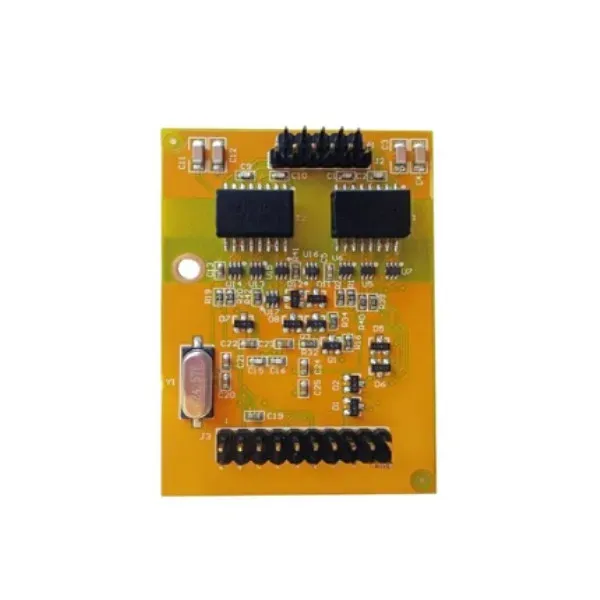
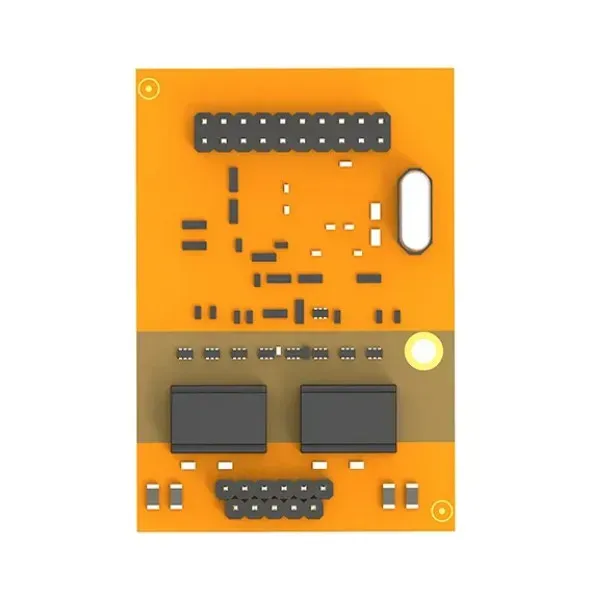
Yeastar B2 BRI Module
The Yeastar B2 BRI Module is a compact telephony expansion module for organizations that still require ISDN Basic Rate Interface connectivity within a Yeastar PBX environment. Yeastar specifies the B2 as a two-port NT/TE BRI module. In the current P-Series Appliance Edition, BRI trunk support requires a B2 module, while larger P560 and P570 systems use telephony modules through the EX08 expansion board. This makes the B2 particularly relevant for businesses preserving existing BRI services during a phased transition to SIP trunks, IP phones, remote extensions, or broader unified communications.
2 BRI Ports
Adds two NT/TE BRI ports for digital ISDN trunk connectivity on supported Yeastar systems.
Modular Deployment
Useful where a PBX must combine physical BRI trunks with SIP, analog, or cellular connectivity according to site requirements.
Migration Friendly
Helps organizations retain operational BRI services while modernizing handsets, extensions, collaboration tools, and trunk strategy.
What the Yeastar B2 BRI Module Does
The B2 module provides the physical BRI interface required when a compatible Yeastar PBX must connect to an ISDN BRI service. A BRI trunk is different from a SIP trunk: SIP can be delivered over an IP network without a telephony interface module, while a physical BRI circuit needs a matching BRI port and correct trunk configuration. Yeastar documentation identifies the B2 module as the requirement for BRI trunks on P-Series Appliance Edition systems. For procurement teams, the important point is that the B2 is not a standalone PBX and it is not a replacement for a carrier circuit. It is an interface module that must be paired with a supported Yeastar appliance and an active, correctly provisioned BRI service.
Before ordering, confirm the exact PBX model, available module or expansion-board capacity, the number of BRI circuits, and the carrier’s signaling details. Yeastar’s BRI setup guidance specifically requires the installer to gather trunk signaling, switch type, and signaling-role information from the ISDN provider. This verification is important because a correctly fitted module alone does not guarantee an operational trunk; both the physical layer and the data-link configuration must be correct.
Verified Technical Highlights
| Product | Yeastar B2 Module |
| Interface | 2 BRI ports |
| Port mode | 2 × NT/TE BRI ports |
| Current P-Series use | BRI trunk connectivity requires the B2 module |
| P520 | Supports up to 2 telephony modules, including B2 |
| P550 | Supports up to 4 telephony modules, including B2 |
| P560 / P570 | Use B2 telephony modules through EX08 expansion-board capacity |
Compatibility and Procurement Planning
Yeastar’s current telephony-module documentation lists the B2 among the modular interface options used across selected P-Series and S-Series appliances. Current documentation identifies P520, P550, P560 and P570 support, with P560 and P570 requiring an EX08 expansion board for telephony modules. Yeastar also lists selected S-Series systems as compatible. Because PBX families, hardware revisions, lifecycle status, and regional sales policies change, procurement should always be tied to the exact chassis model rather than to a generic assumption that every Yeastar PBX accepts every module.
A practical quotation request should therefore state the PBX model, hardware revision if known, present module population, number of active BRI lines, desired failover approach, existing SIP trunks, and whether the project is a new installation or a migration. If the business is moving away from ISDN, the B2 may still have value as an interim interface, allowing legacy BRI service to remain active while SIP trunks, IP endpoints, call routing, and remote-user capabilities are introduced in stages. For entirely new greenfield installations, buyers should also compare whether SIP trunking can meet the requirement without maintaining a physical BRI circuit.
Deployment Checklist
Before Purchase
Confirm the exact Yeastar appliance, available module slots or EX08 capacity, BRI circuit count, carrier handoff, signaling details, and whether NT or TE mode is required. Documenting these items reduces the risk of ordering the correct module for the wrong chassis or an interface that cannot be used with the local service.
During Installation
Install the module according to the appliance hardware guide, connect the BRI cable to the correct carrier equipment, then validate physical and data-link status in the PBX. Configuration should match the carrier’s signaling, switch type, and role information instead of relying on guessed defaults.
After Go-Live
Test inbound and outbound calling, number presentation, routing, failover behavior, emergency dialing policies where applicable, and the interaction between BRI and any SIP trunks. Keep the final configuration documented so that future migration or troubleshooting work can be completed efficiently.
Related FourTeck Resources
For broader procurement and regional project coordination, explore FourTeck Tanzania for Tanzania-focused technology sourcing and solution pages. Projects that extend into East Africa can also reference FourTeck Uganda and FourTeck Kenya for region-specific requirements. Multi-country African projects may be coordinated with FourTeck Africa, while procurement teams handling Gulf-linked sourcing or international project coordination can review FourTeck UAE. These links are intended to help buyers frame cross-border requirements without implying stock, office presence, or service coverage in any specific location unless separately confirmed.
Yeastar B2 BRI Module Tanzania
For organizations in Tanzania, the Yeastar B2 BRI Module is most relevant where a business telephone system must continue using ISDN BRI while the wider communications environment is being modernized. The purchase decision should begin with infrastructure, not only with the module name. Buyers should establish whether an active BRI service is already present, whether the circuit is expected to remain in service, and which Yeastar appliance will host the B2. This matters because the module is one part of the telephony path: the carrier service, cabling, PBX chassis, module slot, trunk configuration, call routes, extensions, and endpoint strategy all have to work together.
Tanzanian businesses may encounter mixed environments where older digital trunks coexist with SIP services, analogue devices, GSM connectivity, or cloud collaboration tools. In those projects, the B2 can support a staged approach. Rather than forcing an immediate cutover away from an established BRI service, an IT team can keep the digital trunk connected while it upgrades desk phones, introduces mobile or desktop clients, cleans up dial plans, and evaluates SIP trunk options. The important procurement question is whether preserving BRI provides operational value during the transition. If the carrier has a retirement roadmap for ISDN services, the B2 should be viewed within that migration timetable rather than as an indefinite commitment to legacy infrastructure.
For a Tanzania quotation, provide the exact Yeastar model, present telephony modules, required number of BRI circuits, expected concurrent call needs, branch connectivity, and whether SIP trunks are already in use. Ask the carrier for signaling details before installation planning. This allows the solution team to verify module capacity and avoid assumptions about switch type or signaling role. Businesses with multiple sites should also decide whether BRI remains necessary at every branch or only at a central site. A well-planned design can preserve required legacy connectivity while reducing unnecessary dependence on physical circuits and preparing the organization for IP-based communications.
Yeastar B2 BRI Module Dar es Salaam
In Dar es Salaam, the B2 is suited to offices, service businesses, hotels, professional firms, trading companies, and established enterprises that still operate BRI-connected PBX services or that are replacing an older telephone system without immediately changing the carrier handoff. The dense commercial environment makes continuity important: a telephony upgrade may need to be scheduled around customer-facing operations, contact-centre activity, reception services, reservations, dispatch, or supplier coordination. Keeping a known BRI circuit available during a controlled PBX migration can reduce the number of simultaneous changes.
A Dar es Salaam deployment should first identify the existing demarcation point and confirm who owns each part of the path from the carrier termination to the PBX. Verify cable type, available rack or cabinet space, PBX model, and the exact telephony-module configuration. If the target appliance is a P560 or P570, include EX08 expansion-board requirements in the design. If the system is a P520 or P550, confirm available onboard module slots before ordering. This slot-level check is more useful than simply counting free ports on the front panel because telephony modules and expansion boards have model-specific rules.
Companies planning a broader digital transformation should also decide how BRI and SIP will coexist. One approach is to preserve BRI for selected inbound numbers or fallback routing while testing SIP for new services. Another is to migrate number ranges in phases and retain the B2 only during transition. Neither approach is automatically better; the right decision depends on carrier contracts, numbering, call volume, resilience goals, and the business cost of service interruption. A quotation request should include these operational priorities, not merely ask for the module price, because correct compatibility and migration planning usually matter more than the accessory itself.
Yeastar B2 BRI Module Mwanza
For businesses in Mwanza, the Yeastar B2 BRI Module can be considered when an existing ISDN BRI service remains part of the site’s telephony architecture. Organizations upgrading from a traditional PBX may want to retain familiar carrier connectivity while moving users onto IP extensions, improving call routing, or consolidating communications management. The B2 provides the physical interface for that transition, but it should be purchased only after the carrier service and host PBX have been verified.
Mwanza projects often benefit from careful remote-support preparation. Before an installer travels or schedules a cutover, collect photographs of the existing telecom cabinet, the Yeastar chassis label, module-slot occupancy, carrier termination, and current line documentation. Record which numbers are associated with which BRI circuits and identify critical inbound routes such as reception, sales, support, or reservations. These details make it easier to build a cutover plan and to test the right call paths after the B2 is installed. They also reduce the chance that a hidden dependency on an old trunk or number range is discovered only after the migration starts.
If resilience is a requirement, define it explicitly. A second BRI circuit is not the same as a diverse path if both services depend on the same upstream infrastructure. Similarly, adding SIP does not automatically create failover unless routing and network connectivity are designed for it. The B2 should therefore be treated as one component within a continuity plan that can include multiple trunks, internet diversity, power protection, documented failover routes, and tested recovery procedures. A Mwanza buyer requesting a quote should share the target PBX, number of BRI lines, expected call load, existing SIP availability, and the desired migration timeline so the module can be assessed in context.
Yeastar B2 BRI Module Arusha
In Arusha, businesses in tourism, hospitality, professional services, logistics, education, and administration may still encounter telephone environments built around long-standing digital carrier services. The Yeastar B2 BRI Module is useful when such a service must connect to a compatible Yeastar PBX, particularly during a phased move toward SIP and unified communications. For customer-facing organizations, the migration plan should protect published numbers, reception workflows, reservation or booking lines, and after-hours routing.
A strong Arusha deployment plan starts with call-flow mapping. Identify the numbers entering through BRI, the departments or IVRs that answer them, and what should happen if the trunk becomes unavailable. Then verify the PBX model and module capacity. On systems that support onboard telephony modules, confirm a free slot. On P560 or P570 appliances, confirm an EX08 is available and has suitable capacity. Once the hardware path is validated, obtain signaling, switch type, and role details from the provider before configuring the trunk. This sequence prevents technical teams from treating a physical connection as proof that the line is ready for production traffic.
For organizations with seasonal demand, such as tourism-related operations, consider how call volume changes through the year. The two-port B2 provides physical BRI interfaces, but overall system sizing also depends on channels, concurrent calls, routing, and other trunks. Businesses should avoid assuming that adding an interface automatically increases all PBX capacities. If growth is expected, the quotation should include the present call pattern and the planned future state so the PBX, module strategy, SIP capacity, and user licensing can be reviewed together. This turns the B2 purchase into a controlled communications upgrade rather than a narrow hardware replacement.
Yeastar B2 BRI Module Dodoma
Organizations in Dodoma that operate formal reception, administration, public-facing offices, or multi-department telephone systems may need to preserve established BRI services during infrastructure renewal. The Yeastar B2 BRI Module provides two NT/TE BRI ports for supported Yeastar systems, allowing a digital trunk to be integrated into a modular PBX configuration. The value is highest where there is a clear operational reason to retain BRI, such as number continuity, an existing carrier contract, staged modernization, or a requirement to run legacy and IP trunks in parallel.
Procurement teams should document the existing environment before seeking pricing. List the current PBX, carrier, BRI circuit count, published numbers, user count, major departments, critical call routes, and any dependence on fax, analogue adapters, door phones, or other peripheral systems. Some of those devices may not use the BRI module directly, but they affect the overall migration design. A new Yeastar appliance may need a mixture of B2, FXS, FXO, SIP, or cellular interfaces depending on what must remain connected. The modular design is useful precisely because it allows those interfaces to be selected deliberately rather than assumed.
A Dodoma project should also include acceptance testing. Confirm inbound calls to every important number, outbound call permissions, caller ID behavior, department routing, after-hours schedules, and fallback paths. Record the final trunk configuration and provider details for future support. If the organization expects to migrate fully to SIP later, document which BRI circuits are transitional and set a review date so temporary infrastructure does not become permanent by default. When requesting a quote, include both the immediate need and the intended future-state architecture so the B2 can be supplied as part of a coherent migration plan.
Yeastar B2 BRI Module UAE
For UAE projects, the Yeastar B2 BRI Module is relevant where an organization maintains an ISDN BRI handoff or must integrate a legacy digital service into a Yeastar PBX. The decision should be based on the active carrier service and the organization’s migration roadmap. In a market where many businesses are moving toward SIP-based communications, BRI is often best treated as a specific compatibility requirement rather than a default choice for a new deployment. If the business already has a functioning BRI service tied to important published numbers, a B2-equipped Yeastar system can support a controlled transition.
UAE procurement teams should confirm local carrier provisioning, signaling parameters, exact PBX model, module availability, and whether the installation is a replacement, expansion, or temporary migration bridge. International or multi-office businesses should also map how the BRI site interacts with SIP trunks, inter-office extensions, call recording, contact-centre functions, and disaster-recovery routing. This avoids creating an isolated legacy island inside a wider IP communications platform.
For P560 and P570 appliances, the hardware bill of materials should account for EX08 expansion-board capacity when B2 modules are required. For smaller compatible appliances, confirm onboard slots and existing modules before ordering. Ask the carrier for the exact signaling, switch type, and role information used by the BRI service. During cutover, test inbound number ranges, outbound rules, caller ID, and failover. Buyers coordinating UAE and East African sites can use the same documentation format across locations so inventory, trunk types, and migration milestones remain easy to manage. A quotation should state the site location, target Yeastar model, BRI quantity, required cutover date, and whether SIP migration is planned.
Yeastar B2 BRI Module Uganda
Ugandan organizations evaluating the Yeastar B2 BRI Module should first establish whether the requirement comes from an active BRI service, an existing PBX migration, or a design inherited from another location. Because the B2 is specifically for BRI connectivity, it should not be selected simply because a legacy system used digital lines. Confirm the local carrier handoff and the actual trunk type. If the service is SIP, no B2 is required for that trunk; if it is BRI, the B2 provides the corresponding physical interface on compatible Yeastar appliances.
For multi-site businesses, Uganda deployments can benefit from standardizing the discovery process. Record the host PBX, active modules, extension count, critical numbers, existing trunks, internet links, power protection, and support contacts. Where branches are migrating at different times, a B2 may be useful at one site while another branch can move directly to SIP. Standardization should therefore focus on architecture and documentation rather than forcing identical hardware into every branch.
A procurement request should include enough information for compatibility validation. On P520 and P550 platforms, confirm onboard module-slot availability. On P560 and P570 systems, confirm EX08 expansion-board capacity. Establish how many BRI circuits need to terminate and how they fit into the PBX’s overall call-capacity plan. During testing, validate physical-layer status, data-link status, inbound and outbound routes, and any fallback logic. If the B2 is part of a migration away from ISDN, define an exit plan for the circuit and module so the organization can simplify its telephony estate when the transition is complete.
Yeastar B2 BRI Module Kampala
In Kampala, established businesses frequently have telephone numbers and routing practices that have been in place for years. When replacing the PBX, preserving those workflows may be more important than changing the carrier at the same time. The Yeastar B2 BRI Module can support that strategy by connecting an existing BRI service to a compatible Yeastar appliance while users and call routing move onto the new platform. This separates the PBX modernization from the trunk migration and can make the project easier to control.
The design should start with a line audit. Identify each BRI circuit, the number ranges delivered on it, and which business functions depend on those numbers. Then verify Yeastar hardware compatibility and module capacity. If an EX08 expansion board is needed, include it in the project bill of materials and check its remaining module slots. Next, obtain the carrier’s signaling and switch information so the PBX can be configured against known parameters. Finally, build a test script covering reception, direct inward numbers where used, outbound classes, after-hours rules, and failover behavior.
Kampala organizations with multiple internet links or SIP trunks should decide whether BRI will act as a primary path, secondary path, or temporary coexistence path. The answer affects routing priorities and user expectations. If the goal is future SIP adoption, the B2 can be deployed with a clear migration milestone and retained only as long as it serves a defined business purpose. A detailed quote request should include the Yeastar model, current modules, BRI count, key numbers, existing SIP services, expected simultaneous calls, and target cutover window.
Yeastar B2 BRI Module Arua
For an Arua deployment, planning quality is especially important when specialist installation resources or replacement parts may not be located at the site. The Yeastar B2 BRI Module itself is straightforward in purpose: it provides two NT/TE BRI ports on supported Yeastar systems. The wider project, however, depends on correct PBX compatibility, carrier service details, cabling, configuration, and testing. Gathering all of that information before dispatching hardware can reduce avoidable return visits.
A remote-readiness pack should include clear photographs of the PBX, chassis labels, open module slots, existing expansion boards, carrier termination, rack layout, and power arrangements. Document the BRI service provider, support number, signaling details, and the business numbers carried on the circuit. If the installation replaces an older PBX, export or manually record the old dial plan and call routes before disconnection. These practical steps often matter more to a successful migration than the physical installation of the module.
Arua businesses should also think about support continuity after go-live. Keep a simple site record showing which BRI port maps to which trunk, the assigned numbers, routing priorities, and fallback method. Where internet connectivity is adequate, remote PBX administration can help with diagnosis, but the physical BRI layer may still require local inspection when a cable, carrier handoff, or module status is at fault. If the organization is gradually moving to SIP, establish which services will migrate first and which numbers must remain on BRI until later. The purchase should therefore be aligned with a support plan, not treated as a standalone spare part.
Yeastar B2 BRI Module Mbarara
In Mbarara, the Yeastar B2 BRI Module may fit businesses that need to connect existing ISDN BRI services to a modern Yeastar PBX while keeping a familiar external-number arrangement. This can be useful in healthcare, hospitality, education, distribution, professional services, or branch-office environments where communication downtime must be carefully managed. Instead of changing carrier, PBX, endpoints, and call flows at once, the organization can preserve BRI as one stable element during the first phase of modernization.
The technical team should confirm the exact PBX model and available telephony-module capacity before procurement. If the appliance is a P560 or P570, plan for B2 installation via EX08. If it is a smaller compatible appliance, inspect onboard slots and existing modules. Then validate the carrier service. Yeastar’s setup process expects the administrator to know the BRI signaling, switch type, and signaling role, so these details should be obtained from the provider rather than inferred during installation.
For long-term value, use the deployment as an opportunity to document the communication system. Record all business numbers, extensions, hunt groups, IVRs, schedules, and trunk priorities. Decide whether BRI is the preferred trunk, a backup, or a transitional service. If SIP is introduced, establish explicit routing rules and test both normal and failure scenarios. Mbarara procurement teams requesting a quote should therefore provide not just the module name, but also the target PBX, number of required BRI interfaces, current carrier arrangement, estimated concurrent calls, and future migration plans. This produces a more accurate hardware and deployment recommendation.
Yeastar B2 BRI Module Gulu
For organizations in Gulu, the Yeastar B2 BRI Module can serve as the physical bridge between an existing BRI service and a compatible Yeastar PBX. Its role is narrow but important: without the correct BRI interface, a digital circuit cannot simply be connected to a SIP-only port. The module is therefore relevant for replacement PBX projects, staged migrations, and sites that have a business reason to keep an active BRI circuit.
Before ordering, inventory the telecommunications environment. Confirm the provider handoff, active numbers, PBX model, module slots, expansion boards, expected call traffic, and any dependency on legacy devices. If the site uses a P560 or P570, confirm that an EX08 is available for telephony modules. If the system has multiple trunks, determine the desired routing order and what users should experience if BRI is unavailable. A robust plan could route selected calls over SIP or another service, but such behavior has to be configured and tested; the B2 itself does not create automatic resilience.
For supportability, keep the installation simple and documented. Label the BRI cables, record port assignments, save the carrier parameters, and maintain a current diagram of the PBX and trunk connections. Where the organization intends to move to SIP in the future, capture a list of BRI-dependent numbers and processes so migration progress can be measured. A Gulu quote request should include the deployment location, PBX model, BRI quantity, carrier details, desired go-live sequence, and any requirement for parallel SIP operation. That information allows the B2 to be evaluated as part of an overall telephony design rather than as an isolated accessory.
Yeastar B2 BRI Module Kenya
Kenyan businesses considering the Yeastar B2 BRI Module are typically dealing with an existing BRI service, a PBX replacement, or a mixed trunk environment. The correct first step is to verify whether the site’s carrier handoff is genuinely BRI and whether that service should remain part of the future design. If the organization is building a completely new telephony system, SIP may be worth comparing. If established BRI numbers and contracts must be preserved, the B2 offers a practical way to connect them to a compatible Yeastar appliance.
The module should be specified alongside the host PBX. For P520 and P550, check onboard module-slot availability. For P560 and P570, check EX08 expansion-board requirements and capacity. Where older S-Series systems are in use, confirm the specific model and hardware status before purchasing because lifecycle and platform choices matter. Avoid ordering based solely on a reseller compatibility list when the exact installed chassis is available for verification.
Kenya deployments that span Nairobi and branch locations should also determine whether BRI is needed consistently across the network. A central office might retain a carrier BRI service while branches operate on SIP, with internal routing over IP. Alternatively, a migration may move all sites to SIP over time. Document the current and intended trunk topology so module purchases support that roadmap. For quotation accuracy, include the PBX model, number of BRI circuits, expected call concurrency, provider parameters, existing SIP services, and any required failover. Buyers can also review FourTeck Kenya when coordinating Kenya-specific project requirements.
Yeastar B2 BRI Module Kuwait
For Kuwait projects, the Yeastar B2 BRI Module is a targeted interface option for businesses that need to preserve or integrate ISDN BRI services within a Yeastar PBX. The most important procurement question is whether BRI remains a current operational requirement. Where the carrier service is active and tied to business-critical numbers, the B2 can support continuity while the organization updates endpoints, user features, or other trunks. Where no legacy dependency exists, the design team should compare IP-based trunking options before committing to additional physical interfaces.
Compatibility planning should include the exact Yeastar appliance. Current P-Series documentation supports B2 use across selected appliances, with P560 and P570 relying on EX08 expansion boards for telephony modules. Confirm slot availability, existing modules, and overall trunk requirements before ordering. If the company operates contact-centre functions, reception queues, or multiple departments, map how each number and route will move during the upgrade so testing can be organized around business priorities.
Carrier coordination is equally important. Obtain signaling, switch type, and role details for the BRI service, then test the physical and data-link status after installation. Verify inbound number presentation, outbound dialing, route priorities, and any coexistence with SIP trunks. Multi-country businesses should use a common documentation template so Kuwait, Tanzania, Uganda, Kenya, and other sites can be compared easily. That template can include PBX model, module inventory, circuit type, provider, number ranges, failover policy, and retirement date for legacy trunks. The B2 then becomes a planned component of communications architecture rather than an unmanaged legacy dependency.
Yeastar B2 BRI Module Ghana
In Ghana, the Yeastar B2 BRI Module can be relevant to enterprises and institutions that are replacing an older PBX while retaining an established digital BRI service. A modular Yeastar appliance allows the organization to combine physical BRI with SIP and other interface types, but the right combination should be driven by verified service availability and business need. The B2 should not be specified simply as a generic digital-trunk card; it is specifically a two-port NT/TE BRI module.
For a Ghana deployment, begin with service discovery. Confirm whether the provider handoff is BRI, identify the associated number ranges, and request the signaling parameters required by the PBX. Then inspect the target Yeastar chassis and confirm module capacity. On P560 or P570, include EX08 expansion-board capacity in the calculation. On P520 or P550, verify onboard slots. If the project uses a legacy S-Series appliance, confirm exact compatibility and lifecycle considerations before purchasing additional modules.
A well-structured migration can keep BRI operational while users move to IP phones, desktop clients, mobile clients, or updated call flows. The organization can then evaluate when to move individual numbers or departments to SIP. During the coexistence period, clearly define which trunk is primary for each call type and how failures are handled. Test those policies rather than assuming they work. Ghana buyers should include PBX model, BRI circuit count, critical numbers, expected concurrent calls, existing SIP services, and migration objectives in the quotation request. This information allows the module and wider telephony solution to be sized around real operational requirements.
Yeastar B2 BRI Module Nigeria
Nigerian businesses with complex branch networks or established corporate telephony may encounter a mixture of legacy circuits, SIP trunks, mobile connectivity, and IP extensions. The Yeastar B2 BRI Module is appropriate only for the BRI portion of that environment. It provides two NT/TE BRI ports on supported Yeastar systems, enabling a physical digital service to be integrated into a modular PBX. The module should be selected as part of a trunk strategy that considers resilience, provider diversity, numbering, call cost, and future migration.
For enterprises with several sites, standardize the assessment process but allow each branch to have a different final trunk mix. A Lagos office might still have a reason to preserve BRI while another site can operate entirely on SIP. The technology standard can therefore be the Yeastar platform and a common routing policy, not necessarily identical telephony modules everywhere. For P-Series hardware, confirm the exact appliance and its module architecture. P560 and P570 use EX08 capacity for B2 modules, while smaller compatible models have onboard module slots.
Operational resilience should be designed beyond the module. If BRI is intended as backup to SIP, test the trigger and outbound routing behavior. If SIP is intended as backup to BRI, confirm that inbound numbers can actually reach users during a BRI failure; that may require provider-side arrangements, not just PBX configuration. Keep carrier contacts and circuit identifiers with the PBX documentation. A Nigeria quote request should state the exact PBX model, trunk mix, BRI quantity, number ranges, business-critical call flows, expected concurrency, and desired migration path. That level of detail helps avoid buying interface hardware without a workable end-to-end service plan.
Yeastar B2 BRI Module Seychelles
For businesses in Seychelles, the Yeastar B2 BRI Module may be useful where an existing ISDN BRI service remains important to hotel operations, reservations, administration, professional services, or other customer-facing functions. Island deployments can place additional value on planning and documentation because hardware logistics and specialist visits may require more coordination. Confirming compatibility before shipment is therefore essential.
Start by verifying the target Yeastar model and its available module or expansion-board capacity. Confirm the BRI service with the carrier and obtain the signaling, switch type, and role information required for configuration. Record the numbers delivered on the circuit and how they should route to reception, departments, IVRs, or after-hours destinations. If the project introduces SIP at the same time, define whether both trunk types will run permanently or only during migration. This distinction affects how much testing, fallback planning, and long-term support the BRI path needs.
For remote support, label each cable and port, save a simple connection diagram, and record the final trunk settings. If a future fault occurs, support teams can then distinguish between a carrier problem, physical-layer issue, data-link configuration problem, PBX routing issue, or endpoint problem more quickly. Buyers should also consider whether a spare strategy is justified by business criticality, but stock decisions should be based on project requirements and actual availability rather than assumptions. A Seychelles quotation request should include the site, PBX model, BRI circuit count, key numbers, carrier details, desired go-live date, and future SIP plans so the B2 can be assessed within the complete communications environment.
Buying Guidance: When the B2 Is the Right Choice
Choose the Yeastar B2 BRI Module when you have verified BRI connectivity that must terminate directly on a compatible Yeastar appliance. It is particularly suitable for replacement projects where the business wants to modernize the PBX while keeping an existing carrier circuit unchanged for the first migration stage. It can also be useful in hybrid designs where BRI and SIP trunks operate together under a defined routing policy. Do not choose it merely because the organization historically used ISDN; first confirm that the active service is BRI and that retaining it supports the business roadmap.
If the goal is a greenfield phone system with no existing BRI dependency, compare SIP trunking and other current connectivity options. SIP does not require a B2 module on the PBX and may simplify physical infrastructure, although network quality, carrier service, security, and resilience still require proper design. If the business has existing BRI numbers but wants to migrate, ask the carrier about number-porting, contract terms, and transition options before purchasing hardware solely to preserve an old circuit.
Quotation Checklist
To prepare an accurate Yeastar B2 BRI Module quotation, include: exact Yeastar PBX model; hardware revision if known; current module and expansion-board inventory; number of BRI circuits; carrier name; signaling, switch type and role information if available; number ranges delivered by the BRI service; expected concurrent calls; current SIP trunks; desired primary and backup routing; installation city and country; target migration date; and whether BRI is permanent, backup, or transitional. Also identify any required related hardware such as an EX08 expansion board for supported larger P-Series appliances. Supplying this information helps reduce compatibility assumptions and makes the quote more relevant to the actual project.
Frequently Asked Questions
How many BRI ports does the Yeastar B2 Module provide?
Yeastar specifies the B2 Module with two NT/TE BRI ports. It is used where a supported Yeastar PBX needs physical ISDN BRI trunk connectivity.
Do I need a B2 module for a SIP trunk?
No. Yeastar’s P-Series documentation lists SIP trunks as not requiring an additional telephony module. The B2 is specifically used for BRI trunks.
Can the B2 be used with Yeastar P560 or P570?
Yes, current Yeastar documentation lists B2 among the telephony modules supported through the EX08 expansion-board architecture on P560 and P570. Verify the installed expansion board and remaining capacity before ordering.
What information is needed to configure a BRI trunk?
Yeastar’s setup guidance says to obtain carrier signaling information including signaling, switch type, and signaling role. The BRI cable and active provider service are also required.
Is the B2 a complete phone system?
No. It is a telephony interface module. It must be installed in a compatible Yeastar PBX or supported expansion-board arrangement and connected to a properly provisioned BRI service.
Should a business keep BRI or migrate to SIP?
That decision depends on the existing carrier contract, number portability, resilience requirements, network readiness, lifecycle plans, and operational risk. The B2 is useful when BRI must be retained, including during a phased migration, but new deployments should compare current trunking options.
Decision Recap
The Yeastar B2 BRI Module is a focused solution for adding two NT/TE BRI interfaces to compatible Yeastar PBX platforms. The strongest purchasing case is a verified need to connect or preserve BRI service. Before ordering, confirm the exact PBX, module architecture, carrier parameters, circuit count, call-routing plan, and future migration strategy. For P560 and P570, include EX08 expansion-board requirements in the design. For any location, avoid assuming stock, carrier compatibility, or immediate service availability until the project details have been checked.
Consultation Panel
For a project review, share your Yeastar PBX model, the number of BRI circuits, carrier details, present telephony modules, and deployment location. A compatibility-led quote can then identify whether the B2 alone is sufficient or whether the design also needs an EX08 expansion board, other telephony modules, SIP trunk planning, or migration support. This approach is more reliable than ordering from the module name alone because it connects the hardware choice to the complete telephony architecture.



Reviews
There are no reviews yet.