
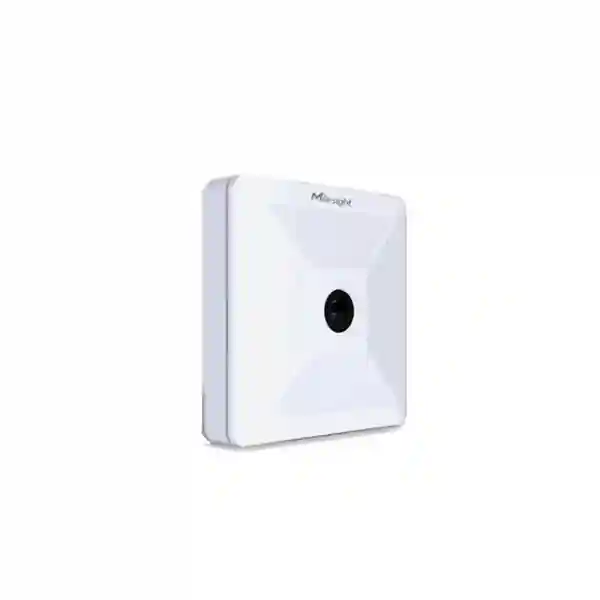
Yeastar People Counting Sensor
The Yeastar People Counting Sensor is designed to connect physical meeting-room usage with digital workplace management. Based on the VS121 sensor platform, it uses artificial-intelligence-based detection to count occupants and monitor room presence in real time, then passes headcount information through LoRaWAN to Yeastar Workplace. For organizations that struggle with ghost meetings, underused rooms, inaccurate capacity planning, or uncertainty about whether booked rooms are actually occupied, the sensor provides a practical data layer that can make meeting-room scheduling more responsive.
Direct answer
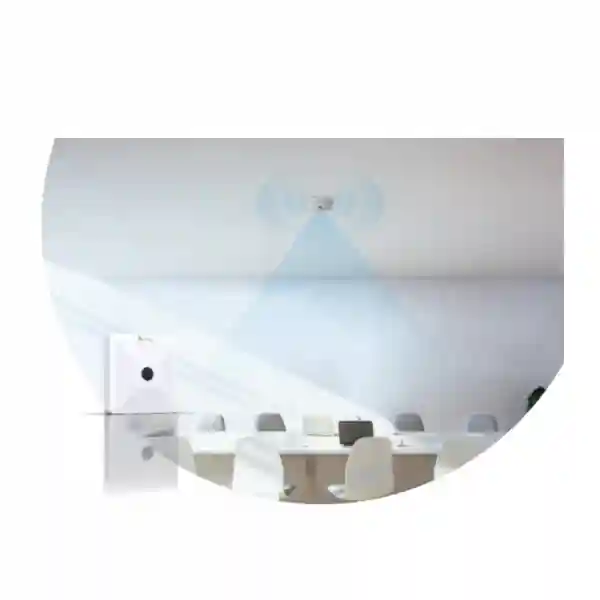
Yeastar People Counting Sensor is a ceiling-mounted smart occupancy sensor for Yeastar Workplace. It counts people without facial recognition, helps the booking platform understand whether a room is occupied, and can support automatic release of unused reservations so available space returns to the booking pool.
What the Yeastar People Counting Sensor does
Modern meeting-room problems are often operational rather than purely technical. A room can show as booked even when nobody arrived. A ten-person room may regularly host only two people while smaller rooms remain unavailable. Facilities teams may know that space feels constrained but lack reliable occupancy evidence. The Yeastar People Counting Sensor addresses these issues by continuously detecting room presence and producing a headcount that can be associated with the room inside Yeastar Workplace.
The sensor does not simply act as a standalone counter. Its value comes from integration. Yeastar Workplace can use occupancy data together with booking records, room displays and administrative analytics. When a room is reserved but remains unused, sensor-triggered workflows can help release that booking according to the configured workplace process. When employees look for available rooms, the system can therefore reflect actual space usage more accurately than a schedule alone.
Privacy is another important consideration for workplace analytics. Yeastar documentation describes anonymous detection with no personally identifiable information used, collected or uploaded by the people-counting process. This is useful for organizations that want practical occupancy insight without turning routine meeting-room usage into identity tracking. Customers should still review their own privacy notices, internal policies and any applicable local requirements before deploying workplace sensors.
Real-time headcount
The sensor detects the number of people in the monitored meeting-room area and synchronizes occupancy information into the Yeastar workplace environment.
Ghost-meeting control
Room presence can be used to support automatic release of reservations that are booked but unused, helping other employees recover meeting capacity.
Anonymous analytics
The detection process is designed around people counting rather than facial recognition, reducing the amount of identity-related data involved in occupancy monitoring.
LoRaWAN transport
LoRaWAN is used to carry sensor data through the Yeastar Workplace smart-device architecture, supporting flexible placement across office environments.
Verified VS121 technical profile
| Platform model | VS121 |
| Detection technology | Artificial intelligence based people counting |
| Coverage | Up to 48 m² in Yeastar technical documentation, dependent on installation geometry |
| Connectivity | LoRaWAN for data transmission; Wi-Fi is used for configuration |
| Mounting | Ceiling mounting, facing downward |
| Power | 5 V / 1.5 A via USB Type-C |
| Dimensions | 85 × 85 × 20 mm |
| Privacy approach | Anonymous detection; no facial recognition required for counting |
Deployment should be validated against the room layout, ceiling height, mounting position, reflective surfaces, bright-light interference, selected LoRaWAN frequency variant and the current Yeastar Workplace licensing/device architecture. Do not select a frequency variant or purchase quantity from floor area alone.
Yeastar Workplace integration and deployment planning
Yeastar documentation places the People Counting Sensor within the Yeastar Workplace ecosystem rather than as an isolated building sensor. Registration requires the room resource to exist in Yeastar Workplace and requires an associated gateway path. Current Yeastar guidance identifies the UG65 LoRaWAN gateway or supported Room Display hardware in applicable configurations as the data bridge. The sensor is then bound to the intended meeting room so that headcount has operational meaning inside the booking system.
Physical installation matters. Yeastar recommends ceiling mounting, downward orientation, avoidance of strong light interference and reflective objects, and careful attention to mounting height. This means a quotation should consider more than sensor quantity. The project may need power access near the ceiling, suitable cable routing, gateway placement, a review of ceiling construction, room geometry and a configuration step to define the detection region. Open spaces and large rooms deserve extra review because the sensor may need customized detection regions or multiple devices.
Network and platform planning should also be completed before installation. The gateway must have the connectivity required to reach Yeastar Workplace, and the organization must confirm the applicable Yeastar Workplace plan and subscription terms. Buyers should also decide who will own the admin portal, how rooms will be named, what auto-release behavior is acceptable, and how occupancy analytics will be communicated to staff. A technically correct installation can still fail operationally if booking rules and user expectations are not aligned.
For connected workplace projects in Tanzania, it can be useful to review the broader FourTeck Tanzania technology portfolio and the FourTeck Tanzania shop. The sensor may sit alongside meeting-room displays, conferencing systems, wireless infrastructure, switching and other business technology, so early integration planning can prevent fragmented procurement.
Who should consider this sensor?
The strongest use case is an organization already using, or planning to use, Yeastar Workplace for meeting-room management and wanting room occupancy to influence scheduling. Typical environments include corporate headquarters, multi-floor offices, shared business centres, universities with bookable collaboration rooms, large professional-services offices, technology campuses, regulated enterprises that prefer anonymous occupancy metrics, and organizations running hybrid-work policies that need evidence about actual room utilization. It is less suitable as a generic standalone visitor counter when there is no Yeastar Workplace requirement; in that case the broader application and integration requirements should be reviewed before selecting the device.
Regional buying and deployment guidance
Yeastar People Counting Sensor Tanzania
Organizations evaluating the Yeastar People Counting Sensor in Tanzania should begin with the workplace problem they want the sensor to solve. In many offices, meeting-room scheduling depends entirely on calendar reservations, which means a room may remain blocked even when a meeting is cancelled informally or participants choose another location. The VS121 adds real occupancy evidence to the Yeastar Workplace environment. That makes it relevant for businesses seeking better meeting-space utilization rather than simply adding another IoT device.
A Tanzania deployment should consider room size, ceiling height, available power, gateway placement and the selected LoRaWAN frequency variant before procurement. Meeting rooms with mirrors, glass surfaces, unusual ceiling geometry or strong light sources should receive a practical installation review. If the organization has several rooms on multiple floors, the design should also define how gateways are distributed and how each sensor is named, registered and bound to the correct room. These operational details matter because analytics are only useful when sensor identity and room identity remain consistent.
Procurement teams should request a quotation that separates sensors, required gateways or compatible room displays, Yeastar Workplace plan requirements, mounting accessories, configuration, installation and support scope. They should also ask whether the chosen hardware revision and regional radio option are appropriate for the project. Availability, lead time and commercial terms can change, so they should be confirmed at quotation stage rather than assumed from online references.
For offices combining workplace analytics with video collaboration, networking, displays or access systems, the FourTeck Tanzania services page provides context for integrated planning. A useful project brief should state the number of rooms, approximate dimensions, ceiling heights, current meeting-booking platform, number of floors, existing network design and whether automated room release is required. This allows the sensor discussion to be connected to measurable workspace outcomes rather than treated as a standalone hardware purchase.
Yeastar People Counting Sensor Dar es Salaam
Dar es Salaam offices often combine executive meeting rooms, project rooms, client-facing boardrooms and shared collaboration areas in the same building. For these environments, the Yeastar People Counting Sensor can help facilities and IT teams distinguish between booked capacity and actual occupancy. The practical value is not only knowing that a room is in use but understanding whether valuable space is routinely reserved and left empty, or whether larger rooms are regularly occupied by very small groups.
Before ordering sensors for a Dar es Salaam site, teams should map every meeting room and classify each space by size, ceiling height, seating capacity and booking importance. Executive rooms may need conservative release rules because meetings can start late, while highly shared collaboration rooms may benefit from more aggressive ghost-meeting control. A deployment plan should also check ceiling power, cable routing and where the LoRaWAN gateway or supported room display will sit in relation to the sensor network.
Organizations occupying leased commercial buildings should coordinate installation requirements with their facilities or property-management process. Ceiling access, drilling permissions, electrical work and after-hours installation windows can affect the project. Where office fit-outs are still under construction, it is more efficient to include sensor power and mounting considerations alongside meeting-room displays, video conferencing, network outlets and lighting controls rather than retrofitting them later.
For procurement, include the intended Yeastar Workplace plan, number of rooms, floor plan and desired automation rules in the request. Avoid asking only for “one sensor per room” because coverage depends on geometry and mounting. A technically reviewed bill of materials can clarify sensor quantities, gateways, power arrangements and platform dependencies before the purchase is approved. This is especially useful for companies planning several branches and wanting a repeatable smart-meeting-room standard across Tanzania.
Yeastar People Counting Sensor Mwanza
In Mwanza, the Yeastar People Counting Sensor can be considered by regional offices, educational organizations, financial institutions, healthcare administration teams and businesses that operate shared meeting facilities. The strongest business case appears when meeting rooms are scarce or when management wants clearer evidence before changing office layouts. Headcount data can show whether current room sizes align with actual behavior, helping organizations avoid decisions based only on calendar bookings.
A Mwanza project should pay close attention to infrastructure readiness. The sensor itself is ceiling mounted and powered through Type-C, while the Yeastar Workplace integration depends on an appropriate LoRaWAN communication path. This means the design should confirm stable power at the installation point and reliable network connectivity for the gateway or compatible room-display architecture. If a building experiences frequent power disturbances, the wider network and gateway equipment may need suitable backup planning so occupancy data and booking automation remain dependable.
Room geometry deserves equal attention. A long boardroom, divisible training room or irregular collaboration space may not behave like a standard rectangular meeting room. The detection area and mapped regions should be reviewed against seating layout and movement patterns. Mirrors, bright lighting and reflective surfaces are also relevant to placement. A site review or clear photographs and room dimensions can improve pre-sales planning before equipment is allocated.
Buyers should also define who will administer Yeastar Workplace after deployment. Device registration, room binding, booking rules and analytics interpretation require ownership. A project can include initial configuration and handover, but the customer should retain clear administrator responsibility and documentation. For multi-site organizations, standardized room naming and device naming are helpful because analytics from Mwanza may eventually be compared with Dar es Salaam, Arusha or other offices using the same platform.
Yeastar People Counting Sensor Arusha
Arusha has a mix of corporate, hospitality, NGO, education and professional-service environments where meeting facilities can be heavily shared. The Yeastar People Counting Sensor is relevant where the objective is to make room availability more accurate and to gather occupancy information for workspace decisions. Hotels and conference-oriented businesses may have different workflows from corporate offices, so the first question should be whether the room is managed through Yeastar Workplace and whether automated occupancy-based booking behavior fits the operating model.
For a conventional office, the sensor can help identify persistent no-shows and early-ended meetings. For an NGO or project organization with many short coordination sessions, it can help distinguish room demand from reservation habits. For training environments, the headcount signal may support utilization analysis, but buyers should confirm that the room layout and expected movement are appropriate for the sensor’s intended detection approach. The device is not a substitute for attendance registration where named participant records are required.
Installation planning should include ceiling height, sensor position, Type-C power, gateway location, radio variant and platform licensing. If the room includes decorative lighting, chandeliers, strong skylight, glass partitions or mirrors, the mounting position should be evaluated carefully. A visually discreet installation can still deliver poor results if the detection zone is compromised, so functional positioning should take priority over convenience.
When requesting a quotation for Arusha, provide room measurements, photographs or floor plans, the number of rooms, current scheduling process and whether Yeastar Room Displays are already installed. This information helps determine whether the project requires only sensors or a broader Yeastar Workplace architecture. It also makes it easier to plan deployment as part of a meeting-room upgrade that could include conferencing, displays and network improvements rather than multiple disconnected projects.
Yeastar People Counting Sensor Dodoma
Dodoma organizations considering smart workplace technology may include government-related offices, institutions, associations, education facilities and expanding corporate branches. In these environments, the Yeastar People Counting Sensor can support structured meeting-room management by providing actual occupancy information rather than relying solely on reservation records. This can be particularly useful where bookable rooms are shared across departments and where room utilization is periodically reviewed for capacity planning.
Institutional deployments often require clearer documentation than informal office projects. A useful proposal should identify each room, sensor quantity, gateway dependency, Yeastar Workplace plan, mounting method, power source, network requirements and configuration responsibilities. It should also explain the intended booking rule, including what constitutes a no-show and when a room can be released. These decisions should be agreed before rollout because they affect user experience as much as the hardware itself.
Privacy and governance deserve attention in formal environments. The VS121 counting approach is designed to avoid facial recognition and personally identifiable information in the people-counting workflow, which can simplify the conversation compared with identity-based analytics. Nevertheless, organizations should decide how occupancy reports are used, who can access them, how long operational data is retained within the relevant platform settings and how the deployment is communicated to staff.
For procurement teams in Dodoma, it is helpful to separate mandatory technical components from optional workplace enhancements. A sensor may be paired with room displays, conferencing devices or broader workplace-management features, but each item should have a defined purpose. This avoids buying hardware simply because it belongs to the same ecosystem. A clear requirement statement, floor plan and user workflow will produce a stronger quotation and make later acceptance testing much easier.
Yeastar People Counting Sensor UAE
In the UAE, the Yeastar People Counting Sensor fits workplace projects where meeting-room automation and space analytics are already part of a broader digital-office strategy. Large corporate offices, free-zone businesses, managed workplaces and multi-site organizations can use occupancy data to reduce ghost reservations and to understand whether premium office space is being matched to actual collaboration patterns. The business case is strongest when Yeastar Workplace is the chosen booking platform and when facilities, IT and HR stakeholders agree on the desired room-use policy.
UAE projects may involve polished interiors, glass-heavy meeting rooms, complex ceiling finishes and strict fit-out standards. Sensor placement therefore needs coordination with interior design and facilities teams. The device should be mounted where it can observe the intended zone without interference from bright light or reflective objects, while power routing should remain serviceable. For new offices, this planning belongs in the fit-out stage; for occupied offices, installation windows and ceiling access should be confirmed beforehand.
Organizations with operations across the Gulf and Africa should also consider standardization. Using the same room naming, booking policy, sensor configuration approach and documentation template can make regional support easier. However, the LoRaWAN frequency option, commercial availability and compliance requirements should be validated for each destination rather than assuming one hardware variant is interchangeable everywhere.
Customers coordinating a UAE deployment can also use the wider FourTeck UAE technology channel for regional project discussions. When requesting a proposal, include room count, dimensions, floor plans, existing Yeastar components, desired auto-release rules, subscription status and the need for onsite installation or remote configuration. This allows commercial and technical scope to be evaluated together.
Yeastar People Counting Sensor Uganda
Uganda organizations evaluating the Yeastar People Counting Sensor should treat it as part of a complete room-management workflow. The device can count occupants and report room presence, but the business value appears when that data is associated with reservations, room displays and workplace analytics. Offices with frequent meeting conflicts, ghost bookings or limited collaboration space can use the resulting information to improve availability and to understand how different room sizes are being used.
Deployment design should consider room conditions and supporting infrastructure. The sensor requires ceiling mounting and local power, while data transmission uses LoRaWAN through the relevant Yeastar Workplace device architecture. Gateway placement should be planned rather than treated as an afterthought, especially in multi-floor buildings with reinforced walls or distributed meeting zones. The project’s internet and network environment must also support the gateway connection to the Yeastar platform.
Organizations with branches in Uganda and Tanzania may benefit from common booking rules and documentation. A standard could define room naming, device naming, gateway placement principles, occupancy-release settings, administrative ownership and acceptance tests. Each site can then be adjusted for its actual floor plan and room geometry while retaining a consistent operational model.
Uganda buyers should confirm the applicable regional sensor variant, platform plan and quotation scope before ordering. The FourTeck Uganda site can be used for regional enquiries. For an accurate proposal, share the number of rooms, ceiling heights, current booking system, existing Yeastar hardware and whether the requirement includes installation, configuration, room displays or broader meeting-room technology.
Yeastar People Counting Sensor Kampala
Kampala’s concentration of corporate offices, banks, NGOs, professional firms and technology businesses creates a practical setting for meeting-room optimization. The Yeastar People Counting Sensor can help organizations move beyond calendar-only room management by supplying real occupancy data. For offices where boardrooms are continuously reserved but smaller rooms sit unused, occupancy analytics can support better booking policies and future workspace redesign.
A Kampala office may have multiple meeting zones spread across several floors. In that situation, sensor installation should be planned together with the LoRaWAN gateway architecture and any Yeastar Room Displays. Each sensor must be linked to the correct room resource, so naming discipline is important. IT teams should avoid informal device names that become confusing later; a structured convention using building, floor and room identifiers makes troubleshooting and analytics easier.
Facilities teams should also decide how quickly an unused booking can be released. A client-facing boardroom may need a grace period because guests can arrive late, while an internal huddle room may justify faster release. These are business-policy decisions rather than sensor specifications. The technology works best when workplace rules are documented and users understand why a booking may be returned to the available pool.
For procurement, request confirmation of the Yeastar Workplace plan, gateway requirements, regional LoRaWAN option, installation scope and configuration services. Provide room dimensions and photos where possible. If the project is part of a larger office modernization, include conferencing equipment, displays, network readiness and power protection in the same planning discussion so the occupancy system is not deployed in isolation from the rest of the meeting-room experience.
Yeastar People Counting Sensor Arua
For organizations in Arua, the Yeastar People Counting Sensor may be useful where a smaller number of shared meeting rooms must serve several departments, project teams or visiting staff. Rather than deploying workplace analytics simply because they are available, buyers should first identify a measurable issue: repeated room no-shows, uncertainty about room demand, overbooking, or plans to resize the office. The sensor is most valuable when its occupancy data will change a decision or automate part of the booking workflow.
Infrastructure planning can be especially important for regional offices. The sensor needs stable local power, and its LoRaWAN connection depends on the associated gateway architecture. If internet connectivity or power is less predictable, project design should consider how the gateway, network equipment and room displays will be protected and managed. A sensor that remains powered while its gateway is offline cannot deliver the intended real-time workplace experience.
The physical room should also be assessed. Ceiling type, height, lighting and reflective surfaces affect suitable positioning. If meeting space is occasionally reconfigured with movable partitions, the detection region may need review after changes. Staff should know that the sensor counts occupancy rather than identifies individuals, which helps set the correct expectation about what analytics can and cannot answer.
A good Arua quotation request should state the number of rooms, expected occupants, dimensions, ceiling heights, current booking method and whether Yeastar Workplace is already licensed. If deployment is remote, clear photos and a basic floor plan can improve planning. Customers should also ask what commissioning, documentation and post-installation checks are included, because correct room binding and validation are essential to dependable data.
Yeastar People Counting Sensor Mbarara
Mbarara businesses, universities, healthcare organizations and regional operations can consider Yeastar People Counting Sensor when they need a clearer picture of shared-room demand. The sensor’s role is not to record who attended a meeting but to determine whether a room is occupied and how many people are present. This distinction makes it suitable for utilization analysis and booking automation without turning meeting-room analytics into identity management.
For education and training environments, buyers should distinguish between room utilization and formal attendance. A people-counting sensor can indicate occupancy levels, but it does not replace student or participant registration. In corporate offices, the same data can be compared with room capacity to see whether large spaces are routinely used by small groups. That information can inform future fit-out decisions, though it should be considered alongside qualitative user feedback and booking trends.
Technical planning should confirm ceiling mounting, Type-C power, gateway coverage and the appropriate platform configuration. Strong sunlight, reflective surfaces or unusual room shapes should be considered when choosing the position. The goal is to observe the intended meeting area accurately while keeping the installation accessible for future service. IT teams should also document the sensor serial number, room assignment and gateway association during handover.
When requesting pricing in Mbarara, ask for a complete scope rather than only the sensor unit. A complete scope may include Yeastar Workplace licensing, gateway hardware, room displays where required, mounting, configuration and testing. Confirm which elements are already present in the existing environment. This avoids duplicating hardware and makes comparison between quotations more meaningful because every supplier is pricing the same operational outcome.
Yeastar People Counting Sensor Gulu
In Gulu, organizations with shared offices, institutional meeting rooms, program-management spaces or training facilities can use the Yeastar People Counting Sensor as part of a structured room-booking solution. Its value lies in creating a link between the booking calendar and the physical room. If a room is reserved but nobody arrives, occupancy-aware workflows can help return that space to other users, subject to the rules configured by the organization.
This makes policy design important. Facilities managers should agree on grace periods, exceptions and how users are informed about room-release behavior. A sensor can identify presence, but it cannot decide which meetings are strategically important or whether an absent organizer is about to arrive. The booking policy therefore needs enough flexibility to improve room use without creating frustration. Pilot deployment in a small set of rooms can help organizations refine these rules before a wider rollout.
Physical installation should follow the manufacturer’s guidance regarding ceiling mounting, height, bright light and reflective objects. A clear power source and suitable gateway connectivity are also required. Where there are several rooms in one corridor or floor, the gateway and room-display architecture should be planned as a group. This is more efficient than purchasing each sensor independently and then discovering that supporting infrastructure is missing.
Gulu customers should provide room measurements, site photographs, current booking methods and any existing Yeastar components when asking for a proposal. They should also confirm who will administer Yeastar Workplace and whether training or handover documentation is required. These details help turn a hardware purchase into a maintainable workplace system that can be expanded later if additional rooms or offices adopt the same approach.
Yeastar People Counting Sensor Kenya
Kenyan organizations with hybrid-work programs and actively managed meeting spaces may use the Yeastar People Counting Sensor to improve the accuracy of room availability. In offices where employees reserve rooms through a booking platform, the calendar can show demand that never becomes physical occupancy. By adding anonymous presence and headcount data, facilities teams can distinguish habitual booking behavior from actual room use and can tune space allocation accordingly.
For multi-floor offices in Nairobi or regional branches elsewhere in Kenya, scalable device management should be part of the design. Each room needs a clear resource identity, sensor association and communication path. Gateway placement should reflect building layout, and room naming should follow a standard that remains readable inside reports. If a company intends to deploy across several East African offices, a common documentation template will make ongoing administration easier.
Procurement should verify the exact regional frequency option and current Yeastar Workplace requirements. A sensor should not be ordered from a generic model reference without checking the required radio variant. The quotation should also identify whether a compatible gateway or room display is included, how the device will be powered and who is responsible for commissioning and binding it to the room resource.
The business case should remain tied to outcomes. If analytics show that large boardrooms are consistently used by only a few people, future office planning may favor more small rooms. If no-show bookings are common, auto-release can increase practical availability without adding floor space. These gains depend on consistent usage policies and good system administration, so management should assign an owner for reviewing utilization reports and adjusting rules after deployment.
Yeastar People Counting Sensor Kuwait
Kuwait offices considering Yeastar People Counting Sensor often have a strong reason to optimize expensive, professionally fitted meeting spaces. Boardrooms, client rooms and collaboration areas may be booked far in advance, yet calendar data alone does not reveal how many people actually use them. Occupancy sensing can help facilities teams compare scheduled demand with real usage and identify opportunities to change room mix or booking rules.
Interior conditions can influence deployment planning. High-end offices may include reflective glass, decorative ceilings and lighting that require careful sensor placement. The sensor should face downward from an appropriate ceiling position with the intended zone clearly covered. Access to Type-C power and future serviceability should be considered during fit-out. If devices are hidden above decorative features or installed where maintenance requires major ceiling work, lifecycle support becomes unnecessarily difficult.
A regional project should also verify LoRaWAN frequency selection, platform licensing and the role of gateways or compatible Yeastar displays. Organizations with multiple offices can use standardized room and device names, but they should not assume that every site uses the same radio hardware or network architecture. Each country should be validated before shipment and commissioning.
Kuwait procurement teams should ask suppliers to itemize sensors, gateways, displays, software subscriptions, installation and configuration. They should also define acceptance criteria: the device should appear online in the Yeastar portal, report occupancy, be bound to the correct room and support the intended booking automation. This makes handover objective and prevents a project from being considered complete merely because the sensor has been physically mounted.
Yeastar People Counting Sensor Ghana
Ghana organizations adopting hybrid work and shared-office models can use the Yeastar People Counting Sensor to add occupancy evidence to room-booking decisions. The device is most useful where meeting rooms are a constrained resource, where no-show reservations are common or where facilities teams are preparing to redesign office space. It can provide room presence and headcount without depending on facial recognition, making it suitable for organizations that prefer anonymous occupancy analytics.
For offices in Accra and other business centres, the deployment plan should begin with room inventory. Record capacity, dimensions, ceiling height, floor location, lighting and current booking method. Then map the supporting Yeastar architecture, including room displays or gateways and the Yeastar Workplace subscription. This prevents a common procurement mistake: ordering sensors before confirming how they will connect and how occupancy data will be used.
Power resilience and network continuity may also be important depending on the site. The sensor itself uses local Type-C power, while the gateway and network equipment need stable connectivity to the workplace platform. If meeting-room operations are business critical, UPS protection for network devices and well-documented restart procedures can reduce disruption after power events. The required design will vary by building and should be scoped rather than assumed.
Facilities managers should establish a review cycle after commissioning. The first few weeks can be used to compare occupancy behavior with existing booking habits and adjust auto-release policies. If a room shows consistently unusual data, check sensor placement, room binding and user behavior before drawing conclusions about space demand. This disciplined approach makes occupancy analytics more valuable than simply accumulating data without a decision process.
Yeastar People Counting Sensor Nigeria
Nigeria has large corporate, financial, professional-service and technology organizations where meeting-room demand can be significant. Yeastar People Counting Sensor can support offices that want better utilization of boardrooms, training rooms and collaboration spaces by connecting real presence data to the Yeastar Workplace booking environment. This helps administrators identify no-show patterns and understand whether room capacity matches the size of meetings that actually occur.
Large offices in Lagos, Abuja or other centres may require several gateways or carefully planned room-display integration depending on building layout. Sensor quantity should be based on room geometry and coverage rather than a simplistic per-room rule. High ceilings, movable partitions and large training spaces may require additional design work. The manufacturer’s installation guidance regarding bright light, reflective surfaces and ceiling position should be respected during site planning.
Power and network resilience deserve particular consideration for any cloud-connected workplace system. The people-counting sensor, gateway and core network all contribute to the operational chain. Organizations should identify which components need UPS support and how administrators will know if a device goes offline. The Yeastar portal can expose device status, but internal ownership is still required so alerts or anomalies lead to action.
For procurement, request confirmation of the correct regional sensor variant, current Yeastar Workplace plan, required gateway hardware, commissioning and support. Multi-branch organizations can also ask for a standardized deployment template so future offices use consistent naming, booking policies and documentation. Standardization is especially useful when a central IT team needs to manage workplace systems across several Nigerian locations or across multiple African markets.
Yeastar People Counting Sensor Seychelles
Seychelles businesses and organizations may have fewer rooms than large metropolitan offices, but meeting-space efficiency can still matter where commercial floor area is limited or where hospitality and administrative teams share collaboration facilities. The Yeastar People Counting Sensor can provide anonymous occupancy information for rooms managed through Yeastar Workplace and can help return unused reservations to availability when configured appropriately.
For island environments, procurement and support planning should be completed carefully before shipment. Confirm the exact sensor variant, required gateway or room-display hardware, platform licensing, power adapters and all mounting components. Missing a small dependency can create disproportionate delay when replacement items need to be sourced internationally. A complete bill of materials and remote pre-configuration can reduce this risk.
Room conditions may vary between corporate offices, resorts, conference spaces and institutional buildings. The sensor should be mounted on the ceiling with suitable visibility of the intended occupancy zone and should avoid strong light and reflective interference. Coastal environments also make good equipment-room practices important for the supporting network, including clean installation, sensible cooling and protection from unstable power where applicable.
Customers should define whether they need only occupancy sensing or a complete smart meeting-room experience. A broader project can include Yeastar Room Displays, meeting-booking software, conferencing equipment, displays and wireless network improvements. The final design should remain proportionate to the problem being solved. A small office with reliable room availability may not need extensive analytics, while a busy resort or multi-department organization with heavily shared rooms may see a clearer operational benefit.
Selection and quotation checklist
Provide room dimensions, ceiling height, seating capacity, floor-plan position, lighting conditions and photographs where possible.
State whether Yeastar Workplace is already deployed, which plan is in use, and whether Yeastar Room Displays or LoRaWAN gateways already exist.
Define whether the aim is ghost-meeting release, utilization analytics, real-time room status, capacity planning or a combination of these outcomes.
Clarify whether the quotation should include hardware only, installation, gateway setup, Yeastar configuration, user training, documentation and post-installation support.
Frequently asked questions
Does the Yeastar People Counting Sensor use facial recognition?
No. Yeastar’s technical documentation describes anonymous people counting and states that personally identifiable information is not used, collected or uploaded for the detection process. The purpose is occupancy and headcount rather than identifying individuals.
Can the sensor automatically free a booked room?
Within the Yeastar Workplace workflow, occupancy information can support automatic release of booked but unused rooms according to the configured policy. The organization should define suitable grace periods and booking rules before deployment.
Does the sensor work without Yeastar Workplace?
The product is positioned by Yeastar as part of the Yeastar Workplace ecosystem. Buyers looking for a generic standalone people counter should first confirm whether Yeastar Workplace integration matches their requirement.
How large an area can VS121 detect?
Current Yeastar technical documentation cites coverage up to 48 m² under specified installation conditions. Actual room planning should consider mounting height, geometry, obstacles and detection-zone configuration rather than using area alone.
What infrastructure is needed?
The sensor requires ceiling mounting, Type-C power and a supported LoRaWAN communication path into Yeastar Workplace. Current Yeastar guidance references the UG65 gateway or supported Room Display hardware in applicable configurations. The exact architecture should be confirmed for the current product revision and platform plan.
Can I use one sensor in every room?
Not as an automatic rule. Small and standard rooms may be straightforward, while large, irregular or divisible spaces can require additional planning. Quantity should be based on the physical room and required detection region.
Which radio frequency version should I buy?
Do not guess from the model family alone. The VS121 supports regional LoRaWAN frequency variants, and the appropriate version should be confirmed for the deployment country and gateway environment before order placement.
Decision recap
Choose the Yeastar People Counting Sensor when you need anonymous, real-time meeting-room occupancy and headcount to become part of Yeastar Workplace scheduling and analytics. The strongest reasons to deploy it are ghost-meeting reduction, better room availability, utilization insight and more evidence-based space planning.
Before purchase, verify the room geometry, ceiling mounting conditions, power, gateway or supported display architecture, regional LoRaWAN variant, Yeastar Workplace plan and desired automation rules. A well-scoped deployment connects the sensor to an operational policy and a maintainable workplace platform rather than treating it as an isolated device.
Plan your Yeastar smart-workplace deployment
Share your meeting-room count, dimensions, ceiling heights, current Yeastar Workplace status, existing room displays or gateways, and the business outcome you want to achieve. FourTeck can use that information to structure a quotation around hardware, platform dependencies, installation and configuration rather than leaving critical components undefined.



Reviews
There are no reviews yet.