
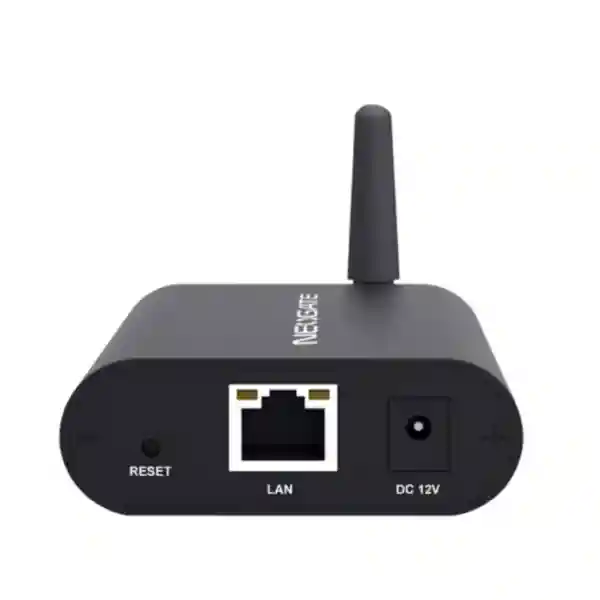
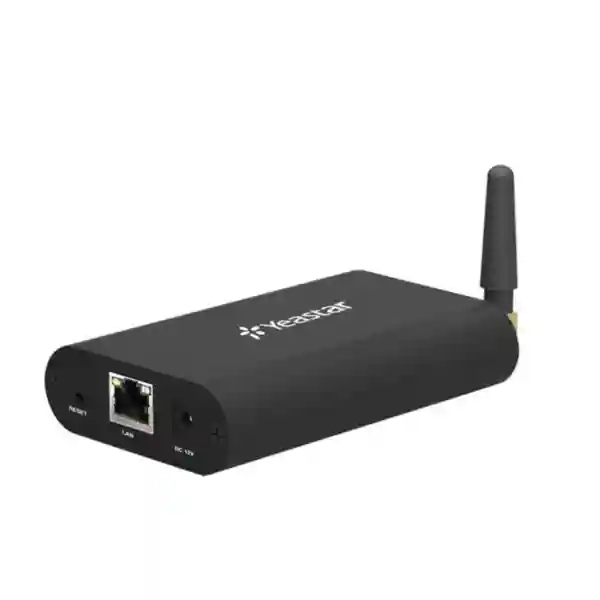
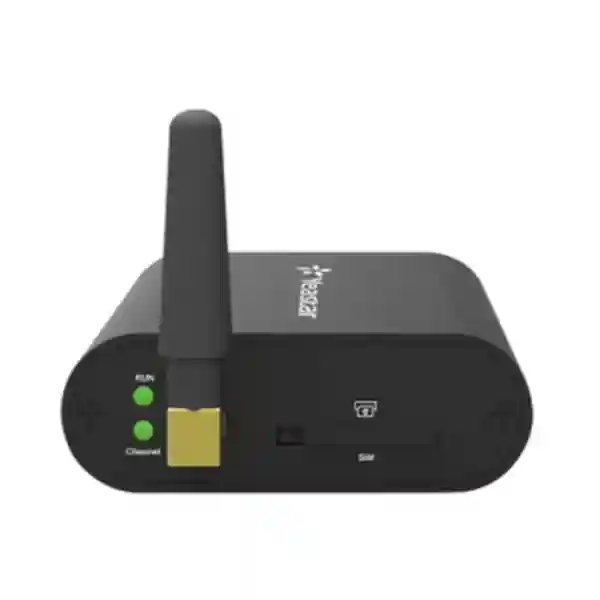
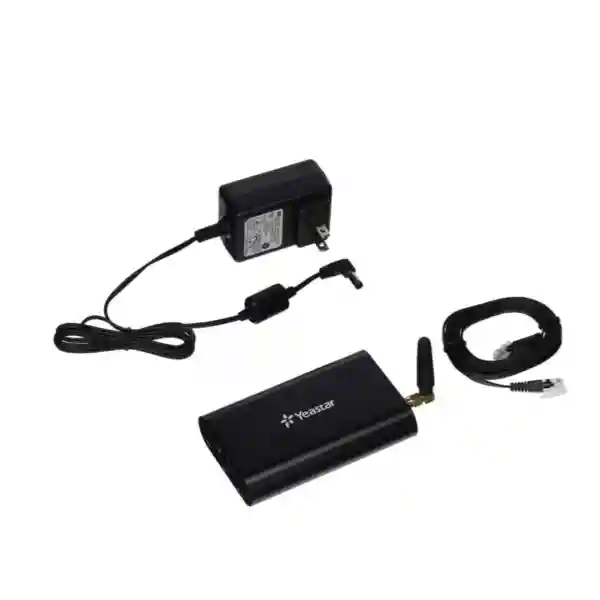
Yeastar TG100 VoIP 4G Gateway
The Yeastar TG100 is a compact, single-channel cellular VoIP gateway designed to connect a GSM or 3G/UMTS mobile network to an IP-PBX or softswitch. It supports two-way call routing between cellular and VoIP networks and includes SIP/IAX2 connectivity, web management, SMS and USSD functions, routing controls, security tools, and common telephony features. However, buyers should note a critical product-status point before ordering or planning a new installation: Yeastar states that TG100 does not support 4G LTE, and Yeastar lists TG100 as End-of-Life from 31 December 2025, with TG200 as the migration path. This page therefore helps Tanzania buyers understand what TG100 can do, where an existing unit may still fit, and when a current TG-series model is the more appropriate choice.
Need one GSM/3G cellular channel for an existing system? TG100 may still be relevant where hardware is already deployed and the mobile network remains compatible.
Need a new 4G LTE deployment? Choose a currently supported LTE-capable TG-series model rather than TG100.
What the Yeastar TG100 actually supports
For procurement accuracy, the TG100 should be described as a one-port GSM/3G VoIP gateway, not as a 4G LTE gateway. Yeastar’s TG-series information identifies one cellular port for TG100 and documents GSM frequencies of 850/900/1800/1900 MHz, with WCDMA/UMTS band options depending on the module. The gateway supports SIP and IAX2, common transport options including UDP, TCP, TLS and SRTP, and codecs such as G.711, G.726, G.729A, GSM, ADPCM and Speex. DTMF options include RFC2833, SIP INFO and in-band signalling, while echo cancellation is based on ITU-T G.168 LEC.
The TG100 can route calls in both directions: VoIP-to-cellular termination and cellular-to-VoIP origination. This is useful when an IP-PBX needs access to a mobile network for outbound calling, inbound mobile-number handling, temporary connectivity, or a secondary voice path. The device includes a 10/100 Mbps Ethernet interface and supports network functions such as DHCP, static IP addressing, VLAN, QoS, static routing, DDNS, firewall controls and OpenVPN. Administrators can use a web interface for configuration and can work with call routing rules, SIP trunk or peer settings, logs, packet capture, backup and restore, and related operational tools.
SMS and USSD are another practical part of the TG platform. The feature set includes SMS sending and receiving, bulk SMS, SMS Center functions, USSD and API capabilities. These functions can be useful for operational notifications, mobile-account checks and application integration, but organizations should validate their carrier policies and local rules before automating messaging. Because TG100 is now a legacy product, any new deployment should also be evaluated against lifecycle, firmware availability, carrier-network evolution and the cost of moving directly to a supported model.
1 cellular channel
Suitable for a small requirement where a single cellular path is enough. It is not a multi-SIM load-sharing platform.
SIP and IAX2
Designed to connect mobile-network calling with IP-PBX, softswitch and SIP-based environments using established VoIP protocols.
No 4G LTE on TG100
Yeastar explicitly excludes TG100 from LTE support. LTE buyers should move to the appropriate newer TG-series model.
End-of-Life model
Yeastar lists TG100 as EOL from 31 December 2025 and names TG200 as the migration path for buyers planning replacement.
Important before you request a TG100 quotation
If your requirement is specifically for a new 4G LTE cellular trunk, do not approve TG100 purely because a reseller page describes it as a 4G gateway. Yeastar’s own product information is the authoritative reference and states that the TG100 does not support 4G LTE. For a new project, request a comparison with current TG-series LTE-capable alternatives and confirm the cellular module, bands and operator compatibility before purchasing. If you already own TG100 units, provide the exact hardware version, cellular module type, firmware version and mobile operator so the existing environment can be assessed without assuming compatibility.
Verified technical profile and deployment considerations
| Area | TG100 guidance |
|---|---|
| Cellular channels | 1 GSM/CDMA/UMTS channel, depending on ordered module/version. |
| 4G LTE | Not supported on TG100 according to Yeastar. |
| VoIP protocols | SIP and IAX2. |
| Transport/security | UDP, TCP, TLS and SRTP support is documented for the TG series/TG100 profile. |
| Ethernet | 1 × 10/100 Mbps Ethernet interface. |
| Network features | DHCP, DDNS, firewall, OpenVPN, static IP, QoS, static route and VLAN. |
| Management | Web-based configuration, backup/restore, logs, packet capture and firmware upgrade tools. |
| Lifecycle | End-of-Life: 31 December 2025; Yeastar migration path: TG200. |
For deployment, the technical table is only the starting point. Cellular frequency support must match the operator serving the site, signal strength should be tested at the actual installation position, and antenna placement can materially affect reliability. On the IP side, the PBX should be configured with appropriate trunk authentication or peer rules, outbound and inbound routes, codec priorities, DTMF settings and security controls. Call-routing logic should be documented so administrators understand which calls are intentionally sent through the cellular channel and what happens if that path is unavailable.
Related FourTeck Tanzania resources
For broader voice-system planning, review the FourTeck Tanzania services page, which covers IP PBX and IP-phone project planning alongside networking, security and infrastructure services. Buyers comparing TG100 with a wider communications architecture can also use the FourTeck Tanzania technology shop to frame telephony, switching and supporting equipment requirements.
If the project includes new voice handsets, network switches, Wi-Fi, security or other business infrastructure, the FourTeck Tanzania solution overview explains how those systems depend on one another. For company context, visit About FourTeck Tanzania. When you are ready to compare TG100 with an LTE-capable replacement or request a quotation, use the FourTeck Tanzania contact page.
Regional buyers can also review FourTeck’s broader network for local technology context: FourTeck Kenya for Kenya-based IT and VoIP requirements, FourTeck Uganda for Uganda communications projects, FourTeck Africa for multi-market technology planning, FourTeck Ghana for Ghana procurement, and FourTeck Nigeria for Nigeria technology requirements.
Yeastar TG100 VoIP 4G Gateway Tanzania
Organizations searching for the Yeastar TG100 VoIP 4G Gateway in Tanzania are often trying to solve a practical connectivity problem: connect a mobile line to an IP-PBX, create a secondary voice path, reduce dependence on a fixed-line trunk, or keep an existing TG100 installation operational. The first procurement step is to separate the common search phrase from the verified product capability. TG100 is a one-channel GSM/3G gateway and does not support 4G LTE. This distinction matters in Tanzania because mobile operators continue to modernize their networks, and a new communications project should not be designed around a cellular technology that may not align with the site’s current or future service environment.
For an existing TG100 in Tanzania, the device can still be evaluated as a bridge between a supported mobile network and a SIP or IAX2 PBX. The project should identify the exact cellular module, check whether the operator still provides the required GSM or UMTS service at the installation location, and verify signal conditions with the intended SIM. On the VoIP side, administrators should record the PBX address, authentication method, codecs, inbound route, outbound route, DTMF method and any NAT or firewall rules. That creates a repeatable configuration rather than a one-off setup that becomes difficult to support later.
Businesses in Tanzania may use a cellular gateway for several reasons. A branch office could send selected calls through a mobile network. A temporary site could use a cellular channel while fixed infrastructure is being arranged. An organization with a legacy PBX deployment might use TG100 to preserve an existing calling workflow. SMS and USSD capabilities may also be useful where operational teams need to send messages or query mobile-account information. These use cases should be evaluated against carrier rules, security policy and lifecycle risk rather than treated as universal benefits.
For new Tanzania projects, the lifecycle position is decisive. Yeastar lists TG100 as End-of-Life as of 31 December 2025 and points customers toward TG200. That means a buyer requesting a fresh deployment should normally compare a current TG-series model with the exact number of channels and LTE bands required. A FourTeck quotation request should therefore include the target mobile operator, required number of simultaneous cellular calls, PBX brand/model, expected inbound and outbound call flow, site location, and whether SMS/USSD is needed. This information helps distinguish between maintaining TG100 and selecting a replacement that is better aligned with current network conditions.
Yeastar TG100 VoIP 4G Gateway Dar es Salaam
In Dar es Salaam, organizations evaluating a Yeastar TG100 are likely to have more than one connectivity option, including SIP trunks, fixed broadband, mobile networks and cloud-based PBX services. That makes the buying decision less about whether TG100 can place a mobile call and more about whether keeping a legacy GSM/3G gateway is the best architecture for the business. The device can still be meaningful where an existing installation depends on a single cellular channel, but a new project should be assessed against Yeastar’s stated EOL status and the fact that TG100 has no 4G LTE support.
A Dar es Salaam office may use cellular routing for a reception line, outbound mobile calling, a temporary office, a small branch, or as an alternate route for specific call patterns. Before configuration, map the desired call flow: which extensions may use the cellular channel, whether incoming mobile calls should ring reception or an IVR, which numbers should be blocked, and what should happen if the cellular trunk is busy. Because TG100 has one cellular channel, only one cellular call can be handled through that channel at a time. This is an important sizing point for offices with several users who may need to place mobile-routed calls concurrently.
Network preparation should also be deliberate. The TG100 connects through Ethernet, so the LAN should provide stable addressing and appropriate reachability to the IP-PBX. Voice VLANs, QoS, firewall rules and NAT design may be relevant depending on whether the PBX is on the same site, in another branch, or hosted elsewhere. If the device is exposed to remote management or communicates across untrusted networks, administrator credentials, permitted source addresses and encrypted transport options should be reviewed rather than leaving a legacy gateway broadly reachable.
For procurement teams in Dar es Salaam, the quotation should state whether the requirement is replacement of an existing TG100 or a new cellular gateway. If it is a replacement, include the existing SIM/operator, PBX details, routing logic, current firmware and any SMS integration. If it is a new project, ask for an LTE-capable alternative and confirmation of the relevant mobile bands. FourTeck Tanzania’s contact page identifies Dar es Salaam among its listed office locations, making the Tanzania contact route the appropriate place to submit the complete requirement for compatibility review and model selection.
Yeastar TG100 VoIP 4G Gateway Mwanza
For businesses in Mwanza, a cellular VoIP gateway can be considered when voice connectivity needs to work alongside mobile coverage, branch telephony or a limited fixed-line environment. The TG100 can bridge one GSM/3G cellular channel to an IP-PBX, but the site should be treated as a real radio environment rather than assuming a mobile service will work identically everywhere in the city or surrounding operational areas. Signal level, building construction, antenna placement, operator coverage and the specific cellular module all influence whether a legacy TG100 can provide a stable call path.
A typical Mwanza requirement might involve a warehouse, office, retail branch, hospitality property, clinic, school or distributed operation that already has an IP-PBX and wants a mobile-network route for selected calls. The PBX administrator can use outbound rules to direct specific destination patterns toward the gateway and inbound rules to send calls from the cellular number to reception, a ring group or another internal destination. Because the TG100 provides one cellular channel, capacity planning should be realistic. A team that expects several simultaneous mobile calls needs a multi-channel current gateway rather than multiple assumptions around one legacy port.
Power and network stability deserve attention as well. The gateway, PBX and switch all need consistent power for the voice path to work. If the business uses UPS backup for its network, the gateway and any associated router should be included in the protected load. Ethernet connectivity should be documented, and administrators should avoid ad-hoc cabling or undocumented IP settings that make troubleshooting difficult. When a fault occurs, packet capture, call logs and trunk status can help distinguish between an IP-routing problem, PBX configuration issue and cellular-network problem.
For a new Mwanza deployment, TG100 should not be selected as an LTE gateway. Yeastar’s own documentation excludes LTE support and its lifecycle policy lists TG100 as EOL. Procurement should instead specify the business requirement—number of channels, preferred operator, expected call volume, SMS/USSD needs and IP-PBX details—and request a supported LTE-capable TG-series model. This avoids buying a product simply because an older model name appears in search results and keeps the architecture aligned with a more current cellular environment.
Yeastar TG100 VoIP 4G Gateway Arusha
Arusha organizations may consider cellular-to-VoIP gateways for hotels, tour operations, offices, educational environments, branch sites and businesses that coordinate with staff or customers over mobile networks. In those use cases, the attraction of the TG100 is its simple concept: one cellular channel can be presented to an IP-PBX so selected calls can move between mobile and VoIP networks. The technical simplicity can be useful in an existing installation, but lifecycle and network-generation support now need to be part of every buying decision.
For an existing TG100 in Arusha, begin with service validation. Confirm the module variant installed in the gateway, the SIM operator and whether the required GSM or UMTS service is still available with adequate signal where the equipment is installed. Test inbound and outbound calls rather than relying only on registration indicators. Confirm caller ID behavior, DTMF operation for IVR access, codec compatibility and whether call progress tones are handled correctly. If the cellular service is marginal, antenna position and cable quality may need attention before changing the PBX configuration.
The IP side should be integrated into the rest of the voice design. If the IP-PBX uses VLANs, the gateway should be placed in the appropriate network with documented access rules. If the gateway reaches a remote PBX through the internet, NAT traversal and security become more important. Use strong credentials, restrict management access, back up the configuration and keep a record of routes. SMS and USSD functions may add value for specific operational workflows, but they should be tested with the chosen carrier and application rather than assumed to work identically across every SIM plan.
For new Arusha requirements, FourTeck Tanzania should be given the exact outcome instead of only the model name. State whether the project needs a cellular backup trunk, mobile-call routing, inbound mobile-number termination, SMS, or branch connectivity. Include the expected number of simultaneous calls and the PBX platform. Since TG100 is EOL and lacks LTE support, new installations should normally compare TG200 or another current model with the correct LTE module and bands. This approach keeps procurement focused on fit, not on an outdated search label.
Yeastar TG100 VoIP 4G Gateway Dodoma
In Dodoma, government-related offices, professional firms, educational organizations, businesses and branch operations may encounter the TG100 when maintaining an older Yeastar deployment or searching for a small cellular VoIP gateway. The key technical clarification remains essential: TG100 provides a single GSM/3G cellular channel and does not provide 4G LTE. Any new requirement that specifically depends on LTE should therefore be moved to a current TG-series model rather than treating TG100 as a modern 4G platform.
A legacy TG100 may still be operational where the mobile operator continues to support the gateway’s radio technology. In that situation, administrators should document the whole chain from SIM to PBX. Record the cellular module and frequency support, antenna connection, signal level, Ethernet address, SIP or IAX2 trunk definition, authentication, codecs, DTMF, inbound route, outbound route and permitted users. A clear configuration record is particularly valuable for older equipment because replacement parts, vendor support and troubleshooting knowledge can become harder to obtain over time.
Capacity is straightforward but easy to overlook. One TG100 cellular port means one cellular call path. If a Dodoma office expects a queue of outbound mobile calls, simultaneous departmental calling or multiple inbound mobile calls, the gateway is undersized regardless of how well the PBX itself scales. A multi-channel replacement can reduce contention and provide a cleaner path for growth. The right number of channels should be determined from actual peak call concurrency, not just the total number of extensions.
Procurement teams should also factor in product lifecycle. Yeastar identifies TG100 as EOL from the end of 2025 and recommends TG200 as the migration path. A quotation for Dodoma should therefore state whether the aim is to support an installed TG100 temporarily, source a replacement unit for continuity, or modernize the cellular trunk. FourTeck Tanzania’s contact page lists Dodoma among its office locations; buyers can use the Tanzania enquiry route to provide PBX details, user count, operator information and the intended call flow for a more accurate recommendation.
Yeastar TG100 VoIP 4G Gateway UAE
UAE buyers searching for Yeastar TG100 as a 4G gateway should treat the model name with caution. The TG series includes LTE-capable models, but Yeastar specifically excludes TG100 from 4G LTE support. In a market where mobile network evolution and VoLTE expectations are important, a new deployment should not be based on TG100 unless the requirement is explicitly to maintain a compatible legacy GSM/3G installation. The more suitable procurement path for current projects is to select an LTE-capable TG-series model after checking the installed module, supported bands and operator compatibility.
A business with an existing TG100 may use it for a single cellular route into a SIP or IAX2 PBX, such as a small branch, a mobile-number entry point or a controlled outbound route. The network administrator should verify whether the cellular service used by that particular gateway is still available and stable. UAE deployments can also have strict corporate network policies, so the gateway should be placed in an appropriately segmented network, with administration limited to authorized sources and firewall rules scoped to the required PBX communication only.
If the gateway is connected to a cloud or remote PBX, administrators should review NAT traversal, transport security and failover behavior. TLS and SRTP support can be relevant, but security is not achieved by enabling individual protocols in isolation. Strong passwords, limited management exposure, configuration backups and regular review of routing rules matter as much as protocol selection. Call detail records and logs can also help operations teams understand how the cellular channel is being used and identify repeated call failures or routing mistakes.
Because TG100 reached Yeastar End-of-Life on 31 December 2025, UAE procurement teams planning a new installation should request a migration proposal rather than a like-for-like legacy purchase. State the number of simultaneous mobile channels, the PBX platform, the carrier, desired inbound and outbound routing, SMS/USSD requirements and whether VoLTE is required. FourTeck’s regional technology network can then align the request with a current model and avoid the common error of ordering TG100 under a generic “4G gateway” description that does not match the manufacturer’s specification.
Yeastar TG100 VoIP 4G Gateway Uganda
Uganda organizations may encounter TG100 in older IP telephony deployments where a cellular trunk was added to an office PBX for mobile calling, remote-site connectivity or a backup voice route. The model’s main role is straightforward: convert between a single GSM/3G cellular channel and VoIP. However, buyers should not equate the TG-series family name with LTE capability on every model. Yeastar explicitly states that TG100 does not support 4G LTE, which is particularly important when planning a new cellular trunk in a market where operators continue to evolve network technologies.
For an installed TG100, validate the radio side first. Identify the SIM provider, module version and bands, then confirm current service and signal at the site. An office in an urban area and a branch in a more remote environment may experience very different results even when using the same operator. Antenna placement, building materials and local coverage can all affect call quality. Use actual call testing to validate both directions and confirm caller ID, DTMF and audio behavior before relying on the route for business-critical communication.
The PBX design should define exactly when calls use the gateway. For example, mobile-destination prefixes can be directed through the cellular channel while other calls continue through SIP. Incoming calls to the SIM can be routed to reception, a ring group or another PBX destination. One TG100 channel limits cellular concurrency, so organizations with several departments or higher call volumes should calculate peak simultaneous mobile calls and consider a larger gateway. SMS and USSD features can be useful, but their suitability depends on the operator and the organization’s workflow.
For new projects in Uganda, the EOL status should shift the conversation toward migration. Yeastar’s lifecycle page places TG100 in the End-of-Life category as of 31 December 2025 and points to TG200 as the migration path. FourTeck Uganda’s regional site covers IP PBX and VoIP solutions, while FourTeck Tanzania can coordinate the product enquiry from this page. A useful request should include the PBX model, number of required cellular channels, operator, site city, expected call traffic and whether a current LTE/VoLTE-capable solution is mandatory.
Yeastar TG100 VoIP 4G Gateway Kampala
Kampala businesses often operate in environments where mobile connectivity, SIP trunks and IP-PBX platforms can all be available, so a cellular gateway should be selected for a defined role rather than simply added because it appears to offer an alternate route. TG100 can provide one GSM/3G channel for an older deployment, but it does not support LTE. For a new Kampala office that specifically wants a 4G cellular trunk or VoLTE, a current TG model is the more appropriate starting point.
Where TG100 is already installed, administrators can use it for controlled routing of selected mobile calls, a dedicated SIM number, temporary fallback or a small branch. The PBX can make the gateway available to chosen extensions or prefixes, but call permissions should be deliberate to prevent unexpected usage. A single channel also means that when one cellular call is active, a second call cannot use that same port. Reception and sales teams should understand this limitation so busy behavior is not misdiagnosed as a PBX fault.
Kampala deployments should also be checked for local radio conditions and building layout. If the equipment is in a rack or interior server room, the antenna may need a position that provides usable cellular signal without creating an untidy or fragile installation. On the IP side, give the gateway a documented address, protect the management interface and back up the configuration. If the gateway communicates with a PBX at another site, test the path for latency, packet loss and firewall behavior, because call quality depends on both the cellular and IP sides.
When requesting pricing in Kampala, specify whether the objective is maintaining an existing TG100 or buying a new cellular gateway. If the latter, include the required number of channels and the intended operator so an LTE-capable replacement can be matched more accurately. Because Yeastar lists TG100 as EOL, procurement should avoid treating low price or remaining stock as the only decision factor. Long-term support, carrier compatibility, firmware status and the ability to grow beyond one cellular channel are more important for a new business communications design.
Yeastar TG100 VoIP 4G Gateway Arua
For an Arua business or branch, a cellular gateway may be attractive when mobile connectivity is easier to obtain than traditional telephony or when the organization wants a second call path. TG100 can connect one compatible GSM/3G cellular channel with an IP-PBX. That architecture can be useful for a legacy setup, but organizations should first confirm whether the local operator still provides the radio technology required by the installed module. New 4G/LTE requirements should not be assigned to TG100 because the model does not support LTE.
A practical Arua installation assessment should include signal quality at the actual equipment location, not only on a mobile phone outside the building. Rack position, walls, roofing materials and antenna placement can alter the result. The mobile SIM plan should also be appropriate for gateway use under the operator’s terms. Once the radio side is stable, test both incoming and outgoing calls and verify audio in both directions, caller ID and DTMF. These tests create a baseline before changing PBX routing.
The gateway can be integrated into a small office PBX with a simple outbound pattern or can serve as a specific inbound mobile number. However, one channel means one simultaneous cellular call. If a branch has several users or needs dependable access during a SIP outage, capacity should be calculated from expected concurrency rather than extension count alone. If two or more cellular calls may overlap, moving to a multi-channel current platform is usually cleaner than trying to stretch one TG100 beyond its design.
Because TG100 is an End-of-Life product, replacement planning should be part of any support activity in Arua. Back up the existing configuration, document SIM and antenna details, record trunk and routing settings, and identify the newer model that can reproduce the required call flow. When contacting FourTeck, include whether the site needs LTE or VoLTE, the chosen mobile operator, number of channels, PBX type and any SMS/USSD usage. This lets the quotation focus on continuity and future compatibility rather than only on locating another legacy unit.
Yeastar TG100 VoIP 4G Gateway Mbarara
Mbarara organizations with branch offices, clinics, schools, hospitality sites, retail operations or service businesses may use IP telephony while still needing access to mobile networks. A cellular gateway can make that connection, and TG100 historically provided a compact one-channel option. For 2026 procurement, however, the model must be treated as legacy: it is GSM/3G rather than LTE, and Yeastar has already placed TG100 in End-of-Life status. This changes the buying question from “where can I buy TG100?” to “is maintaining TG100 still sensible for this site?”
If an existing TG100 is stable and the operator continues to support its mobile technology, the gateway can remain a controlled part of the PBX environment while a migration is planned. Administrators should make a current backup and document the Ethernet configuration, SIP/IAX2 settings, routes, codecs, DTMF method, SIM operator and antenna setup. If troubleshooting is needed, use call logs and packet capture on the IP side and direct signal/call testing on the cellular side to isolate where the failure begins.
For businesses using the gateway as an alternate route, failure behavior should be deliberate. What should happen when the cellular channel is busy, unavailable or has insufficient signal? The PBX may be able to try another trunk, return a clear error, or route certain calls differently. Documenting this behavior prevents users from repeatedly retrying calls without understanding the limitation. Likewise, permissions should limit which users can access expensive or sensitive routes, especially if the SIM plan has usage limits.
A new Mbarara deployment should be specified around current needs. Provide the expected number of concurrent cellular calls, operator, LTE/VoLTE requirement, PBX type, remote-site topology and SMS/USSD use. Since Yeastar recommends TG200 as the migration path from TG100, it is sensible to compare the relevant modern TG configuration instead of reproducing an older one-channel 3G architecture. This gives procurement a clearer lifecycle position and reduces the risk that a newly purchased gateway depends on diminishing network support.
Yeastar TG100 VoIP 4G Gateway Gulu
In Gulu, a mobile-to-VoIP gateway may be considered for branch telephony, local mobile calling, temporary offices or resilience where fixed-line options are limited. The TG100 can perform that role only as a GSM/3G single-channel gateway. Search listings that attach “4G” to TG100 can create a procurement error, so buyers should verify against Yeastar’s own information before ordering. TG100 does not support LTE, and the manufacturer has already reached the model’s End-of-Life milestone.
For an existing Gulu installation, check whether the mobile network used by the gateway remains suitable. A mobile phone showing 4G service does not prove that a TG100’s older radio module will register or place calls. Identify the specific module and verify the operator technology that the site can use. The antenna should be securely installed with a stable signal. Once cellular registration is confirmed, test calls in both directions and validate voice quality, DTMF and caller-ID behavior.
The IP network should be equally structured. Give the gateway a known address, document its VLAN and switch port, limit management access and keep the configuration backup with the PBX records. If the device is used with a remote PBX, check internet stability and firewall rules. TG100 supports several network and security functions, but the overall design should remain simple: only expose the services that are actually needed and avoid leaving legacy interfaces reachable from untrusted networks.
For replacement planning in Gulu, determine whether one channel remains enough. If the branch has grown, a multi-channel LTE-capable gateway may be more appropriate. Specify how many calls can overlap, whether inbound mobile calls are important, whether the SIM is used for SMS/USSD, and what PBX must be integrated. Yeastar’s migration guidance toward TG200 provides a logical starting point, but final model and module selection should be based on the actual operator, bands and business capacity rather than a direct assumption that every newer TG200 variant is identical.
Yeastar TG100 VoIP 4G Gateway Kenya
Kenya has an active market for Yeastar telephony equipment, and TG100 listings are still visible from regional resellers. That availability can be useful for businesses maintaining an installed system, but it can also create confusion because some reseller pages describe TG100 using the broader “GSM/3G/4G” language of the TG family. Yeastar’s own documentation is more specific: TG100 does not support 4G LTE. Buyers should therefore distinguish between remaining legacy stock and a current LTE-capable gateway intended for a new deployment.
An organization with TG100 already in service can continue to evaluate it as a single cellular channel into a SIP/IAX2 PBX. The gateway can support inbound and outbound routes, SMS/USSD functions and common management tools. However, its one-channel capacity should be checked against current usage. A growing Nairobi office, a branch operation or a support team may quickly outgrow one cellular call path. If users report busy conditions, the solution may be capacity expansion rather than PBX reconfiguration.
Kenya deployments should also consider the operator and radio bands. The fact that a newer phone works well on a carrier does not establish that the TG100 module is compatible with the service used at that location. Check the installed module, current SIM service and signal, then confirm calling behavior. On the IP side, integrate the gateway with documented routing, security controls and failover rules. For branch use, ensure the WAN path to a remote PBX is stable enough for VoIP traffic.
For new Kenya procurement, compare the lifecycle cost of a legacy TG100 with a current LTE-capable replacement. Yeastar marks TG100 EOL from 31 December 2025 and identifies TG200 as the migration path. FourTeck Kenya’s regional site covers IP PBX, VoIP and business IT solutions, which makes it a relevant context for projects that extend beyond the gateway itself. A quotation should include channel count, operator, PBX model, voice-routing objective, SMS/USSD requirements and whether LTE/VoLTE is mandatory so the correct current hardware can be selected.
Yeastar TG100 VoIP 4G Gateway Kuwait
Kuwait buyers searching for TG100 often need a compact gateway that places cellular calls through an IP-PBX or receives a mobile number into the office phone system. The TG100 historically filled that one-channel role, but it is not an LTE gateway. For a 2026 business deployment, that limitation and the model’s EOL status should be treated as primary technical criteria. A new project that requires current mobile-network compatibility should start with an LTE-capable TG model and confirmed operator bands.
Where a Kuwait organization already has TG100 in service, maintenance can focus on configuration stability and transition planning. Record the device firmware, SIP or IAX2 trunk settings, cellular module, SIM, network address and routing logic. Keep a known-good configuration backup so a factory reset or configuration error can be recovered without rebuilding the device from memory. Review administrator access and firewall exposure because legacy devices deserve tighter management controls, not looser ones.
Call routing should match the business case. Some organizations use cellular gateways to send mobile-destination calls over a SIM plan, while others use a mobile number as an inbound route. The PBX can route those calls to reception, departments or extensions. Since TG100 has one cellular channel, concurrency is limited. If several users rely on mobile calling, the business should calculate how often calls overlap and move to a gateway with sufficient channels rather than relying on busy retries.
For a replacement project, specify the mobile operator, LTE/VoLTE requirement, number of cellular channels, PBX platform and security topology. If the PBX is hosted or located at another site, include the WAN architecture so NAT, firewall and transport requirements are considered from the beginning. Yeastar’s official migration path from TG100 points toward TG200, but the exact module variant must still be matched to the intended network. This is more dependable than selecting by product-family name alone.
Yeastar TG100 VoIP 4G Gateway Ghana
Ghana businesses considering a cellular gateway may want to connect a mobile SIM to an office PBX, support a branch, provide a temporary voice route or retain an existing mobile-number workflow. TG100 can serve such a use case only where its GSM/3G module remains compatible with the selected operator. It is not a 4G LTE device, despite search phrases that may combine TG100 with the broader TG-series 4G category. This distinction should be written directly into purchase specifications to avoid receiving hardware that cannot satisfy the network requirement.
An installed TG100 should be assessed from both sides of the gateway. On the cellular side, validate the SIM, module, frequencies, signal and two-way calling. On the VoIP side, verify SIP/IAX2 registration or peer status, routing, codecs, DTMF, NAT and firewall behavior. If the gateway is used for SMS or USSD, test the actual workflow and document any API integration so a future replacement can reproduce the needed function rather than only matching the voice channel count.
For organizations with several users, one cellular channel can become a constraint. A single active mobile call occupies the path, so procurement teams should distinguish between “one SIM” and “one simultaneous call.” If the company expects multiple concurrent calls, a multi-channel current gateway should be sized accordingly. Capacity planning is especially important when the cellular route is intended as a fallback because many users may attempt calls at the same time during an outage of the primary trunk.
TG100 reached Yeastar End-of-Life at the end of 2025, so Ghana buyers planning new infrastructure should compare supported alternatives. FourTeck Ghana provides regional business technology context, while the Tanzania enquiry can coordinate this product request. Provide the PBX vendor/model, desired mobile carrier, channel count, call flow, LTE/VoLTE requirement and site type. That information supports a more accurate model selection and reduces the risk of purchasing remaining legacy stock simply because it appears inexpensive or familiar.
Yeastar TG100 VoIP 4G Gateway Nigeria
Nigeria has a large and varied mobile communications environment, which makes careful gateway specification essential. A business searching for Yeastar TG100 may be trying to integrate a SIM with an IP-PBX, reduce dependence on one trunk type, or retain an older cellular voice setup. TG100 provides only GSM/3G capability and one cellular channel; it does not support LTE. New projects that need 4G or VoLTE should therefore move directly to a compatible newer TG-series model.
Existing TG100 deployments can still be evaluated where operator service remains compatible. The first step is to identify the radio module rather than assuming every TG100 unit has identical cellular support. Test the intended SIM at the actual site, because coverage and indoor signal conditions vary. The antenna should have a stable, suitable position. After the radio side is confirmed, validate PBX routes, codecs, DTMF and caller ID so the gateway behaves predictably in both call directions.
Security is also important. Cellular gateways connect two communications domains, and the management interface should not be left exposed without a reason. Use a segmented network where appropriate, strong administrator credentials, source restrictions and configuration backups. Monitor call records for unusual usage and set PBX permissions so only authorized extensions can access mobile routes. If the business uses SMS or USSD APIs, protect those interfaces and record the integration details for future migration.
For a Nigeria replacement or expansion, begin with concurrency and carrier requirements. A one-channel TG100 may have been adequate when an office was smaller but can become a bottleneck as call volume grows. Yeastar lists TG100 as EOL and provides TG200 as the migration path, making a current multi-channel review sensible. FourTeck Nigeria’s regional site can support broader IT context, while a quotation request should provide the PBX platform, required simultaneous mobile calls, preferred carrier, LTE/VoLTE need, branch topology and any messaging functions.
Yeastar TG100 VoIP 4G Gateway Seychelles
In Seychelles, where businesses may operate hotels, resorts, professional offices, service organizations and distributed properties, a cellular VoIP gateway can be considered as one component of a wider communications plan. TG100 historically provided a simple single-channel bridge between GSM/3G and an IP-PBX. It should not be specified for a new 4G LTE requirement, because Yeastar explicitly states that TG100 does not support LTE and the model is now End-of-Life.
If an organization already has TG100 at a property, assess whether the existing mobile service remains compatible and whether the gateway still serves a useful operational purpose. A single cellular channel may be enough for a dedicated mobile-number route, a low-volume backup path or a specific department. For a busy reception, reservations team or multi-user office, one simultaneous cellular call is likely to be restrictive. Usage records can help determine whether capacity has outgrown the original design.
Island and property layouts can make signal testing especially important. Equipment rooms may be located away from windows or in areas with shielding materials, so mobile signal at the gateway can differ from user experience elsewhere in the building. Antenna placement should be neat, secure and tested. The IP network should also provide stable connectivity to the PBX, with VLANs, firewall rules and QoS considered where appropriate. For remote PBX connections, test WAN quality and avoid unnecessary management exposure.
A new Seychelles project should be documented by business outcome: how many cellular calls must occur simultaneously, whether the mobile number receives inbound calls, which operator will be used, whether SMS/USSD matters, and whether LTE or VoLTE is required. Since Yeastar recommends migration from TG100 to TG200, a current TG-series comparison is the right starting point. Final model selection should still verify module type and network compatibility rather than assuming that a newer model automatically matches every carrier configuration.
Compatibility, integration and migration guidance
TG100 can interoperate with SIP-based PBX and softswitch environments, but compatibility should be validated at the feature level rather than assumed from basic SIP registration. Check whether the PBX and gateway agree on authentication, codecs, DTMF transport, caller ID presentation, early media, call progress and transfer behavior. If calls traverse NAT, confirm that signalling and RTP return correctly. Where the gateway and PBX are on different sites, firewall policy and WAN reliability become part of the voice design.
Migration from TG100 should begin with an inventory of what the device currently does. Record inbound routes, outbound routes, SIM/operator details, any prefix manipulation, call permissions, SMS/USSD use, API integrations, IP addressing and security rules. Then translate those requirements to the new gateway. This is better than simply replacing a box because legacy configurations often accumulate hidden behaviors over time. The replacement should be tested for normal calls, busy behavior, no-answer conditions, DTMF, caller ID, failover and any messaging workflow before the old unit is retired.
For organizations that do not already own TG100, the migration step can be skipped. Start directly with a supported LTE-capable model that has sufficient channels for expected concurrency and a cellular module compatible with the target operator. That approach reduces lifecycle risk and creates a cleaner support path.
Quotation checklist for TG100 support or replacement
Frequently asked questions
Does Yeastar TG100 support 4G LTE?
No. Yeastar’s official TG-series information specifically states that TG100 does not support 4G LTE. The broader TG family includes LTE-capable models, which is why reseller descriptions and search results can be confusing.
Is Yeastar TG100 still a current supported product?
No. Yeastar lists TG100 as an End-of-Life product with an EOL date of 31 December 2025. Yeastar identifies TG200 as the migration path.
How many cellular calls can TG100 handle?
TG100 has one cellular channel. That means the cellular side supports one active call path at a time. Businesses needing concurrent mobile calls should evaluate a multi-channel gateway.
Can TG100 connect to an IP-PBX?
Yes. The gateway is designed to provide cellular connectivity to IP-PBX and softswitch environments using SIP or IAX2. Exact configuration depends on the PBX, routing design and network topology.
Does TG100 support SMS and USSD?
Yeastar documents SMS sending/receiving, bulk SMS, SMS Center, USSD and API functions for the TG platform/TG100 feature set. Carrier policies and specific workflows should still be tested.
What should replace a TG100?
Yeastar’s EOL policy lists TG200 as the migration path. The exact replacement should be selected by required channel count, LTE bands, operator compatibility, PBX integration and messaging requirements.
Can I use TG100 as a backup voice route?
It can provide an alternate cellular route where the local GSM/3G network and installed module remain compatible. Because it is EOL and limited to one channel, new resilience designs should usually consider a current gateway.
Decision recap
Choose TG100 only when you have a clear legacy requirement and have confirmed that its GSM/3G cellular module remains compatible with the operator and site. Do not buy TG100 for a new 4G LTE requirement. The manufacturer explicitly excludes LTE support on this model and has already moved TG100 to End-of-Life status.
For a new deployment, define the channel count, mobile operator, LTE/VoLTE requirement, PBX platform and SMS/USSD needs, then compare a current TG-series alternative. For an existing deployment, document and back up the configuration before migration so inbound routes, outbound routes, permissions and messaging workflows are carried forward deliberately.
Talk to FourTeck about TG100 support, replacement or a current LTE gateway
Send the product model, site location, PBX type, operator, number of cellular channels and intended call flow. If your requirement is currently described as “TG100 4G,” mention that you need LTE so the recommendation can be corrected to a compatible supported model rather than quoting a legacy non-LTE TG100.




Reviews
There are no reviews yet.