
Yeastar TG1600 VoIP 4G Gateway Tanzania
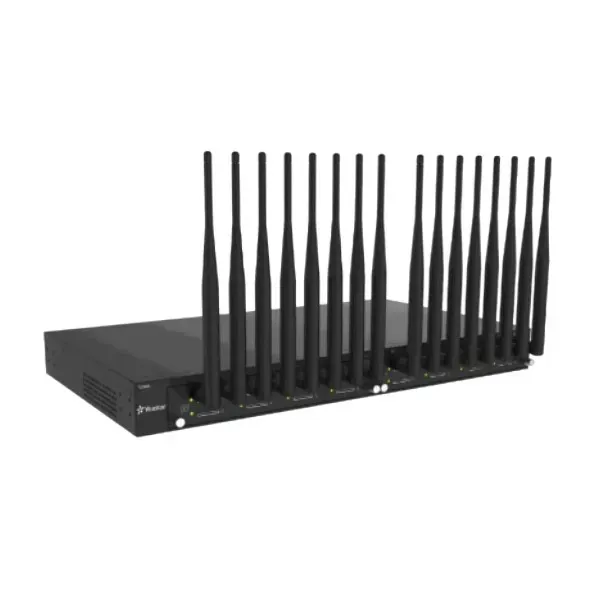
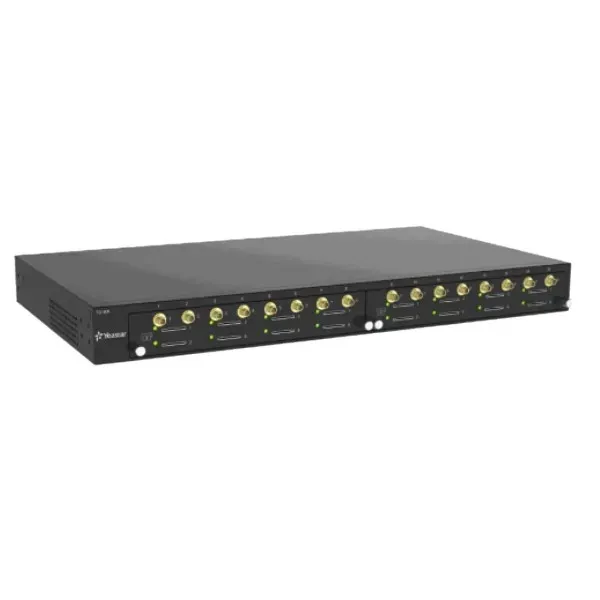
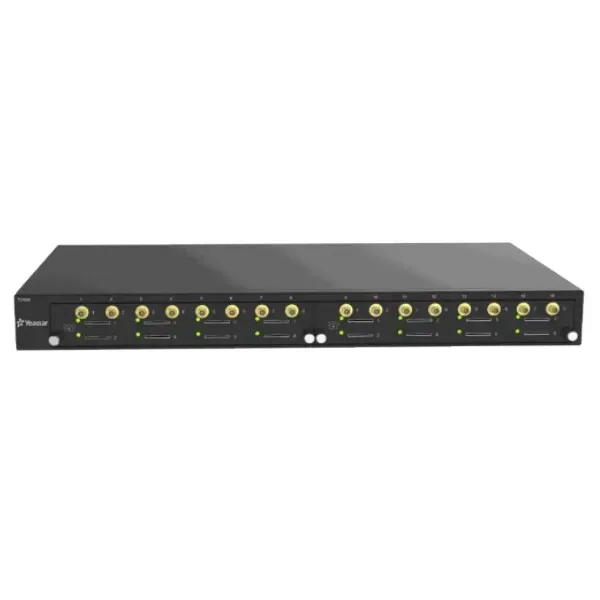
The Yeastar TG1600 VoIP 4G Gateway is a 16-channel cellular-to-VoIP gateway built for organisations that need to connect mobile network services with an IP-PBX, softswitch or SIP-based communications environment. It can route calls in both directions between supported cellular networks and VoIP systems, helping businesses create mobile trunks, add alternative call paths, centralise SIM-based calling and support controlled SMS workflows. For Tanzanian organisations evaluating cellular voice integration, the TG1600 offers a high-capacity rack-mount platform with web-based administration, flexible routing, SIP and IAX2 support, security-oriented transport options and practical monitoring tools. The exact 4G LTE bands depend on the installed module, so operator and band compatibility should always be confirmed before ordering.
What the Yeastar TG1600 Does
The TG1600 sits between a mobile network and an IP telephony system. On one side, supported cellular modules and SIM services provide access to GSM, WCDMA/3G or 4G LTE voice networks depending on the installed hardware. On the other side, the gateway connects to an IP network and communicates with SIP or IAX2-based telephony platforms. This architecture allows an IP-PBX or softswitch to use cellular routes for outbound calls and allows calls arriving through cellular channels to be presented to the VoIP environment. It is particularly useful when a business needs many concurrent mobile channels, wants to consolidate mobile trunks in a communications rack, or needs an alternative path that does not depend entirely on fixed-line telephony.
Yeastar positions the TG1600 as the largest model in the TG family, providing 16 cellular channels. The platform supports incoming and outgoing routing rules, trunk grouping, call detail records, call duration limits, caller identification functions, call transfer, carrier selection, system logs, packet capture and configuration backup and restore. These functions matter in real deployments because a gateway is not simply a collection of SIM slots: it must also help an administrator control which calls use which route, troubleshoot call failures, observe traffic and maintain a repeatable configuration.
The gateway also supports SMS sending and receiving, a web SMS centre, bulk SMS capability and APIs for SMS and USSD functions. Organisations should design SMS use responsibly and in accordance with operator terms, local rules and consent requirements. The TG1600 is a communications gateway rather than a bulk-marketing platform, so the most effective deployments use its messaging functions as part of a well-governed business workflow.
Cellular-to-VoIP Integration
Bridge supported mobile voice services with SIP or IAX2 telephony systems, enabling two-way calling between the cellular network and an IP-PBX or softswitch.
High Channel Density
Sixteen mobile channels make the TG1600 suitable for organisations that have outgrown small two-, four- or eight-channel gateways and need denser rack deployment.
Routing & Control
Incoming and outgoing routing, trunk groups, call-duration limits, carrier selection, CDRs and status visibility give administrators tools for controlled call handling.
Security-Oriented Transport
The TG series supports UDP, TCP, TLS and SRTP transport options, allowing deployments to align signaling and media choices with the capabilities of the connected PBX.
Verified Technical Highlights
| Item | TG1600 capability |
|---|---|
| Mobile channels | 16 channels |
| VoIP protocols | SIP and IAX2 |
| Transport | UDP, TCP, TLS and SRTP |
| Voice codecs | G.711 a-law/u-law, G.726, G.729A, GSM, ADPCM and Speex |
| DTMF | RFC2833, SIP INFO and in-band |
| Echo cancellation | ITU-T G.168 LEC |
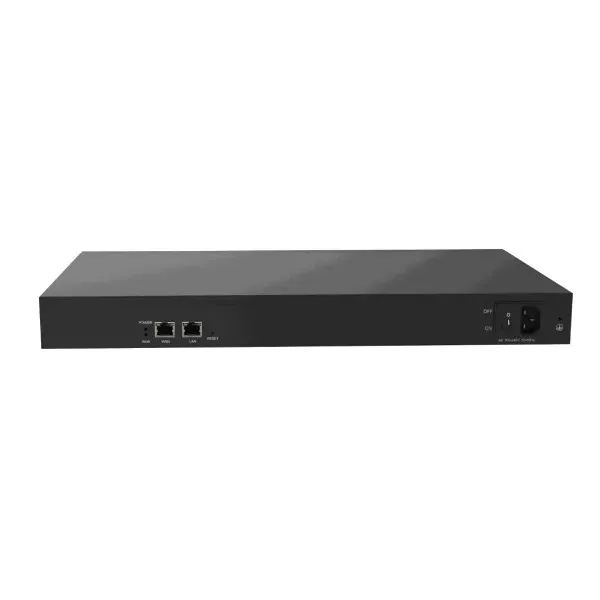
| Ethernet | 2 × 10/100 Mbps Ethernet interfaces |
| NAT traversal | Static NAT and STUN |
| Network functions | DHCP, DDNS, firewall, OpenVPN, static IP, QoS, static route and VLAN |
| Power | AC 100–240 V |
| Dimensions | 440 × 250 × 44 mm |
| Operating range | 0°C to 40°C |
Important LTE note: Yeastar states that supported 4G LTE bands depend on the module type. Confirm the exact module, supported bands and intended mobile operator before procurement or deployment.
Why the 16-Channel Format Matters
A 16-channel gateway is most valuable when a business has a defined need for multiple simultaneous cellular call paths. Rather than deploying several small gateways, the TG1600 can centralise a larger number of channels in one 1U rack-mountable chassis. This can simplify cabling, power planning, IP addressing and administration, particularly in a communications room where the gateway is being integrated with an IP-PBX, call-routing platform or service-provider softswitch.
Capacity should still be sized according to realistic simultaneous-call demand. Sixteen channels do not automatically mean a business should route every call over mobile networks. A better design normally begins with traffic analysis: determine expected concurrent calls, identify which destinations benefit from cellular routing, define backup requirements and decide how many independent SIMs or operators are required. The TG1600 then becomes part of a deliberate routing strategy rather than an isolated appliance.
Business Use Cases in Tanzania
Tanzanian organisations often operate a mix of IP networks, mobile services and geographically distributed offices. In that environment, the TG1600 can be used as a cellular trunk gateway for an IP-PBX, a secondary voice route when a fixed telephony path is unavailable, a controlled outbound route for mobile destinations, or an inbound mobile access point that forwards calls into a VoIP dial plan. These use cases can be relevant to contact centres, logistics operators, hospitality groups, healthcare organisations, educational institutions, financial service operations, government-related environments and multi-branch businesses, provided the technical design and local telecom requirements are appropriate.
For contact-centre-style environments, the key benefit is not simply the number of SIM channels. The larger operational question is how those channels are governed. Administrators can use routing rules, trunk grouping, call status information, call detail records and duration controls to align the gateway with an existing dialing policy. Where a PBX supports least-cost or policy-based routing, the TG1600 can be placed behind that logic so selected calls are directed to suitable cellular paths while other calls continue over SIP trunks or alternative routes.
For multi-site operations, a central TG1600 may also help avoid placing separate mobile devices at every desk. Calls can be presented to extensions through the IP-PBX, while authorised outbound users access mobile trunks through configured routes. The design can improve manageability, but it should be planned with network security, SIM governance, operator terms and failover behaviour in mind.
Yeastar TG1600 Tanzania
For buyers searching for the Yeastar TG1600 in Tanzania, the most important procurement step is to match the hardware variant to the intended cellular network environment. Yeastar publishes the TG series as supporting GSM, WCDMA/3G and, with relevant module types, 4G LTE. Because LTE band support depends on the module, a quotation should state the intended operator or operators, desired network generation, required number of active channels and the IP-PBX or softswitch that will be connected. This prevents a common procurement mistake: ordering solely by model name without validating the cellular module configuration.
Tanzania deployments should also consider antenna placement, rack environment, IP addressing, VLAN policy, firewall rules and PBX routing before installation. The gateway supports an antenna splitter option for relevant TG models, which can reduce antenna count in suitable deployments, but the RF environment still matters. A rack room with heavy metal shielding or poor cellular signal may require careful antenna planning. Good signal quality, correct bands and appropriate SIM provisioning are fundamental to reliable mobile calling.
For organisations with existing SIP trunks, the TG1600 does not need to replace those services. It can instead complement them. A PBX dial plan can use cellular channels for selected mobile destinations or business-continuity scenarios while primary routes continue through existing carriers. This hybrid approach is often more flexible than treating cellular and SIP connectivity as mutually exclusive choices. During solution design, document normal routing, overflow routing, failure behaviour, permitted users and the recovery process if a SIM or mobile network becomes unavailable.
Procurement teams should request confirmation of model version, module type, supported bands, power requirements and any accessories needed for the planned rack and antenna design. They should also confirm that the intended mobile usage complies with operator conditions and applicable rules. FourTeck can assist with solution-level planning around the gateway and related IP telephony infrastructure. For broader technology context, visit FourTeck Tanzania for regional IT and communications solutions.
Yeastar TG1600 Dar es Salaam
Dar es Salaam organisations commonly need communications platforms that can support higher user counts, busy customer-facing operations and integration between multiple connectivity services. The TG1600’s 16-channel architecture is well suited to buyers who have already identified a requirement for substantial cellular call capacity. Rather than using separate desktop mobile devices or a collection of small gateways, the rack-mount TG1600 can centralise mobile trunks and expose them to an IP-PBX through SIP or IAX2.
A strong Dar es Salaam deployment starts with call-flow design. Identify which departments are allowed to use cellular routes, which mobile destinations should be prioritised, whether incoming SIM numbers will map to specific extensions or queues, and how the system should behave during congestion. The gateway’s routing rules and trunk groups can then be aligned with the PBX dial plan. Call detail records provide a useful operational record for troubleshooting and usage review, while call-duration controls can support internal policy.
Network design is equally important. The TG1600 provides two 10/100 Mbps Ethernet interfaces and supports network functions including static IP, DHCP, VLAN, QoS, firewall, static routing and OpenVPN. In a business network, the gateway should normally be placed in an appropriate voice or infrastructure segment rather than exposed unnecessarily. Administrators should restrict management access, use supported secure transport where practical and maintain backups of the working configuration before making major changes.
For cellular compatibility, verify the operator and required bands before purchase. Yeastar explicitly states that supported LTE bands depend on the installed module. This check is particularly important if the intended deployment uses VoLTE. Yeastar’s current documentation describes VoLTE enablement for LTE modules with a suitable 4G SIM in a 4G environment. Procurement should therefore capture the operator, SIM type, expected voice service and location-specific coverage requirements as part of the quote request rather than leaving those details until installation.
Yeastar TG1600 Mwanza
Businesses in Mwanza evaluating the Yeastar TG1600 should focus on how cellular connectivity can complement their existing IP telephony architecture. A multi-channel gateway may be useful for organisations with frequent calls to mobile users, operations spread across several facilities or a requirement for alternate voice routes. The TG1600 can connect supported cellular networks directly into a SIP- or IAX2-based system, which means users can continue working through standard IP phones and PBX extensions while the routing platform determines when calls should use mobile channels.
For regional operations, resilience can be as important as cost. A business that depends on a single fixed telephony path may decide to introduce cellular channels as part of a broader continuity design. The TG1600 supports bidirectional calling, so the mobile side can provide both outbound and inbound paths when properly configured. However, business continuity should never be assumed simply because a second technology is present. The design should test failure scenarios, define which routes activate when a primary service fails and verify that the connected PBX can redirect calls as intended.
Mwanza deployments should also evaluate the RF environment at the equipment location. A gateway installed deep inside a building or metal rack may not receive the same cellular signal as a handset used near a window. Antenna positioning and signal quality should therefore be validated during installation. If an antenna splitter is planned, confirm the supported accessory and layout for the exact hardware variant. Signal strength, operator service quality and network availability remain external factors that influence call performance.
From a management perspective, the TG1600 provides web-based configuration, system logs and packet capture tools that can help diagnose signaling or routing issues. A good handover should document IP settings, SIP trunk configuration, inbound and outbound rules, SIM-to-port mapping, user permissions and backup procedures. That documentation is especially valuable for organisations whose communications system may be maintained by more than one IT administrator over its lifecycle.
Yeastar TG1600 Arusha
Arusha has a broad mix of hospitality, tourism, professional services, education and operational businesses that may need reliable communication between office staff, field teams and mobile users. The TG1600 can be considered when an organisation wants to integrate multiple cellular voice channels with an IP-PBX while keeping call handling centralised. Instead of giving each employee a separate mobile device for business outbound calls, authorised users can place calls through the PBX and allow configured routes to select the gateway when appropriate.
Hospitality and service-oriented organisations should pay particular attention to call presentation and routing rules. Incoming calls to SIM numbers can be directed through the VoIP system to reception, a queue or a defined extension, subject to the capabilities of the PBX and the selected routing configuration. Outbound calls can similarly be mapped according to prefixes, departments or other dial-plan logic. The purpose of the gateway is to make cellular resources usable within an IP telephony workflow rather than operate as a separate communications island.
The TG1600 also provides SMS functionality, including web-based sending and receiving and bulk SMS features. Organisations considering SMS for guest updates, service notifications or internal alerts should first establish governance around message content, recipient consent, operator terms and local requirements. Technical capability alone does not define an appropriate messaging policy. Integration teams should also decide whether messaging will be managed manually through the web interface or through supported API-based workflows.
Before ordering for Arusha, verify the exact module and LTE bands if 4G use is required, determine the number of channels needed, check the rack and power environment and document the intended PBX integration. A requirements-led quotation makes it easier to distinguish the TG1600 from smaller TG models and helps avoid paying for unused capacity. Where eight or fewer simultaneous cellular channels are sufficient, a smaller TG-family model may warrant comparison; where channel density and centralised management are the priority, TG1600 is the logical model to evaluate.
Yeastar TG1600 Dodoma
Organisations in Dodoma looking at the TG1600 may include public-sector departments, institutions, service providers, enterprises and multi-site organisations that need cellular and IP telephony to work together. The gateway provides 16 mobile channels and can register or peer with compatible SIP-based telephony environments. This makes it possible to incorporate mobile routes into an existing extension plan without changing the user experience at every desk.
A procurement specification for Dodoma should separate functional requirements from product assumptions. First identify the required number of simultaneous mobile calls, whether inbound calls are required, whether SMS or USSD functions are part of the project, and what PBX platform will be used. Then specify the intended mobile operators and required bands. Yeastar notes that LTE support varies by module type, so a quote that simply says “TG1600 4G” is incomplete unless the module configuration is matched to the intended network.
Security planning should cover both the management plane and the VoIP connection. The TG series supports TLS and SRTP in addition to UDP and TCP, and it provides firewall and network controls. Use only the protocols and network exposure needed for the deployment, protect management credentials, restrict administrative access and keep configuration backups. Where remote access is required, design it through a controlled method rather than exposing the management interface directly to the public internet.
Operational teams should also define how they will monitor individual SIM channels. Carrier selection, call status, balance alarms where supported by the SIM service, CDRs, logs and port grouping can help administrators maintain a large cellular gateway. If different SIMs are used for different purposes, document the mapping clearly. A consistent naming and routing convention makes fault isolation much easier when sixteen channels are involved.
Compatibility and Integration Planning
Yeastar states that the TG series interoperates with a broad range of softswitch, PBX and IP-PBX environments. In practice, successful interoperability depends on matching SIP settings, authentication method, codecs, DTMF method, transport, caller-ID rules and dial-plan behaviour on both sides. A proof-of-concept or staged configuration is recommended where the connected PBX is business critical.
The TG1600 supports both peer and registered SIP trunk arrangements. Administrators should choose the topology that best fits the PBX and security model. If TLS or SRTP is used, certificate and compatibility requirements should be reviewed. If NAT is involved, validate media paths and firewall rules rather than relying only on signaling success. One-way audio, failed DTMF and incorrect caller ID are often integration symptoms that require inspection of both PBX and gateway configuration.
For a broader IP telephony project, FourTeck’s specialist resources can also be explored through FourTeck IP PBX solutions, while regional organisations operating across East Africa can review FourTeck Uganda and FourTeck Kenya for related communications and infrastructure context.
Yeastar TG1600 UAE
Businesses evaluating the TG1600 for UAE-linked operations should treat cellular gateway design as both a technical and regulatory procurement exercise. The TG1600 can provide 16 mobile channels and IP-PBX connectivity, but the allowed use of cellular SIM resources, call termination and messaging can vary by operator terms and local requirements. Buyers should verify the intended application before deployment and ensure the cellular service is authorised for the proposed business use.
From a technical perspective, the same module-validation rule applies: 4G LTE support depends on the module type. Confirm the bands required by the intended operator and whether VoLTE will be used. Where a UAE office is part of a wider multi-country PBX design, avoid assuming that one TG1600 hardware configuration can simply be moved between countries without checking band and operator compatibility. Mobile network requirements can differ by market.
The TG1600 can integrate with centralised SIP infrastructure, allowing a company to define country-specific routes while managing extension behaviour in a shared IP telephony platform. Such designs should be carefully segmented, secured and documented. If voice traffic traverses WAN links between sites, account for latency, packet loss, QoS and firewall policy. The cellular gateway itself only solves the mobile-network edge; end-to-end call quality depends on the entire IP path.
For UAE-associated projects, procurement teams may also review the wider FourTeck technology portfolio at FourTeck UAE. The correct design should be based on required channels, PBX topology, operator compatibility and approved use, not on geographic keyword matching alone.
Yeastar TG1600 Uganda
For Uganda deployments, the TG1600 can provide a central bridge between supported cellular services and an IP-PBX, allowing businesses to make policy-based use of mobile routes without changing the endpoint used by staff. A multi-branch company can centralise selected mobile trunks or place gateways at sites where the cellular route is operationally useful. The choice depends on WAN reliability, call routing, mobile coverage and the PBX architecture.
Before purchase, identify the operators and network bands expected at the installation site. LTE support in the TG family depends on the installed module, and VoLTE requires an LTE module, an appropriate 4G SIM and a compatible network environment. This verification should happen during procurement rather than after installation. Buyers should also check whether the intended SIM plan permits gateway use and whether any commercial or regulatory conditions apply.
The TG1600’s 16 channels can be grouped and routed according to business rules. A company may reserve some channels for outbound calling, use others for inbound numbers or separate operators to create route diversity. The exact configuration should follow measured traffic patterns. Adding more SIMs does not automatically improve quality if the rack location has poor signal or the underlying operator network is congested.
Administrators should establish a maintenance process that covers firmware review, configuration backup, CDR inspection and SIM lifecycle management. Yeastar continues to publish TG-series firmware and documentation, which helps support structured maintenance. Changes should be tested and documented, especially in systems that handle customer-facing calls.
Yeastar TG1600 Kampala
Kampala businesses with high mobile-call demand may consider TG1600 when smaller gateways cannot provide enough concurrent channels. A single 16-channel unit can simplify rack deployment compared with multiple low-capacity devices. The operational benefit is strongest when call routing is centralised through an IP-PBX and users do not need to know which underlying trunk is carrying a call.
The PBX can make route decisions based on destination prefixes, availability or internal policy, while the TG1600 provides the cellular side of the connection. Incoming mobile calls can similarly enter the PBX environment and be sent to an IVR, extension, queue or other supported destination. This architecture is useful for organisations that want mobile numbers to participate in a structured business call flow rather than ring separate handsets.
A Kampala deployment should include network and RF testing. Place the gateway where Ethernet connectivity, power and ventilation are suitable, then evaluate cellular signal for the intended operators. Because the TG1600 is a rack-oriented device, external antenna arrangement may require more planning than a mobile phone. If a 4-in-1 antenna splitter is part of the design, confirm the correct accessory and installation approach for the exact unit.
When requesting a quotation, provide the PBX model, number of desired active SIM channels, operator information, 4G/VoLTE expectations, antenna requirements and whether configuration assistance is required. This produces a more useful technical response than a generic price-only request and helps identify any compatibility issue before equipment is ordered.
Yeastar TG1600 Arua
Arua organisations evaluating cellular VoIP should pay close attention to the real coverage and service conditions at the intended equipment location. A 16-channel gateway can centralise substantial mobile-call capacity, but every channel still depends on appropriate cellular service. Planning should therefore begin with operator availability, the required radio bands, signal quality and SIM provisioning, followed by PBX integration.
The TG1600 supports flexible incoming and outgoing routing rules, which can help an organisation distribute calls across available mobile channels. For example, different port groups may be associated with different routing purposes or operators. The design should avoid unnecessary complexity: create clear rules, document them and ensure PBX administrators understand how the gateway behaves when a channel is busy or unavailable.
Where the TG1600 is used as a backup path, the organisation should test the full failure scenario. A backup route is only useful if the PBX can detect primary-route failure and redirect calls as expected, if the mobile network remains available, and if users know what limitations apply. Periodic tests are more reliable than assuming a configured route will work months later without validation.
Management access should be secured, system logs should be retained according to internal policy and configuration backups should be taken after stable changes. The TG1600’s packet capture and logging functions can help troubleshooting teams differentiate between SIP, network and cellular-side issues, which is especially useful in geographically distributed organisations.
Yeastar TG1600 Mbarara
Mbarara businesses that operate customer service, distribution, healthcare, education or branch communications can use the TG1600 as part of an IP telephony architecture where mobile connectivity has a defined role. The gateway offers 16 cellular channels, making it more suitable for concentrated call demand than the smaller TG models. Capacity planning should still be based on simultaneous calls rather than total employee count.
For an organisation with 100 employees, for example, the correct number of cellular channels depends on how many of them are expected to use mobile routes at the same time. A call-volume review may show that eight channels are sufficient, or it may show that sixteen channels provide needed headroom. This distinction is important because gateway sizing should follow traffic patterns, not marketing assumptions.
Integration planning should establish codec preferences, DTMF method, SIP authentication, caller-ID handling and routing behaviour. The TG1600 supports multiple codecs and DTMF modes, but the configuration should match the connected PBX. If calls traverse constrained WAN connections, codec choice can also affect bandwidth use. Quality of service on the IP network is relevant when voice shares links with other business traffic.
For 4G deployments, confirm the installed LTE module and operator bands. If VoLTE is required, ensure the SIM and network support it and configure the gateway according to Yeastar documentation. A disciplined installation checklist covering cellular, IP and PBX layers reduces commissioning time and creates a better foundation for later support.
Yeastar TG1600 Gulu
Gulu deployments may benefit from the TG1600 when cellular routes are an important part of business telephony or continuity planning. The gateway can connect supported mobile networks to VoIP and support both originating and terminating call directions. This means it can be used for outbound mobile calls, inbound mobile numbers or a combination of both, depending on the dial plan and SIM service.
A key design question is whether the gateway should be centralised or installed close to the users it serves. Centralisation can simplify administration, but it also makes WAN connectivity part of the voice path for remote sites. Local deployment can reduce WAN dependency for that site but creates more distributed equipment to manage. The right approach depends on network topology, support capability and business-continuity priorities.
The TG1600 provides network tools including VLAN, static routes, QoS and OpenVPN support. These features can help fit the gateway into an enterprise network design, but they should be configured within a broader security architecture. A gateway should not be treated as a substitute for perimeter security or network segmentation. Limit administrative reachability, maintain strong credentials and avoid exposing services that are not required.
Procurement teams in Gulu should include cellular compatibility, power environment, rack space, antenna layout and PBX details in their requirement. This avoids receiving a quote that is technically incomplete. For support planning, document the working configuration and the exact module variant so future administrators know which radio bands and firmware path apply to the deployed unit.
Yeastar TG1600 Kenya
Kenyan organisations evaluating the TG1600 can use the same structured approach: define mobile-call demand, choose the required number of channels, verify operator compatibility and then integrate the gateway with the existing IP-PBX. The 16-channel capacity is attractive for high-volume environments, but a well-designed system may combine cellular trunks with SIP trunks rather than using one technology exclusively.
Hybrid routing can help an organisation apply different paths to different call types. Calls to mobile destinations might use selected cellular routes, while international or fixed destinations use SIP trunks. Inbound SIM numbers can be mapped to teams or queues in the PBX. The exact commercial outcome depends on operator tariffs and usage patterns, so cost savings should be evaluated with real call data rather than assumed.
Network teams should also consider signaling security, media protection and management access. TG supports TLS and SRTP along with traditional UDP and TCP. Use settings that are mutually supported by both gateway and PBX, and validate certificates or transport behaviour where required. If NAT exists between systems, test audio in both directions and verify DTMF as part of commissioning.
For Kenya-linked regional operations, the value of the TG1600 may be greatest when it is integrated into a consistent multi-country voice architecture with local cellular termination only where justified. That model keeps extension logic and user experience predictable while allowing each site’s gateway module and SIM plan to match local networks.
Yeastar TG1600 Kuwait
For Kuwait deployments, buyers should confirm both technical compatibility and permitted business use with the selected mobile operator. The TG1600 is capable of connecting supported cellular services with VoIP, but SIM and gateway usage can be subject to operator policy. A compliant procurement process should therefore document the use case before the system is placed into service.
The 16-channel design can be useful where a business needs a dense mobile trunk solution. The rack-mount form factor, dual Ethernet interfaces and central web administration make the TG1600 easier to manage as infrastructure than a collection of individual mobile devices. Call routing rules, CDRs, trunk groups and status views allow the administrator to operate the mobile channels as part of a telephony system.
If the deployment requires 4G or VoLTE, confirm the module and LTE bands against the intended network. Do not rely on the TG1600 model name alone to infer band support, because Yeastar specifies that LTE compatibility depends on module type. This is one of the most important technical questions to put on a quotation request.
For businesses connecting Kuwait operations to offices in other countries, WAN and PBX architecture should be evaluated separately from cellular compatibility. Even with a fully compatible gateway, poor IP connectivity can affect SIP signaling and voice quality. Define the location of PBX services, routing policy and failover behaviour before commissioning the cellular edge.
Yeastar TG1600 Ghana
Ghana deployments can use the TG1600 to incorporate up to sixteen mobile channels into an IP-based communications environment. This can be useful for companies with substantial mobile calling requirements, central customer-service teams or business-continuity plans that include cellular voice. The gateway should be selected only after validating that the required channel count and module type fit the project.
In multi-operator designs, administrators may dedicate groups of channels to different networks. Routing logic can then send selected calls over the appropriate group. The business benefit depends on tariffs, coverage and policy, so it is sensible to analyse actual calling patterns. A route that appears attractive commercially may not be the best technical route if signal quality is weak at the gateway location.
The device’s SMS and USSD capabilities can also support selected business workflows, subject to operator and local requirements. If API integration is planned, define authentication, application ownership, message limits and error handling rather than treating the gateway interface as an unrestricted messaging channel. Operational governance becomes more important as automation increases.
For long-term support, retain a record of firmware version, module type, IP settings, SIM mapping, PBX trunk configuration and routing rules. This configuration baseline is useful when troubleshooting, replacing SIMs or making future network changes. It also helps support teams avoid changing unrelated settings while investigating a single channel problem.
Yeastar TG1600 Nigeria
Nigeria is a large and diverse mobile communications market, so a TG1600 deployment should begin with site-specific network validation rather than a general assumption about operator service. The gateway can host sixteen cellular channels and connect them to VoIP, but the correct module, network bands, SIM policies and signal conditions must match the exact deployment.
For high-call-volume organisations, the TG1600 can centralise mobile trunks and remove the need for separate handsets used purely as business call endpoints. Users can place calls from their normal PBX phones while routing rules determine the underlying path. This creates a more manageable business workflow and allows call records to remain associated with the communications system.
For inbound customer access, SIM numbers can be routed through the gateway toward the PBX, where calls may then enter queues or extensions according to configuration. This can be useful when a business publishes mobile numbers alongside other contact methods. Careful caller-ID and route design is needed to make the experience predictable for both customers and agents.
The 16-channel form factor also makes monitoring discipline important. A fault affecting one SIM should not be confused with a SIP-trunk or network problem. Use gateway status, logs, CDRs and packet capture alongside PBX diagnostics to isolate issues. Maintaining an accurate SIM-to-port record is especially valuable when multiple operators or business units share one gateway.
Yeastar TG1600 Seychelles
Seychelles organisations considering the TG1600 should size the solution to realistic call volumes and validate local cellular compatibility. Sixteen channels may be appropriate for a larger hospitality property, service organisation or centralised communications environment, but smaller operations may be better served by lower-capacity TG models. The goal is to match the gateway to concurrent-call requirements rather than simply select the highest channel count.
Hospitality deployments may value the ability to integrate mobile connectivity with an existing IP-PBX so front-desk, reservations or operations teams can use familiar extensions while selected calls travel over cellular routes. Incoming mobile calls can also be incorporated into PBX call flows. This allows the business to manage telephony more centrally than using separate mobile devices for each function.
Because island environments can have specific building and connectivity constraints, antenna placement and power protection should be considered during installation. The TG1600 is specified for operation from 0°C to 40°C and requires appropriate ventilation and a suitable rack environment. As with other network equipment, stable power and a controlled equipment area support reliable operation.
If 4G LTE is required, verify module bands and operator support. If the gateway will connect to a remote or cloud-hosted PBX, also assess WAN quality and security. A cellular gateway can diversify the access technology used for calls, but it does not remove dependence on the IP path between the gateway and a remote PBX. End-to-end testing should therefore include both the mobile and IP network segments.
Deployment and Configuration Checklist
1. Define traffic
Estimate simultaneous mobile calls, inbound versus outbound demand and any peak-hour requirement. Use real call records where available.
2. Verify cellular module
Confirm the module type, supported bands, operators, SIM services and whether VoLTE is required before ordering.
3. Plan PBX integration
Document SIP or IAX2 topology, authentication, codecs, DTMF, caller ID, inbound destinations and outbound routing policy.
4. Design network access
Choose IP addressing, VLAN, firewall rules, QoS and secure administration paths. Avoid unnecessary exposure to public networks.
5. Validate RF conditions
Check cellular signal and antenna placement at the actual rack location. Confirm any splitter or antenna accessory before installation.
6. Test and document
Test inbound and outbound calls, failover, caller ID, DTMF, audio, SMS if used, and then save a configuration backup and handover record.
Quotation Checklist for Yeastar TG1600
For an accurate TG1600 quotation, provide the installation country and city, intended mobile operator or operators, required number of active cellular channels, need for GSM/3G/4G or VoLTE, PBX brand and model, preferred SIP topology, inbound and outbound call requirements, SMS/API requirements, rack and antenna constraints, and whether configuration assistance is required. If the gateway will be used for business continuity, also describe the primary voice service and desired failover behaviour.
This information helps separate hardware selection from assumptions. It allows the solution team to confirm whether TG1600 is the right channel size, whether a smaller TG model would be sufficient, and which module characteristics need verification. It also provides the basis for planning implementation tasks such as IP configuration, SIP trunks, route tables and acceptance testing.
Frequently Asked Questions
How many cellular channels does the Yeastar TG1600 support?
The TG1600 is the 16-channel model in Yeastar’s TG series. It is intended for higher-density cellular-to-VoIP deployments compared with the smaller TG200, TG400 and TG800 models.
Does the TG1600 support 4G LTE?
The TG series supports 4G LTE with relevant module types. Yeastar states that LTE band support depends on the module, so the exact unit must be checked against the intended operator and bands before purchase.
Can the TG1600 work with an IP-PBX?
Yes. The gateway is designed to connect supported cellular networks to IP-based telephony environments using SIP or IAX2. Specific interoperability depends on matching trunk, codec, DTMF, transport and routing settings between the gateway and PBX.
Can it make and receive calls?
Yes. Yeastar specifies both termination from VoIP to the mobile network and origination from the mobile network to VoIP, enabling bidirectional calling when configured with appropriate SIM services and PBX routes.
Does the TG1600 support secure VoIP transport?
The TG series supports UDP, TCP, TLS and SRTP. The actual security configuration should be selected according to the capabilities of the connected PBX and the organisation’s network design.
Does it support SMS?
Yes. Yeastar lists SMS sending and receiving, an SMS centre, bulk SMS and APIs for SMS and USSD among TG-series capabilities. Usage should follow operator terms, consent requirements and applicable local rules.
What should I check before buying TG1600 for Tanzania?
Confirm the exact module version, required LTE bands and operators, number of concurrent cellular calls, PBX model, rack and antenna plan, SIM policy and whether VoLTE or SMS integration is required. These details determine compatibility and implementation scope.
Can the TG1600 be used as a backup voice route?
It can be incorporated into a business-continuity design as an alternative cellular route. The effectiveness of failover depends on PBX routing, mobile-network availability, correct testing and the operational procedures defined by the organisation.
Decision Recap
Choose the Yeastar TG1600 when the project genuinely needs a high-density 16-channel cellular gateway, SIP or IAX2 integration, flexible inbound and outbound routing, web-based management and optional messaging workflows. Before committing, verify the mobile module and radio bands, confirm operator and SIM suitability, size the channels from actual concurrent-call demand and document how the gateway will connect to the PBX and network. For organisations that need fewer channels, compare smaller TG-series models rather than assuming the TG1600 is automatically the best fit.
Consultation for TG1600 Planning
A useful TG1600 consultation should cover the intended operators, mobile bands, call volume, PBX platform, routing objectives, SMS requirements, network topology and deployment location. FourTeck can use those details to help structure a product quotation and implementation scope without relying on unsupported assumptions about stock, operator compatibility or service availability.
When contacting sales, include your city, expected channel count and PBX model. This allows the discussion to focus quickly on whether TG1600 is the appropriate gateway and what compatibility checks are required before deployment.



Reviews
There are no reviews yet.