
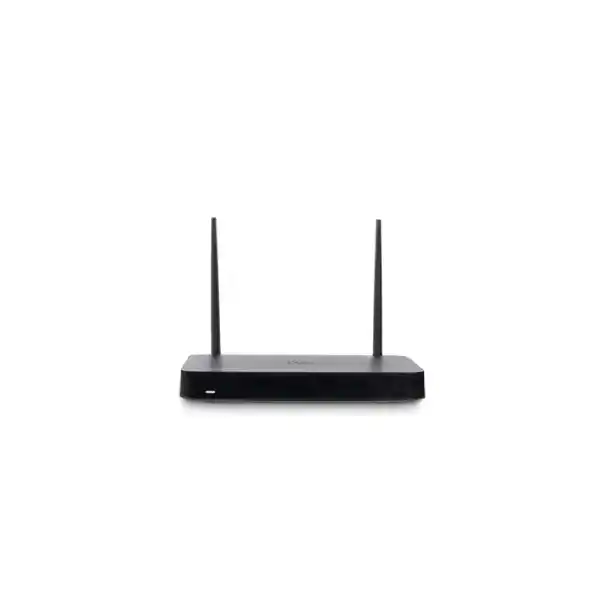
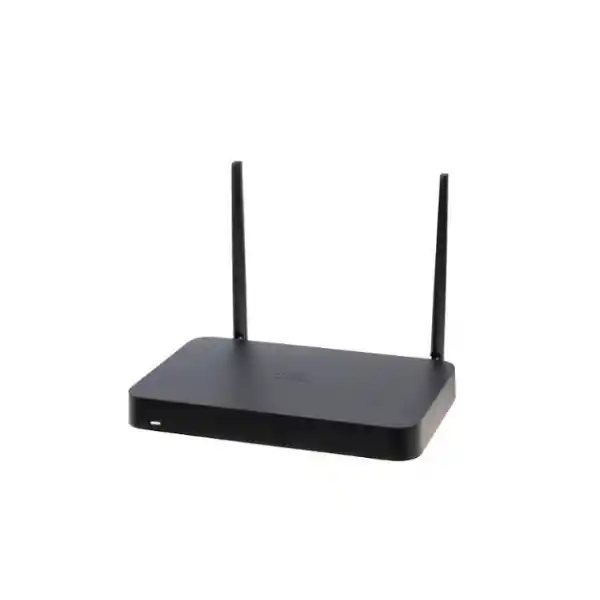
Cisco Meraki Z4C Tanzania
Cisco Meraki Z4C is designed for secure remote work, executive home offices, compact branches and distributed business locations that need centrally managed networking without placing a full-size branch appliance at every site. Cisco specifies the Z4C as an enterprise-class firewall, VPN gateway and router managed through the Meraki Dashboard, with built-in Wi-Fi 6 and an integrated CAT12 LTE modem for automatic cellular failover.
For Tanzanian organizations, the practical value is not simply that the device is small. The Z4C gives an IT team a repeatable way to extend corporate networking to a remote user or compact site while retaining visibility, policy control, VPN connectivity, wireless access and a backup cellular path. A correct deployment still depends on licensing, WAN design, mobile-network compatibility, addressing, VLAN policy and the applications that must remain available during failover.
Verified Z4C highlights
Firewall: up to 500 Mbps stateful throughput in NAT mode.
VPN: up to 250 Mbps.
Wireless: dual-band 2×2 Wi-Fi 6.
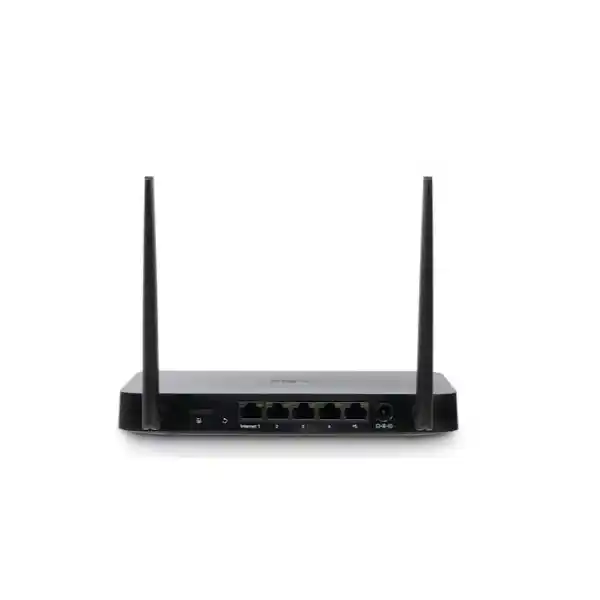
LAN: four dedicated GbE RJ45 ports, including one 802.3at PoE+ port.
WAN: one dedicated GbE RJ45 plus integrated CAT12 LTE cellular uplink.
Recommended scale: up to 15 LAN clients.
What Cisco Meraki Z4C solves
Many organizations can secure a headquarters effectively but struggle to extend the same standards to home-based employees, executives, temporary project locations and very small branches. Consumer routers offer internet access, but they rarely provide the same centrally managed segmentation, VPN automation, traffic policy and operational visibility used in the corporate network. The Z4C is intended to close that gap by putting Meraki cloud management and secure site connectivity into a compact form factor.
Cisco documents Layer 3 and Layer 7 stateful firewalling, configurable VLANs and DHCP, static routing, 1:1 and 1:many NAT, client VPN capability, Meraki AutoVPN, IPsec VPN support, custom traffic shaping, historical client usage, NetFlow, syslog and remote packet capture tools. Automatic firmware upgrades reduce the need to manually maintain software at each remote location. For organizations already operating Meraki, the Z4C can become part of a broader cloud-managed architecture rather than a standalone remote router.
The built-in LTE modem is the defining difference between Z4C and a standard Z4. It is intended as a backup cellular uplink, not a reason to skip WAN planning. Before relying on LTE for business continuity, confirm the local carrier, supported frequency bands, SIM type, signal quality, data plan, APN requirements and regulatory or carrier acceptance for the country of deployment. Cisco notes that carrier compatibility can depend on both frequency support and operator certification, so a quotation should separate hardware capability from local-network confirmation.
Secure remote access
AutoVPN can simplify encrypted connectivity between Meraki-managed locations, helping organizations provide remote users or compact sites with access to authorized corporate resources without manually building every tunnel.
WAN resilience
The integrated CAT12 LTE modem gives the Z4C a built-in cellular failover path. Business continuity still depends on carrier coverage, SIM activation, signal quality and the capacity of the cellular plan.
Wi-Fi 6 at the edge
Dual-band 2×2 Wi-Fi 6 provides local wireless connectivity for the small number of clients expected in a teleworker or compact-site deployment, while wired devices can use four dedicated Gigabit Ethernet LAN ports.
PoE+ convenience
One LAN port supports 802.3at PoE+, useful for a compatible IP phone, access point or other powered endpoint. Cisco documentation states up to 30 W PoE output on the PoE+ port.
Technical specifications and deployment facts
| Product class | Cloud-managed teleworker gateway, firewall, VPN gateway and router |
| Model SKU | Z4C-HW according to Cisco’s ordering guide |
| Recommended use | Up to 15 devices |
| Stateful firewall throughput | Up to 500 Mbps in NAT mode |
| VPN throughput | Up to 250 Mbps |
| WAN | 1 × dedicated GbE RJ45 plus integrated cellular uplink |
| LAN | 4 × dedicated GbE RJ45 |
| PoE | 1 × 802.3at PoE+ LAN port |
| Wireless | Dual-band 2×2 Wi-Fi 6 MU-MIMO; maximum wireless data rate stated by Cisco as 1.5 Gbps radio data-frame capability |
| Cellular | Built-in CAT12 LTE modem with two external LTE antennas |
| Mounting | Desktop or wall mount |
| Dimensions | 200 × 112 × 26 mm |
| Weight | 0.487 kg |
| Power | 50 W DC power supply; Cisco states 15 W idle and 46 W maximum load |
| Operating environment | 0°C to 45°C; 5% to 95% humidity according to Cisco documentation |
Licensing, cellular and procurement checks
Meraki hardware is designed to operate as part of the Meraki cloud-management platform, so licensing should be planned at the same time as the hardware purchase. Cisco’s subscription documentation maps Z4C-HW to the Z product class and lists Z licensing options that vary by feature tier. Procurement teams should request the exact license tier, term and renewal ownership in writing rather than comparing a hardware-only quotation with a hardware-plus-license quotation.
For cellular failover, the Z4C installation guide calls for a nano SIM and directs administrators to verify whether the chosen carrier requires a specific APN. Cisco publishes supported LTE bands and lists certain tested carriers, but not every carrier in Tanzania or the other markets covered on this page is specifically named. Therefore, FourTeck recommends validating the carrier and SIM arrangement before treating cellular backup as guaranteed. Signal strength, indoor placement and building materials can also influence real failover quality.
A quotation request should include the number of Z4C units, deployment locations, primary WAN handoff, expected clients, required VPN destinations, existing Meraki organization details, required Wi-Fi SSIDs, VLANs, PoE endpoint requirements, preferred licensing term and planned cellular provider. This makes it easier to distinguish a basic teleworker rollout from a more complex multi-site policy deployment.
Related FourTeck Tanzania resources
For a broader view of how the Z4C fits with firewalls, switching, Wi-Fi, voice and supporting infrastructure, start with the FourTeck Tanzania integrated IT solutions overview. Buyers comparing networking categories can use the FourTeck Tanzania technology shop, while organizations planning rollout, configuration or lifecycle assistance can review the FourTeck Tanzania services page.
If your requirement is larger than a teleworker or very small branch, compare the Cisco Meraki MX family in Tanzania. For compact branch security, the Cisco Meraki MX67 and cellular-capable Cisco Meraki MX67C provide useful comparison points. Environments needing a larger branch platform can evaluate the Cisco Meraki MX68 or Cisco Meraki MX75. These pages help buyers distinguish a dedicated teleworker gateway from broader branch firewall and SD-WAN appliances.
Cisco Meraki Z4C Tanzania
Organizations evaluating Cisco Meraki Z4C in Tanzania are typically trying to solve a distributed-connectivity problem rather than simply buy another router. The requirement may involve executives working from home, specialist staff who need dependable access to internal resources, temporary project offices, kiosks, small service points, or compact branches where a full branch firewall would be excessive. The Z4C is well suited to this discussion because Cisco positions it specifically as a teleworker gateway with cloud management, Wi-Fi 6, AutoVPN and integrated LTE backup. Its recommended client scale of up to 15 devices gives buyers a practical boundary: it is a focused remote-site appliance, not a replacement for a high-capacity head-office edge platform.
For Tanzania, primary connectivity should be assessed site by site. A Z4C can connect to a fixed broadband handoff through its dedicated Gigabit Ethernet WAN interface, with cellular configured as backup. The LTE function is valuable where continuity matters, but it should be treated as an engineered backup path. Before procurement, confirm that the intended operator can support the device’s LTE bands and any required certification or network acceptance. The deployment team should also evaluate signal level at the actual installation position, determine whether an APN must be configured, and choose an appropriate data package. Failover should be tested after installation rather than assumed from the presence of a SIM.
IT teams can use Dashboard-based configuration to standardize SSIDs, firewall rules, VPN settings and monitoring across multiple Z4C units. A consistent IP-addressing plan is especially useful for Tanzanian businesses that expect to add remote workers or branches over time. VLANs can separate corporate workstations, voice endpoints and other local devices where needed, while the PoE+ port can power one compatible endpoint such as an IP phone. The built-in wireless radio provides a compact all-in-one user experience without requiring a separate access point for a small location.
When requesting a Cisco Meraki Z4C Tanzania quotation, include the number of units, target sites, existing Meraki organization, VPN destinations, primary WAN type, desired licensing term and preferred mobile-network provider. Also specify whether the rollout needs standard configuration templates, labeling, documentation or integration with existing MX, Meraki switching or wireless environments. A well-prepared request lets the quotation address the complete operational requirement rather than supplying hardware that still needs licensing or design decisions before it can be deployed.
Cisco Meraki Z4C Dar es Salaam
Dar es Salaam businesses often operate with a mixture of headquarters users, satellite offices, mobile executives, customer-facing points and staff who work from home part of the week. That mix makes the Cisco Meraki Z4C useful as a standardized edge for smaller locations that still need corporate security and visibility. Instead of allowing each home office or micro-branch to use an unmanaged consumer router, an IT team can deploy a Z4C with defined Wi-Fi, firewall, VPN and monitoring settings in the Meraki Dashboard. This can improve consistency when the organization’s larger offices already use Meraki networking.
The most important design question is the relationship between the Z4C and the Dar es Salaam user’s internet connection. If the site has fixed fiber, wireless broadband or another Ethernet-delivered service, that connection normally becomes the primary WAN. The integrated CAT12 LTE modem can be configured for cellular failover, but real resilience depends on the mobile network available at the exact building. A strong outdoor signal does not always translate to a reliable indoor backup path, particularly in dense or reinforced buildings. The installation location, external LTE antennas, SIM activation and carrier APN should therefore be checked as part of deployment.
For remote executives and professional users, AutoVPN can provide an office-like path to authorized corporate services without requiring them to manually establish a tunnel every time they work. The Z4C can also support local breakout for internet applications according to the configured policy. Wi-Fi 6 helps serve modern laptops and phones, while the four LAN ports provide wired connections for desktops, printers or phones. One PoE+ port can reduce local power-adapter clutter when a compatible VoIP endpoint or other powered device is part of the remote-office standard.
A Dar es Salaam rollout should be documented as a repeatable branch or teleworker profile. Record the primary ISP handoff, cellular provider, required SSIDs, VLANs, VPN destinations, DNS and DHCP settings, permitted applications and responsible Dashboard administrators. If dozens of Z4C units will be deployed to staff across the city, standardized naming and templates can make support substantially easier. Procurement should include the Meraki license term and any spare power or mounting requirements rather than treating the gateway as a standalone retail router.
Cisco Meraki Z4C Mwanza
Cisco Meraki Z4C can be a practical choice for Mwanza organizations that need secure connectivity at a small branch, project location or specialist remote-work site while keeping management centralized elsewhere. In a distributed Tanzanian business, a Mwanza office may not have a full-time network engineer on site. The Meraki model addresses that operational reality by allowing configuration, monitoring and troubleshooting through the Dashboard. The device can be provisioned into an existing Meraki organization, receive policy remotely and establish secure VPN connectivity without the branch becoming an isolated network that must be administered manually.
Connectivity planning should focus on what the Mwanza site must continue doing during an internet failure. If the branch uses cloud ERP, SaaS collaboration, IP voice or remote access to a Dar es Salaam office, the backup link needs enough capacity for the essential workload. The Z4C’s CAT12 LTE modem provides the failover mechanism, but the business must decide which applications deserve priority when operating on cellular. Traffic shaping can help protect critical services, and a failover test should measure not only whether the link comes up but also whether DNS, VPN routes and key business applications remain usable.
The recommended scale of up to 15 LAN clients means Z4C is most appropriate when the Mwanza location is compact. A growing office with many users, cameras, guest devices and multiple access points may be better served by a larger MX-class appliance and separate switching or wireless. For a small site, however, Z4C combines routing, firewalling, VPN, Wi-Fi and cellular backup in one manageable unit. This can reduce equipment count and simplify the support model, especially when the site needs only a handful of wired and wireless devices.
Before requesting a Mwanza quotation, document the number and type of endpoints, primary internet speed, mobile-network provider, VPN peers, local printer or phone requirements, and whether the PoE+ port will be used. If the site connects to other Meraki locations, verify IP addressing so subnets do not overlap. Include licensing term and Dashboard ownership in the procurement record. A deployment that begins with clear network standards is easier to extend when the organization later adds other Lake Zone sites or expands the Mwanza office.
Cisco Meraki Z4C Arusha
Arusha has a wide range of small business, hospitality, professional, tourism and regional-office environments where a compact managed gateway can be more appropriate than a large branch appliance. The Cisco Meraki Z4C is particularly relevant when the organization wants corporate-grade policy at a small site while retaining simple remote administration. A tour operator’s satellite office, a hospitality manager’s remote workspace, a finance or reservation team operating from a small location, or a senior employee working securely away from headquarters can all benefit from a standardized gateway that IT can see and manage centrally.
A key Arusha design decision is whether the Z4C is serving one critical user, a small workgroup or a public-facing location. For a home or executive office, Wi-Fi 6, four Gigabit LAN ports and the integrated PoE+ port may provide all required local connectivity. For a small hospitality or service point, VLANs can separate corporate equipment from another device group, but client count and traffic must remain within the appliance’s intended scale. If the location has many guests or requires high-density public Wi-Fi, a dedicated access-point design and a larger branch edge may be more appropriate.
The integrated LTE modem can improve resilience where the primary broadband service is occasionally disrupted, but the cellular path should be validated using the carrier available at the installation address. The backup service should be sized around priority business applications. During failover, it may be sensible to limit nonessential traffic so reservations, payment systems, business communications and VPN access remain responsive. Meraki traffic shaping and centralized policy make this possible, but administrators need to define the priorities before an outage occurs.
For an Arusha Z4C quotation, provide the intended role of the site, number of users and devices, primary WAN type, preferred mobile operator, required corporate networks, existing Meraki hardware and chosen license term. Organizations with multiple small offices can also request a common configuration standard for SSIDs, VLAN IDs, addressing and AutoVPN. The objective should be repeatable operations: each site can have different bandwidth and local users while still following one supportable security and networking model.
Cisco Meraki Z4C Dodoma
In Dodoma, Cisco Meraki Z4C can support organizations that need a secure compact network for an executive residence, project team, administrative satellite office, consulting workspace or small branch connected back to a main office. The cloud-managed architecture is valuable when network administration is centralized and local users should not need to understand firewall or VPN configuration. IT can define the required network in the Dashboard, register the Z4C and maintain visibility after deployment, reducing the need to treat each small location as a separate technology environment.
The device is especially useful where continuity requirements justify a cellular backup path. The Z4C’s integrated CAT12 LTE modem can automatically take over when the wired WAN fails. For a Dodoma office, the business should identify the exact services that must survive that transition: email and web access may be sufficient for one site, while another may need persistent AutoVPN connectivity to an ERP server, IP telephony or cloud collaboration. The cellular plan, expected usage and traffic priorities should reflect those applications. It is also important to confirm local LTE coverage and any APN requirements before installation.
The LAN side should be kept intentionally simple. Up to four wired devices can connect directly, and Wi-Fi 6 provides wireless access for laptops and mobile devices. One Ethernet port can deliver PoE+ to a compatible endpoint. If the Dodoma location begins to require many additional wired ports, surveillance cameras, several access points or a larger guest network, the architecture should be reviewed rather than repeatedly extending a teleworker gateway beyond its intended use. A compact design is most reliable when the appliance is matched to a genuinely compact workload.
Procurement teams should include licensing, Meraki organization ownership, WAN details, mobile carrier, VPN topology, addressing and deployment documentation in the Z4C request. If the organization has other Meraki sites, list their relevant models and subnets so the new Dodoma location can be integrated cleanly. A small remote office can be easy to support when it follows the same naming, policy and monitoring standards as larger locations, even though its hardware footprint is much smaller.
Cisco Meraki Z4C UAE
Organizations operating between Tanzania and the UAE can use Cisco Meraki Z4C to standardize secure connectivity for executives, home workers and compact offices across both markets. The benefit is a common management model rather than a claim that every site has the same internet or cellular environment. Meraki Dashboard allows administrators to view and configure Z4C gateways from a centralized organization, while AutoVPN can connect remote locations to permitted corporate networks. This can be useful when a company has leadership, sales or support staff working between Dar es Salaam and cities in the UAE.
The UAE often offers high-speed fixed broadband, so buyers should compare the available WAN service with the Z4C’s published 500 Mbps stateful firewall and 250 Mbps VPN throughput before assuming the gateway will pass the full speed of a faster circuit under every traffic pattern. Z4C is designed for teleworkers and small sites, not for a high-capacity office edge. Where a location has many users, multi-gigabit internet, numerous VLANs or extensive security-service requirements, an MX or larger Meraki-managed platform may be more suitable.
The integrated CAT12 LTE modem still needs local carrier validation. The UAE site should confirm frequency compatibility, SIM activation, APN configuration and indoor signal quality. The backup service should also be tested with the actual corporate VPN and cloud applications. For multinational companies, renewal planning deserves attention: hardware may be deployed in several countries, but administrators should keep clear records of license terms, device serial numbers, assigned users and Dashboard networks to avoid fragmented lifecycle management.
Regional organizations can also review FourTeck UAE technology solutions when coordinating UAE-side requirements. A cross-border Z4C project should identify which sites are teleworker-scale, which require larger branch appliances, and which applications need inter-site connectivity. That approach gives procurement a repeatable bill of materials and allows IT to maintain common configuration standards without forcing every location onto identical hardware regardless of workload.
Cisco Meraki Z4C Uganda
Cisco Meraki Z4C can support Ugandan organizations that operate small branches, field offices or remote employees but want network policy to remain under centralized IT control. The product’s combination of firewalling, Wi-Fi 6, AutoVPN and cloud management is particularly useful when the organization already runs Meraki at a headquarters or regional hub. A Z4C can be provisioned into the same operational model, giving administrators remote visibility into client connections, WAN status and basic troubleshooting without requiring dedicated technical staff at each small location.
For Uganda deployments, internet and cellular options can differ substantially by city and site. The Z4C has one Ethernet WAN interface and an integrated CAT12 LTE modem for failover, but the business should verify the intended operator against the device’s supported bands and the carrier’s network policies. A SIM that works in a phone should not automatically be assumed to provide the desired failover behavior in a managed gateway. Check APN settings, signal strength, data-plan restrictions and whether public addressing or specific services behave differently when traffic moves to LTE.
AutoVPN is useful when the remote site needs secure access to systems hosted at another Meraki location. However, addressing must be planned carefully. Two branches using the same private subnet can create avoidable routing problems. Standardized subnets, SSIDs and VLAN names make it easier to deploy multiple Z4C gateways across Uganda while keeping the configuration understandable. The recommended client scale of up to 15 devices also provides a sizing checkpoint: a site that is growing beyond that profile should be evaluated for a larger branch platform.
Organizations coordinating Uganda projects can review FourTeck Uganda IT and networking solutions alongside the Tanzania design. For a quotation, provide location, primary WAN speed, mobile carrier, expected client count, existing Meraki organization, VPN peers, license term and whether a PoE-powered endpoint will use the integrated PoE+ port. This information helps define a complete deployment rather than a hardware-only purchase.
Cisco Meraki Z4C Kampala
Kampala organizations often have headquarters, customer-facing offices and employees who work from home or smaller satellite locations. Cisco Meraki Z4C can provide a consistent network edge for the smallest of those sites, especially when central IT wants to avoid unmanaged consumer routers. The gateway combines wired connectivity, Wi-Fi 6, firewalling, VPN and cloud administration in one unit, allowing IT to apply a standard configuration while the local user only needs to connect the device to power and the primary internet service according to the deployment plan.
The primary WAN should be assessed against the applications used at the Kampala site. Cloud collaboration, VoIP, remote desktop, ERP and large file transfers each create different sensitivity to latency and loss. Z4C’s 500 Mbps stateful firewall throughput is more than enough for many teleworker circuits, but the published 250 Mbps VPN limit should be considered if most traffic is expected to traverse encrypted site-to-site tunnels. The device’s intended small-client profile should also guide expectations when several employees share one location.
Cellular backup is one of the reasons buyers choose the Z4C over the standard Z4. In Kampala, the engineering question is not simply whether LTE exists, but whether the preferred carrier has stable signal at the installation point and whether the plan can sustain critical traffic during a broadband outage. Test failover with the actual SIM, confirm any APN configuration and verify how long business applications take to recover. If the location depends heavily on video meetings or voice, define which traffic should be prioritized when bandwidth falls back to cellular.
A strong Kampala deployment record should contain device serial number, assigned user or site, Meraki network, primary ISP, cellular provider, local subnet, SSID, license term and support owner. This operational detail matters when dozens of remote devices are rolled out. The Z4C can make teleworker networking easier, but the largest benefit comes from consistent policy and documentation, not only from the hardware. Buyers should therefore request licensing and deployment scope together with the gateway.
Cisco Meraki Z4C Arua
For a small office or remote operational site in Arua, Cisco Meraki Z4C offers an approach that keeps network administration with the central IT team while minimizing the local equipment footprint. This can suit NGOs, distributed businesses, project teams or specialist users who need secure access to systems hosted elsewhere. The Z4C is not simply a wireless router: Cisco positions it as an enterprise-class firewall, VPN gateway and router, managed through the Meraki Dashboard and designed for remote-work scenarios. That distinction matters when business policy and troubleshooting need to remain consistent across distant sites.
Arua deployments should place particular emphasis on WAN resilience planning. If the primary internet connection is essential for cloud systems or inter-office access, the integrated CAT12 LTE modem can provide a valuable secondary path. The organization should verify available carrier coverage at the actual premises, not rely only on general coverage maps. Internal wall construction, antenna placement and local network congestion can affect performance. It is also important to understand how much data a failover event could consume so the backup SIM plan does not become a hidden operational constraint.
For small teams, the Z4C’s four wired LAN ports and Wi-Fi 6 may eliminate the need for extra switching or a separate wireless access point. The PoE+ port can power one compatible endpoint. Where more ports are needed, a small managed switch may be added, but administrators should review whether the overall site is still within teleworker scale. If cameras, many phones, multiple access points or a larger user population are expected, a proper branch architecture may provide better growth capacity and segmentation.
When planning an Arua quotation, include the exact location, estimated users and devices, fixed-WAN type, proposed cellular carrier, critical applications, VPN requirements and chosen Meraki license term. If the site is part of a wider Uganda rollout, standardize IP address ranges and configuration templates so each branch remains unique but follows a common operational pattern. Central management can reduce travel for routine changes, but physical connectivity and power conditions still need local planning.
Cisco Meraki Z4C Mbarara
Mbarara businesses and institutions that maintain small satellite offices can use Cisco Meraki Z4C when centralized management and secure connectivity matter more than raw branch scale. A teleworker gateway is especially useful where the site has a handful of users but still needs the same basic network controls as a main office. The Meraki Dashboard lets administrators monitor the gateway remotely, while AutoVPN can extend secure connectivity to other Meraki networks. Wi-Fi 6 and four Gigabit LAN interfaces give local users a mix of wireless and wired access without a large rack installation.
The choice between Z4C and a larger branch appliance should be based on the site workload. Cisco recommends Z4C for up to 15 LAN clients and publishes 500 Mbps stateful firewall and 250 Mbps VPN throughput. A compact professional office may fit comfortably within that profile. A larger location with guest Wi-Fi, many cameras, several switches or substantial server traffic may require a different platform. The right decision is therefore a sizing exercise, not simply a comparison of purchase price.
Cellular failover should be designed around business continuity. The CAT12 LTE modem provides the technical capability, but the preferred Mbarara carrier must be checked for signal and compatibility. Administrators should configure any required APN, confirm the SIM is active, and then deliberately disconnect the primary WAN during commissioning to verify that LTE becomes ready and that critical applications continue to function. This test can also reveal whether firewall rules, DNS or VPN routes behave differently during failover.
For procurement, list the site role, user count, LAN devices, Wi-Fi requirements, primary ISP, cellular operator, VPN destinations and desired license term. If an IP phone is planned, specify whether the Z4C PoE+ port will power it and confirm the endpoint’s power requirements. A well-documented Mbarara deployment can become a repeatable pattern for other small branches, simplifying future rollouts and giving central IT a predictable way to monitor connectivity and support users.
Cisco Meraki Z4C Gulu
Cisco Meraki Z4C is relevant to Gulu organizations that need a secure, manageable network at a small site where local IT support may be limited. By combining firewalling, routing, VPN, Wi-Fi 6 and cellular failover into one cloud-managed appliance, it reduces the number of separate devices that must be configured at the location. Central administrators can use the Meraki Dashboard for monitoring, policy changes and troubleshooting, which can be particularly helpful for businesses, NGOs or project teams with several geographically separated offices.
The Z4C should be positioned as part of a defined architecture. The Ethernet WAN remains the primary internet path, while the embedded CAT12 LTE modem provides backup. For Gulu, carrier validation is important because Cisco’s published tested-carrier list is not a guarantee for every mobile operator or country. Confirm frequency support, SIM activation, APN needs, signal strength and data allowances. The two external LTE antennas should be positioned carefully, and the site should test actual failover rather than assume that a connected SIM equals a usable backup service.
The appliance supports up to four directly connected wired devices and Wi-Fi clients, with one LAN port capable of PoE+. This is useful for a compact office that needs a powered phone or similar endpoint without adding another injector. If the site grows, an access switch can extend connectivity, but the total traffic and number of devices still need to remain appropriate for a teleworker gateway. Growth planning should therefore be part of the initial quotation, particularly if the Gulu location could expand into a full branch.
A Gulu deployment brief should specify the role of the location, number of users, primary ISP, intended mobile carrier, corporate resources accessed over VPN, local SSIDs, VLANs, device count and licensing term. It should also identify the central Meraki organization and administrators who will own the configuration. With those details in place, the Z4C can be commissioned as a controlled extension of the enterprise network rather than a one-off router that becomes difficult to support later.
Cisco Meraki Z4C Kenya
Kenyan organizations with remote employees and compact sites can evaluate Cisco Meraki Z4C as a standardized teleworker gateway, particularly when Meraki Dashboard and AutoVPN are already part of the network strategy. The product’s appeal is operational consistency: a Nairobi executive office, remote employee or small project location can receive centrally defined security and connectivity without requiring a full branch appliance. IT can monitor the WAN, manage policy and troubleshoot remotely while the local user receives wired and wireless connectivity from one compact device.
Internet services in Kenya can range from high-speed urban fiber to wireless or mobile connectivity, so the gateway should be matched to the actual circuit. Z4C supports a Gigabit Ethernet WAN interface, but its published firewall and VPN performance should be considered when the primary service is faster than the teleworker workload requires. The integrated CAT12 LTE modem offers backup cellular connectivity; however, businesses still need to confirm the chosen operator, supported bands, signal quality and APN settings. For critical users, failover testing should form part of commissioning.
A multi-country business operating in both Tanzania and Kenya can benefit from a common teleworker design. SSID naming, VLAN numbering, IP addressing, AutoVPN topology, security policy and license tracking can be standardized while each site keeps locally appropriate ISP and carrier choices. This creates a consistent support model without pretending that all local telecom conditions are identical. The same policy template can also reduce configuration drift when the organization adds users over time.
For Kenya-side coordination, review FourTeck Kenya networking and IT solutions. A Cisco Meraki Z4C quotation should include the number of sites, expected clients, primary internet connections, mobile backup providers, required VPN resources, license tier and term, and any need for PoE-powered endpoints. If a location exceeds the intended teleworker scale, compare it with a current Meraki MX branch model instead of forcing Z4C into a role it was not designed to fill.
Cisco Meraki Z4C Kuwait
Cisco Meraki Z4C can serve Kuwait-based executives, remote workers and small satellite offices that need centrally managed corporate networking. In a regional organization, a user may require the same secure access whether working in Tanzania, Kuwait or another market. Meraki’s cloud-management model supports that objective by allowing administrators to apply common network standards through the Dashboard. AutoVPN can provide encrypted connectivity to other Meraki sites, while Wi-Fi 6 and Gigabit Ethernet cover local endpoints in a compact office.
High-speed internet availability makes sizing important. The Z4C is not intended to be a high-capacity enterprise perimeter for a large office. Cisco publishes up to 500 Mbps stateful firewall throughput and 250 Mbps VPN throughput, with a recommended client count of up to 15. A Kuwait site with a much faster circuit, many employees or extensive local services may need a larger MX or other Meraki-managed branch platform. The teleworker model is strongest when the requirement is focused and predictable.
The integrated CAT12 LTE modem can provide a secondary path, but cellular compatibility must be verified locally. Check the selected operator’s supported frequencies, SIM provisioning and APN requirements, then test failover with the actual network. In a business continuity plan, administrators should decide whether video calls, backups or large downloads should be restricted on LTE so essential applications retain capacity. Traffic policy should reflect the limits and cost structure of the backup service.
Regional procurement teams can consult FourTeck Kuwait IT and network solutions when coordinating the local side of a project. The quotation should identify each Z4C user or site, WAN speed, cellular operator, VPN role, Meraki organization, license term and any accessories required. Standardized configuration and lifecycle records are particularly valuable for companies managing remote users across several countries because they keep renewals, policy and support ownership visible.
Cisco Meraki Z4C Ghana
Ghana-based organizations can use Cisco Meraki Z4C where a small office or remote employee needs secure corporate networking under centralized administration. The device combines firewall, router, VPN gateway, Wi-Fi 6 and LTE failover functions in a compact form. This makes it relevant to regional businesses that operate a main office in one country while staff or project teams work from smaller sites elsewhere. Rather than manage independent consumer routers, IT can bring Z4C gateways into the Meraki Dashboard and maintain a consistent policy framework.
The cellular feature is an important procurement consideration. Cisco’s Z4C contains a CAT12 LTE modem with broad band support, but deployment teams should still verify the chosen Ghanaian mobile operator and the exact installation location. Signal quality, APN configuration and the service plan can influence whether failover is suitable for business use. A commissioning test should disconnect the primary WAN and observe how quickly the cellular connection becomes active, whether AutoVPN recovers and whether priority applications remain usable under the available LTE bandwidth.
For a compact Ghana office, four Gigabit LAN interfaces and Wi-Fi 6 may be sufficient for PCs, printers and phones. One port provides PoE+ for a compatible powered device. If the location expects more than the recommended small-client profile, the buyer should plan switching and possibly a larger security appliance. A teleworker gateway should not be selected merely because it includes many useful features; the overall user count, VPN load and internet speed still determine whether it is correctly sized.
Customers coordinating regional projects can review FourTeck Ghana business technology solutions. A Z4C quote should specify device quantity, user or branch assignment, primary ISP, mobile carrier, VPN destinations, local network requirements and license term. When those details are standardized with the Tanzania environment, the organization can maintain one support model while still adapting connectivity choices to each country’s telecom conditions.
Cisco Meraki Z4C Nigeria
Cisco Meraki Z4C can be a useful component of a Nigerian remote-work or micro-branch strategy where centralized management, VPN connectivity and WAN resilience are priorities. Distributed companies often have a small number of users at locations that do not justify a full branch stack but still handle sensitive business traffic. Z4C gives those users corporate-managed wired and wireless connectivity while allowing the network team to see and configure the gateway through the Meraki Dashboard. AutoVPN can extend connectivity to other Meraki-managed offices or hubs without requiring each remote user to maintain a complex manual tunnel.
Nigeria’s connectivity environment makes backup design important, but buyers should distinguish capability from guaranteed service. The integrated CAT12 LTE modem gives the Z4C a built-in cellular path, yet the quality of that path depends on the selected operator, coverage, congestion, indoor reception and SIM configuration. A deployment should confirm supported bands and any APN details, then test real failover. If the user depends on cloud voice, video meetings or transactional applications, traffic policy may need to prioritize those services when the backup link has less capacity than the primary WAN.
The Z4C’s published client recommendation of up to 15 devices helps define suitable locations. An executive home office, project room or small branch can fit the profile. A larger Lagos, Abuja or regional office with many users, multiple switches, guest access and servers should be evaluated against the broader Meraki MX portfolio. The gateway’s 500 Mbps stateful firewall and 250 Mbps VPN throughput are strong for teleworker use but should not be confused with the scale of larger security appliances.
When procuring Z4C for Nigeria as part of a Tanzania-led regional standard, document the hardware assignment, WAN service, carrier, local subnet, SSIDs, VPN routes, license term and Dashboard administrators. The same configuration principles can be repeated while leaving telecom choices local to each site. That balance gives IT consistency without making unsupported assumptions about carrier behavior or internet quality in different cities and countries.
Cisco Meraki Z4C Seychelles
Cisco Meraki Z4C can support Seychelles businesses that need a centrally managed gateway for a remote executive, small office, hospitality back-office function or specialist operational location. Island and multi-site environments can make remote administration especially valuable because routine changes should not require a network specialist to be physically present at every site. Meraki Dashboard provides centralized configuration and visibility, while AutoVPN can connect a Z4C location back to approved corporate networks. Wi-Fi 6 and four Gigabit Ethernet LAN ports serve the local user environment.
The integrated CAT12 LTE modem offers a potential continuity path when the fixed broadband service is unavailable, but local carrier validation remains essential. Before relying on LTE, confirm that the intended Seychelles operator supports compatible bands and that the SIM plan can be used in the gateway. Check signal strength where the Z4C will actually be placed, configure any required APN, and test failover during commissioning. The outcome should be measured using real applications rather than only a connectivity indicator in the Dashboard.
For hospitality or professional settings, keep the Z4C’s intended scale in mind. It is appropriate for a small protected workgroup, not for a hotel guest network or a large property-wide Wi-Fi deployment. Guest connectivity, many cameras or several access points can quickly create a workload better handled by dedicated switching, wireless and a larger security appliance. The teleworker gateway should be reserved for the small location where its integrated capabilities simplify the architecture without creating capacity constraints.
A Seychelles quotation should describe the users, devices, primary WAN service, proposed cellular provider, VPN destinations, licensing term and any local PoE requirement. For organizations operating across East Africa and island markets, FourTeck Africa technology solutions can provide additional regional context. Standard configuration records across Tanzania and Seychelles can simplify support while still allowing each site to use the local connectivity options best suited to its location.
Cisco Meraki Z4C buying checklist
1. Confirm the workload
List users, wired and wireless devices, internet speed, cloud applications, VPN traffic and any PoE endpoint. Use Cisco’s up-to-15-device guidance as a sizing checkpoint.
2. Choose licensing
Request the applicable Meraki Z license tier and subscription term with the hardware. Record renewal responsibility and Dashboard organization ownership.
3. Validate cellular
Confirm LTE band support, operator acceptance, nano SIM, APN, signal and data plan. Do not assume carrier compatibility solely because mobile coverage exists.
4. Plan VPN and addressing
Document remote subnets, hubs, routes and whether AutoVPN or third-party IPsec connectivity is required. Avoid overlapping branch networks.
5. Test failover
During commissioning, disconnect the wired WAN and verify LTE readiness, DNS, VPN recovery and application usability before the site depends on the backup path.
6. Document lifecycle
Record serial number, assigned user/site, license, ISP, carrier, IP plan, SSIDs, configuration template and support ownership for every deployed unit.
Frequently asked questions
What is Cisco Meraki Z4C?
Cisco Meraki Z4C is a cloud-managed teleworker gateway that combines firewall, routing, VPN, Wi-Fi 6, Gigabit Ethernet and an integrated CAT12 LTE modem. It is designed to extend managed corporate connectivity to remote workers and small locations.
How many users can Cisco Meraki Z4C support?
Cisco lists the Z4C recommended use case as up to 15 devices. Actual suitability depends on traffic patterns, VPN use, Wi-Fi demand and the applications in use. Larger branches should be evaluated against the Meraki MX portfolio.
Does the Z4C include cellular failover?
Yes. Z4C includes a built-in CAT12 LTE modem and supports automatic WAN failover to cellular. Local carrier compatibility, SIM activation, APN settings, signal and the data plan must still be verified for the deployment country.
What is the difference between Meraki Z4 and Z4C?
Both Z4 and Z4C provide the same published 500 Mbps stateful firewall throughput, 250 Mbps VPN throughput, Wi-Fi 6 and PoE+ capability. The Z4C adds an integrated CAT12 LTE cellular uplink for backup connectivity.
Does Cisco Meraki Z4C require a license?
Meraki Z products are cloud managed and Cisco maps Z4C-HW to the Z licensing product class. Buyers should include the appropriate license tier and subscription term with the hardware quotation and confirm the licensing model currently applicable to their Meraki organization.
Can Z4C connect to Meraki MX using AutoVPN?
Z4C supports Meraki AutoVPN. The final topology should be planned around addressing, hubs, routes and organizational policy, and the relevant current firmware and licensing requirements should be checked before deployment.
Can the Z4C power an IP phone?
One Z4C LAN port supports 802.3at PoE+. Cisco states up to 30 W PoE output on that port. Confirm the connected endpoint’s PoE standard and power requirement before relying on the gateway to power it.
What information should I send for a Cisco Meraki Z4C quotation?
Send quantity, deployment country and city, primary WAN speed and handoff, expected devices, corporate VPN destinations, existing Meraki organization, preferred license term, mobile carrier for LTE backup, Wi-Fi requirements and any device that will use the PoE+ port.
Decision recap
Choose Cisco Meraki Z4C when the site is genuinely teleworker or small-office scale, centralized Meraki management is desired, Wi-Fi 6 and four local LAN ports are sufficient, and integrated LTE failover adds meaningful resilience. Compare a larger Meraki MX appliance when the location has substantially more users, higher VPN demand, more complex segmentation, multiple switches or access points, or a WAN service whose capacity materially exceeds the Z4C’s intended performance range.
The strongest procurement process combines hardware, licensing, primary WAN, cellular validation, IP addressing, VPN design and support ownership in one plan. That prevents the common situation where a gateway arrives but cannot be deployed because the license, SIM, addressing or Meraki organization details were not prepared.
Consultation and quotation panel
To prepare a Cisco Meraki Z4C proposal, provide the number of gateways, intended users or sites, internet connection details, cellular operator, required VPN destinations, current Meraki environment and preferred subscription term. If your requirement is uncertain, describe the business use case rather than guessing a model; FourTeck can compare Z4C with relevant Meraki MX options and related switching or wireless products.
For neighboring-market coordination, the regional FourTeck network can help align requirements across East Africa and other operating countries while the final product, carrier and licensing choices are validated for each site.



Reviews
There are no reviews yet.