
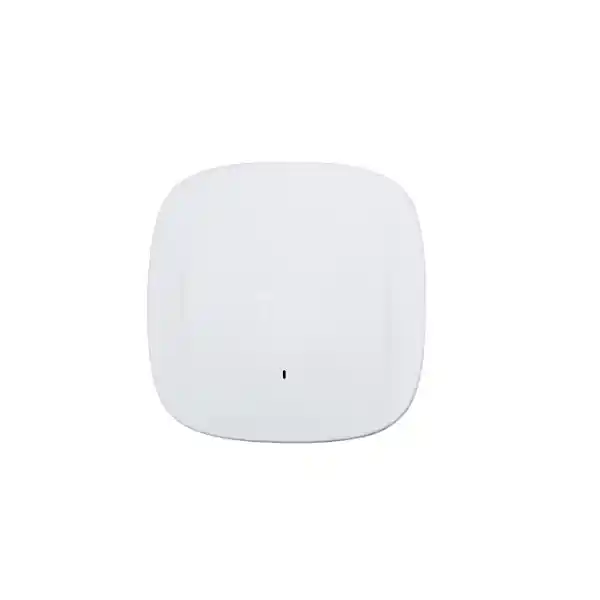
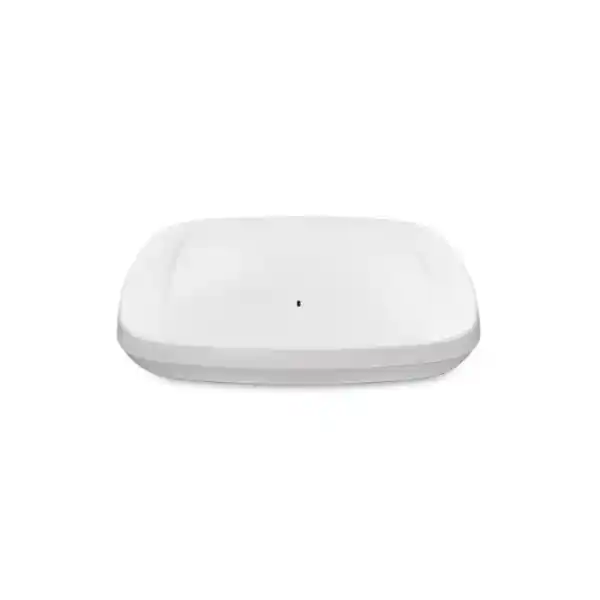
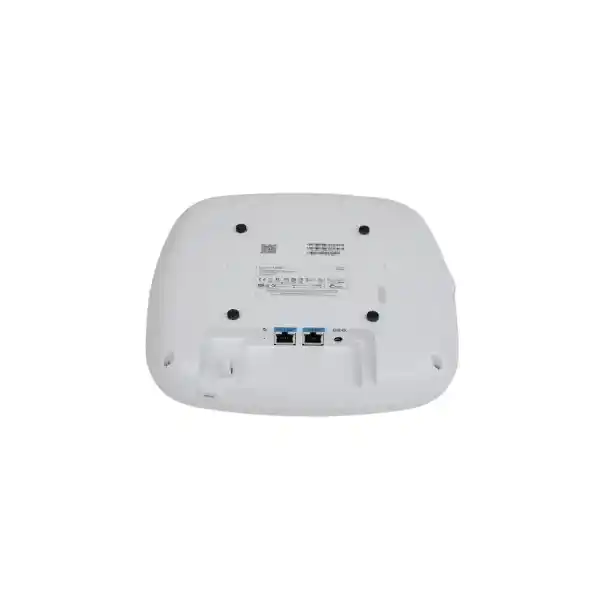
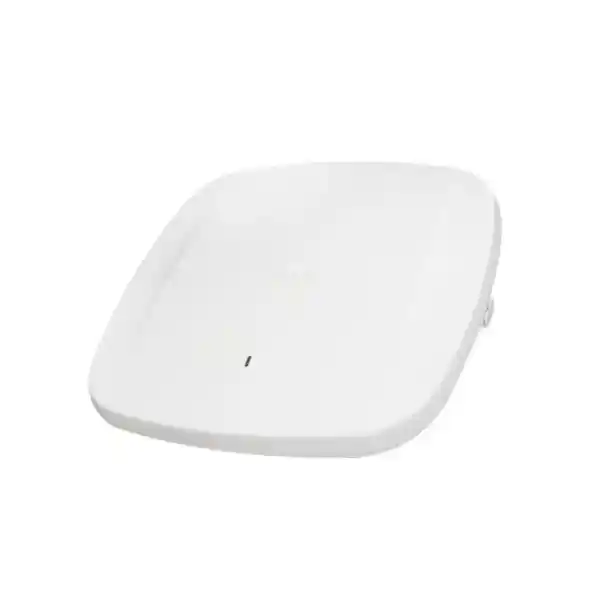
Cisco Meraki MR57 Tanzania
Cisco Meraki MR57 is an ultra-high-performance indoor Wi-Fi 6E access point for organizations that need high-capacity wireless, centralized cloud management and a cleaner path to 6 GHz connectivity. Cisco positions the MR57 as a tri-band 2.4 GHz, 5 GHz and 6 GHz platform using 4×4:4 MU-MIMO, with dual 5 Gbps multigigabit Ethernet interfaces, PoE support, USB, dedicated security and RF management functions, Bluetooth Low Energy/IoT capabilities and Meraki Dashboard management. For Tanzanian businesses, the practical value is not simply a faster access point; it is the ability to build a managed wireless architecture around user density, application priorities, security segmentation and repeatable operations across one or many sites.
A successful MR57 project should begin with the building, client devices and wired network rather than with the access point alone. Wi-Fi 6E introduces 6 GHz spectrum, but clients must support that band to benefit from it, and the wired LAN must provide suitable multigigabit capacity and PoE for the design. FourTeck Tanzania can help buyers review coverage objectives, floor plans, switching, cabling, VLANs, guest access, Meraki licensing and future growth before finalizing a bill of materials.
2.4 GHz, 5 GHz and 6 GHz radios support modern client strategies and additional spectrum planning.
Four spatial streams per band support high-capacity enterprise wireless environments.
Dual 5 Gbps multigigabit Ethernet ports help prevent the wired edge from becoming an avoidable bottleneck.
Meraki Dashboard centralizes configuration, monitoring, RF visibility, firmware operations and troubleshooting workflows.
What the Cisco Meraki MR57 is designed to solve
Enterprise Wi-Fi problems often appear as slow applications, unreliable roaming, congested meeting rooms, weak coverage, poor guest experiences or difficult troubleshooting. The underlying cause can be radio congestion, insufficient access-point capacity, poor placement, outdated client standards, bottlenecked uplinks, incorrect channel plans, inadequate PoE, or a network that has grown without a consistent management model. The MR57 addresses the wireless layer with a high-end Wi-Fi 6E platform and cloud-managed operational model. Its dedicated scanning/security functions help separate monitoring tasks from client-serving radios, while Meraki Dashboard gives administrators a centralized view across sites.
The 6 GHz band is particularly useful because it creates additional channel opportunities for compatible Wi-Fi 6E clients. That does not mean every existing device immediately moves to 6 GHz. A realistic design will continue supporting 2.4 GHz and 5 GHz devices while introducing 6 GHz where client support, regulatory availability and application requirements align. This makes client inventory important: laptops, phones, scanners, tablets and specialist devices may support different generations of Wi-Fi, and older equipment can influence channel and security decisions.
Verified Cisco Meraki MR57 features
| Area | MR57 capability | Planning relevance |
|---|---|---|
| Wireless | Wi-Fi 6E across 2.4, 5 and 6 GHz | Supports mixed estates while adding 6 GHz capacity for compatible clients. |
| Spatial streams | 4×4:4 MU-MIMO | Useful for high-density and performance-sensitive indoor environments. |
| Wired uplink | Dual 5 Gbps multigigabit Ethernet | Switch port speed, cabling and uplink design should match AP capability. |
| Power | 802.3at and 802.3bt PoE support | Confirm switch PoE class and total power budget before deployment. |
| Management | Meraki cloud management | Supports centralized configuration, monitoring and multi-site operations. |
| Security/RF | Dedicated security and RF management radio | Helps continuous RF awareness and wireless security monitoring. |
| IoT | Bluetooth Low Energy/IoT radio and USB | Provides options for supported location and IoT use cases. |
Deployment, switching and licensing considerations
The MR57 should be planned as part of the complete LAN. A high-performance access point can only use its capabilities when the wired infrastructure is appropriate. Confirm switch multigigabit support, PoE budget, cable category and quality, VLAN configuration, trunking, DHCP, DNS, firewall policy and upstream internet capacity. In environments with many access points, the aggregate traffic toward the distribution or core layer may require uplink upgrades even when individual access-point links are correctly sized.
Meraki cloud-managed access points require appropriate licensing for normal cloud-managed operation. Buyers should include the required subscription term in procurement planning rather than treating the license as an afterthought. Confirm the exact current Cisco license option, term, support entitlement and renewal process at quotation time because commercial packaging can change over a product lifecycle. The customer should also maintain clear ownership of its Meraki organization, administrator accounts, MFA controls and operational contacts.
Wireless design should include staff, guest and device segmentation. Different SSIDs can map to different VLANs and security policies, while access controls can prevent guest users or untrusted devices from reaching business systems. Where voice, video or latency-sensitive applications rely on Wi-Fi, traffic handling should be coordinated with wired QoS and WAN policy. Site surveys and post-install validation are strongly preferable to selecting AP quantities by floor area alone.
Related FourTeck Tanzania resources
For complete project planning, review the FourTeck Tanzania integrated IT solutions overview for the relationship between wireless, switching, firewalls, cabling and business infrastructure. The FourTeck Tanzania technology shop provides broader buying guidance across wireless and network categories, while the technology services page explains design, deployment and lifecycle considerations.
Organizations building a wider Meraki environment can compare the Cisco Meraki MX security and SD-WAN family for cloud-managed edge security, the Cisco Meraki MX67 for smaller branch security requirements, the Cisco Meraki MX68 for branch networking, the Cisco Meraki MX75 for higher-capacity branch edge projects, and the Cisco Meraki MX85 for larger branch or campus edge scenarios. These links help buyers plan the MR57 in the context of cloud-managed security and WAN architecture rather than as an isolated wireless device.
Cisco Meraki MR57 Tanzania
Businesses evaluating Cisco Meraki MR57 in Tanzania typically need more than a headline wireless speed. A useful assessment starts with the number and type of clients, building layout, wall materials, application mix, roaming requirements, guest access, security policy and the existing switch infrastructure. Offices with modern laptops and mobile devices may be able to use 6 GHz quickly, while warehouses, hospitality properties or mixed-device environments may retain a larger population of 2.4 GHz and 5 GHz clients. The advantage of a tri-band platform is that the design can serve the mixed estate while creating room for Wi-Fi 6E adoption where compatible devices justify it.
Tanzania deployments also benefit from deliberate infrastructure planning. A multigigabit access point should not be connected to a network that cannot provide adequate PoE or wired capacity. Check existing switch models, port speeds, PoE budget and the cable plant before ordering. Cat6 or better structured cabling may be appropriate depending on link requirements and installation conditions, but the actual cable performance should be verified rather than assumed from labels alone. If the project spans several floors, aggregation uplinks and fiber backbones may need review because many high-performance APs can generate more aggregate traffic than older LANs were designed to carry.
For a Tanzanian quotation, provide floor plans where possible, expected simultaneous users, major applications, existing AP count, switch models, internet bandwidth and any known coverage problems. State whether the deployment will be a new Meraki organization or an extension of an existing one. Also include the desired license term and whether guest access, VLAN segmentation, site-to-site connectivity or application prioritization is part of the project. FourTeck can then align the MR57 requirement with switching, security, cabling and operational ownership instead of treating wireless as a standalone purchase.
Cisco Meraki MR57 Dar es Salaam
Dar es Salaam organizations often operate in dense office buildings, retail sites, hospitality properties, campuses and multi-tenant environments where wireless design is affected by neighboring networks and high device counts. The MR57 can be attractive for these settings because Wi-Fi 6E adds 6 GHz spectrum for compatible clients and because the platform provides centralized Meraki cloud management. The design challenge is to convert those capabilities into predictable service for real users. That means measuring client density by area, identifying meeting rooms and collaboration zones, understanding wall construction and considering the RF activity produced by neighboring tenants or nearby networks.
A head office in Dar es Salaam may need strong roaming between floors, reliable video conferencing, cloud application access and separate networks for employees, visitors and operational devices. An MR57 rollout should therefore be coordinated with VLAN and firewall policy so that SSIDs map to appropriate trust zones. Guest internet can be isolated from internal systems, while corporate users can be authenticated according to the organization’s security model. Voice and video traffic may need prioritization across both wireless and wired infrastructure. Meraki Dashboard can help administrators monitor AP health and client experience, but good naming, floor plans and documented network standards make centralized tools significantly more useful.
Procurement teams should also examine the LAN edge. Dual 5 Gbps interfaces and high-performance radios create little value if APs are attached to older 1 Gbps switches with insufficient PoE or congested uplinks. Check switch capacity, power budget, cabling condition and backbone speed before finalizing quantities. If the building has generator or UPS-backed network infrastructure, determine which switching and internet components remain operational during interruptions so that wireless resilience is understood end to end. A useful Dar es Salaam quotation request includes floor plans, expected users per zone, existing switch details, current AP models, internet circuits, license term and any requirement to integrate the MR57 into an existing Meraki organization.
Cisco Meraki MR57 Mwanza
For businesses in Mwanza, the MR57 can support branch offices, education facilities, hospitality operations, professional workplaces and larger commercial environments that want cloud-managed Wi-Fi with the option to use the 6 GHz band. A common branch requirement is remote manageability. If network specialists are based elsewhere, Meraki Dashboard provides a centralized operating model for configuration, monitoring and troubleshooting. That can reduce dependency on repeated on-site intervention, provided the deployment is documented carefully and local physical infrastructure such as power, switching and cabling is dependable.
Mwanza sites should be designed around capacity and coverage separately. A signal can reach an area without providing enough airtime for the users in it. Training rooms, conference spaces, customer areas and staff zones may have very different concurrency. The MR57’s high radio capability can support demanding zones, but access-point placement and channel planning still matter. Installing too many APs without coordination can create interference or roaming problems, while placing too few can lead to excessive client load and weak edge coverage. A predictive design followed by on-site validation gives a better basis than a fixed AP-per-square-meter rule.
The wired network should also be assessed for multigigabit operation and PoE. If existing switches are being retained, confirm port speed, power class, total PoE budget and firmware support. If the site connects back to a Dar es Salaam office or a cloud environment, the firewall and WAN path should be checked for guest isolation, corporate traffic and application needs. When requesting a Mwanza quotation, provide floor size, wall types, expected users, key applications, switch models, cabling details and whether existing Meraki equipment is already deployed. This information allows the MR57 to be considered as part of the branch architecture rather than simply as a wireless hardware upgrade.
Cisco Meraki MR57 Arusha
Arusha has a broad mix of hospitality, tourism, education, professional services and regional business operations, and those environments can place very different demands on Wi-Fi. Hotels and guest-facing facilities may need broad coverage and strong isolation between visitor and operational networks. Offices may prioritize collaboration tools, cloud applications and secure employee access. Education sites can experience sharp peaks when many devices connect simultaneously. The MR57 is relevant where organizations want high-capacity indoor Wi-Fi 6E and centralized management, but the exact deployment should be shaped around how the property is used rather than simply around the access point specification.
Hospitality environments deserve particular attention because room layout, concrete walls, corridors and shared guest spaces can change RF behavior significantly. A strong signal in a corridor does not guarantee good performance inside rooms. Likewise, a lobby may require more capacity than a similarly sized back-office area because many guests congregate there at once. In those scenarios, the MR57 can be placed in high-demand indoor zones while the overall network may use different access-point models in areas with different requirements. A mixed-model Meraki design can still be centrally managed when licensing and organization structure are planned correctly.
For an Arusha project, define whether staff, guests, point-of-sale terminals, cameras, IoT devices or building systems will share the wireless infrastructure. Map each class of traffic to an appropriate SSID, VLAN and firewall policy. Also review internet capacity because high-density wireless can expose a WAN bottleneck that was less obvious on the previous network. If the AP is expected to use multigigabit uplinks, confirm suitable switch ports, PoE and cabling. A useful quotation request includes building plans, guest-room or office counts, peak concurrent users, expected client standards, switching details, existing Meraki licenses and any need for centralized management across multiple properties or branches.
Cisco Meraki MR57 Dodoma
Organizations in Dodoma may use the MR57 for government-related offices, institutions, enterprises, education environments and distributed branch networks where cloud-managed wireless simplifies central administration. A centrally managed AP is useful when IT teams need visibility across several sites without maintaining a local wireless controller at every location. The operational model can include common SSID standards, consistent security policy, scheduled firmware management, alerts and remote diagnostics. That consistency is particularly valuable when branch sites are supported by a small central IT team.
A Dodoma wireless design should begin by identifying critical work areas. Executive and administrative offices may need stable cloud access and video meetings, training rooms may have short periods of very high client density, and public or visitor spaces may require internet-only guest service. These zones should not automatically receive the same AP quantity or configuration. Use floor plans and expected concurrency to develop a radio plan, then validate signal and roaming after installation. Wi-Fi 6E clients can use the 6 GHz band where supported, while older devices remain on 2.4 or 5 GHz, so client capability should be part of the inventory.
The LAN should be reviewed for multigigabit and PoE readiness. An older switch can become the limiting factor when paired with a high-capacity access point. Ensure the uplink, cable plant and switch power budget are suitable, and consider UPS protection for the network stack if business continuity is important. Security design should separate guest users and device networks from sensitive internal resources. When requesting an MR57 quotation for Dodoma, include existing switch and firewall information, approximate floor areas, user numbers, existing wireless issues, desired license term and whether the deployment must align with a broader Tanzania or regional Meraki standard.
Cisco Meraki MR57 UAE
Businesses with operations in both Tanzania and the UAE can use the MR57 as part of a common Meraki wireless standard across geographically separated sites. The principal benefit of standardization is operational consistency: the same Dashboard organization can provide administrators with familiar configuration, alerting, monitoring and troubleshooting workflows. Hardware quantities can still differ by office size and density, but naming conventions, SSIDs, VLAN mappings and security principles can be kept consistent, reducing the number of unique network patterns the IT team must support.
UAE offices may have high-speed internet and modern client fleets, making Wi-Fi 6E especially relevant where many laptops and mobile devices support 6 GHz. High-capacity meeting spaces, open-plan offices and customer environments can benefit from additional spectrum, but AP placement should still be validated because 6 GHz propagation differs from lower bands. Walls, glass, partitions and furniture affect coverage, and a design optimized only for 2.4 GHz can misrepresent what a 6 GHz client will experience. Capacity planning should therefore consider both the band mix and the actual client estate.
Regional procurement should align hardware, license terms and ownership of the Meraki organization. The quotation should state the AP model, quantity, license duration, mounting or power accessories where needed, switch requirements and implementation scope. If the UAE and Tanzania networks share a broader security or SD-WAN architecture, review the FourTeck UAE technology portfolio for complementary regional infrastructure. Standardizing the wireless operating model while allowing local variation in ISP connectivity, building design and user density gives multi-country IT teams a practical balance between consistency and site-specific engineering.
Cisco Meraki MR57 Uganda
Ugandan organizations evaluating the MR57 may include headquarters, distributed enterprises, schools, hospitality groups and branch networks that value centralized management. A Meraki deployment can reduce the operational differences between sites by applying common SSIDs, security policies and alerting standards through the cloud-managed platform. That can be especially useful when technical staff are concentrated in one location and remote offices need predictable wireless service without a dedicated wireless engineer at each branch.
The design should still be adapted to every location. Kampala offices may have dense user concentrations and modern device fleets, while smaller branches may have fewer users but greater need for remote troubleshooting. Some sites may justify MR57 in high-demand areas and use other Meraki access-point models elsewhere. The correct approach is to match AP class to density, applications and client capability rather than insisting on one model for every room. Survey data, floor plans and user profiles should determine placement.
Switching is a major dependency. Verify multigigabit capability, PoE budget, cable condition and upstream capacity. Security segmentation should separate guests, corporate users and device networks. If Uganda and Tanzania sites are part of the same enterprise, a common Meraki organization can simplify visibility, but administrator roles and license renewal responsibility should be documented. Regional customers can also review FourTeck Uganda networking solutions for country-specific project context. When requesting a quotation, include site count, user quantities, floor plans, switch models, expected Wi-Fi 6E client adoption, license term and any requirement to integrate with existing Meraki firewalls or switches.
Cisco Meraki MR57 Kampala
Kampala is a natural location for larger corporate offices, head offices and campuses, and these environments often contain high-density meeting rooms, collaborative spaces, open offices and guest areas. The MR57 can suit such deployments when Wi-Fi 6E capacity and centralized management are priorities. Rather than placing access points uniformly, a Kampala design should identify where concurrent usage peaks. A boardroom with many laptops on video calls has different airtime needs from a corridor, storeroom or small private office, even if the physical areas are similar.
The 6 GHz band can create additional channel opportunities for compatible devices, but the network should not assume every endpoint supports it. Inventory major device types and operating-system generations, then decide how 2.4, 5 and 6 GHz should be used. Legacy or specialist devices may continue using lower bands, while newer laptops and phones can move to 6 GHz. Security policy should also reflect device roles: staff, contractors, visitors, printers, IoT equipment and voice devices may require different access levels even when they use the same physical AP estate.
For larger Kampala sites, core and distribution capacity matter as much as the AP edge. Multiple multigigabit APs connected to access switches can create substantial aggregate demand on switch uplinks. Review fiber uplinks, link aggregation, switch stacking or redundancy where relevant. If wireless is business-critical, evaluate UPS coverage for access switches and internet edge devices so the Wi-Fi design is not undermined by a short power interruption upstream. A useful MR57 quotation should include user counts by floor, floor plans, switch port and PoE details, application priorities, guest-access requirements and expected license term. This creates a more reliable basis for both pricing and implementation planning.
Cisco Meraki MR57 Arua
Arua deployments may emphasize remote manageability and operational simplicity more than extreme user density. For a branch office, NGO facility, education site or commercial location, a cloud-managed access point can allow administrators elsewhere to review status, update configuration and investigate many client issues without immediate travel to the site. The MR57 is most appropriate where the branch has enough client demand, modern device capability or strategic value to justify a high-performance Wi-Fi 6E platform.
Remote management does not remove the need for reliable local infrastructure. The access point still depends on switch power, cabling, DHCP, DNS, internet access and firewall policy. If the switch has an inadequate PoE budget or the cable run is damaged, no cloud dashboard can compensate for the physical fault. Arua projects should therefore document the cable path and switch port serving each AP and use clear naming that allows local staff to identify equipment when remote technicians request a physical check.
Security segmentation is also useful at smaller branches. Guest users should not automatically have access to printers, finance systems, cameras or management interfaces. Corporate devices may need access to VPN-connected resources, while operational or IoT devices can be limited to only the services they require. If the branch connects to a larger Meraki network, maintain consistent VLAN numbering and SSID names where practical so troubleshooting procedures remain familiar. Before requesting an MR57 quote for Arua, provide the building layout, expected user count, current AP model, switch and PoE details, internet connection information, intended license duration and whether the site must be integrated into an existing regional Meraki organization.
Cisco Meraki MR57 Mbarara
Businesses in Mbarara can use the MR57 in offices, education environments, hospitality facilities and branch operations that need high-quality indoor wireless with centralized administration. The buying decision should begin with the applications used at the site. Cloud ERP, video collaboration, VoIP over Wi-Fi, large file transfers and guest internet create different traffic patterns, and those patterns influence both wireless capacity and the upstream WAN requirement. A high-performance AP can improve the local wireless layer, but user experience will still be limited if the internet circuit or firewall is congested.
A proper Mbarara design separates RF coverage from application performance. Place APs according to wall materials, client locations and expected density, then ensure the switch layer can support the traffic. Dual 5 Gbps interfaces on the MR57 demonstrate the platform’s wired capacity, so organizations should verify whether their current access switches offer suitable multigigabit ports and PoE. Where the current LAN is older, an MR57 project may become an opportunity to modernize selected switch ports or uplinks rather than replacing the entire network without evidence.
Operations should also be planned from the start. Decide who owns the Meraki organization, who receives alerts, how administrator accounts are protected and who is responsible for license renewal. For multi-site businesses, consistent naming and templates can make future branches easier to deploy. Guest, staff and device networks should be mapped to clear VLAN and firewall policies. A quotation request should list the expected users, floor plan, existing APs, switch model, PoE budget, internet bandwidth and any special applications such as wireless voice or high-volume cloud systems. These details help determine whether MR57 is justified for the whole site or only for the most demanding areas.
Cisco Meraki MR57 Gulu
Gulu organizations considering the MR57 may prioritize dependable business Wi-Fi, simple remote administration and the ability to standardize wireless across several locations. The Meraki cloud model is useful when network management is centralized, because access points can be monitored and configured through one platform. For a branch without resident network specialists, this can make ongoing operation more predictable. However, the hardware choice should still reflect local user density and application demand; a high-end MR57 should be selected because the site needs its capabilities, not merely because it is the newest model in a search result.
Client capability is an important consideration. Wi-Fi 6E benefits are greatest when a meaningful share of user devices can access 6 GHz. If most devices are older 2.4 GHz or 5 GHz clients, the MR57 still supports those bands, but the business case may be driven more by capacity, management and lifecycle planning than immediate 6 GHz use. Document laptop, phone and specialist device generations before designing the RF strategy. This is especially important where scanners, handheld terminals or IoT equipment may have narrower wireless compatibility than normal office laptops.
The access switch must provide appropriate power and connectivity, and the upstream firewall and WAN must be sized for the resulting traffic. Segment guest access and operational devices so they do not gain unnecessary access to internal systems. For remote support, name APs by location and floor and maintain clear switch-port documentation. A Gulu quotation request should include floor plans or dimensions, expected simultaneous clients, current wireless pain points, switch model and PoE budget, internet service details, license term and any requirement for centralized management with Kampala, Tanzania or other regional offices. This information turns procurement into an architectural decision rather than a simple model purchase.
Cisco Meraki MR57 Kenya
Kenya deployments can range from compact branches to large Nairobi offices, education campuses, retail chains and hospitality sites. For organizations operating in both Kenya and Tanzania, the MR57 can be part of a common Wi-Fi 6E standard that simplifies administration across borders. The same dashboard can provide a familiar workflow for monitoring, firmware, SSIDs and alerts, while each site still receives the number and placement of APs its own floor plan and user density require. Standardization should focus on architecture and operations rather than forcing identical hardware quantities everywhere.
High-bandwidth sites should pay close attention to the wired edge. If modern clients can use wide channels and multiple APs serve dense areas, 1 Gbps switch ports or legacy uplinks can become avoidable constraints. Review access-switch capabilities, multigigabit port availability, PoE class, cabling and core uplinks. Security policy should also be coordinated across countries so that guest, corporate and device traffic receive equivalent protections even when local internet services and building designs differ.
Regional buyers can review FourTeck Kenya IT and networking solutions for country-specific requirements while using the Tanzania site for Tanzanian procurement. When preparing a multinational quotation, identify which legal entity is purchasing each site, how licenses will be assigned and renewed, who owns the Meraki organization and whether administrator roles are shared. Include floor plans, user counts, switch models and license duration for every site rather than assuming one bill of materials can be copied unchanged. This approach preserves the benefits of a consistent Meraki platform while respecting real differences in buildings, client fleets and connectivity.
Cisco Meraki MR57 Kuwait
Kuwait organizations evaluating the MR57 may have modern office environments with high client density, extensive cloud application use and strong expectations for reliable collaboration. Wi-Fi 6E can be valuable where client devices support 6 GHz and where existing 5 GHz spectrum is heavily used. The MR57’s tri-band architecture allows a staged transition: legacy devices continue operating on 2.4 or 5 GHz while compatible laptops and phones can make use of the additional 6 GHz spectrum. This flexibility is useful during device-refresh cycles because organizations rarely replace every endpoint at the same time.
Dense offices should be surveyed carefully. Glass partitions, meeting rooms, corridors and neighboring wireless networks can affect RF behavior. The goal is not maximum transmit power; it is a balanced cell design that supports roaming and capacity. Wide 160 MHz channels may be available in appropriate circumstances, but channel width should be selected based on density, spectrum availability and client support rather than used automatically. Meraki’s RF management tools can assist ongoing optimization, while proper initial placement remains essential.
Regional IT teams can review FourTeck Kuwait technology solutions when coordinating a Kuwait requirement alongside Tanzania. The quotation should include exact MR57 quantities, licenses, mounting and power requirements, switch upgrades if needed and the implementation scope. If the site is part of a multinational Meraki organization, document administrative ownership, network naming and renewal responsibility. A unified operating model can simplify support across Kuwait, Tanzania and other locations, but each building still needs its own RF plan and wired-capacity assessment.
Cisco Meraki MR57 Ghana
Ghana businesses can use the MR57 for cloud-managed wireless in offices, education, hospitality and distributed enterprise environments. The product is particularly relevant when organizations want a higher-performance Wi-Fi 6E platform and expect their client fleet to increasingly support 6 GHz. During a transition period, the network must continue serving older devices well, so an inventory of laptops, mobile devices and specialist endpoints should be part of the planning process. The value of Wi-Fi 6E is strongest when RF design, client readiness and wired infrastructure are considered together.
A Ghana deployment should also account for operational responsibilities. Meraki Dashboard centralizes management, but the customer still needs clear administrator ownership, secure accounts, alert handling and license-renewal planning. Multi-site customers can standardize SSID names, VLAN mappings and security rules to make new branches easier to understand. That standardization should be documented rather than relying on individual administrator memory. Floor plans and switch-port records can make remote troubleshooting significantly more efficient.
For regional coordination, FourTeck Ghana business technology solutions can be used for country-specific discussions. A quotation request should describe the building, user density, current APs, desired coverage, switch models, PoE capability, internet capacity, security segmentation and license duration. If the Ghana site will share policies with Tanzania, identify common standards while allowing local differences in ISP architecture and building construction. This helps procurement compare complete solutions rather than hardware-only prices and reduces the risk of discovering switch, power or licensing gaps after the APs arrive.
Cisco Meraki MR57 Nigeria
Nigeria enterprises may deploy the MR57 in large offices, financial or professional environments, education campuses, hospitality properties and distributed branch networks that need centralized wireless administration. The cloud-managed model can be especially useful for organizations with sites in several cities because configuration and monitoring can be coordinated from a central team. High-density areas should be identified separately from normal office zones so that access-point placement follows real usage rather than a uniform grid.
Wi-Fi 6E planning should include client compatibility and band strategy. Newer devices may move to 6 GHz, relieving pressure on 5 GHz, while older or specialist devices remain on established bands. The AP’s 4×4:4 architecture provides strong radio capacity, but real throughput depends on client capability, channel conditions, interference and the wired path. The LAN should therefore provide adequate PoE and multigigabit connectivity where the design expects to use the MR57’s higher capacity. Distribution uplinks and firewalls should be reviewed at the same time.
Organizations managing both Nigeria and Tanzania can use FourTeck Nigeria technology solutions for local project context while retaining a common regional architecture. Procurement should specify license terms, Meraki organization ownership and deployment scope along with hardware. If several sites are being rolled out, group locations by user density and business criticality instead of assigning identical AP counts to each branch. A well-prepared quotation includes floor plans, expected simultaneous users, switch and cabling details, current wireless problems and growth expectations. This makes the resulting design easier to defend technically and commercially.
Cisco Meraki MR57 Seychelles
Seychelles projects often include hospitality, resort, professional and distributed island business environments where wireless reliability can have a direct impact on staff operations and guest experience. The MR57 can be suitable for high-demand indoor zones such as lobbies, conference facilities, office areas and premium guest spaces that benefit from Wi-Fi 6E and centralized management. The broader property may use different access-point types for outdoor, corridor or lower-density areas, so the MR57 should be placed according to need rather than used indiscriminately.
Hospitality networks should separate guest access from operational systems. Front-desk devices, payment systems, building management, cameras and staff networks should not share unrestricted access with guest clients. SSIDs and VLANs can provide segmentation, while firewall policy controls traffic between zones. Bandwidth planning is also important because excellent local Wi-Fi cannot overcome an undersized or congested internet service. Where bandwidth is costly or limited, application visibility and traffic priorities can help protect essential operations during peak periods.
Physical installation should consider ceiling materials, room construction, humidity-controlled indoor areas and the location of network closets. Verify cable quality and switch PoE before installing high-performance APs. For properties with many rooms, AP quantity should come from RF design rather than a simple room count because walls, corridors and building geometry affect signal differently. A Seychelles quotation should include property plans, guest and staff density, expected conference usage, current internet service, switch infrastructure, security segmentation and desired Meraki license term. For organizations managing several regional properties, a consistent Meraki Dashboard standard can simplify support while each site retains a deployment tailored to its own layout.
Buying and quotation checklist
Cisco Meraki MR57 FAQs
Is the Cisco Meraki MR57 Wi-Fi 6E?
Yes. Cisco identifies the MR57 as an ultra-high-performance Wi-Fi 6E indoor access point using 2.4 GHz, 5 GHz and 6 GHz radios.
Does the MR57 require a Meraki license?
Meraki access points operate within Cisco Meraki’s cloud-managed licensing model. The exact current license option and term should be included and verified when the quotation is prepared.
Can older Wi-Fi devices connect to the MR57?
The MR57 supports 2.4 GHz and 5 GHz in addition to 6 GHz, allowing mixed client estates. Actual client compatibility depends on the device’s supported standards and security configuration.
What switch should be used with the MR57?
The switch should provide suitable multigigabit Ethernet capability and adequate PoE for the intended configuration. Port speed, PoE class, total power budget, cabling and uplinks should be verified against the deployment design.
How many MR57 access points are needed?
There is no reliable universal count based only on square metres. Quantity depends on floor plan, walls, client density, applications, interference, roaming expectations and the 6 GHz coverage objective. A survey-led design is preferable.
Decision recap
Choose Cisco Meraki MR57 when the project needs premium indoor Wi-Fi 6E capacity, 4×4:4 MU-MIMO, multigigabit wired connectivity and centralized Meraki cloud operations. Validate client readiness, RF design, switching, PoE, cabling, license term and security segmentation before ordering. For mixed sites, it can be more cost-effective to deploy MR57 in high-demand areas and use other suitable Meraki access points where density is lower.
Consult FourTeck Tanzania
Share your floor plan, user count, existing switch details, current wireless issues and preferred Meraki license term. FourTeck can help frame the MR57 requirement alongside switching, security, structured cabling and broader network architecture. This is especially useful for organizations standardizing networks across Tanzania and neighboring markets, where the platform should remain consistent even when building layouts and connectivity differ.

Reviews
There are no reviews yet.