
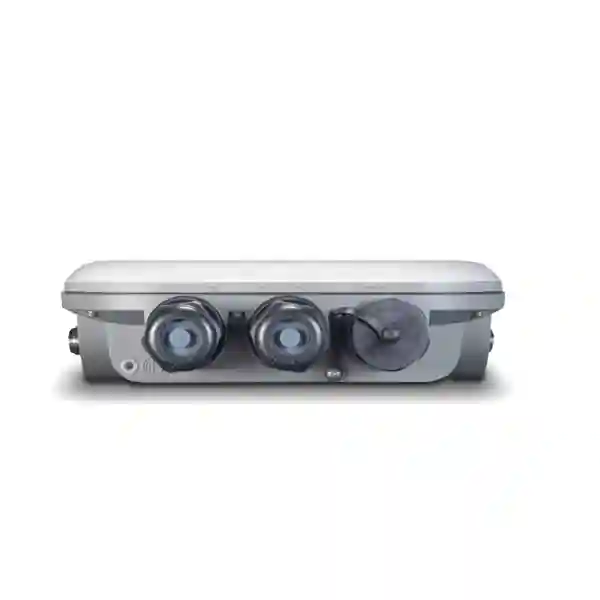
FortiAP FAP-432F Tanzania
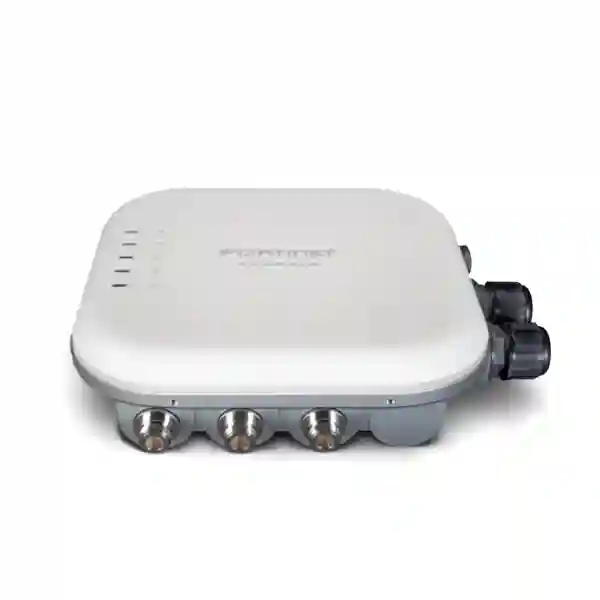
Fortinet FortiAP FAP-432F is an enterprise-class rugged indoor/outdoor Wi-Fi 6 access point for organizations that need dependable wireless access beyond a conventional office ceiling. Its architecture combines 2.4 GHz and 5 GHz client-serving radios with dedicated wireless scanning, external antenna flexibility, a 2.5 Gigabit Ethernet interface and an additional Gigabit Ethernet interface. For Tanzanian buyers planning secure wireless across campuses, yards, warehouses, hospitality properties, education environments, logistics facilities or exposed business areas, the FAP-432F offers a mature Wi-Fi 6 platform that can be integrated into a Fortinet-managed network.
802.11ax wireless with OFDMA and 4×4 client-serving radio capability for modern enterprise access.
Separate client radios and scanning capability help organizations combine access with ongoing RF visibility.
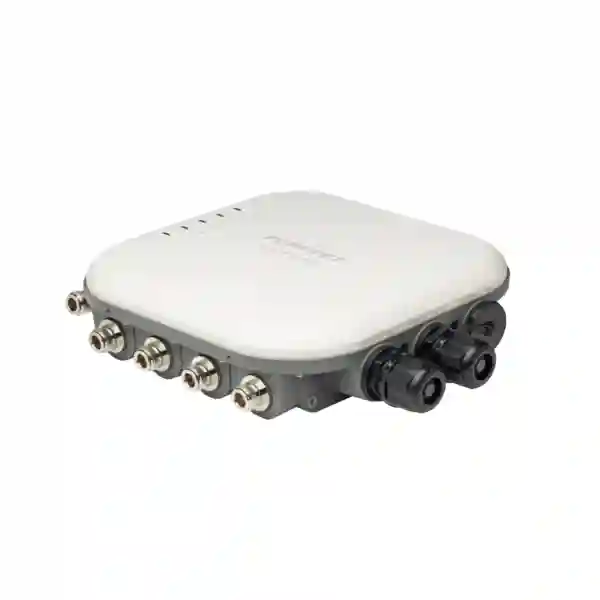
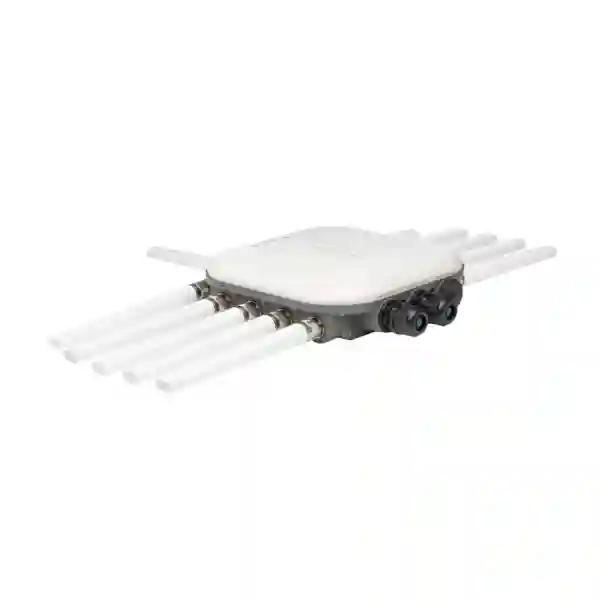
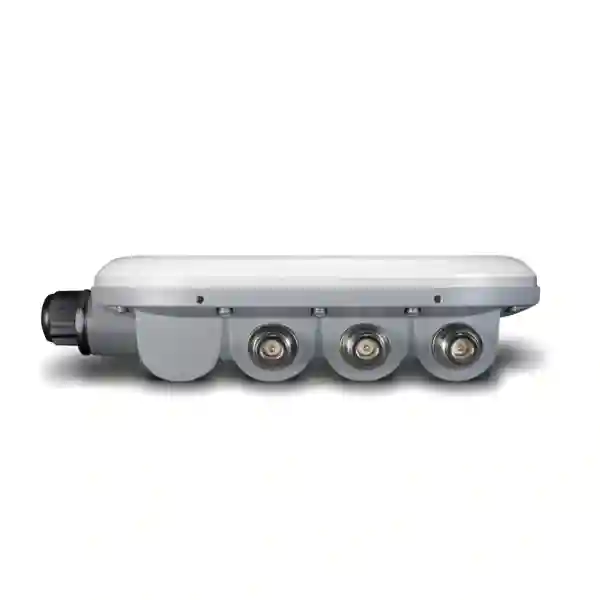
Designed for indoor/outdoor deployment with external antennas and wall/pole mounting considerations.
Verified FortiAP FAP-432F capabilities
Fortinet documentation identifies the FAP-432F as a ruggedized indoor/outdoor access point with three Wi-Fi radios plus BLE functionality. The 2.4 GHz service radio supports 4×4 operation, while the 5 GHz service radio also supports 4×4 operation, including channel-width options appropriate to Wi-Fi 6 deployments. A further radio is intended for frequency scanning. Published maximum PHY data rates are up to 1,147 Mbps on the 2.4 GHz radio and up to 2,402 Mbps on the 5 GHz radio; real application throughput depends on client capability, RF conditions, channel plan, interference, network design and regulatory settings.
The platform provides one 100/1000/2500 Base-T RJ45 interface and an additional 10/100/1000 Base-T RJ45 interface, giving network designers a multigigabit uplink option where the switching infrastructure supports it. The access point uses external antennas, including dual-band Wi-Fi/scanning antennas, and includes BLE/Zigbee capability. Supported wireless security and authentication capabilities documented for this generation include WPA, WPA2 and WPA3 options, enterprise 802.1X methods, preshared-key deployments and captive-portal scenarios. Exact radio settings and available frequencies must always follow the regulatory domain and local rules for the country of deployment.
Secure wireless management and integration
A major purchasing consideration is how the access point will be controlled. Fortinet positions FortiAP as part of its secure networking architecture, with centralized wireless control available through compatible Fortinet management approaches. In a FortiGate-centered environment, this can help network teams coordinate wireless access, segmentation and security policy with the wider LAN edge. Before procurement, buyers should confirm the intended controller or cloud-management method, supported FortiOS release, switching and PoE design, VLAN plan, authentication method and any support subscriptions required by the organization.
For organizations standardizing a broader security stack, explore Fortinet-focused solutions from FourTeck for complementary firewall and secure networking context. Customers planning cross-border projects can also review FourTeck Africa technology solutions, FourTeck Uganda, FourTeck Kenya and FourTeck UAE when coordinating related regional requirements.
FortiAP FAP-432F Tanzania
For Tanzania deployments, the FAP-432F is best evaluated as part of a complete wireless design rather than as a stand-alone coverage promise. Business buyers should begin with the physical environment: determine whether radios will serve offices, warehouses, courtyards, industrial spaces, hospitality grounds, education facilities, logistics yards or mixed indoor/outdoor zones. Building materials, mounting height, vegetation, metal racking, machinery, neighboring wireless networks and client density can all influence the number and placement of access points. The external-antenna design gives planners flexibility, but antenna choice and orientation should be engineered for the actual coverage objective rather than selected only from headline gain figures.
Tanzanian organizations should also plan the wired side carefully. A Wi-Fi 6 access point with a 2.5GbE interface can benefit from multigigabit switching where traffic demand justifies it, while PoE capacity must be checked against the selected deployment and power method. Network teams should map VLANs for corporate users, guests, operational devices and other device groups, then align authentication and firewall policy with those segments. Where FortiGate is already present, integrating wireless control with the existing security environment may simplify policy administration and visibility.
Procurement teams requesting a quotation should specify quantity, deployment city, indoor/outdoor exposure, mounting requirements, preferred antenna approach, controller environment, switching platform, PoE availability and support expectations. They should also confirm the correct regulatory-domain suffix for Tanzania before an order is finalized. Because product generations and orderability change over time, availability should be confirmed at quotation stage rather than assumed from an older catalogue. This approach gives buyers a more useful proposal covering the access point, compatible power and mounting components, management requirements and implementation scope.
FortiAP FAP-432F Dar es Salaam
Dar es Salaam organizations often need wireless designs that span very different environments within the same project: multi-floor offices, retail premises, hotels, warehouses, yards and coastal commercial facilities. The FAP-432F can be considered where rugged placement and external antennas are valuable, particularly when an ordinary indoor access point would not match the installation conditions. A site survey should identify desired service areas, likely concurrent users, high-bandwidth applications, roaming paths and sources of RF obstruction before mounting locations are finalized.
For a corporate campus or warehouse, designers can use the dedicated scanning capability to support RF monitoring while the primary radios continue serving clients. However, good Wi-Fi performance still depends on disciplined channel planning, transmit-power choices and appropriate AP spacing. Adding more access points without considering co-channel interference can reduce rather than improve user experience. In busy Dar es Salaam sites, planners should pay particular attention to 5 GHz capacity, client capabilities and how much traffic will ultimately traverse the wired uplink.
A quotation request should therefore include a floor plan or site dimensions where possible, expected device counts, application mix, existing FortiGate/FortiSwitch details, ISP topology and any guest-access requirements. For outdoor placements, the installation team should also review grounding, cable paths, weather exposure and mounting structure. FourTeck can use this information to frame a bill of materials and integration discussion without making unsupported assumptions about coverage. Buyers comparing the FAP-432F with newer FortiAP generations should evaluate controller compatibility, radio requirements, lifecycle considerations and budget together rather than treating Wi-Fi generation alone as the decision criterion.
FortiAP FAP-432F Mwanza
In Mwanza, businesses evaluating enterprise wireless may be connecting administrative offices, hospitality spaces, education facilities, distribution operations or compounds where indoor and outdoor service areas overlap. The rugged FAP-432F is relevant when access-point placement requires more environmental resilience and external antenna flexibility than a standard indoor unit. The planning process should distinguish coverage from capacity: a signal may reach a location while still failing to provide acceptable performance when many clients compete for airtime.
Wi-Fi 6 features such as OFDMA are useful in environments with numerous modern clients, but the full benefit depends on compatible endpoints and sound RF design. The 2.4 GHz band remains important for reach and legacy/IoT connectivity, while 5 GHz typically offers more capacity and wider channel choices. A professional design should decide which SSIDs and device classes belong on each network segment, how roaming will be handled and whether guest access needs separate policy. The dedicated scanning radio can contribute to wireless monitoring without using the main client radios solely for that task.
Mwanza procurement teams should ask for the correct regional model, mounting hardware, power arrangement and support coverage to be clearly identified in the quotation. If the project already uses Fortinet security, include current FortiGate model and software details so compatibility can be checked. If the wired network is being upgraded simultaneously, review PoE budget and whether multigigabit switching is appropriate for selected AP locations. This prevents an access-point purchase from being constrained by an undersized switch, unsuitable cabling or unclear controller plan after installation begins.
FortiAP FAP-432F Arusha
Arusha buyers may encounter wireless requirements across hospitality properties, offices, education environments, tourism-related facilities and operational compounds. For these sites, the FAP-432F can be assessed where a rugged Wi-Fi 6 access point with external antennas and wall/pole mounting suits the physical deployment. Hospitality projects in particular should model guest density by zone rather than assuming uniform demand: reception, conference areas, restaurants and outdoor gathering spaces can create concentrated peaks that need different AP placement from low-density accommodation areas.
Enterprise buyers should also decide how authentication and segmentation will work before installation. Staff, guests, point-of-sale devices, cameras, IoT equipment and operational systems should not automatically share the same trust level. Fortinet-managed wireless can form part of a policy-based network where SSIDs map to appropriate VLANs and security controls. The exact design depends on the existing firewall, switches, identity services and business applications, so these details should be captured during solution scoping.
For outdoor or semi-exposed Arusha installations, the physical layer deserves the same attention as the radio specification. Cable length and route, surge considerations, grounding, pole or wall stability, antenna positioning and maintenance access can affect long-term reliability. Buyers should request a quote that separates hardware, accessories, support and implementation services so commercial comparisons remain meaningful. If future expansion is expected, state the anticipated site growth and client increase; this helps determine whether the proposed controller, switching and IP addressing plan can accommodate additional FortiAP units without unnecessary redesign.
FortiAP FAP-432F Dodoma
Dodoma organizations considering the FortiAP FAP-432F may be planning secure wireless for offices, institutional campuses, education sites, warehouses or compounds where robust installation is important. The model’s Wi-Fi 6 service radios and separate scanning capability make it suitable for designs that need enterprise access and ongoing RF awareness. The purchasing decision should nevertheless be based on measured requirements: number of users, device mix, application demand, building layout, outdoor coverage zones and existing wired infrastructure.
For administrative and institutional networks, segmentation is often a central requirement. A deployment can separate employees, visitors, managed devices and specialized systems into different logical networks, with firewall policy controlling communication between them. WPA3-capable security options and enterprise authentication methods can be considered according to client compatibility and organizational policy. Legacy endpoints may affect the final security configuration, so an inventory of important devices should be completed before enforcing a new authentication standard across every SSID.
When requesting pricing in Dodoma, provide the required quantity and whether each unit will be installed indoors, outdoors or in a protected transitional space. Include switch models, available PoE, cabling category and controller information. If there is no existing Fortinet management platform, ask for the management architecture to be described as part of the proposal. Buyers should also verify lifecycle and current orderability because the FAP-432F belongs to an earlier Wi-Fi 6 generation and newer FortiAP options exist. A careful comparison can determine whether continuity with an installed estate or migration to a newer model better fits the project.
FortiAP FAP-432F UAE
For UAE projects, the FAP-432F is relevant to enterprises that need rugged Wi-Fi 6 coverage in warehouses, logistics facilities, hospitality areas, compounds and other sites with demanding physical placement. Heat, outdoor exposure and dense commercial RF environments make proper site engineering essential. The access point should be positioned according to a survey and antenna plan rather than simply mounted at the highest available point. Coverage, capacity, interference and client roaming are separate design questions that need to be balanced.
Organizations operating between Tanzania and the UAE may also value architectural consistency. Standardizing SSID naming, VLAN structure, authentication, logging and change procedures can reduce operational variation across sites, even when local radio settings and regulatory domains differ. The FAP-432F’s multigigabit Ethernet interface should be matched to appropriate switching where required, and PoE design should include sufficient budget for the chosen installation. Network teams should document which platform will manage the APs and how configuration backups, firmware updates and monitoring will be handled.
Commercial requests should specify the country of deployment because FortiAP regulatory suffixes matter. Do not transfer hardware between regulatory domains on the assumption that all suffixes are interchangeable. For UAE procurement and broader Fortinet requirements, the regional FourTeck resources linked above can help frame related security, switching and wireless discussions. A complete quotation should identify the exact model, required accessories, support option and implementation scope, while avoiding assumptions about stock or delivery until these are confirmed for the specific request.
FortiAP FAP-432F Uganda
Ugandan enterprises evaluating the FAP-432F can consider it for rugged wireless requirements across campuses, hospitality sites, warehouses, education facilities, compounds and distributed operations. The key advantage of this class of access point is not merely Wi-Fi 6 branding; it is the combination of enterprise radio capability, dedicated scanning, external antennas and a form factor intended for more demanding placement. A survey should determine where that rugged capability is actually required and where conventional indoor APs may be more economical.
For multi-site organizations, centralized standards are especially useful. Define corporate and guest SSIDs, VLAN numbering, authentication, IP addressing, DNS and logging policies before rolling out numerous sites. This makes deployments easier to audit and troubleshoot. Where FortiGate appliances are used, FortiAP can fit into the wider secure networking design, but compatibility and software versions should be verified for the intended architecture. The switching layer must also supply suitable PoE and uplink capacity.
Uganda quotations should state the deployment region and exact hardware suffix, quantity, antenna requirements, mounting conditions and desired support. If the project spans Tanzania and Uganda, keep regulatory and commercial line items separated while maintaining a common technical design where appropriate. Organizations should also discuss product lifecycle because newer FortiAP generations may be available. The decision can then weigh installed-base compatibility, performance requirements, project timing and long-term standardization instead of focusing on purchase price alone.
FortiAP FAP-432F Kampala
Kampala has a wide mix of dense office, retail, hospitality and institutional wireless environments. In such locations, capacity planning is often more important than maximum coverage distance. The FAP-432F’s 4×4 service radios can support enterprise designs, but the final user experience depends on channel reuse, interference, client radio capability, backhaul and application demand. Designers should identify meeting rooms, event spaces, reception zones and other high-density areas separately from ordinary office space.
The dedicated scanning radio can support RF monitoring while client radios remain available for access, which is useful where administrators want stronger visibility into the wireless environment. Security planning should include WPA2/WPA3 compatibility, enterprise authentication where appropriate, guest access controls and segmentation of unmanaged devices. For organizations with voice or real-time applications over Wi-Fi, roaming paths and RF cell boundaries should be tested rather than assumed from a predictive plan alone.
Kampala buyers should send site drawings, estimated device counts and details of existing firewall/switch infrastructure when requesting a solution. This gives the supplier enough information to discuss AP quantity, PoE, cabling, management and support as a coordinated system. Where outdoor installation is planned, specify pole/wall conditions and cable-entry constraints. The proposal should identify any assumptions so that installation costs and accessory requirements are visible before procurement approval.
FortiAP FAP-432F Arua
Arua deployments may involve branch offices, education facilities, healthcare-adjacent administrative networks, logistics sites or compounds where reliable wireless must cover a combination of buildings and open areas. The FAP-432F can be evaluated for locations needing a rugged access point with external antenna options. Rather than trying to cover an entire property from one powerful radio, designers should create controlled cells that deliver usable signal quality and sufficient capacity where people and devices actually operate.
WAN constraints can also influence wireless design. Fast Wi-Fi does not improve an application if the upstream internet or private WAN link is the bottleneck. For branch environments, capacity planning should therefore consider local LAN traffic, cloud applications, VPN usage and internet bandwidth together. Administrators can then set realistic expectations and use segmentation or traffic policy where needed. A Fortinet-centered architecture may simplify management when the branch already uses compatible FortiGate infrastructure.
For procurement, identify whether the installation is a new build, expansion or replacement. Existing cable routes, switch PoE capability and controller versions can materially affect the bill of materials. Buyers should confirm the correct regulatory variant and current availability at quotation time. If a newer FortiAP model is proposed as an alternative, ask for the differences in radio generation, antenna arrangement, management compatibility, power and switching requirements to be explained so the comparison reflects the real project rather than a model-number change alone.
FortiAP FAP-432F Mbarara
Mbarara businesses can consider the FAP-432F for enterprise wireless projects where indoor/outdoor resilience and external antennas are useful, including hospitality, education, distribution and larger commercial properties. Site planning should begin by mapping user activity, not simply building boundaries. A loading area with handheld devices, a conference room full of laptops and a quiet corridor have very different airtime demands even when they occupy similar floor area.
Wi-Fi 6 capabilities can improve efficiency with compatible clients, while the dedicated scanning radio helps preserve monitoring capability. Still, radio design must account for legacy devices and IoT endpoints that may remain on 2.4 GHz. Separating device classes through SSIDs and VLANs can help operations and security, but too many SSIDs create additional management overhead and airtime consumption. A balanced design keeps the wireless configuration understandable and aligned with actual business requirements.
A Mbarara quotation should include hardware quantity, antenna/mounting requirements, PoE and switching assumptions, controller method, support requirement and installation scope. For organizations expanding over time, ask whether the switching and management design has capacity for additional APs. Confirm model lifecycle and regulatory suffix before purchase. These checks reduce the risk of discovering after delivery that a power accessory, controller update or alternative regional SKU is required.
FortiAP FAP-432F Gulu
Gulu organizations planning secure wireless may need connectivity across offices, campuses, accommodation facilities, storage areas or compounds. The rugged FAP-432F is designed for deployments where environmental conditions and mounting options call for more than a standard indoor access point. Its external antennas should be selected and oriented according to the desired RF pattern. Higher antenna gain is not automatically better; the correct pattern depends on whether the goal is broad local coverage, directional reach or service around a particular structure.
Network design should include the complete path from wireless client to application. Check Ethernet cabling, switch port speed, PoE capacity, VLAN configuration, gateway/firewall policy and WAN bandwidth. If the organization uses FortiGate, the wireless environment can be planned alongside existing security policy, subject to software and feature compatibility. Administrators should also define how firmware maintenance and configuration changes will be controlled, particularly across multiple branches.
When requesting pricing for Gulu, state the installation environment and business objective rather than requesting only a unit price. A technically useful quote can then include compatible accessories and implementation considerations. Buyers should verify regulatory-domain requirements and current product orderability. Where continuity with an existing FAP-432F estate is important, document that requirement; where the project is entirely new, compare the model with current-generation alternatives before standardizing a large deployment.
FortiAP FAP-432F Kenya
Kenyan projects may use rugged wireless across logistics, hospitality, education, manufacturing, enterprise campuses and distributed facilities. The FAP-432F offers Wi-Fi 6 client service, dedicated scanning and external antenna flexibility, making it relevant where environmental placement is a key design factor. In high-density urban environments, a survey should account for neighboring networks and channel utilization; in larger compounds, the focus may shift toward mounting, backhaul, roaming and outdoor cell design.
Cross-border organizations operating in Kenya and Tanzania can benefit from a common logical architecture while respecting country-specific radio regulations. Standardize authentication, segmentation, naming, monitoring and documentation, then apply the appropriate regional hardware and RF configuration to each site. This makes troubleshooting easier for shared IT teams. Switching should be assessed for PoE and multigigabit requirements, particularly when many APs aggregate traffic into the same access layer.
For a Kenya quotation, include quantity, city/site, deployment conditions, current Fortinet equipment, desired management platform and support needs. Confirm the regulatory suffix rather than assuming a unit sourced for another market is appropriate. If the FAP-432F is being used to expand an installed network, supply existing AP models and firmware details so interoperability can be reviewed. For a greenfield deployment, compare lifecycle, capacity and management requirements with newer FortiAP options before final selection.
FortiAP FAP-432F Kuwait
Kuwait deployments can present demanding outdoor temperatures, exposed mounting locations and dense commercial wireless environments. A rugged access point such as the FAP-432F should still be installed within the manufacturer’s environmental and power specifications, with appropriate mounting, grounding and cabling practices. External antennas allow design flexibility, but antenna selection must follow both the intended coverage pattern and local regulatory requirements.
For warehouses and industrial-commercial sites, planners should consider metal shelving, vehicles, moving inventory and machinery as dynamic RF obstacles. A predictive design can establish a starting point, but validation after installation is important. The dedicated scanning capability can assist wireless monitoring, while 2.4 GHz and 5 GHz service radios support different client requirements. The wired network should provide sufficient uplink and PoE resources for the planned deployment.
Organizations linking Kuwait operations with East African sites should keep a consistent security and management model where practical while procuring the correct regional hardware for each country. Quotations should state model suffix, accessories, support and implementation scope. Because FAP-432F is not the newest FortiAP generation, buyers should explicitly confirm current orderability and consider the operational value of maintaining an existing standard versus adopting a newer platform for a greenfield site.
FortiAP FAP-432F Ghana
Ghanaian organizations can assess the FAP-432F for rugged enterprise wireless in campuses, logistics environments, hospitality properties, warehouses and commercial compounds. Humidity, weather exposure and mounting conditions should be reviewed during design. The access point’s outdoor-oriented construction does not remove the need for correct cable routing, grounding and installation practice. Likewise, external antennas should be chosen to fit the RF objective and installed with attention to orientation and obstruction.
Capacity planning should separate employee productivity, guest internet and operational-device requirements. A warehouse scanner network may prioritize roaming and consistent coverage, while guest Wi-Fi may emphasize user isolation and internet access. Corporate users may require enterprise authentication and access to internal applications. Mapping these use cases to separate network policies helps avoid a one-size-fits-all wireless configuration.
A Ghana procurement request should provide site details, quantity, existing security and switching infrastructure, power availability and management preferences. Confirm the correct regulatory model and current lifecycle status. For organizations with several African operations, documenting a repeatable deployment template can reduce configuration variation, but every site still needs local RF validation. A quotation should therefore distinguish reusable architecture from site-specific survey, cabling, mounting and implementation work.
FortiAP FAP-432F Nigeria
Nigeria’s enterprise environments range from dense offices and hospitality properties to large logistics and industrial sites. The FAP-432F can fit projects requiring rugged Wi-Fi 6, external antennas and dedicated scanning. In busy RF environments, designers should avoid selecting channel width solely for maximum headline speed. Wider channels consume more spectrum, and a denser AP deployment may perform better with a carefully coordinated channel plan that increases reuse.
Power and network resilience also matter. The AP’s capabilities should be supported by a properly sized PoE and switching design, with upstream network availability considered as part of the service objective. Where business continuity is important, document which network components have backup power and redundant connectivity rather than treating wireless alone as the availability solution. Fortinet integration can support centralized policy and visibility when deployed with compatible management infrastructure.
Nigeria quotations should identify exact deployment conditions, expected client load, model quantity, mounting and antenna needs, regulatory suffix and support requirements. If the project includes replacement of older APs, provide the existing models and controller details. This allows compatibility and migration steps to be considered. New projects should compare FAP-432F with current FortiAP generations, especially where long lifecycle, new radio bands or future client standards are major procurement priorities.
FortiAP FAP-432F Seychelles
Seychelles deployments, particularly hospitality and multi-building commercial properties, can require wireless service across indoor guest areas, outdoor spaces and exposed coastal environments. The rugged FAP-432F may be considered where the physical deployment calls for an outdoor-capable enterprise access point. Coastal conditions make mounting hardware, connectors, cable paths and maintenance practices important considerations beyond the access point specification itself.
Hospitality wireless should be designed around guest behavior and property layout. Pools, restaurants, conference spaces and reception areas may have concentrated demand, while pathways and accommodation blocks require consistent roaming. Staff and operational devices should normally be separated from guest traffic through appropriate network segmentation and policy. A survey can identify where external antenna patterns and AP placement will provide useful service without excessive overlap.
For Seychelles procurement, request a complete bill of materials that identifies the exact regional model, antennas, mounting/power requirements and support. If centralized management will be used across several properties, document the controller and WAN dependencies. Buyers should also verify current FAP-432F orderability and compare it with newer FortiAP models for greenfield projects. The goal is a design that balances compatibility, lifecycle, environmental installation and user experience rather than choosing solely from a specification table.
Selection, sizing and deployment checklist
Before ordering FortiAP FAP-432F, document the number of sites, required coverage zones, concurrent devices, application types, indoor/outdoor exposure, mounting positions, existing switch ports, PoE capacity, controller platform, FortiOS versions, authentication requirements, VLAN design and support expectations. Confirm whether external antenna characteristics match the intended RF pattern and verify the country-specific regulatory SKU. For upgrades, capture the existing AP estate and migration constraints; for new deployments, compare current-generation alternatives as part of lifecycle planning.
FortiAP FAP-432F FAQs
Is FortiAP FAP-432F an outdoor access point?
Yes. Fortinet documentation describes FAP-432F as a ruggedized indoor/outdoor wireless access point. Installation still needs to follow the documented environmental, mounting, grounding, antenna and power requirements.
Does FAP-432F support Wi-Fi 6?
Yes. FAP-432F is an 802.11ax Wi-Fi 6 model with 4×4 client-serving radios on 2.4 GHz and 5 GHz and a separate scanning radio.
Does it have a 2.5GbE port?
Yes. Published specifications list one 100/1000/2500 Base-T RJ45 interface plus an additional Gigabit Ethernet interface. The upstream switch, cabling and traffic demand should be reviewed when deciding whether multigigabit connectivity is required.
Can FAP-432F be managed with FortiGate?
FortiAP is designed for centralized management in compatible Fortinet architectures, including FortiGate-based wireless control. Confirm the exact FortiGate model, FortiOS release and intended AP firmware before deployment.
What should I provide for a Tanzania quotation?
Provide quantity, city/site, indoor or outdoor conditions, expected users/devices, existing FortiGate and switch details, PoE availability, mounting and antenna needs, management preference and support requirements. This allows the quotation to address the full deployment rather than only the access-point unit.
Decision recap
FortiAP FAP-432F is a rugged Wi-Fi 6 access point suited to organizations that specifically need external antennas, indoor/outdoor placement, 4×4 service radios, dedicated scanning and multigigabit Ethernet integration. It is particularly relevant when extending or maintaining an established Fortinet wireless architecture. For a new deployment, buyers should verify current lifecycle and availability and compare newer FortiAP generations before standardizing. The strongest procurement outcome comes from matching the AP to a documented RF, switching, PoE, security and management design.
Consult FourTeck Tanzania
Share your site type, quantity, current Fortinet environment and wireless objectives with FourTeck Tanzania for a project-focused discussion. A useful consultation should confirm the exact model and regulatory domain, identify required accessories and management dependencies, and distinguish hardware supply from survey, configuration, installation and support requirements.




Reviews
There are no reviews yet.