
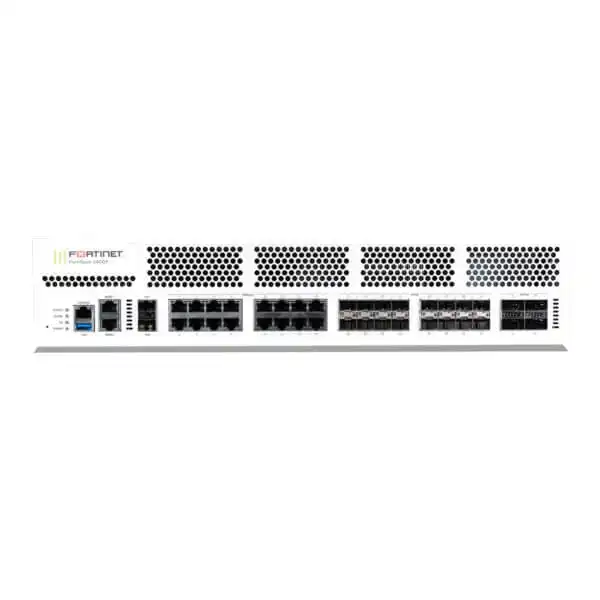
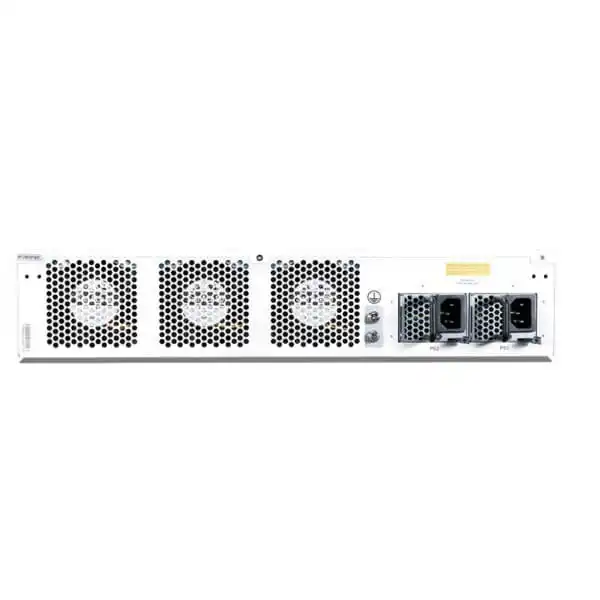
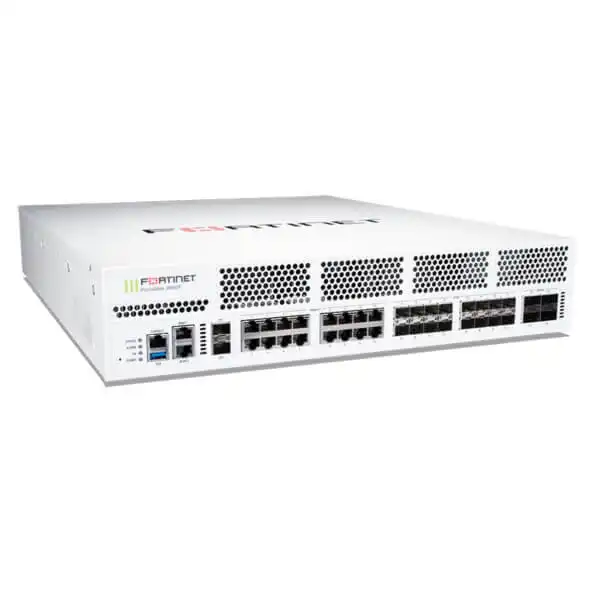
FortiGate 2600F (FG-2600F) Tanzania
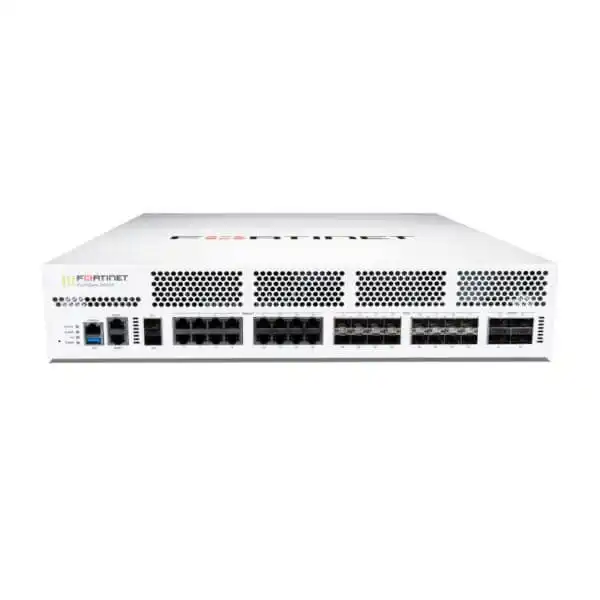
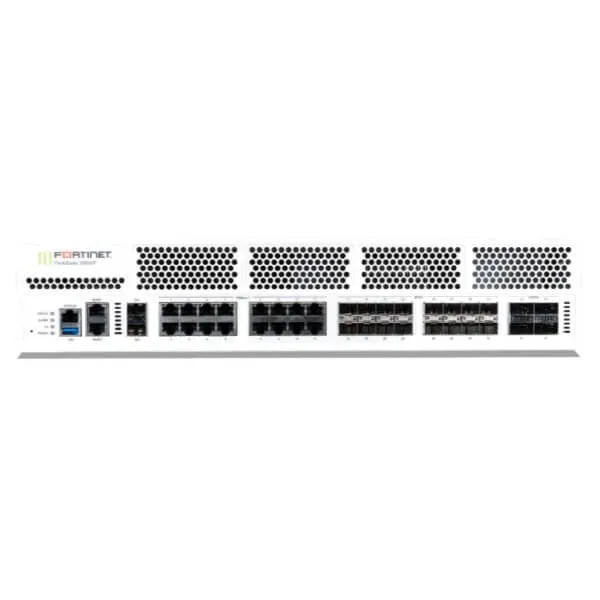
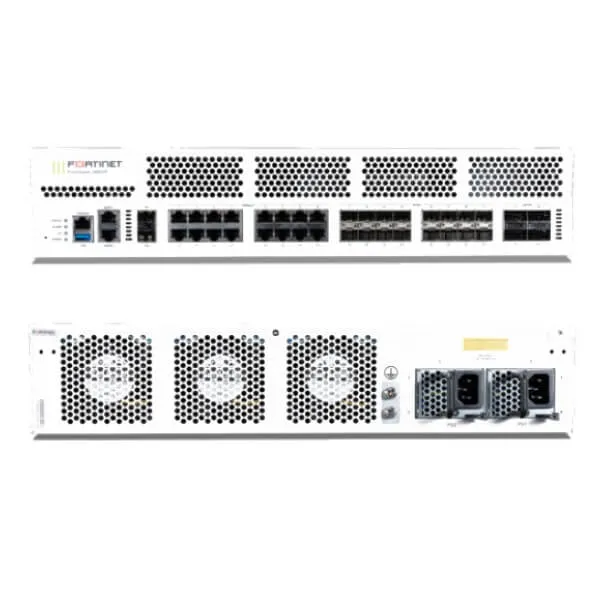
FortiGate 2600F is a high-performance Fortinet next-generation firewall for organisations that need dense high-speed interfaces, accelerated security processing and a platform suitable for large enterprise edges, data-centre boundaries and demanding hybrid networks. Fortinet positions the 2600F Series as a foundation for Hybrid Mesh Firewall architecture and publishes 31 Gbps IPS, 27 Gbps NGFW and 25 Gbps threat-protection performance. Its interface mix includes multiple GE connections together with 25 GE SFP28 / 10 GE SFP+ / GE SFP and 100 GE QSFP28 / 40 GE QSFP+ options. These figures are manufacturer performance references rather than a promise of application throughput in every design; real sizing should account for enabled inspection, traffic mix, encryption, VPN, logging, policy complexity and growth.
For Tanzania buyers, the useful procurement question is not simply whether FG-2600F is powerful. The better question is whether its security capacity, port density, resiliency and subscription plan match the intended network. FourTeck can help turn an RFQ into a complete bill of materials covering the appliance, appropriate FortiGuard and FortiCare terms, optics or transceivers where required, rack and power considerations, high-availability planning, switching dependencies and implementation scope. Request a FortiGate 2600F consultation.
Fortinet-published IPS throughput for the FortiGate 2600F Series.
Fortinet-published NGFW performance reference for sizing discussions.
Fortinet-published threat-protection performance for the series.
High-speed QSFP28/QSFP+ connectivity supports demanding aggregation and data-centre designs.
What the FortiGate 2600F is designed to solve
Large networks frequently outgrow firewalls because security inspection, east-west segmentation, encrypted traffic, remote connectivity and multi-gigabit internet links place very different demands on an appliance than simple packet forwarding. The FG-2600F combines FortiOS networking and security functions with Fortinet SPU acceleration. This makes the model relevant when an organisation is consolidating perimeter security, protecting high-capacity internet edges, segmenting data-centre zones, terminating site-to-site connectivity or standardising policy across a larger Fortinet environment. Procurement should still be driven by measured requirements: peak and sustained traffic, percentage of encrypted traffic, applications, concurrent users and sessions, VPN topology, interface speeds, HA strategy, inspection profiles and retention or logging architecture.
Fortinet also integrates SD-WAN and ZTNA capabilities into FortiGate. In practical terms, that can allow the same policy platform to participate in WAN path selection, application-aware connectivity and identity-aware access designs. Whether those functions should be enabled on a specific 2600F deployment depends on architecture and operational ownership. A data-centre firewall may have different priorities from an internet-edge firewall, and an organisation with a dedicated SD-WAN layer may use FortiGate differently from a consolidated design. FourTeck recommends documenting the role first, then selecting licenses and configuration around that role.
FG-2600F technical and procurement highlights
| Area | Verified / planning point |
|---|---|
| IPS | 31 Gbps manufacturer-published performance |
| NGFW | 27 Gbps manufacturer-published performance |
| Threat protection | 25 Gbps manufacturer-published performance |
| High-speed interfaces | 100 GE QSFP28 / 40 GE QSFP+ and 25 GE SFP28 / 10 GE SFP+ options, plus GE connectivity |
| Platform | FortiOS with Fortinet Security Fabric and FortiGuard service integration |
| Before quotation | Confirm exact appliance variant, AC/DC requirement, subscriptions, support term, optics, HA quantity and implementation scope |
FortiGate 2600F licensing, FortiGuard and lifecycle planning
A FortiGate purchase is usually more than a hardware decision. The security services and support entitlement selected for the appliance influence which protections are available and how the platform is maintained. Fortinet offers FortiCare support and multiple FortiGuard service combinations, and commercial bundles can vary by term and service level. Because bundle names and inclusions can change over time, an RFQ should state the required protection outcomes and requested term rather than relying only on an old bundle code. Buyers should identify needs such as intrusion prevention, malware protection, web and DNS filtering, application control, sandboxing or other services, then confirm the current Fortinet ordering configuration at quotation time.
For multi-year infrastructure projects, align firewall subscription duration with the organisation’s budgeting cycle and expected hardware lifecycle. Also define who owns firmware planning, configuration backup, policy review, certificate renewal, logging, incident response and change control. A high-capacity firewall can still become an operational risk if rules accumulate without ownership or subscriptions expire unexpectedly. The FourTeck Tanzania technology overview explains the broader integrated approach, while the Tanzania business technology shop provides related buying guidance.
Related FortiGate choices and Tanzania infrastructure links
The 2600F should be compared with adjacent models according to inspected throughput, interface requirements and deployment role rather than model number alone. FourTeck Tanzania currently lists multiple FortiGate platforms that can be useful for branch, campus or lower-capacity tiers. Review FortiGate 600F for a lower-tier enterprise firewall comparison, FortiGate 700G for another high-performance generation option, FortiGate 400F for midrange enterprise requirements, FortiGate 200G for smaller edge deployments, and FortiGate 200F for established branch and enterprise-edge designs. Exact fit must be validated against the current Fortinet datasheet and the intended inspection profile.
A firewall also depends on the network around it. Use the FourTeck Tanzania services page when the requirement includes implementation, and the Tanzania quotation and contact page to provide topology, bandwidth, HA and licensing details.
FortiGate 2600F Tanzania
For organisations evaluating the FortiGate 2600F in Tanzania, the strongest use cases are typically those where the firewall must protect a substantial internet edge, data-centre boundary, shared-services environment or multi-site network without becoming the bottleneck as security inspection increases. Tanzania deployments can differ significantly in connectivity design. A head office may have diverse fibre links and cloud-heavy applications, while a regional operation may depend on a mixture of primary fibre, secondary provider connectivity and VPN links to branches. The FG-2600F offers substantial manufacturer-rated security capacity, but capacity planning should start with the traffic that will actually cross the appliance. Record current peak throughput, expected internet upgrades, internal segmentation traffic, remote-access demand and site-to-site VPN load. Then add growth rather than sizing only for today’s average usage.
Procurement teams in Tanzania should request a bill of materials that distinguishes the base appliance from FortiGuard security services, FortiCare support, transceivers, patching, rack accessories, HA peer requirements and implementation. This is particularly important for 25GE and 100GE designs because optics, fibre type and the connected switch interfaces must match. If high availability is required, confirm two compatible units, power feeds, heartbeat interfaces, upstream/downstream redundancy and how maintenance will be performed. If the firewall will connect to core switching, verify routing protocols, VLAN design and link aggregation requirements before ordering.
Operational readiness matters as much as procurement. Decide where logs will be retained, who will review security events, how policy changes will be approved and how configuration backups will be protected. For organisations with branches, standard templates for address objects, VPN naming, VLANs and policy structure can reduce long-term complexity. Tanzania buyers can also coordinate related network, server, Wi-Fi and structured-cabling requirements through FourTeck rather than treating the firewall as an isolated box. The result should be a documented security edge that is sized for inspection, connected with the correct interfaces and supported by a renewal plan.
FortiGate 2600F Dar es Salaam
Dar es Salaam organisations often evaluate high-capacity firewalls in environments where headquarters, data-centre services, cloud applications, internet-facing systems and branch connectivity converge. For such a site, FG-2600F sizing should separate north-south internet traffic from traffic that may cross security zones internally. A business with server VLANs, user networks, guest access, voice, CCTV and management networks can generate significant inter-zone inspection even when its public internet circuit is smaller than the firewall’s headline throughput. Documenting these flows helps determine whether the 2600F is being selected for the right reason and which interfaces should connect to core, aggregation and WAN equipment.
Dar es Salaam procurement may also involve carrier diversity and redundant WAN architecture. The firewall can participate in SD-WAN and routing decisions, but the design should define failure behaviour before deployment. Identify which applications must survive a provider outage, whether inbound services require special failover arrangements, how public addressing changes between links and whether VPN peers can use alternative paths. For high-availability firewall pairs, upstream switching and provider handoffs should avoid creating a single point of failure. Power, UPS runtime, rack cooling and cable management deserve the same attention because an enterprise firewall cannot provide resilience if both units depend on one unprotected power path.
Before requesting a Dar es Salaam quotation, prepare current bandwidth, projected bandwidth, user count, remote users, branch count, required VPN types, public services, security features, log-retention goals and interface speeds. Include the preferred support and subscription term if procurement policy is known. This lets the quotation distinguish mandatory components from optional enhancements. FourTeck can use those details to discuss the appliance, licensing, optics, HA and deployment dependencies without claiming a one-size-fits-all configuration.
FortiGate 2600F Mwanza
For Mwanza enterprises, industrial operations, institutions and regional hubs, a FortiGate 2600F project should begin with the role the site plays in the wider organisation. A regional hub that aggregates branch VPNs, business applications, surveillance networks and internet access can have a different traffic profile from a standalone office. If the Mwanza site is a disaster-recovery location or hosts local servers, security policies may need to protect both external connectivity and traffic between internal zones. The 2600F’s high-speed interface choices can support substantial aggregation, but only when connected switches, fibre, transceivers and routing design are aligned.
Resilience planning is especially important where business continuity depends on more than one connectivity method. Rather than simply adding a second WAN, define how health checks identify failure, which applications can move to the backup link, whether bandwidth is sufficient during failover and how VPN connectivity is restored. For applications sensitive to latency or session changes, failover behaviour should be tested during commissioning. Security inspection policies should also reflect business priorities: a backup or replication network, for example, may have different controls from user web access or a public application segment.
Mwanza buyers should include physical deployment requirements in the RFQ. Confirm rack depth and space, available power circuits, UPS design, cooling, fibre paths and the distance to core switches. If two appliances are planned for HA, document both normal and failure-state cabling. Subscription and support terms should be recorded alongside the hardware so renewals are visible to finance and IT. A clear handover should include configuration backup, interface map, addressing, routing, VPN documentation and an agreed process for firmware and policy changes.
FortiGate 2600F Arusha
Arusha organisations considering FG-2600F may include large hospitality groups, institutions, corporate campuses and regional operations that need secure connectivity between users, applications, guest services and remote locations. In hospitality or campus environments, guest traffic should be separated from corporate, operational and management networks. The firewall can enforce segmentation, but the LAN must carry those VLANs correctly and wireless infrastructure must map users to the intended security zones. A 2600F purchase therefore benefits from a topology review covering switching, Wi-Fi, servers, public services and WAN connections.
Where cloud applications and remote administration are important, encrypted traffic inspection and identity-aware policy can materially affect design. Teams should decide which traffic needs deeper inspection, which services have privacy or compatibility constraints and how certificates will be deployed to managed endpoints where appropriate. ZTNA and VPN capabilities can support remote access patterns, but access policy should be based on roles and applications rather than broad network reach. Logging should provide enough visibility for troubleshooting and incident investigation without becoming an unmanaged volume of data.
For Arusha procurement, ask vendors to state exactly what is included: FG-2600F hardware, selected FortiGuard services, FortiCare term, optics, rack accessories, installation, configuration, migration and documentation. Avoid comparing quotations only by the appliance line item when subscription scope differs. If replacing an existing firewall, provide the current interface count, routing, VPNs, NAT rules and critical policies so migration effort can be assessed. Plan a rollback method and an agreed maintenance window before cutover.
FortiGate 2600F Dodoma
Dodoma deployments can involve government-facing services, institutions, corporate offices and organisations that need structured security controls around critical applications and branch connectivity. For these environments, the FortiGate 2600F should be evaluated not only on throughput but also on how well the proposed architecture supports separation of trust zones, controlled administration and auditable change. Begin by mapping user networks, server segments, management networks, public-facing services, VPN peers and any specialised operational systems. This map becomes the basis for firewall zones, routing and policy rather than recreating years of legacy rules without review.
Security governance should be part of the implementation scope. Define administrator roles, multi-factor authentication requirements, configuration-backup procedures, log destinations and the approval process for rule changes. When multiple teams manage applications and networks, use clear object naming and policy comments so future administrators can understand why access exists. FortiGuard services can add threat intelligence and inspection capabilities, but organisations should confirm which subscriptions are included and ensure renewal dates are tracked. Firmware upgrades should follow a tested change process appropriate to the criticality of the environment.
A Dodoma RFQ should include bandwidth, interface speeds, expected segmentation traffic, VPN count, remote users, HA requirements and support expectations. If procurement requires multi-year costing, request consistent terms so competing proposals can be compared on the same basis. Include optics, fibre and upstream switching where these are part of the project. During acceptance, test routing, policy, VPNs, failover, logging and administrative access rather than treating successful power-on as completion.
FortiGate 2600F UAE
UAE enterprises and regional headquarters may evaluate the FortiGate 2600F for high-bandwidth internet edges, data-centre security, multi-cloud connectivity and branch aggregation. In these designs, 100GE and 25GE interfaces can be important when the firewall connects to high-speed core or data-centre switching. Interface speed alone does not define usable security capacity, so architects should model inspected traffic, encrypted flows, VPN demand and east-west segmentation. High availability is commonly considered for critical edges, requiring redundant upstream and downstream connectivity as well as independent power paths.
Regional organisations headquartered in the UAE may also need standardised firewall policies across Africa and GCC locations. A central design can define naming, segmentation, logging, VPN templates and security profiles while allowing each site to use an appropriately sized FortiGate model. This avoids placing an oversized appliance at every branch while maintaining operational consistency. For broader UAE Fortinet context, buyers can review FourTeck’s Fortinet UAE specialist site and Dubai firewall solution resources.
For cross-border procurement, specify destination, required documentation, licensing term and project timeline, then confirm commercial and delivery details at quotation time rather than assuming stock or lead time. The hardware configuration, power variant and subscription bundle should be checked against current Fortinet ordering information. Where the UAE site is the policy or management hub for Tanzania, Uganda, Kenya or other operations, document the inter-site routing and failure behaviour so regional connectivity remains predictable.
FortiGate 2600F Uganda
Uganda organisations considering FG-2600F should first decide whether the appliance is intended for a national headquarters, data-centre edge, service-provider environment or aggregation point for multiple branches. The traffic model for each role is different. A headquarters may combine internet browsing, cloud applications, remote access and branch VPNs, while a data-centre firewall may inspect significant internal application traffic. Using Fortinet’s published 31 Gbps IPS, 27 Gbps NGFW and 25 Gbps threat-protection figures as reference points is useful, but design headroom should reflect the actual enabled services and expected growth.
WAN resilience can be designed with multiple providers and SD-WAN capabilities, but successful failover depends on routing, DNS, public services and VPN peers as well as the firewall itself. Organisations should identify which business applications are critical, their acceptable outage window and the capacity available on secondary links. If the firewall pair protects public servers, inbound failover deserves specific testing. If it aggregates branches, consider how branch tunnels react when the hub changes path. For Uganda-specific technology discussions, FourTeck Uganda provides a regional point of reference.
Procurement should include the appliance, licensing, support, HA quantity, optics and implementation assumptions. A migration plan should inventory existing rules and remove obsolete access rather than copying everything blindly. Acceptance testing should verify critical applications, remote access, site-to-site VPNs, security profiles, logging and failover. Documentation should be handed over in a format the local IT team can maintain.
FortiGate 2600F Kampala
Kampala headquarters and large enterprise sites can use a platform such as FortiGate 2600F when internet, cloud, branch and data-centre traffic converge at a high-capacity security edge. Start by measuring the current environment rather than selecting from the ISP circuit alone. Peak traffic, encrypted sessions, internal zone crossings, remote users and backup windows can all influence load. If 10GE, 25GE or 100GE connections are planned, confirm the connected switch ports and transceiver specifications so the final bill of materials includes compatible optics and fibre.
A Kampala deployment can also benefit from deliberate segmentation. User networks, servers, guest Wi-Fi, CCTV, voice, management and third-party access do not need identical trust. Firewall policies can restrict unnecessary movement between these zones, while logging provides visibility into allowed and denied flows. Segmentation design should be practical: too many poorly documented rules can become difficult to operate, so zone definitions and object naming should follow a maintainable standard. Administrative access should be limited and protected, and configuration backups should be part of normal operations.
For quotation preparation, document appliance quantity, desired HA mode, subscription term, support level, required security services, WAN links, VPN peers and migration scope. If the firewall replaces another vendor, include the current configuration size and any special NAT, routing or authentication dependencies. Testing should cover business applications and failure scenarios. A good deployment closes with an interface map, policy documentation, backup procedure and renewal record rather than only a running appliance.
FortiGate 2600F Arua
For an Arua organisation, selecting a FortiGate 2600F may make sense when the site serves as a substantial regional hub, hosts critical services or requires capacity well above a conventional branch firewall. Because high-end platforms carry both acquisition and subscription costs, buyers should validate that the model aligns with measured demand. Count users and devices, but also map branch tunnels, server traffic, internet capacity, security inspection and future expansion. If the requirement is smaller, a lower FortiGate tier may deliver a better fit while preserving FortiOS operational consistency.
Connectivity resilience should be designed around available circuits and business priorities. A backup link is valuable only if it can carry the applications needed during an outage. SD-WAN policies can steer traffic, but administrators must define health checks, preferred paths and fallback behaviour. Remote sites may also need careful VPN design so tunnels recover without manual intervention. Where centralised services are hosted in Arua, document dependencies such as DNS, authentication and application gateways that could affect failover.
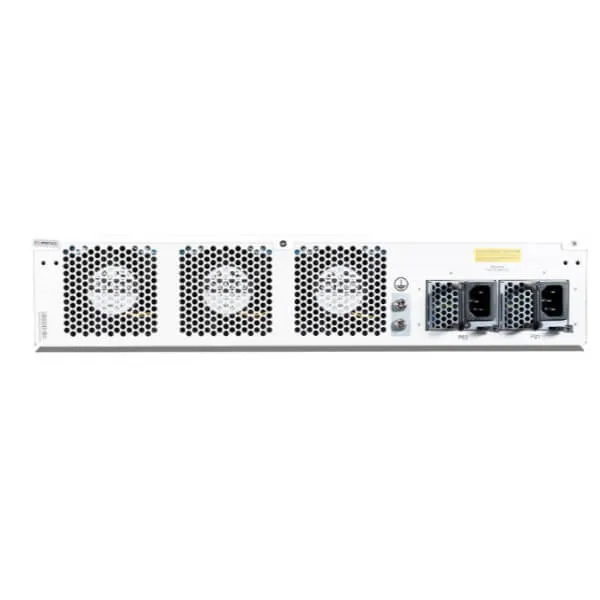
Physical readiness matters for a 2RU enterprise appliance: rack space, power, UPS, cooling, cable routes and secure access to the communications room should be checked before delivery. If HA is planned, avoid shared failure points wherever practical. Procurement documents should identify licensing term, support, optics and installation. Handover should give the IT team clear diagrams, credentials procedures, backups and renewal dates so ongoing operation does not depend on one installer.
FortiGate 2600F Mbarara
Mbarara businesses and institutions may consider FG-2600F for a major campus, regional data hub or network that consolidates several sites. The first design task is to determine where security boundaries belong. Placing every VLAN behind a firewall can increase visibility but also increases inspected traffic and policy complexity. Conversely, leaving sensitive server or management networks on the same trust plane can create unnecessary exposure. A practical architecture identifies critical zones and uses the firewall where control and inspection provide clear value.
Bandwidth planning should include future ISP upgrades and internal links. Fortinet’s high-speed interface options make the 2600F suitable for fast uplinks, but optics and fibre must match the switch infrastructure. If existing core switches are limited to lower speeds, document whether they will remain or be upgraded. VPN requirements also need detail: number of branches, expected aggregate traffic, remote-access population, authentication method and redundancy. These factors influence configuration and operational effort even when raw throughput is ample.
For Mbarara procurement, request transparent separation of hardware, subscriptions, support, transceivers and services. Clarify whether migration, policy cleanup, testing and documentation are included. Avoid assuming a quoted bundle contains every security service desired; verify current Fortinet inclusions. After deployment, establish a routine for firmware review, backup, log monitoring and rule recertification. This turns the firewall from a one-time purchase into a managed security control with clear ownership.
FortiGate 2600F Gulu
A Gulu deployment of FortiGate 2600F is most defensible where the site has high-capacity security requirements, aggregates substantial regional traffic or hosts services that justify an enterprise data-centre-class platform. Buyers should avoid using model prestige as the sizing method. Gather traffic measurements, identify security services that will be enabled and estimate growth. If the site has modest internet bandwidth but significant internal segmentation, internal flows may be the deciding factor. If the site mainly provides basic branch access, an alternative FortiGate could be more appropriate.
For distributed operations, the firewall may act as a VPN hub or participate in SD-WAN. Design tunnel addressing, route exchange, authentication and failover consistently so new branches can be added without creating a unique configuration each time. Where connectivity quality varies, application-aware path selection can improve resilience, but it should be paired with realistic secondary-link capacity. Logging and monitoring should help administrators distinguish ISP issues from firewall policy, DNS, application or LAN problems.
Gulu procurement teams should also consider maintainability. Ensure local administrators have documented procedures for backup, safe changes and escalation. Critical configurations should not exist only on one engineer’s laptop. Subscription expiry dates should be visible to procurement and IT well before renewal. During commissioning, test business workflows, VPN recovery and administrative access, then record the accepted baseline. This creates a stronger foundation for future troubleshooting and expansion.
FortiGate 2600F Kenya
Kenya enterprises may evaluate the FortiGate 2600F for Nairobi headquarters, data-centre environments, high-bandwidth campus networks and regional hubs serving East African branches. A multi-country design should separate global standards from site-specific sizing. Security profiles, object naming, logging and VPN conventions can be standardised, while appliance capacity and interface selection reflect each location. This approach can simplify operations without forcing every office to purchase the same hardware tier.
When a Kenya site connects to Tanzania, Uganda and cloud platforms, routing and failure scenarios should be documented before implementation. Determine whether traffic goes directly to the internet at each branch or backhauls to a hub, where security inspection occurs and how SaaS traffic is handled. If the 2600F is the regional hub, model aggregate VPN and internet traffic rather than a single site’s bandwidth. For Kenya-focused procurement and integration discussions, FourTeck Kenya provides regional context.
Quotation comparisons should use identical assumptions for FortiCare, FortiGuard term, appliance variant, optics and services. Public reseller prices are not a reliable substitute for a project quotation because licensing and scope differ. Confirm current commercial terms, availability and delivery at the time of order. For implementation, include migration planning, change window, rollback, testing and documentation so the firewall project has measurable acceptance criteria.
FortiGate 2600F Kuwait
Kuwait organisations considering FG-2600F may be securing high-bandwidth enterprise edges, data-centre services, energy-sector networks or multi-site corporate infrastructure. Environmental and operational planning should accompany cybersecurity sizing. Confirm rack cooling, redundant power, UPS capacity and secure equipment-room access, especially when deploying an HA pair. High-speed interfaces can connect to core and aggregation networks, but transceiver type, fibre specification and switch compatibility must be checked as part of the bill of materials.
Security policy should reflect application ownership and trust boundaries. Public services can be separated from internal application tiers, management networks can be restricted, and remote administration can use controlled access rather than broad exposure. FortiGuard services can provide additional inspection and threat intelligence, subject to the selected subscription. Buyers should ask for current bundle inclusions and avoid assuming an older SKU still represents the same service package. For regional sourcing context, FourTeck Kuwait can support Kuwait-focused discussions.
If the Kuwait firewall forms part of a wider MEA architecture, document how it exchanges routes and security policy with other sites. Decide whether logging is local or central, how incident response is coordinated and who owns renewals. Procurement should include a clear scope for implementation and acceptance testing. A technically capable appliance provides the most value when the operating model is equally clear.
FortiGate 2600F Ghana
Ghana enterprises can consider the FortiGate 2600F where a high-capacity perimeter or data-centre firewall is required for substantial internet, branch and application traffic. The sizing process should distinguish raw forwarding from security-inspected traffic. Fortinet’s published IPS, NGFW and threat-protection figures provide useful reference points, while real deployments need headroom for encrypted traffic, policy complexity, logging and growth. An architecture review should also determine whether the firewall will inspect internal segmentation traffic, which can materially change the total load.
For Accra headquarters or national hubs, resilience may involve multiple WAN providers, HA appliances and redundant core switching. Each layer should be tested together. A firewall failover that works internally may still leave public services unavailable if routing or provider dependencies were not addressed. Similarly, a secondary ISP may not have enough capacity for every application. Define priority applications and failure-state expectations before configuring SD-WAN or routing policies. FourTeck Ghana offers a regional reference for related requirements.
Ghana procurement teams should request current licensing and support details, optics, implementation and documentation as separate identifiable scope items. If the project replaces a legacy firewall, use migration as an opportunity to review obsolete objects and rules. After commissioning, maintain configuration backups, administrator controls, firmware planning and subscription renewal tracking. This reduces the chance that a high-performance platform becomes difficult to operate over time.
FortiGate 2600F Nigeria
Nigeria organisations with large headquarters, data centres, financial or industrial networks and multi-branch connectivity may evaluate FortiGate 2600F for its combination of security performance and high-speed interfaces. Large deployments should begin with a traffic and application inventory. Identify internet circuits, private WANs, cloud connectivity, branch tunnels, public applications and internal zones. Estimate both normal and peak conditions, including backup or replication windows. This makes it possible to judge whether the 2600F provides appropriate headroom and which links need 10GE, 25GE or 100GE connectivity.
In multi-site Nigerian environments, operational standardisation can be as important as appliance capacity. Use consistent naming, policy structure, VPN templates and logging so teams can support multiple locations. Centralised visibility can help security operations correlate events, but log-retention architecture should be sized separately. Remote access should be based on strong authentication and least privilege. Where SD-WAN is used, path rules should align with application priority and real provider performance rather than simple link availability. FourTeck Nigeria provides regional technology context.
A Nigeria RFQ should specify exact model, quantity, HA, subscription and support term, optics, power requirements, implementation and desired documentation. Do not infer stock or delivery from another market; confirm these at quotation time. During cutover, use a documented rollback plan and test critical applications, VPNs, public services, logging and failover. Record the accepted baseline so later changes can be measured against it.
FortiGate 2600F Seychelles
Seychelles organisations evaluating FG-2600F may include large hospitality groups, government or enterprise networks, service environments and regional operations where security resilience is critical. Because island deployments can make logistics and replacement planning particularly important, the architecture should consider redundancy, support entitlement and spares strategy alongside performance. A high-availability pair can reduce appliance-level risk, but only if power, switching and WAN dependencies are also designed to avoid common failure points.
Hospitality and mixed-use networks often require strong separation between guest, corporate, property systems, voice, CCTV and management traffic. A FortiGate can enforce policy between selected zones while also protecting internet access, but VLAN and switching design must be coordinated. Where multiple properties connect by VPN, define hub topology, routing and failover in a repeatable way. Bandwidth can be valuable, so security policies and update processes should be planned to avoid unnecessary operational disruption while maintaining appropriate protection.
For Seychelles procurement, prepare a complete bill of materials before shipment: appliance variant, subscription and FortiCare term, HA quantity, optics, rack accessories and any required cables. Confirm commercial availability and logistics at order time rather than relying on assumptions. Implementation planning should include remote and on-site responsibilities, secure administrative access, backup and recovery procedures and acceptance tests. For broader regional support context, FourTeck Africa can complement Tanzania-focused project discussions.
FortiGate 2600F integration and deployment checklist
Before ordering, document the intended firewall role, current and future WAN bandwidth, internal segmentation traffic, number of sites, VPN topology, remote users, public services, required security inspection, interface speeds, routing protocols, high-availability requirements and log-retention strategy. Then map physical dependencies: rack space, cooling, AC or DC power requirement, UPS, redundant feeds, fibre type, transceivers and switch ports. This information prevents a technically correct appliance from arriving without the components needed to connect it.
Before cutover, back up the existing firewall, export or document routing and NAT, inventory VPNs and critical policies, identify application owners and define a rollback plan. During testing, verify DNS, authentication, internet access, critical SaaS and on-premises applications, inbound services, remote access, branch tunnels, logging and HA or WAN failover. After handover, store the approved configuration and diagrams securely and create recurring ownership for firmware review, policy cleanup, certificate expiry and FortiGuard/FortiCare renewal.
FortiGate 2600F quotation checklist
Current/target bandwidth, peak traffic, encrypted traffic and segmentation flows.
Required 1/10/25/40/100GE links, optics, fibre and connected switch interfaces.
Required inspection capabilities and current FortiGuard bundle/term confirmation.
HA quantity, redundant power, WAN diversity, upstream/downstream redundancy and failover tests.
FortiGate 2600F FAQs
What is the FortiGate 2600F IPS throughput?
Fortinet’s current 2600F Series datasheet publishes IPS throughput of 31 Gbps. Treat this as a vendor benchmark reference; production performance depends on traffic and configuration.
What are the published NGFW and threat-protection figures?
Fortinet publishes 27 Gbps NGFW and 25 Gbps threat-protection performance for the 2600F Series.
Does FG-2600F support 100GE connectivity?
Yes. Fortinet lists 100 GE QSFP28 / 40 GE QSFP+ slots among the interface options, together with 25 GE SFP28 / 10 GE SFP+ / GE SFP and GE connectivity.
Should I buy one FG-2600F or an HA pair?
That is a design decision. Critical environments often evaluate high availability, but an HA pair only addresses part of the resilience chain. Power, switching, WAN links, routing and maintenance procedures also need redundancy planning.
Which FortiGuard license should I choose?
Choose according to required security outcomes and confirm the current Fortinet bundle contents and term at quotation time. Bundle names and commercial packaging can evolve, so do not rely on an old SKU list.
What information should I send for a Tanzania quotation?
Send bandwidth, expected growth, users/sites, VPN needs, security services, interface speeds, HA requirements, preferred support term, current firewall details and any optics or implementation requirements.
Decision recap: is FG-2600F the right tier?
FortiGate 2600F is a serious enterprise platform with high-speed interfaces and manufacturer-published security performance aimed at demanding networks. It is most compelling when those capabilities solve a measured requirement: high inspected throughput, dense fast uplinks, large-scale VPN or segmentation, data-centre security, or substantial growth headroom. If the requirement is materially smaller, compare other FortiGate tiers instead of purchasing capacity that will not be used.
FourTeck can help turn the requirement into a quotation-ready specification covering appliance, subscriptions, support, optics, HA, integration and migration. For related regional projects, the FourTeck network includes FourTeck UAE, FourTeck Kenya, FourTeck Uganda, FourTeck Ghana and FourTeck Nigeria.
Consult FourTeck Tanzania about FortiGate 2600F
Share your topology, bandwidth, sites, security-service requirements, HA preference and desired support term. The discussion can then focus on whether FG-2600F is correctly sized and what must be included in the bill of materials. No stock, price, delivery, warranty or authorisation claim is implied on this page; these should be confirmed in the current written quotation.


Reviews
There are no reviews yet.