
FortiSwitch FS-3032G Tanzania
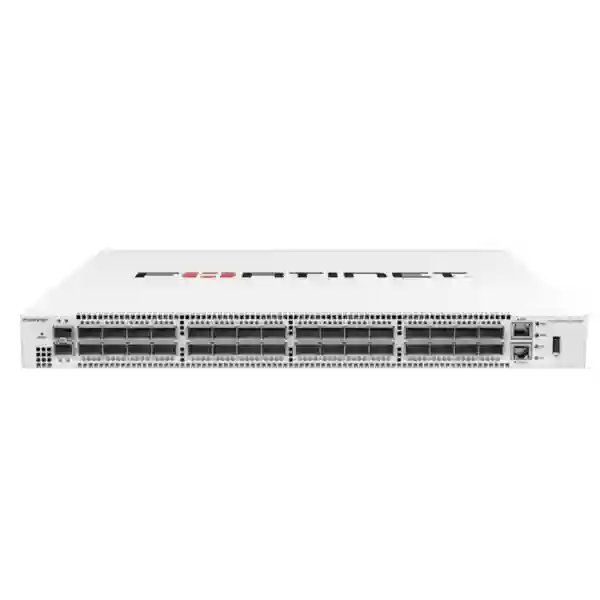
FortiSwitch FS-3032G is a high-density Fortinet campus-core and data-center switch built for organizations that need large-scale 100 Gigabit Ethernet connectivity in a compact 1RU platform. Fortinet specifies 32 × 100GE/40GE QSFP28/QSFP+ interfaces plus 2 × 10GE/1GE SFP+/SFP interfaces, Layer 2/3 operation, 6.44 Tbps duplex switching capacity, sub-1 microsecond network latency, 4K VLAN support, IPv4/IPv6 routing and dual hot-swappable AC power supplies. For Tanzanian enterprises, service providers, universities, financial institutions, data-center operators and large distributed organizations, the FS-3032G can serve as a high-capacity building block for aggregation, core, spine/leaf and server-fabric designs when its port profile and performance match the project.
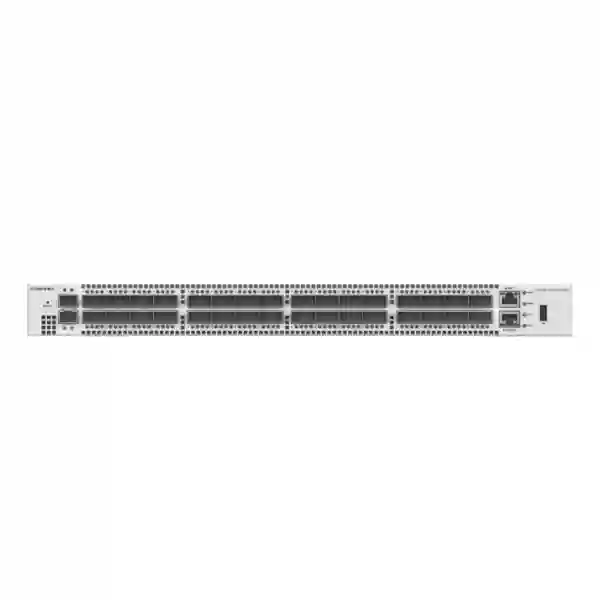
QSFP28/QSFP+ high-speed network interfaces for dense core and data-center connectivity.
Fortinet-published duplex switching capacity for demanding high-bandwidth network fabrics.
Published network latency suited to performance-sensitive data-center and campus-core traffic.
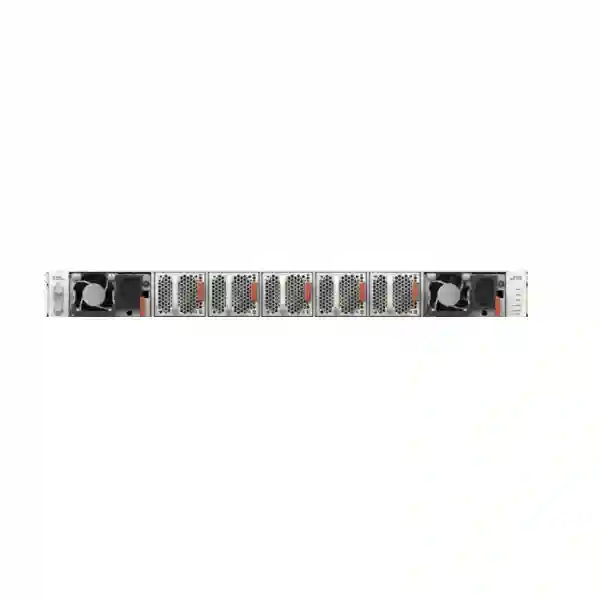
Rack-efficient form factor with dual hot-swappable AC power supplies.
FortiSwitch FS-3032G Overview
The FS-3032G sits in Fortinet’s Campus Core and Data Center family. Its interface mix makes it materially different from an ordinary access switch: the primary ports are 100GE/40GE optical interfaces intended for high-throughput links rather than desktop copper access. That makes project discovery important. Buyers should start with the number of required 100GbE and 40GbE connections, expected oversubscription ratio, topology, optics and cabling plan, routing requirements, redundancy model, rack airflow, power design and management architecture. A procurement request that includes these details is easier to validate than a request based only on total port count.
Fortinet documents the FS-3032G with 4K VLANs, 65K MAC address storage, 32 MB packet buffers, eight queues per port, IPv4/IPv6 routing, 8 GB DDR4 memory, 32 MB NOR flash and a 128 GB SSD. The platform is designed for high-speed network roles where organizations need predictable switching resources and the operational advantages of the Fortinet networking ecosystem. FortiSwitch hardware can operate standalone or be managed using supported Fortinet management approaches, depending on software version, design and deployment requirements.
Technical Specifications
| Network interfaces | 32 × 100GE/40GE QSFP28/QSFP+; 2 × 10GE/1GE SFP+/SFP |
| Service / console | 1 × 10/100/1000 service port; 1 × RJ-45 serial console |
| Switching capacity | 6,440 Gbps duplex |
| Packet forwarding | 4,000 Mpps duplex at 64-byte packets |
| Latency | Less than 1 microsecond |
| VLANs | 4K |
| MAC address storage | 65K |
| Packet buffers | 32 MB |
| Form factor | 1RU rack mount |
| Dimensions | 43 × 460 × 438.5 mm |
| Weight | 8.37 kg |
| Power | 100–240V AC, 50–60 Hz; dual hot-swappable AC power supplies |
| Operating temperature | 0°C to 40°C |
Design and Deployment Guidance
A successful FS-3032G deployment begins with topology rather than hardware alone. In a leaf-spine architecture, planners should identify how many server or leaf connections terminate on each switch, the required east-west bandwidth, whether 40GbE compatibility is needed during migration, and how uplinks are distributed for resilience. In a campus-core design, the team should map building or distribution-layer uplinks, routing boundaries, VLAN scale, link aggregation, failover behavior and maintenance windows. The two 10GE/1GE SFP+/SFP interfaces should be considered in the context of the complete architecture rather than assumed to replace the high-density QSFP28 fabric ports.
Optics and cabling deserve their own bill of materials. QSFP28 connectivity can involve different transceiver types, fiber specifications, reach requirements and breakout strategies. Procurement teams should document link distance, connector type, fiber plant, peer equipment and desired speed for every planned connection. Compatibility should be checked against current Fortinet documentation before ordering. This reduces the risk of purchasing a high-capacity switch while overlooking transceivers, patching, fiber trays, rack power or other infrastructure required to place it into service.
Thermal planning is also important. Fortinet specifies front-to-back airflow, maximum power consumption of 548.94 W and a published noise level of 73.13 dBA. The FS-3032G is therefore more naturally suited to controlled equipment rooms and data-center racks than quiet office workspaces. Rack placement should preserve airflow, power feeds should be designed around redundancy objectives, and facilities teams should confirm cooling capacity before deployment.
Fortinet Management and Network Integration
FortiSwitch products can be used in standalone deployments or within supported Fortinet management architectures. The appropriate approach depends on software versions, operational model and the surrounding Fortinet environment. Organizations already using FortiGate, Fortinet centralized management or Fortinet cloud-management services should define where configuration ownership, monitoring, firmware lifecycle and change control will reside before deployment. This is particularly important for core switches because configuration changes can affect many downstream services.
The FS-3032G supports Layer 2 and Layer 3 use cases, which gives architects flexibility in deciding whether routing occurs at the switch, firewall or another network tier. That decision should be driven by segmentation policy, traffic flows, failure domains, operational responsibilities and security architecture. For broader Fortinet security planning, explore FourTeck Tanzania, the regional Fortinet Kenya solutions guide, FortiGate solutions in Uganda, and FourTeck UAE for related regional solution context.
FortiSwitch FS-3032G Tanzania
Organizations evaluating FortiSwitch FS-3032G Tanzania are typically planning beyond ordinary office access switching. A 32-port 100GbE platform belongs in discussions about data-center fabrics, enterprise cores, large campus backbones, high-capacity aggregation and infrastructure where many high-speed links must converge. Tanzanian buyers should therefore frame the procurement around the network architecture: identify existing switch models, firewall and router connections, server interfaces, virtualization clusters, storage traffic, inter-rack links, fiber distances and expected growth. This provides a sound basis for deciding whether the FS-3032G is the right density and whether one unit, a redundant pair or a larger fabric is appropriate.
For a Tanzania deployment, environmental and facilities planning matters as much as logical configuration. Confirm rack depth, front-to-back airflow, cooling, redundant power feeds, UPS capacity, grounding and maintenance access. Where the switch supports business-critical services, design for component and path redundancy rather than relying on a single chassis or single fiber path. The dual hot-swappable AC power supplies help support resilient power design, but overall availability still depends on upstream electrical feeds, peer devices, cabling and topology.
Procurement teams should request an itemized quotation that separates the FS-3032G hardware from required optics, cables, support services and any management components. They should also provide intended link speeds and distances so the optical bill of materials can be validated. Price alone is a weak comparison if one proposal excludes transceivers or support that another includes. For organizations migrating from older 40GbE infrastructure, the switch’s 100GE/40GE QSFP28/QSFP+ interface support may help stage a transition, subject to compatible optics and configuration. A documented migration plan should cover cabling, routing adjacencies, VLANs, link aggregation, monitoring and rollback procedures.
FortiSwitch FS-3032G Dar es Salaam
Dar es Salaam organizations considering the FS-3032G may include enterprises with centralized server rooms, service providers, financial institutions, universities, logistics operations and other environments where backbone traffic can outgrow conventional 10GbE switching. The buying process should begin by documenting the present core and expected traffic growth. Count 100GbE and 40GbE peers, identify 10GbE dependencies, map server and storage clusters, and decide whether the new switch will function as a core, aggregation device, spine or leaf. The FS-3032G’s high port density can simplify a fabric, but only when the physical and logical design is matched to the application.
In dense equipment rooms, airflow and cable management are critical. Thirty-two QSFP-class ports can produce a substantial concentration of fiber or direct-attach connections. Good labeling, patch-panel planning and documented port allocation reduce operational mistakes. Teams should reserve capacity for expansion instead of consuming every interface on day one. They should also plan monitoring and configuration backup before production cutover, with clear ownership for firmware review and change approval.
A Dar es Salaam quotation request should include quantities, topology, required optics, fiber type and distances, desired support term, rack and power environment, and target installation schedule. If the switch is part of a broader Fortinet architecture, include the FortiGate and management platform versions so compatibility can be checked. FourTeck can use these details to prepare a more precise commercial and technical discussion without assuming stock, lead time or site conditions before confirmation.
FortiSwitch FS-3032G Mwanza
For Mwanza businesses and institutions, the FortiSwitch FS-3032G is relevant when the network requirement is a high-speed core rather than user-edge connectivity. A regional headquarters, campus, data-processing site or service-provider environment may need to aggregate multiple distribution switches, virtualization hosts or high-bandwidth services. Before selecting the model, architects should quantify peak and projected traffic, identify failure domains and determine how much 100GbE capacity is actually needed. The goal is to match infrastructure investment to measurable network demand.
Where equipment support may require planned travel or scheduled maintenance, operational simplicity becomes valuable. Document the configuration, transceiver inventory, spare strategy, software version and recovery procedure. Use consistent interface descriptions and cable labels so remote teams can diagnose faults without ambiguity. Redundant uplinks should follow physically diverse paths where possible, and dual power supplies should connect to appropriately designed power sources if the site requires power resilience.
Mwanza procurement teams should avoid treating the switch as a complete project by itself. A usable 100GbE deployment may require compatible QSFP28 optics, fiber infrastructure, rack accessories, upstream or downstream interfaces and professional configuration work. Requesting these as an integrated bill of materials makes commercial comparisons clearer and helps expose missing dependencies before purchase. If migration from existing 10GbE or 40GbE infrastructure is planned, document each transition link and validate the required interface mode and optical compatibility.
FortiSwitch FS-3032G Arusha
Arusha organizations evaluating a FortiSwitch FS-3032G may be modernizing a central network for hospitality groups, education, enterprise operations, public-sector environments or large multi-building sites. The switch is best evaluated against backbone requirements. Determine whether the network needs 100GbE between core and distribution layers, between server clusters, or across a data-center fabric. Where most endpoints remain 1GbE or 10GbE, the FS-3032G would normally sit above access switches rather than connect end-user devices directly.
A resilient Arusha design should consider maintenance as well as failure. If one switch must be upgraded or rebooted, can traffic continue through another path? Are routing and link-aggregation protocols configured to converge as expected? Are power supplies connected to independent protected sources? Is fiber routing documented? These questions help turn a high-performance hardware purchase into a dependable service architecture.
For quotation preparation, list the exact number of 100GbE, 40GbE and 10GbE connections, the distance of each optical run, rack location, peer equipment and target topology. Include whether the project requires installation, configuration, migration assistance or only hardware supply. This avoids generic quotations and supports more accurate optics selection. Buyers should confirm current availability, support options and compatibility at the time of order because these commercial details can change independently of the published hardware specification.
FortiSwitch FS-3032G Dodoma
In Dodoma, the FS-3032G can be considered for large institutional, government, education or enterprise network projects that need dense 100GbE switching at a core or data-center layer. Network planners should first separate access requirements from backbone requirements. Desktop users, cameras, phones and ordinary wireless access points typically connect through access-layer switches, while a platform such as the FS-3032G aggregates high-speed infrastructure links. This distinction helps avoid overspecifying edge connectivity while ensuring the core has adequate capacity.
Formal procurement projects benefit from a technical schedule that states required interfaces, switching and routing functions, rack format, power expectations, environmental conditions and management approach. Fortinet’s published FS-3032G specifications provide a baseline, but the project team should separately document optics, cabling, support and implementation scope. Acceptance testing can then verify port operation, redundancy, routing, VLANs, monitoring and failover against the approved design.
For long-term operations, keep an asset record containing serial information, software version, configuration backups, support details, optic types and port maps. Define who can approve configuration changes and how emergency rollback will work. These governance steps are especially important when a core switch carries traffic for many departments or services. FourTeck can discuss the procurement requirement using the exact topology and bill of materials rather than making assumptions about a Dodoma site.
FortiSwitch FS-3032G UAE
UAE buyers evaluating the FS-3032G often have access to mature data-center ecosystems, carrier facilities and enterprise campuses where 100GbE adoption is driven by virtualization, cloud interconnection, storage and high-density compute. The switch’s 32 high-speed QSFP28/QSFP+ ports can fit spine/leaf or core designs when the required topology aligns with its capabilities. Design teams should model traffic flows rather than select solely by headline capacity, paying attention to oversubscription, east-west traffic and redundant paths.
Data-center procurement should specify front-to-back airflow, rack position, A/B power feeds, optics, cable lengths and peer equipment. With dual hot-swappable AC supplies, the chassis supports a redundant power approach, but facility architecture determines whether that redundancy is meaningful. For production fabrics, consider paired switches, multi-chassis topology and maintenance procedures so one device can be serviced without unnecessary outage.
Commercial comparisons should use equivalent scope. Confirm whether proposals include the switch only or also transceivers, support, implementation and management components. UAE projects may also involve cross-connect charges or structured cabling that sit outside the switch quotation. A complete cost view helps procurement teams compare alternatives fairly and reduces surprises during deployment.
FortiSwitch FS-3032G Uganda
Uganda organizations can evaluate the FS-3032G for enterprise core and data-center requirements where 100GbE density is justified by server, aggregation or backbone demand. The model should be selected through capacity planning: current utilization, growth, number of high-speed peers and required redundancy. Organizations with smaller branch networks may be better served by access or aggregation models, while the FS-3032G belongs where substantial high-speed concentration is required.
Procurement should account for optics and fiber from the beginning. A switch populated with multiple 100GbE links can require a significant optical budget, and link distances influence transceiver choice. Teams should record each connection in a port schedule with source, destination, speed, distance and fiber type. This document becomes useful for ordering, installation, testing and later troubleshooting.
Operational planning should include configuration backups, monitoring, firmware lifecycle, spare optics and support escalation. If the FS-3032G is integrated with Fortinet security infrastructure, record the management and software versions and verify compatibility before production changes. This creates a controlled path from procurement to commissioning.
FortiSwitch FS-3032G Kampala
Kampala data-center and enterprise projects may need to consolidate many high-bandwidth connections into a compact rack footprint. The FS-3032G provides 32 100/40GbE interfaces in 1RU, which can be useful where rack density matters. Architects should calculate required port count after allowing for redundant links and future expansion. A design that fills every port immediately can limit flexibility for migration and growth.
Before deployment, validate cooling and power. The published maximum consumption and front-to-back airflow should be considered alongside neighboring equipment. Keep fiber bend radius, patching and service access in mind because dense front-panel cabling can complicate maintenance. Clear labeling and structured patching can reduce human error during changes.
For Kampala procurement, provide the expected topology, optics list, support requirement and implementation scope when requesting pricing. If existing FortiGate or FortiSwitch equipment will participate in the design, include model and software information. This allows compatibility and management questions to be addressed before cutover rather than during an outage window.
FortiSwitch FS-3032G Arua
An Arua deployment should be justified by the actual backbone requirement. Where a regional site aggregates high-speed services or connects to a larger enterprise network, the FS-3032G may provide substantial headroom. Where links are primarily 1GbE or 10GbE, planners should evaluate whether a different FortiSwitch platform better matches the role. Correct sizing protects budget while preserving a clear upgrade path.
Remote-site operations make documentation especially important. Maintain port maps, optic part references, configuration backups, management addressing and escalation contacts. Plan redundant links so a single fiber or upstream device failure does not isolate critical services. Where dual power feeds are used, test the design rather than assuming redundancy based solely on the presence of two supplies.
A complete quotation request should identify every high-speed link, cable distance and peer interface. It should also state whether commissioning assistance, migration planning or ongoing support is required. This produces a procurement package that can be reviewed technically before purchase.
FortiSwitch FS-3032G Mbarara
Mbarara enterprises and institutions considering a high-capacity core can use the FS-3032G specification as a starting point for architecture discussions. Its 100/40GbE port density is most relevant to data-center, backbone and aggregation roles. Begin with traffic measurements and growth projections, then decide how many links require 100GbE today and during the expected service life.
Network resilience should cover switch, link and power failures. Pair critical paths where appropriate, avoid concentrating all uplinks through one physical route, and define routing or link-aggregation behavior during failure. Maintenance procedures should include configuration backup and rollback. These measures can be more important to availability than raw switching capacity.
Procurement teams should request compatible optics based on measured distance and fiber type rather than generic 100GbE modules. They should also verify rack, cooling and UPS capacity. With these inputs documented, suppliers can respond to a defined requirement rather than guessing at the surrounding infrastructure.
FortiSwitch FS-3032G Gulu
Gulu buyers should position the FS-3032G within a layered network design. It is a high-speed switching platform, not a replacement for all access-layer functions. A large campus or regional infrastructure site may use it to aggregate distribution switches or connect compute resources, while lower-speed FortiSwitch models serve endpoints. Separating these roles helps build a scalable hierarchy.
The physical design should account for 1RU rack space, front-to-back airflow, dual AC supplies and dense fiber connections. Keep adequate service loops and labeling while preventing cabling from restricting airflow. Document power-source assignments and test failover procedures if continuous service is a requirement.
For a Gulu quotation, state quantity, interface speeds, optics, topology and support expectations. Confirm commercial availability and lead time at the point of purchase rather than relying on static web claims. This is especially important for project schedules that depend on coordinated installation of racks, fiber and upstream equipment.
FortiSwitch FS-3032G Kenya
Kenyan organizations evaluating the FS-3032G can use it as a candidate for high-density campus-core or data-center switching where 100GbE connectivity is required. Data-center operators, universities, large enterprises and service providers should model east-west and north-south traffic, identify redundancy requirements and determine how the switch integrates with routing and security layers. The published 6.44 Tbps switching capacity provides substantial hardware capability, but topology and application behavior determine real project suitability.
A Nairobi or regional Kenya project may include connections between server racks, virtualization clusters, storage systems, firewalls and upstream networks. Each connection should be documented by speed, optic, fiber and redundancy role. Teams migrating from 40GbE can investigate staged transitions using the supported interface types, with compatibility validated for the exact transceivers and peer devices.
Procurement should compare complete solutions rather than chassis prices. Support term, optics, cabling, installation and management requirements can materially affect project cost. A well-structured request for quotation lets technical and finance teams review the same scope and reduces change orders later.
FortiSwitch FS-3032G Kuwait
Kuwait enterprise and data-center environments considering FS-3032G should evaluate high-speed port density alongside facilities requirements. The platform’s 1RU format supports dense rack designs, but power and cooling remain important. Confirm rack airflow direction, available electrical capacity and environmental controls before installation.
For core and data-center networks, define failure behavior before choosing topology. Redundant switching nodes, diverse fiber paths and controlled routing convergence can reduce dependence on a single component. Maintenance windows should include pre-change backups, validation steps and rollback criteria.
When requesting a Kuwait quotation, include the exact optical links and distances, not only the switch model. This enables a more complete bill of materials and avoids treating transceivers as an afterthought. Current pricing, availability and support terms should be confirmed at quotation time.
FortiSwitch FS-3032G Ghana
Ghanaian enterprises can consider the FS-3032G when building high-capacity data-center or campus-core infrastructure. A good sizing exercise identifies current utilization, peak traffic, growth, port count and redundancy. High headline bandwidth is valuable only when it maps to real server, aggregation or backbone requirements.
Facilities and fiber planning should accompany the network design. Document racks, cooling, power, fiber types, link distances and patching. If the switch carries critical services, establish monitoring and configuration-management practices before commissioning. A controlled operational model makes future troubleshooting and upgrades safer.
Ghana procurement teams should seek a line-item quotation covering hardware, optics, support and services needed for the intended deployment. Where multiple vendors or switch models are compared, normalize the bill of materials so the commercial evaluation reflects equivalent scope.
FortiSwitch FS-3032G Nigeria
Nigeria has enterprise, financial, telecom and data-center environments where dense 100GbE switching can be relevant. The FS-3032G should be evaluated as part of the fabric rather than in isolation. Map compute, storage, firewall and WAN connections, then determine whether the required port density and routing functions align with the Fortinet platform.
Power architecture deserves specific attention for critical sites. Dual hot-swappable supplies support redundant design, but each feed, UPS and upstream electrical path must be engineered appropriately. Cooling should also be validated against rack density and the switch’s published environmental limits.
For procurement, document optics, support term, software-management approach and deployment services. Avoid assumptions about stock or delivery until a current quotation confirms them. For migration projects, schedule compatibility testing and a rollback path before moving production links.
FortiSwitch FS-3032G Seychelles
Seychelles organizations considering FS-3032G are likely to have specialized high-capacity requirements such as centralized infrastructure, service-provider networking, hospitality data services or institutional core networks. Because logistics and maintenance planning can be especially important for island deployments, the project should include a clear spares and support strategy alongside the switching architecture.
Document all optics and cables carefully, since a missing or incompatible transceiver can delay commissioning even when the chassis is available. Consider keeping appropriate spare optics for critical links, subject to project policy and budget. Maintain current configuration backups and detailed port documentation so troubleshooting can be performed efficiently.
A Seychelles quotation request should include topology, port schedule, optical distances, rack and power environment, support requirement and implementation scope. This gives the supplier enough information to identify dependencies and helps the buyer compare proposals on equivalent terms.
Buying Checklist for FortiSwitch FS-3032G
Network
Confirm topology, 100/40/10GbE port counts, routing boundaries, VLANs, link aggregation, redundancy and expected growth.
Optics
Record every link distance, fiber type, connector, peer device and required speed; validate compatible transceivers before ordering.
Facilities
Verify rack depth, airflow, cooling, A/B power design, UPS capacity, grounding and cable-management space.
Operations
Define management platform, monitoring, backups, firmware lifecycle, support term, change control and rollback procedures.
Frequently Asked Questions
How many 100GbE ports does FortiSwitch FS-3032G have?
Fortinet specifies 32 × 100GE/40GE QSFP28/QSFP+ network interfaces, plus 2 × 10GE/1GE SFP+/SFP interfaces.
What is the switching capacity?
The published duplex switching capacity is 6,440 Gbps, or 6.44 Tbps.
Is FS-3032G a Layer 3 switch?
Fortinet positions it as a Layer 2/3 switch and publishes IPv4/IPv6 routing support. The exact routing design and supported features should be checked against the software release used in the project.
Does it have redundant power?
Yes. Fortinet specifies dual hot-swappable AC power supplies. Overall power resilience still depends on how the supplies are connected to facility power and UPS systems.
Can FS-3032G be used for a data-center spine?
Its dense 100GbE interfaces and high switching capacity can make it a candidate for high-speed fabric roles. Suitability depends on topology, scale, routing requirements, optics, redundancy and software features.
What should I include in a quote request?
Include switch quantity, topology, required port speeds, optical distances, fiber type, peer devices, support term, management approach and whether installation or migration services are needed.
Decision Recap
Choose the FortiSwitch FS-3032G for evaluation when your design genuinely requires dense 100/40GbE connectivity, Layer 2/3 functionality, compact 1RU deployment and a high-capacity Fortinet switching platform. Validate the complete architecture—not only the chassis—including optics, fiber, peer interfaces, routing, redundancy, management, power and cooling. For Tanzania procurement, share these requirements with FourTeck so the quotation discussion can be based on the actual project scope.
Consultation and Quotation Preparation
Before requesting pricing, prepare a simple port schedule and topology diagram. State how many FS-3032G units are required, which ports will run at 100GbE or 40GbE, whether 10GbE connections are required, and the distance and fiber type for each optical link. Add support expectations, management architecture, installation location and target project timeline. This information allows a more useful discussion about hardware, optics and deployment dependencies while avoiding unsupported assumptions about stock or delivery.



Reviews
There are no reviews yet.