
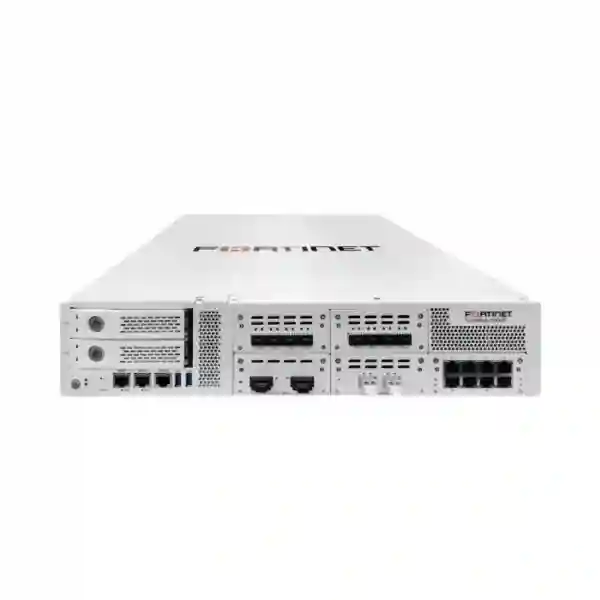
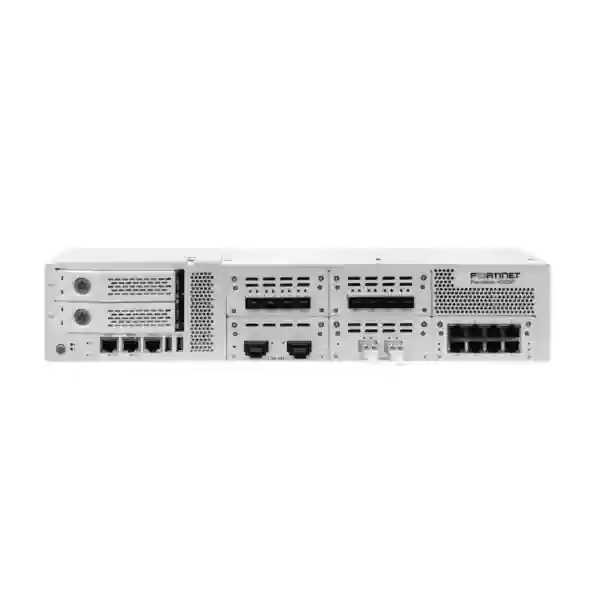
FortiWeb FWB-4000F
FortiWeb FWB-4000F is a high-capacity Fortinet web application firewall designed for organizations that need to protect business-critical websites, web applications and APIs while sustaining demanding data-center traffic. Fortinet currently publishes up to 70 Gbps HTTP and HTTPS throughput for the 4000F platform. The appliance combines hardware SSL/TLS processing, high-speed bypass interfaces, machine-learning-assisted application protection, Layer 7 traffic-management capabilities and high-availability options in a 2U platform.
For Tanzania procurement, the important question is not simply whether FWB-4000F is powerful. Buyers should confirm application traffic, TLS usage, protected domains, API exposure, availability architecture, upstream and downstream switching, rack power, support term and FortiWeb service bundle before finalizing a bill of materials. FourTeck Tanzania can use those inputs to help structure a quotation and deployment discussion.
Fortinet-published HTTP/HTTPS throughput, with actual performance dependent on configuration and traffic.
Rack-mountable form factor with dual hot-swappable power supplies for data-center deployment.
40GE bypass connectivity plus 10 × 10GE SFP+ and 8 × GE RJ45 bypass interfaces.
Integrated SSD storage specified for the FortiWeb 4000F hardware platform.
What FortiWeb FWB-4000F Protects
Public web applications and APIs are exposed to risks that are different from general network threats. Application-layer attacks can target authentication, input handling, sessions, APIs, bots, known vulnerabilities and unexpected application behavior. FortiWeb is Fortinet’s web application and API protection platform. Its multilayer approach includes signature-based controls and machine-learning-assisted detection intended to help identify malicious anomalies while reducing the operational burden associated with false positives.
FWB-4000F is positioned at the high end of Fortinet’s current hardware FortiWeb family. That makes it relevant to large enterprises, service environments, data centers and organizations consolidating protection for substantial application estates. Capacity should nevertheless be validated against the actual workload. Peak HTTP/HTTPS traffic, TLS cipher and key choices, application behavior, security profiles, logging, bot-management requirements and high-availability design can all affect the final architecture.
| Verified item | FortiWeb 4000F |
|---|---|
| Product SKU | FWB-4000F |
| HTTP/HTTPS throughput | Up to 70 Gbps |
| GE RJ45 | 8 GE, 8 bypass |
| 10G BASE-SR SFP+ | 10, including 2 bypass |
| 40G QSFP | 2 bypass |
| SSL/TLS processing | Hardware |
| Storage | 2 × 960 GB SSD |
| High availability | Active/Passive and Active/Active clustering |
| Power | Dual hot-swappable |
Application Security, APIs and Machine Learning
FortiWeb is designed to protect web applications and APIs against known and unknown attack techniques using multiple detection layers. For security teams, the practical value of a WAF is its ability to enforce controls close to the application while maintaining enough context to distinguish normal application behavior from suspicious requests. Fortinet positions machine learning as an important part of this process, alongside established application-security controls and continuously updated threat intelligence.
A successful deployment still requires application knowledge. Teams should inventory public hostnames, APIs, authentication paths, administrative interfaces, expected client behavior, upload functions, third-party integrations and application change processes. Security policies should be introduced with monitoring, tuning and change control rather than assuming that a default profile represents the final production configuration. Where development and operations teams release changes frequently, WAF ownership should be connected to the application lifecycle so new endpoints and behaviors are reviewed promptly.
The 4000F platform also supports substantial Layer 7 traffic-management scale. Fortinet documentation for FortiWeb 7.6.4 and later notes increased 4000F limits for server pools and HTTP content-routing policies, supporting larger deployments with more complex routing logic. Exact configuration maximums depend on the software release, so implementation teams should always verify the administration guide for the version being deployed.
Deployment and Procurement Planning
Traffic and TLS
Measure normal and peak application throughput, HTTPS percentage, transaction patterns and expected growth. Published maximum throughput is a sizing reference, not a substitute for workload analysis.
High Availability
Decide whether the application-security tier requires an HA pair and whether active/passive or active/active design is appropriate. Include switching, cabling and failure behavior in the architecture.
Subscriptions and Support
Fortinet offers Standard and Advanced FortiWeb bundles and support terms. Quotations should identify the base appliance, bundle, duration and implementation scope separately so commercial comparisons are like-for-like.
FortiWeb FWB-4000F Tanzania
Organizations evaluating FortiWeb FWB-4000F in Tanzania are usually dealing with an application-security requirement that has moved beyond a small edge deployment. The 4000F is a high-throughput appliance, so the procurement case should be tied to a measurable application estate: public websites, customer portals, internet-facing APIs, business platforms, digital services or consolidated data-center workloads. Before requesting a Tanzania quotation, document the number of applications and domains, current and peak HTTP/HTTPS throughput, expected growth, TLS requirements, API exposure and whether the design requires one appliance or a resilient pair.
Data-center readiness is equally important. FWB-4000F is a 2U rack appliance with high-speed interfaces and dual hot-swappable power supplies. The deployment plan should confirm rack space, power feeds, cooling, optical modules, patching, upstream and downstream port speeds and management connectivity. If 40GE or 10GE interfaces will be used, verify the exact transceiver, fiber and switch-port requirements before the purchase order is issued. This prevents a security appliance from arriving before the surrounding network can support it.
Application owners and security teams should also agree on policy ownership. A WAF protects applications most effectively when teams understand normal traffic, release schedules, APIs and exceptions. Plan an initial learning and tuning phase, define how alerts will be reviewed and decide how emergency application changes are communicated. For complementary infrastructure, buyers can review FourTeck Tanzania technology solutions, the Tanzania technology shop, and IT and security services. These pages help place the WAF within the wider network, server, rack and support environment rather than treating it as an isolated device.
For quotation preparation, specify FWB-4000F, quantity, desired support term, Standard or Advanced service requirements if known, HA requirement, interface plan and implementation expectations. Avoid assuming stock, delivery time or final pricing until these are confirmed in a formal quotation. The objective is a procurement scope that matches the application-security architecture and can be checked by technical and commercial teams before approval.
FortiWeb FWB-4000F Dar es Salaam
Dar es Salaam organizations often concentrate headquarters, data-center, financial, logistics, telecom, professional-services and customer-facing digital operations in environments where application availability and security are closely linked. FWB-4000F can be evaluated where the protected application estate requires high throughput and where web and API traffic must be inspected without designing the security layer around a small-appliance ceiling. The first step is to create an application inventory and identify which services are truly internet-facing, which are partner-facing and which remain internal.
For a Dar es Salaam data-center deployment, network architecture should be reviewed before procurement. Confirm whether application traffic reaches FortiWeb through routed, transparent or other supported deployment designs appropriate to the environment, and map the interfaces required for production, management and HA. The appliance provides 40GE, 10GE and GE connectivity options, but the selected design must match the surrounding switching fabric. Optical transceivers, fiber type, redundancy and bypass behavior should be documented as part of the bill of materials.
Application-security operations deserve the same attention as hardware. Determine who will approve WAF policies, review machine-learning observations, investigate blocked requests and coordinate with developers when applications change. For businesses with frequent releases, change management can be as important as the initial installation because a legitimate new API endpoint or application behavior may require policy review. Logging and reporting requirements should be aligned with the broader security-monitoring process.
FourTeck Tanzania’s verified contact and quotation page can be used to submit the exact model, quantity and project context. Include peak traffic, application count, required availability, existing switches and whether FortiWeb will integrate with a wider Fortinet environment. This gives the commercial discussion enough technical context to distinguish a base appliance request from a complete high-availability application-security project.
FortiWeb FWB-4000F Mwanza
For Mwanza organizations, FortiWeb FWB-4000F may be relevant when web applications are centralized in a primary facility while users, customers or branches connect from multiple locations. In that model, the WAF becomes part of a service-delivery chain that may include internet connectivity, perimeter firewalls, load balancing, application servers, databases and monitoring. Procurement should therefore begin with the end-to-end service rather than a standalone hardware specification. Document which applications are protected, where they are hosted and how traffic reaches them.
Capacity planning should consider peak periods. Business portals, payment-related applications, customer services, educational platforms or operational systems may have traffic patterns that vary by hour, season or event. The 70 Gbps published throughput gives the 4000F significant capacity, but teams should still measure actual traffic and understand TLS processing, policy complexity and growth. Over-sizing without a workload case can waste budget, while underestimating future consolidation can create another replacement project too soon.
Connectivity between Mwanza sites and a centralized application environment should also be considered. If remote offices depend on applications protected by FortiWeb, availability planning must include WAN and internet resilience, DNS, upstream firewalls and the server tier. A highly available WAF cannot by itself remove single points of failure elsewhere. Review power, UPS, rack cooling and management access as part of the same design, particularly where the appliance will be installed outside a large purpose-built data center.
A useful Mwanza quotation request should list the FWB-4000F quantity, application and domain count, peak throughput, HA expectations, network interface speeds, support term and whether implementation assistance is required. Where centralized logging is part of the wider Fortinet architecture, the FortiAnalyzer FAZ-1000G Tanzania page provides related context for larger security analytics environments. FortiAnalyzer is a separate platform and should be sized independently from FortiWeb.
FortiWeb FWB-4000F Arusha
Arusha enterprises evaluating FWB-4000F may include hospitality groups, institutions, regional businesses and organizations running customer portals or APIs that must remain accessible while being protected at the application layer. The purchasing process should identify whether applications are hosted locally, in a centralized Tanzania data center, in private infrastructure or across hybrid environments. That hosting model influences where a physical WAF appliance fits and how traffic is routed through it.
Hospitality and service businesses can have particularly visible digital touchpoints such as reservation systems, customer portals and partner integrations. A WAF project should map those external dependencies and distinguish between application traffic that can be inspected by the appliance and services hosted entirely by third parties. Security teams should avoid assuming that buying a large WAF automatically places every digital service behind it. DNS, routing and application ownership determine the actual protection path.
The 4000F’s high-speed connectivity and 2U form factor make physical planning important. Confirm rack depth, redundant power feeds, UPS capacity, cooling and cable management. If the design uses high-speed fiber interfaces, ensure the connected switches and optics are specified together. HA pairs also require careful topology planning so a device or link failure does not create unexpected traffic paths or asymmetric behavior.
Arusha buyers should include application owners in the deployment discussion. Define maintenance windows, testing procedures, rollback plans and responsibility for policy changes. If the organization needs wider network and security assistance, FourTeck Tanzania’s services overview describes integrated design, installation, configuration and lifecycle support areas. The final project scope should state exactly which of those services are included rather than assuming they accompany the hardware automatically.
FortiWeb FWB-4000F Dodoma
Dodoma organizations considering FortiWeb FWB-4000F may be protecting public-sector portals, institutional applications, enterprise services or APIs where security policy, availability and controlled administration are important. A structured requirements document is especially useful for such projects. It should identify protected applications, data-center location, peak traffic, user populations, API dependencies, required administrative separation and any governance rules that affect logging or change control.
FortiWeb supports administrative domains and high-availability clustering, but these features should be mapped to real operational requirements. If separate teams or application groups need delegated administration, document that before configuration. If the service must survive an appliance failure, determine the intended HA mode and validate the upstream and downstream network design. Resilience is an architectural property; it depends on power, switches, links and servers as well as the WAF pair.
Security policy rollout should be phased. Begin with application discovery and baseline behavior, review machine-learning and security observations, tune legitimate exceptions and establish an approval process before aggressive blocking is applied to critical services. This is particularly important for applications with older code, third-party integrations or irregular usage patterns. The aim is to improve protection while preserving legitimate business transactions.
For procurement, Dodoma teams should request the exact FWB-4000F hardware, applicable FortiWeb bundle, FortiCare term, required quantity, transceiver and cabling needs, implementation scope and documentation deliverables. The FourTeck Tanzania shop provides broader business-technology purchasing guidance, including compatibility, capacity, infrastructure and lifecycle checks that are useful when reviewing a high-value security appliance purchase.
FortiWeb FWB-4000F UAE
UAE organizations evaluating FWB-4000F often operate dense data-center and hybrid environments with high application traffic, formal security operations and demanding availability targets. The 4000F’s published 70 Gbps HTTP/HTTPS throughput and high-speed interfaces make it relevant to consolidated application-security tiers, but model selection should remain workload-driven. Teams should measure traffic, TLS usage, API request volumes and expected application growth before choosing the platform.
A UAE deployment may also need to integrate with established load balancers, next-generation firewalls, SIEM platforms, vulnerability-management processes and DevSecOps workflows. Integration requirements should be documented during design rather than after hardware arrival. FortiWeb can participate in a broader Fortinet Security Fabric environment, but every integration should be validated against the exact software versions and operational goals.
Commercial evaluation should distinguish hardware from service bundles and professional services. Fortinet’s ordering material lists Standard and Advanced FortiWeb bundles, with different included services and multiple support durations. Buyers should compare quotations using the same term and service level. A lower hardware-only price is not directly comparable with a bundle that includes FortiCare and application-security services.
For regional technology context, buyers can review FourTeck UAE. When the requirement is specifically for Tanzania deployment but procurement is coordinated from the UAE, state the destination, rack environment, support expectations and implementation location clearly so the quotation reflects the actual project rather than the purchasing office alone.
FortiWeb FWB-4000F Uganda
Ugandan enterprises can evaluate FortiWeb FWB-4000F for high-capacity protection of web applications and APIs where a physical data-center appliance fits the architecture. The design process should identify whether applications are centralized in Kampala, distributed across facilities, hosted in another regional data center or delivered through hybrid infrastructure. That determines where the WAF should sit and which traffic it can practically inspect.
For multi-site businesses, application security should be coordinated with WAN and internet design. Branch users may depend on the same applications that external customers use, but their traffic paths can be different. Map public DNS, private routing, VPNs and upstream security controls so the FortiWeb deployment does not unintentionally create a bottleneck or single point of failure. If HA is required, validate both appliance failover and network convergence behavior.
Operationally, security teams should define who owns WAF tuning and how application changes are communicated. Machine-learning-assisted detection is most useful when teams can investigate anomalies in context. Application developers, infrastructure administrators and security analysts should have a practical escalation path for blocked requests, false positives and newly published vulnerabilities.
Regional buyers can review FourTeck Uganda technology solutions for related infrastructure context. A complete FWB-4000F request should include quantity, HA mode, traffic estimates, interfaces, support duration, service bundle and deployment expectations. Pricing, stock and delivery should be confirmed through a formal quotation rather than inferred from another market.
FortiWeb FWB-4000F Kampala
Kampala-based enterprises frequently centralize digital platforms and IT operations while supporting branches and customers across Uganda. In such an architecture, FWB-4000F can form a high-capacity application-security layer in front of important web services and APIs. Before procurement, teams should separate internet-facing workloads from internal applications and determine which systems actually require WAF inspection. This keeps the design focused and makes capacity estimates more meaningful.
The appliance’s interface density supports high-speed data-center connectivity, but the network around it must be equally capable. Verify switch port speeds, optical modules, VLANs, routing, link redundancy and bypass requirements. If traffic traverses load balancers or reverse proxies, document the sequence of devices and how client IP information, TLS termination and health checking will be handled. These decisions can affect logging and security-policy behavior.
Kampala security teams should plan monitoring from day one. Define which FortiWeb events are operational alerts, where logs will be retained and how incidents are escalated. For a larger Fortinet estate, centralized analytics may be part of the design, but logging capacity should be sized independently. The related FortiAnalyzer FAZ-3100G reference illustrates the role of dedicated analytics appliances in larger environments, without implying that a specific analyzer is automatically required for FWB-4000F.
When requesting a quote, provide current traffic measurements, application count, API exposure, HA requirements and the preferred subscription term. If the project includes migration from an existing WAF, include the current policy count, certificates, routing model and change window so implementation effort can be scoped realistically.
FortiWeb FWB-4000F Arua
For Arua organizations, FWB-4000F is most likely to be considered as part of a centralized or regional application-security architecture rather than a small local edge requirement. If applications are hosted in another city or country, the key design question is where the WAF sits relative to the servers and users. A physical appliance protects traffic that is actually routed through it, so topology and hosting location must be confirmed before procurement.
Remote-site connectivity can influence the user experience even when the WAF itself has substantial throughput. WAN latency, internet reliability, DNS and upstream routing may determine how quickly applications respond to users in Arua. Security teams should therefore separate WAF performance from wider network performance when troubleshooting. A well-designed monitoring plan should capture application response, network health and FortiWeb security events so operational teams can identify the correct layer when an issue occurs.
If Arua is one site in a multi-location enterprise, central policy governance can help maintain consistency. Application-security policies should still account for each application’s behavior rather than forcing one generic rule set onto every service. Document business owners, technical contacts and maintenance windows for each protected application. This information becomes valuable during tuning and incident response.
Procurement teams should aggregate requirements across all sites that will use the protected services. Include projected traffic growth and new applications, not only current Arua usage. Specify support and implementation expectations explicitly and confirm logistics through the relevant quotation process. This avoids making unsupported assumptions about local stock, delivery times or on-site service availability.
FortiWeb FWB-4000F Mbarara
Mbarara businesses evaluating FortiWeb FWB-4000F should first decide whether their application-security requirement genuinely needs a high-end hardware WAF. The platform is designed for demanding throughput and application scale, so a requirements-led comparison with other FortiWeb form factors can protect budget while still meeting security objectives. Measure traffic and application count, document expected growth and determine whether consolidation or HA drives the need for the 4000F.
For organizations with a central data center, physical readiness should include rack capacity, redundant power, UPS, cooling and high-speed network ports. If applications are hosted remotely, consider whether a cloud or virtual FortiWeb deployment model better matches traffic location. Fortinet offers hardware, VM, public-cloud, container and SaaS-related application-security options, so form factor should follow architecture rather than brand preference alone.
Security operations should include a defined tuning period. Teams can monitor normal application behavior, investigate anomalies and refine controls before moving critical policies into blocking mode. Certificate lifecycle, API changes and application releases should be integrated into operational procedures. A WAF that is deployed once and then ignored can gradually diverge from the applications it is meant to protect.
A Mbarara quotation request should state whether FWB-4000F has already been selected through technical sizing or whether alternatives should be evaluated. Include application locations, peak bandwidth, TLS use, desired HA, interface requirements and support term. This gives suppliers enough context to respond with a solution scope rather than only a part number.
FortiWeb FWB-4000F Gulu
Gulu organizations that are part of larger enterprise or institutional networks may consume applications hosted in centralized infrastructure. In this situation, FWB-4000F can be evaluated at the central hosting layer to protect applications used across locations. The security architecture should document whether remote users reach those applications through private WAN links, VPN, public internet or a combination, because traffic paths affect where application inspection takes place.
Business continuity planning should cover more than the appliance. FortiWeb supports active/passive and active/active clustering, but resilient application delivery also depends on network links, switches, DNS, server pools, storage and upstream connectivity. Test failure scenarios before production handover. A documented failover test is more useful than assuming that redundant components automatically produce a resilient service.
Operational teams should also decide how logs and alerts from the WAF are handled. Not every blocked request represents a serious incident, and not every application error is a security event. Establish alert priorities and escalation rules so security analysts can focus on meaningful activity. When applications are managed by external developers or vendors, include them in the change-notification process so new releases do not surprise the security team.
For Gulu procurement, include the central hosting location and total enterprise traffic rather than sizing only from local user count. Specify whether the purchase is hardware only or should include FortiCare, FortiWeb services, deployment and knowledge transfer. Confirm all commercial details in the final quote.
FortiWeb FWB-4000F Kenya
Kenyan enterprises with large web and API estates can evaluate FWB-4000F for high-throughput application protection in data centers and regional service environments. The 70 Gbps published throughput gives the platform significant headroom, but procurement should be based on measured HTTP/HTTPS traffic and the security services actually required. Organizations consolidating several applications behind a common WAF should also consider the number of protected domains, routing policies and operational ownership.
Nairobi and other major business environments may already have sophisticated load balancing, firewalling, SIEM and application-delivery infrastructure. FortiWeb integration should be designed to preserve visibility and predictable traffic flow. Decide where TLS terminates, how certificates are managed, how source addresses are preserved and how health checks interact with application servers. Documenting these details before implementation reduces troubleshooting during cutover.
Procurement comparisons should normalize the service bundle and term. Hardware-only, Standard bundle and Advanced bundle offers can represent materially different scopes. Ask suppliers to identify the exact Fortinet SKU, FortiCare level, FortiWeb service package and duration. If implementation is included, request a clear statement of configuration, migration, testing, documentation and handover tasks.
Regional buyers can review FourTeck Kenya IT and security solutions for local technology context. For projects managed across East Africa, standardizing application-security policy and documentation can make support easier, while each deployment should still be sized for its own traffic and hosting architecture.
FortiWeb FWB-4000F Kuwait
Kuwait organizations evaluating FortiWeb FWB-4000F may have high-value digital services, customer applications and APIs that require a dedicated application-security tier. The hardware platform provides high throughput and data-center connectivity, but a successful deployment depends on understanding the applications themselves. Build an inventory of domains, API endpoints, authentication methods, upload functions and external integrations before policy design begins.
High availability is commonly important for public services, but the required architecture should be documented rather than assumed. FortiWeb supports active/passive and active/active clustering. The surrounding network, load balancers and server pools must be designed to support the selected mode. Test appliance failure, link failure and maintenance scenarios so operations teams know the expected behavior.
Kuwait data-center procurement should include power, rack and cooling checks as well as transceivers and fiber. The FWB-4000F has 40GE and 10GE connectivity options, and the exact optics should be matched to connected equipment. Support terms and security-service subscriptions should also be aligned with the organization’s lifecycle and budgeting model.
When comparing suppliers, focus on exact SKU and scope rather than headline price. Confirm whether the quote includes only FWB-4000F hardware or a bundle, the number of years, support level, implementation and any required accessories. This makes technical and commercial approval more transparent and reduces the risk of discovering missing components after purchase.
FortiWeb FWB-4000F Ghana
Ghanaian enterprises can evaluate FWB-4000F when business-critical web services and APIs require a high-capacity physical WAF. Financial services, large institutions, service providers and multi-site enterprises may have application-security needs that justify a dedicated platform, but sizing should always start with traffic and application data. Record peak throughput, TLS percentage, number of domains and expected growth before committing to the high-end model.
The WAF should be positioned within a layered architecture. Network firewalls control broader network access, while FortiWeb focuses on web applications and APIs. Application servers still require secure configuration and patching, and developers still need secure coding practices. WAF protection complements these controls rather than replacing them. Procurement and governance documents should reflect this shared-responsibility model.
Deployment planning should cover network interfaces, bypass design, HA, certificate handling, management access and logging. Security teams should establish a process for reviewing machine-learning findings and tuning policies. If applications change frequently, link the WAF change process to release management so new behavior can be evaluated quickly.
For Ghana regional context, buyers can review FourTeck Ghana technology solutions. A complete quotation request should specify exact appliance quantity, support term, service bundle, interface needs and implementation expectations. Pricing and availability should be confirmed at the time of procurement.
FortiWeb FWB-4000F Nigeria
Nigeria’s large enterprise and service-provider environments can generate substantial web and API traffic across customer portals, financial platforms, e-commerce, enterprise applications and digital services. FWB-4000F is relevant where those workloads require a high-capacity physical WAF, but the design should be based on measured traffic and application architecture. Consolidating many applications onto one platform increases the importance of capacity planning, administrative separation and change governance.
Data-center teams should map traffic through internet edges, DDoS controls, firewalls, load balancers and server tiers. Decide where FortiWeb fits in that sequence and how failure or maintenance affects the path. High-speed interfaces provide flexibility, but the connected switching environment must support the selected topology. HA should be tested under realistic traffic rather than validated only by configuration status.
Security teams should use a risk-based policy rollout. Critical authentication endpoints, APIs and administrative paths may need stricter monitoring, while legacy applications can require careful tuning. Machine-learning-assisted detection can provide additional behavioral context, but operational review remains essential. Define responsibilities across security, network and application teams before go-live.
For regional procurement information, organizations can review FourTeck Nigeria IT solutions. Request quotations with exact hardware, subscription, support and services separated. If the project spans several Nigerian sites or a regional network, include aggregate traffic and growth so sizing reflects the complete protected estate.
FortiWeb FWB-4000F Seychelles
Seychelles organizations may have smaller geographic footprints than large continental enterprises but can still operate highly valuable public applications in hospitality, finance, government and service sectors. FWB-4000F should be evaluated where application traffic, consolidation or availability requirements justify its high capacity. If the workload is smaller, other FortiWeb hardware, virtual or cloud deployment options may provide a better architectural fit.
For island and multi-property environments, hosting location matters. If applications are hosted outside Seychelles, placing a physical WAF locally may not protect the intended traffic path. Map DNS, hosting, internet connectivity and user access before choosing the deployment location. Where applications are hosted in a local or regional data center, review network resilience and upstream connectivity alongside WAF HA.
Operational simplicity can be especially valuable for smaller IT teams. Policy design should prioritize clear ownership, manageable alerting and documented change procedures. Avoid enabling complex controls without a process for reviewing their output. A tuned and monitored security policy is more useful than a feature-rich configuration that no one owns.
Seychelles procurement teams should request exact FWB-4000F scope, support term, FortiWeb service bundle, optics and implementation requirements. If remote deployment assistance is expected, state that explicitly and confirm the delivery model in the quotation. Do not assume stock, lead time or on-site support from information published for another country.
Related FourTeck Tanzania Security and Infrastructure Resources
FWB-4000F normally sits inside a wider application and network architecture. The following verified Tanzania FourTeck resources are useful when planning adjacent components and services.
Overview of integrated IT, telecom, security and infrastructure solutions.Business Technology Shop
Buying guidance across firewalls, servers, networking and supporting infrastructure.Technology Services
Planning, deployment, configuration and lifecycle service context.Contact FourTeck Tanzania
Submit model, quantity, traffic, application and project details for quotation.FortiAnalyzer FAZ-1000G
Related centralized Fortinet logging and analytics platform for larger environments.FortiAnalyzer FAZ-150G
Compact Fortinet analytics reference for understanding the broader product family.FortiAnalyzer FAZ-3100G
Enterprise centralized logging context for larger Fortinet security estates.FortiAnalyzer FAZ-3510G
High-capacity security analytics reference for complex Fortinet environments.
FWB-4000F Quotation Checklist
A useful quotation should be based on the deployment requirement, not only the model number. Prepare the following information before requesting commercial terms:
FortiWeb FWB-4000F FAQs
What is the published throughput of FortiWeb 4000F?
Fortinet currently publishes up to 70 Gbps HTTP and HTTPS throughput for FortiWeb 4000F. Performance figures are maximum values and can vary with traffic and configuration, so production sizing should use the intended workload.
What network interfaces does FWB-4000F provide?
Fortinet lists 8 GE RJ45 bypass ports, 10 10G BASE-SR SFP+ ports including two bypass ports, and two 40G QSFP bypass ports, along with management connectivity. Verify optics and switch compatibility for the final design.
Does FortiWeb 4000F support high availability?
Yes. Fortinet lists Active/Passive and Active/Active clustering. The surrounding network and application architecture must also be designed for resilience.
Is FWB-4000F only for websites?
No. FortiWeb is positioned for web application and API protection. The protected scope should be documented by domain, application, API and traffic path during design.
What should a Tanzania quote request include?
Include the exact FWB-4000F quantity, traffic estimates, application and domain count, API requirements, HA design, interface speeds, support term, service bundle and any implementation or migration requirements.
Decision Recap
FortiWeb FWB-4000F is the high-capacity hardware option in Fortinet’s current FortiWeb appliance family, with published HTTP/HTTPS throughput up to 70 Gbps, hardware SSL/TLS processing, high-speed bypass connectivity, dual hot-swappable power and 2 × 960 GB SSD storage. It is most appropriate when application traffic, consolidation, API protection, resilience and data-center architecture justify a large physical WAF. The purchase decision should be based on measured workload and a complete deployment scope rather than the headline throughput alone.
Plan Your FortiWeb 4000F Deployment
Bring your application inventory, peak traffic, API requirements, HA target, network topology and preferred support duration to the discussion. FourTeck Tanzania can use that information to structure the product and project quotation around the intended environment. Commercial availability, delivery and service scope should be confirmed in the formal proposal.


Reviews
There are no reviews yet.