
Grandstream GWN7672L Tanzania
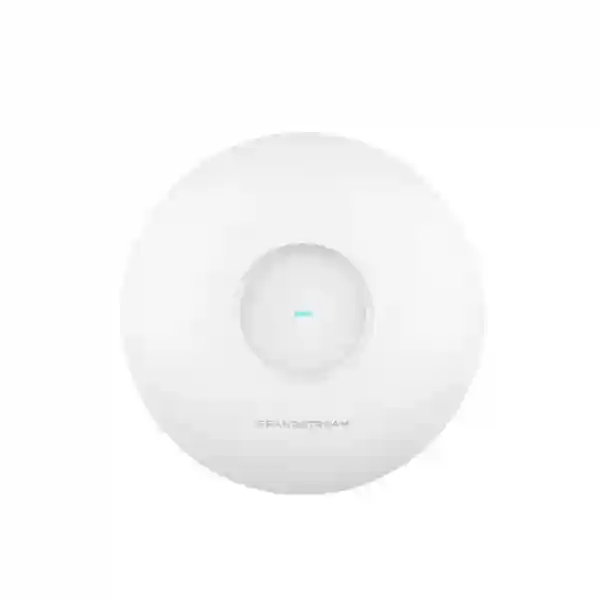
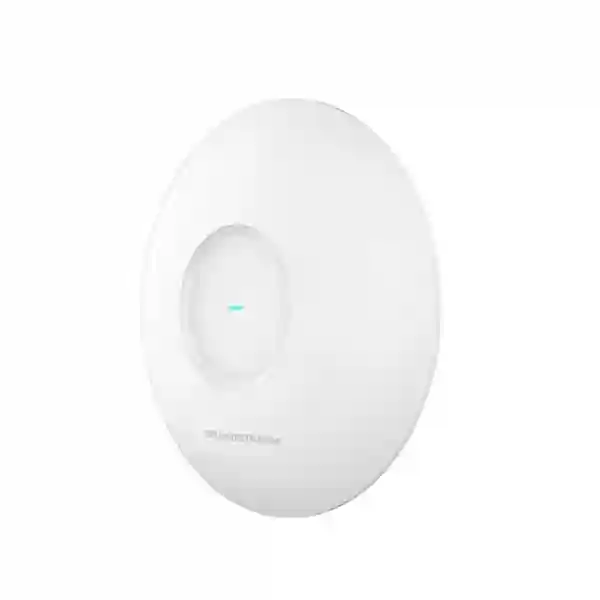
The Grandstream GWN7672L is an enterprise-grade indoor Wi-Fi 7 access point designed for medium wireless networks with medium-to-high user density. It combines tri-band 2×2:2 MU-MIMO radios, enhanced OFDMA, Multi-Link Operation, 4096-QAM, Multi-RU and preamble puncturing with up to 11 Gbps aggregate wireless throughput. For organizations in Tanzania planning a new WLAN or refreshing older Wi-Fi, the GWN7672L offers a modern access layer that can support cloud applications, voice over Wi-Fi, collaboration, guest access, business mobility and a growing population of Wi-Fi 6E and Wi-Fi 7 client devices.
What the Grandstream GWN7672L is designed to solve
Business wireless networks increasingly carry more than web browsing. A typical office may have notebooks, smartphones, tablets, wireless IP phones, collaboration devices, printers, scanners, IoT endpoints and guest devices connected simultaneously. The GWN7672L is designed for environments where administrators need both capacity and manageability. Its 2.4 GHz radio supports legacy and lower-bandwidth clients, the 5 GHz radio provides broad compatibility and high performance, while the 6 GHz radio gives supported Wi-Fi 6E and Wi-Fi 7 devices access to additional spectrum. That combination can reduce pressure on crowded bands when the client mix and local regulatory conditions permit use of 6 GHz.
Wi-Fi 7 features such as Multi-Link Operation, Multi-RU, preamble puncturing and 4096-QAM are intended to improve spectrum use, throughput and responsiveness with compatible clients. These features do not eliminate the need for RF planning. Walls, ceiling materials, furniture, neighboring WLANs, user concentration, uplink design and internet capacity still determine real results. The right procurement process therefore evaluates the GWN7672L as part of the complete LAN rather than treating the access point as a standalone speed upgrade.
Verified technical specifications
| Wireless standard | IEEE 802.11a/b/g/n/ac/ax/be; Wi-Fi 7 |
| Radio design | Tri-band 2×2:2 MU-MIMO on 2.4 GHz, 5 GHz and 6 GHz |
| Maximum data rate | 688 Mbps at 2.4 GHz, 4,320 Mbps at 5 GHz, 5,765 Mbps at 6 GHz; up to 11 Gbps aggregate wireless throughput |
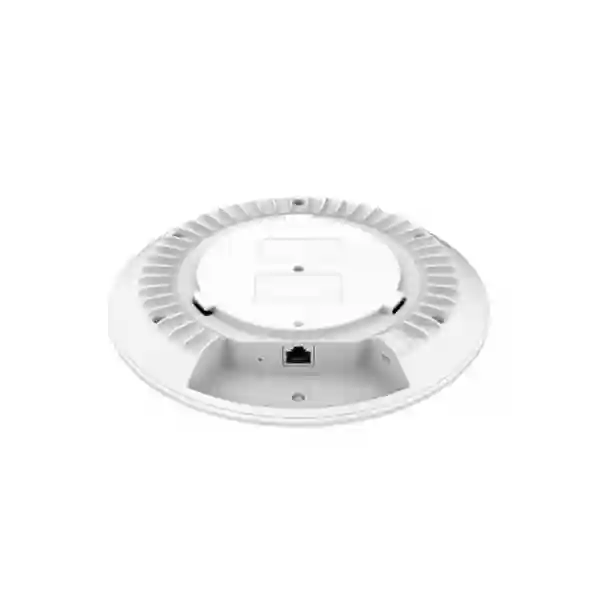
| Network interface | 1 × 5 GbE RJ45 port with PoE input |
| Power | IEEE 802.3at PoE+; maximum power consumption 22 W |
| Client capacity | Up to 384 concurrent clients |
| SSIDs | 48 total; up to 16 per radio |
| PPSK | Up to 2,500 PPSK accounts |
| Coverage | Up to 175 meters under vendor-stated conditions; real coverage varies by environment |
| Management | Local Web UI, GWN App, embedded controller, GDMS Networking, GWN Manager, TR-069 and SNMP |
| Local controller | Manages up to 50 local GWN access points |
| Mounting | Indoor wall, ceiling and junction-box mounting |
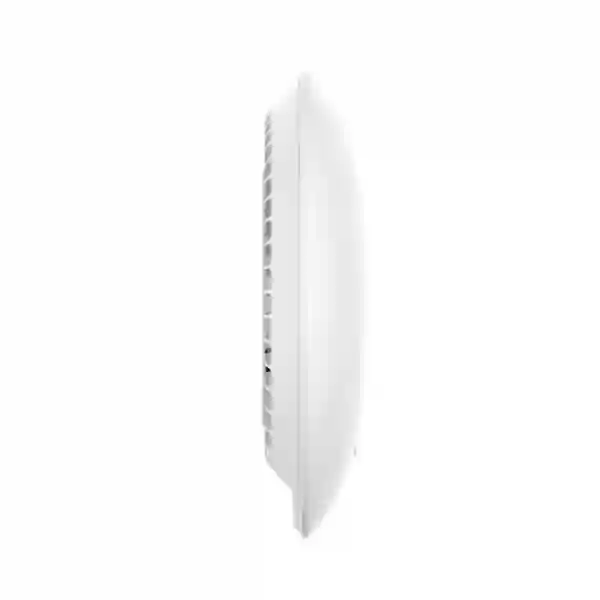
| Dimensions | Diameter 220 mm × 48.5 mm |
| Operating environment | 0°C to 45°C; 10% to 90% non-condensing humidity |
Frequency availability, transmit power and usable 6 GHz channels vary by country and regulatory domain. Procurement teams should confirm the correct regional model and local spectrum rules before deployment.
Wi-Fi 7 features and business value
Multi-Link Operation
MLO allows compatible Wi-Fi 7 clients to use multiple links in ways that can improve throughput, latency and link resilience. For collaboration, voice, cloud applications and dense business areas, this gives modern clients more flexibility than a single-band connection.
320 MHz channels
The 6 GHz radio supports channel widths up to 320 MHz where regulation and RF conditions allow. Wide channels can support very high data rates for compatible clients, although dense environments may deliberately use narrower channels to improve reuse.
Multi-RU and puncturing
Multi-RU and preamble puncturing help Wi-Fi 7 use spectrum more efficiently when portions of a channel are busy or when multiple users need airtime. They are particularly relevant to high-usage networks where efficiency matters as much as raw peak speed.
Before you buy: check the wired network too
The GWN7672L has a 5 GbE uplink and requires PoE+. A high-performance wireless upgrade can expose limitations in older switches, cabling or upstream internet. Confirm that the selected switch provides IEEE 802.3at power, sufficient PoE budget, appropriate multigigabit port capability where full uplink potential is required, suitable cabling, VLAN support and enough upstream capacity. FourTeck Tanzania’s business technology shop provides broader procurement context for switches, firewalls, access points and supporting infrastructure that may need to be planned together.
Grandstream GWN7672L Tanzania
Organizations evaluating the Grandstream GWN7672L in Tanzania should begin with the environment in which the access point will operate. A head office with collaborative workspaces, a hotel with guest traffic, a school with concentrated classroom demand, a healthcare facility with mobile endpoints or a retail environment with customer and operational devices can all use wireless differently. The GWN7672L is well aligned with medium deployments that need modern tri-band capacity, but access-point quantity should be determined from floor plans, construction materials, client density and application priorities rather than from the vendor’s maximum coverage figure. A 175-meter headline range is an upper-limit reference, not a guaranteed indoor design radius. Reinforced walls, glass, furniture, neighboring networks and mounting height can alter signal propagation significantly.
For Tanzania procurement, confirm whether the site already has PoE+ switching and whether those switches offer multigigabit Ethernet where appropriate. The access point’s single 5 GbE interface makes wired backhaul a material part of the design. Also identify which client devices can actually use Wi-Fi 7 and 6 GHz. Older devices will still connect through supported legacy standards, but the greatest benefit from the new radio generation comes from a mixed strategy in which current and future client capabilities are understood. Employee, guest and device traffic should be separated according to business policy, using SSIDs, VLANs, authentication and firewall controls that match the organization’s risk profile.
For multi-AP deployments, Grandstream provides several management paths: the embedded controller can manage up to 50 local GWN access points, while GDMS Networking and GWN Manager support centralized administration models. Procurement teams should decide who will own firmware updates, configuration backups, SSID changes, monitoring and incident response after installation. A good quotation request should therefore include site type, floor plans if available, expected concurrent users, critical applications, switch models, PoE budget, internet bandwidth, guest requirements and installation scope. This gives the supplier enough information to evaluate the GWN7672L as part of a working WLAN rather than merely quoting a device quantity.
Grandstream GWN7672L Dar es Salaam
Dar es Salaam businesses often operate in busy commercial environments where wireless demand is uneven across the day. A corporate office may have ordinary desk areas alongside meeting rooms that suddenly fill with laptops and phones; a hotel may have high demand around reception, conference facilities and guest areas; a clinic or retail site may have operational devices competing with staff and visitor traffic. The GWN7672L can serve these medium-to-high density patterns through tri-band Wi-Fi 7, but a sound design separates coverage planning from capacity planning. An access point can produce a strong signal yet still become congested if too many active devices share airtime. Conversely, placing too many APs without coordinated channels and power can create interference and poor roaming.
For a Dar es Salaam project, map high-density rooms, voice or video usage, staff mobility and guest access before confirming quantity. The 6 GHz band can offer useful additional spectrum to compatible devices, but regulatory availability and the client mix must be confirmed. Older 2.4 GHz devices may need a different SSID or policy from newer corporate endpoints. Where voice over Wi-Fi or real-time collaboration matters, QoS, roaming behavior, upstream switch configuration and internet stability should be tested together. A fast access point cannot compensate for a saturated WAN connection or an undersized firewall.
Installation planning should also include PoE+ capacity and cable routes before ceilings or finishing work are closed. The GWN7672L’s 5 GbE uplink creates an opportunity for higher-speed backhaul, but only when switching and cabling support the intended design. In an upgrade, document existing SSIDs, VLANs, IP addressing, authentication and known dead zones before migration. In a new site, define those elements before installation so the wireless network fits the wider security architecture. A Dar es Salaam quotation is most useful when it includes floor plans, AP mounting preferences, expected user counts, switch information, security segmentation and whether configuration, survey, installation or post-deployment validation is required.
Grandstream GWN7672L Mwanza
Mwanza organizations considering the GWN7672L may include branch offices, schools, clinics, hospitality properties, professional firms and growing multi-site businesses. The most important design question is not simply whether the AP is fast enough; it is whether the complete wireless architecture supports the way the site works. A branch connected to headquarters may prioritize standardized SSIDs, authentication and centralized monitoring, while a standalone facility may focus more on local coverage, guest access and simplified administration. The GWN7672L supports embedded management as well as GDMS Networking and GWN Manager, allowing the management model to be selected according to the organization’s scale and operating preference.
Mwanza deployments should identify peak client density rather than relying only on average occupancy. Training rooms, meeting areas and reception spaces may create short periods of concentrated demand. Wi-Fi 7 technologies can improve efficiency for compatible devices, but RF fundamentals still determine performance. Walls, room geometry, floor slabs, shelving and neighboring networks affect signal and channel reuse. Where wireless is business-critical, a site survey or predictive design is more reliable than using the stated maximum range to estimate AP quantity.
The wired path should be reviewed at the same time. Check whether the access switch provides IEEE 802.3at PoE+, whether its power budget covers the full AP count, whether ports support the desired Ethernet speed and whether uplinks to the core or firewall are sufficient for aggregate traffic. Document VLANs and firewall policy for staff, guests and devices. For quotation accuracy, provide the site type, building layout, current network equipment, internet bandwidth, expected client count, voice/video requirements and any migration constraints. If the GWN7672L is replacing older APs, avoid assuming that existing locations remain optimal; the refresh is an opportunity to correct poor placement, cabling limitations and inconsistent configuration.
Grandstream GWN7672L Arusha
Arusha has a broad range of business environments that can benefit from enterprise wireless, including hospitality properties, tour and travel operations, offices, NGOs, schools and customer-facing commercial spaces. These sites often mix staff connectivity with guest access, which makes segmentation and capacity planning important. The GWN7672L provides up to 48 SSIDs across its three radios, but that technical maximum should not be treated as a design target. In practice, administrators usually benefit from a smaller, clearly structured set of WLANs that represent meaningful user groups such as corporate, guest, voice or operational devices. Each network can then be mapped to the appropriate VLAN, authentication method and firewall policy.
Hospitality and visitor-facing environments deserve special attention because demand can shift by location and time. Conference rooms, lobbies, restaurants and shared work areas may become dense while corridors and service zones remain lightly used. AP placement should follow these patterns rather than a uniform spacing rule. If Wi-Fi calling or collaboration tools are important, test roaming between cells and ensure upstream QoS and internet performance are adequate. The GWN7672L supports 802.11k/v/r roaming features, but client behavior and RF design still influence the real handoff experience.
For Arusha procurement, determine the number of floors, building materials, guest and staff populations, expected Wi-Fi 7 client adoption and any outdoor areas that require separate weather-rated equipment. The GWN7672L is an indoor AP and should not be specified for exposed outdoor locations. Check PoE+ switching, multigigabit uplinks, cable category and rack capacity before ordering. Where a hospitality property or institution has several buildings, decide whether management will be centralized and how internet or private links connect the sites. A quotation request that includes floor plans, user profiles, guest portal expectations, existing switches and deployment services will produce a more realistic bill of materials than requesting AP quantity from floor area alone.
Grandstream GWN7672L Dodoma
Dodoma organizations such as administrative offices, education environments, professional institutions and branch networks can evaluate the GWN7672L when they need high-capacity indoor Wi-Fi with modern security and centralized management options. A business deployment should begin by identifying the users and devices that need wireless access. Corporate notebooks, visitors, printers, wireless phones, managed tablets and IoT endpoints do not necessarily require the same network permissions. Separating them through SSIDs, VLANs and authentication rules can improve both security and troubleshooting. The GWN7672L supports enterprise authentication options, PPSK and captive portal functions that can be aligned to those policies.
For institutional sites, operational lifecycle is particularly important. Decide who will approve SSID changes, manage user access, monitor AP health, install firmware and keep configuration records. Grandstream’s embedded controller can manage up to 50 local GWN APs, while GDMS Networking and GWN Manager offer centralized alternatives. The right choice depends on the number of sites, administrative preferences and network governance. Central management can simplify monitoring, but each building still needs local RF planning because walls, floors, interference and client density are physical conditions rather than management-platform settings.
Dodoma project planning should also include PoE and upstream capacity. The GWN7672L requires PoE+ and provides a 5 GbE interface, so switch selection matters. An older gigabit-only switch can still be part of a functioning design in some circumstances, but it may constrain the access point’s potential wired throughput. Confirm the intended performance target before deciding whether switching also needs to be upgraded. For a useful quotation, provide building dimensions, high-density rooms, current switch and firewall models, number of concurrent clients, critical applications, guest requirements and expected growth. Where reliability is important, include post-installation RF validation and documentation so the network can be operated consistently after handover.
Grandstream GWN7672L UAE
UAE businesses evaluating the Grandstream GWN7672L for offices, hospitality, retail, education or branch networks should make regulatory domain and spectrum availability part of procurement. The GWN7672L uses 2.4 GHz, 5 GHz and 6 GHz radios, but usable channels and transmit power depend on local rules. Procurement should therefore identify the correct regional model rather than treating every online listing as interchangeable. This is especially important for 6 GHz because regulatory frameworks differ by country and can change over time.
Dense offices and customer-facing properties often benefit from careful capacity mapping. Meeting rooms, training spaces and reception areas can generate bursts of demand that are not visible from average user counts. The GWN7672L supports up to 384 concurrent clients, yet practical design should consider application behavior, airtime use and client radio capabilities. A large number of low-activity devices has a different effect from simultaneous video meetings or large cloud transfers. The 5 GbE uplink and PoE+ requirement should also be coordinated with multigigabit switching and power budgets.
Organizations operating both UAE and Tanzania sites can standardize management principles, SSID naming, segmentation and change control while still allowing each site to retain local channel plans and regulatory settings. For UAE project coordination, FourTeck’s UAE IT and networking solutions site provides regional context. A cross-region bill of materials should list access points, switch models, PoE budgets, cabling, firewall policy and management platform rather than only device counts. This makes it easier to build a repeatable standard without assuming that different buildings or countries share identical RF conditions.
Grandstream GWN7672L Uganda
Ugandan organizations considering the GWN7672L can use it as part of a modern indoor WLAN for offices, education, healthcare, hospitality and distributed branch networks. Multi-site businesses often benefit from standardizing SSID names, authentication approaches, VLAN structures and management responsibilities. The GWN7672L’s local and centralized management options can support that approach while allowing each site to maintain its own RF tuning. Standardization should simplify operations, not force identical AP quantities into buildings with different layouts.
Before ordering for Uganda, confirm the correct regulatory model and the local status of 6 GHz operation. The tri-band design is one of the model’s major advantages, but the value of the 6 GHz radio depends on regulatory availability and client support. Existing endpoints that use Wi-Fi 5, Wi-Fi 6 or 2.4 GHz standards can still connect through supported bands, so migration can be phased. For sites with many older devices, administrators may want separate WLAN policies or band-steering strategies rather than expecting every client to behave like a Wi-Fi 7 device.
Infrastructure checks should cover PoE+, switch power budget, port speed, cabling, WAN capacity and firewall segmentation. Remote branches may also need a clear support model because troubleshooting becomes easier when AP names, switch ports, VLANs and management access are documented consistently. FourTeck’s Uganda technology solutions site is relevant for regional coordination. A quotation request should state city, site type, expected concurrent users, floor plans where available, switch and firewall models, management preference and whether configuration or installation is required. This turns a product request into a deployable wireless scope.
Grandstream GWN7672L Kampala
Kampala offices and institutions can have a challenging mix of employee devices, guest users, video meetings, cloud applications and operational endpoints within the same building. Dense neighboring wireless networks can also influence the usable RF environment. The GWN7672L’s Wi-Fi 7 features provide a strong technical foundation, but channel planning and access-point placement remain essential. Administrators should identify peak-use zones such as meeting rooms, classrooms or shared workspaces and design capacity around those areas rather than evenly spacing APs by floor area.
For corporate use, segmentation should be planned before installation. Staff devices may need internal application access, visitors may require isolated internet-only connectivity, and operational devices may need restricted routes to specific systems. GWN features such as WPA2/WPA3, enterprise authentication, PPSK, captive portal support and client isolation can be used within a broader security design. The access point itself does not replace firewall policy; it should integrate with VLANs and upstream access controls.
Kampala procurement should also validate the wired side. A 5 GbE AP connected to an old switch with limited PoE or constrained uplinks may not deliver the expected overall experience. Check PoE budget across the complete AP count and consider whether switch uplinks, internet bandwidth and firewall throughput match the wireless plan. If the project is an upgrade, inventory current AP locations, SSIDs and user complaints first. Dead zones, slow areas and roaming problems help identify whether the root issue is RF placement, interference or upstream capacity. For quotations, provide floor plans, expected client counts, priority applications, existing network equipment, installation scope and management requirements.
Grandstream GWN7672L Arua
Arua branch offices, education sites, healthcare facilities and commercial locations may prioritize wireless networks that are easy to operate remotely. The GWN7672L supports centralized management models that can reduce the need to treat every access point as an independent device. For distributed organizations, repeatable standards for AP naming, VLANs, SSIDs and monitoring can simplify troubleshooting and make it easier to compare performance across branches. The physical RF design still has to be specific to the building because wall construction, room layout and user concentration differ from site to site.
Remote-site planning should consider the complete path from client to application. A user may report “slow Wi-Fi” when the real bottleneck is the WAN circuit, VPN, firewall, cloud service or overloaded switch uplink. The GWN7672L’s high radio capacity and 5 GbE interface can remove some local constraints, but upstream components must be sized accordingly. For branches that connect to headquarters, identify whether business applications use local internet breakout, site-to-site VPN or centralized hosting because those choices affect bandwidth planning.
Power and support are equally practical concerns. Confirm that PoE+ switches have enough power budget and that UPS protection is available where continuity matters. Document cable routes and switch ports so local staff can identify connections without guesswork. If a site has only a few IT resources, remote management and clear handover documentation can be more valuable than complicated configurations. An Arua quotation request should therefore include expected users, building type, switch details, WAN design, SSID requirements and support scope. Ask for the exact regional model and avoid assuming 6 GHz channel availability from specifications published for another country.
Grandstream GWN7672L Mbarara
Mbarara organizations planning a wireless refresh may be moving from standalone access points or older Wi-Fi generations to a more centrally managed platform. The GWN7672L offers Wi-Fi 7 capability, but the upgrade should start with an audit of the existing environment. Record current AP locations, switch models, PoE availability, SSIDs, VLANs, authentication, known coverage gaps and user complaints. This helps distinguish problems caused by outdated radio technology from problems caused by poor placement, congested WAN links or limited switching.
Where many devices share the same spaces, tri-band operation can spread compatible clients across more spectrum. Wi-Fi 7 technologies improve efficiency, yet application demand still matters. A classroom or meeting room where many users start video sessions at the same time needs more capacity than an area where the same number of devices remain mostly idle. Procurement teams should therefore estimate concurrent active users, not simply count all registered devices. If the site supports voice over Wi-Fi, roaming and latency should be tested after installation rather than assumed from feature lists.
The network edge must provide PoE+ and suitable backhaul. Verify switch power budget with all planned APs, review whether multigigabit ports are available and ensure core uplinks are not a hidden bottleneck. If the deployment is staged, define how old and new WLANs will coexist during migration. Keep SSID changes controlled to avoid unnecessary user disruption. For a Mbarara quote, share the building layout, estimated device counts, existing switches and firewall, current internet bandwidth, critical applications and desired management model. Including survey, installation, configuration and documentation requirements in the request produces a clearer project scope than comparing access-point hardware prices alone.
Grandstream GWN7672L Gulu
Gulu businesses, NGOs, education environments and branch operations can evaluate the GWN7672L where they need enterprise-class indoor wireless that can be monitored and administered consistently. Distributed organizations often benefit from cloud or centralized management because configuration and health information can be viewed without visiting each site. The management platform should be selected alongside an operational process: administrators need clear responsibility for firmware, configuration backups, alerts, user-access changes and escalation when the problem is outside the WLAN itself.
Coverage and capacity planning should identify high-value areas first. Offices may require dependable connectivity for cloud applications and collaboration, while education sites may have concentrated demand in classrooms. NGO branch sites may depend on wireless for both local users and visiting teams. The GWN7672L supports up to 384 concurrent clients, but real design limits depend on traffic type, RF conditions and the way users are distributed. A capacity-oriented design may place more APs in dense rooms even when signal from a neighboring AP is already visible.
For Gulu projects, review WAN reliability and power continuity along with the WLAN. A high-performance access point cannot improve an unstable internet circuit, and a PoE-powered AP still depends on the switch and its power source. UPS-backed switching can help preserve wireless connectivity during short interruptions where business requirements justify it. Verify local regulatory settings, especially for 6 GHz, and confirm the correct product variant before purchase. A complete quotation should identify whether the site is standalone or part of a regional rollout, list current switches and firewalls, state expected user numbers and applications, and define installation or support expectations.
Grandstream GWN7672L Kenya
Kenyan organizations considering the GWN7672L can use it for office, hospitality, education, healthcare and branch wireless projects that need a forward-looking Wi-Fi 7 platform. Dense commercial areas and multi-floor buildings can create challenging RF conditions, so procurement should not rely on the stated maximum coverage range to estimate AP quantity. The strongest design starts from floor plans, building materials, client density and application requirements. Wi-Fi 7 is valuable when compatible clients are present, but older devices remain part of most business networks and must be considered in band and SSID planning.
Companies operating across Kenya and Tanzania can standardize architecture while maintaining local RF tuning. A common design can define naming, authentication, VLANs, security policy, management and documentation standards. Each building then receives its own channel plan, power settings and AP placement. This approach allows teams to achieve operational consistency without pretending that every site has the same walls, interference or user distribution. Regional regulatory requirements for 6 GHz should also be checked separately.
Switching and cabling are critical because the GWN7672L has a 5 GbE interface and PoE+ power requirement. Check port speeds, total PoE budget, uplink capacity and cable quality before rollout. For Kenya-focused coordination, FourTeck’s Kenya IT solutions site provides regional context. A procurement brief should include exact city, building type, expected concurrent users, floor plans, existing network equipment, internet capacity, guest requirements and support scope. This information makes it easier to determine whether the GWN7672L is the right fit and whether supporting switches or other infrastructure also need to be included.
Grandstream GWN7672L Kuwait
Kuwait businesses evaluating the Grandstream GWN7672L should make regulatory model selection a formal procurement step. Tri-band Wi-Fi 7 includes 6 GHz capability, but available frequencies and allowed operating parameters vary by jurisdiction. The exact regional unit and current regulatory guidance should therefore be confirmed before shipment. This avoids importing equipment intended for another domain and ensures the design is based on the channels that can actually be used at the site.
Office and branch environments should map wireless demand by user type and location. Meeting rooms, executive areas, shared workspaces and guest areas may have very different traffic patterns. Wi-Fi 7 features can improve performance with compatible devices, but good WLAN practice still requires coordinated channels, reasonable transmit power and appropriate AP density. For applications such as voice or video, verify roaming, latency and upstream QoS. The access point can deliver high local throughput while the internet or firewall remains the limiting factor, so end-to-end capacity matters.
The GWN7672L’s PoE+ and 5 GbE requirements should be reviewed against switch specifications and rack power design. Organizations with regional offices can use a common management and security framework while retaining local RF settings. Procurement should document access-point quantity, switching, cabling, firewall integration, management method and installation scope as one bill of materials. Where existing APs are being replaced, validate whether old mounting positions remain suitable rather than reusing them automatically. Quotation requests should also ask for current regional availability and exact included accessories rather than relying on third-party listings from another market.
Grandstream GWN7672L Ghana
Ghanaian offices, schools, clinics, hospitality properties and branch networks can consider the GWN7672L where high-capacity indoor wireless and centralized management are priorities. The product’s tri-band 2×2:2 radio design gives the WLAN access to 2.4 GHz, 5 GHz and 6 GHz spectrum, but client capability and local regulation determine how much of that capacity can be used. A mixed client estate may include devices from several Wi-Fi generations, so administrators should understand how those devices will be distributed across bands and how guest, corporate and operational traffic will be separated.
For multi-floor or high-density sites, conduct RF planning rather than estimating AP quantity from a universal area figure. Wall materials, neighboring wireless networks, floor slabs and user concentration can all change placement. If an organization is replacing older equipment, compare existing problem areas with the planned new AP locations and confirm whether upstream switching and WAN capacity contributed to previous complaints. New radios alone will not resolve a congested internet connection or insufficient PoE budget.
A Ghana procurement request should state user counts, building type, critical applications, floor plans where available, switch and firewall models, internet bandwidth and required service scope. Security planning should identify which SSIDs need internal access, guest isolation, PPSK, enterprise authentication or captive portal functions. Where wireless supports customer-facing services, post-installation validation is valuable. Document AP names, switch ports, VLAN assignments, management ownership and firmware procedure after deployment. This makes future expansion and troubleshooting easier and allows additional GWN access points to be integrated consistently instead of creating isolated configurations.
Grandstream GWN7672L Nigeria
Nigeria deployments can range from compact offices to large multi-site organizations, and the GWN7672L can be evaluated as an indoor Wi-Fi 7 access point for medium deployments or as one component within a broader standardized WLAN. High-density meeting rooms, training spaces and shared offices should be treated separately from lightly used corridors or back-office areas because capacity requirements differ even within one floor. The device’s support for up to 384 concurrent clients is a vendor maximum rather than a design target; actual user experience depends on airtime, application demand and RF conditions.
Migration planning is important when replacing an existing wireless platform. Inventory current SSIDs, authentication services, guest portals, VLANs and any devices that are difficult to reconfigure. A phased rollout can reduce operational risk by allowing teams to validate coverage, roaming and policy in one area before expanding. If voice over Wi-Fi is part of the requirement, include call-quality and roaming tests in acceptance criteria. If cloud applications dominate, measure WAN and firewall performance as well as local wireless throughput.
The access layer should provide IEEE 802.3at PoE+ and appropriate Ethernet capacity. Check total switch power budget, port speed and upstream links. For regional organizations, adopt naming and configuration standards that can be repeated while allowing each location its own channel plan. Procurement should confirm the correct regulatory domain and current availability at quotation time. A complete request should include location, number of sites, floor plans, approximate concurrent clients, existing switches and firewalls, management preference and whether survey, installation, configuration, documentation or ongoing support is expected.
Grandstream GWN7672L Seychelles
Seychelles businesses, particularly hospitality properties, professional offices and distributed commercial sites, can evaluate the GWN7672L for indoor high-capacity wireless. Hospitality design often requires a clear separation between guest traffic and operational systems. Reception, conference rooms, restaurants and common areas can experience concentrated client demand, while back-office or service areas may have lower density but higher operational importance. The WLAN should therefore be designed around service zones rather than assuming uniform demand throughout a property.
Island procurement benefits from preparing a complete bill of materials before equipment is shipped. The GWN7672L requires PoE+, and a high-performance design may also require multigigabit switching, suitable cabling, rack capacity and UPS protection. Mounting accessories should be confirmed, and indoor APs should not be substituted for weather-rated outdoor models in exposed areas. A missing switch, power component or mounting item can create disproportionate deployment delays, so procurement should review the entire installation path rather than ordering access points alone.
Regulatory verification is especially important for 6 GHz. Confirm the correct regional model and permitted operation before finalizing the WLAN design. For hotels or other guest-heavy sites, captive portal and segmentation requirements should be agreed in advance, and bandwidth policy should protect operational applications from uncontrolled guest demand. Roaming should be validated in corridors, guest areas and conference zones according to the service objective. A Seychelles quotation request should include property layout, expected guest and staff devices, switch and firewall information, internet capacity and deployment services. Clear documentation at handover helps remote support and future expansion.
Deployment and integration guidance
A successful GWN7672L deployment starts with an RF plan and a wired-network check. Place APs according to user density and building materials, not simply where cables already exist. Confirm that switch ports provide PoE+ and that the switch has enough total power budget for every AP. Where the project expects to make use of the 5 GbE uplink, confirm multigigabit switching and suitable cabling. Define VLANs, SSIDs, authentication and guest policy before installation so configuration can be built consistently.
Security should include more than a strong wireless password. Use WPA3 where compatible, enterprise authentication where the organization has the required identity infrastructure, PPSK where individualized credentials are useful, and client isolation where guest or device networks should not communicate directly. Secure management access, change default credentials, keep firmware current and document administrative ownership. Grandstream also supports secure boot, digital-signature protection and unique device credentials as part of the platform’s security design.
For buyers comparing ecosystems, FourTeck Tanzania also lists enterprise wireless alternatives such as the FortiAP FAP-221K Wi-Fi 7 access point. It is a different vendor platform with different management and security integration, so comparison should focus on the customer’s installed environment, management preference, licensing model, required features and lifecycle rather than only headline wireless speed.
GWN7672L versus GWN7672: an important procurement distinction
The GWN7672L and GWN7672 share major wireless characteristics, including BE11000 tri-band Wi-Fi 7, up to 11 Gbps aggregate wireless throughput and support for up to 384 concurrent clients. They are not identical hardware. The GWN7672L has one 5 GbE RJ45 interface, whereas the GWN7672 uses two 5 GbE Ethernet interfaces. Physical dimensions and antenna details also differ. Procurement teams should therefore keep the exact model suffix in quotations, purchase orders and technical documentation.
This distinction is especially important when a project requires a specific wired topology or redundancy approach. Do not copy a GWN7672 datasheet into a GWN7672L bill of materials or assume that accessories and physical details are interchangeable without verification. The same principle applies to regional variants: use the exact product name, confirm the regulatory model and validate current vendor documentation before ordering.
Quotation checklist for Grandstream GWN7672L
☐ Number of sites and floors
☐ Floor plans or dimensions
☐ Expected concurrent users
☐ Wi-Fi 7 / 6E client mix
☐ Available PoE+ budget
☐ Ethernet port speeds
☐ Internet bandwidth
☐ Firewall and VLAN design
☐ Authentication method
☐ Voice/video applications
☐ Survey or installation scope
☐ Management and support expectations
Frequently asked questions
Is the GWN7672L a Wi-Fi 7 access point?
Yes. The GWN7672L supports IEEE 802.11be Wi-Fi 7 and includes Wi-Fi 7 features such as Multi-Link Operation, 4096-QAM, Multi-RU and preamble puncturing. It also supports earlier Wi-Fi standards for compatibility with mixed client environments.
How many clients can the GWN7672L support?
Grandstream specifies support for up to 384 concurrent Wi-Fi clients. Practical design should still consider traffic type, RF conditions, application demand and how users are distributed across the coverage area.
Does the GWN7672L require PoE+?
Yes. The access point supports IEEE 802.3at PoE+ and has a vendor-stated maximum power consumption of 22 W. Check both the switch port capability and total PoE budget across all connected APs.
Does the GWN7672L have a 5 Gigabit Ethernet port?
Yes. The GWN7672L provides one 5 GbE RJ45 port with PoE input. To use multigigabit wired throughput, the upstream switch and cabling must also support the intended link speed.
Can the GWN7672L be managed without a hardware controller?
Yes. Grandstream provides an embedded controller, and the AP also supports management through GDMS Networking, GWN Manager, the GWN App and local Web UI. The embedded controller can manage up to 50 local GWN access points.
Can I use the 6 GHz band everywhere?
No universal assumption should be made. Frequency availability and transmit power vary by country and regulatory domain. Confirm local regulations and the correct regional model before designing around 6 GHz operation.
How many GWN7672L access points do I need?
There is no reliable universal answer based only on floor area. Quantity depends on wall materials, floor plan, client density, interference, application demand, mounting height and roaming objectives. Important deployments should use a predictive design or site survey.
Is the GWN7672L suitable for voice over Wi-Fi?
The platform includes QoS and roaming features applicable to voice and real-time applications, and Grandstream positions it for voice-over-Wi-Fi use. Real call quality also depends on RF design, client behavior, switch QoS, WAN conditions and the voice platform.
Decision recap
Choose the Grandstream GWN7672L when the requirement is an indoor, tri-band Wi-Fi 7 access point for medium deployments that need high aggregate wireless capacity, one 5 GbE PoE+ uplink, support for up to 384 clients, strong security options and flexible controller choices. Before confirming quantity, validate the RF environment, local 6 GHz rules, wired switching, PoE budget, cabling, management method and segmentation policy. For most business projects, the best purchasing decision comes from matching the access point to the complete network rather than selecting by headline speed alone.
Consult FourTeck for a deployment-ready quotation
Share the site location, floor plans, expected concurrent users, existing switch and firewall models, internet bandwidth, guest-access requirements and whether you need survey, installation or configuration. That information helps determine whether the GWN7672L fits the requirement and what supporting infrastructure should be included. FourTeck can evaluate the access point alongside switching, segmentation, firewall, cabling and related business-network requirements without assuming stock, delivery time or regional availability until the quotation is confirmed.
For Tanzania procurement, compare the product against the wider network requirement and request current commercial terms through the verified contact channel. Where you are planning a multi-country rollout, provide all deployment countries in the same request so regulatory variants, management standards and supporting equipment can be reviewed consistently.




Reviews
There are no reviews yet.